Portland Maine: Old Port, lighthouses, lobster industry, food scene, Acadia, and practical guide
Portland Maine overview: Old Port cobblestone 19th century brick warehouses most James Beard nominees per capita US, Food and Wine Restaurant City 2018, Sam Hayward James Beard 2004 Fore Street Rob Evans 2009 Hugo's; Portland Head Light 1791 George Washington first federal lighthouse ordered, Maine 65 lighthouses more than any state except Michigan, 5500km coastline more than California; Longfellow born Portland 1807 Wadsworth-Longfellow House 1785 first Portland brick building; Maine lobster 75-80% US supply 110-130M pounds USD 500-700M/year, Portland Fish Exchange largest US fresh fish auction; Fore Street 1996 Hayward wood hearth, Duckfat Belgian fries duck fat, Allagash Brewing 1994 Rob Tod Belgian pioneer Allagash White best-selling US; Acadia 4M visitors/year Rockefeller 57km carriage roads 1913-1940, Cadillac Mountain 466m first continental sunrise October-March, Kennebunkport Bush Walker's Point, Bowdoin 1794 Chamberlain Longfellow, Farnsworth Wyeth collection; PWM airport 2M Amtrak Downeaster Boston 2.5hrs Casco Bay ferry Peaks Island 15min.
- 1
Portland Maine - Lobster, the Old Port, and New England Charm
Portland, Maine (population approximately 70,000 city, 550,000 metro) is the largest city in Maine, the most visited city in New England north of Boston, and has been consistently ranked as one of the best small cities in the United States for food, outdoor recreation, and quality of life. Portland's geography: the city occupies a peninsula jutting into Casco Bay, with Munjoy Hill to the east and the Western Promenade to the west, and is surrounded by water on three sides — giving it one of the most beautiful natural settings of any city on the American East Coast. The Old Port (the 6-block historic waterfront district between Exchange, Commercial, Middle, and Union Streets): the most vibrant commercial neighborhood in Portland, with cobblestone streets lined by 19th-century brick warehouses converted to restaurants, bars, boutiques, and galleries. The Old Port is the gastronomic capital of northern New England, with more Michelin-recognized and James Beard-nominated restaurants per capita than any comparably sized city in the United States. Portland as a food city: Food and Wine magazine named Portland the Restaurant City of the Year in 2018, and the city has produced nationally recognized chefs including Sam Hayward (James Beard Award Best Chef Northeast 2004, Fore Street restaurant), Rob Evans (James Beard Award Best Chef Northeast 2009, Hugo's), and Jason Loring (one of the most celebrated cocktail and spirits programs in the Northeast). Maine lobster: Maine produces approximately 75-80% of all lobster consumed in the United States, with the annual harvest averaging approximately 110-130 million pounds (50-60 million kg), worth approximately USD 500-700M annually at the dock. The Maine lobster roll (the cold lobster meat lightly dressed in mayonnaise in a toasted, split-top hot dog bun, served in restaurants across Portland) is the most iconic seafood preparation in New England.
- 2
Portland Head Light and Lighthouse Heritage
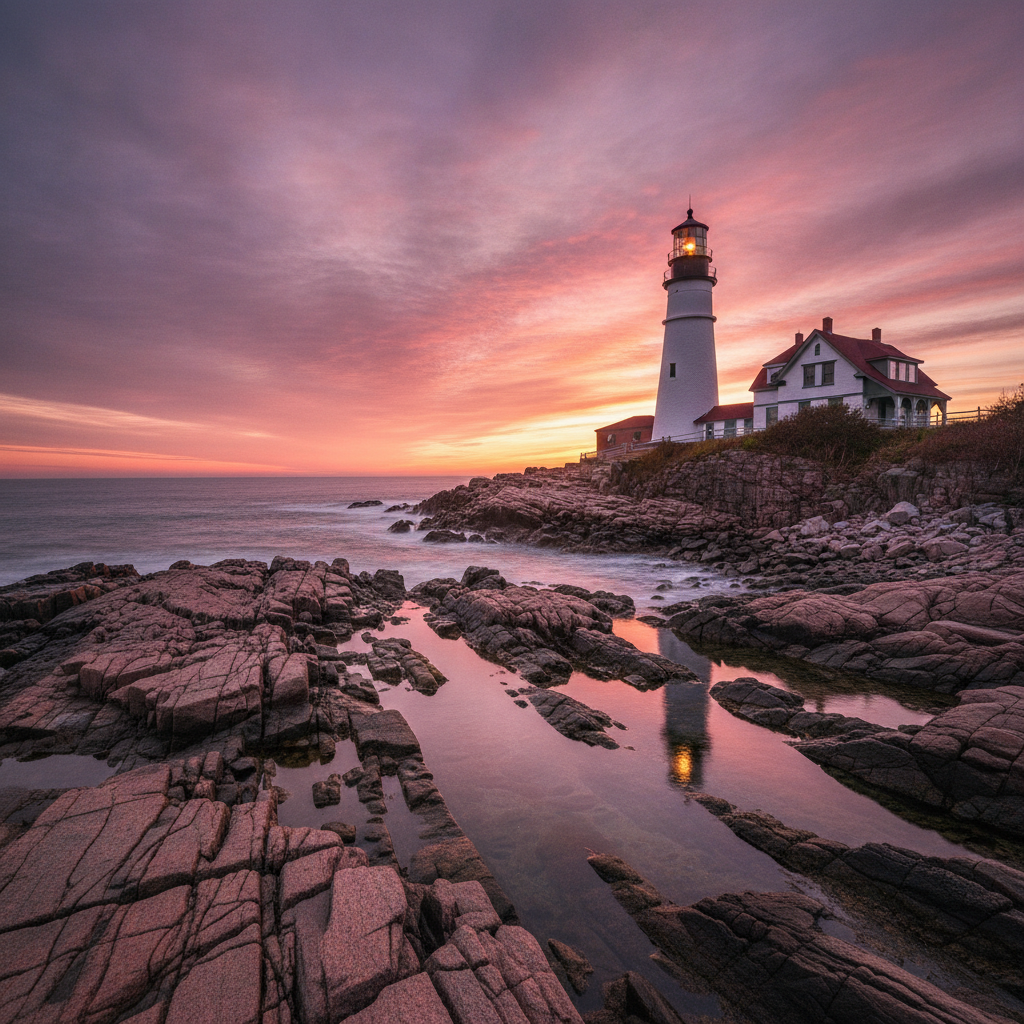
Portland Head Light (at 1000 Shore Road, Cape Elizabeth, 9 km south of downtown Portland): the oldest lighthouse in Maine and one of the most photographed lighthouses in the world, commissioned by George Washington (who ordered its construction in 1787, making it the first federal lighthouse construction ordered by the new US government) and completed in 1791. The lighthouse stands at the entrance to Casco Bay and Portland Harbor, on the headland of Cape Elizabeth — a promontory of granite reaching into the Atlantic. Maine lighthouse heritage: Maine has 65 active lighthouses (more than any other state except Michigan) along its extraordinarily convoluted coastline — Maine has more coastline than California, with the tidal coastline measuring approximately 5,500 km (compared to California's 1,350 km), due to the fjord-like bays, peninsulas, and approximately 4,600 islands that characterize the Maine coast. The Maine Lighthouse Museum (at 1 Park Drive, Rockland, Maine, 100 km northeast of Portland): the largest collection of lighthouse artifacts in the world, with approximately 25,000 objects documenting the history of lighthouse keeping on the American coast. Henry Wadsworth Longfellow (born February 27, 1807, Portland, Maine; died March 24, 1882, Cambridge, Massachusetts): the most popular American poet of the 19th century (Paul Revere's Ride, The Song of Hiawatha, Evangeline, The Village Blacksmith), born in Portland and associated with the city throughout his life. The Wadsworth-Longfellow House (at 489 Congress Street, Portland): the childhood home of Longfellow, the first brick building in Portland (built 1785-1786) and now operated as a house museum by the Maine Historical Society. Longfellow Square (at the intersection of Congress and Longfellow Streets): the bronze statue of the poet marking the neighborhood of his childhood.
- 3
Maine's Lobster Industry and the Working Waterfront
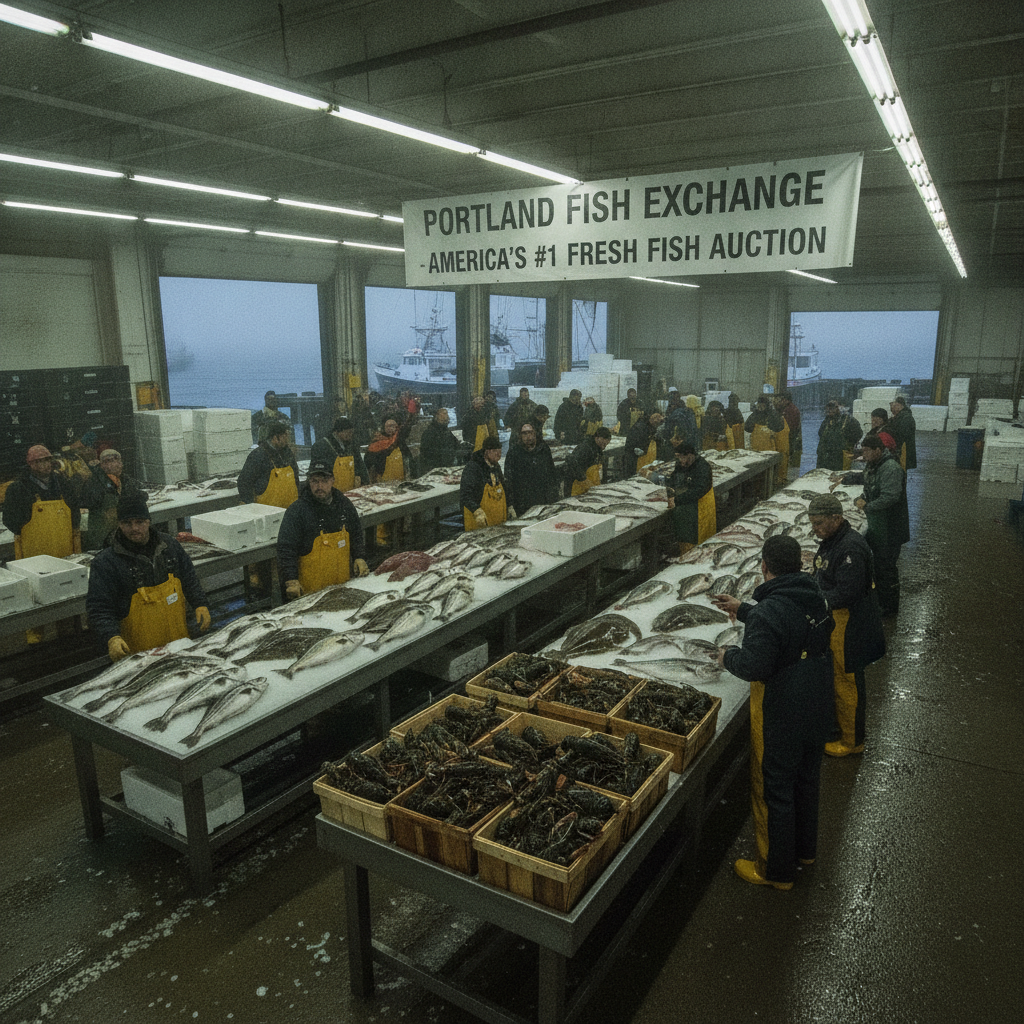
Maine's lobster industry in depth: the Maine lobster (Homarus americanus, the American lobster) fishery is the most economically important single-species fishery in the United States, with the Gulf of Maine serving as the most productive lobster habitat in the world due to the combination of cold water temperatures (8-14 degrees Celsius), rocky seafloor providing shelter, and abundant food supply. Portland Fish Exchange (at 6 Portland Fish Pier): the largest fresh fish auction in the United States, operating 6 days per week, with buyers from restaurants and fish markets across the Northeast bidding on the daily catch of the Portland-based fishing fleet. The Maine lobster trap: the wire-mesh traps (each weighing approximately 18 kg, deployed in groups of 50-100 per boat on lines with surface buoys marked in the owner's registered colors) used in the Maine lobster fishery are one of the most ecologically sustainable large-scale fishing methods on earth — the traps use escape vents that allow undersized lobsters to escape, and regulations (minimum size, no egg-bearing females, notching of egg-bearing females' tails to permanently exempt them from harvest) have maintained the Maine lobster population at historically high levels despite catches of 100+ million pounds per year. Maine aquaculture: the fastest-growing sector of the Maine seafood economy is oyster aquaculture, with approximately 150 oyster farms operating in Maine's coastal estuaries, producing approximately 5 million oysters per year. The Portland oyster bar scene: the concentration of raw oyster bars in the Old Port (Eventide Oyster Co. at 86 Middle Street, the most acclaimed oyster bar in New England; Portland Oyster Company; J's Oyster at 5 Portland Pier) makes Portland one of the three or four best cities in the United States for oyster enthusiasts.
- 4
Portland's Food and Craft Beer Scene
Portland as a food destination in detail: the city's extraordinary dining scene is the result of a self-reinforcing ecosystem — talented young chefs who trained in major American and European cities have chosen Portland for its lower rents, high quality of life, and enthusiastic local food culture. Fore Street Restaurant (at 288 Fore Street, Old Port, founded 1996 by Sam Hayward): the restaurant that launched the Portland food revolution, still regarded as the finest restaurant in Maine, with a wood-burning hearth and spit in the open kitchen and a commitment to Maine-sourced ingredients that predated the farm-to-table movement by a decade. Hugo's (at 88 Middle Street, founded 1988, taken over by Rob Evans in 2000): the restaurant that won the James Beard Award for Best Chef Northeast in 2009, and subsequently spawned Duckfat (at 43 Middle Street, the Belgian fry and sandwich restaurant that uses duck fat for all frying and has been named one of the best restaurants in America by multiple national publications). The Portland craft beer revolution: Portland has more craft breweries per capita than any other city in the United States, with approximately 15-20 craft breweries within the city limits of a city with 70,000 residents. Notable breweries include Allagash Brewing Company (at 50 Industrial Way, founded 1994 by Rob Tod, the pioneer of Belgian-influenced craft beer in the United States — Allagash White, the flagship witbier, is the best-selling Belgian-style wheat beer in the US), Bissell Brothers Brewing (at 4 Thompson's Point, founded 2013, the most acclaimed newer brewery in Maine), and Rising Tide Brewing Company (at 103 Fox Street, founded 2010). The Portland Farmers Market (at Deering Oaks Park on Saturday and Monument Square on Wednesday): the most-visited market in northern New England, with approximately 60 vendors.
- 5
Acadia National Park and the Maine Coast
Acadia National Park (at 20 McFarland Hill Drive, Bar Harbor, Maine, 280 km northeast of Portland): the most visited national park in New England and the most visited east of the Mississippi River (approximately 4 million visitors per year), preserving 73 km of carriage roads (the 57-km system of broken-stone roads designed by John D. Rockefeller Jr., who donated the land and funded the construction from 1913 to 1940 — the most generous single private donation to an American national park), the cadillac Mountain summit road (the 3.5-mile road to the 466-m summit of Cadillac Mountain, the highest point on the Atlantic coast north of Brazil, which is the first place in the continental United States to receive the sunrise from October through March), and the Atlantic coastline of Mount Desert Island (the largest island on the Maine coast, with the dramatic pink granite cliffs of the Otter Cliffs and Thunder Hole). The Kennebunkport day trip (35 km south of Portland, via US Route 1): the village of Kennebunkport is the summer home of the Bush family (President George H.W. Bush's Walker's Point estate is a private compound at the end of Ocean Avenue, visible from charter boat tours). Kennebunkport is a classic Maine coastal village with galleries, shops, and the Dock Square commercial district. The mid-coast Maine towns: the stretch of US Route 1 from Brunswick (the site of Bowdoin College — founded 1794, the college of Joshua Chamberlain, Nathaniel Hawthorne, and Henry Wadsworth Longfellow) north to Rockland (the Farnsworth Art Museum, with the world's finest collection of Wyeth family paintings — Andrew Wyeth's Christina's World, 1948, was painted in Cushing, Maine) includes Camden, Rockport, and dozens of classic Maine coastal villages.
- 6
Portland Maine Day Trips and Practical Guide
Portland, Maine practical visitor guide. Getting to Portland: the Portland International Jetport (IATA: PWM, at 1001 Westbrook Street, 3 km from downtown) serves approximately 2M passengers per year, with flights from New York, Philadelphia, Boston, Washington, Chicago, Denver, and Florida. Amtrak (the Downeaster service, connecting Portland to Boston's North Station in 2.5 hours, with stops in Wells, Saco, Old Orchard Beach, and Portland) is the most civilized way to travel between Portland and Boston. Boston is 175 km south of Portland. Getting around Portland: the city is highly walkable, with the Old Port, Arts District, and Congress Street all within 1-2 km of each other. The Portland Harbor ferries serve the Calendar Islands of Casco Bay, with the Casco Bay Lines ferry (at 56 Commercial Street, the terminal) providing scheduled service to Peaks Island (15 minutes by ferry, year-round, the most accessible of the Casco Bay islands, with bicycle rentals and a small year-round community of approximately 1,000 residents) and the other Calendar Islands. Best time to visit: summer (late June to early September, average highs 25-28 degrees Celsius, the Old Port waterfront at its most vibrant) and fall (September-October, foliage at its peak in the Maine interior, the lobster season at its most productive). Winter (December-March): the best time for off-season prices, the Maine Lobster Festival (held in early August in Rockland), and the indoor food and arts scene without tourist crowds. Maine's unique appeal: the combination of extraordinary seafood, world-class outdoor recreation (hiking, kayaking, cycling, skiing at Sunday River and Sugarloaf 120-200 km north of Portland), authentic fishing culture, and relatively unspoiled natural environment makes Maine the premier destination in New England for visitors who have already seen Boston.
Walk this route with audio
Stories play automatically as you reach each stop — no tapping needed.
More in portland-maine
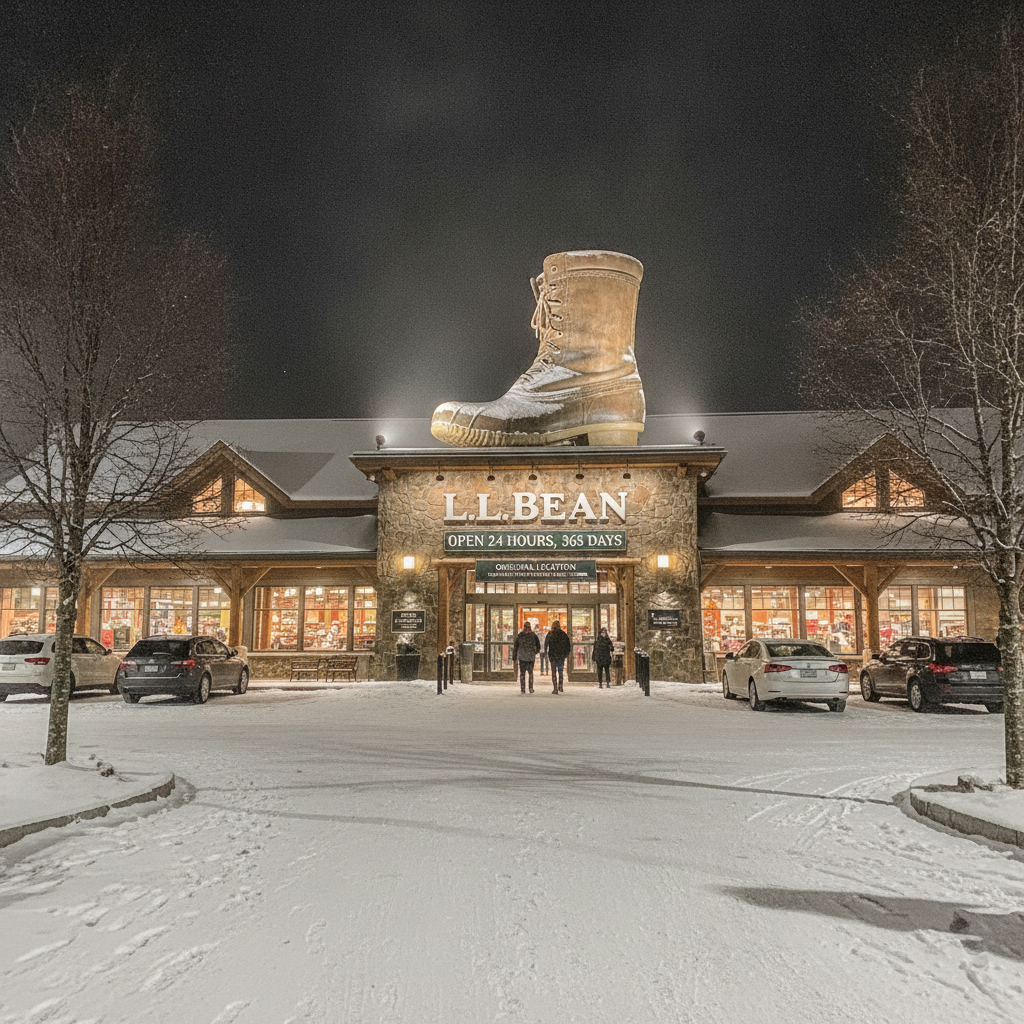
Portland Maine R5: Great Fire July 4 1866 (firecracker boatshop 4pm 1500 buildings 10,000 homeless 2 dead, rebuilt by 1870 most architecturally unified Victorian streetscape US, Italianate brick bracketed cornices, Maine granite Vinalhaven Deer Isle Crotch Island most important US stone industry 1820-1900), Civil War (70,000 Maine men 70% male population, 20th Maine Gettysburg July 2 1863, Chamberlain born 1828 Brewer bayonet charge Little Round Top saved Union left Medal of Honor awarded June 11 1900 37 years later, 54th Massachusetts Fort Wagner July 18 1863 Glory 1989 Denzel Washington Oscar), Bowdoin (1794 Brunswick 40km, Hawthorne Scarlet Letter 1850, Longfellow, Franklin Pierce 14th President Kansas-Nebraska Act 1854, Chamberlain, Peary North Pole, Peary-MacMillan Arctic Museum, University of Maine 1865 Orono 11,000), Freeport L.L. Bean (1912 Leon Bean Maine Hunting Shoe 100 pairs refunded, 24hrs 365 days since 1912, 3M visitors/year, 200 outlet stores, Desert of Maine overfarmed glacial silt 50 acres), Literature (Thoreau Maine Woods 1864 Katahdin 1846, E.B. White Charlotte's Web North Brooklin farm 1938-1985, Robert McCloskey born 1914 died Deer Isle 2003 Make Way Ducklings 1941 Caldecott 1942 Blueberries Sal), Economy (Aroostook 18-20% poverty 30% population loss since 1960, logging Penobscot River, paper mills Millinocket East Millinocket Lincoln Rumford closed 2008-2014 5000 jobs, cannabis 2016 2020 retail USD 150M 800 retailers, remote work COVID top 10 inflows).
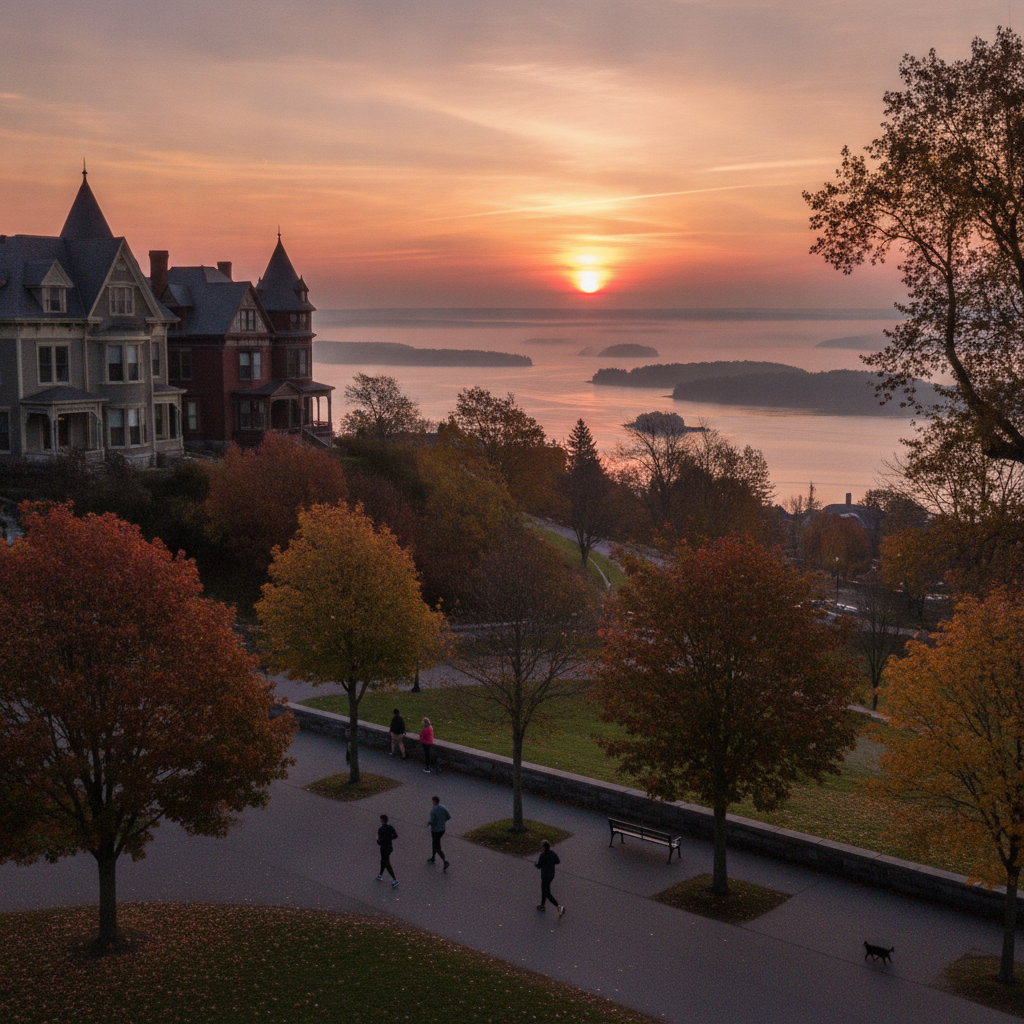
Portland Maine R2-R5: Arts District (Portland Museum of Art 1882 18,000 works Winslow Homer collection, I.M. Pei wing 1983, First Friday Art Walk 10,000 monthly, Portland Observatory 1807 only remaining US maritime signal tower, State Theatre 1929 Art Deco 1600 seats); Literary (Harriet Beecher Stowe Uncle Tom's Cabin 1851-1852 best-selling 19th century US after Bible 300,000 copies year one Lincoln so you started this great war, Stephen King born Portland 1947 Bangor bat-gate house, Sarah Orne Jewett Country Pointed Firs 1896, E.B. White Charlotte's Web Maine saltwater farm); Casco Bay Islands (Peaks Island 15min 1000 residents Battery Steele WWII 1942 graffiti murals, Cliff Island 60 residents 90min no stores roads, Eagle Island Peary North Pole April 6 1909 summer home 1904, Maine Island Trail 375 miles 7000 kayakers); Wilderness (90% forested 7M hectares, moose 75,000-80,000 largest contiguous US, Baxter 83,371ha Governor Baxter 37 donations 1931-1962, Katahdin 1606m AT northern terminus 3540km 1000-1500 thru-hikers/year, Moosehead Lake 483km2 largest NE); Architecture (Great Fire July 4 1866 1500 buildings 10,000 homeless most destructive US before Chicago 1871, rebuilt 1867-1875 most coherent Victorian streetscape US, Victoria Mansion 1858 finest Italian Villa US, City Hall Carrere Hastings 1909); Seasonal (summer book 2-4 weeks advance, Lobster Festival July, Sunday River 135 trails, Sugarloaf best natural snow).
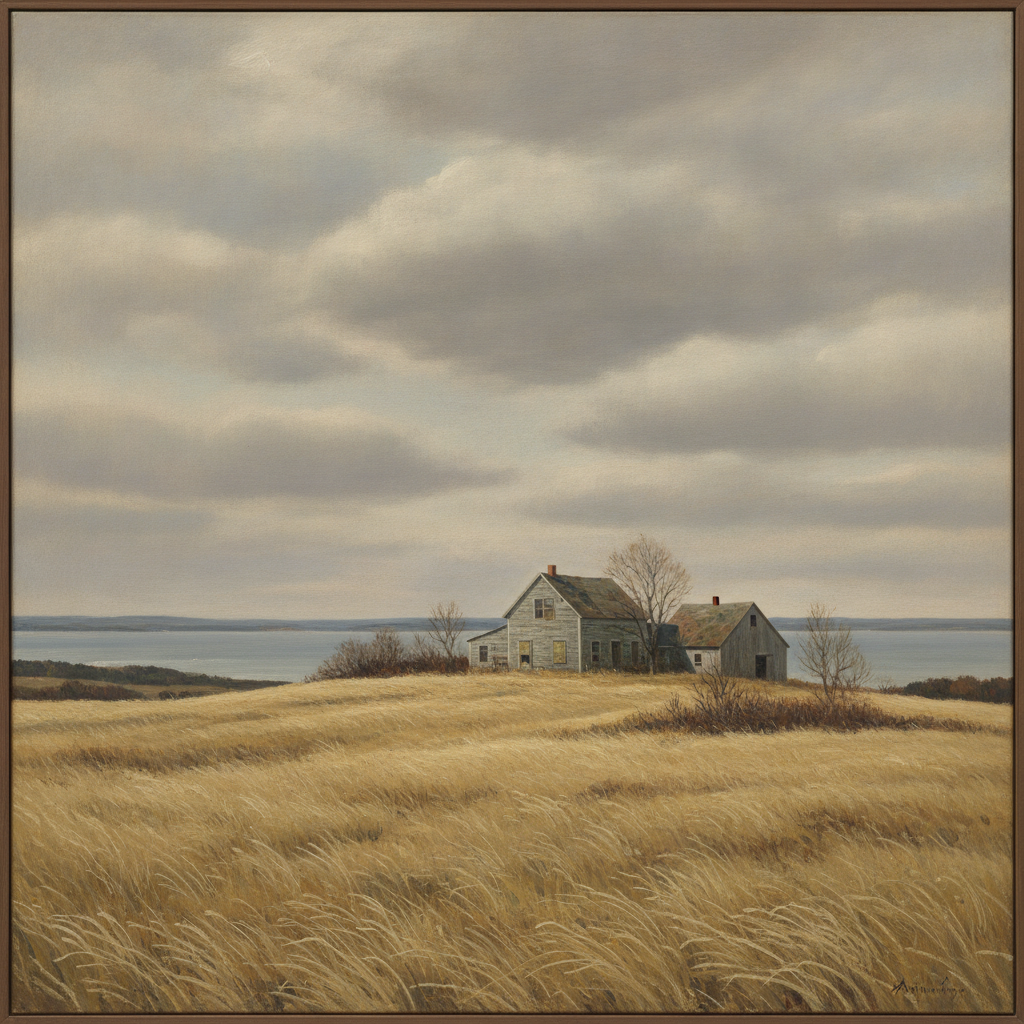
Portland Maine R4: Winslow Homer (born 1836 moved Prouts Neck 1883, Northeaster 1895 Blue Boat 1892 Eight Bells 1886, studio National Historic Landmark opened 2012, Farnsworth Museum Rockland finest NE regional art NC Wyeth died railroad crossing 1945, Andrew Wyeth Christina's World 1948 Olson House Cushing, Jamie Wyeth 1946 dynastic family), outdoors (sea kayaking premier eastern US, Maine Island Trail 600km 200 island campsites, L.L. Bean Freeport 1912 open 24hrs 365 days since 1951, Mount Battie 475m Camden Hills, Sugarloaf 1291m above treeline), Congress Street (Maine Historical Society 1822 oldest institution 2M items, Monument Square Civil War memorial Simmons 1891, Portland Press Herald 1862, West End Victorian Federal Greek Revival Italianate Queen Anne), Rangeley Lakes (180km north, 650km2 lake chain, Victorian resort 1880s Rangeley Lake House 500 guests, brook trout 6-8kg depleted, Wilhelm Reich Museum 1897-1957 orgone FDA censored destroyed publications 1954-1956 most significant scientific censorship US), Lobster roll (cold Mayo Maine-style vs warm drawn butter CT-style, Reds Eats Wiscasset 41 Water Street 45-90min lines full pound no mayo, Lukes Lobster 2009 Holden, Eventide brown butter bao, Five Islands lobster shacks), Wabanaki (Penobscot Passamaquoddy Maliseet Mi'kmaq Abenaki 12,000 years, Indian Island Old Town 2500 members, birchbark canoe 400kg capacity 20kg weight, Maine Indian Claims Settlement 1980 USD 81.5M 60% of Maine largest US Native settlement at time, Abbe Museum Bar Harbor).