Portland Maine: Lighthouse Coast, James Beard Food and Ocean Promenades
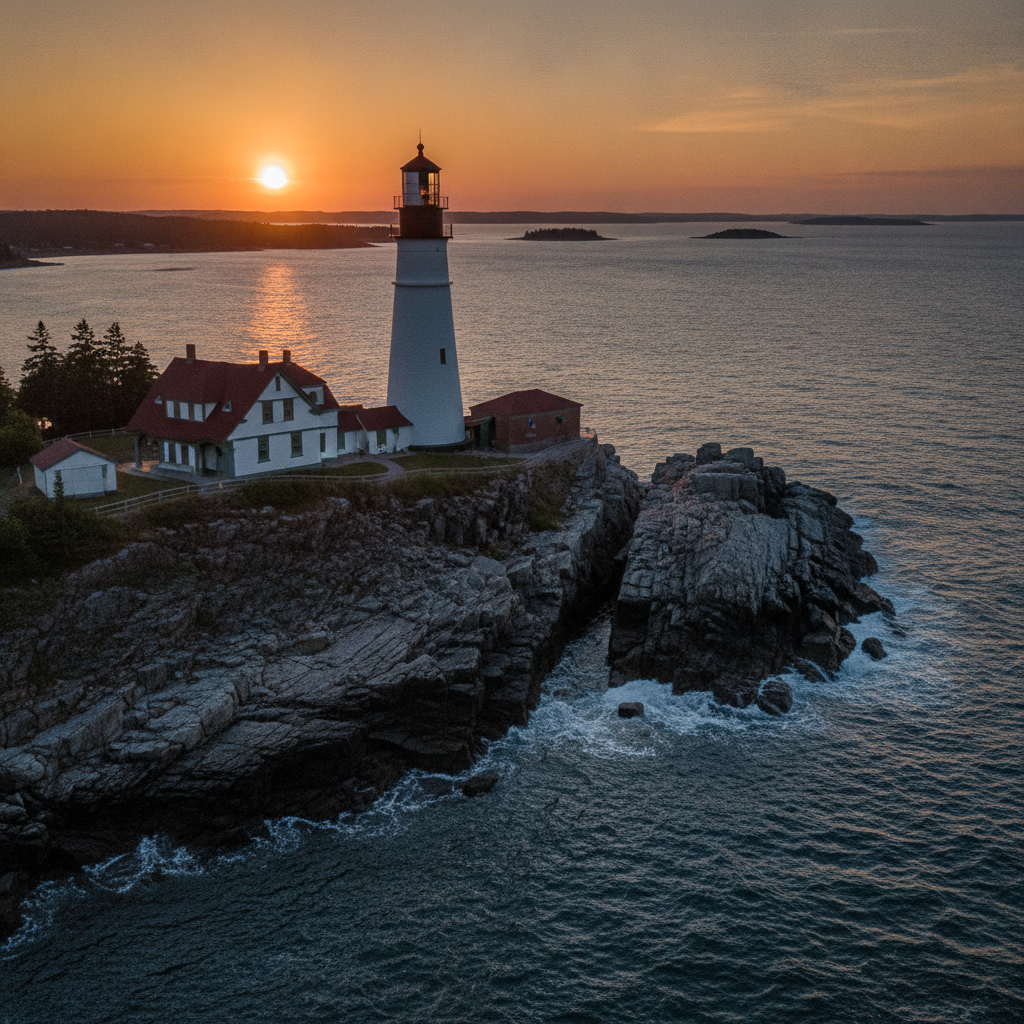
Watch cruise ships dock at Ocean Gateway, photograph Portland Head Light at sunset, taste the farm-to-table food scene that put Maine on the national culinary map, walk the Olmsted promenade above Casco Bay, climb the 1807 maritime signal tower on Munjoy Hill, and explore Fort Williams coastal battery ruins.
- 1
Maine State Pier and Ocean Gateway Terminal
The Maine State Pier on the Portland waterfront, rebuilt in 2009 as the Ocean Gateway International Marine Passenger Terminal at a cost of 12 million dollars, receives cruise ships carrying up to 2,500 passengers who disembark for day trips into Portland and the surrounding coast. The facility was designed to be the most environmentally sustainable cruise terminal in North America, with shore power connections that allow ships to shut down engines while docked. Portland receives roughly 100 cruise calls annually. The adjacent Portland Lobster Company and DiMillo Floating Restaurant, a converted car ferry that has been a stationary restaurant since 1982, represent the tourist-oriented waterfront businesses that coexist with the working commercial harbor.
- 2
Portland Headlight and Cape Elizabeth
Portland Head Light, commissioned by George Washington and completed in 1791, is the oldest lighthouse in Maine and one of the most photographed landmarks in New England. The lighthouse stands 80 feet above sea level and its light is visible 24 miles offshore. The keeper house is now the Museum at Portland Head Light, open seasonally, which interprets the history of the lighthouse and its keepers. Cape Elizabeth, the town surrounding the headlight, also contains Two Lights State Park and Crescent Beach State Park. Winslow Homer painted the Cape Elizabeth coastline extensively from his Prouts Neck studio four miles south. The rocky headlands and surf of Cape Elizabeth appear in some of the most significant American seascape paintings of the 19th century.
- 3
Maine Food Scene Beyond Lobster
Portland has been recognized as one of the best restaurant cities in the United States by Bon Appetit, Food and Wine, and the James Beard Foundation, remarkable for a city of its size. Chef Sam Hayward at Fore Street Restaurant, which opened in 1996 and roasts meats and vegetables over applewood fires in an open kitchen, is credited with establishing Maine as a fine dining destination by sourcing entirely from Maine farms and waters. Hugo s restaurant, where chef Rob Evans won a James Beard Award for Best Chef Northeast in 2009, added national recognition. The Public Market House on Monument Square and the Portland Food Hall on Forest Avenue represent newer approaches to concentrated independent food vendors. The Rabelais culinary bookshop, operated until 2013, drew food writers from across the country.
- 4
Eastern Promenade and Back Cove
The Eastern Promenade, a 68-acre park on Munjoy Hill at the eastern end of the Portland peninsula, offers panoramic views of Casco Bay and the Calendar Islands and was designed by the Olmsted Brothers landscape architecture firm in the early 1900s. The Promenade Trail along the water below the bluff extends 2.1 miles and connects to the Back Cove Trail, a 3.5-mile loop around a tidal estuary that is the most heavily used recreational trail in Maine, drawing over a million visits annually. Back Cove, formerly a saltwater tidal flat used for waste disposal, was restored as a conservation area in the 1970s and now attracts migratory shorebirds, wintering waterfowl, and osprey that nest on platforms erected by the Maine Audubon Society.
- 5
Munjoy Hill and Portland Neighborhoods
Munjoy Hill, the eastern promontory of the Portland peninsula, has been home to immigrant and working-class communities since the early 19th century. Irish immigrants fleeing the Great Famine settled here in the 1840s and 1850s. The neighborhood was historically stigmatized as the rougher end of the peninsula but has gentrified substantially since 2010 as rising property values on the West End and in the Old Port pushed housing costs upward. The Portland Observatory, an 1807 maritime signal tower on Munjoy Hill, is the last surviving maritime signal tower in the United States and offers views across Casco Bay from its octagonal cupola. The observatory was used to signal the arrival of ships so merchants could prepare their wharves before vessels docked.
- 6
Fort Williams Park and Military History
Fort Williams Park in Cape Elizabeth, 4 miles south of downtown Portland across the Fore River, preserves the grounds of a coastal artillery fort established in 1873 and decommissioned after World War II. The park contains Battery Blair, completed in 1906 with 10-inch and 12-inch disappearing guns capable of firing shells weighing over 1,000 pounds, and Goddard Mansion, the ruins of a 32-room Victorian house burned during a military training exercise in World War II. The park surrounding Portland Head Light covers 90 acres of ocean-facing parkland with trails along the rocky shoreline. The fort was garrisoned continuously from the Spanish-American War through World War II and at its World War II peak housed over 700 soldiers monitoring the approaches to Portland Harbor.
Walk this route with audio
Stories play automatically as you reach each stop — no tapping needed.