Pittsburgh: Steel legacy (446 bridges most in world, Carnegie Steel to US Steel 1901, 150,000 jobs lost 1979-1988, Homestead Strike 1892), Mount Washington inclines (Duquesne Incline 1877, Monongahela 1870 oldest continuous, Golden Triangle view three rivers confluence, Point State Park Fort Pitt 1758), Carnegie Museums (Natural History Diplodocus carnegii, Mary Cassatt Impressionist born Allegheny City, Andy Warhol Museum 900 works Campbell's Soup Marilyn Elvis), Pittsburgh sports (Steelers 6 Super Bowls Steel Curtain Immaculate Reception, Penguins 5 Stanley Cups Crosby, Pirates Mazeroski 1960 walk-off HR, PNC Park most beautiful stadium), Strip District and food (Primanti Brothers 1933 fries-in-sandwich, Pennsylvania Macaroni 1902, pierogi Pierogi Race Pirates), Practical (CMU computer science drama, Cathedral of Learning 42 stories tallest educational Western Hemisphere, autonomous vehicles Uber Waymo, Fallingwater 90km Fallingwater masterpiece)
Pittsburgh highlights: steel and bridges (446 bridges most in world, Carnegie Steel 25% US steel, Homestead Strike 1892 10 dead, Carnegie 2,509 libraries worldwide Carnegie Mellon University), Mount Washington (Duquesne Incline 1877 original wooden cars, Monongahela Incline 1870 oldest continuous US, Golden Triangle panorama three rivers, Point State Park Fort Pitt 1758), Carnegie Museums (Natural History Dinosaur Hall Diplodocus carnegii, Mary Cassatt only American Impressionist born Allegheny City, Carnegie International oldest US contemporary art exhibition 1896, Andy Warhol Museum 900 works largest single-artist US), Pittsburgh sports (Steelers 6 Super Bowls most NFL — Steel Curtain Immaculate Reception 1972, Penguins 5 Stanley Cups Crosby back-to-back 2016-2017, Pirates Mazeroski 1960 walk-off World Series HR), Strip District food (Primanti Brothers 1933 fries inside sandwich, Pennsylvania Macaroni 1902, pierogi Pierogi Race), practical (CMU top CS engineering drama, Cathedral of Learning 42-story tallest educational Western Hemisphere, AVs Uber Waymo, Fallingwater 90km 1935-1938 masterpiece).
- 1
Pittsburgh - City of Bridges and the Steel Legacy
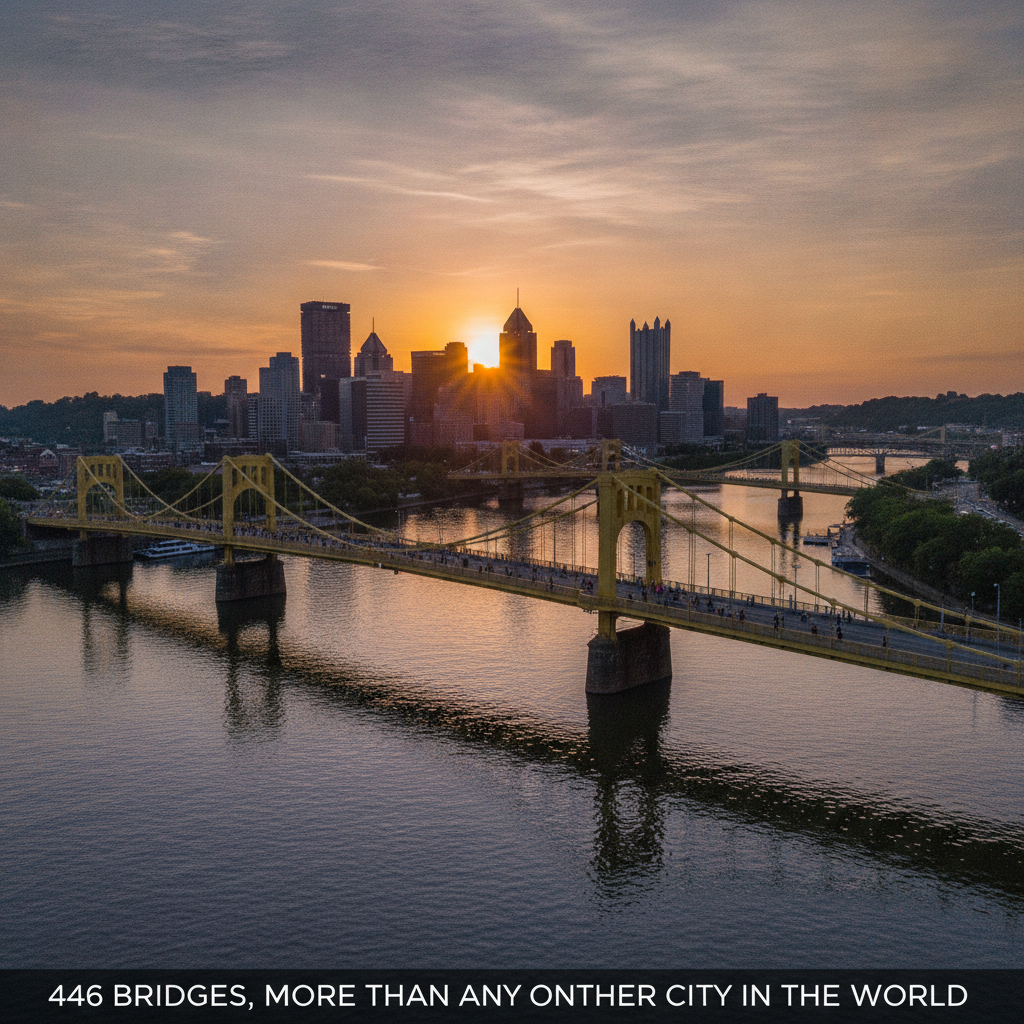
Pittsburgh (Allegheny County seat, population approximately 303,000 city, 2.4 million metropolitan area): the second largest city in Pennsylvania, located at the confluence of the Allegheny River and the Monongahela River (which merge to form the Ohio River at the Point), and known as the City of Bridges (with 446 bridges, more than any other city in the world, including more than Venice). Pittsburgh geography: the city is built on dramatically steep hillsides (Mount Washington, Duquesne Heights, and the South Side Slopes) overlooking the three rivers, creating one of the most dramatic and unusual urban topographies in the United States. Pittsburgh steel history: Pittsburgh was the steel capital of the world from the 1870s to the 1970s, producing at its peak approximately 25% of all American steel (the equivalent of approximately 40% of all Allied steel production during World War II). Andrew Carnegie (born Dunfermline, Scotland, 1835; died Lenox, Massachusetts, 1919): the Scottish immigrant who built the Carnegie Steel Company (consolidated 1901 into US Steel, then the largest corporation in the world, capitalized at USD 1.4 billion) and became the richest man in the world, then gave away approximately 90% of his fortune (approximately USD 350 million, equivalent to approximately USD 5-10 billion today) to libraries, universities, and cultural institutions — establishing 2,509 libraries worldwide (including the Carnegie Library of Pittsburgh) and the Carnegie Mellon University. The collapse of Pittsburgh steel: from 1979 to 1988, Pittsburgh lost approximately 150,000 manufacturing jobs as the domestic steel industry collapsed under competition from Japanese and German steelmakers and from mini-mills using scrap metal. The Homestead Strike of 1892 (the battle between Carnegie Steel workers and the Pinkerton detective agency hired by Carnegie plant manager Henry Clay Frick at the Homestead Steel Works, in which 10 people were killed) remains one of the most significant events in American labor history.
- 2
The Inclines, Mount Washington, and Pittsburgh Views
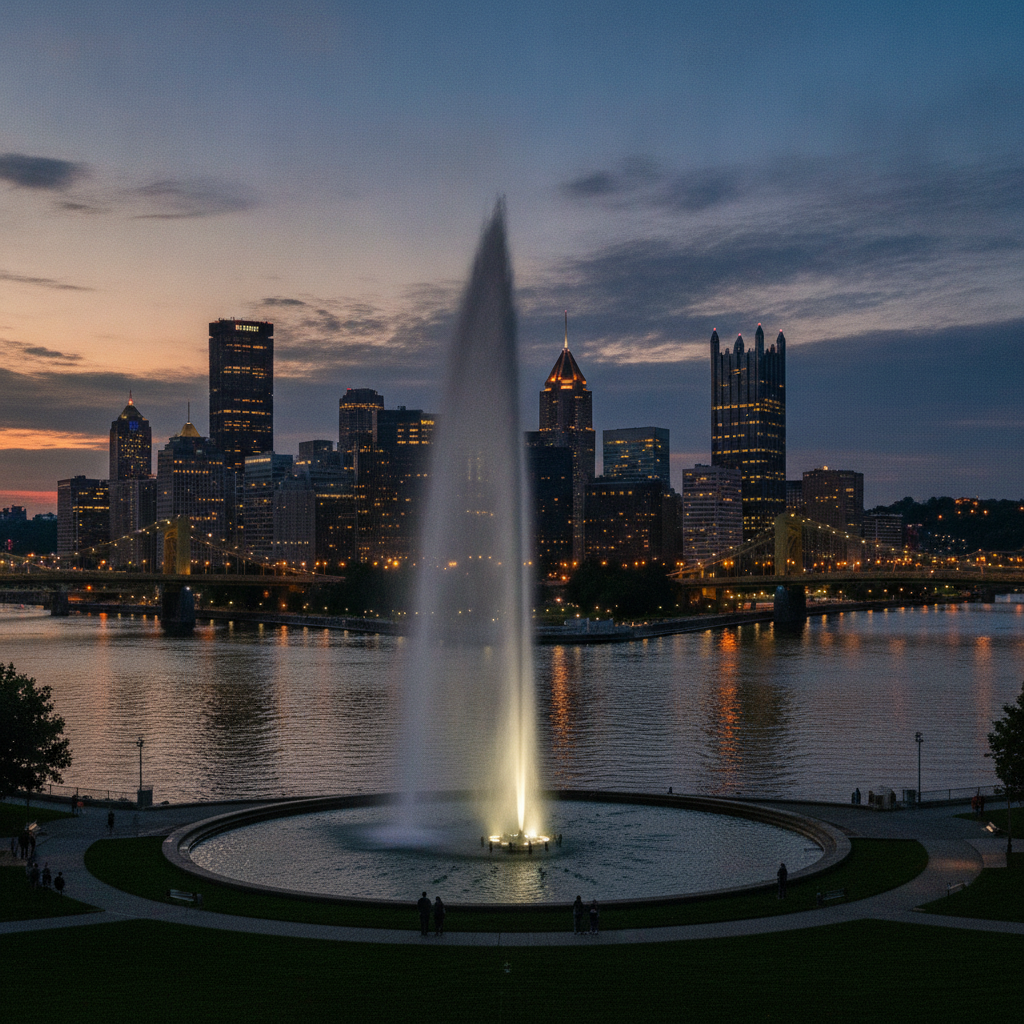
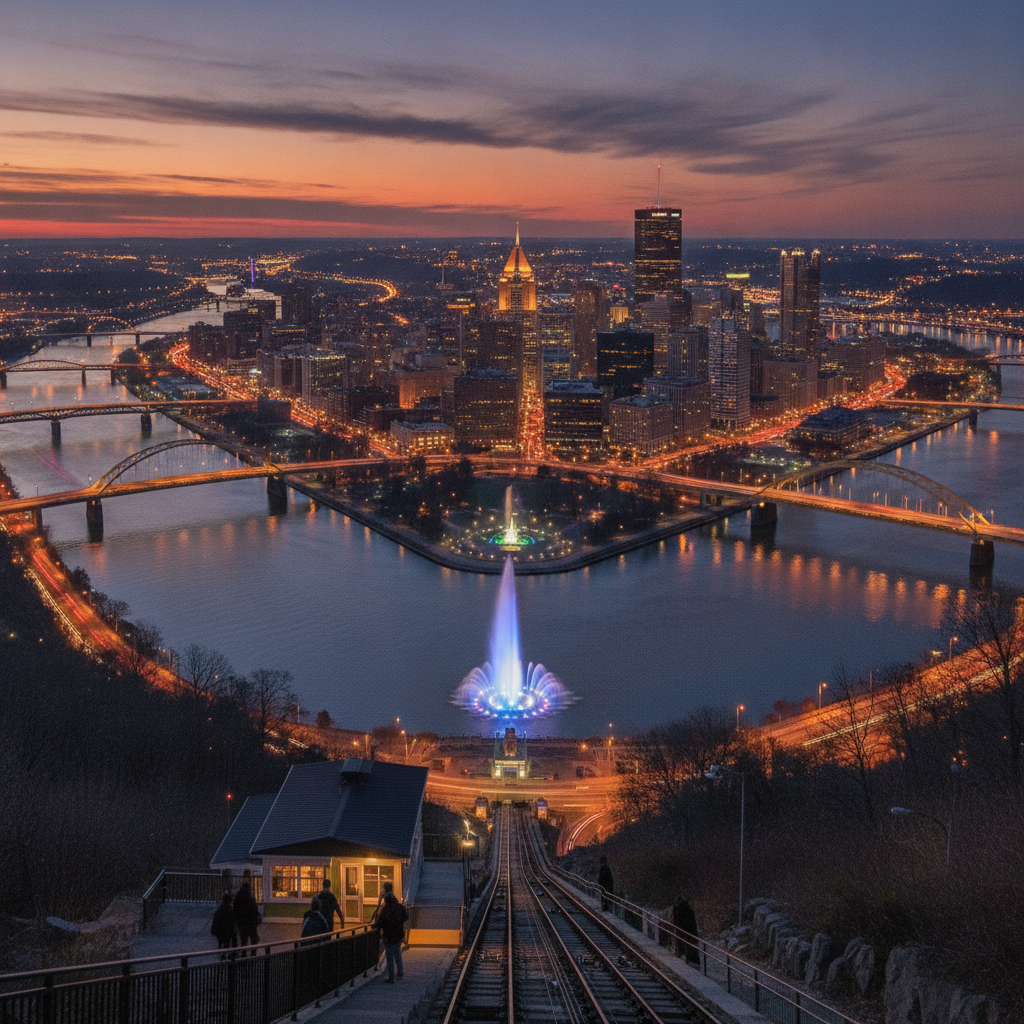
Mount Washington (the neighborhood on the steep hillside south of the Monongahela River, accessible from downtown Pittsburgh by the two historic cable-car inclines): the most dramatic urban viewpoint in the United States, with the entire Pittsburgh downtown skyline visible at close range below, framed by the converging rivers and the bridges. The Duquesne Incline (at West Carson Street, south bank of the Monongahela): the most famous of Pittsburgh's inclines, built 1877, still using the original wooden cable cars and the original machinery, transporting passengers up the 393-foot (120m) slope at a 30-degree angle. The Monongahela Incline (at Smithfield Street, adjacent to the Smithfield Street Bridge): the oldest continuously operating cable incline in the United States, opened 1870. Pittsburgh panoramic view: the view from the observation deck at the top of the Duquesne Incline (at Grandview Avenue, Mount Washington) is considered one of the great urban views in the United States and one of the most photogenic cityscapes in America — the Golden Triangle of downtown Pittsburgh is visible at the Point where the three rivers meet, with the distinctive yellow bridges (Pittsburgh uses only yellow bridges, a local color standard established in the 1990s), the PPG Place glass skyscrapers, the PNC Park baseball stadium, and the Heinz Field (now Acrisure Stadium) football stadium. The Point State Park (at the confluence of the three rivers, at the very tip of downtown Pittsburgh): the park with the 46-meter fountain at the exact point where the Allegheny and Monongahela rivers meet to form the Ohio River, with the reconstructed Fort Pitt (originally built by the British in 1758-1762 on the site of the French Fort Duquesne, one of the most strategically significant military sites in American colonial history).
- 3
Carnegie Museums and Pittsburgh Cultural Renaissance
Carnegie Museums of Pittsburgh: Andrew Carnegie's most lasting gift to Pittsburgh is the complex of museums bearing his name. Carnegie Museum of Natural History (at 4400 Forbes Avenue, Oakland, adjacent to Carnegie Mellon University and the University of Pittsburgh): one of the top 5 natural history museums in the United States, with the Dinosaur Hall (one of the most important dinosaur fossil collections in the world, including the original Diplodocus carnegii — the species named after Andrew Carnegie — discovered in Wyoming in 1899 and cast in plaster for Carnegie to give as gifts to European monarchs). Carnegie Museum of Art (adjacent to the Natural History Museum): one of the first museums in the United States to collect Impressionist paintings, with a collection including works by Winslow Homer, Mary Cassatt (the only American Impressionist accepted by the French Impressionists, born in Allegheny City, now part of Pittsburgh), and important contemporary art. The Carnegie International (held since 1896): the oldest and most prestigious contemporary art exhibition in the United States (the equivalent of a European biennial), held every 3-5 years at the Carnegie Museum of Art. The Andy Warhol Museum (at 117 Sandusky Street, North Shore, across the Allegheny River from downtown): the largest museum dedicated to a single artist in the United States, with 900 original works by Pittsburgh-born Pop Art pioneer Andy Warhol (born Andrew Warhola, August 6, 1928, Pittsburgh; died February 22, 1987, New York City), including the Campbell's Soup Cans paintings, the Marilyn series, the Elvis series, and 610 films and videos.
- 4
Pittsburgh Sports - Steelers Penguins and Pirates
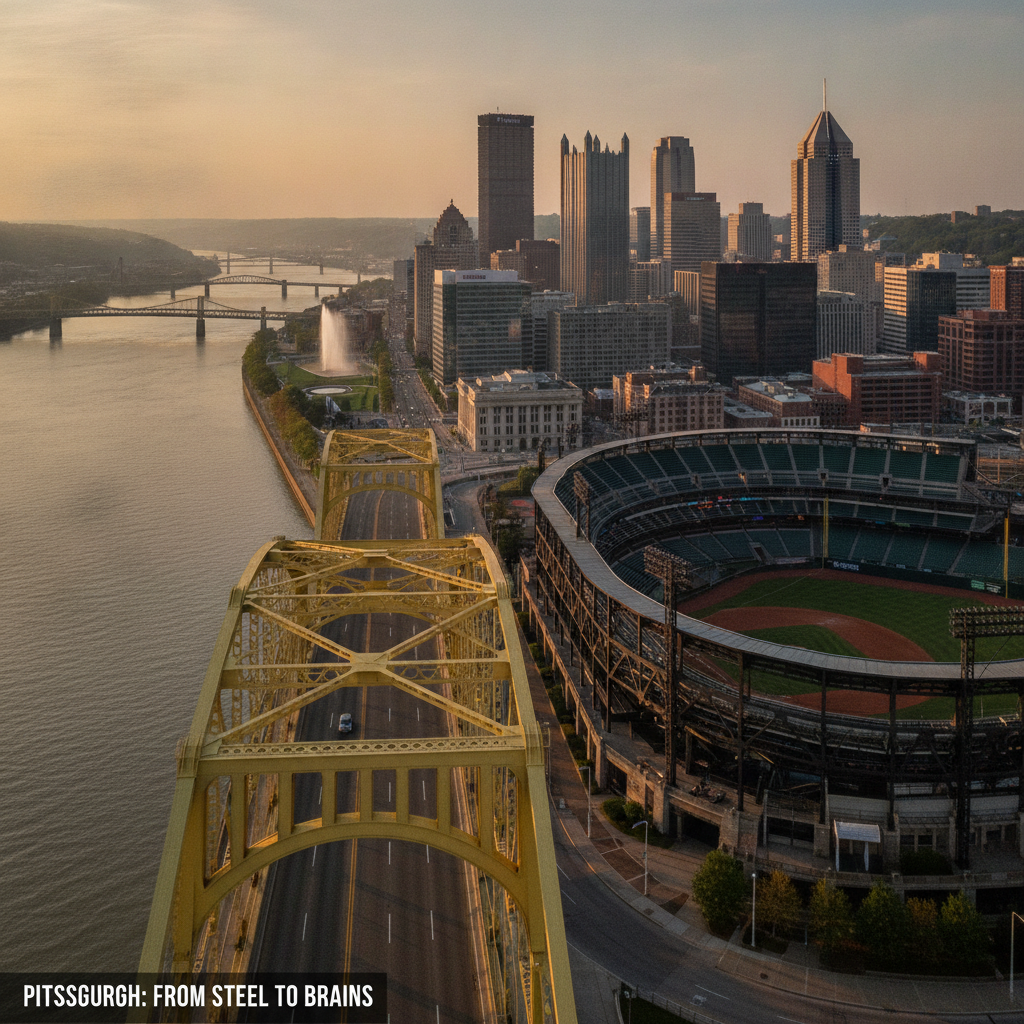
Pittsburgh sports: Pittsburgh is one of the most successful sports cities in American history, with the Steelers (6 Super Bowl championships: the most in NFL history, with Chuck Noll's Steel Curtain defense of the 1970s and Bill Cowher's and Mike Tomlin's subsequent championship teams), the Penguins (5 Stanley Cup championships, including back-to-back in 2016 and 2017 with Sidney Crosby, the most dominant NHL player of his generation), and the Pirates (5 World Series championships, including the 1960 championship when Bill Mazeroski hit the most famous walk-off home run in World Series history in Game 7 to defeat the New York Yankees). Pittsburgh Steelers (playing at Acrisure Stadium, 100 Art Rooney Avenue, North Shore): the most successful franchise in NFL history by championship count (6 Super Bowls: IX, X, XIII, XIV, XL, XLIII), with the Steel Curtain defense of the 1970s (Mean Joe Greene, Jack Ham, Jack Lambert, Mel Blount) being the greatest defensive unit in NFL history according to many analysts, and the Immaculate Reception (December 23, 1972, at Three Rivers Stadium: Franco Harris caught a deflected pass off the turf and ran for a touchdown in the final seconds to defeat the Oakland Raiders in the AFC divisional playoff — one of the most controversial and celebrated plays in NFL history). PNC Park (at 115 Federal Street, North Shore): the home of the Pittsburgh Pirates, consistently rated one of the most beautiful baseball stadiums in the United States, with views of the Roberto Clemente Bridge, the Allegheny River, and the Pittsburgh skyline from virtually every seat.
- 5
Pittsburgh Food Scene and the Strip District
Pittsburgh food culture: Pittsburgh has developed one of the most distinctive regional food cultures in the American Northeast, built on the intersection of Eastern European immigrant cooking (Polish, Slovak, Ukrainian, Italian, and Greek communities), African American soul food traditions, and a strong farm-to-table movement. Primanti Brothers (at 46 18th Street, Strip District, founded 1933): the most famous Pittsburgh food institution, serving the Primanti sandwich (a mountain of grilled meat topped with coleslaw and french fries inside the sandwich — the fries are placed inside the sandwich, not served alongside it, a tradition that started because the original market workers could not spare a hand for a separate plate of fries). The Strip District (the neighborhood along Penn Avenue and Smallman Street, east of downtown): the wholesale produce and specialty food market district of Pittsburgh, with Eastern European delis (Dobra Zemlja, Parma Sausage), the Pennsylvania Macaroni Company (at 2010 Penn Avenue, the largest Italian food store in Pittsburgh, operating since 1902), the Strip District Farmers Market, and dozens of specialty food stalls. Pamela's Diner (the Pittsburgh breakfast institution, with 7 locations): famous for the Crepe Hotcakes (the thin crepes that look like hotcakes, crispy around the edges), which became nationally famous after President Obama visited the Strip District location in 2009 and again in 2012 (the Obama administration ordered Pamela's pancakes for White House events). Pittsburgh pierogies: the pierogi (the Polish stuffed dumpling, typically filled with potato and cheese) is the most beloved Pittsburgh food, with the Pittsburgh Pirates running a Pierogi Race during home games (racing giant pierogi mascots around the warning track).
- 6
Pittsburgh Practical Guide - Universities and Day Trips
Pittsburgh practical visitor guide: Pittsburgh has transformed remarkably from a post-industrial rust belt city into one of the most livable mid-size cities in the United States. Pittsburgh universities: Carnegie Mellon University (at 5000 Forbes Avenue, Oakland, founded 1900 by Andrew Carnegie): consistently ranked among the top 10 universities in computer science, engineering, and drama (the Carnegie Mellon School of Drama, the most rigorous theater conservatory in the United States, has produced Ted Danson, Holly Hunter, and dozens of other major entertainers); University of Pittsburgh (at 4200 Fifth Avenue, Oakland, founded 1787 as Pittsburgh Academy): the flagship state research university of Pittsburgh, with the Cathedral of Learning (the 42-story Gothic Revival tower on the Pitt campus, the tallest educational building in the Western Hemisphere and the second tallest in the world, with 30 Nationality Classrooms — each designed in the architectural style of a different nation). Pittsburgh as tech hub: Pittsburgh has become one of the leading autonomous vehicle research centers in the United States, with Uber ATG, Carnegie Mellon's National Robotics Engineering Center, and Waymo all operating research facilities in Pittsburgh. Getting around Pittsburgh: the Port Authority Transit (PAT) operates buses and the light rail T line (connecting downtown to the South Hills neighborhoods); many Pittsburgh neighborhoods are connected by the staircases and footpaths built into the steep hillsides (with 739 public outdoor staircases — more than any other US city except Cincinnati). Pittsburgh day trips: Frank Lloyd Wright's Fallingwater (at 1491 Mill Run Road, Mill Run, 90 km southeast): the most famous private residence in the world, built 1935-1938 over a waterfall in the Laurel Highlands, the masterpiece of American organic architecture.
Walk this route with audio
Stories play automatically as you reach each stop — no tapping needed.
More in pittsburgh
Pittsburgh R4: Oakland (Cathedral of Learning 42-story tallest educational Western Hemisphere, 30 Nationality Classrooms, Phipps Conservatory 1893 LEED Platinum, Schenley Park Mary Schenley 1889), Steelers dynasty (Chuck Noll 4 Super Bowls 1974 draft greatest in NFL history, Steel Curtain, Immaculate Reception 1972, Terrible Towel 1975, Yinzer Pittsburghese yinz jagoff), Penguins (Lemieux lymphoma 1993 hatrick 3 days after radiation, saved team from bankruptcy 1999, Crosby 3 Stanley Cups 2010 Olympic golden goal), Pittsburgh bridges 446 (Three Sisters self-anchored unique trio, Fort Pitt Tunnel arrival greatest urban moment, bridge engineering CMU Pitt), Roberto Clemente (18 seasons .317 BA 12 Gold Gloves 3,000 hits, died December 31 1972 Nicaragua earthquake relief, Hall of Fame 1973 no waiting period, MLB 21 retired league-wide 2023), Pittsburgh today (Google Duolingo 500M users von Ahn CMU, median home USD 200-250K affordable, carbon neutrality 2030 commitment)
Pittsburgh R2: Neighborhoods (Squirrel Hill Tree of Life shooting October 2018 deadliest US antisemitic attack, Lawrenceville craft beer arts gentrification, Mexican War Streets Victorian), Rust Belt recovery (UPMC 92,000 employees USD 26B largest PA employer, CMU UM 55,000 students USD 3B, robotics Uber ATG Argo AI Aurora), Three Rivers outdoor (Heritage Trail 45km, Three Rivers Regatta largest free inland, Ohiopyle Class III-IV rapids Yough), Pittsburgh history (Fort Duquesne 1754 French Indian War George Washington first mission, Forbes captures 1758 Fort Pitt, Frick Westinghouse Mellon Gilded Age, Richardson Courthouse 1888 greatest 19th century American architecture), Warhol and arts (7-story museum Silver Clouds Time Capsule 600 boxes, Benedum Center Stanley Theater 1987, Pittsburgh Glass Center largest public US, Pittsburgh Symphony Orchestra), Practical (T light rail free downtown, PIT airport 1992 most advanced, 160-165 sunny days cloudiest major US city, Three Rivers Arts Festival 300,000 June)
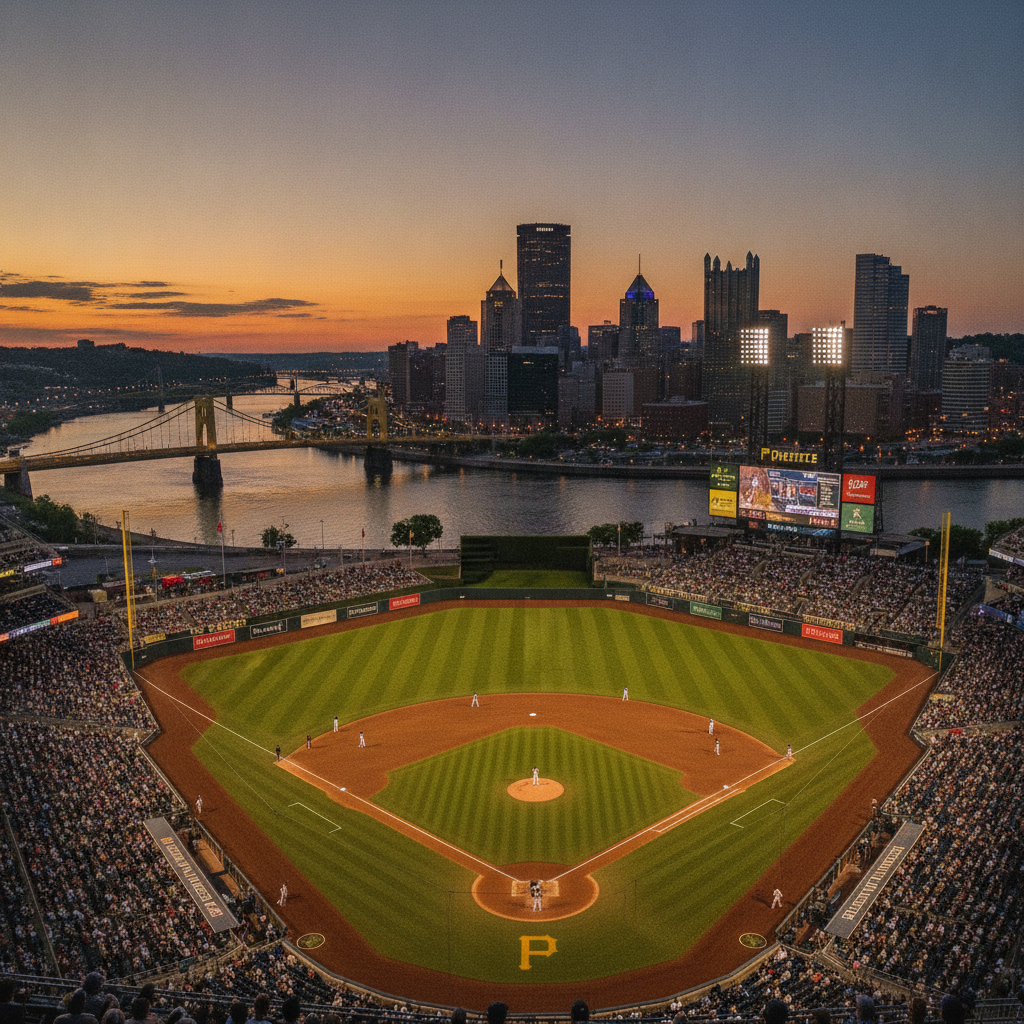
Pittsburgh: Fallingwater in the Forest, Glass Hothouses and the City That Reinvented Itself
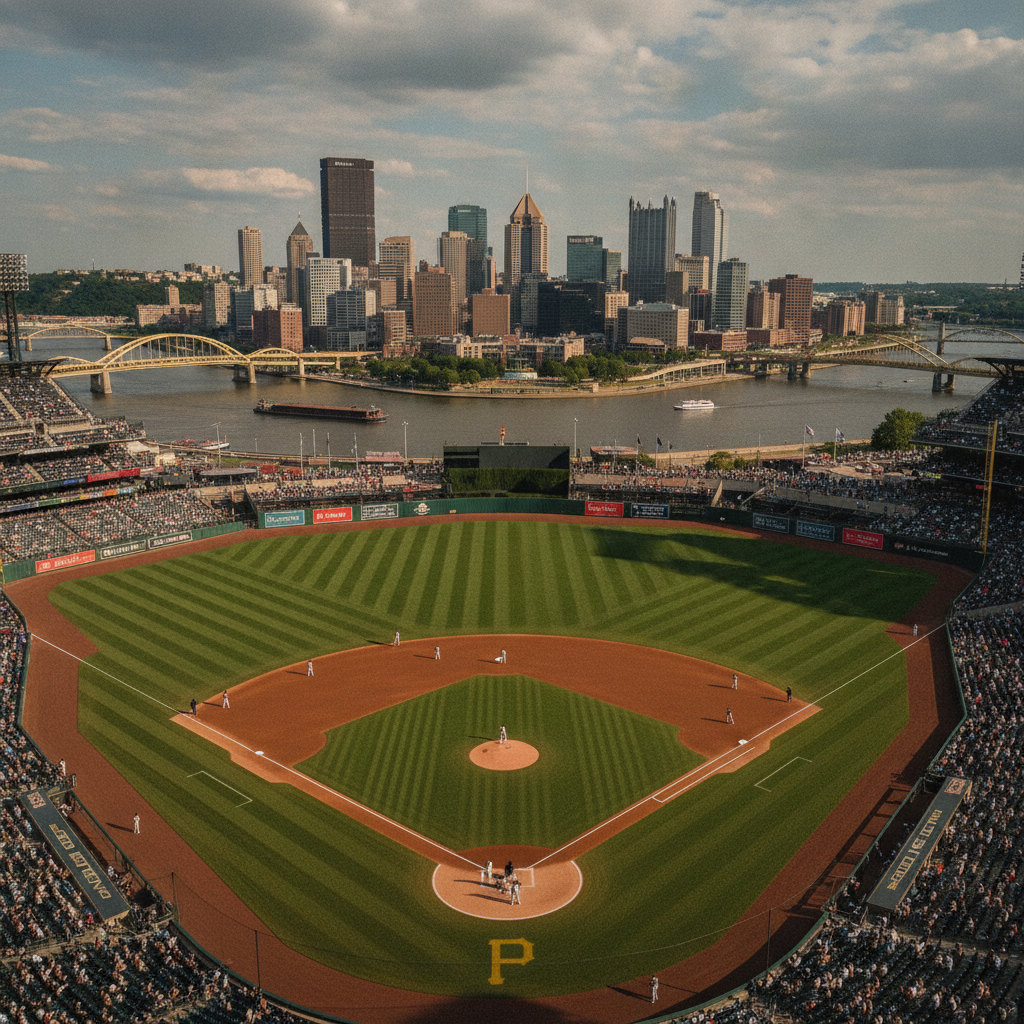
Pittsburgh: Six Super Bowls, Diplodocus Given to Kings and Fries Inside the Sandwich
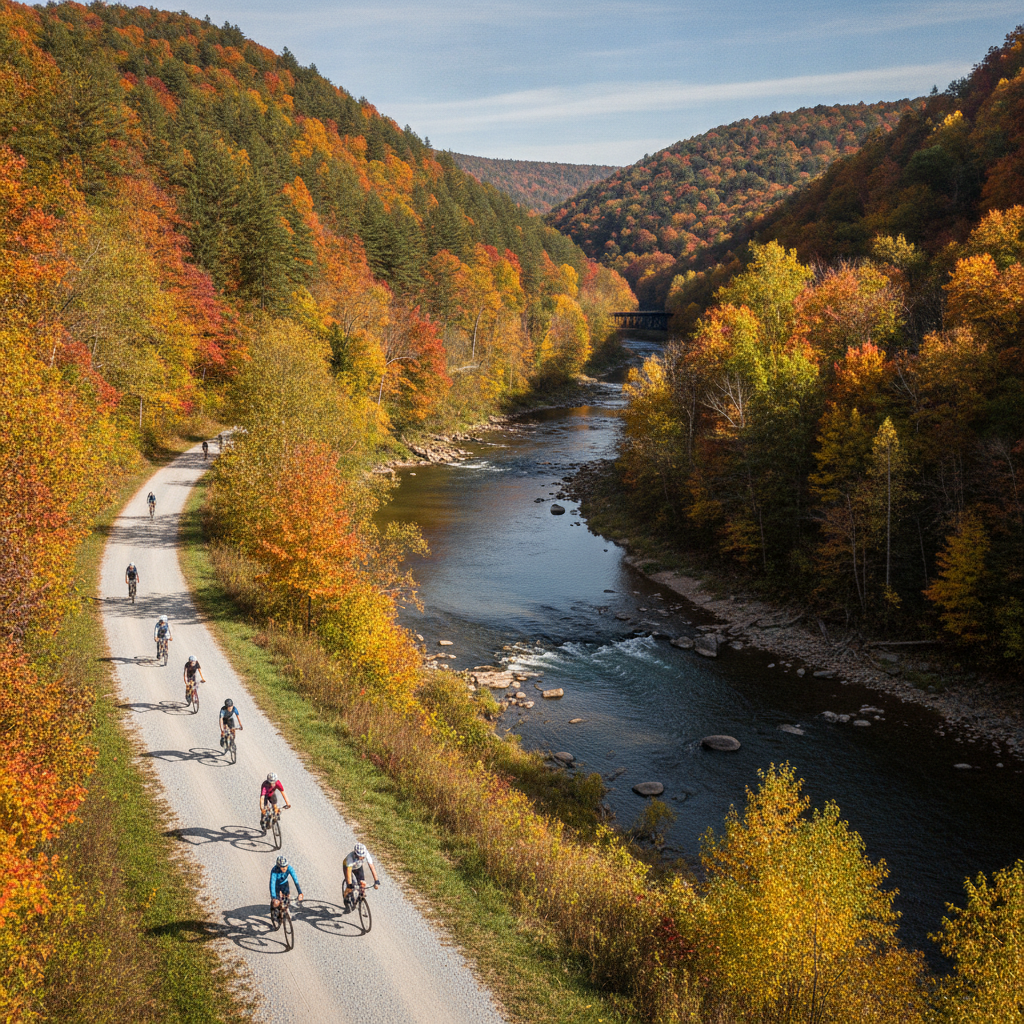
Pittsburgh: 446 Bridges, August Wilson Pulitzers and 335 Miles Car-Free to Washington DC