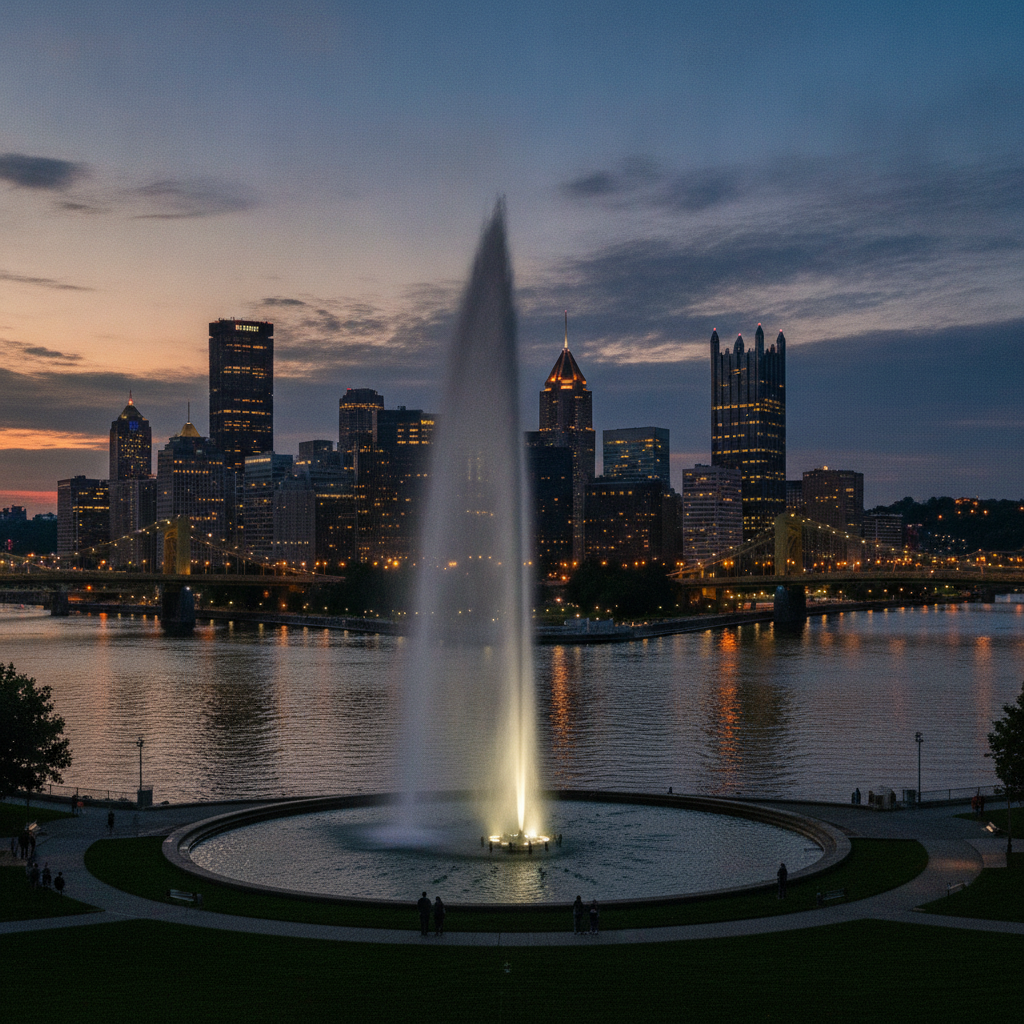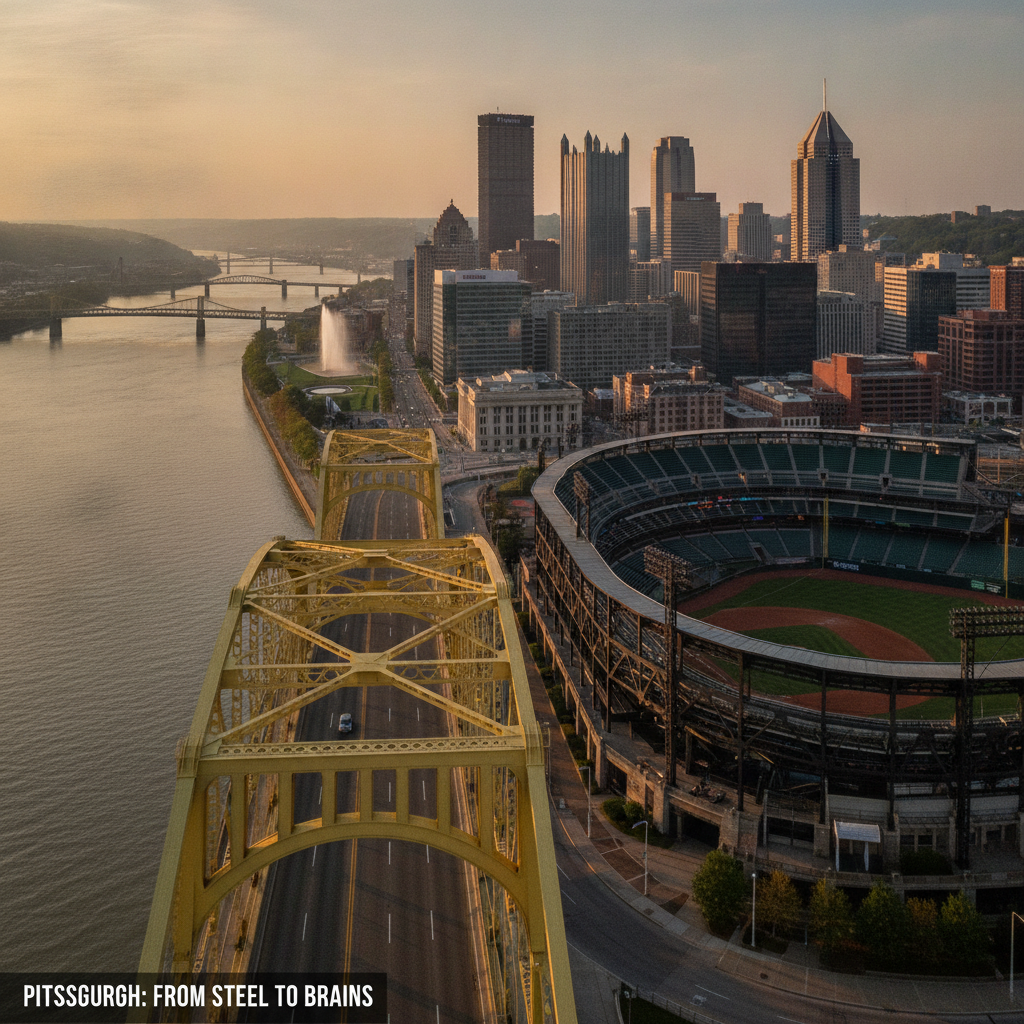
Pittsburgh R2: Neighborhoods (Squirrel Hill Tree of Life shooting October 2018 deadliest US antisemitic attack, Lawrenceville craft beer arts gentrification, Mexican War Streets Victorian), Rust Belt recovery (UPMC 92,000 employees USD 26B largest PA employer, CMU UM 55,000 students USD 3B, robotics Uber ATG Argo AI Aurora), Three Rivers outdoor (Heritage Trail 45km, Three Rivers Regatta largest free inland, Ohiopyle Class III-IV rapids Yough), Pittsburgh history (Fort Duquesne 1754 French Indian War George Washington first mission, Forbes captures 1758 Fort Pitt, Frick Westinghouse Mellon Gilded Age, Richardson Courthouse 1888 greatest 19th century American architecture), Warhol and arts (7-story museum Silver Clouds Time Capsule 600 boxes, Benedum Center Stanley Theater 1987, Pittsburgh Glass Center largest public US, Pittsburgh Symphony Orchestra), Practical (T light rail free downtown, PIT airport 1992 most advanced, 160-165 sunny days cloudiest major US city, Three Rivers Arts Festival 300,000 June)
Pittsburgh extended: neighborhoods (Squirrel Hill Tree of Life October 27 2018 11 killed deadliest US antisemitic attack, Stronger than Hate symbol, Lawrenceville Butler Street craft beer arts, Mexican War Streets 1860s Victorian), Rust Belt recovery (UPMC USD 26B 92,000 employees largest PA employer, CMU Pitt USD 3B regional economy, robotics National Robotics Engineering Center Uber ATG Argo AI Aurora), three rivers (Allegheny-Monongahela-Ohio confluence, Three Rivers Heritage Trail 45km, Three Rivers Regatta August largest free inland US, Ohiopyle whitewater Class III-IV Yough 100km), Pittsburgh history (Fort Duquesne 1754 triggered French Indian War, George Washington first military mission 23 years old, Forbes 1758 Fort Pitt, Richardson Courthouse 1888 greatest US 19th century architecture), Warhol arts (7 stories 900 works Silver Clouds Time Capsule 600 boxes, buried Bethel Park, Benedum Center Heinz Hall Pittsburgh Symphony, Pittsburgh Glass Center largest public US), practical (T light rail free downtown, PIT airport, 160 sunny days cloudiest major city, fall October best season, Three Rivers Arts Festival 300,000).
- 1
Pittsburgh Neighborhoods - Squirrel Hill to Lawrenceville
Pittsburgh neighborhood character: Pittsburgh is famous for its extraordinarily strong neighborhood identity — there are 90 officially recognized Pittsburgh neighborhoods, each with its own distinct culture, architecture, and ethnic heritage, created by the topography of the hills and valleys that naturally divided immigrant communities. Squirrel Hill (the neighborhood approximately 5 km east of downtown, centered on Murray and Forbes Avenues): the most important Jewish neighborhood in Pittsburgh and the primary Jewish commercial and cultural district in the city, home to Carnegie Mellon University and the University of Pittsburgh campus areas. The Tree of Life synagogue shooting (October 27, 2018): the terrorist attack at the Tree of Life synagogue (at 5898 Wilkins Avenue, Squirrel Hill) in which a gunman killed 11 Jewish worshippers during Shabbat morning services — the deadliest antisemitic attack in United States history. The Squirrel Hill community response was widely praised for its resilience and solidarity, and the phrase Stronger than Hate (with a Star of David and the Pittsburgh Steelers logo) became a national symbol of resistance to antisemitism. Lawrenceville (the neighborhood along Butler Street, approximately 3 km northeast of downtown): the most rapidly gentrified Pittsburgh neighborhood, transforming from a working-class Polish and Eastern European neighborhood into the center of Pittsburgh's craft beer, restaurant, and arts scene. Butler Street is now lined with independent restaurants, craft breweries (Arsenal Cider House, Allegheny City Brewing), vintage clothing stores, and art galleries. The Mexican War Streets (the neighborhood of Allegheny West, with street names commemorating the Mexican-American War of 1846-1848): one of the most architecturally intact Victorian neighborhoods in Pittsburgh, with Italianate and Second Empire rowhouses from the 1860s-1880s.
- 2
Pittsburgh and the Rust Belt Recovery
Pittsburgh as a model of post-industrial recovery: Pittsburgh's transformation from a steel city to a diversified economy centered on education, healthcare, and technology is widely studied as the most successful example of Rust Belt urban recovery in the United States. The Pittsburgh renaissance: the term Pittsburgh Renaissance refers to the city's first major urban renewal effort (1945-1969), led by Mayor David L. Lawrence and Pittsburgh industrialist Richard King Mellon (the head of the Mellon Bank fortune and the most powerful single individual in Pittsburgh's post-war civic life). The Renaissance cleared the smoke and smog that had historically darkened Pittsburgh's skies (Pittsburgh was literally so polluted in the 1940s that streetlights burned at noon), built the Gateway Center office complex at the Point, and created the Point State Park. The Pittsburgh medical and university economy: today, the University of Pittsburgh Medical Center (UPMC, with approximately 92,000 employees and USD 26 billion in annual revenue) is the largest employer in Pennsylvania and one of the largest nonprofit healthcare systems in the world. Carnegie Mellon University and the University of Pittsburgh together enroll approximately 55,000 students and contribute approximately USD 3 billion per year to the Pittsburgh regional economy. Pittsburgh technology: Pittsburgh is home to one of the most concentrated robotics and autonomous vehicle research ecosystems in the world, centered on Carnegie Mellon's National Robotics Engineering Center (NREC) and the related spinoffs: Uber ATG (Advanced Technologies Group, which conducted extensive AV testing on Pittsburgh streets from 2016 to 2020), Argo AI (acquired by Ford and VW), and Aurora Innovation.
- 3
Pittsburgh Rivers and Outdoor Recreation
The Three Rivers: the Allegheny River (the river flowing from the northeast, rising in northern Pennsylvania and southern New York, 523 km long), the Monongahela River (flowing from the southwest, rising in West Virginia, 206 km long), and the Ohio River (formed at the Point in Pittsburgh, flowing west to the Mississippi River at Cairo, Illinois, 1,579 km long): the most strategically important river confluence in American history, controlling the gateway between the eastern seaboard and the interior of the continent. The Three Rivers Heritage Trail (the multi-use trail following both banks of the Allegheny and Monongahela Rivers in Pittsburgh): the most comprehensive urban trail system in western Pennsylvania, with 45 km of continuous trails connecting the North Shore (PNC Park and Acrisure Stadium), downtown, the South Side, the Strip District, and the Oakland cultural district. Three Rivers Regatta (held each August since 1978 on the Allegheny River): the largest free inland regatta in the United States, with powerboat racing, water skiing, and live music. Kayaking and water sports: the confluence of the three rivers is accessible for kayaking and stand-up paddleboarding from the Venture Outdoors boathouse at the North Shore, with guided kayak tours under Pittsburgh's 446 bridges being one of the most distinctive outdoor experiences in any American city. Ohiopyle State Park (the state park in the Laurel Highlands, 100 km southeast of Pittsburgh): the whitewater rafting capital of the East Coast, with Class III and IV rapids on the Youghiogheny River (the Yough), 230 km of trails, and the natural waterslides at Ohiopyle Falls.
- 4
Pittsburgh History - From Fort Pitt to the Gilded Age
Pittsburgh colonial and early American history: Pittsburgh's strategic location at the confluence of three rivers made it the most contested geographic position in colonial North America. Fort Duquesne (the French fort built at the Point in 1754): the French military presence that sparked the French and Indian War (1754-1763), when George Washington's first military mission (as a young Virginia militia officer in 1753-1754) was to demand that the French withdraw from the region. The British siege and capture of Fort Duquesne (1758): General John Forbes led a British and colonial army that captured the French fort (which the French burned before retreating) and renamed the Point Fort Pitt, establishing the British dominance over the Ohio Valley that set the stage for American westward expansion after the Revolutionary War. The Pittsburgh industrial Gilded Age titans: in addition to Andrew Carnegie, Pittsburgh was home to Henry Clay Frick (the coke magnate and Carnegie business partner who built the Frick Collection in New York after moving east), George Westinghouse (the inventor of the railroad air brake and alternating current electrical system, born Schenectady NY but who built his empire in Pittsburgh), and the Mellon banking family (Thomas Mellon, Andrew Mellon — Secretary of the Treasury 1921-1932 — and Richard King Mellon). The Allegheny County Courthouse and Jail (at 436 Grant Street, Downtown Pittsburgh): designed by Henry Hobson Richardson in 1884-1888 (completed after his death), considered one of the two or three greatest works of American architecture of the 19th century, the masterpiece of the Romanesque Revival style that influenced virtually every public building built in America in the following decade.
- 5
Pittsburgh Art Scene - Warhol to Contemporary
Pittsburgh as an art city: Pittsburgh has one of the most vibrant and nationally recognized visual arts scenes of any mid-size American city, anchored by the Andy Warhol Museum and the network of Carnegie institutions. The Andy Warhol Museum content: the seven-story museum on the North Shore contains the most comprehensive collection of Warhol's work in existence, including the Silver Clouds installation (the mylar helium balloons that float freely through a gallery), the Time Capsule archive (Warhol created over 600 cardboard boxes filled with objects from his daily life that were sealed and numbered, a conceptual art project that has been extensively researched and partially opened since his death), and the collection of Warhol's films and video works. Warhol's Pittsburgh connection: despite leaving Pittsburgh at age 18 to attend Carnegie Tech (now CMU) and then moving to New York permanently, Warhol maintained complex feelings about his working-class Pittsburgh background and his Slovak immigrant parents. He is buried at Saint John the Baptist Byzantine Catholic Cemetery in Bethel Park (10 km south of Pittsburgh). The Pittsburgh Cultural Trust (the nonprofit arts organization managing the Cultural District in downtown Pittsburgh): the 14-block arts district including the Benedum Center (the historic Stanley Theater, renovated 1987, the most beautiful performing arts venue in Pittsburgh), the Heinz Hall for the Performing Arts (the home of the Pittsburgh Symphony Orchestra, one of the top orchestras in the United States), and the Kelly Strayhorn Theater. The Pittsburgh Glass Center (at 5472 Penn Avenue, Garfield): the largest public glass art educational facility in the United States, with hot glass studio, kiln work, and flameworking.
- 6
Pittsburgh Practical Guide - When to Go and the Neighborhoods
Pittsburgh practical visitor guide: Pittsburgh is compact and surprisingly easy to navigate for visitors. Getting around: the Port Authority of Allegheny County (PAT) operates the T light rail (connecting downtown to the South Hills, free in the downtown subway section), buses throughout the city, and the two inclines (Duquesne and Monongahela, both fare-paying). Pittsburgh is walkable in the downtown Golden Triangle, the Strip District, and the Oakland cultural district, but most neighborhoods are best accessed by car or rideshare due to the steep topography. Pittsburgh International Airport (PIT, at 1000 Airport Blvd, Findlay Township, 25 km west of downtown): formerly a US Airways hub, now a primarily point-to-point airport rebuilt in 1992 as the most advanced airport in the United States at that time. Pittsburgh weather: Pittsburgh has one of the cloudiest climates of any major American city (averaging 160-165 sunny days per year, compared to 205 for Chicago and 234 for Denver), due to the convergence of cold air from Canada and warm moist air from the Gulf of Mexico producing persistent cloud cover and the occasional pollution inversion that historically trapped smog from the steel mills. The Pittsburgh fall season (September-October) is the most beautiful time to visit, with the Laurel Highlands and surrounding forests at peak fall color. Pittsburgh events: the Three Rivers Arts Festival (the oldest and largest free arts festival in Pittsburgh, held each June in Gateway Center, with over 300,000 attendees), and the Pittsburgh Marathon (May, running through all three river bridges and the neighborhood hills).
Walk this route with audio
Stories play automatically as you reach each stop — no tapping needed.
More in pittsburgh
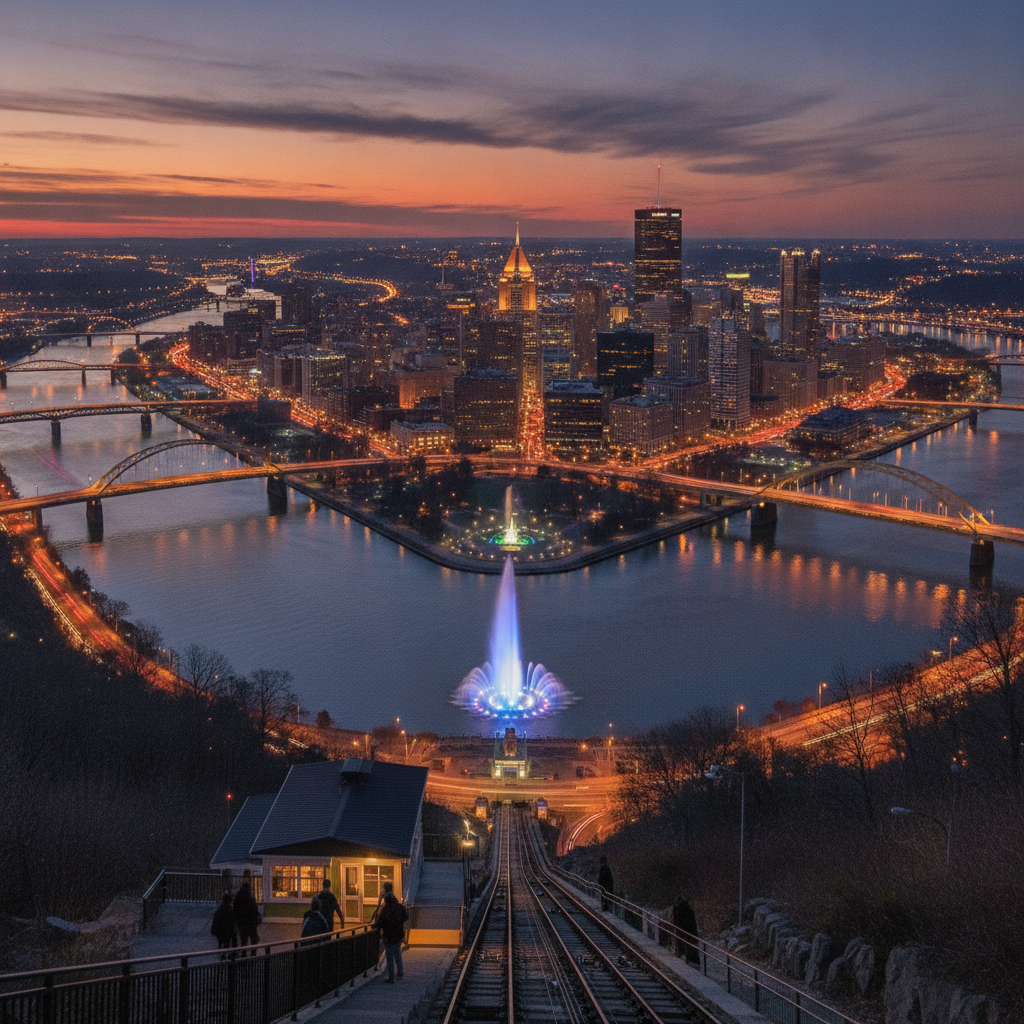
Pittsburgh: Steel legacy (446 bridges most in world, Carnegie Steel to US Steel 1901, 150,000 jobs lost 1979-1988, Homestead Strike 1892), Mount Washington inclines (Duquesne Incline 1877, Monongahela 1870 oldest continuous, Golden Triangle view three rivers confluence, Point State Park Fort Pitt 1758), Carnegie Museums (Natural History Diplodocus carnegii, Mary Cassatt Impressionist born Allegheny City, Andy Warhol Museum 900 works Campbell's Soup Marilyn Elvis), Pittsburgh sports (Steelers 6 Super Bowls Steel Curtain Immaculate Reception, Penguins 5 Stanley Cups Crosby, Pirates Mazeroski 1960 walk-off HR, PNC Park most beautiful stadium), Strip District and food (Primanti Brothers 1933 fries-in-sandwich, Pennsylvania Macaroni 1902, pierogi Pierogi Race Pirates), Practical (CMU computer science drama, Cathedral of Learning 42 stories tallest educational Western Hemisphere, autonomous vehicles Uber Waymo, Fallingwater 90km Fallingwater masterpiece)
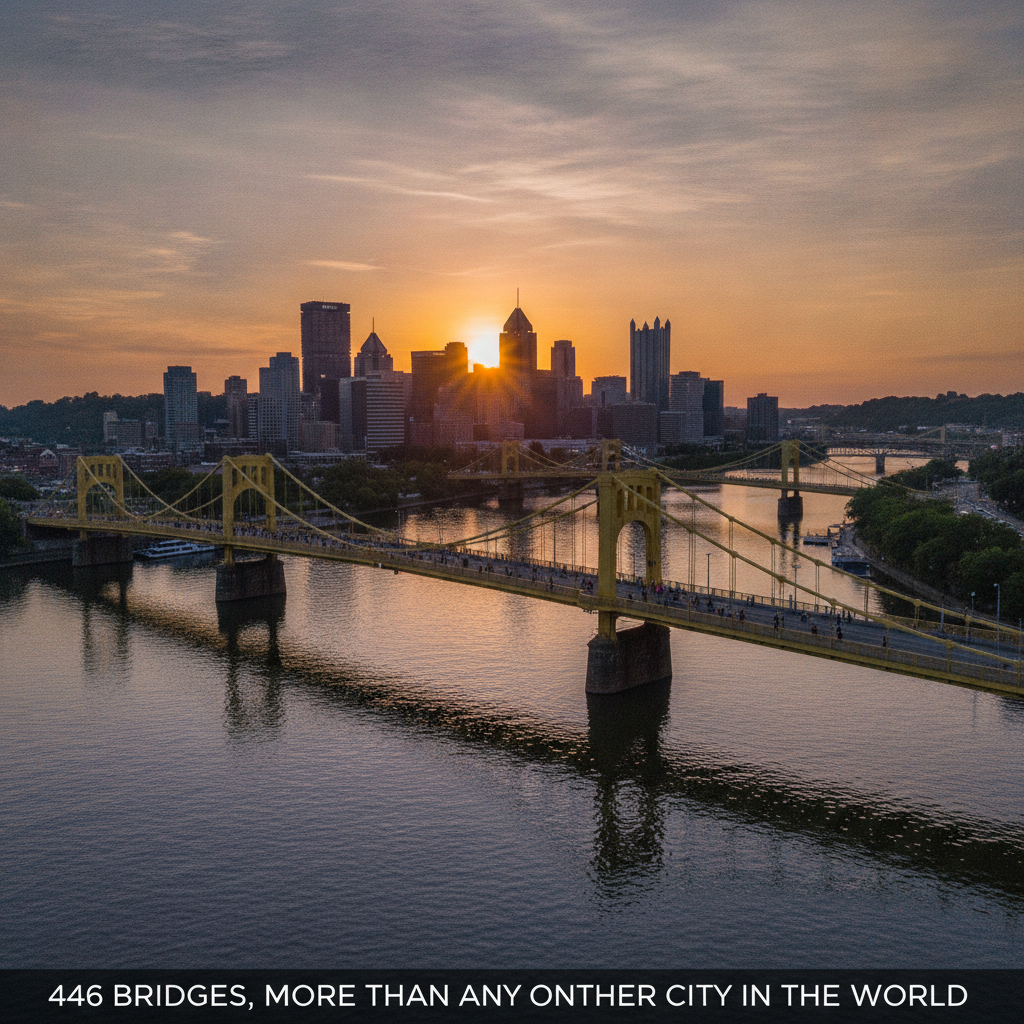
Pittsburgh R4: Oakland (Cathedral of Learning 42-story tallest educational Western Hemisphere, 30 Nationality Classrooms, Phipps Conservatory 1893 LEED Platinum, Schenley Park Mary Schenley 1889), Steelers dynasty (Chuck Noll 4 Super Bowls 1974 draft greatest in NFL history, Steel Curtain, Immaculate Reception 1972, Terrible Towel 1975, Yinzer Pittsburghese yinz jagoff), Penguins (Lemieux lymphoma 1993 hatrick 3 days after radiation, saved team from bankruptcy 1999, Crosby 3 Stanley Cups 2010 Olympic golden goal), Pittsburgh bridges 446 (Three Sisters self-anchored unique trio, Fort Pitt Tunnel arrival greatest urban moment, bridge engineering CMU Pitt), Roberto Clemente (18 seasons .317 BA 12 Gold Gloves 3,000 hits, died December 31 1972 Nicaragua earthquake relief, Hall of Fame 1973 no waiting period, MLB 21 retired league-wide 2023), Pittsburgh today (Google Duolingo 500M users von Ahn CMU, median home USD 200-250K affordable, carbon neutrality 2030 commitment)
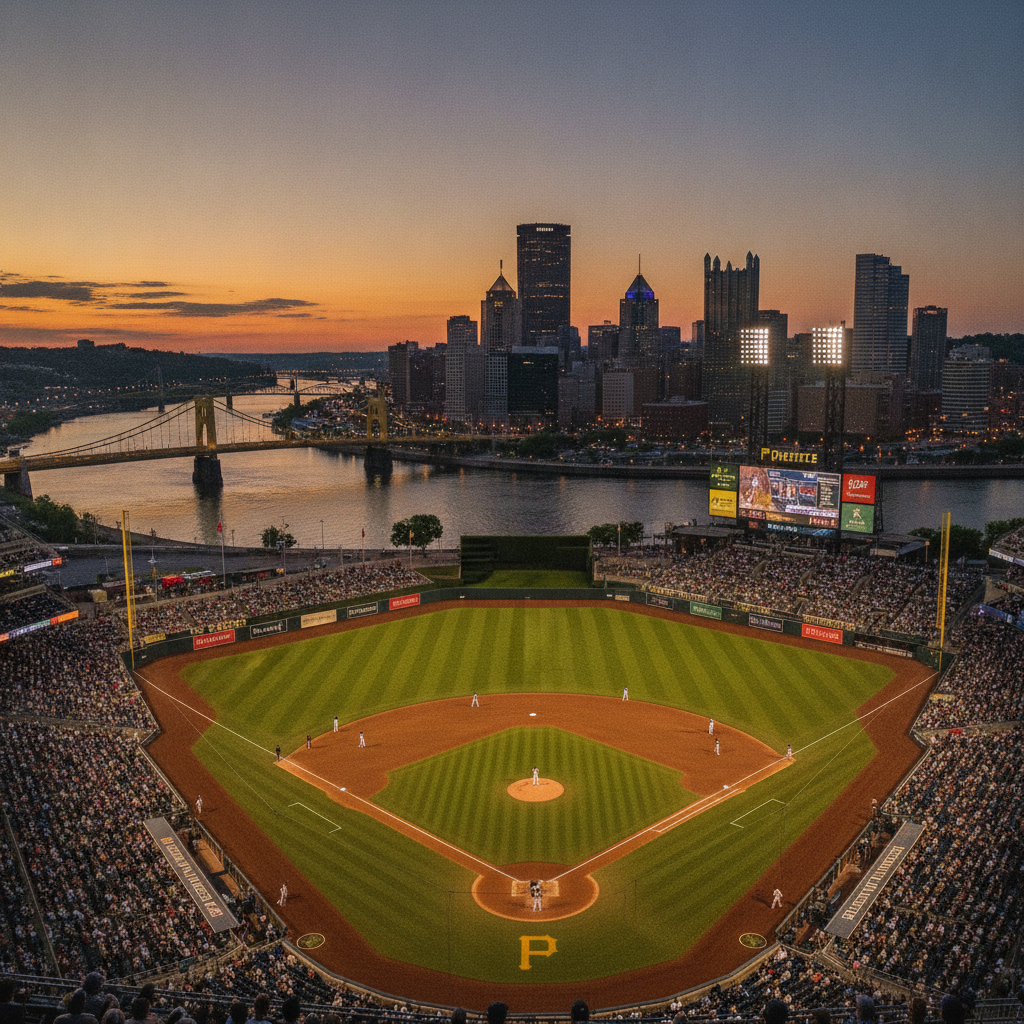
Pittsburgh: Fallingwater in the Forest, Glass Hothouses and the City That Reinvented Itself
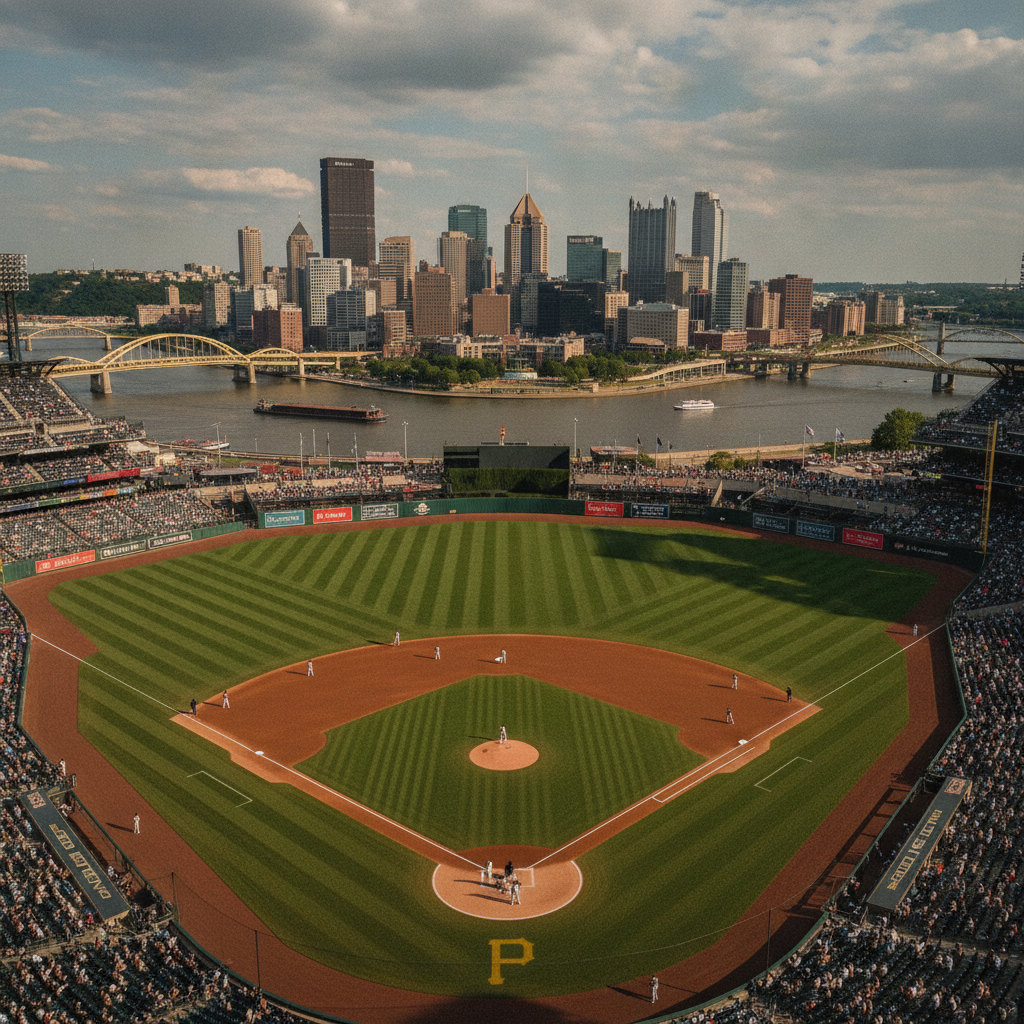
Pittsburgh: Six Super Bowls, Diplodocus Given to Kings and Fries Inside the Sandwich
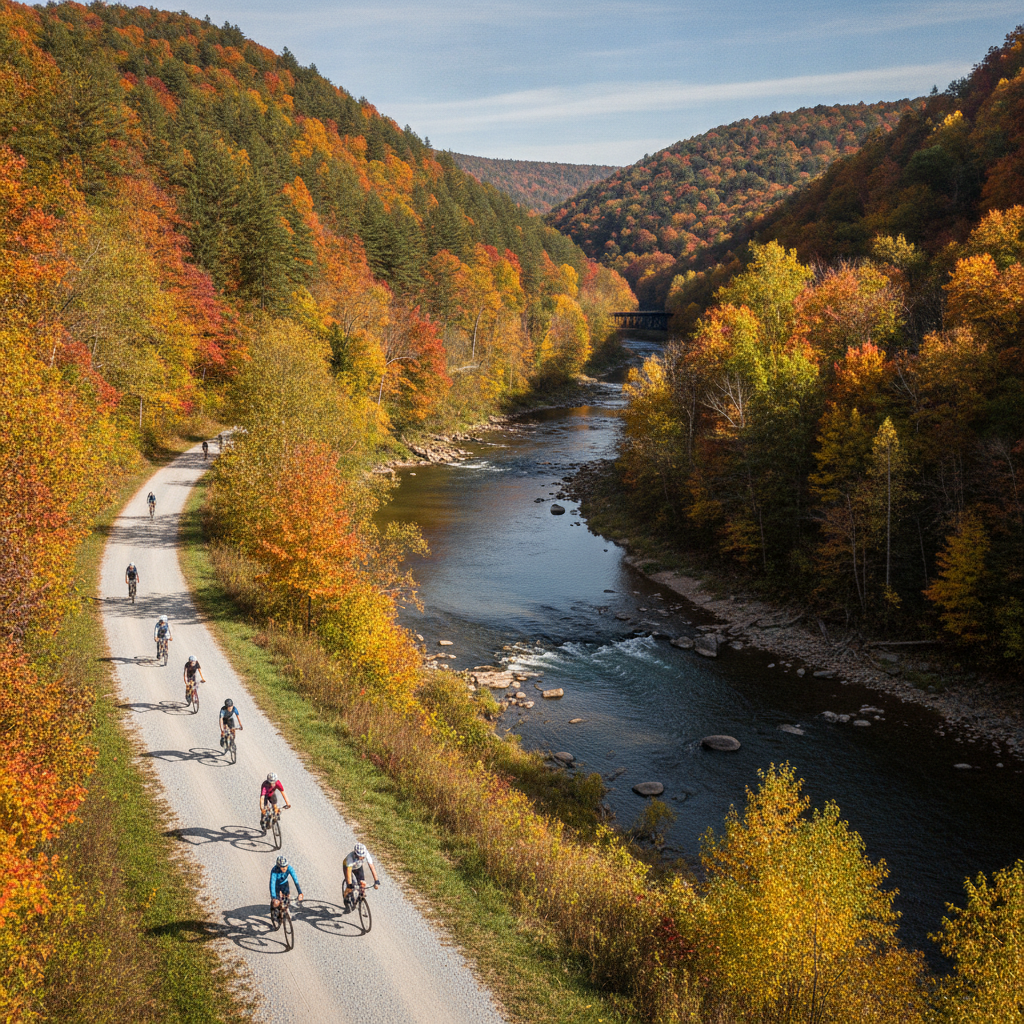
Pittsburgh: 446 Bridges, August Wilson Pulitzers and 335 Miles Car-Free to Washington DC