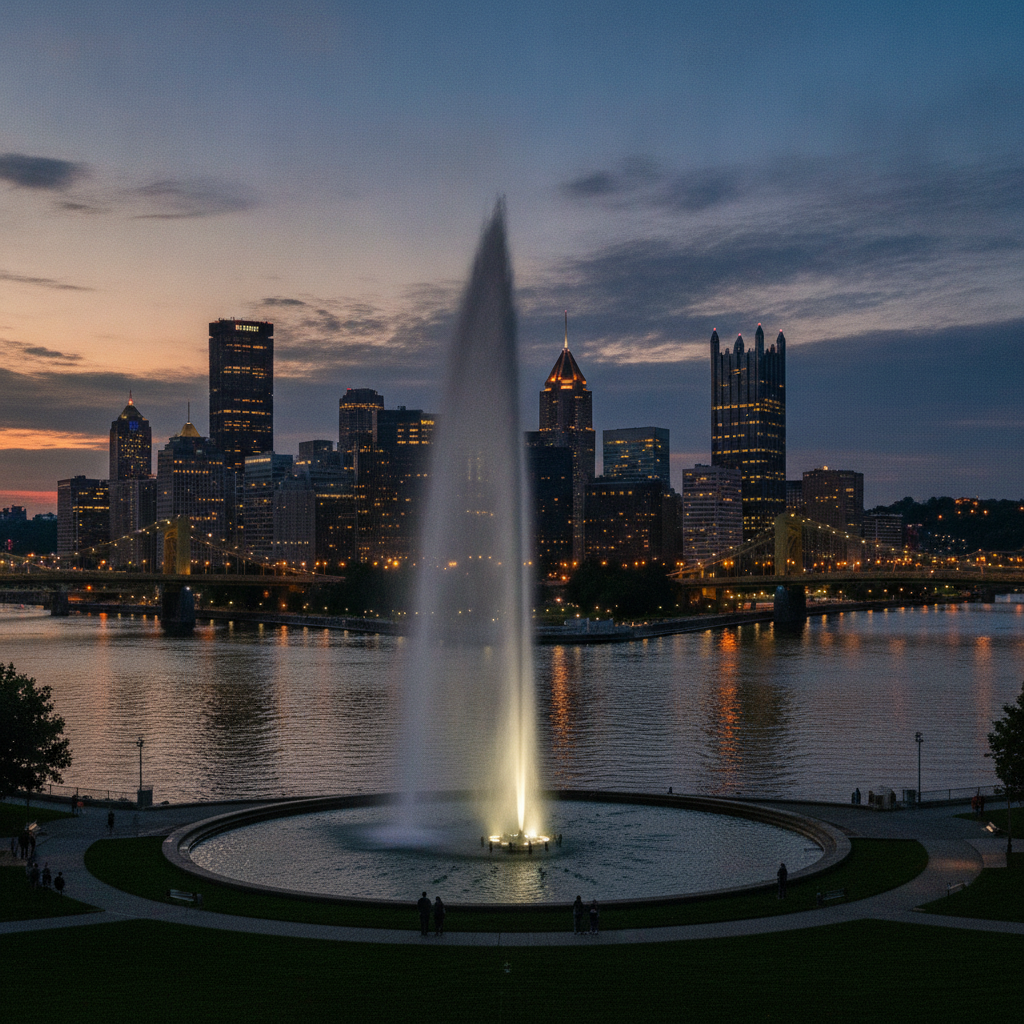
Pittsburgh: Six Super Bowls, Diplodocus Given to Kings and Fries Inside the Sandwich
Tour the Carnegie dinosaur halls where Carnegie gave replica skeletons to world leaders on request, then cross to the Andy Warhol Museum holding 900 paintings of the most documented American artist, walk 90 Pittsburgh neighborhoods from South Side Victorian bars to gentrified Lawrenceville, ride the Monongahela Incline to Mount Washington for the Golden Triangle view where three rivers meet, follow Carnegie Mellons robotics pipeline that made Pittsburgh the self-driving car capital, cycle 150 miles of Great Allegheny Passage rail trail from here to DC, and eat a Primanti Brothers sandwich with fries and coleslaw inside the bread as God and the 1933 truck drivers intended.
- 1
Carnegie Museums and Cultural District
The Carnegie Museums of Pittsburgh, founded by Andrew Carnegie and comprising the Carnegie Museum of Art, Carnegie Museum of Natural History, Carnegie Science Center, and Andy Warhol Museum, represent the largest museum complex in the United States outside of Washington DC funded by a single individual. The Carnegie Museum of Natural History houses one of the finest dinosaur fossil collections in the world, including Diplodocus carnegii, the first nearly complete Diplodocus skeleton ever found, replicas of which were distributed by Carnegie to museums in nine countries at the personal request of foreign heads of state. The Carnegie Museum of Art was the first museum in the country to collect contemporary art as a stated policy, holding the Carnegie International exhibition beginning in 1896. The Andy Warhol Museum across the river in the North Side holds the most comprehensive single-artist museum collection in the world, with 900 paintings and 2,000 other works documenting all phases of Warhols career.
- 2
Pittsburgh Neighborhoods and Identity
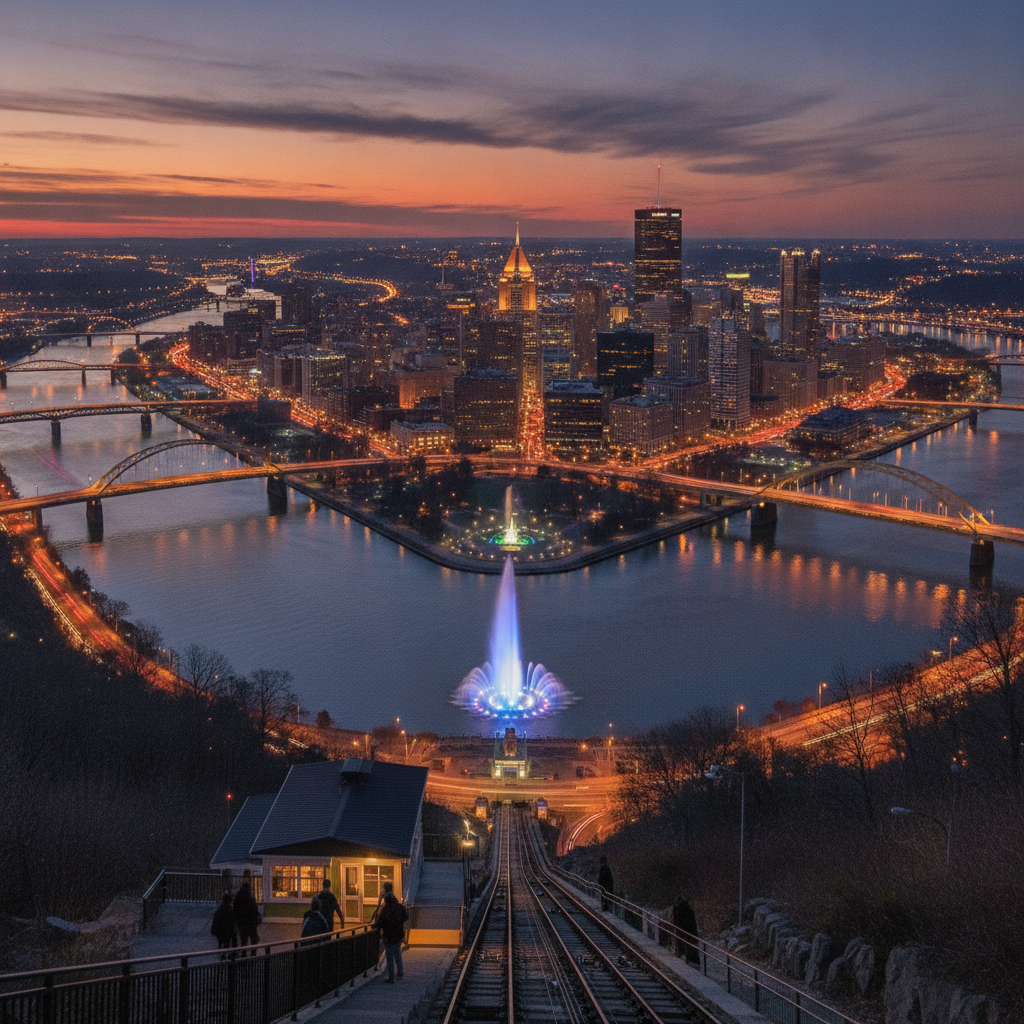
Pittsburgh is widely considered the most neighborhood-oriented large American city, with 90 distinct neighborhoods each having its own identity, character, and community organizations. The South Side along Carson Street retains a dense Victorian commercial strip of bars, restaurants, and shops. Lawrenceville has gentrified rapidly from an Irish working-class neighborhood into the primary arts and restaurant district. The Strip District along Penn Avenue is a wholesale produce and restaurant supply corridor that has been transformed into a weekend retail market and dining destination. Mount Washington above the south bank of the Monongahela commands the most famous view of downtown Pittsburgh, the Golden Triangle where the three rivers meet. The Monongahela and Duquesne Inclines connect downtown to Mount Washington, providing a functional funicular ride that is both transit and attraction. Pittsburgh has been consistently ranked among the most livable cities in the United States despite its industrial heritage.
- 3
Pittsburgh Tech Ecosystem and Universities
Pittsburgh is home to two of the most influential research universities in the United States: Carnegie Mellon University, ranked among the top computer science programs in the world, and the University of Pittsburgh, a major research university with a particularly strong medical school. Carnegie Mellon Robotics Institute, founded in 1979, is the world leading robotics research center, and the university has deep connections to the autonomous vehicle industry that has made Pittsburgh a hub for self-driving car development with Uber ATG, Aurora, and Waymo establishing significant Pittsburgh operations. The Pittsburgh technology sector, while much smaller than Silicon Valley or Seattle, has attracted investment because of CMU talent pipelines and relatively low costs. Pitt and CMU together employ over 30,000 people in Oakland and generate billions in research funding annually. The Oakland neighborhood connecting both campuses contains one of the most concentrated research ecosystems in America.
- 4
Three Rivers and Outdoor Recreation
Pittsburgh sits at the confluence of the Allegheny, Monongahela, and Ohio Rivers, a geography that shaped its history as a strategic military and commercial location and now provides an extensive outdoor recreation network. The Three Rivers Heritage Trail runs 24 miles along both banks of all three rivers. The Great Allegheny Passage, a 150-mile rail trail from Pittsburgh to Cumberland, Maryland, connects to the C&O Canal Towpath, extending a car-free route 335 miles from Pittsburgh to Washington DC, one of the most popular long-distance cycling trails in the eastern United States. Kayaking on the Allegheny through the Highland Park area and on the Youghiogheny River south of Pittsburgh provides whitewater options. North Park, South Park, and Frick Park are major urban parks. The Waterfront development in Homestead occupies the former site of the Carnegie Steel Homestead Works where the 1892 Homestead Strike, one of the bloodiest labor conflicts in American history, occurred.
- 5
Pittsburgh Steelers and Sports Culture
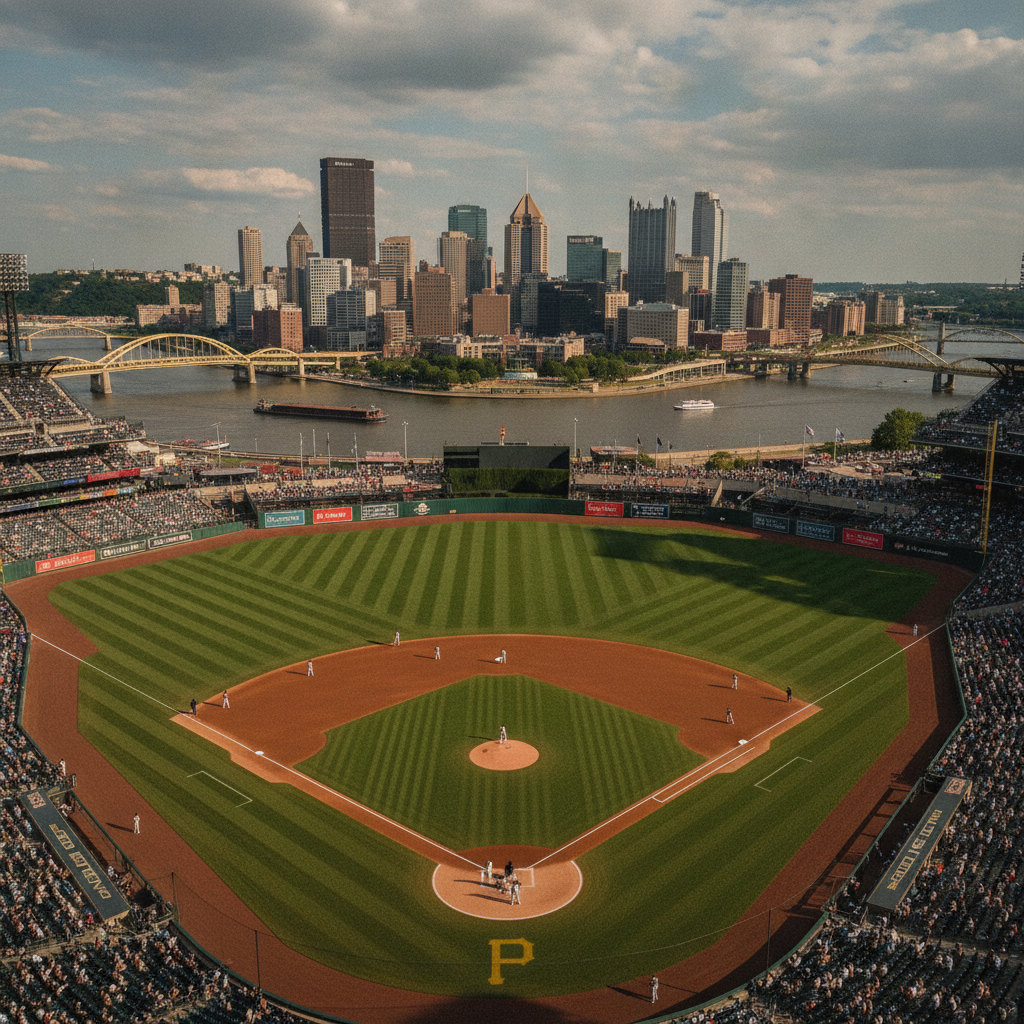
The Pittsburgh Steelers, founded in 1933 and playing at Acrisure Stadium on the North Shore since 2001, have won six Super Bowl championships in 1974, 1975, 1978, 1979, 2005, and 2008, more than any other team in NFL history. The dynasty of the 1970s with Terry Bradshaw, Franco Harris, Lynn Swann, and the Steel Curtain defense is considered the greatest sustained excellence in professional football history. Pittsburgh is one of the most sports-passionate cities in the United States, with the Steelers, Pirates, and Penguins commanding intense loyalty from a fan base that follows teams through decades of rebuilding cycles. The Pittsburgh Penguins, winners of five Stanley Cup championships, were led by Mario Lemieux and Sidney Crosby in two distinct championship eras. PNC Park, home of the Pittsburgh Pirates opened in 2001, is consistently rated the most beautiful ballpark in baseball for its views of downtown Pittsburgh and the Roberto Clemente Bridge across the Allegheny.
- 6
Strip District and Pennsylvania Produce
The Strip District, a linear neighborhood along Penn Avenue between downtown and Lawrenceville, was for decades the wholesale produce, meat, and restaurant supply district feeding Pittsburgh restaurants and institutions. On weekend mornings it transforms into the most animated public market experience in the city, with vendors spilling onto sidewalks selling fresh produce, pierogies, pastries, Middle Eastern groceries, and Pittsburgh-specific items like Primanti Brothers sandwiches with fries and coleslaw inside the bread. Primanti Brothers, founded in 1933 to feed truck drivers who could not stop to eat multiple courses, now has over 40 locations but the original Strip District location at 18th and Smallman remains the most authentic. Pennsylvania pierogies, brought by Eastern European immigrants and now a Pittsburgh sports mascot symbol through the Great Pierogi Race at PNC Park, are embedded in local food identity at a level few other cities approach with any single dish.
Walk this route with audio
Stories play automatically as you reach each stop — no tapping needed.
More in Pittsburgh
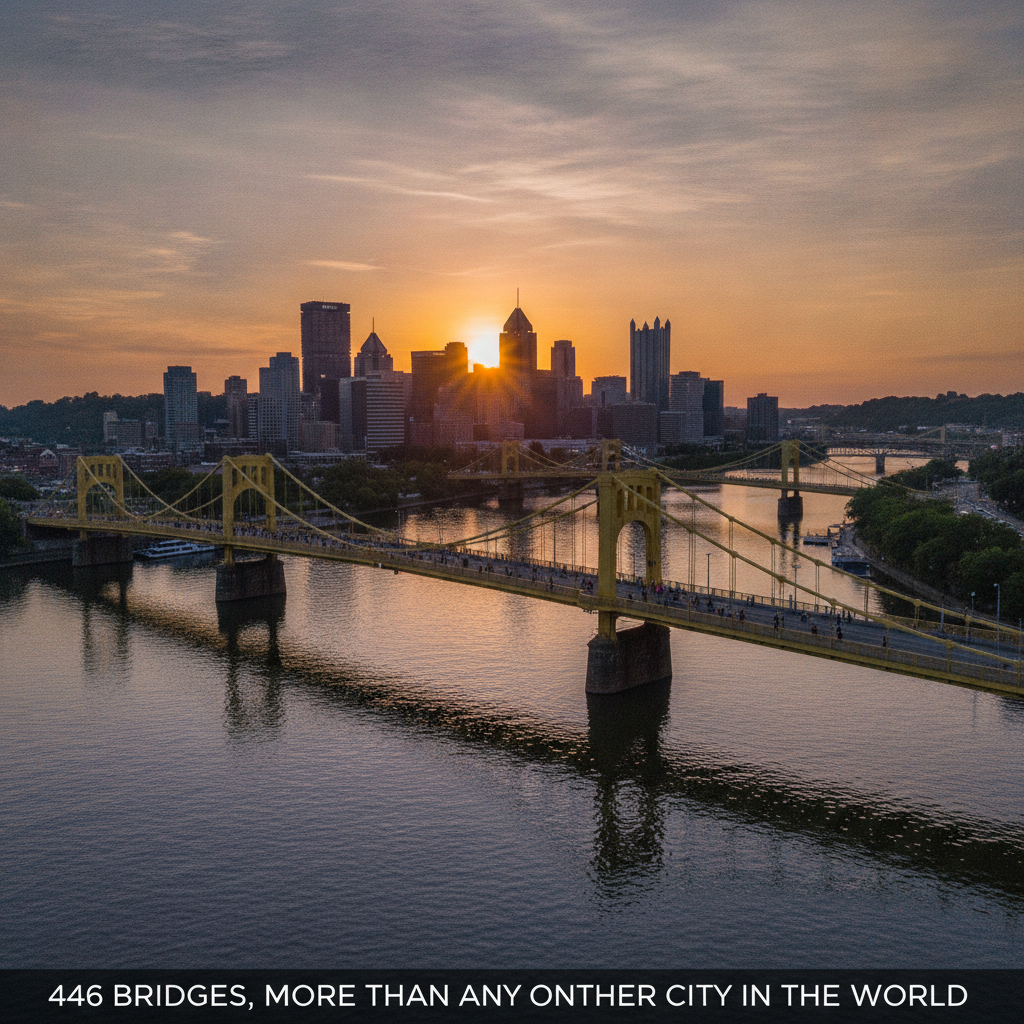
Pittsburgh: Steel legacy (446 bridges most in world, Carnegie Steel to US Steel 1901, 150,000 jobs lost 1979-1988, Homestead Strike 1892), Mount Washington inclines (Duquesne Incline 1877, Monongahela 1870 oldest continuous, Golden Triangle view three rivers confluence, Point State Park Fort Pitt 1758), Carnegie Museums (Natural History Diplodocus carnegii, Mary Cassatt Impressionist born Allegheny City, Andy Warhol Museum 900 works Campbell's Soup Marilyn Elvis), Pittsburgh sports (Steelers 6 Super Bowls Steel Curtain Immaculate Reception, Penguins 5 Stanley Cups Crosby, Pirates Mazeroski 1960 walk-off HR, PNC Park most beautiful stadium), Strip District and food (Primanti Brothers 1933 fries-in-sandwich, Pennsylvania Macaroni 1902, pierogi Pierogi Race Pirates), Practical (CMU computer science drama, Cathedral of Learning 42 stories tallest educational Western Hemisphere, autonomous vehicles Uber Waymo, Fallingwater 90km Fallingwater masterpiece)
Pittsburgh R4: Oakland (Cathedral of Learning 42-story tallest educational Western Hemisphere, 30 Nationality Classrooms, Phipps Conservatory 1893 LEED Platinum, Schenley Park Mary Schenley 1889), Steelers dynasty (Chuck Noll 4 Super Bowls 1974 draft greatest in NFL history, Steel Curtain, Immaculate Reception 1972, Terrible Towel 1975, Yinzer Pittsburghese yinz jagoff), Penguins (Lemieux lymphoma 1993 hatrick 3 days after radiation, saved team from bankruptcy 1999, Crosby 3 Stanley Cups 2010 Olympic golden goal), Pittsburgh bridges 446 (Three Sisters self-anchored unique trio, Fort Pitt Tunnel arrival greatest urban moment, bridge engineering CMU Pitt), Roberto Clemente (18 seasons .317 BA 12 Gold Gloves 3,000 hits, died December 31 1972 Nicaragua earthquake relief, Hall of Fame 1973 no waiting period, MLB 21 retired league-wide 2023), Pittsburgh today (Google Duolingo 500M users von Ahn CMU, median home USD 200-250K affordable, carbon neutrality 2030 commitment)
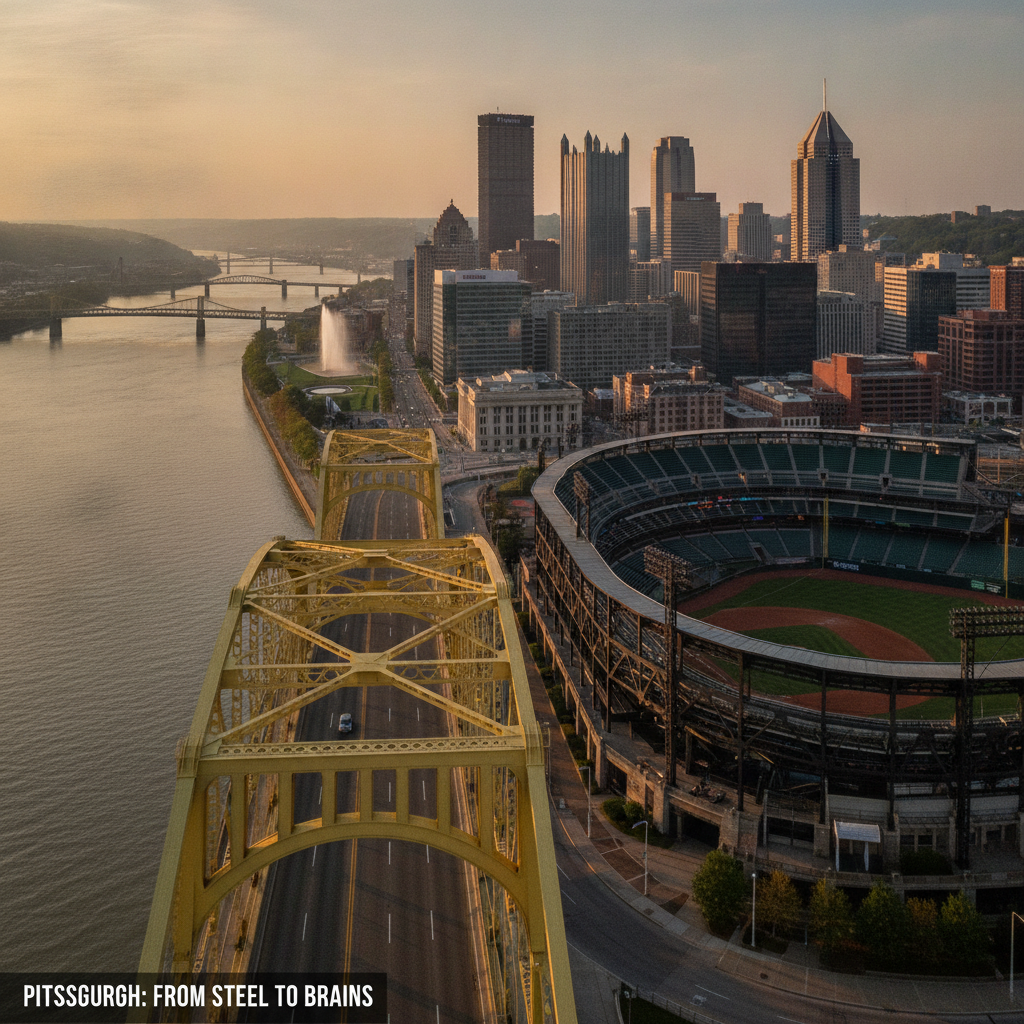
Pittsburgh R2: Neighborhoods (Squirrel Hill Tree of Life shooting October 2018 deadliest US antisemitic attack, Lawrenceville craft beer arts gentrification, Mexican War Streets Victorian), Rust Belt recovery (UPMC 92,000 employees USD 26B largest PA employer, CMU UM 55,000 students USD 3B, robotics Uber ATG Argo AI Aurora), Three Rivers outdoor (Heritage Trail 45km, Three Rivers Regatta largest free inland, Ohiopyle Class III-IV rapids Yough), Pittsburgh history (Fort Duquesne 1754 French Indian War George Washington first mission, Forbes captures 1758 Fort Pitt, Frick Westinghouse Mellon Gilded Age, Richardson Courthouse 1888 greatest 19th century American architecture), Warhol and arts (7-story museum Silver Clouds Time Capsule 600 boxes, Benedum Center Stanley Theater 1987, Pittsburgh Glass Center largest public US, Pittsburgh Symphony Orchestra), Practical (T light rail free downtown, PIT airport 1992 most advanced, 160-165 sunny days cloudiest major US city, Three Rivers Arts Festival 300,000 June)
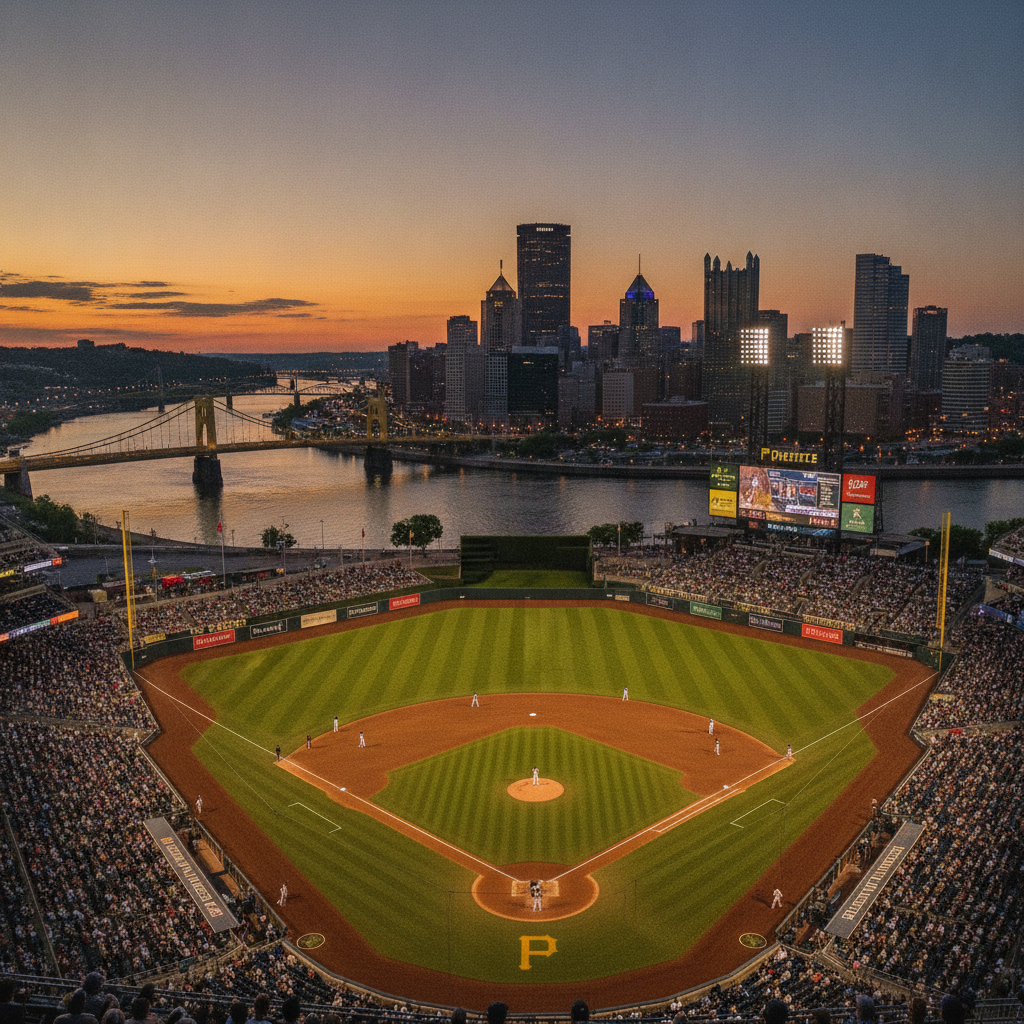
Pittsburgh: Fallingwater in the Forest, Glass Hothouses and the City That Reinvented Itself
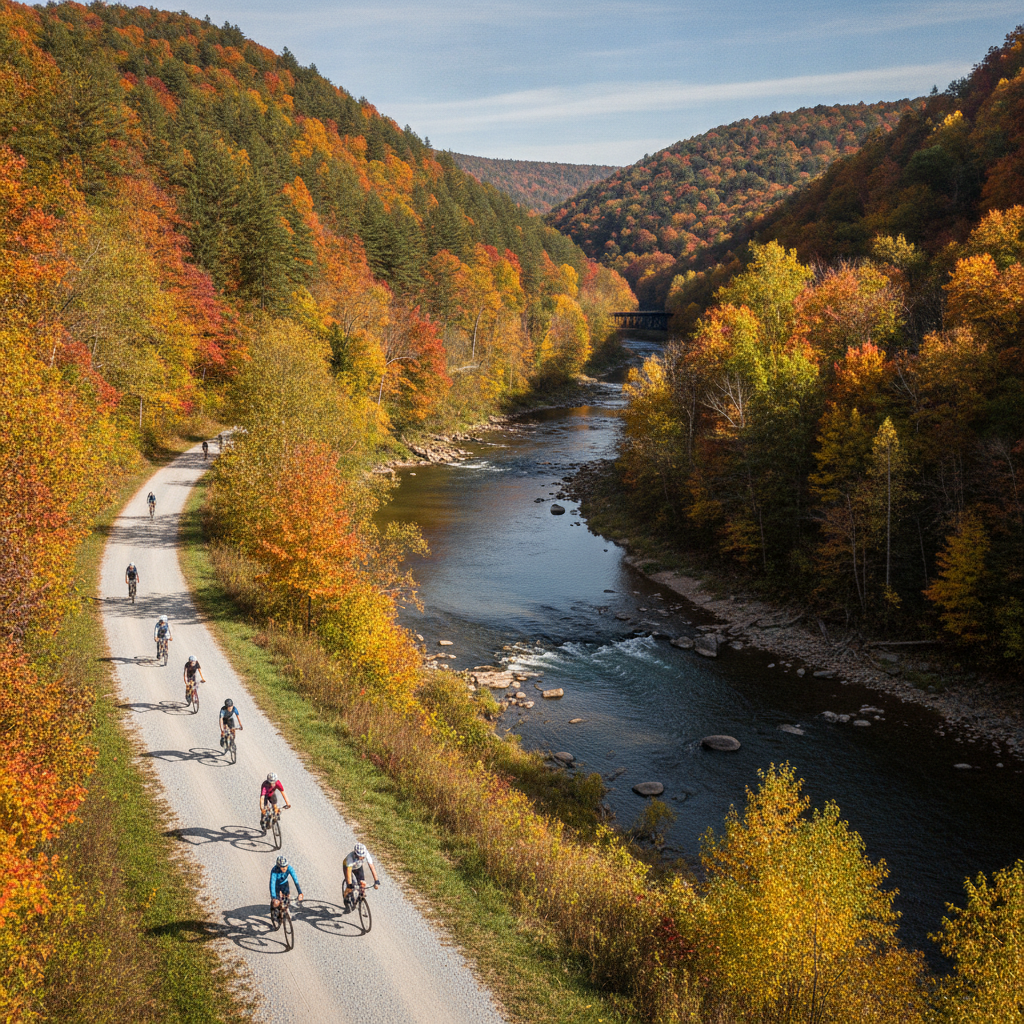
Pittsburgh: 446 Bridges, August Wilson Pulitzers and 335 Miles Car-Free to Washington DC