Phoenix: Taliesin West Frank Lloyd Wright (UNESCO World Heritage, organic architecture, Scottsdale), Hohokam Civilization (800km pre-Columbian canals, 300BCE-1450CE, Pueblo Grande Museum), Scottsdale Luxury Spa Resort (200+ golf courses, Boulders Resort, Four Seasons Troon North), Saguaro National Park (Arizona-Sonora Desert Museum, Sonoran Desert ecology), Salt River Tubing and Wild Horses, and Tucson Day Trip (UNESCO City of Gastronomy, Mission San Xavier, Titan Missile Museum)
Phoenix beyond the basics: Taliesin West (Frank Lloyd Wright winter home 1937, UNESCO 2019, organic desert architecture, guided tours required), Hohokam irrigation civilization (800km canals dug by hand, Pueblo Grande ruins, collapse 1300-1450CE), Scottsdale resort spa capital (200+ golf courses, Boulders Resort, Four Seasons Troon North, USD 2B golf economy), Saguaro National Park and Arizona-Sonora Desert Museum (230 animal species, Sonoran Desert two rainy seasons), Salt River Recreation Area (tubing, wild horse herd protected 2016), and Tucson day trip (UNESCO Gastronomy City, Mission San Xavier 1797, Titan Missile Museum ICBM site).
- 1
Taliesin West and Frank Lloyd Wright in Arizona
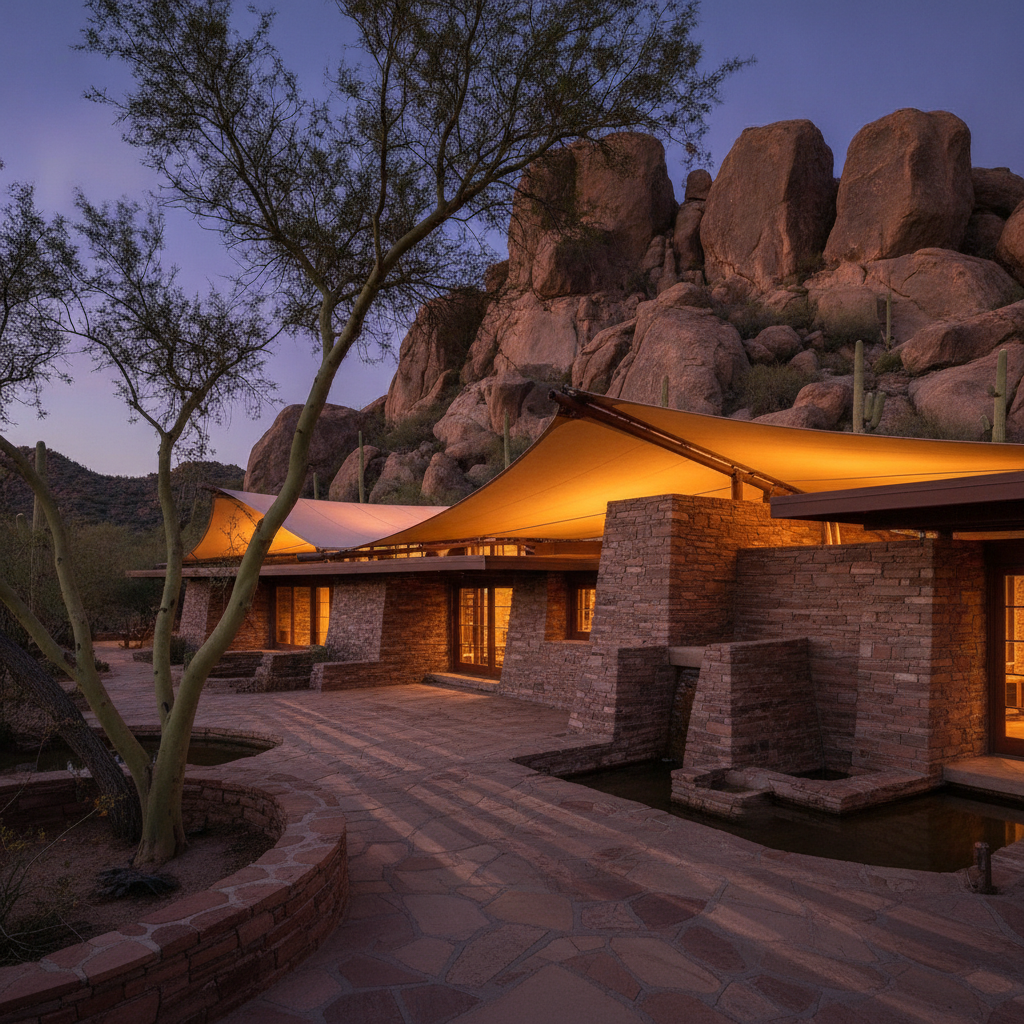
Taliesin West (at 12621 N. Frank Lloyd Wright Boulevard, Scottsdale, 20 km northeast of downtown Phoenix): the winter home, studio, and school of the architect Frank Lloyd Wright (1867-1959), designed and built beginning in 1937 on 600 acres of Sonoran Desert. Taliesin West is now a UNESCO World Heritage Site (designated 2019, as part of the 8-site Frank Lloyd Wright Architecture Works designation). Frank Lloyd Wright and organic architecture: Wright believed in organic architecture, the integration of a building with its natural setting, using local materials and responding to the local climate and landscape. Taliesin West embodies these principles: the building uses desert masonry (rough local stone set in concrete), canvas roof panels to diffuse the harsh Arizona sunlight, wide overhanging roofs for shade, and north-facing sleeping quarters to capture the cool night air. The Taliesin Fellowship (the school of architecture founded by Wright at Taliesin West): the apprentices who studied under Wright at Taliesin West included many who became leading American architects. The tour experience: guided tours (required for all visitors) take 1.5-3 hours and explore the drafting studio, the living quarters, the garden room, and the experimental structures on the property. Notable Frank Lloyd Wright buildings in Arizona: in addition to Taliesin West, Wright designed the Gammage Auditorium at Arizona State University in Tempe (completed 1964, the last major public building designed by Wright), the Grady Gammage Memorial Auditorium.
- 2
Hohokam Civilization and the Phoenix Ancient History
The Hohokam civilization (the prehistoric people who inhabited the Salt River Valley from approximately 300 BCE to 1450 CE): the most significant pre-Columbian civilization in what is now Arizona, and the people who first transformed the Salt River Valley into a productive agricultural landscape. The Hohokam irrigation system: the Hohokam constructed the most extensive pre-Columbian canal irrigation system in North America, with approximately 800 km of canals in the Phoenix area alone. The canals were dug by hand with stone and bone tools, were up to 10 m wide and 4 m deep, and used no metal tools. The modern irrigation canals and streets of Phoenix follow many of the same alignments as the ancient Hohokam canals. The Hohokam collapse (approximately 1300-1450 CE): the reasons for the abandonment of the Hohokam settlements in the Phoenix area are debated; possible causes include a severe drought (the 1,200-year drought record shows several megadroughts in the 14th century), social disruption, flooding from a series of major flood events, and soil salinization from centuries of irrigated agriculture. The Pueblo Grande Museum (at 4619 E. Washington Street, Phoenix): the archaeological site and museum at the ruins of a Hohokam platform mound and the surrounding village site; the excavated remains of the canal system are visible. The Heard Museum (see R1) collection of Hohokam pottery: the Hohokam produced distinctive red-on-buff pottery with intricate geometric designs and human and animal figures.
- 3
Scottsdale Resort and Spa Culture - Wellness in the Desert
Scottsdale as the American luxury resort and spa capital: Scottsdale has the highest concentration of luxury resort hotels and world-class spas of any city in the United States, driven by the combination of the near-perfect winter climate (December-February average highs of 18-22C, with 300+ days of sunshine per year), the dramatic desert landscape, and the decades of investment in luxury hospitality. The defining Scottsdale luxury resorts: the Boulders Resort and Spa (at Carefree, 50 km north of Scottsdale, at the base of the distinctive boulder formations of the Sonoran Desert): the most architecturally integrated resort in Arizona, with the adobe-style casitas built around and into the ancient granite boulders. The Four Seasons Resort Scottsdale at Troon North (at the base of Pinnacle Peak, 35 km north of Scottsdale): 210 casita-style accommodations with private terraces overlooking the McDowell Mountains. The Royal Palms Resort (at the base of Camelback Mountain, Phoenix): the historic estate converted to a luxury boutique hotel, with the most intimate setting of any Phoenix luxury resort. The Spa at JW Marriott Scottsdale Camelback Inn (on Lincoln Drive at the base of Camelback Mountain): one of the most celebrated resort spas in the United States. The wellness and golf tourism economy: the Phoenix-Scottsdale metro area has over 200 golf courses (more per capita than any US metro area other than Las Vegas), attracting an estimated 5 million golfers per year who generate approximately USD 2 billion annually.
- 4
Saguaro National Park and Sonoran Desert Ecology
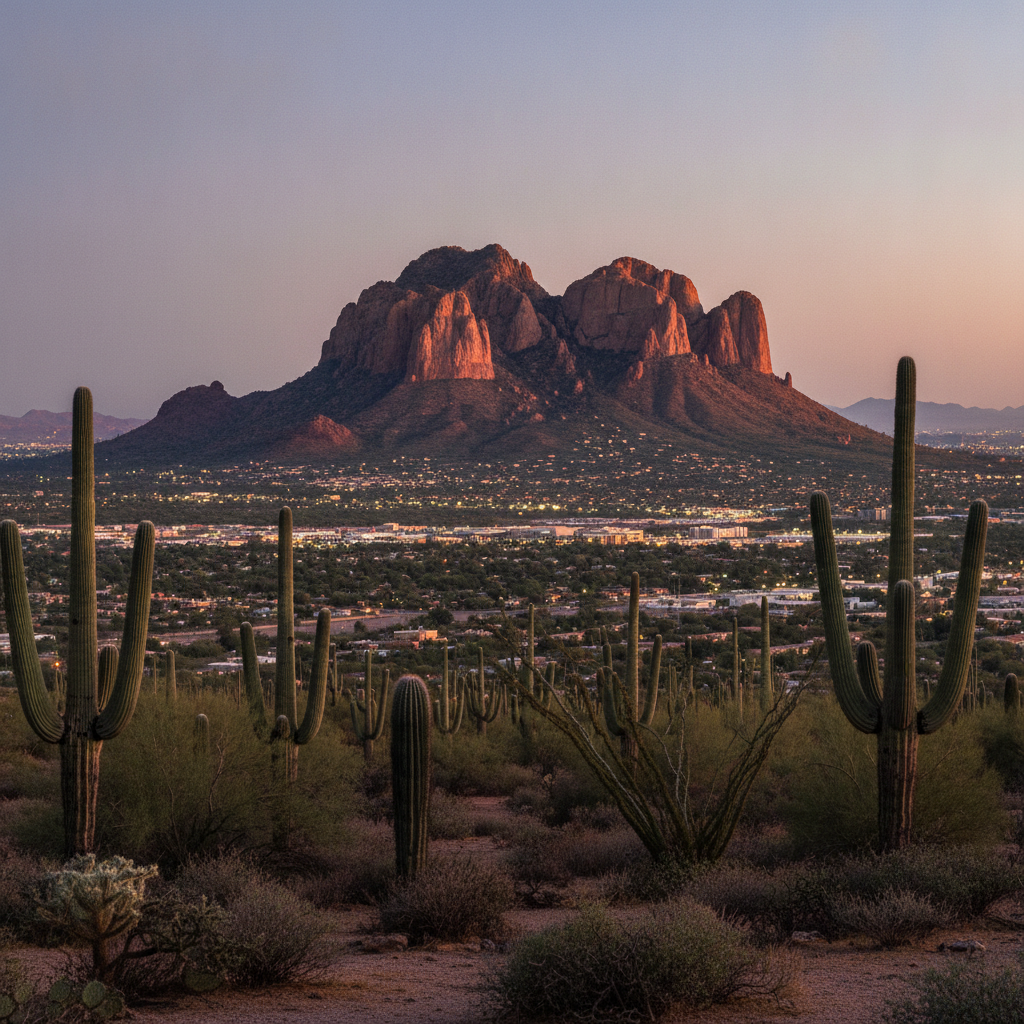
Saguaro National Park (two separate districts surrounding Tucson, 185 km south of Phoenix, 2 hours via I-10): the national park dedicated to the iconic saguaro cactus and the Sonoran Desert ecosystem. The Tucson Mountain District (Saguaro West, at the Tucson Bajada): the western district with the densest and most photogenic saguaro forest, and the Arizona-Sonora Desert Museum (adjacent to the national park). The Rincon Mountain District (Saguaro East, the district with higher terrain reaching the Rincon Mountains at 2,641 m): the eastern district with a more diverse plant community from desert floor to mountain pine forest. The Arizona-Sonora Desert Museum (at 2021 N. Kinney Road, at the Saguaro National Park West entrance, 15 km west of downtown Tucson): the most acclaimed natural history museum in the American Southwest, combining a zoo, botanical garden, and natural history museum in a single outdoor setting of 36 acres. The museum houses 230 animal species and 1,200 plant species in naturalistic desert habitat enclosures. The Sonoran Desert ecology: the Sonoran Desert is the hottest desert in North America but also the wettest (with two rainy seasons, the winter Pacific storms December-March and the summer North American Monsoon July-September), which allows a greater diversity of plants and animals than any other North American desert. The Sonoran Desert plant diversity: in addition to the saguaro, the Sonoran Desert contains palo verde trees (the state tree of Arizona), ocotillo, teddy bear cholla, organ pipe cactus, and dozens of other cactus and succulent species.
- 5
Salt River Recreation and the Lakes Around Phoenix
The Salt River Recreation Area and the Tonto National Forest lakes: the Salt River Project (SRP, the public utility that manages water and power in the Phoenix metro area) operates a system of six reservoirs on the Salt River northeast of Phoenix, providing both water storage and recreation. The Salt River Recreation Area (the stretch of the lower Salt River below Saguaro Lake, approximately 40 km northeast of Phoenix): the most popular tubing and kayaking river in Arizona, where the calm flow, shallow depth, and desert canyon scenery attract 100,000+ tubers and kayakers per year in the summer months. The Salt River wild horses (the herd of approximately 100 feral horses that inhabits the Salt River canyon): one of the most unusual wildlife features of the Phoenix area, with the horses protected by state law since 2016. Saguaro Lake (at the Tonto National Forest, 47 km northeast of Phoenix): the most popular lake for powerboating, jet skiing, wakeboarding, and fishing in the Phoenix area. Bartlett Lake (51 km north of Phoenix): the reservoir known for the best fishing in the Phoenix area (largemouth bass, striped bass, catfish, crappie). Tempe Town Lake (the artificial lake created by inflatable rubber dams on the Salt River through Tempe, adjacent to the Arizona State University campus): the urban recreation lake in Tempe, with the Phoenix-Tempe Rowing Regatta on the lake, the kayak and stand-up paddleboard rentals, and the lakeside restaurants.
- 6
Tucson and the Southern Arizona Day Trip
Tucson (the second city of Arizona, 185 km south of Phoenix, 2 hours via I-10): the most historically and culturally interesting city in Arizona, with a longer European settlement history (the Spanish presidio of Tucson was established in 1775) and the University of Arizona (founded 1885). Tucson history: the oldest continuously inhabited European settlement in Arizona, with the Barrio Viejo (the oldest surviving Mexican-American neighborhood in Tucson, with adobe buildings dating from the 1880s) and the Tucson Convention Center area. The Tucson food scene: Tucson is a UNESCO Creative City of Gastronomy (designated 2015, the first US city to receive this designation), based on its 4,000+ year history of agricultural food traditions including the tepary bean, acorn, and cholla buds. The Mission San Xavier del Bac (at the Tohono O-odham Nation San Xavier District, 15 km south of downtown Tucson): the White Dove of the Desert, the most beautiful and best preserved Spanish colonial church in the United States, built 1783-1797. The Kitt Peak National Observatory (at the Tohono O-odham Nation reservation, 85 km southwest of Tucson): the largest solar telescope in the world (the McMath-Pierce Solar Telescope) and the largest optical telescope complex in the United States (the Nicholas U. Mayall 4-meter telescope). The Titan Missile Museum (at Sahuarita, 38 km south of Tucson): the only preserved Titan II ICBM launch facility in the world, operated from 1963 to 1984; the museum provides the most visceral experience of Cold War nuclear deterrence available to the public.
Walk this route with audio
Stories play automatically as you reach each stop — no tapping needed.
More in phoenix
Phoenix: Every Instrument on Earth, Hohokam Solar Windows and the Anti-Phoenix in the Desert
Phoenix: Intel Silicon Desert, 16000 Acre City Park and the Deadliest Urban Hike in America
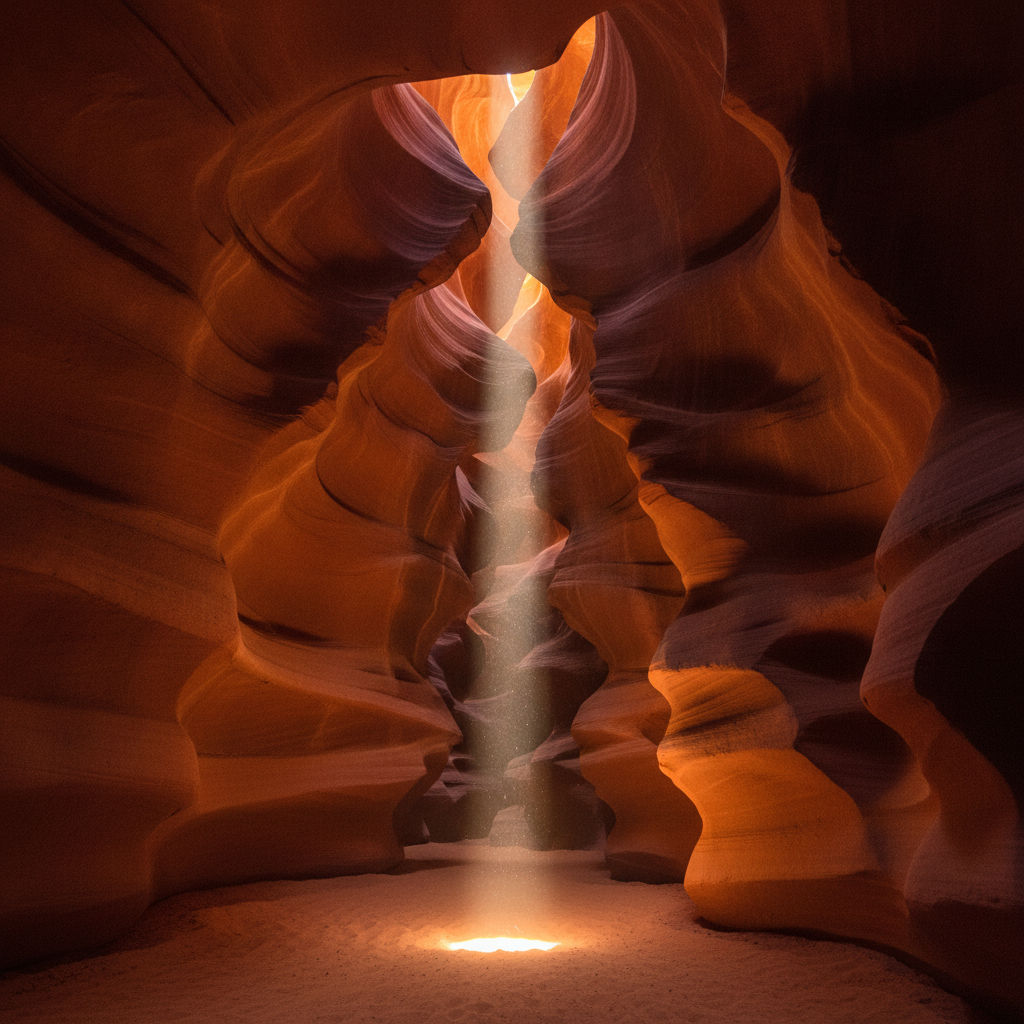
Phoenix: Antelope Canyon and Horseshoe Bend Day Trip (Navajo guided tours, light beams, Colorado River meander), Monument Valley Navajo Nation (John Ford Westerns, Valley Drive Navajo-guided), Arizona State University and Phoenix Tech Hub (Intel Chandler, most innovative US university), Scottsdale Western Heritage Museum (cowboy culture, Parada del Sol Rodeo), Phoenix Sonoran Mexican Food (chimichanga origin, Barrio Cafe, Queen Creek Olive Mill), and Petrified Forest National Park and Painted Desert
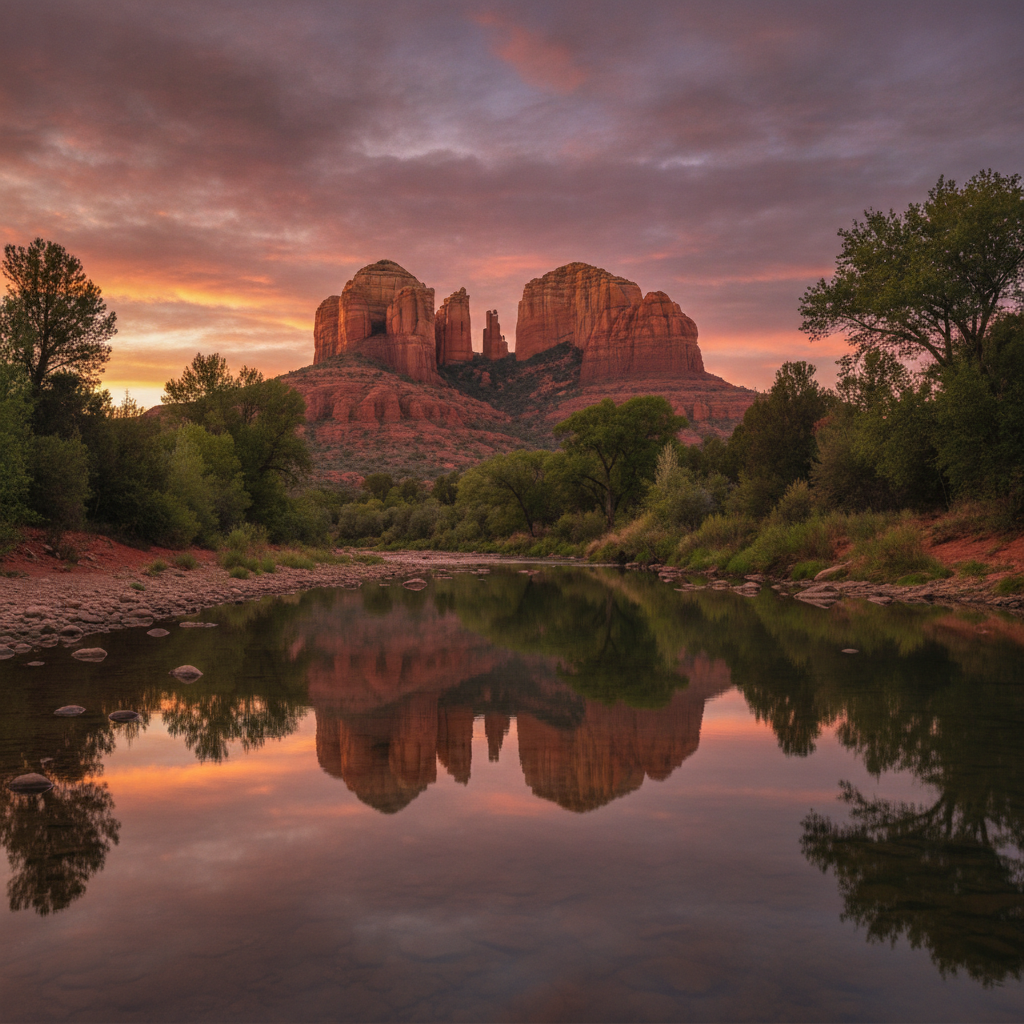
Phoenix: Suns Triple Finals Heartbreak, Red Rock Vortexes and Bacon-Wrapped Hot Dogs
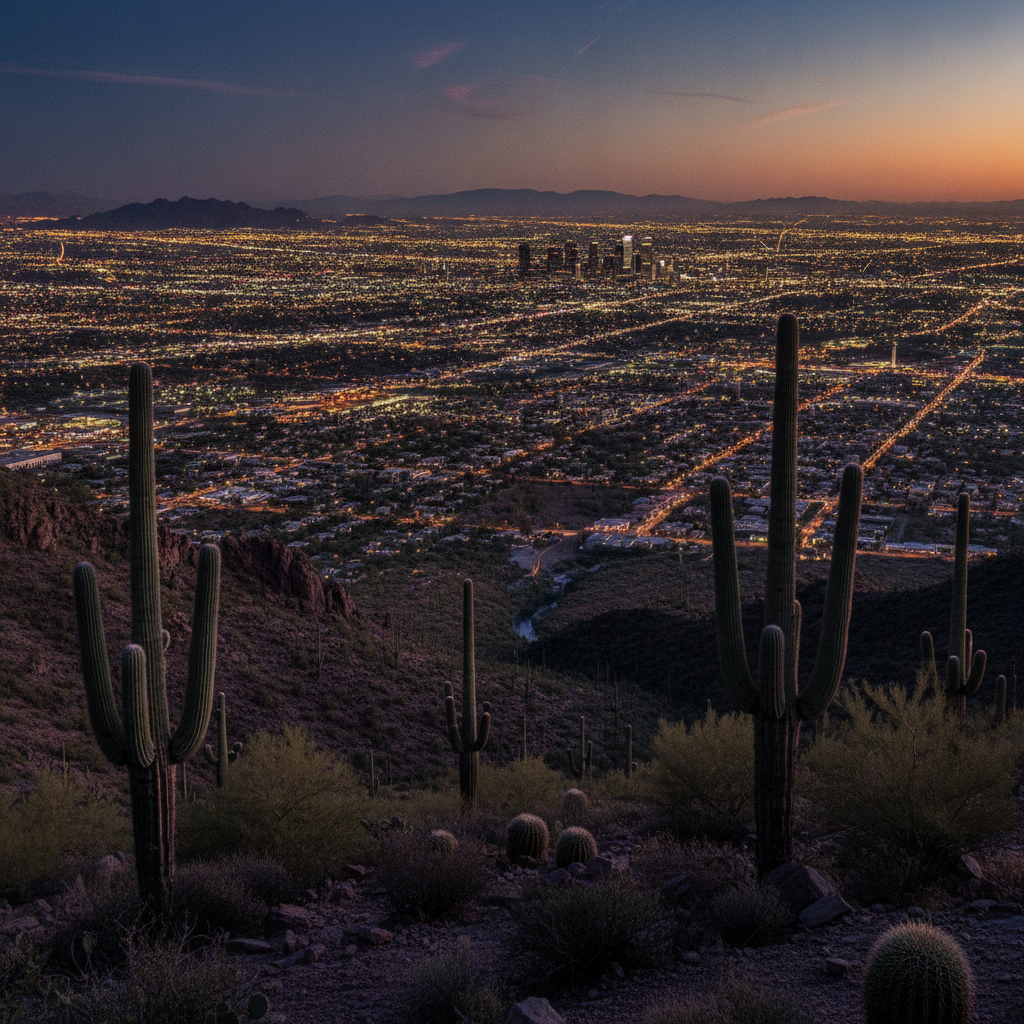
Phoenix: Climate Crisis and Water Security (Colorado River compact, Lake Mead shortage, urban heat island, 107 extreme heat days), Phoenix Outdoor Recreation (South Mountain Park largest urban park in US, McDowell Sonoran Preserve, mountain biking), Snowbird Culture (winter migration, 300000 seasonal residents, RV parks), Arizona Cardinals NFL and Phoenix Sports Scene, Phoenix Growth Story (fastest growing US metro, sprawl critique, light rail expansion), and Practical Guide (Sky Harbor Airport, freeway grid, best months to visit October-April)