Phoenix: Camelback Mountain Hike (Echo Canyon Trail, 200 rescues per year, desert safety), Scottsdale Old Town Arts District (125 galleries, Western American art, luxury shopping), Sedona Red Rock Country Day Trip (energy vortexes, Cathedral Rock, Oak Creek Canyon, jeep tours), Grand Canyon South Rim (6M visitors, Bright Angel Trail, mule rides, Havasupai turquoise falls), and Desert Botanical Garden and Heard Museum (50000 plants, Native American art)
Phoenix highlights: Valley of the Sun overview (Sonoran Desert, saguaro cactus biology, 107 extreme heat days per year, Colorado River water dependency, Hohokam irrigation heritage), Camelback Mountain (461m urban hike, Echo Canyon scramble, heat rescues, sunrise hiking), Scottsdale Old Town (125 art galleries, Western art, SMoCA, luxury shopping, nightlife), Sedona day trip (red rock sandstone formations, energy vortexes, Cathedral Rock trail, jeep tours), Grand Canyon South Rim (Bright Angel Trail, mule rides to Phantom Ranch, Havasupai Falls permit), and Desert Botanical Garden (50,000 plants, Heard Museum Native American art, Phoenix light rail).
- 1
Phoenix - the Valley of the Sun and the Sonoran Desert
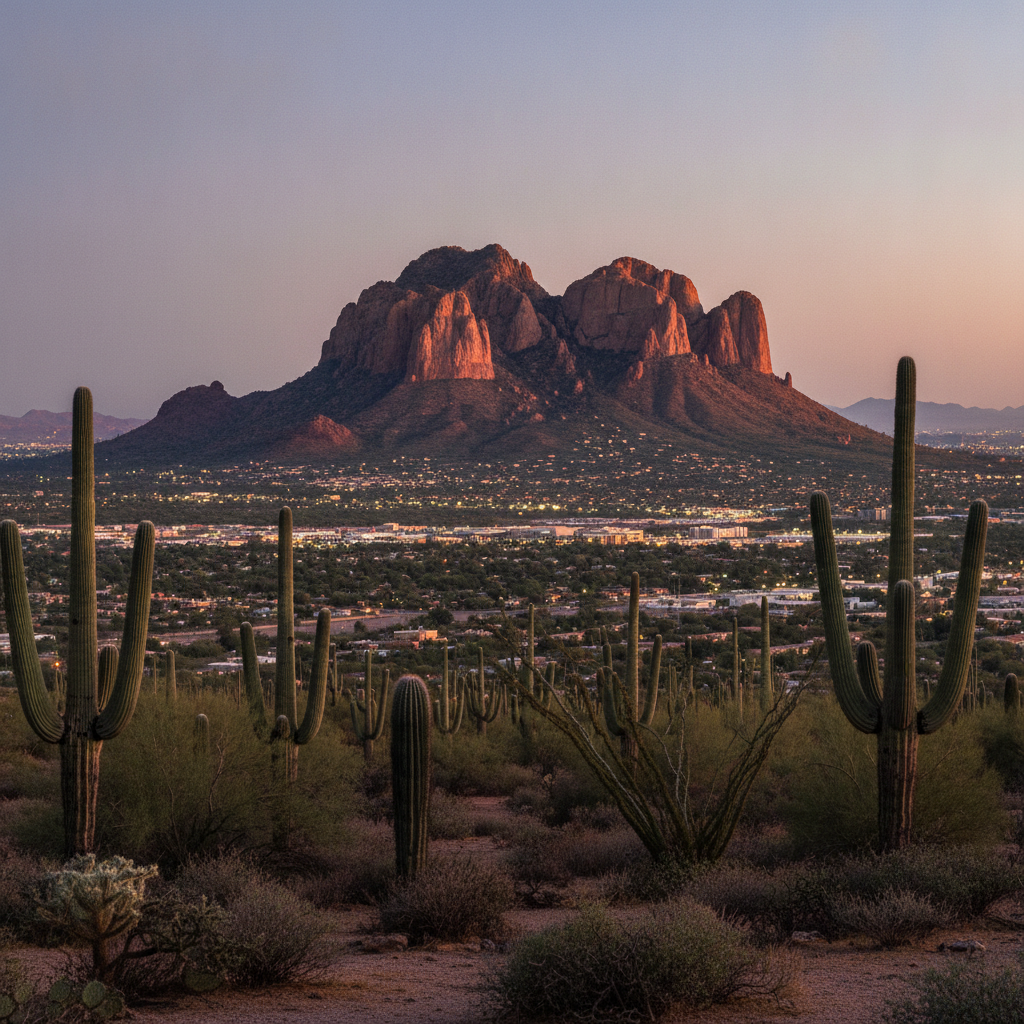
Phoenix (the state capital and largest city of Arizona, population approximately 1.65 million city, 5 million metro area - the 5th largest city in the United States): situated at 331 m elevation in the Salt River Valley, surrounded by the Sonoran Desert. Phoenix is the largest city in the American West that cannot rely on local water resources; the entire Phoenix metro area depends on water deliveries from the Colorado River (via the Central Arizona Project canal, the 541 km canal completed in 1993 that carries Colorado River water from Lake Havasu to Phoenix and Tucson), the Salt River Project reservoirs (the system of six dams on the Salt and Verde Rivers), and groundwater. The Sonoran Desert (the most biodiverse desert in North America, extending from southern Arizona and southwestern New Mexico through the Mexican state of Sonora): the defining landscape of Phoenix, known for the saguaro cactus (the Carnegiea gigantea, the iconic columnar cactus that can grow to 15 m tall, weigh 2,000 kg when full of water, and live for 150-200 years; the saguaro is found only in the Sonoran Desert). Phoenix heat: the average high temperature in July is 41C (106F), with nights rarely dropping below 32C (90F); Phoenix experiences more 38C (100F) days than any other major US city (approximately 107 days per year). The urban heat island effect in Phoenix (the most severe urban heat island of any major US city): the concentration of asphalt, concrete, and buildings retains solar energy and raises temperatures 3-5C above the surrounding desert. Phoenix history: the city was founded in 1868 by Jack Swilling, who recognized that the Salt River Valley had been previously irrigated by the ancient Hohokam people.
- 2
Camelback Mountain - Phoenix Most Iconic Hike
Camelback Mountain (the most prominent mountain in the Phoenix metro area, rising 461 m above the surrounding valley at the boundary of Phoenix and Scottsdale): the defining visual landmark of the Phoenix skyline and the most popular hiking destination in Arizona. Camelback Mountain geology: the mountain is composed of Precambrian granite (approximately 1.7 billion years old) on the west (the Camel Head) and Paleozoic conglomerate and red sandstone on the east (the Hump), giving the mountain its distinctive two-humped silhouette. The Echo Canyon Trail (the west route to the summit, 2.4 km round trip, 503 m elevation gain): the most popular and most difficult of the two summit routes, with significant rock scrambling above the saddle and the use of fixed handrails on the steepest rock faces. The Cholla Trail (the east route to the summit, 3.6 km round trip from the Cholla trailhead off Invergordon Road): a slightly longer but initially more gradual approach that becomes extremely rocky in the upper section. Camelback Mountain trail conditions and hazards: the Phoenix heat makes Camelback Mountain one of the most dangerous urban hikes in the United States; Maricopa County emergency services rescue approximately 200 hikers per year from the mountain, primarily from dehydration and heat exhaustion in the summer months. City of Phoenix recommendations: hike before 8am or after 5pm in summer, carry minimum 1 liter of water per person per hour, and do not summit in temperatures above 38C. The Praying Monk (the rock formation at the top of the camel head, resembling a kneeling figure in prayer): a popular technical rock climbing destination.
- 3
Scottsdale Arts and the Old Town District
Old Town Scottsdale (the historic commercial district of Scottsdale, the eastern suburb of Phoenix, approximately 15 km from downtown Phoenix): the primary arts, entertainment, and dining destination in the Phoenix metro area. Scottsdale character: originally a small agricultural town (named for Army Chaplain Winfield Scott, who bought farmland here in 1888), Scottsdale has grown to a city of approximately 260,000 with one of the highest per-capita incomes of any US city. The Scottsdale Arts District (on the east side of Old Town, centered on 5th Avenue): the most concentrated gallery district in the American Southwest, with over 125 art galleries primarily specializing in Western American art (bronze sculpture, oil paintings of Western landscapes and wildlife, contemporary Native American art). The Scottsdale Museum of Contemporary Art (SMoCA, at 7374 2nd Street): the primary contemporary art museum in Scottsdale, with international modern and contemporary art exhibitions. The Scottsdale Fashion Square (at the junction of Scottsdale Road and Camelback Road): the largest mall in Arizona and one of the largest luxury shopping destinations in the Southwest. The Old Town Scottsdale nightlife: the grid of bars, nightclubs, and restaurants between Scottsdale Road and Goldwater Boulevard constitutes the most active nightlife district in Arizona. The Scottsdale Arts Festival (annual in March): the most prestigious juried outdoor arts festival in the Southwest, with approximately 175 juried artists and 180,000 attendees.
- 4
Sedona Red Rock Country and the Verde Valley
Sedona (the most visited destination in Arizona after the Grand Canyon, 185 km north of Phoenix, 2 hours via I-17 and State Route 89A): a small city (population approximately 10,000) surrounded by dramatic red sandstone formations in the upper Verde Valley. Sedona geology: the red rock formations (Bell Rock, Cathedral Rock, Courthouse Butte, Chimney Rock, Coffee Pot Rock) are composed of 300 million-year-old Schnebly Hill Formation sandstone, colored red by iron oxide, sitting on dark gray Permian Era mudstone and covered in places by white Coconino Sandstone and tan Toroweap Formation. Sedona as a spiritual and wellness destination: Sedona is famous for its alleged energy vortexes (four sites identified by New Age practitioners as locations of concentrated earth energy: Bell Rock, Cathedral Rock, Airport Mesa, and Boynton Canyon). Regardless of the metaphysical claims, the extraordinary landscape makes Sedona the premier wellness and retreat destination in the American Southwest. The Sedona hiking trails: the Bell Rock Pathway (an easy 3.6 km loop at the base of Bell Rock), the Cathedral Rock Trail (a 2.4 km strenuous scramble to the saddle between the Cathedral Rock spires), the West Fork Trail of Oak Creek (the most popular trail in the Red Rock-Secret Mountain Wilderness, 10.6 km round trip through the spectacular Oak Creek Canyon with multiple stream crossings), and the Doe Mountain Trail (a 2.4 km loop with panoramic views from the flat mesa top). Jeep tours: the Red Rock jeep tours are the most popular commercial activity in Sedona, driving up otherwise inaccessible red rock trails.
- 5
Grand Canyon South Rim - the World Greatest Natural Wonder
The Grand Canyon (at Grand Canyon Village on the South Rim, 365 km north of Phoenix, 3.5-4 hours via I-17 and US-180): one of the Seven Natural Wonders of the World and the most visited natural landmark in the United States, with approximately 6 million visitors annually. Grand Canyon statistics: 446 km long, 29 km wide at the widest point, and 1,857 m at the deepest point (from the South Rim to the Colorado River). The canyon exposes 2 billion years of geological history in its rock layers. The Bright Angel Trail (the most popular hiking trail in the Grand Canyon, descending from the South Rim at Grand Canyon Village): the trail descends 1,450 m over 13 km from the Rim to the Colorado River at Phantom Ranch; it is the most heavily traveled trail in the canyon, with Bright Angel and Indian Garden campgrounds at intermediate points. The mule trips to the bottom of the Grand Canyon: the mule rides from the South Rim to Phantom Ranch (the only accommodation at the canyon floor, reservable up to 15 months in advance) are the most sought-after trail experience in the National Park System. The Havasupai Tribe (the Havasupai (meaning people of the blue-green water) reservation within the Grand Canyon, accessible via an 13 km trail from the Hualapai Hilltop): the Havasu Creek and its series of turquoise waterfalls (Havasupai Falls, Mooney Falls, Beaver Falls) are among the most photographed natural scenes in the United States; permits are required and are booked within hours of their release each February.
- 6
Phoenix Practical Guide - Desert Botanical Garden and Papago Park
Phoenix practical guide and key attractions: the Desert Botanical Garden (in Papago Park, 1201 N. Galvin Parkway, near the Phoenix Zoo): 140 acres of curated desert plant collections, with the most comprehensive collection of desert plants in the world (approximately 50,000 plants representing 4,000 desert plant species from the Sonoran Desert and arid regions worldwide). The saguaro cactus collection (over 1,000 individual saguaros at various life stages): the most significant concentrated collection of the iconic cactus. The annual DBG events: the Chihuly in the Garden exhibition (the Dale Chihuly glass sculpture installation, held multiple times), the spring wildflower walks, and the Las Noches de las Luminarias (the holiday lights event in December). Papago Park (the 1,500-acre red rock park surrounding the Desert Botanical Garden and the Phoenix Zoo): the red sandstone buttes of Papago Park (the same red sandstone as Sedona) form distinctive photogenic formations including the Hole in the Rock (a natural oval opening in the rock face). The Heard Museum (at 2301 N. Central Avenue, Phoenix): the most important museum of Native American art and culture in the American Southwest, with the most comprehensive collection of Hopi kachina dolls (tihu) in the world (approximately 437 examples from the Fred Harvey collection) and the most significant collections of Navajo weaving, Pueblo pottery, and Apache basketry. The Phoenix light rail (the Valley Metro Rail, 75 km of light rail through Phoenix, Tempe, Mesa, and Chandler): the primary public transit option in Phoenix, connecting downtown Phoenix to the Arizona State University Tempe campus and the Sky Harbor Airport.
Walk this route with audio
Stories play automatically as you reach each stop — no tapping needed.
More in phoenix
Phoenix: Every Instrument on Earth, Hohokam Solar Windows and the Anti-Phoenix in the Desert
Phoenix: Intel Silicon Desert, 16000 Acre City Park and the Deadliest Urban Hike in America
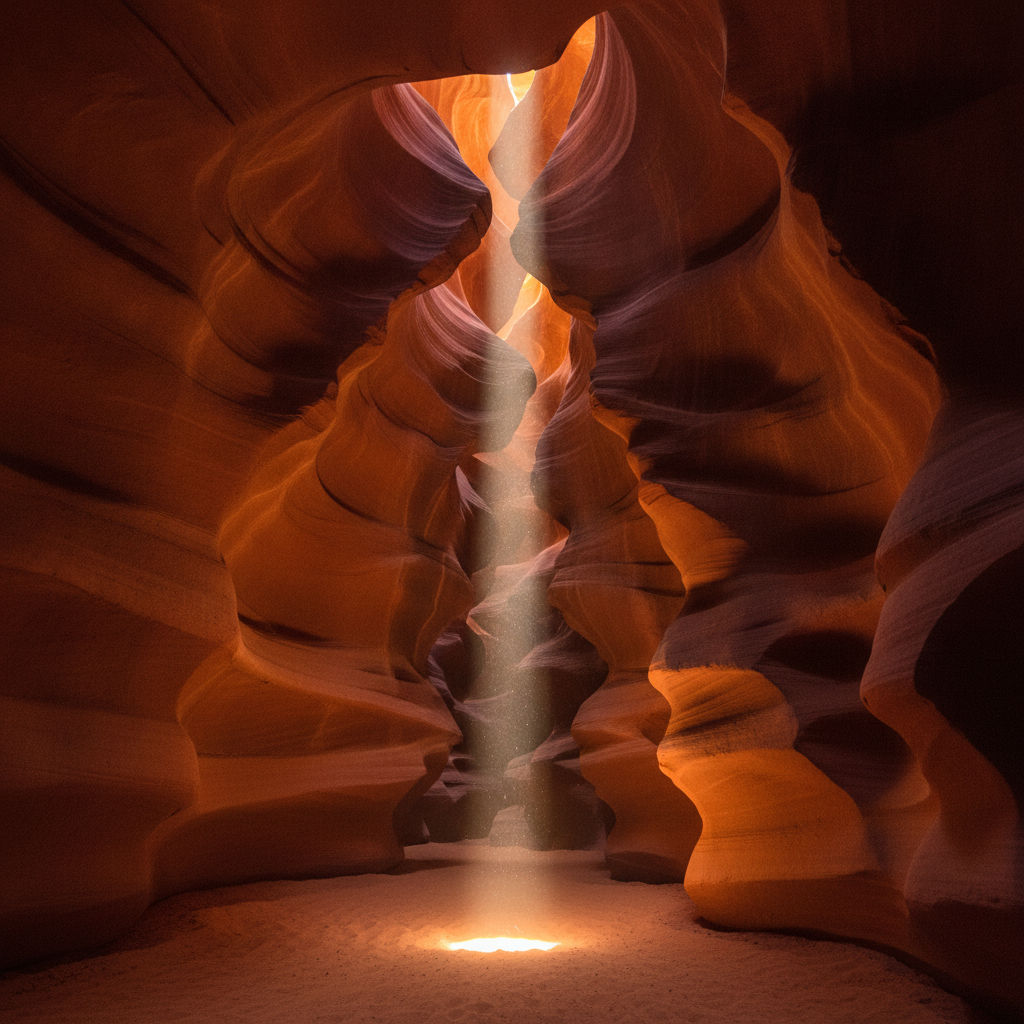
Phoenix: Antelope Canyon and Horseshoe Bend Day Trip (Navajo guided tours, light beams, Colorado River meander), Monument Valley Navajo Nation (John Ford Westerns, Valley Drive Navajo-guided), Arizona State University and Phoenix Tech Hub (Intel Chandler, most innovative US university), Scottsdale Western Heritage Museum (cowboy culture, Parada del Sol Rodeo), Phoenix Sonoran Mexican Food (chimichanga origin, Barrio Cafe, Queen Creek Olive Mill), and Petrified Forest National Park and Painted Desert
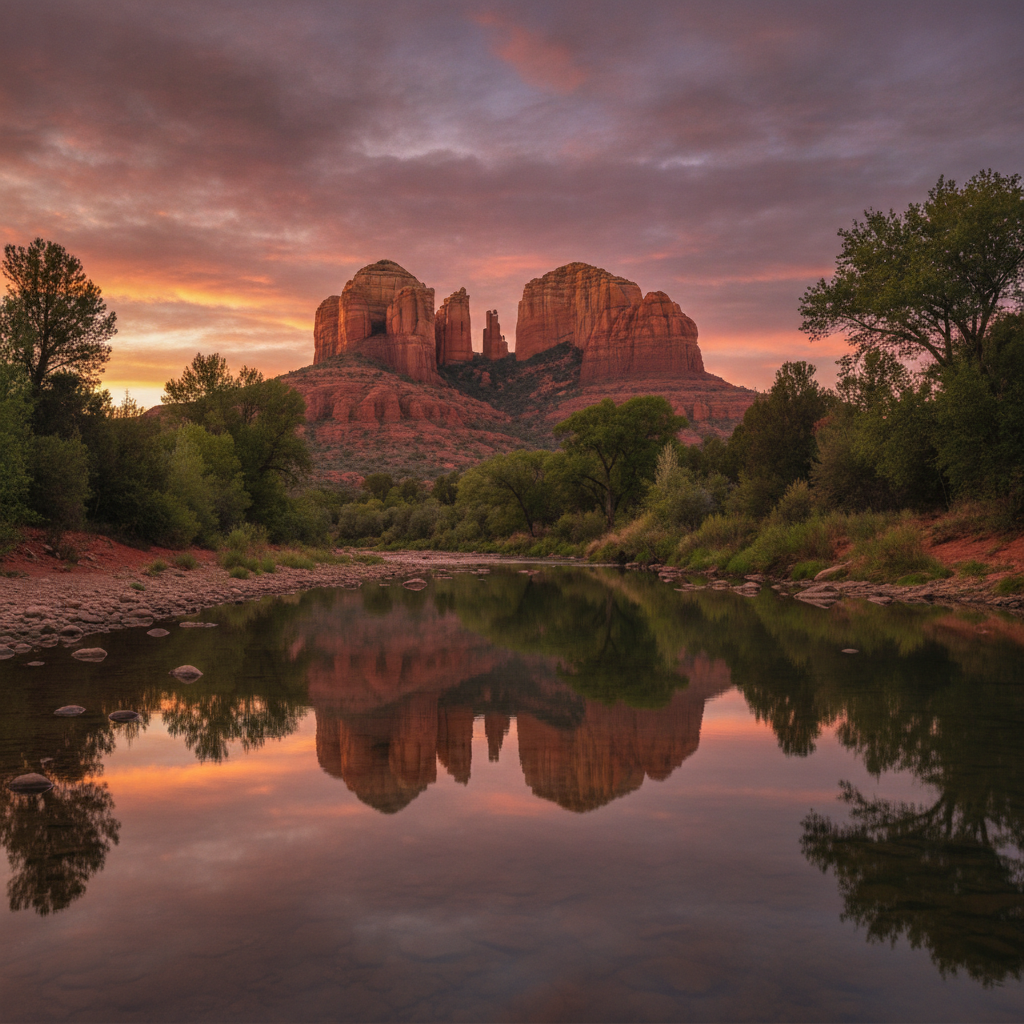
Phoenix: Suns Triple Finals Heartbreak, Red Rock Vortexes and Bacon-Wrapped Hot Dogs
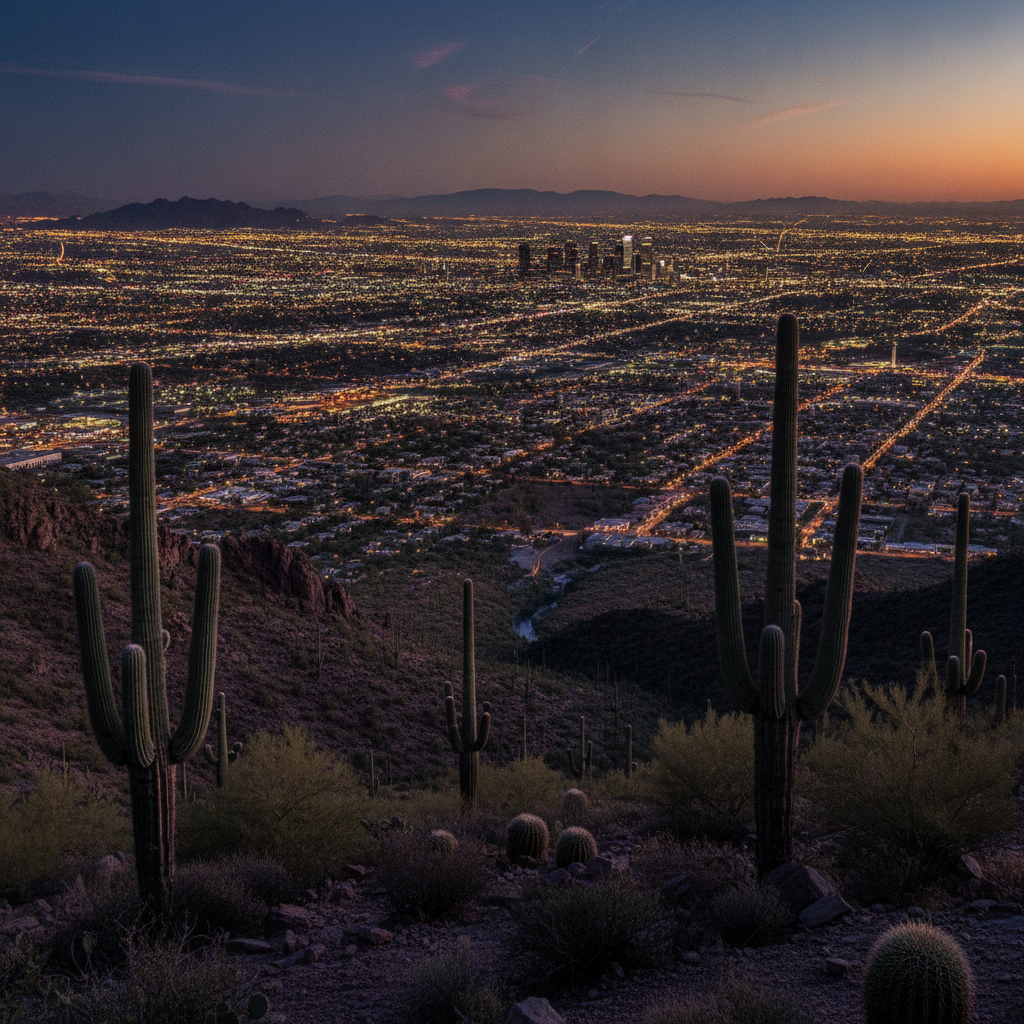
Phoenix: Climate Crisis and Water Security (Colorado River compact, Lake Mead shortage, urban heat island, 107 extreme heat days), Phoenix Outdoor Recreation (South Mountain Park largest urban park in US, McDowell Sonoran Preserve, mountain biking), Snowbird Culture (winter migration, 300000 seasonal residents, RV parks), Arizona Cardinals NFL and Phoenix Sports Scene, Phoenix Growth Story (fastest growing US metro, sprawl critique, light rail expansion), and Practical Guide (Sky Harbor Airport, freeway grid, best months to visit October-April)