Phoenix: Antelope Canyon and Horseshoe Bend Day Trip (Navajo guided tours, light beams, Colorado River meander), Monument Valley Navajo Nation (John Ford Westerns, Valley Drive Navajo-guided), Arizona State University and Phoenix Tech Hub (Intel Chandler, most innovative US university), Scottsdale Western Heritage Museum (cowboy culture, Parada del Sol Rodeo), Phoenix Sonoran Mexican Food (chimichanga origin, Barrio Cafe, Queen Creek Olive Mill), and Petrified Forest National Park and Painted Desert
Phoenix day trips and culture: Antelope Canyon (world most photographed slot canyon, Navajo guided access only, light beams at midday, Horseshoe Bend 300m Colorado River meander), Monument Valley (John Ford Stagecoach and Searchers, Navajo Tribal Park, Mittens buttes), ASU most innovative US university and Phoenix tech hub (Intel Chandler USD 20B fab investment), Scottsdale Western Spirit Museum and Wickenburg dude ranch tradition, Sonoran Mexican food scene (Barrio Cafe, chimichanga Arizona invention claim, green corn tamale, Arizona wine country), and Petrified Forest (225-million-year wood, Painted Desert rainbow badlands).
- 1
Antelope Canyon and Page Arizona - Slot Canyons
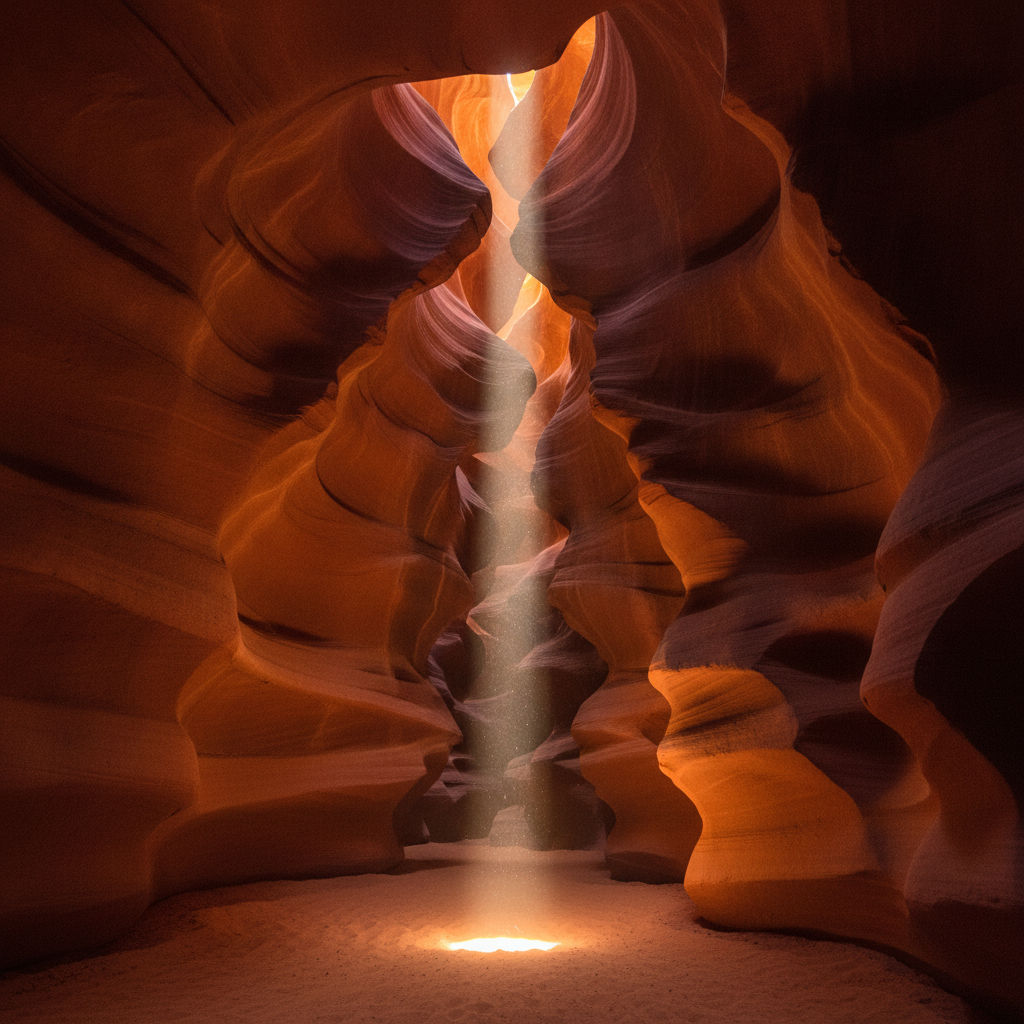
Antelope Canyon (at the Navajo Nation land near Page, Arizona, 320 km north of Phoenix, 3.5 hours via US-89): the most photographed slot canyon in the world, and the most visited site on the Navajo Nation. Antelope Canyon consists of two separate sections: the Upper Antelope Canyon (Tsé bighanilíní, the place where water runs through rocks in Navajo) and the Lower Antelope Canyon (Hazdistazí, the spiral rock arches). The upper canyon (also called The Crack or The Wave) is more accessible (a flat walk on sandy floor) and most widely photographed; the lower canyon requires descending ladders into the canyon and is narrower and more dramatic. The slot canyon geology: Antelope Canyon was carved by flash flooding through the Navajo sandstone (a 190 million-year-old Jurassic aeolian sandstone), with the wave-like smooth walls sculpted by swirling water and sand over thousands of years. The light beams: the famous shafts of light that penetrate the upper canyon from narrow openings far above (most dramatic at midday in the summer months) are the primary photographic subject. Tours are required to enter either section (both are on Navajo land with guided-access-only requirements); Navajo-guided photography tours book months in advance. Horseshoe Bend (at Glen Canyon National Recreation Area, 7 km south of Page): the most-photographed bend of the Colorado River in the United States, where the river makes a 270-degree meander around a sandstone promontory, 300 m below the rim.
- 2
Monument Valley and the Navajo Nation
Monument Valley Navajo Tribal Park (at the Utah-Arizona border, 400 km north of Phoenix, 4 hours via US-89 and US-160): the most iconic landscape of the American West, and the landscape most associated worldwide with the American Southwest. The Mittens (the West Mitten Butte and East Mitten Butte) and Merrick Butte: the three most photographed formations in Monument Valley, rising 300 m from the valley floor. The John Ford Point (the overlook from which the director John Ford framed his iconic Westerns): John Ford made 7 films in Monument Valley between 1939 and 1964, including Stagecoach (1939), Fort Apache (1948), She Wore a Yellow Ribbon (1949), and The Searchers (1956). The Navajo Nation (the largest Native American nation by land area in the United States, 71,000 square km across Arizona, Utah, and New Mexico, population approximately 200,000): the tribal government of the Navajo Nation operates the Monument Valley Navajo Tribal Park. The Valley Drive (the 27 km unpaved self-guided loop through the valley floor): only accessible to visitors in Navajo-guided vehicles (standard passenger vehicles cannot legally drive the Valley Drive without a Navajo guide). The Navajo cultural context: the Navajo (Dine, the people) arrived in the Monument Valley region approximately 400-600 years ago; before them, the Ancestral Puebloans (Anasazi) occupied the region for over 1,000 years. The current Navajo chapters of Oljato and Monument Valley are the communities nearest the park.
- 3
Arizona State University and Tempe Innovation Culture
Arizona State University (the most innovative university in the United States by US News rankings for 8 consecutive years, 2016-2023, with approximately 145,000 students across multiple campuses): the largest single-campus university in the United States (at the Tempe Main Campus) and the fastest-growing research university in the US by research expenditure growth. ASU Tempe campus (the main campus at the center of Tempe, immediately east of Phoenix and south of Scottsdale): the 660-acre campus with the iconic Sun Devil Stadium (the home of the ASU Sun Devils college football and the former home of Super Bowl XXX in 1996). The Tempe Innovation District: Tempe has leveraged its position between Phoenix and Scottsdale and the presence of ASU to develop one of the fastest-growing technology and innovation ecosystems in the US, with Intel (with major semiconductor fabrication facilities in Chandler, 25 km southeast of Tempe), Microchip Technology, and a growing cluster of technology and aerospace companies. The Phoenix-metro technology sector: the Phoenix metro area has become a major US technology hub, with Intel, Microchip, ON Semiconductor, and numerous data centers (attracted by the low land cost, the available labor force, and the low humidity ideal for data center cooling despite the heat). The Intel Chandler campus: the largest private employer in Arizona, with the Fab 52 and Fab 62 fabrication facilities representing a USD 20 billion investment in advanced semiconductor manufacturing.
- 4
Scottsdale Western Heritage and the Cowboy Art Museum
The Western Spirit: Scottsdale Museum of the West (at 3830 N. Marshall Way, Old Town Scottsdale): the most comprehensive museum dedicated to Western American art and history in the United States, opened 2015. The museum collection focuses on art and artifacts of the 19th and early 20th century American West, with galleries dedicated to cowboy culture, Native American peoples, the cattle industry, the settlement of the frontier, and the role of railroads in opening the West. The cowboy and ranching culture of Arizona: Arizona has a living ranching tradition, with approximately 8,000 active cattle ranches. The chuck wagon cooking tradition: the cowboy chuck wagon (the portable kitchen wagon designed by Charles Goodnight in 1866 for the Longhorn cattle drives on the Chisholm Trail) gave rise to a distinctive outdoor cooking tradition; chuck wagon cooking competitions and rodeos maintain this tradition in Arizona. The Scottsdale rodeo season: the Scottsdale Parada del Sol Rodeo (held in February in Scottsdale, with the world longest non-motorized parade through Old Town Scottsdale on the Thursday before the rodeo): the premier Western heritage event in Scottsdale. The Wickenburg (90 km northwest of Phoenix): the self-proclaimed dude ranch capital of the world, with the oldest continuously operating dude ranch tradition in the United States, dating from the 1940s when Hollywood celebrities (Gene Autry, John Wayne, Clark Gable) vacationed at Arizona guest ranches. The Wild West character of Arizona: Arizona was the last of the 48 contiguous states to enter the Union (admitted 14 February 1912).
- 5
Phoenix Food Scene - Mexican American and Southwestern Cuisine
The Phoenix food scene and the Southwestern cuisine tradition: the Phoenix-Scottsdale metro area has one of the most dynamic food cultures in the American Southwest, driven by the large Mexican-American community (approximately 40% of the Phoenix population is Hispanic or Latino), the proximity to the Mexico border (290 km south of Phoenix), and the increasing sophistication of the dining scene. The Sonoran-style Mexican food: the distinctive Mexican food tradition of the Arizona-Sonora border region, which emphasizes flour tortillas (rather than corn tortillas, which are more common in central and southern Mexico), the chimichanga (the deep-fried burrito, claimed to have been invented in Phoenix by Monica Flin of El Charro Cafe in Tucson or by Woody Johnson of Macayo Mexican Kitchen in Phoenix), the green corn tamale (the Sonoran tamale made with fresh green corn masa), and the carne asada burrito. The Barrio Cafe (at 2814 N. 16th Street, Phoenix): the most celebrated modern Mexican restaurant in Phoenix, by Chef Silvana Salcido Esparza, with modern interpretations of traditional Mexican cuisine. The Wren and the Rooster (in Scottsdale): modern Southwestern fine dining. The Queen Creek Olive Mill (at Queen Creek, 50 km southeast of Phoenix): the largest working olive farm and mill in the United States, with tours, tastings, and the farm-to-table bistro. The Arizona wine industry: the Verde Valley AVA (Cottonwood and Jerome areas) and the Sonoita AVA in southern Arizona are the two primary wine-growing regions in Arizona.
- 6
Petrified Forest National Park and the Painted Desert
Petrified Forest National Park (at Holbrook, Arizona, 285 km northeast of Phoenix, 3 hours via I-10 and I-40): one of the most unusual national parks in the United States, preserving the largest concentration of petrified wood on earth and the most extensive exposed fossil record of the Late Triassic period (220-230 million years ago). The petrified wood: the fossilized logs and stumps of the Petrified Forest were originally trees (primarily Araucarioxylon arizonicum, a large conifer similar to the modern monkey puzzle tree) that fell into rivers and swamps approximately 225 million years ago; silica-rich groundwater gradually replaced the organic wood with quartz crystals, preserving the cellular structure of the original wood in vivid red, purple, pink, yellow, and white mineral colors. The Crystal Forest (the most dense concentration of large petrified logs): the 1.2 km walk through thousands of rainbow-colored petrified logs. The Painted Desert (the multi-colored badlands of eroded Chinle Formation mudstone extending along the rim of the Little Colorado River basin): the layered red, orange, purple, pink, and white badlands extend across 200 km of northeastern Arizona. The Painted Desert Rim Trail (the northern section of the Petrified Forest park): the most visually spectacular section of the park, with panoramic views over the rainbow-colored Painted Desert badlands. The Puerco Pueblo (the Ancestral Puebloan village ruins at the Puerco River crossing in the park): over 600 rooms, occupied approximately 1100-1400 CE, with over 650 petroglyphs on the canyon walls below the pueblo.
Walk this route with audio
Stories play automatically as you reach each stop — no tapping needed.
More in phoenix
Phoenix: Every Instrument on Earth, Hohokam Solar Windows and the Anti-Phoenix in the Desert
Phoenix: Intel Silicon Desert, 16000 Acre City Park and the Deadliest Urban Hike in America
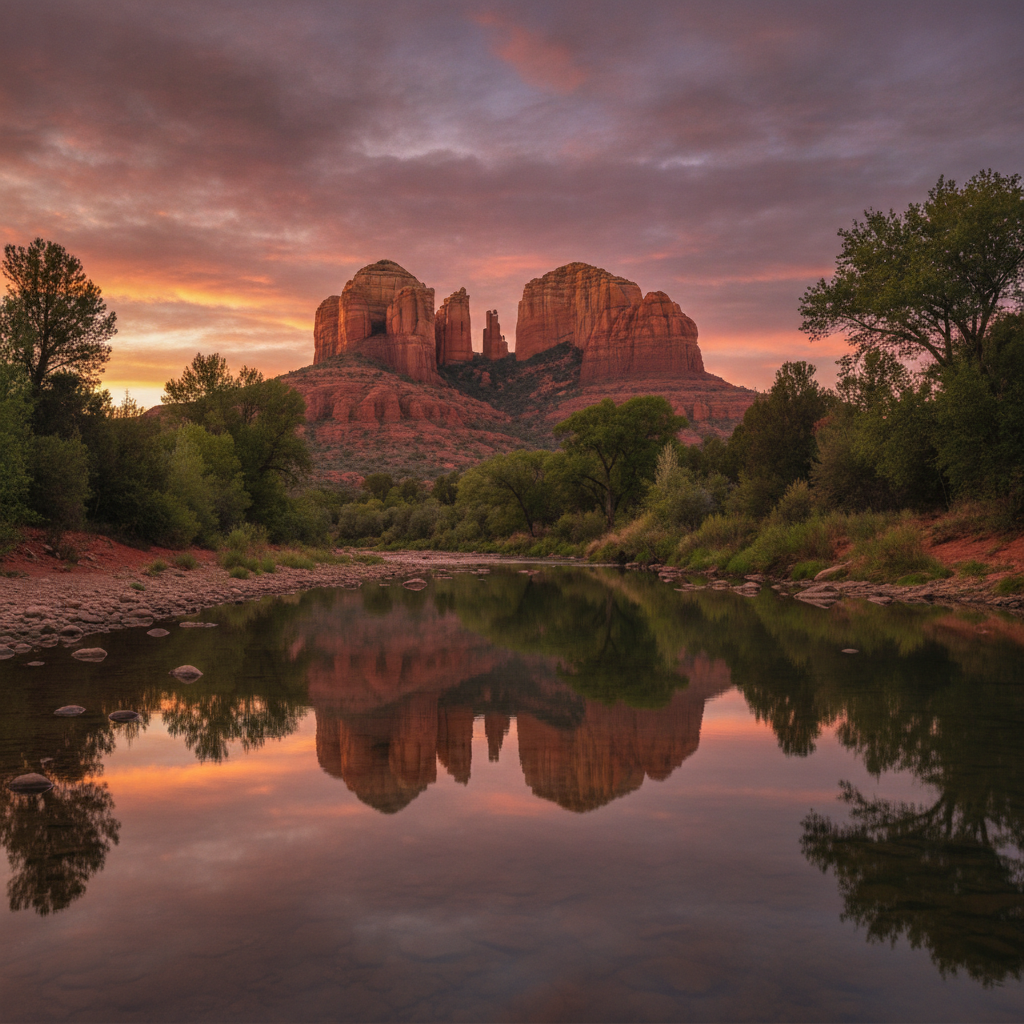
Phoenix: Suns Triple Finals Heartbreak, Red Rock Vortexes and Bacon-Wrapped Hot Dogs
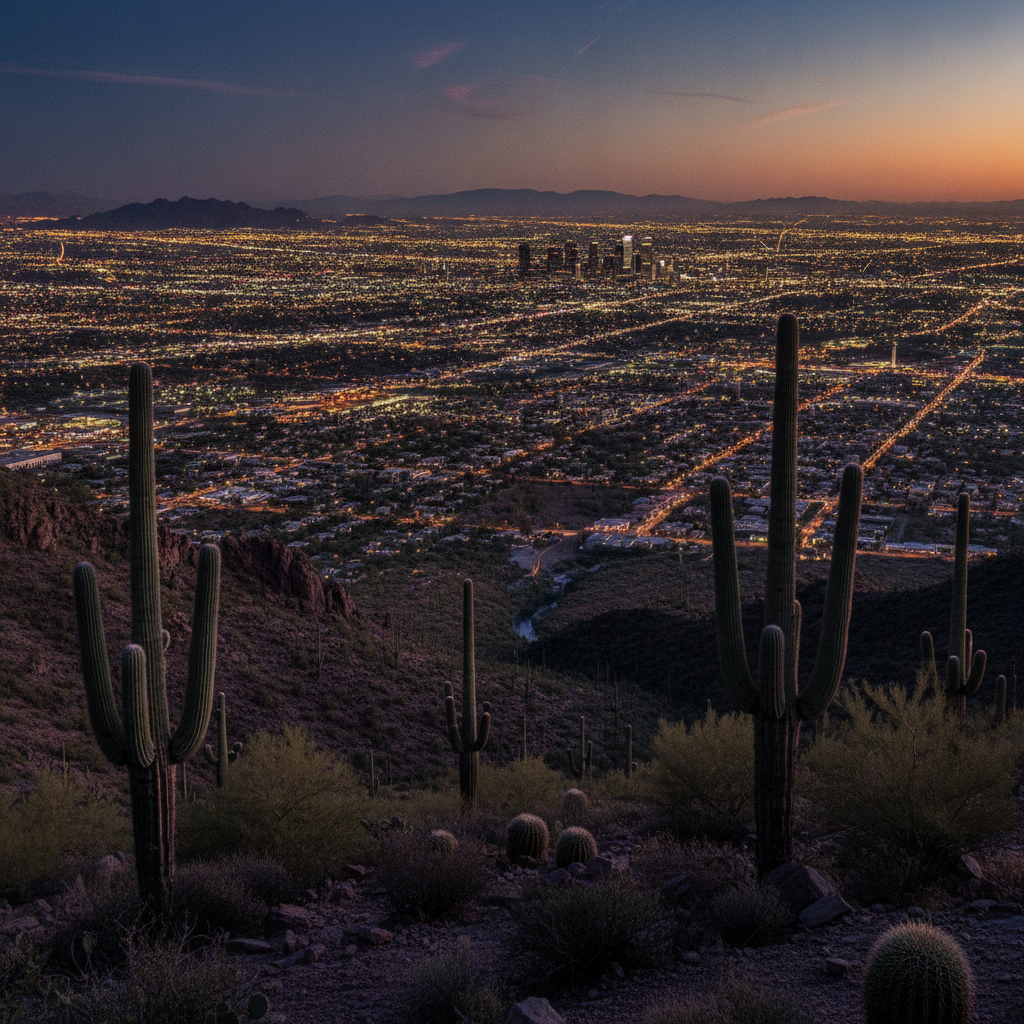
Phoenix: Climate Crisis and Water Security (Colorado River compact, Lake Mead shortage, urban heat island, 107 extreme heat days), Phoenix Outdoor Recreation (South Mountain Park largest urban park in US, McDowell Sonoran Preserve, mountain biking), Snowbird Culture (winter migration, 300000 seasonal residents, RV parks), Arizona Cardinals NFL and Phoenix Sports Scene, Phoenix Growth Story (fastest growing US metro, sprawl critique, light rail expansion), and Practical Guide (Sky Harbor Airport, freeway grid, best months to visit October-April)
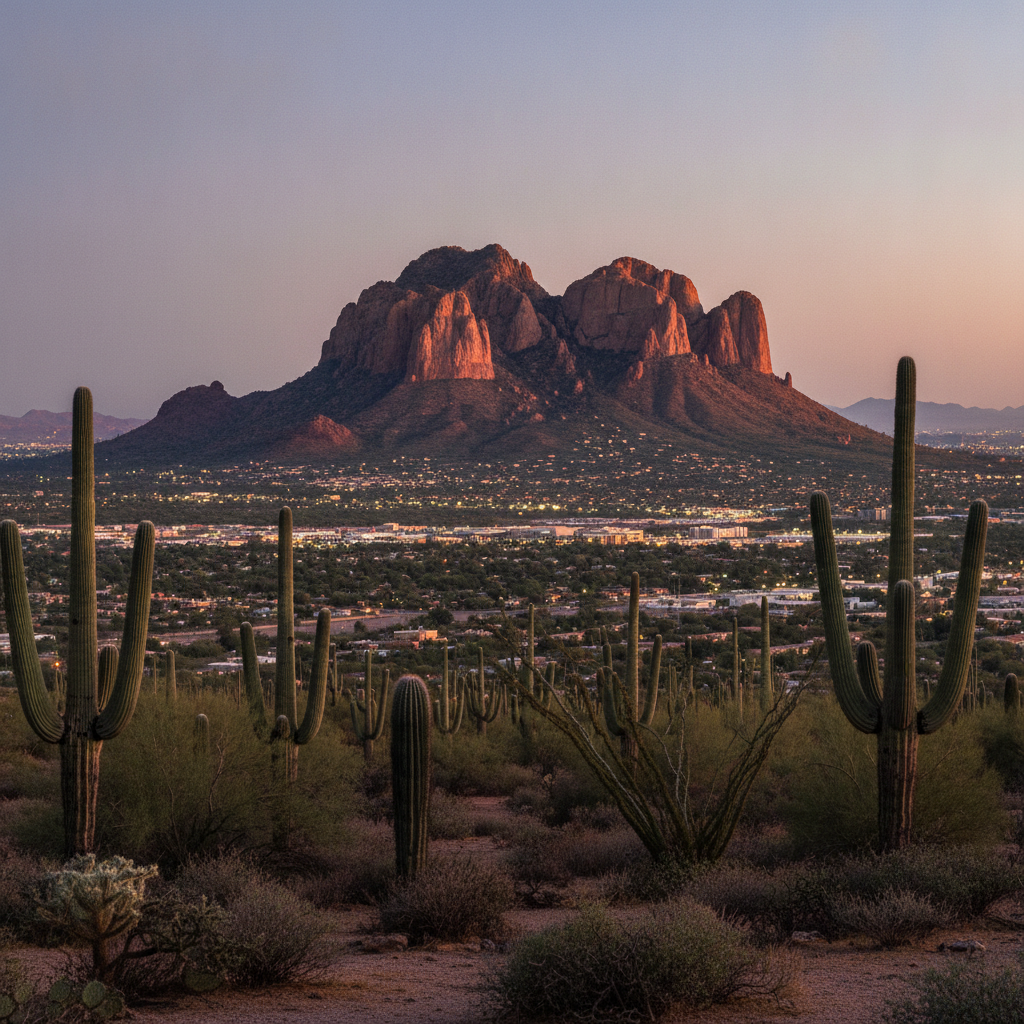
Phoenix: Camelback Mountain Hike (Echo Canyon Trail, 200 rescues per year, desert safety), Scottsdale Old Town Arts District (125 galleries, Western American art, luxury shopping), Sedona Red Rock Country Day Trip (energy vortexes, Cathedral Rock, Oak Creek Canyon, jeep tours), Grand Canyon South Rim (6M visitors, Bright Angel Trail, mule rides, Havasupai turquoise falls), and Desert Botanical Garden and Heard Museum (50000 plants, Native American art)