Phnom Penh: The Silver Pagoda's 5,329 Floor Tiles, the S-21 Photographs of 17,000 Prisoners & the River That Flows Backwards for 5 Months Every Year
Cambodia's Silver Pagoda with its 90-kg gold Maitreya Buddha set with 9,584 diamonds; S-21's systematic photography of every prisoner—the most complete photographic record of a genocide in history—and the 15 survivors from 17,000 who passed through those former classrooms; Choeung Ek's 17-metre glass stupa containing 5,000 skulls arranged by age and sex; the Chaktomuk confluence where the Tonle Sap River reverses direction for 5 months when the Mekong flood pushes water back into a lake that expands from 2,500 km² to 14,000 km²; fish amok steamed in banana leaf with kroeung spice paste; and the US dollar as the city's de facto currency with Riel used only for change under one dollar.
- 1
The Royal Palace & Silver Pagoda – The Living Symbol of the Khmer Kingdom
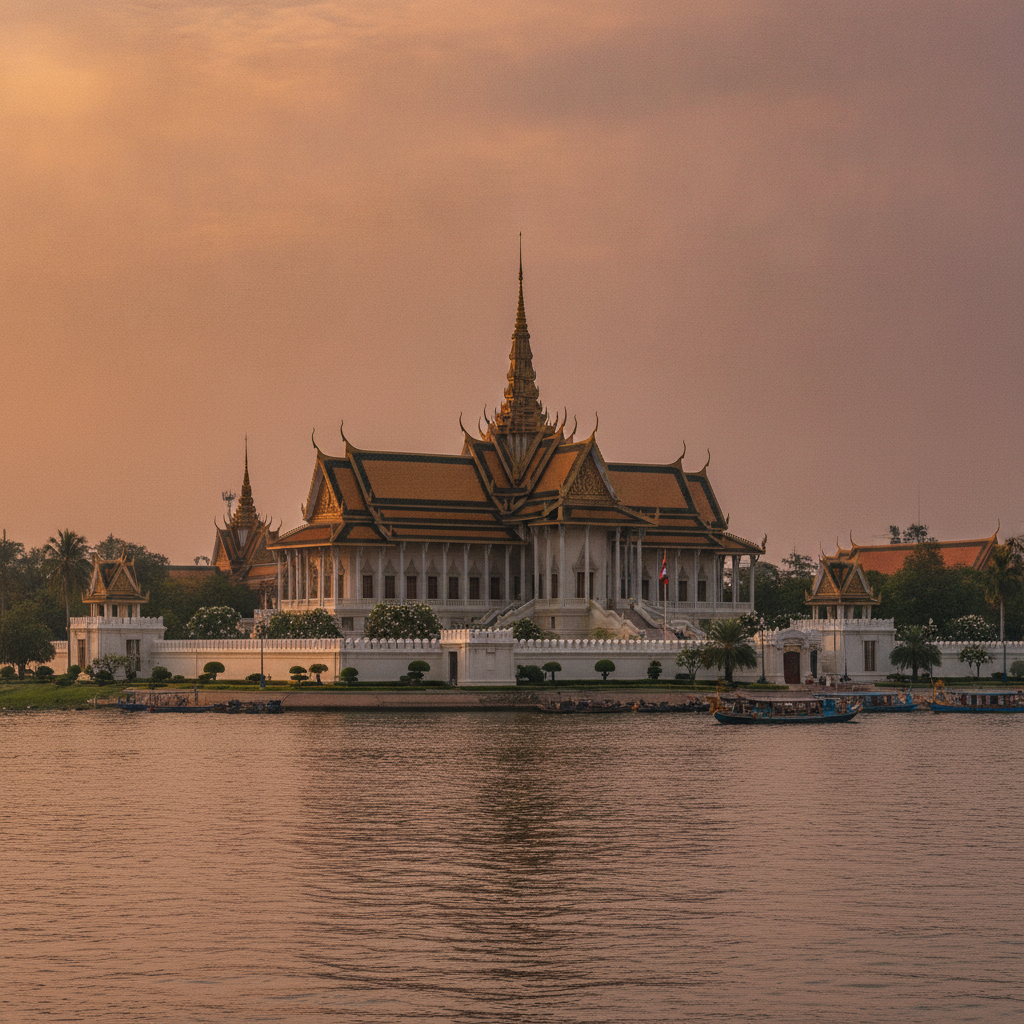
The Royal Palace of Cambodia (the official residence of King Norodom Sihamoni—the 30-hectare complex on the banks of the Tonle Sap River at its confluence with the Mekong, built in the late 19th century to replace the earlier wooden palace; the current complex dates primarily from 1866–1870 under French colonial supervision and 1913–1919 under King Sisowath) is the most important active royal residence in mainland Southeast Asia and the architectural centrepiece of Phnom Penh. The Throne Hall (the Preah Thineang Dheva Vinnichay—the audience hall where state ceremonies are held; the current building dates from 1917; the roof in the Khmer style with five peaks representing Mount Meru—the mythological centre of the Buddhist cosmos; the interior painted with scenes from the Reamker, the Khmer version of the Ramayana). The Silver Pagoda (the Preah Vihear Preah Keo Morokat—inside the Royal Palace compound; named for the 5,329 silver tiles covering the floor; houses the Emerald Buddha (the most sacred object in Cambodia, carved from crystal/baccarat glass—not emerald—and donated by King Norodom in 1892) and the gold Maitreya Buddha (90 kg of gold, set with 9,584 diamonds, the largest of which is 25 carats). The complex geometry: the Royal Palace and Silver Pagoda compound is the most cohesive example of Khmer palace architecture outside of Angkor—the white and yellow painted walls, the tiered roofs, and the manicured gardens constitute a complete environment that has been maintained continuously as a functioning royal residence rather than preserved as a museum.
- 2
Tuol Sleng Genocide Museum – Confronting the Khmer Rouge
Tuol Sleng (S-21—Security Prison 21 of the Khmer Rouge regime—a former secondary school converted in 1975 into the principal interrogation and detention facility of the Democratic Kampuchea government; the facility operated from 1975–1979; approximately 17,000–20,000 people were imprisoned here; fewer than 15 survived) is the most important genocide memorial in Southeast Asia and one of the most significant in the world. The context: the Khmer Rouge, under Pol Pot, governed Cambodia from 1975–1979 (the period designated Year Zero—the attempt to create an agrarian utopia by evacuating all cities, abolishing money and education, and eliminating all perceived enemies of the revolution); the regime killed an estimated 1.5–2 million people (17–25% of Cambodia's entire population) through execution, forced labour, starvation, and disease. The S-21 facility: the former school buildings were converted into cells; the classrooms divided into individual brick isolation cells; the school grounds surrounded by electrified barbed wire; the entire facility operated in total secrecy—the residents of Phnom Penh (which had been emptied of its population) were unaware it existed. The experience: the preserved cells, the torture equipment, the photographs (the systematic documentation of all prisoners by the Khmer Rouge—each prisoner photographed on arrival—has produced the most complete photographic record of a genocide in history), and the paintings by survivor Vann Nath (who survived because his skills as a portrait painter were needed to produce images of Pol Pot)—create one of the most emotionally devastating museum experiences in the world.
- 3
Choeung Ek Killing Fields – Cambodia's Most Painful Memorial
Choeung Ek (15 km south of central Phnom Penh—accessible by tuk-tuk in 30–40 minutes): the principal execution site of the S-21 system; the orchard and burial ground where prisoners transferred from Tuol Sleng were executed and buried in mass graves. The site: the 9-hectare former Chinese cemetery and fruit orchard was selected for executions because it was remote from the empty city, already had land that could be disturbed without visual suspicion, and had existing structures (an abandoned Chinese school) for the guards. The numbers: between 1975 and 1979, approximately 8,985 bodies were exhumed from the 129 mass graves identified at Choeung Ek (86 of which have been excavated); the remaining 43 graves were left intact as a matter of respect. The Stupa: the Memorial Stupa (built 1988)—a glass-sided tower 17 metres high containing the skulls and bones of 5,000 victims exhumed from the graves—is the central monument of the memorial; the skulls are arranged by age and sex; the visual impact (the stupa visible from the entrance road) is among the most confronting memorial architecture in the world. The path: the audio guide (available in 18 languages—the most comprehensive genocide memorial audio guide in Southeast Asia) leads visitors along a path past the excavated graves, the 'magic tree' (from which loudspeakers played Khmer Rouge music to mask the sounds of execution), the children's grave (where skulls of children and infants were found), and the chemical pit (where DDT and chemicals were poured into graves to mask the smell and kill survivors).
- 4
Phnom Penh's Riverfront & the Tonle Sap Reversal
The Phnom Penh riverfront (the Sisowath Quay—the 2-km promenade running along the Tonle Sap River where it meets the Mekong, lined with restaurants, bars, and hotels; the most visited urban promenade in Cambodia) commands the most geographically unusual river confluence in the world. The four rivers of Phnom Penh: at the Chaktomuk (the 'four faces'—the Cambodian name for the confluence): the Mekong flows north to south; the Tonle Sap flows north (from the Tonle Sap Lake) into the Mekong during the dry season (November–May); during the wet season (June–October), when the Mekong's flood volume exceeds the drainage capacity of the river delta, the combined flow reverses—the Tonle Sap River flows backwards (south to north) for approximately 5–6 months, pushing Mekong water into the Tonle Sap Lake, which expands from 2,500 km² to 14,000 km². The Bon Om Touk (Water Festival): the Tonle Sap River Reversal (the exact moment when the river flow changes direction) is celebrated as Bon Om Touk (the Cambodian Water Festival—held on the full moon of the month of Kadeuk, usually November)—the most important secular festival in Cambodia; the three-day celebration includes boat racing on the river (the largest boat race in Southeast Asia—more than 400 boats, 10,000 oarsmen), fireworks, and the illumination of the riverfront.
- 5
The Phnom Penh Food Scene – Khmer Cuisine & the Colonial Legacy
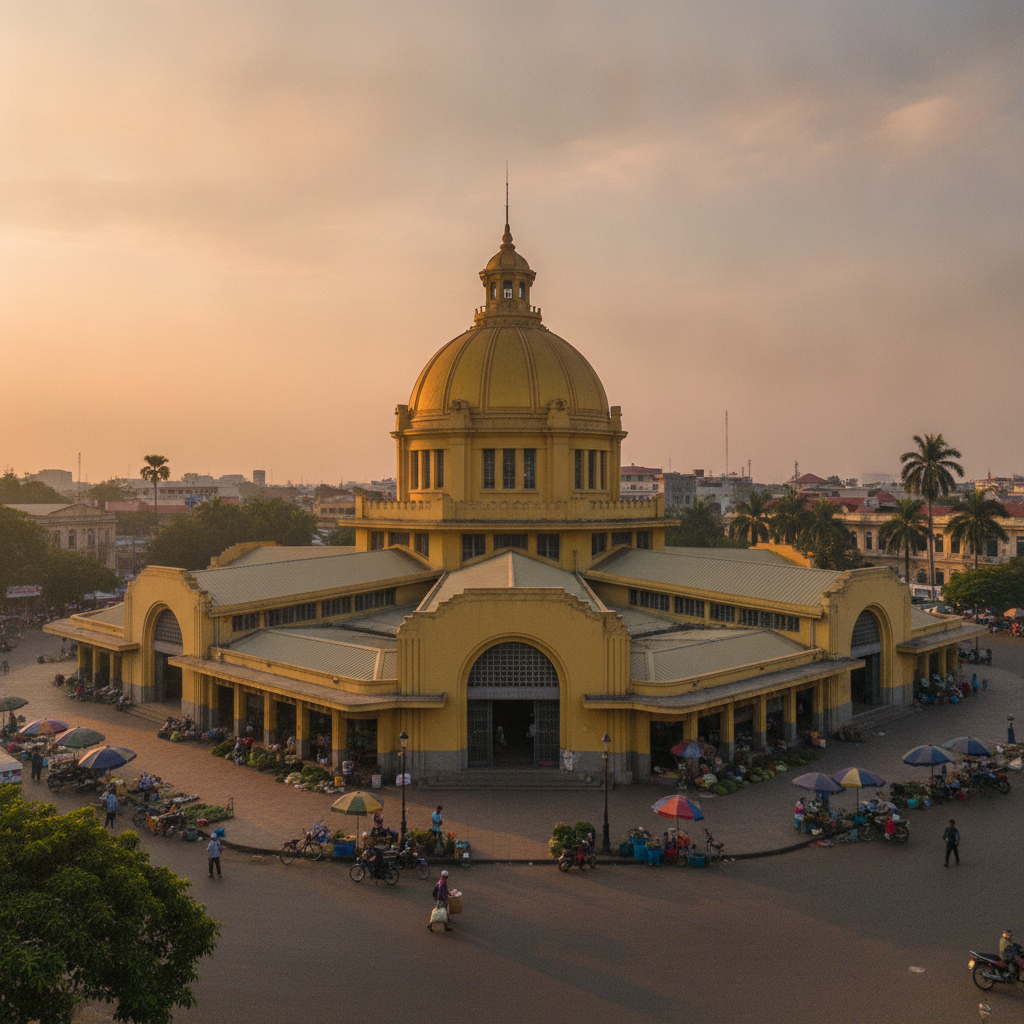
The Phnom Penh food scene—the most internationally diverse in mainland Southeast Asia after Bangkok—combines the sophisticated Khmer culinary tradition with the legacy of French colonial cuisine (50 years of French presence, 1863–1953) and the influence of the Vietnamese, Chinese, and Indian communities that have historically populated the city. The Khmer culinary tradition: fish amok (the national dish of Cambodia—a steamed curry of freshwater fish in coconut milk and kroeung paste—a complex spice paste made from galangal, lemongrass, turmeric, kaffir lime leaves, and shrimp paste; the texture is set (between a curry and a steamed custard) by the luk chey technique; the best versions are steamed in a banana leaf cup); lok lak (stir-fried beef with oyster sauce, served on a bed of lettuce, tomato, and cucumber with a lime-pepper dipping sauce and a fried egg); bai sach chrouk (grilled pork over broken rice—the most popular Phnom Penh breakfast, available at the street stalls from 06:00–09:00). The French legacy: the Central Market (Psar Thmei—the Art Deco market built in 1937 under the French administration—one of the largest Art Deco structures in Southeast Asia; the dome is 26 metres in diameter; four wings extending from the central dome sell gold, clothing, electronics, and food); the French baguette (the most visible colonial food legacy—sold at every Phnom Penh street stall, often as a sandwich with pâté and pickled vegetables—the Cambodian version of the bánh mì).
- 6
Practical Phnom Penh – Getting Around, Money & Day Trips
Getting to Phnom Penh: the Phnom Penh International Airport (PNH—7 km west of the city centre; direct connections to Bangkok, Ho Chi Minh City, Singapore, Kuala Lumpur, Hong Kong, and Guangzhou; no direct flights from Europe or North America—connection required). Getting around the city: the tuk-tuk (the standard Phnom Penh vehicle—a motorcycle pulling a covered passenger carriage; PHP 2–4 per short trip; book via the PassApp or Grab app for metered pricing, otherwise negotiate before boarding); the remork (a larger, more comfortable variant of the tuk-tuk, preferred for longer journeys); motorcycle taxis (the fastest option for single passengers navigating traffic). The money: the Cambodian Riel (KHR) is the official currency but the US dollar is accepted everywhere in Phnom Penh and is the de facto currency of all significant transactions; prices are quoted in dollars; change is given in Riel for amounts under USD 1 (at the de facto rate of KHR 4,000/USD). Day trips from Phnom Penh: the Udong mountain (40 km north—the former Cambodian capital with hilltop temple remains, 1 hour by tuk-tuk); the Mekong dolphin villages (150 km northeast near Kratie—the freshwater Irrawaddy dolphins that inhabit the upper Mekong, 3 hours by bus—the most unusual wildlife day trip from any Southeast Asian capital); Kampot (150 km south—the charming riverside colonial town known for black pepper cultivation and a slower pace of life, 2.5 hours by bus).
Walk this route with audio
Stories play automatically as you reach each stop — no tapping needed.
More in Phnom Penh
Phnom Penh's Hardest Questions: USD 330M Tribunal for 3 Convictions, the Orphanage Tourism Scam That Involved 70% of Facilities & What the City Asks You Not to Skip
Phnom Penh's Complete Picture: From No Currency in 1975 to USD 7 Billion Garment Exports, Vann Molyvann's Demolished Khmer Bauhaus & the Mekong Speedboat to Vietnam
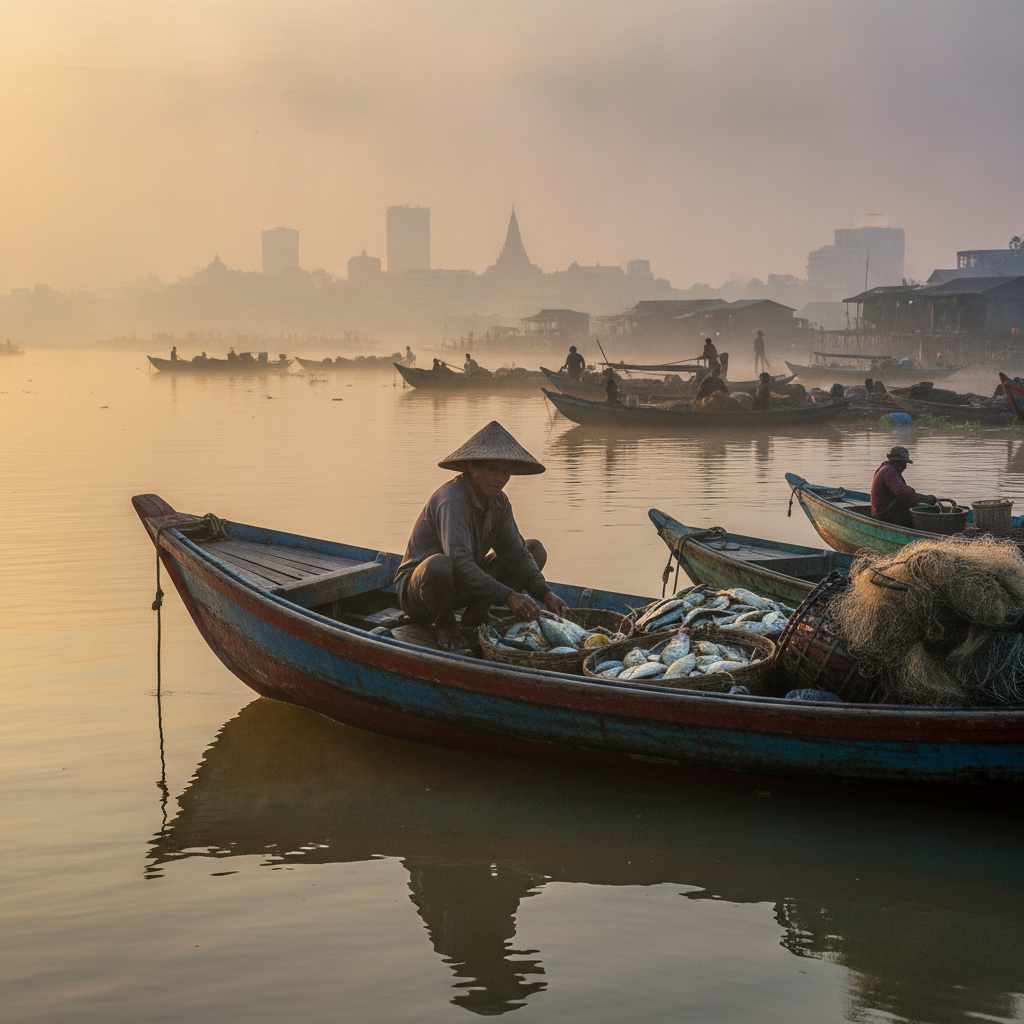
Phnom Penh's Parallel City: 10,000 People in Floating Houses, the Chinese Investment Wave That Built 40,000 Unsold Condominiums & Why the Genocide Memorials Cannot Be Optional
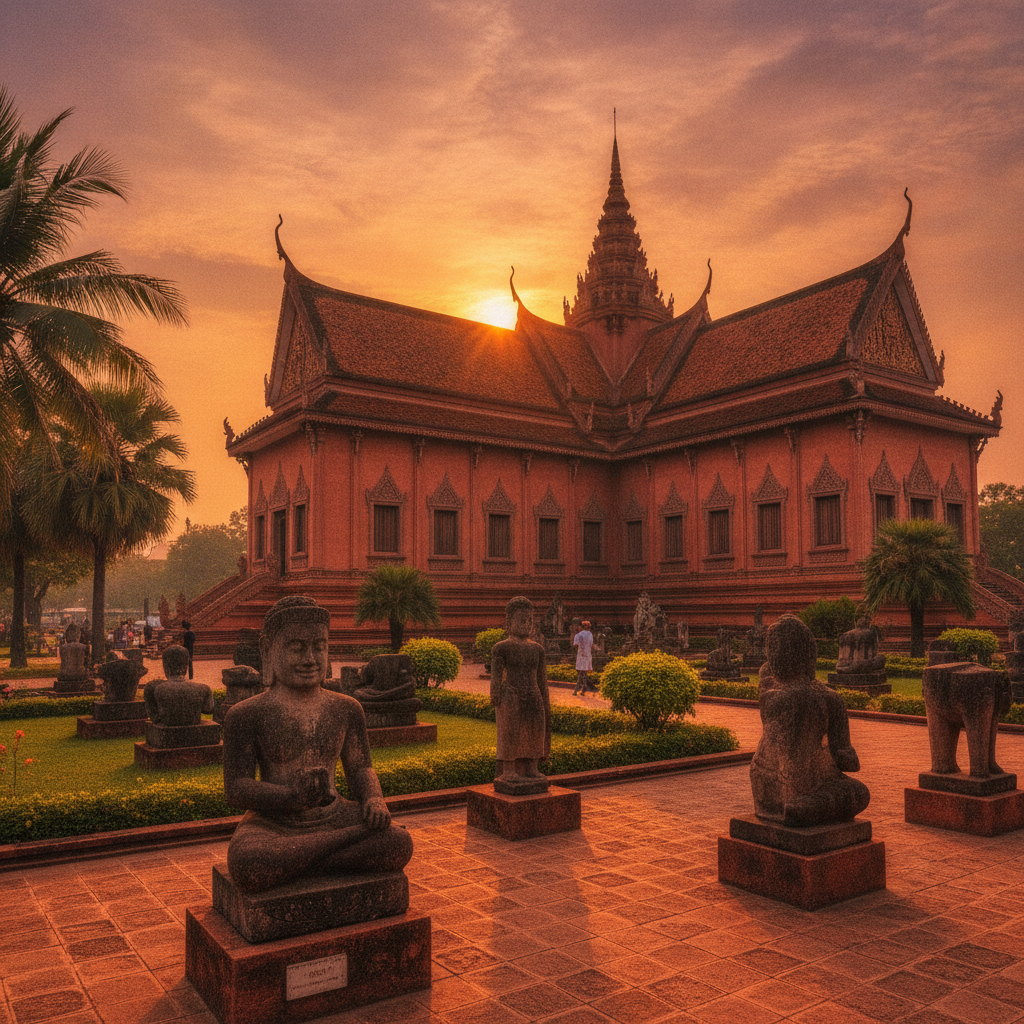
Phnom Penh's Reconstruction: The City Emptied in 1975 and Rebuilt from Zero Since 1979—40 Years of the Most Compressed Urban History in Asia