Phnom Penh's Parallel City: 10,000 People in Floating Houses, the Chinese Investment Wave That Built 40,000 Unsold Condominiums & Why the Genocide Memorials Cannot Be Optional
The Cham Muslim floating village fishers producing prahok fermented fish paste from Mekong catches in a tradition predating the Cambodian state; Brown Coffee's 40+ location Cambodian specialty chain growing faster than any Southeast Asian café brand since 2009; Chinese investment equalling 40% of Cambodian GDP between 2013–2022 while Cambodia became ASEAN's most consistent Chinese diplomatic proxy in South China Sea disputes; the PassApp evening tuk-tuk circuit from Night Market to Russian Market to Street 51 cocktails as the definitive Phnom Penh night; Preah Vihear's 800-metre temple approach sequence on a cliff edge over the Cambodian plain and the armed border conflict that killed 28 soldiers over a 4.6 km² zone; and why visiting Tuol Sleng and Choeung Ek on the same day as a riverside dinner cruise is the wrong choice—and why the city's cultural recovery programmes are the necessary second half of the story.
- 1
The Phnom Penh River Life – Floating Villages & Tonle Sap Fishers
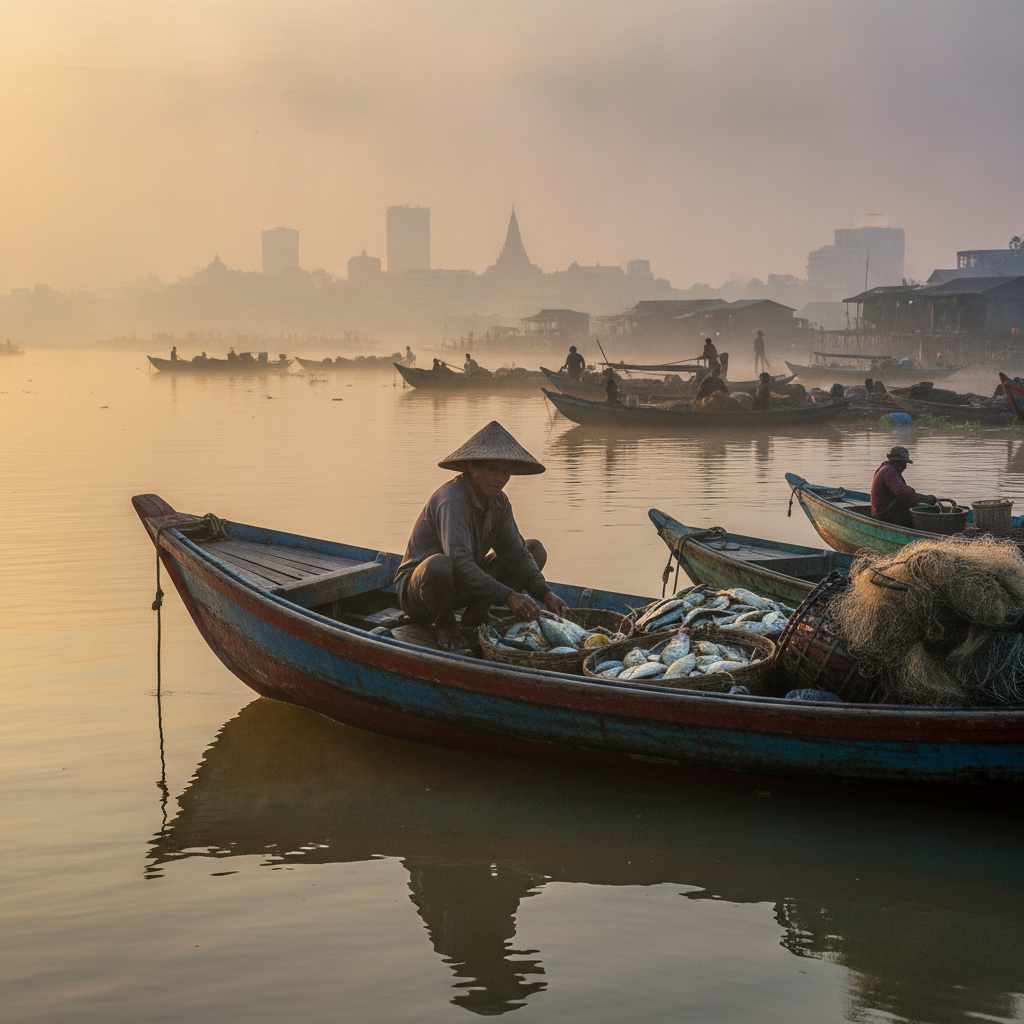
The river life of Phnom Penh—the floating villages on the Tonle Sap River immediately north of the city centre, the fishing fleet that supplies the pre-dawn wholesale market, and the commercial traffic of the Mekong—constitutes a parallel urban system that is geographically adjacent to the city but socially invisible to most visitors. The floating villages: the floating communities on the Tonle Sap River (north of the Chaktomuk confluence, accessible by boat from the Phnom Penh riverfront) are home to approximately 10,000 people—predominantly Vietnamese-Cambodian families and Cham Muslim fishing communities—who live on floating houses that rise and fall with the seasonal flood pulse. The boat trip: the sunset river cruise from the Phnom Penh riverfront (multiple operators—USD 8–15 per person, 1.5–2 hours) passes the Royal Palace water gate, the floating village communities, and the Chaktomuk confluence—the most complete single experience of the city's river geography available to visitors. The Cham fishing communities: the Cham (Muslim Cambodians—descendants of the Cham Kingdom of central Vietnam, which was absorbed by Vietnamese expansion southward in the 15th century; a population of approximately 400,000 in Cambodia, concentrated along the Mekong River) are the most specialised freshwater fishers in Cambodia; the Cham fishing methods (the trey ngeat—dried and smoked fish) contribute significantly to the prahok production.
- 2
The Phnom Penh Coffee Culture & Café Scene
The Phnom Penh café culture—the most dynamic in mainland Southeast Asia after Hanoi and Saigon—has developed rapidly since 2015 under the influence of the returning Cambodian diaspora (young Cambodians educated abroad and returning with international café culture experience), the expatriate community, and the growing urban middle class. The Cambodian coffee tradition: Cambodian coffee (grown in the Mondulkiri and Ratanakiri highlands in the northeast—a small but high-quality production of Robusta and Arabica varieties, relatively unknown internationally but gaining recognition in the specialty coffee community) is the foundation of a coffee culture that is simultaneously rooted in the Cambodian iced coffee tradition (café glacé—strong drip coffee over ice with sweetened condensed milk—the French colonial legacy transformed into the Southeast Asian classic) and the contemporary specialty coffee movement. The café geography: the café cluster around Street 240 and 51 (the 'café street' in BKK1); the riverside cafés on Sisowath Quay (more tourist-oriented but with the best views); the Toul Kork residential café district (the most local and least tourist-oriented—the neighbourhood cafés where the young Phnom Penh creative class works and meets). The notable: Brown Coffee (the Cambodian specialty coffee chain with 40+ locations, founded 2009—the most successful local café brand in Southeast Asia by growth rate); Café Amazon (the Thai 7-Eleven-associated chain that is the most widely distributed café in Cambodia).
- 3
The Cambodia–China Development Story in Phnom Penh
The Chinese investment presence in Phnom Penh—the most significant foreign economic relationship in contemporary Cambodia—has transformed the city's skyline, its political economy, and the composition of its expatriate community over the past decade. The investment: Chinese investment in Cambodia totalled approximately USD 10 billion between 2013 and 2022 (equivalent to approximately 40% of Cambodia's GDP); the primary sectors are real estate (the Phnom Penh condominium construction boom that produced 40,000+ unsold units by 2022), manufacturing (garment sector investment), casino development (Sihanoukville—the coastal city that was transformed from a beach town to a Chinese casino hub between 2016 and 2019 and then collapsed when China banned online gambling in 2019), and infrastructure (the Phnom Penh–Sihanoukville expressway, 2022). The demographic impact: the Chinese population in Phnom Penh rose from approximately 5,000 in 2012 to 50,000–70,000 in 2019 (peak) before declining somewhat after the Sihanoukville casino collapse; the BKK1 and Chamkar Mon districts saw significant Chinese business and residential presence; Chinese-language signage became widespread across the city. The political dimension: Cambodia's close China relationship (Cambodia has been the most consistent ASEAN member supporting Chinese positions in South China Sea disputes) has reduced Cambodian diplomatic flexibility and generated significant Western concern about Chinese strategic influence.
- 4
Phnom Penh by Night – Tuk-tuk Routes After Dark
The night tuk-tuk experience of Phnom Penh—the city seen from the back of a motorised carriage navigating the evening streets from the riverfront to the night markets to the bar district—is the most characteristically Phnom Penh mode of urban experiencing: slow enough to observe, open to the night air, and flexible enough to stop wherever seems interesting. The evening circuit: depart the Sisowath Quay Night Market (17:00–18:00 for the market energy before the dinner crowd arrives); the Royal Palace at dusk (the exterior illuminated, the guards changing); the Russian Market at night (operating until 20:00—the craft and clothing vendors under fluorescent lights); the Street 278 restaurant strip for dinner; the Street 51 bar strip for cocktails. The tuk-tuk negotiation: the Phnom Penh tuk-tuk rate for a full evening circuit should be negotiated in advance (USD 10–15 for 3–4 hours with waiting included); the PassApp or Grab booking gives a metered rate (approximately USD 2–3 per short hop) but a negotiated personal driver who waits gives a better experience for a multi-stop evening. The safe-passage context: Phnom Penh's safety situation has improved dramatically since 2010; handbag and phone snatching from tuk-tuks (which was common 2000–2015) has reduced significantly; the standard precautions (keeping bags inside the tuk-tuk, not using phones overtly in traffic) are appropriate but the city is no longer considered dangerous by Southeast Asian urban standards.
- 5
The Preah Vihear Temple & Cambodia's Northern Heritage
Preah Vihear (the 11th-century Khmer temple built under Suryavarman I on a cliff edge at 625 metres elevation on the Dangrek Escarpment—the natural border between Cambodia and Thailand; designated a UNESCO World Heritage Site in 2008; the centre of a territorial dispute between Cambodia and Thailand that led to armed skirmishes in 2008–2011, killing at least 28 people) is the most dramatic Khmer temple site in Cambodia outside of Angkor—and the most politically charged. The temple: the 800-metre-long series of sanctuaries connected by staircases and processional avenues, ascending to the summit shrine, is the most architecturally theatrical approach sequence in Khmer architecture—the view from the summit (over the Cambodian plain, 525 metres below) was designed to create the sensation of approaching the divine realm from the human world. The territorial dispute: the temple sits on the Cambodian side of the border (determined by the ICJ in 1962 and reaffirmed in 2013) but is most easily accessible from Thailand; the 2008–2011 armed conflict (between Cambodian and Thai military forces over a 4.6 km² buffer zone adjacent to the temple) killed 28 soldiers and displaced 85,000 civilians from border villages before a ceasefire negotiated in 2011. The access from Phnom Penh: approximately 8 hours by road via Kompong Thom—requiring an overnight stay; most visitors access via Siem Reap (5 hours) or from the Thai side (when the border is open).
- 6
Phnom Penh's Emotional Weight – Processing the Visit
No other capital city in the world places its visitors in closer proximity to the evidence of recent mass atrocity than Phnom Penh: the genocide memorial sites are within 15 minutes of the hotel strip; the surviving perpetrators are or were alive; the survivors are the people serving in the restaurants and driving the tuk-tuks; and the physical evidence (the mass graves, the torture rooms, the photographs) has been preserved rather than redeveloped. The processing: the recommendation of every experienced Phnom Penh guide is to not attempt to visit Tuol Sleng and Choeung Ek on the same day as intensive cultural sightseeing; the memorials require their own half-day or full day, with time after for quiet reflection rather than the immediate transition to a restaurant or a riverfront bar. The witness testimony: the surviving victims and their descendants speak through the documentation, the survivor testimony (recorded at both sites and available in multiple languages), and through the tribunal hearings (available on the ECCC website in full); the engagement with the evidence is voluntary but comprehensive. The resilience testimony: the cultural recovery programmes (Cambodian Living Arts, Phare Ponleu Selpak, the National Museum's education programme) present the counterpoint—what was rebuilt and what is being rebuilt—and provide the necessary completion of the Phnom Penh narrative that the genocide memorials open. The standard of comparison: every subsequent Southeast Asian genocide memorial (the Rangoon memorials of the Rohingya crisis, the Myanmar military coup documentation) is measured against the Phnom Penh standard—the city that processed its atrocity into the most complete and accessible memorial system in Asia.
Walk this route with audio
Stories play automatically as you reach each stop — no tapping needed.
More in Phnom Penh
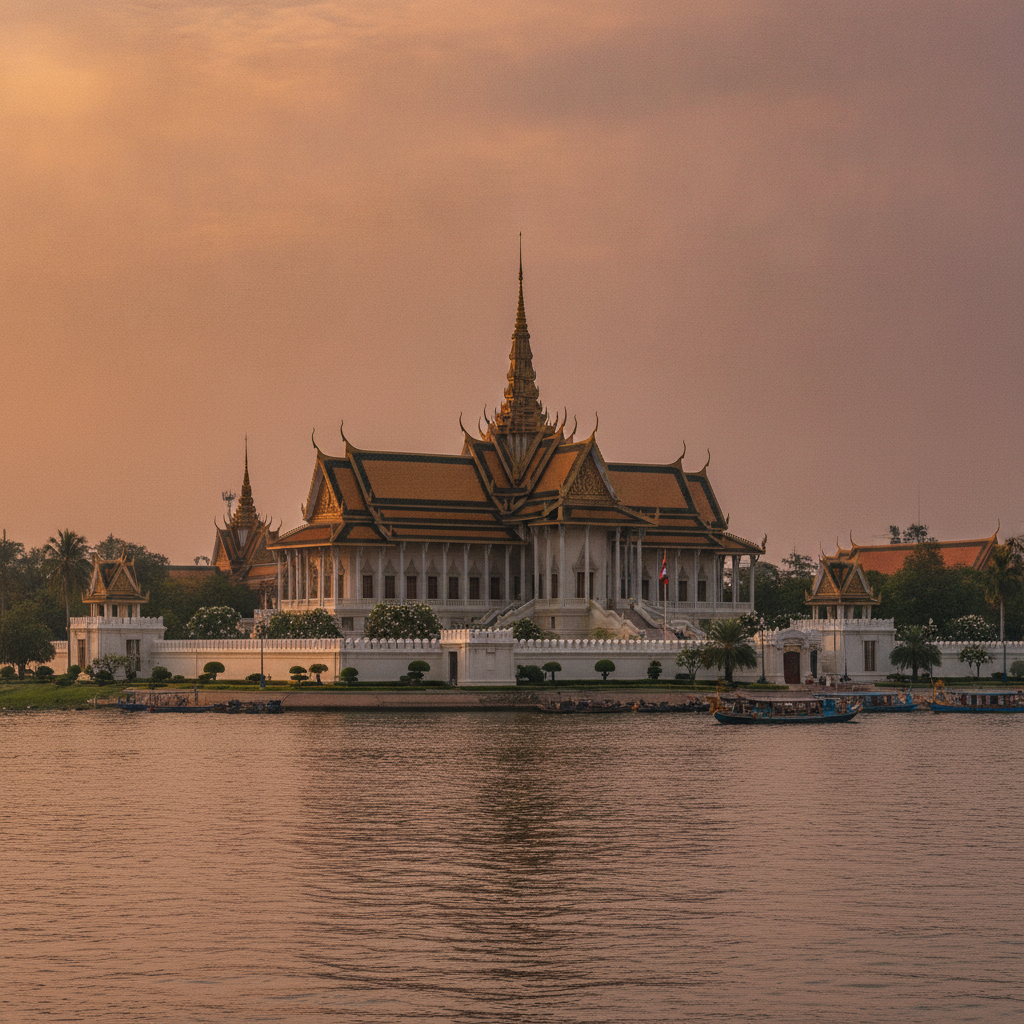
Phnom Penh: The Silver Pagoda's 5,329 Floor Tiles, the S-21 Photographs of 17,000 Prisoners & the River That Flows Backwards for 5 Months Every Year
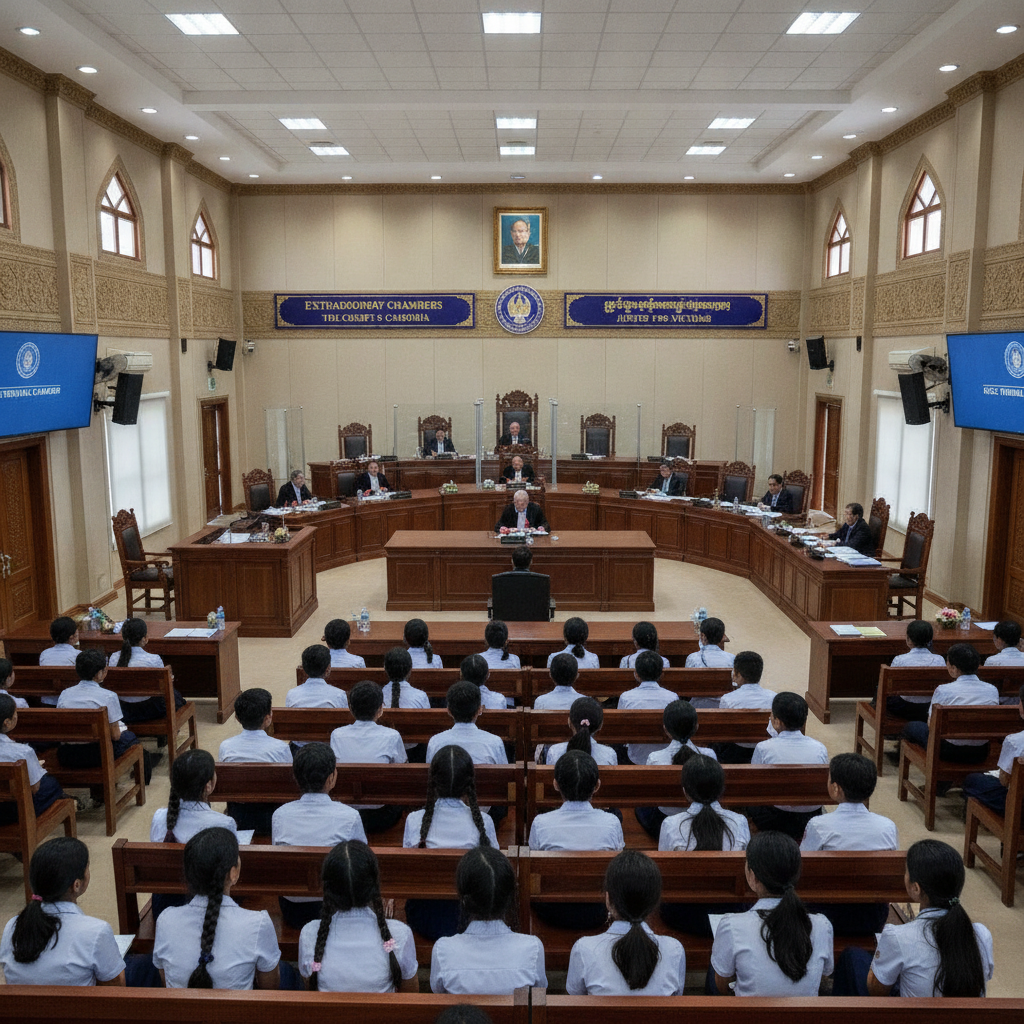
Phnom Penh's Hardest Questions: USD 330M Tribunal for 3 Convictions, the Orphanage Tourism Scam That Involved 70% of Facilities & What the City Asks You Not to Skip
Phnom Penh's Complete Picture: From No Currency in 1975 to USD 7 Billion Garment Exports, Vann Molyvann's Demolished Khmer Bauhaus & the Mekong Speedboat to Vietnam
Phnom Penh's Reconstruction: The City Emptied in 1975 and Rebuilt from Zero Since 1979—40 Years of the Most Compressed Urban History in Asia