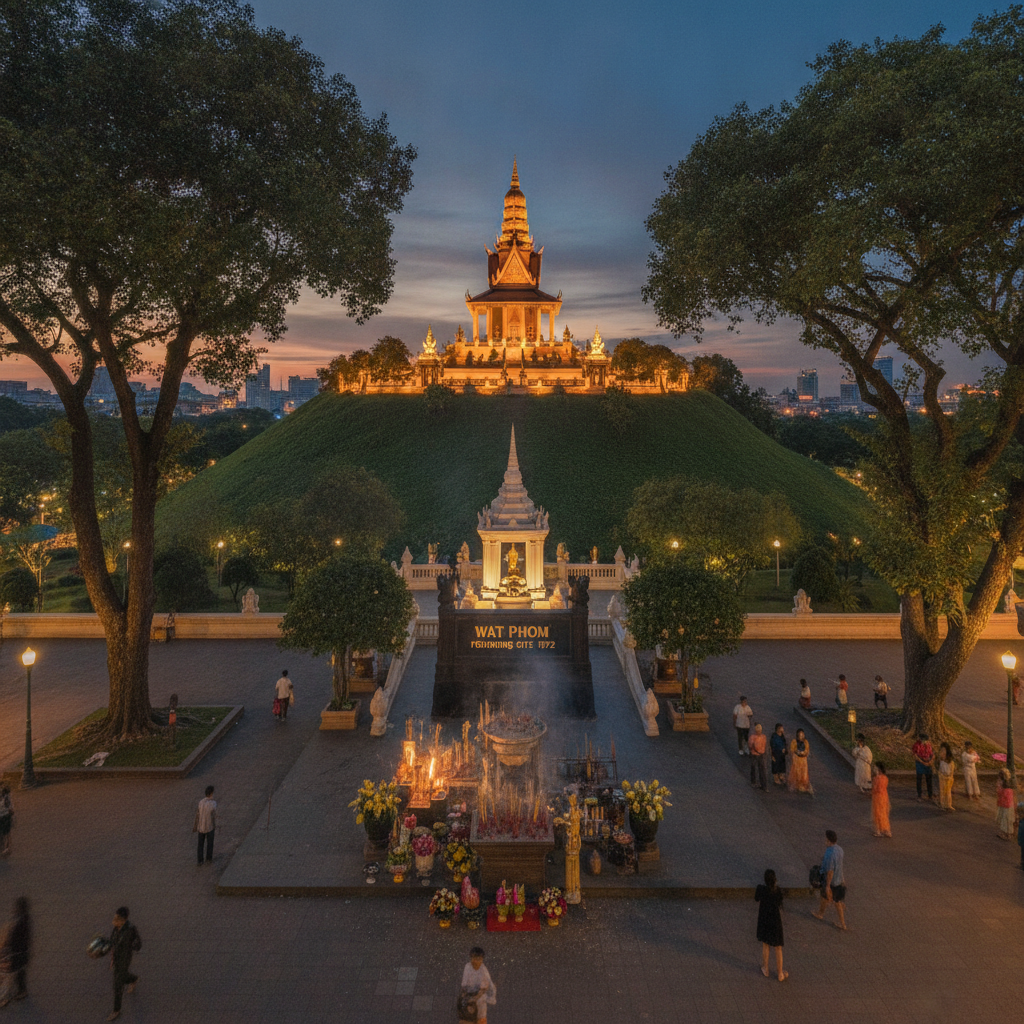
Phnom Penh's Reconstruction: The City Emptied in 1975 and Rebuilt from Zero Since 1979—40 Years of the Most Compressed Urban History in Asia
The National Museum's Harihara of Prasat Andet as the most technically refined 7th-century Khmer sculpture; the city that the Khmer Rouge blew up the National Bank of and demolished the Catholic cathedral of—and that has been rebuilt almost entirely since Vietnamese forces entered in January 1979; the Russian Market's factory-reject H&M jeans at USD 3 while the original market is USD 120; the FCC established 1993 as the institution of the press community that covered the Hun Sen consolidation; garment workers' minimum wage rising from USD 61 to USD 204 between 2012 and 2023 after four workers were killed in the 2014 strike; and the Apsara dance reconstructed from the memories of surviving masters and the bas-reliefs of Angkor after 80–90% of Cambodia's artists were killed.
- 1
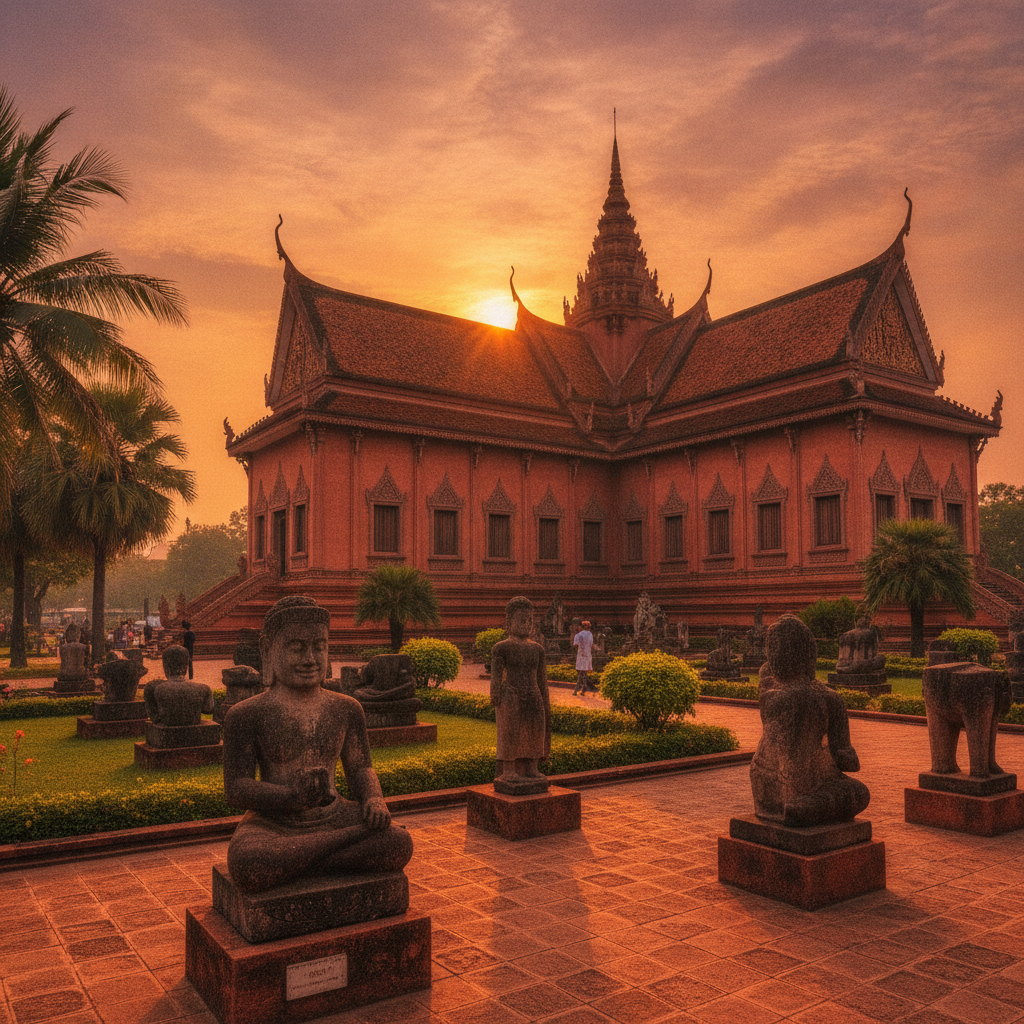
The National Museum of Cambodia – Khmer Art from the Pre-Angkorian to the Post-Colonial
The National Museum of Cambodia (the Musée des Beaux-Arts—built 1917–1920 in Khmer Revival style under the direction of French archaeologist and architect George Groslier; located immediately north of the Royal Palace compound) is the most important collection of Khmer art and sculpture in the world—more significant than any collection outside Cambodia, and the principal reference institution for the study of Khmer civilisation. The collection: 14,000 objects spanning from the pre-Angkorian period (5th–8th centuries CE) through the Angkorian period (9th–15th centuries) and the post-Angkorian period to the present; the most important objects include: the Harihara of Prasat Andet (a 7th-century sandstone sculpture considered the most technically refined early Khmer sculpture extant); the Leper King sculpture (a 13th-century sandstone piece of uncertain identification—possibly representing Yasovarman I or Kubera, the god of wealth); and the collection of Angkorian bronzes (the most comprehensive survey of the Khmer bronze-casting tradition, produced between the 9th and 13th centuries). The architecture: the museum building itself is a significant work—a red-laterite structure in the Khmer temple style with a courtyard garden, the first major Khmer Revival building constructed under French colonialism and the template for subsequent Cambodian public architecture.
- 2
Phnom Penh's Post-Khmer Rouge Reconstruction – The City Rebuilt
The Phnom Penh urban fabric presents one of the most extreme cases of post-genocide urban reconstruction in the world: the city that was emptied of its entire population (2 million people) on 17 April 1975 and repopulated beginning 7 January 1979 (the day Vietnamese forces entered the city, ending the Khmer Rouge regime) has been rebuilt almost entirely from scratch over 45 years, creating a city where the history of urban development is compressed into the post-1979 period. The emptied city: between 1975 and 1979, Phnom Penh was occupied only by Khmer Rouge soldiers and officials; the evacuated residents were sent to work camps in the countryside; the residential buildings, banks, schools, hospitals, and shops were left empty; the National Bank was blown up; the Catholic cathedral was demolished; the currency was abolished. The 1979 return: when Vietnamese forces entered Phnom Penh in January 1979, the city was essentially empty; the returning population (urban Cambodians who had survived the camps) had to re-establish every urban function from scratch—the market system, the schools, the healthcare. The current city: the modern Phnom Penh (2.2 million population, GDP per capita growing at 6–8% annually since 2000) has been built almost entirely since 1979—the colonial-era French buildings (the National Museum, the Royal Palace, the Central Market, the Post Office, the riverside hotels) are the oldest standing structures in most districts.
- 3
The Russian Market & Phnom Penh Shopping
The Psar Toul Tom Poung (the Russian Market—named for the Soviet and Eastern Bloc diplomats who shopped here in the 1980s when it was the only market operating in the reconstructed city, and one of the few places foreigners could obtain goods) is the most visited local market in Phnom Penh and the best shopping destination for crafts, textiles, and factory surplus clothing. The market geography: the central covered market building (1,000+ stalls selling silk, silver jewellery, wood carvings, Buddhist statues, Khmer textiles, and the factory-reject or overrun clothing from the garment factories that make up 80% of Cambodia's export economy); the surrounding street market (extending for 4 city blocks, selling fresh produce, street food, motorcycle parts, and household goods). The factory rejects: the most economically significant section of the Russian Market for budget travellers—the stalls selling branded clothing rejected from the garment factories (Gap, H&M, Levi's, Under Armour—manufactured in the Phnom Penh Special Economic Zone factories) at prices of USD 2–8 per item versus USD 50–150 retail in the brand's home markets. The silver: the Cambodian silver jewellery tradition—specialising in the intricate repousse work on bowls, boxes, and jewellery—is best purchased at the Russian Market's silver section (prices significantly below the tourist-oriented shops on Sisowath Quay).
- 4
Phnom Penh's Nightlife & the Riverside Bar Scene
Phnom Penh's nightlife—the most vibrant in mainland Southeast Asia outside of Bangkok and Yangon—is concentrated along the Sisowath Quay (the riverside promenade from the Night Market at the north end to the Foreign Correspondents' Club at the south), in the BKK1 district (the expatriate residential neighbourhood southwest of the city centre, with the highest concentration of restaurants and bars), and in the Street 51 and Street 278 bar strips. The riverside: the bars and restaurants of the Sisowath Quay (Elephant Bar at the Raffles Le Royal—the most expensive bar in Cambodia; the Rooftop Bar at the Quay Hotel—the most popular for sunset views over the river; the FCC—the Foreign Correspondents' Club, established 1993, the institution of the post-war press community that covered the Hun Sen period). The BKK1 district: the expatriate cluster around Street 278 ('Broken Street'—named for its persistent construction) has developed into the most sophisticated restaurant and bar district in the city, with a concentration of cocktail bars, wine bars, and international restaurants within a 5-block radius. The Cambodian music scene: the live music venues of Phnom Penh (Meta House—a German cultural centre hosting Cambodian film screenings and live music; Cadillac Bar and Restaurant—the long-established live music venue with Cambodian rock bands).
- 5
The Garment Industry – Cambodia's Economic Engine
The Cambodian garment industry—the most important sector of the Cambodian economy (accounting for approximately 80% of Cambodia's total exports and 16% of GDP in 2023)—is based primarily in the Phnom Penh Special Economic Zone and in factories along the main roads connecting Phnom Penh to Sihanoukville. The scale: approximately 600,000 workers (predominantly women from rural provinces) are employed in the garment sector; the factories produce for H&M, Gap, Zara, Marks & Spencer, and most major European and North American fashion brands. The labour conditions: the Cambodian garment industry has been the site of the most internationally visible labour rights disputes in Southeast Asia: the 2012–2014 factory strikes (workers demanding wage increases from USD 61/month to USD 160/month—the USD 61 minimum wage was among the lowest in Asia for garment workers); the 2014 security force response to striking workers (four workers killed, approximately 40 injured at the Veng Sreng Boulevard strike—the most serious labour-related violence in Cambodia since 1998). The wage trajectory: the Cambodian garment minimum wage has risen from USD 61/month in 2012 to USD 204/month in 2023—the product of successive rounds of negotiation between factory owners, the government (GMAC, the Garment Manufacturers Association of Cambodia), and trade unions (CCFU and others). The ethical consumption connection: every purchase of Cambodian-made clothing from a major international brand connects the consumer to this industry.
- 6
Beyond the Genocide – Cambodia's Cultural Resilience
The cultural recovery of Cambodia since 1979—the reconstruction of the artistic, intellectual, and spiritual life of a country that lost an estimated 80–90% of its artists, musicians, teachers, monks, and intellectuals during the Khmer Rouge period—is the most remarkable cultural recovery story of the 20th century. The arts: the classical Cambodian arts (Apsara dance—the court dance tradition that traces its origins to the 7th century; shadow puppetry (sbaek thom and sbaek touch); the Khmer classical music tradition using the pinpeat ensemble of xylophones, gongs, and oboe)—were almost completely destroyed by the Khmer Rouge (who regarded all traditional arts as elements of the feudal culture to be eliminated); they have been painstakingly reconstructed from the memories of the handful of surviving masters, the French colonial documentation (photographs, film, written notation), and the bas-reliefs of Angkor Wat (which depict the dance forms in stone). The reconstruction institutions: the Royal University of Fine Arts in Phnom Penh (re-established 1980 from nothing), the Cambodian Living Arts NGO (founded by Arn Chorn-Pond, a child soldier survivor who became a flutist and cultural preservation activist), and the network of master artists who survived by concealing their skills during the Khmer Rouge period. The Apsara today: the Apsara dance performances at the National Museum courtyard (Tuesday and Thursday evenings) and the restaurant performances (at Malis and other Phnom Penh restaurants) represent the living continuation of a tradition that was technically extinct in 1979 and has been rebuilt in 45 years.
Walk this route with audio
Stories play automatically as you reach each stop — no tapping needed.
More in Phnom Penh
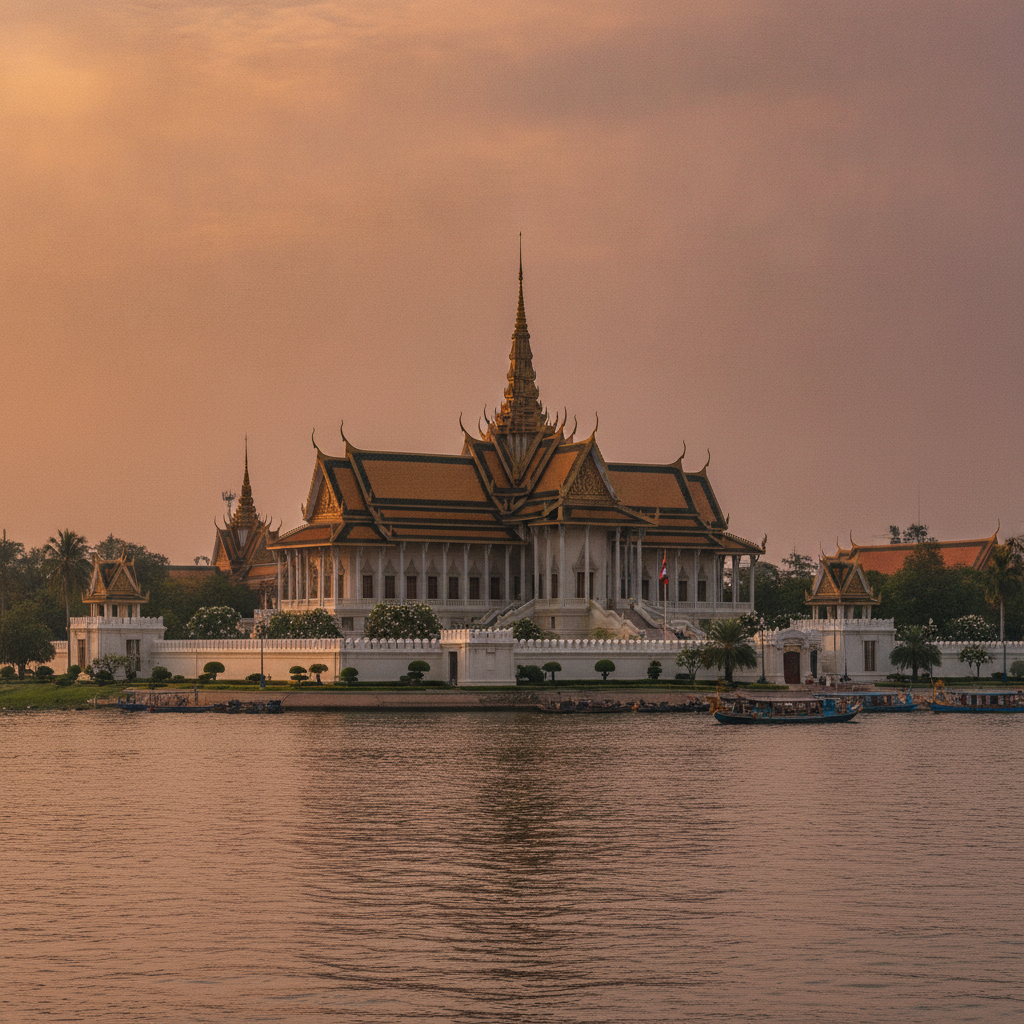
Phnom Penh: The Silver Pagoda's 5,329 Floor Tiles, the S-21 Photographs of 17,000 Prisoners & the River That Flows Backwards for 5 Months Every Year
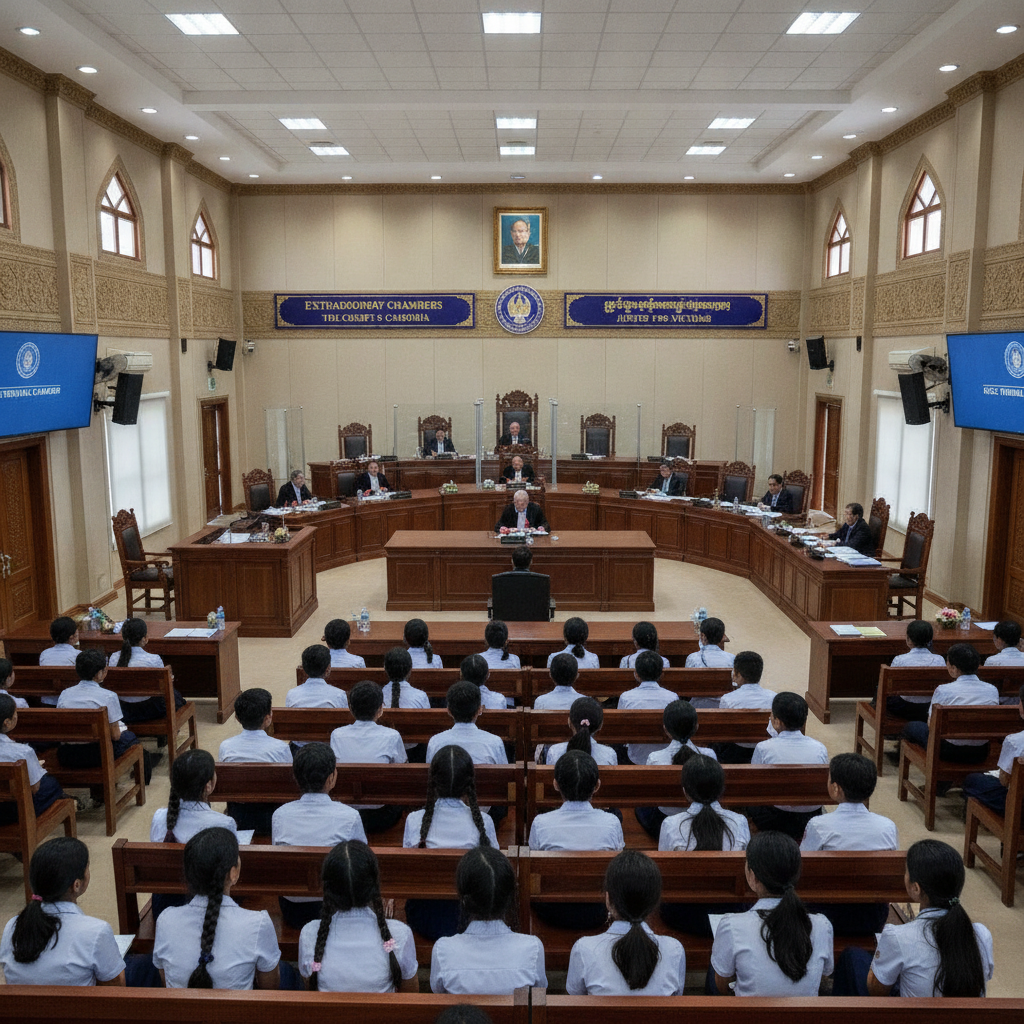
Phnom Penh's Hardest Questions: USD 330M Tribunal for 3 Convictions, the Orphanage Tourism Scam That Involved 70% of Facilities & What the City Asks You Not to Skip
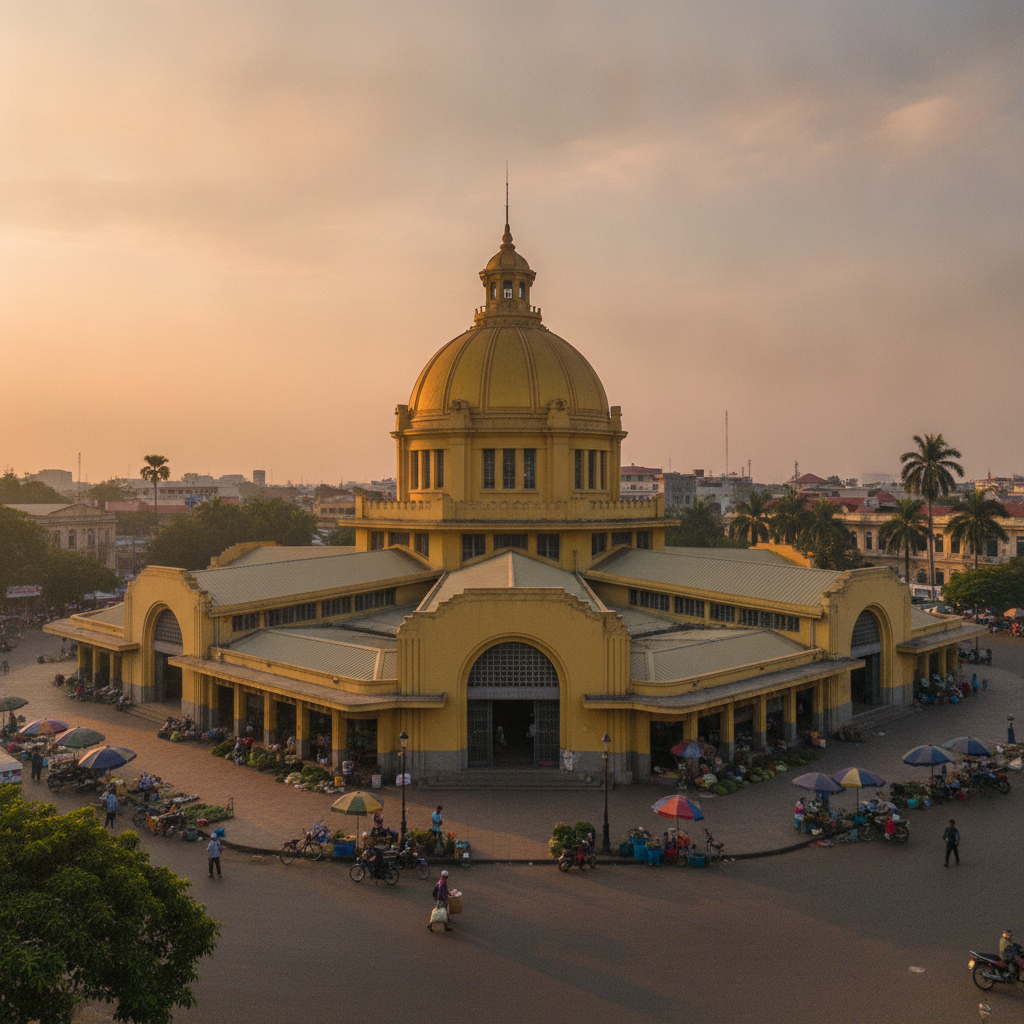
Phnom Penh's Complete Picture: From No Currency in 1975 to USD 7 Billion Garment Exports, Vann Molyvann's Demolished Khmer Bauhaus & the Mekong Speedboat to Vietnam
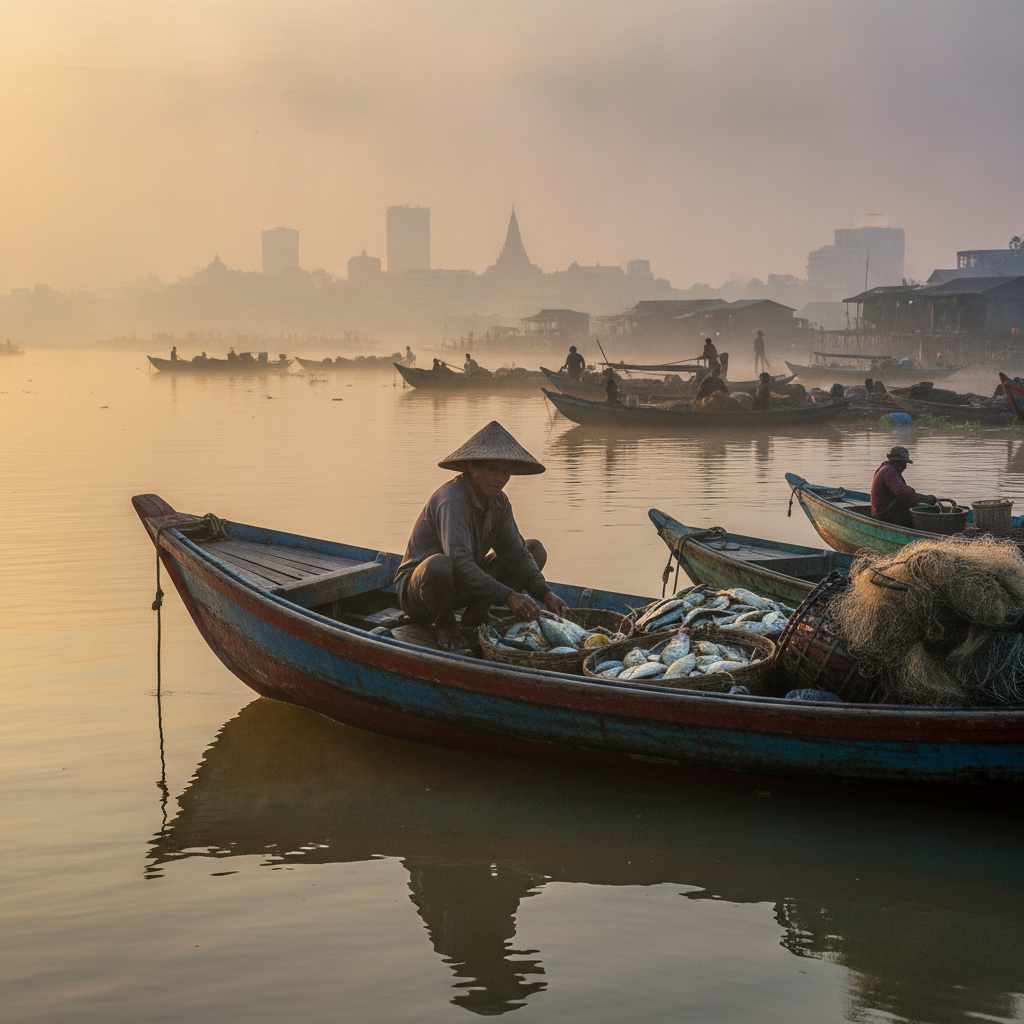
Phnom Penh's Parallel City: 10,000 People in Floating Houses, the Chinese Investment Wave That Built 40,000 Unsold Condominiums & Why the Genocide Memorials Cannot Be Optional