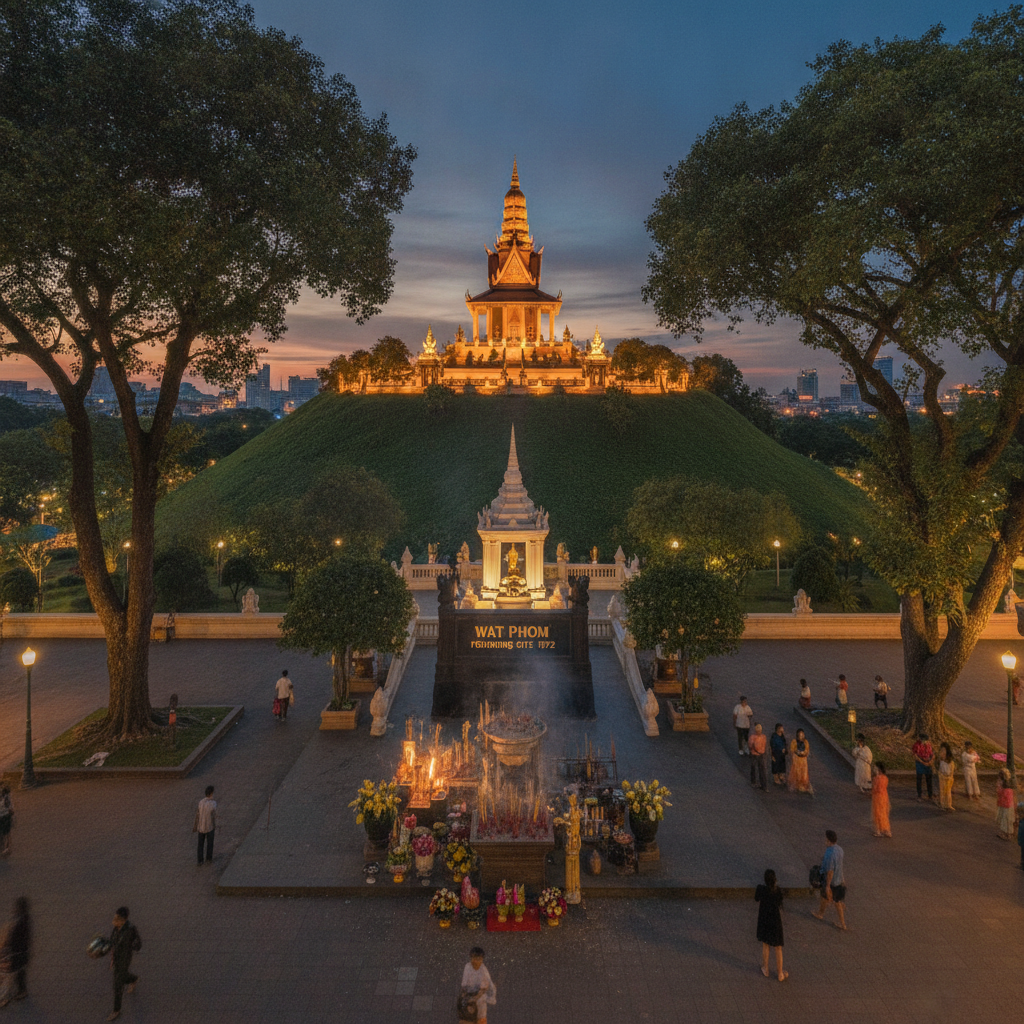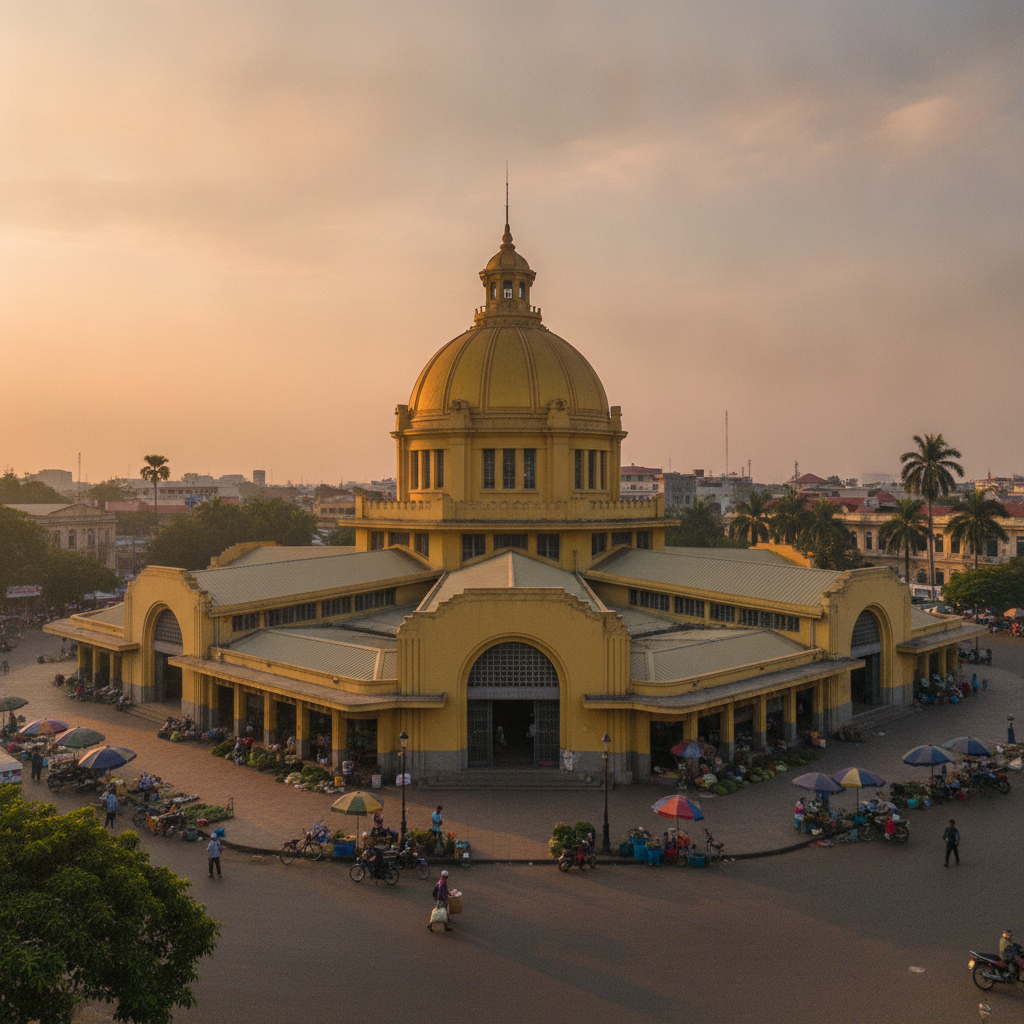
Phnom Penh's Complete Picture: From No Currency in 1975 to USD 7 Billion Garment Exports, Vann Molyvann's Demolished Khmer Bauhaus & the Mekong Speedboat to Vietnam
Pre-dawn wholesale fish market at 03:00 supplying the bai sach chrouk breakfast stalls that open at 06:00; Cambodia's deliberate dollarisation—money abolished in 1975, re-introduced but never controlling transactions above a few hundred dollars, the US dollar now the de facto currency of a country that has grown at 7% annually since 1993; Seeing Hands blind massage therapists as the most socially significant wellness choice in the city; Vann Molyvann's New Khmer architecture—studying under Le Corbusier then creating the most original Southeast Asian modernist style, systematically demolished since 2008; and the Mekong River speedboat from Phnom Penh pier to Chau Doc as the most ecological and scenic route to Ho Chi Minh City through the most productive agricultural landscape in Asia.
- 1
The Phnom Penh Food Market Circuit – From Dawn to Midnight
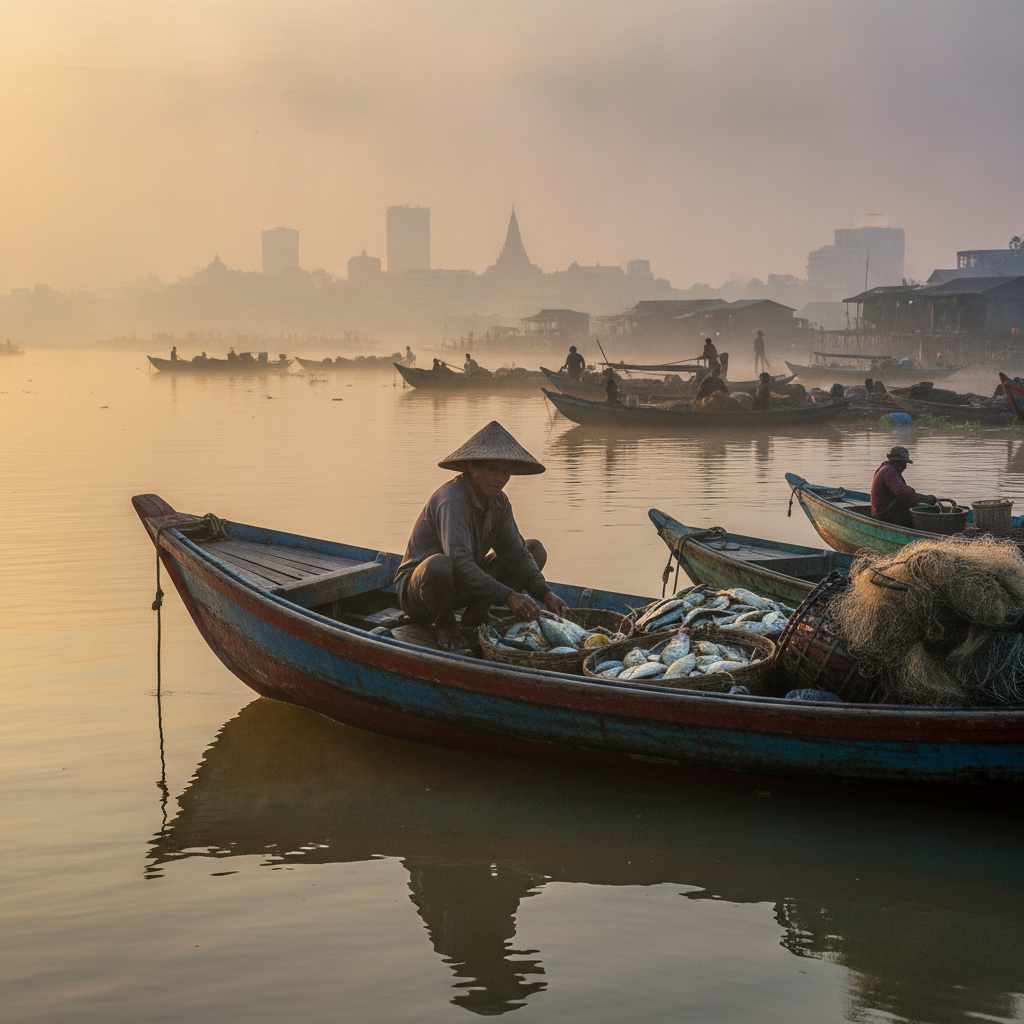
The Phnom Penh market circuit—following the city's food markets from the pre-dawn wholesale markets through the morning breakfast stalls, the midday wet market, and the evening night market—provides the most comprehensive experience of the urban food system available in any Southeast Asian capital. The pre-dawn wholesale market (Psar Kandal—on the Tonle Sap riverside south of the Night Market; operating 03:00–06:00): the wholesale fish, vegetable, and fruit market supplying the city's restaurants and retail markets; the catch from the overnight Mekong fishing fleet arrives here before dawn. The breakfast market (Psar Thmei—the Central Market's food section; operating 06:00–10:00): bai sach chrouk (grilled pork on broken rice—the quintessential Phnom Penh breakfast), kuy teav (rice noodle soup—the Cambodian version of pho, with a clearer, sweeter broth and served with lime, bean sprouts, and basil). The lunch market (the BKK1 street food block—Streets 278 and 57 intersection; operating 11:00–14:00): the office worker lunch—lok lak, amok, and the self-serve Cambodian buffet (in Khmer: bai sach—rice with pre-cooked curries and stir-fries chosen from the display). The night market (Psar Reatrey—Sisowath Quay; Friday–Sunday 17:00–23:00): grilled meats, sugarcane juice, and coconut ice cream on a stick.
- 2
The Cambodian Currency & Economy Story
Cambodia's economic story since 1979 is the most dramatic post-conflict economic recovery in Southeast Asia: from an economy with no currency (money was abolished by the Khmer Rouge in 1975), no banking system, no international trade, and an educated workforce that had been almost entirely killed—to an economy growing at 7% annually from 1993 to 2019, with GDP per capita rising from USD 200 in 1993 to USD 1,700 in 2019. The dollarisation: Cambodia chose not to re-establish a strong national currency system after 1979—the Vietnamese Dong was briefly used; then the Riel was introduced but never established control over transactions above a few hundred dollars; by the 1990s, the US dollar had become the de facto currency of all significant transactions. The garment sector take-off: the 1999 US-Cambodia Trade Agreement (which gave Cambodia preferential access to the US market in exchange for labour rights standards monitored by the ILO) triggered the garment sector expansion that built the USD 7 billion export industry of today. The tourism contribution: tourism revenue (approximately USD 3 billion in 2019—the peak year before COVID) accounts for approximately 12% of GDP; Phnom Penh receives approximately 30% of Cambodia's international tourists (the remainder going primarily to Siem Reap).
- 3
Cycling Phnom Penh – The Urban Cycling Circuit
Cycling Phnom Penh (the most flat urban environment in Southeast Asia—the city is built on the river plain with no significant elevation changes) provides the most human-scale experience of the city's urban geography, allowing the rider to cross between the French colonial district, the Khmer Royal precinct, the Russian Market neighbourhood, and the BKK1 expat district within a single morning. The recommended circuit: departure from the riverside at Wat Phnom (the northern anchor); south along the Sisowath Quay to the Royal Palace; west through the French colonial district (past the Post Office, the Central Market dome, and the French Embassy); south to the Russian Market (approximately 4 km south of the Royal Palace—the full extent of the traditional city); east to the BKK1 restaurant district; north through the Toul Sleng area back to the riverside. The cycling infrastructure: Phnom Penh's cycling infrastructure (dedicated bike lanes—essentially none; traffic volume—significant and fast; driver behaviour—generally alert to cyclists but unpredictable) requires confident urban cycling skills; the early morning hours (06:00–08:00) before the main traffic volume are by far the best cycling window. The bike hire: rent from the guesthouses and cycle shops in the BKK1 area (USD 3–5/day for a basic bicycle; USD 10–15 for an e-bike).
- 4
The Phnom Penh Massage & Wellness Circuit
The Phnom Penh massage scene—a combination of the Cambodian traditional healing tradition (kru Khmer—traditional Cambodian medicine, which includes herbal medicine, coin rubbing (kos kchall—a technique of rubbing the skin with a coin to 'release the wind' in the body), and massage); the post-conflict rehabilitation dimension (the Cambodian population has one of the highest rates of depression, PTSD, and stress disorders in Asia—a result of the Khmer Rouge period); and the international spa industry—provides an unusual combination of authenticity and accessibility. The blind massage schools: the Seeing Hands massage organisation (a network of massage schools and clinics employing blind and visually impaired Cambodian therapists, established 2000)—the most socially significant massage option in Phnom Penh, providing dignified employment and professional training to a population that would otherwise have very limited livelihood options. The spa district: the BKK1 and Toul Kork districts have the highest concentration of international-standard spas (USD 15–40 for a 60-minute treatment). The traditional option: the traditional Khmer massage (available at the Khmer cookery schools and at several traditional healers in the Russian Market district—USD 5–8 for 60 minutes, much more intense than the tourist spa version, using deep pressure and passive stretching).
- 5
Phnom Penh Architecture Walk – From Colonial to Contemporary
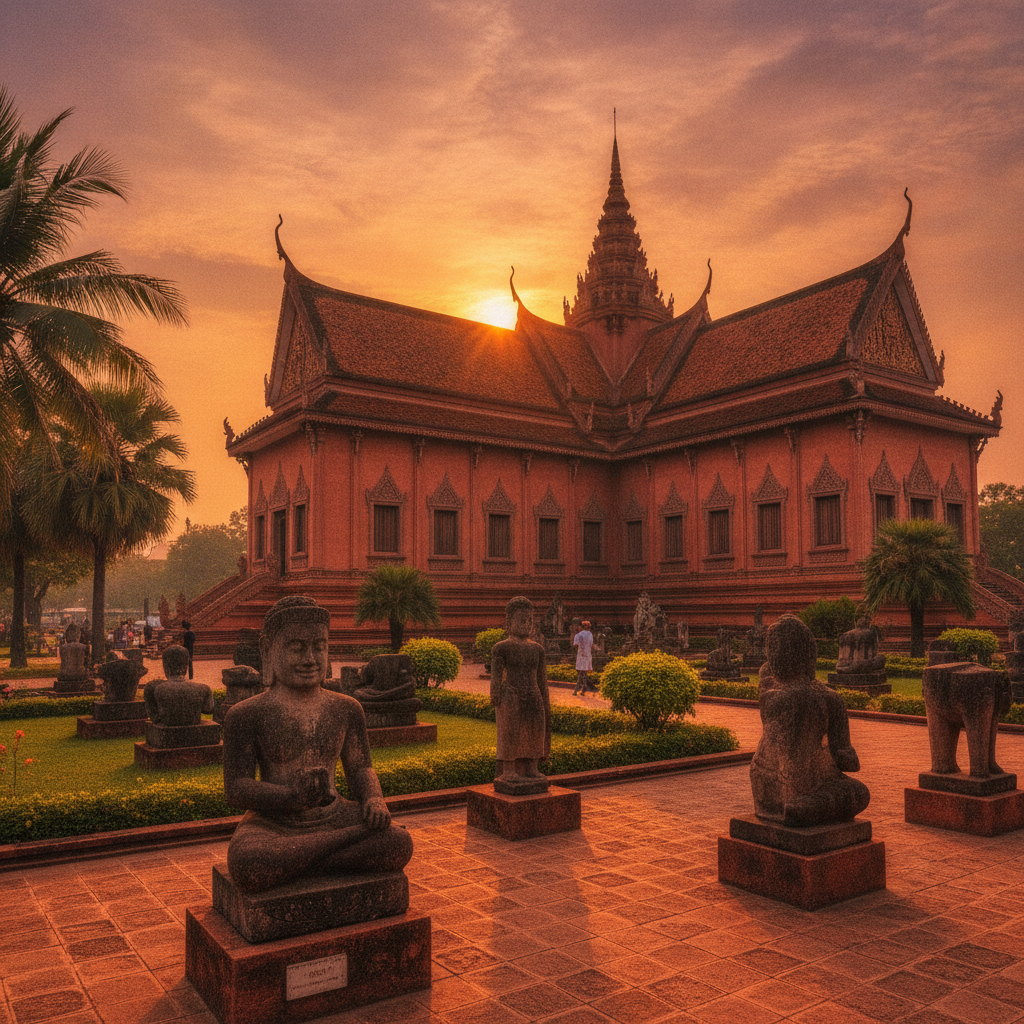
The Phnom Penh architectural landscape presents one of the most compressed and contrasting urban design histories in Asia: within a 3-km radius of the Royal Palace, the visitor encounters Khmer classical temple architecture (Silver Pagoda, 19th century); Khmer Revival (National Museum, 1917); French Beaux-Arts and Art Deco (Central Market 1937, Post Office 1900s, Raffles Le Royal 1929); New Khmer Architecture (the work of the 1960s Cambodian Bauhaus generation led by Vann Molyvann, who studied under Le Corbusier and returned to design the National Sports Complex, the Council of State Building, and the Bassac Theatre in a style that synthesised Khmer temple principles with Brutalist modernism—most of these buildings are now threatened by development pressure); and the contemporary glass tower development (the Vattanac Capital Tower, 2014—the first international-standard office tower, 39 floors, visible from across the city). The Vann Molyvann legacy: the 'New Khmer' architecture movement of the 1960s (the most significant contribution to modern Asian architecture from a Southeast Asian designer) has been systematically demolished: the Phnom Penh Central Market extension (demolished 2009), the Old Stadium area (currently under development pressure), and the National Theatre (demolished 2008)—the most serious loss of 20th-century architectural heritage in Southeast Asian history.
- 6
The Cambodia-Vietnam Border & the Mekong River Route
The Phnom Penh position at the centre of the Indochina Peninsula—between the Thai border (5 hours by road to Poipet), the Vietnamese border (5 hours by road to Ho Chi Minh City/HCMC), the Lao border (accessible via Stung Treng, 7 hours north), and the Cambodian coast (4 hours south to Sihanoukville)—makes it the most logistically central point in mainland Southeast Asia for overland travel. The HCMC connection: the Phnom Penh–Ho Chi Minh City route (the most travelled international land border in Southeast Asia outside of the Thai borders) runs by bus in approximately 5–6 hours via the Moc Bai–Bavet border crossing; the river route (by speedboat from Phnom Penh to Chau Doc in the Vietnamese Mekong Delta—5 hours, operating daily) is the most scenic option and the recommended choice for anyone interested in the ecology of the Mekong system. The Mekong Delta connection: the journey from Phnom Penh to HCMC via the Mekong River (Phnom Penh pier → Chau Doc by speedboat → Can Tho by road → HCMC) passes through the most productive agricultural landscape in Southeast Asia—the Mekong Delta's rice paddies, floating markets, and orchards—and provides the most complete understanding of the river that defines the region. The Kampot and Kep option: the most popular domestic route from Phnom Penh is south to Kampot (2.5 hours by bus—the pepper-growing coastal town with French colonial architecture and the best seafood in Cambodia) and Kep (40 minutes from Kampot—the small beach resort with the Crab Market).
Walk this route with audio
Stories play automatically as you reach each stop — no tapping needed.
More in Phnom Penh
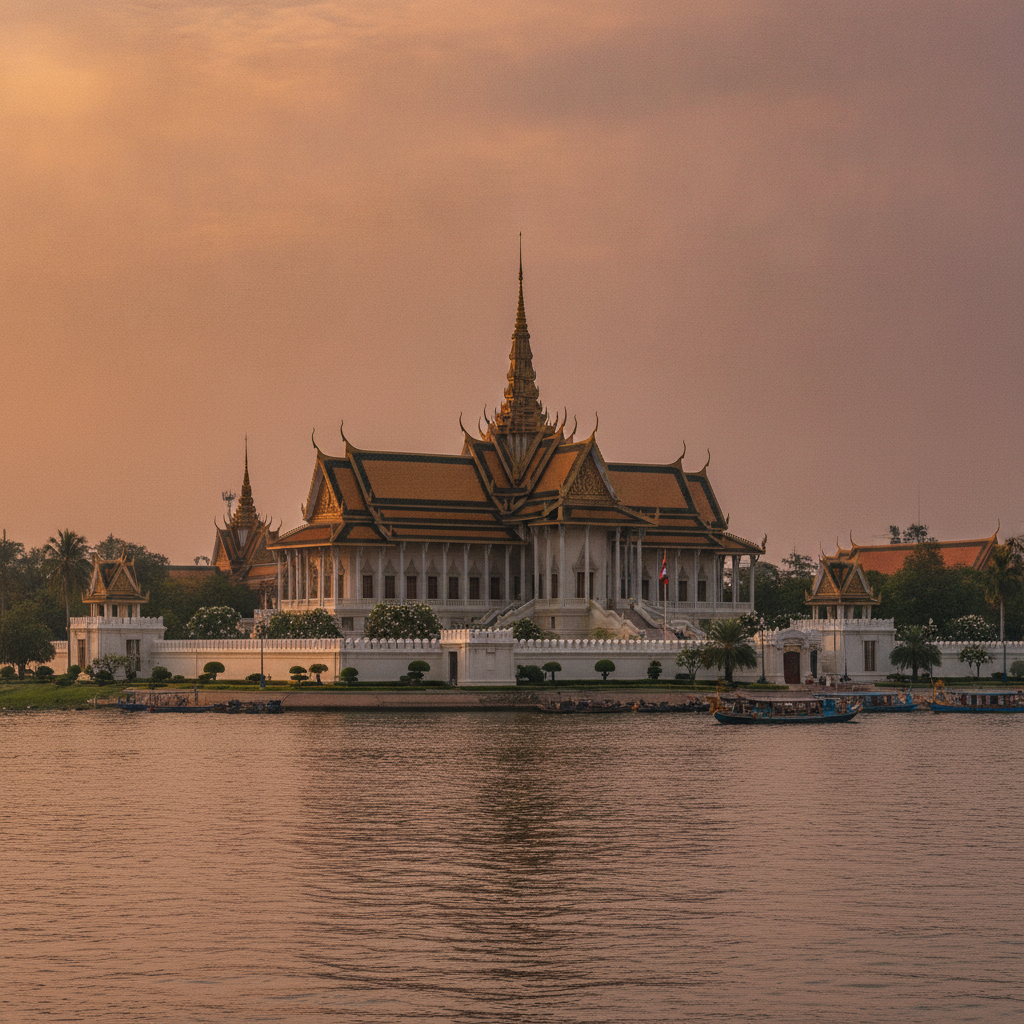
Phnom Penh: The Silver Pagoda's 5,329 Floor Tiles, the S-21 Photographs of 17,000 Prisoners & the River That Flows Backwards for 5 Months Every Year
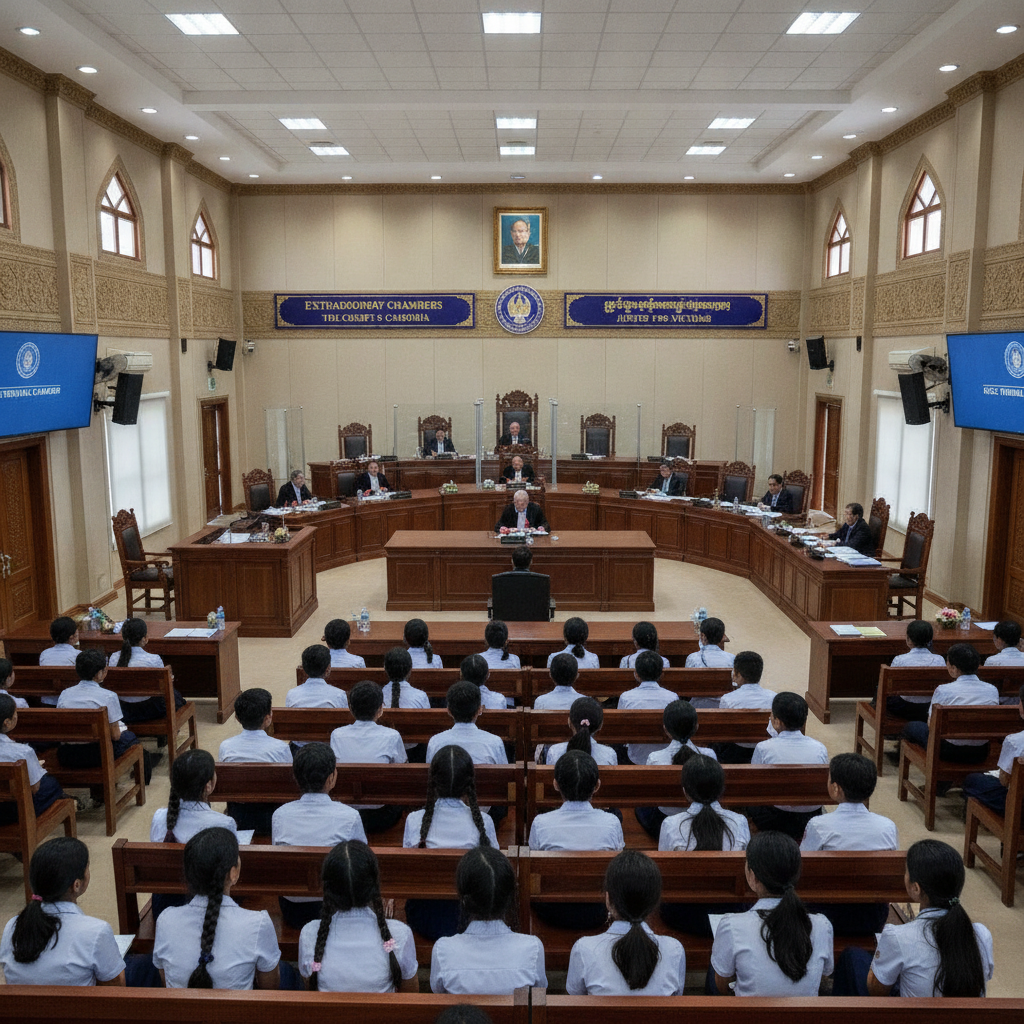
Phnom Penh's Hardest Questions: USD 330M Tribunal for 3 Convictions, the Orphanage Tourism Scam That Involved 70% of Facilities & What the City Asks You Not to Skip
Phnom Penh's Parallel City: 10,000 People in Floating Houses, the Chinese Investment Wave That Built 40,000 Unsold Condominiums & Why the Genocide Memorials Cannot Be Optional
Phnom Penh's Reconstruction: The City Emptied in 1975 and Rebuilt from Zero Since 1979—40 Years of the Most Compressed Urban History in Asia