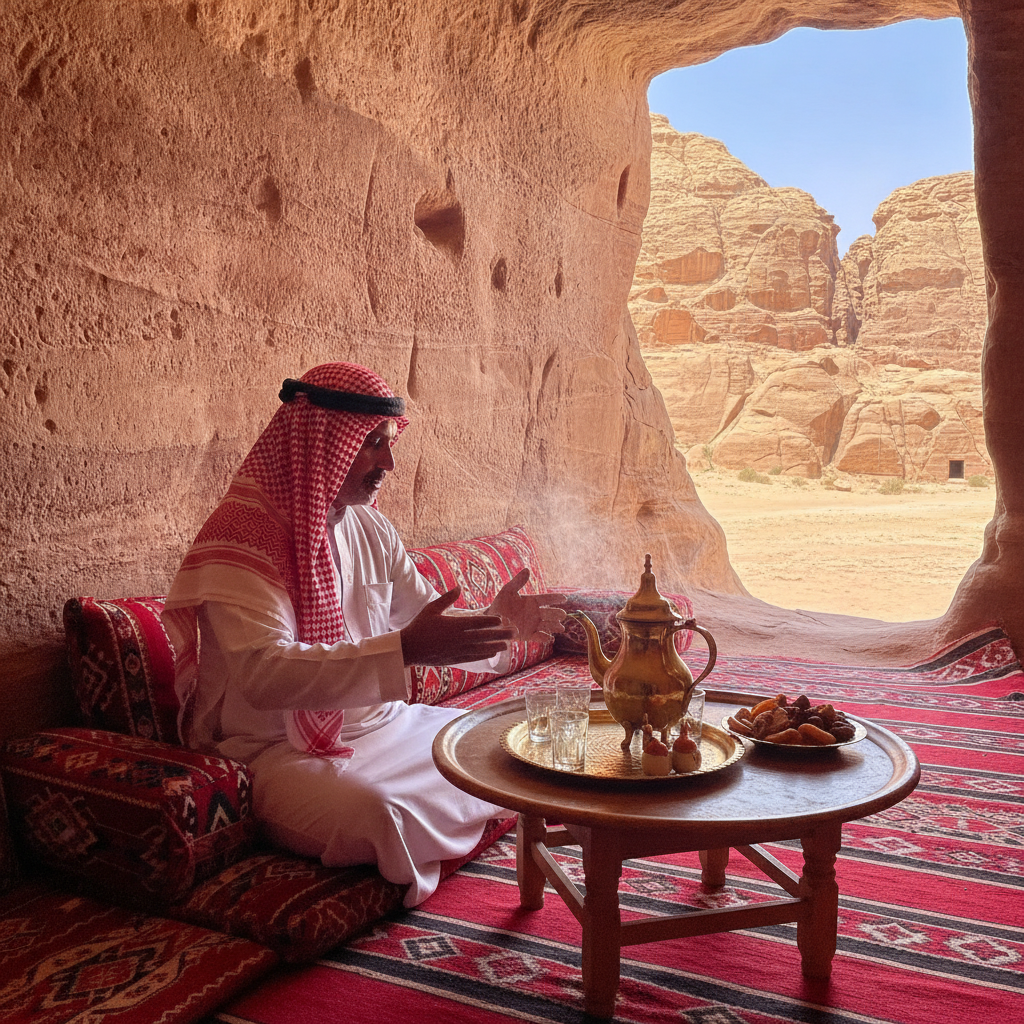
Petra Essentials: The Siq, the Treasury & the 800-Step Climb to the Monastery
Walk the world's most dramatic archaeological approach—the Siq's 1.2 km slot canyon narrowing to 3 metres before the Treasury's Hellenistic facade explodes into view, 40 tomb façades carved into a single cliff face, the Roman colonnaded street of a city that once held 30,000 people, the 50-metre Monastery reached by 800 carved stone steps, and the magical Petra by Night with 1,500 candles.
1. The Siq – The Kilometre-Long Slot Canyon Entrance
- 1
The Siq – The Kilometre-Long Slot Canyon Entrance
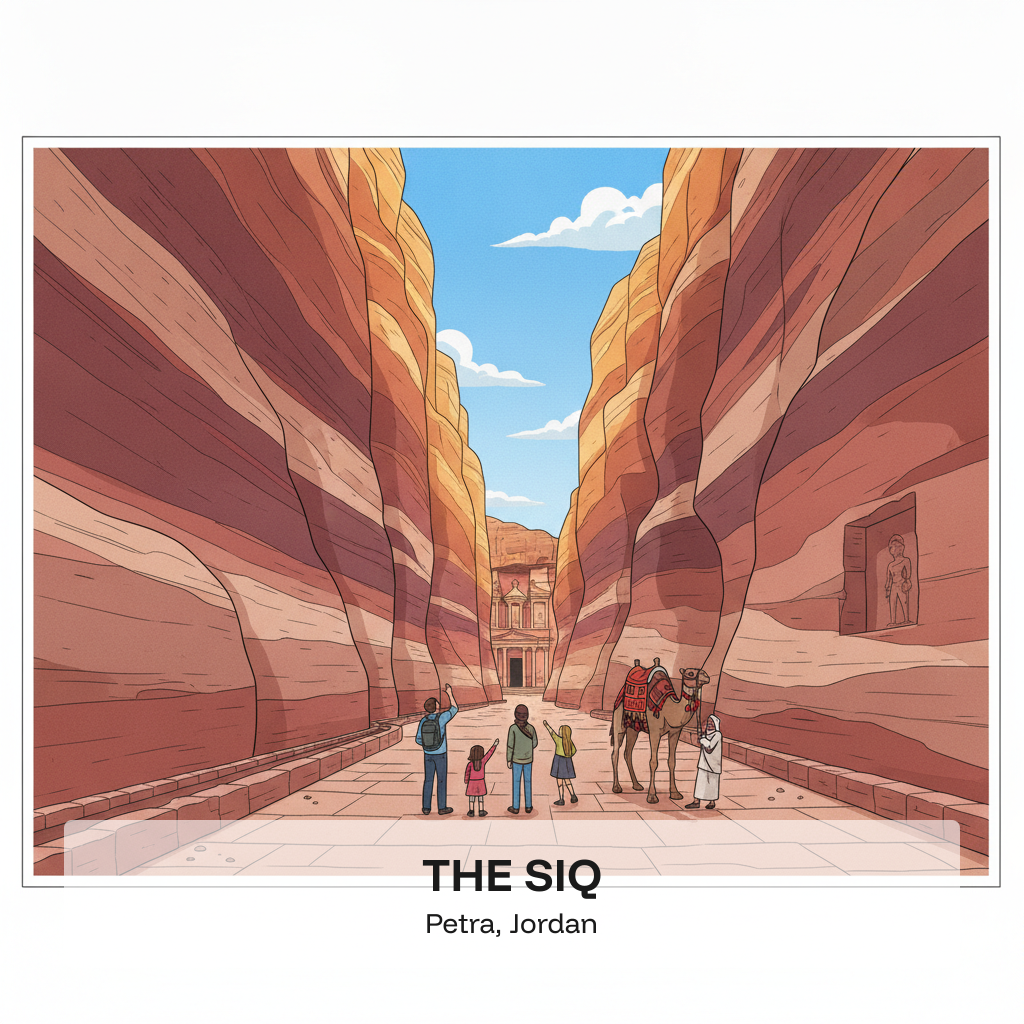
The Siq—a 1.2 km natural sandstone gorge, up to 80 metres high and narrowing to 3 metres wide—is Petra's dramatic entrance corridor. The Nabataean city-builders exploited the natural fault in the rock, widening the passage and lining it with a water channel system (still visible) that brought water from Ain Musa into the city. The walk through the Siq takes 20–30 minutes and culminates in the first glimpse of the Treasury through a narrow cleft in the cliff—one of the most breathtaking reveals in world travel.
- 2
The Treasury – Al-Khazneh
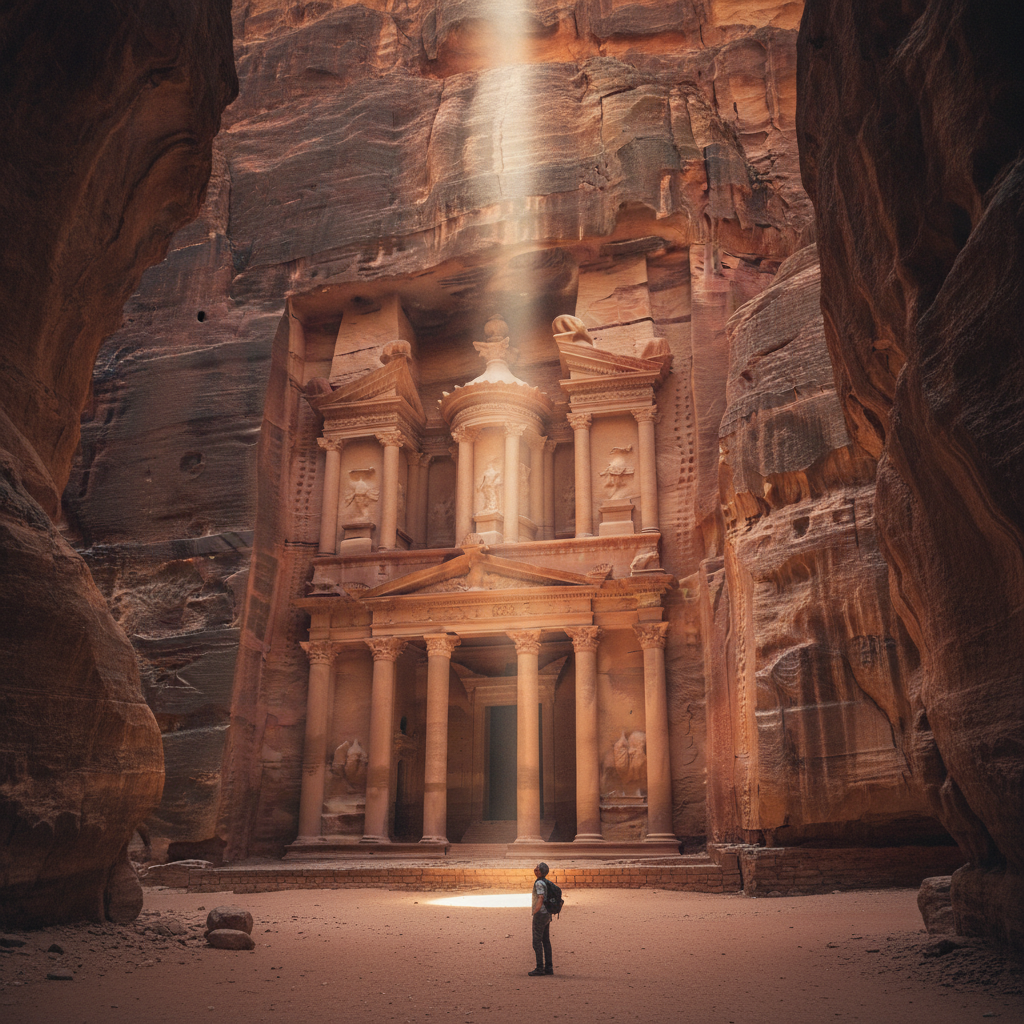
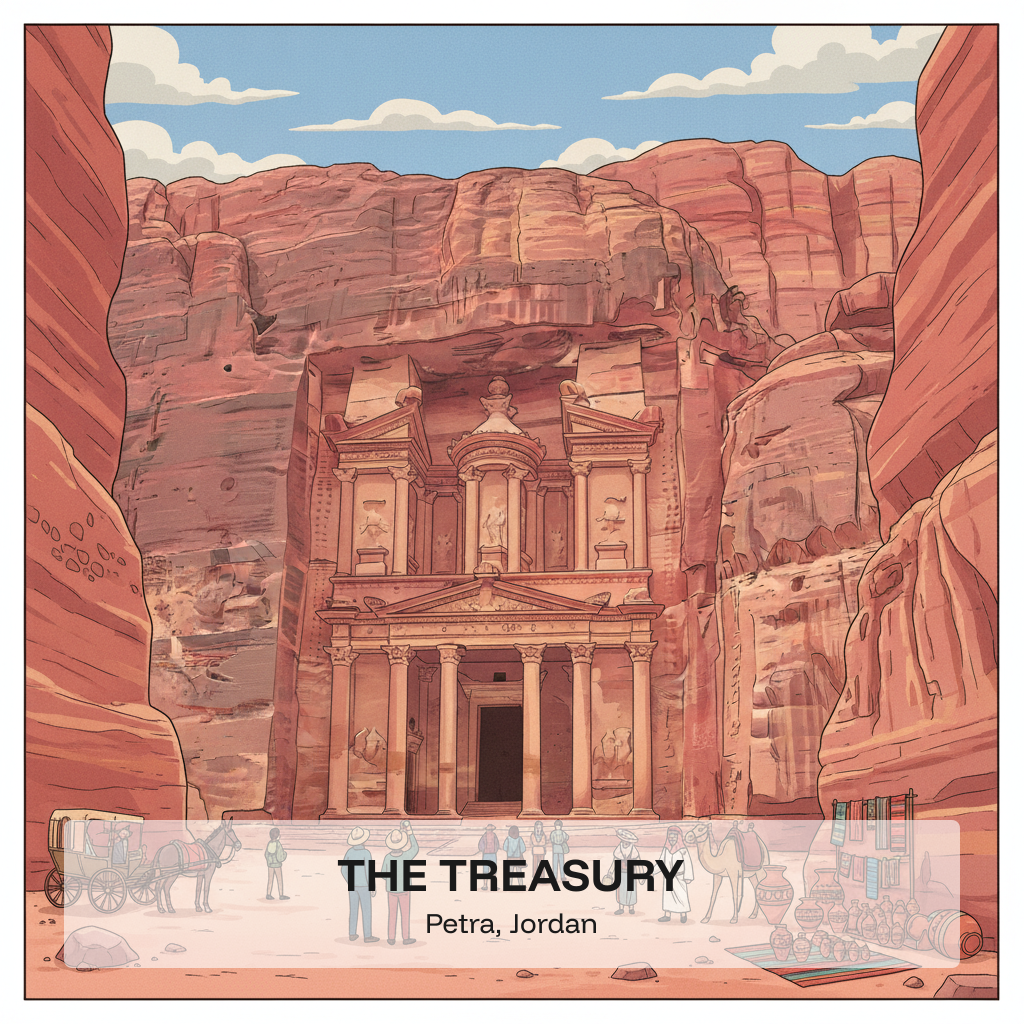
Al-Khazneh (The Treasury), carved into rose-red Nabataean sandstone in the 1st century BC as a royal tomb, is Petra's most iconic structure—its 30-metre-high Hellenistic facade with Corinthian columns and an ornate broken pediment was used as the exterior of the Holy Grail temple in Indiana Jones and the Last Crusade (1989). The interior is a single undecorated chamber; the elaborateness is entirely in the facade. The Treasury was not a treasury—Bedouin legend holds that a pharaoh's treasure was hidden in the urn above, which is pocked with bullet holes from attempts to dislodge it.
- 3
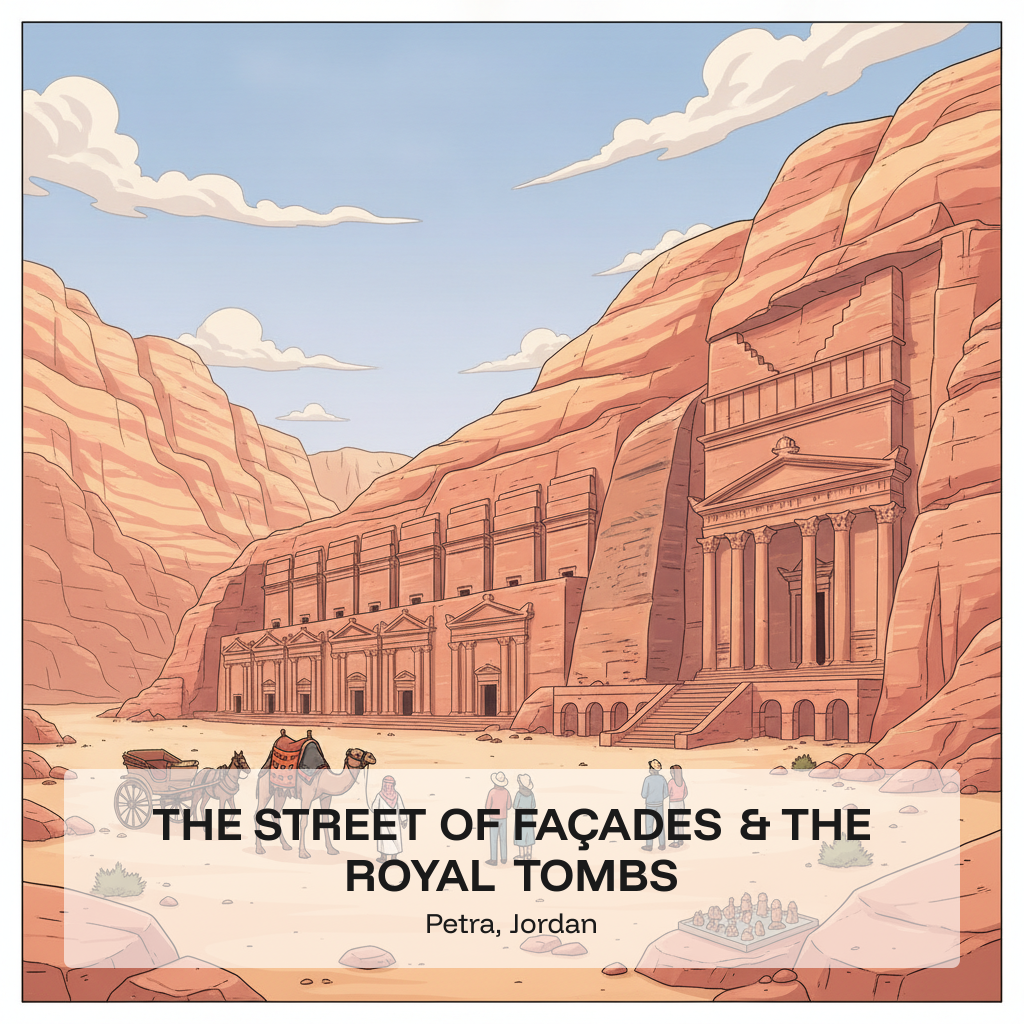
The Street of Façades & the Royal Tombs
Beyond the Treasury, the canyon widens into Petra's main valley (Wadi Musa). The Street of Façades—a 200-metre cliff face carved with 40 tomb facades in ascending Nabataean architectural styles—lines the left side. The Royal Tombs (Urn Tomb, Silk Tomb, Corinthian Tomb, Palace Tomb) are carved into the ridge above and reached by a staircase; the Urn Tomb was converted into a Byzantine church in 447 AD and retains Greek inscriptions. The view of Petra's valley from the Royal Tombs ridge is extensive.
- 4
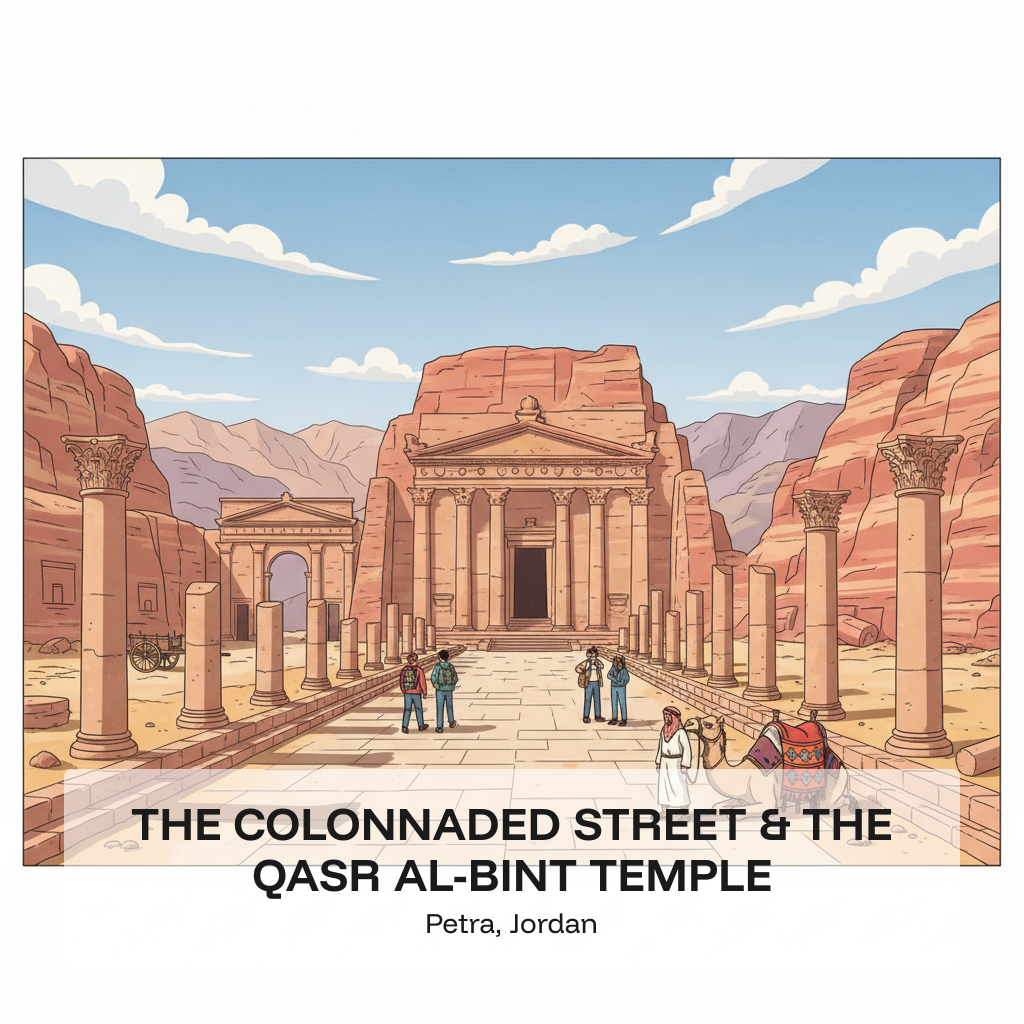
The Colonnaded Street & the Qasr al-Bint Temple
The Colonnaded Street—Petra's main thoroughfare, built in the 1st–2nd century AD under Roman influence after Petra's annexation (106 AD)—runs through the city's centre from the triple-arched Temenos Gate to the Qasr al-Bint Temple. The Qasr al-Bint (Palace of the Pharaoh's Daughter) is Petra's most significant free-standing structure—a Nabataean temple (30 BC–40 AD) built of ashlar masonry and still standing 23 metres high. Despite its popular name, it was the city's main religious building, dedicated to the god Dushara.
- 5
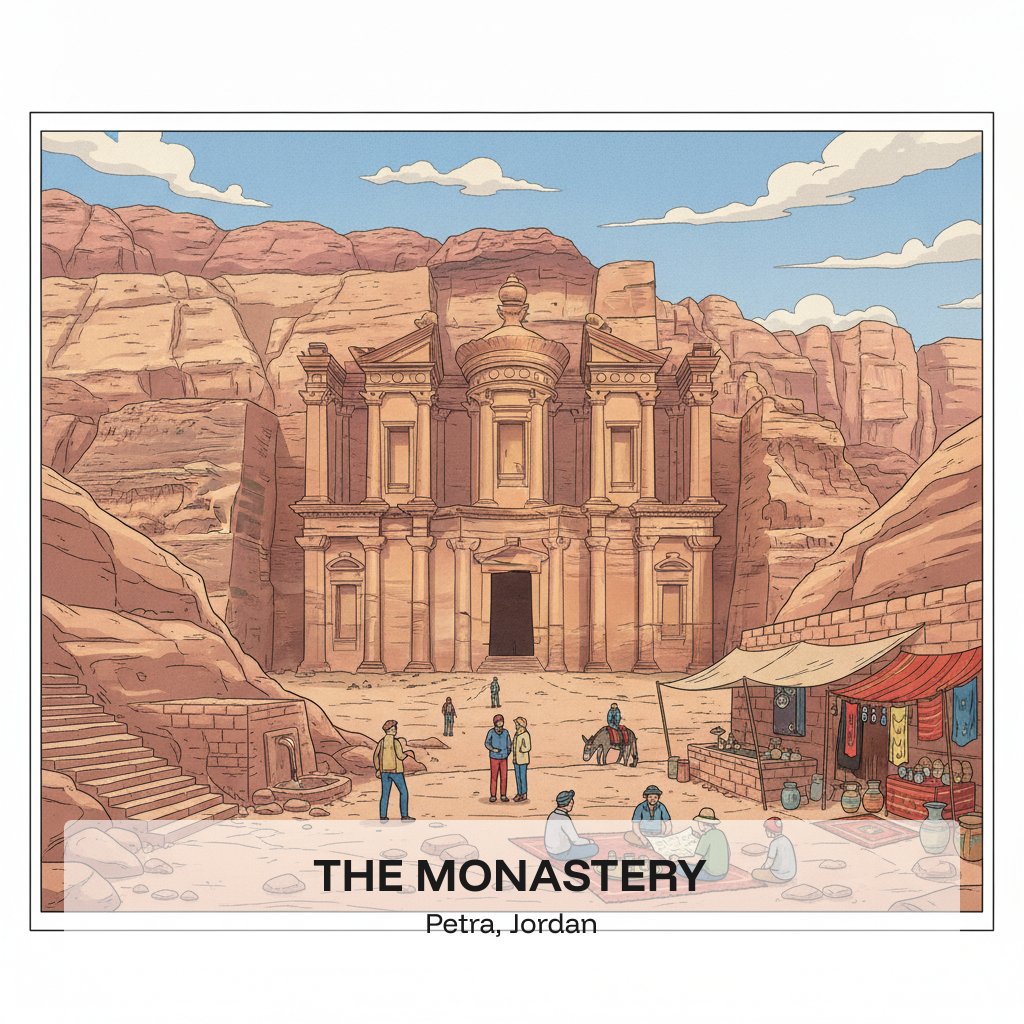
The Monastery – Ad-Deir
The Monastery (Ad-Deir)—even larger than the Treasury at 45 metres wide and 50 metres high—is reached by a 45-minute climb of 800 steps carved into the rock above Petra's main valley. The climb passes tombs, a Nabataean lion fountain, and a biclinium (dining room) before arriving at the Monastery's plateau. Unlike the Treasury, the Monastery is partially carved into a projecting rock face, giving it a more monumental presence. The terrace café opposite the Monastery is the highest point most visitors reach.
- 6
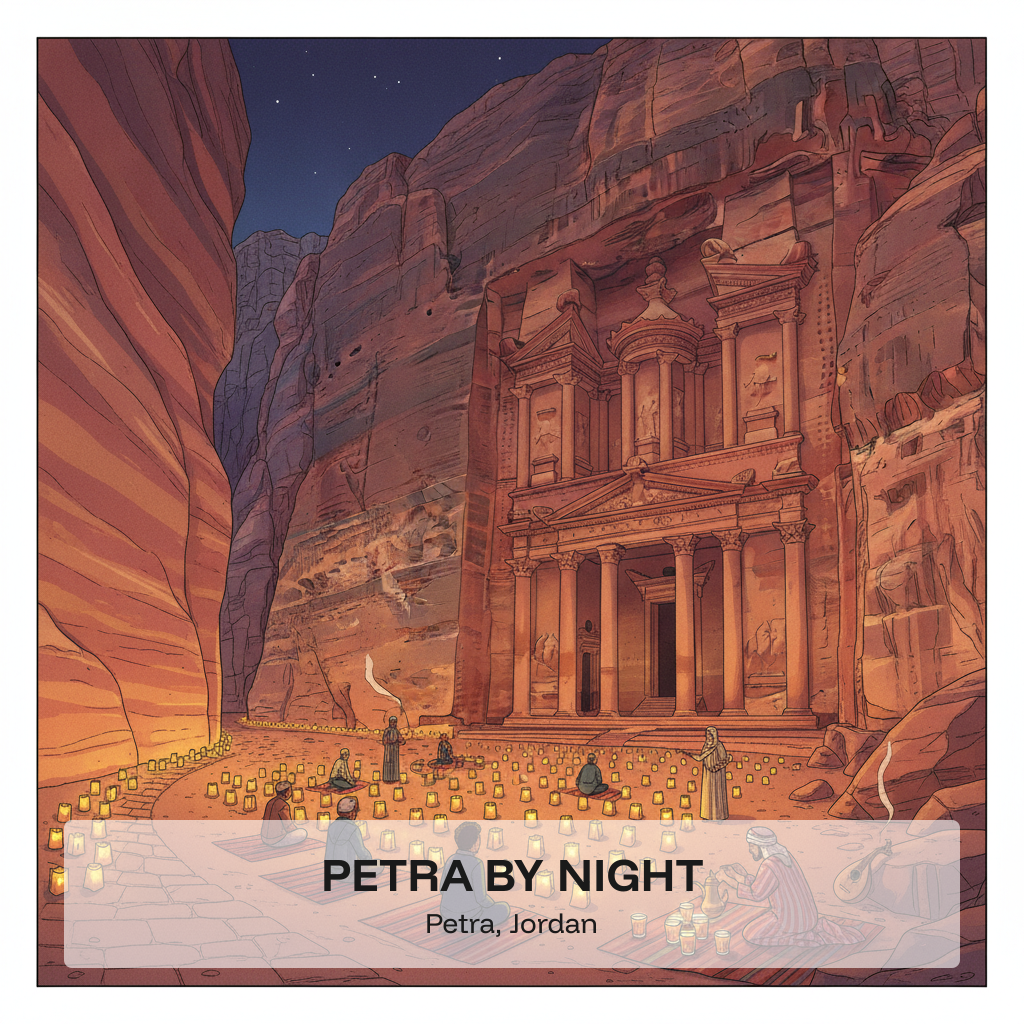
Petra by Night – Candlelit Treasury
Petra by Night—a guided candlelit walk from the Siq entrance to the Treasury Plaza every Monday, Wednesday, and Thursday evening—is one of the most magical visitor experiences at any archaeological site in the world. 1,500 candles in paper bags light the Siq and the Treasury plaza; Bedouin music and tea are served in the candlelit space. The event runs for 2 hours (9–11 pm). Separate tickets are required in addition to the standard Petra entry. Silence is requested for the approach; the Treasury emerging from the candlelit Siq darkness is extraordinary.
Walk this route with audio
Stories play automatically as you reach each stop — no tapping needed.
More in Petra
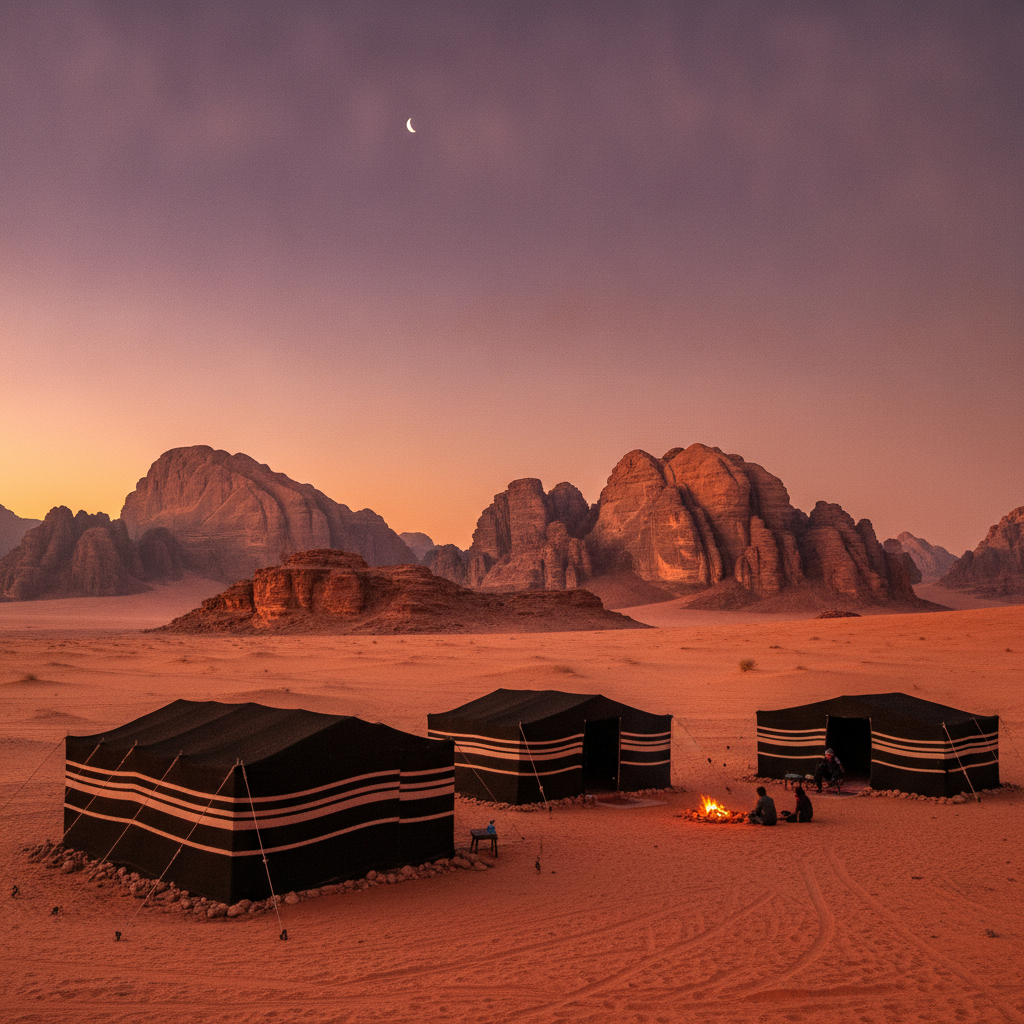
Petra Day Trips: Little Petra Free, Wadi Rum's Martian Landscape & Dana Canyon Trek
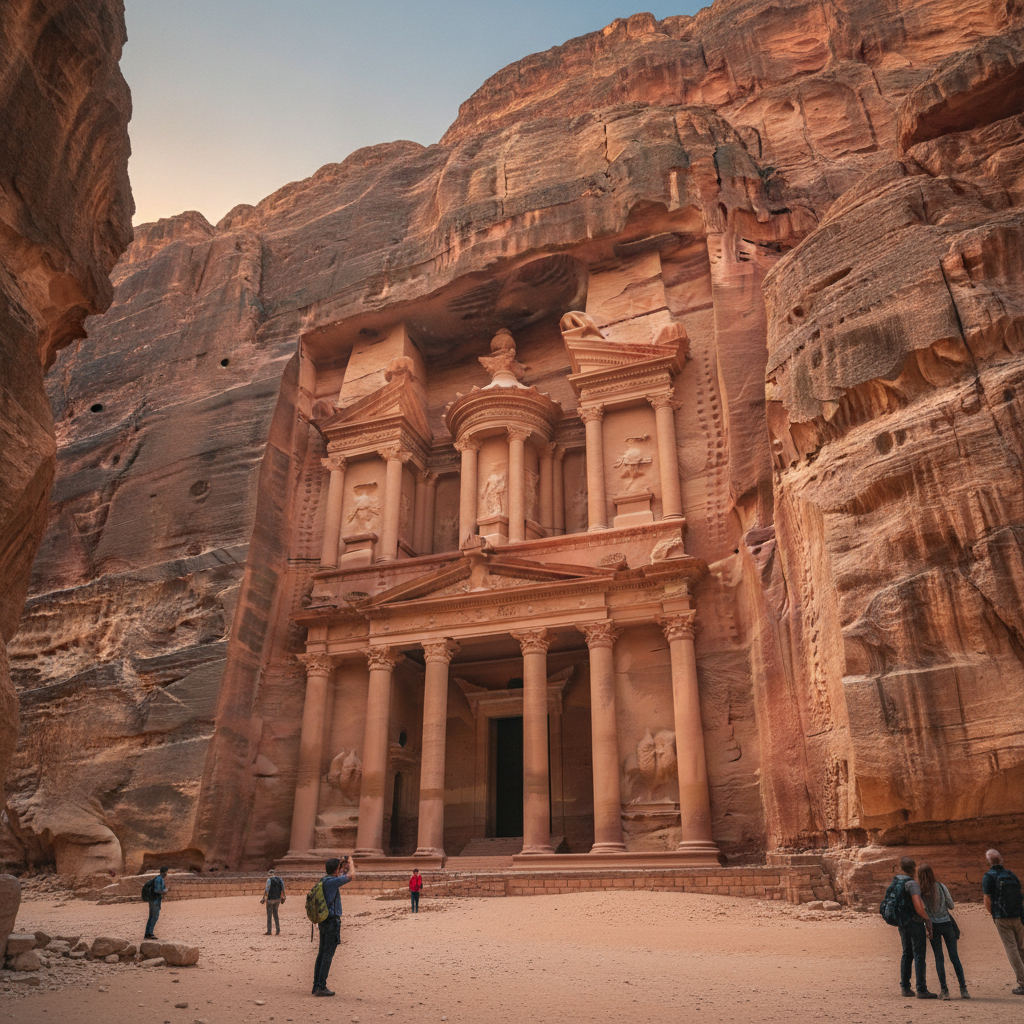
Petra Essential: The Siq Canyon, the Treasury Al-Khazneh, the Street of Facades, the High Place of Sacrifice, the Monastery Ad-Deir, and the Nabataean Capital
Petra's Jordan: The King's Highway, Byzantine Mosaics & the Grand Canyon of Wadi Mujib
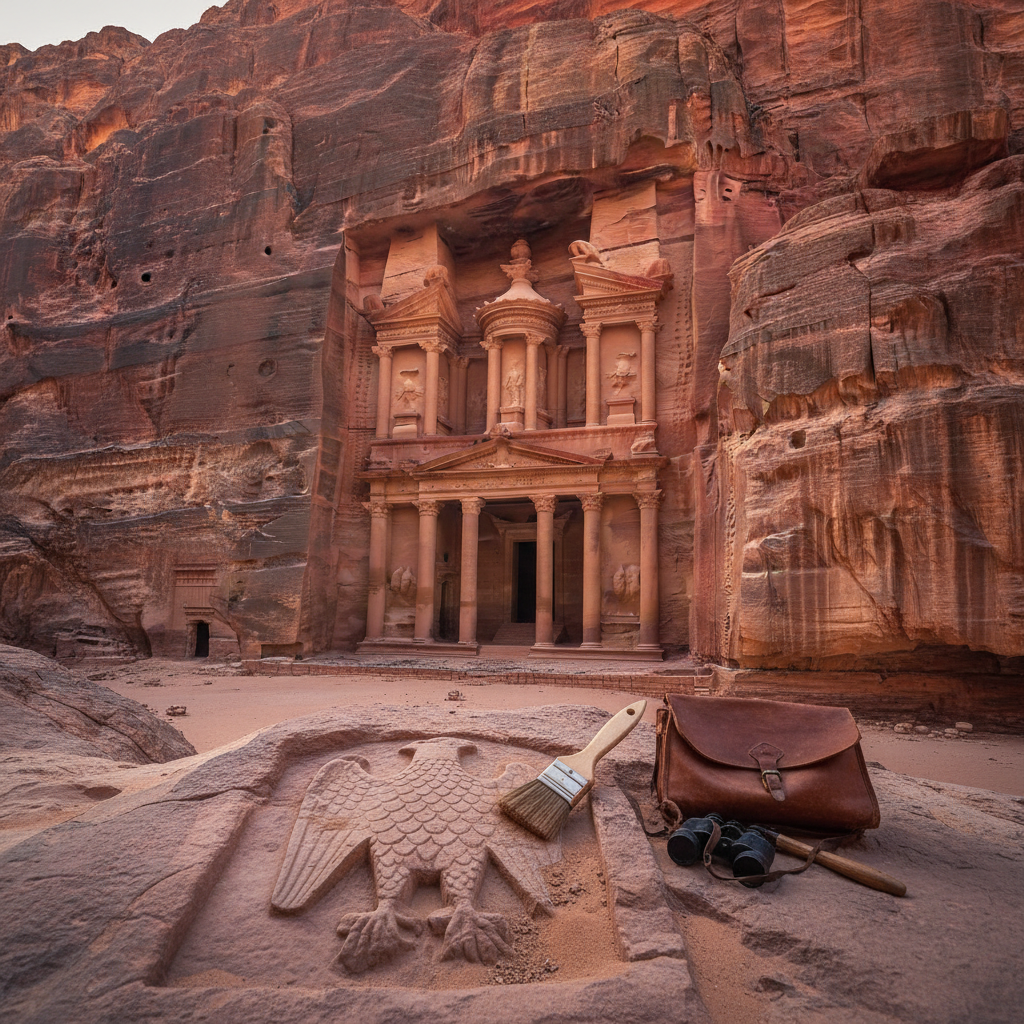
Petra Deep Dive: Only 15% Excavated, the Nabataean Water System & Indiana Jones

Petra Geology: The Rose-Red Sandstone Colors, the Nabataean Water Engineering, the Desert Ecology, and the Natural Environment