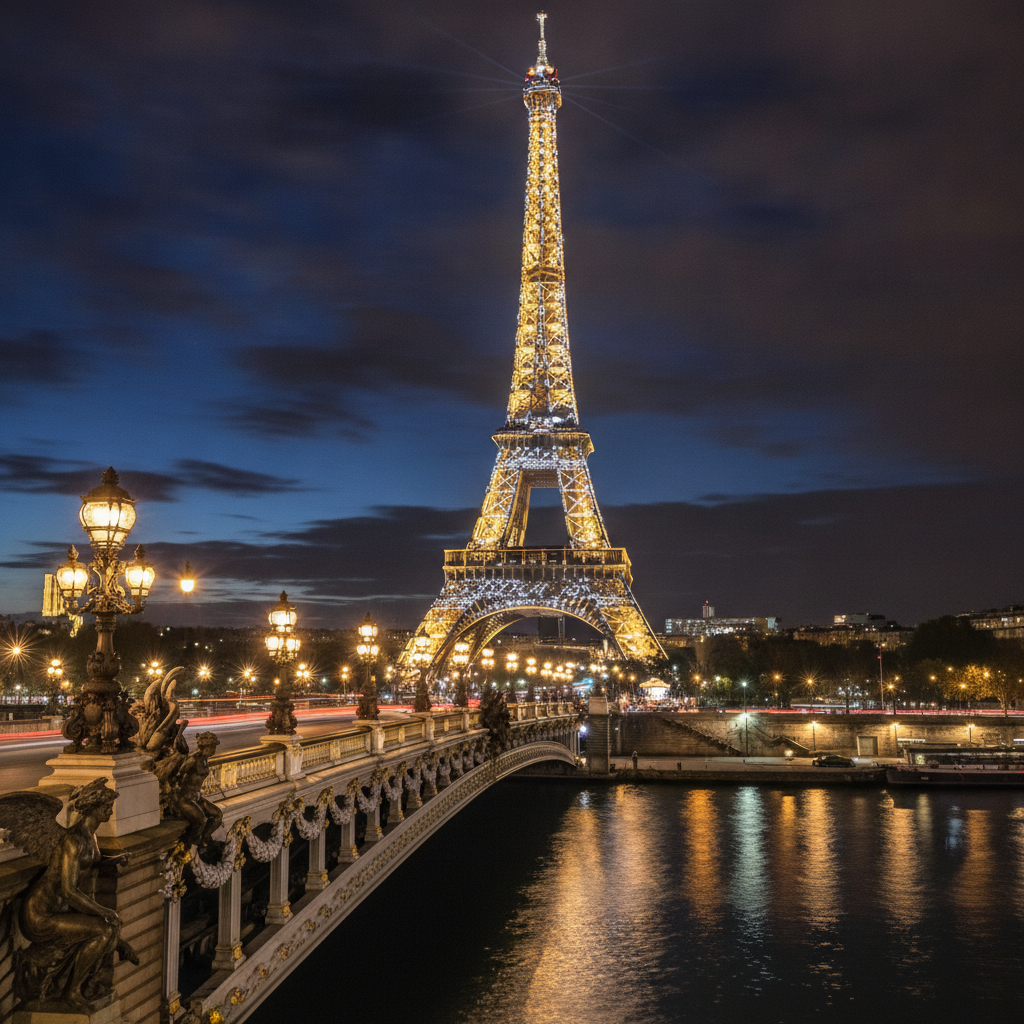
The Royal Axis: From the Louvre to Versailles
For four centuries, Paris was a city built by and for its kings. This full-day route traces the 'royal axis'—the geometric line connecting the Louvre (medieval royal palace), the Tuileries Garden, Place de la Concorde, Champs-Élysées and Arc de Triomphe—before taking the RER train 40 minutes out to the Palace of Versailles for the afternoon. Start early and book Versailles tickets in advance.
- 1
The Louvre — Eight Centuries of Royal History
The Louvre was not built as a museum—it was the primary residence of French kings from Philip II in 1190 until Louis XIV moved the court to Versailles in 1682. The medieval fortress foundations are visible in the Sully crypt underground. The iconic glass pyramid (I.M. Pei, 1989) is the entrance. Even if you don't have time for the full museum, walk through the Richelieu wing courtyard and look at the building itself—it took 800 years to build. The Cour Carrée (the old square courtyard) is particularly beautiful.
- 2
Jardin des Tuileries — The King's Garden
Designed by André Le Nôtre in 1664 for Louis XIV (he later repeated the design on a grander scale at Versailles), the Tuileries stretches 900 metres from the Louvre to Place de la Concorde. The geometric French formal garden style—symmetrical, with fountains, statues and clipped hedges—was deliberately designed to show that the king had dominion even over nature. The garden is open 24 hours and still holds the original 17th-century layout.
- 3
Place de la Concorde — The Empty Centre of Power
At 8.6 hectares, this is the largest square in Paris. The Egyptian obelisk at the centre (a gift from Egypt in 1829, more than 3,000 years old) replaced the guillotine that stood here during the Revolution. Eight allegorical statues at the perimeter represent the major French cities. The fountains were added in 1840. Standing here, the axis is visible in both directions: east toward the Louvre, west toward the Champs-Élysées and Arc de Triomphe.
- 4
Champs-Élysées & Arc de Triomphe — The Grand Avenue
The 1.9km Avenue des Champs-Élysées was laid out as a royal promenade extension in 1724. Today it's lined with flagship stores, cinemas and brasseries. The Arc de Triomphe at the western end was commissioned by Napoleon in 1806 after Austerlitz and completed in 1836—after his death. The Tomb of the Unknown Soldier has burned continuously under the arch since 1921. Climb to the top (access via underground tunnel—do NOT try to cross the roundabout) for the axis view.
- 5
Opéra Garnier — The Emperor's Opera House
Two metro stops east from the Arc, the Palais Garnier is one of the most opulent buildings in Europe. Commissioned by Napoleon III in 1861 and completed in 1875, it has 2,000 rooms, weighs 10,000 tonnes and its basement lake inspired The Phantom of the Opera. The self-guided tour (no performance ticket needed) includes the grand marble staircase, the main auditorium with its Chagall ceiling, and the behind-the-scenes areas. It's worth an hour even if you have no interest in opera.
- 6
Palace of Versailles — Where Kings Made History
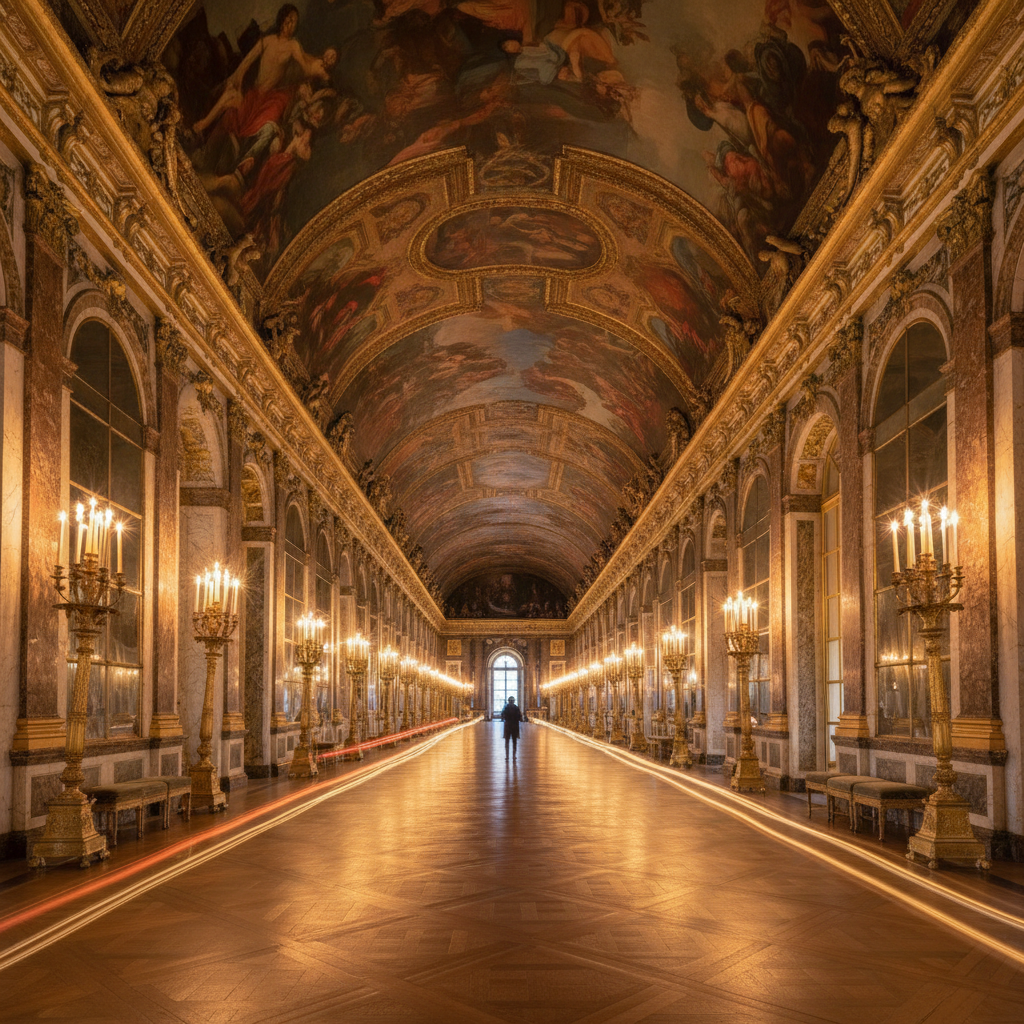
Take RER C from Musée d'Orsay (30 minutes, very affordable) to Versailles Château-Rive Gauche. Louis XIV moved his court here in 1682, building the largest palace in Europe. The Hall of Mirrors (73 metres long, 357 mirrors) is the centrepiece—this is where the German Empire was proclaimed in 1871 and where the Treaty of Versailles was signed in 1919. The formal gardens (free) stretch for kilometres. The Grand Trianon and Marie Antoinette's hamlet are 30 minutes' walk from the main palace and far less crowded. Book tickets 2+ weeks in advance.
Walk this route with audio
Stories play automatically as you reach each stop — no tapping needed.
More in paris
Croissants to Confit: A Paris Food & Market Walk
The Impressionist Trail: Chasing Monet, Renoir & Degas Across Paris
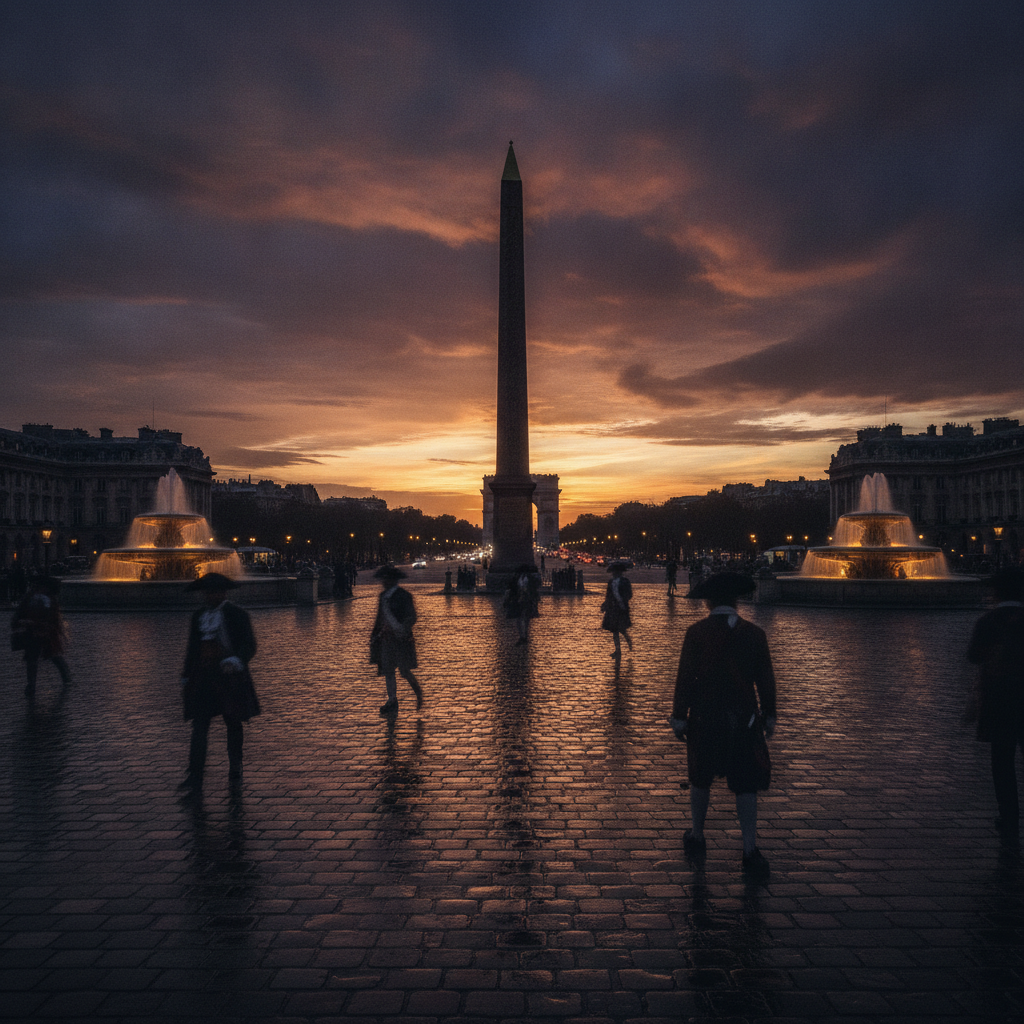
Blood, Guillotines & Liberty: The French Revolution Walk
Paris From Above: The Rooftops & Panoramas Route
The Golden Triangle: Paris Fashion Capital Walk