Barro Colorado Island and the Smithsonian Tropical Research Institute
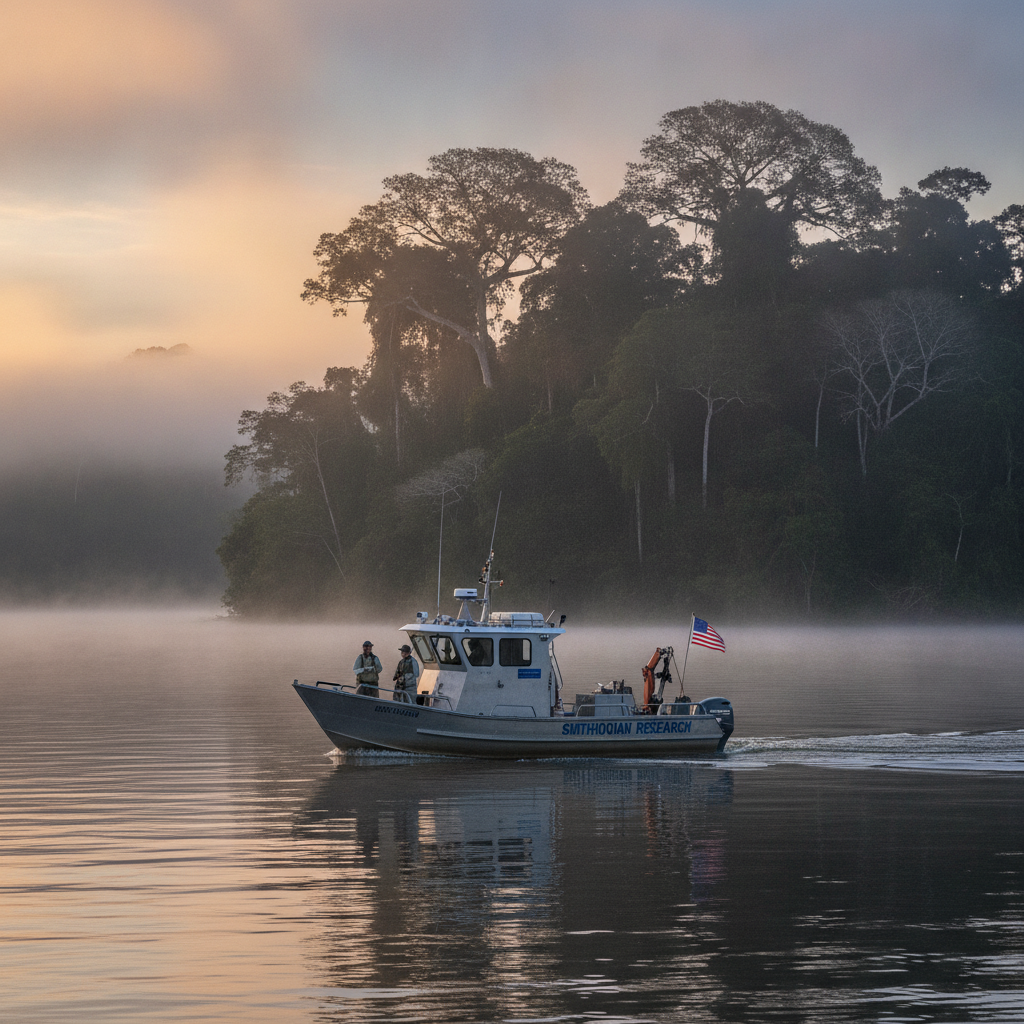
Barro Colorado Island in Gatun Lake is the most intensively studied tropical forest on earth. Created as an island when the Chagres River was dammed to fill the canal, it has been a protected biological reserve since 1923 and has hosted Smithsonian Institution research continuously since 1946. The 1,560-hectare island hosts a complete lowland tropical forest community, with over 1,300 plant species, 380 bird species, and the full complement of neotropical mammals. Access is restricted to researchers and guided educational tours, making the island simultaneously the best-understood and one of the least-visited natural areas accessible from Panama City.
- 1
The Making of an Island: Canal Construction and Forest Protection
Barro Colorado was a hilltop in the Chagres River valley before the canal construction. When the Gamboa Dike was blown in 1913 and the waters of Gatun Lake rose, the hill became an island. The surrounding forest, no longer accessible to hunters and farmers, regenerated rapidly on the lake shores while the island interior maintained old-growth character. The Smithsonian began permanent research in 1946, and the island was declared a Biological Monument in 1923. The protection of the island forest and the surrounding Canal Zone forest from the earliest years of the republic means that the research conducted here reflects conditions in a continuously protected landscape, a rare opportunity in tropical biology that most field sites, established in remnant forest after decades of degradation, cannot provide.
- 2
Fifty Years of Forest Dynamics: The 50-Hectare Plot
The 50-hectare Forest Dynamics Plot on Barro Colorado, established in 1980, is the foundation of tropical forest science. Every tree with a trunk diameter above one centimeter in the 50-hectare area has been mapped, tagged, measured, and identified by species; the census has been repeated every five years for four decades. The resulting dataset documents the birth, growth, and death of every tree in the plot across fifty years, providing the only long-term record of tropical forest dynamics at this resolution anywhere on earth. Studies of species coexistence, the role of seed dispersal, the effect of drought, and the relationship between tree species diversity and forest productivity have all used the BCI plot as their empirical foundation.
- 3
Mammals of Barro Colorado: Coatis, Agoutis, and Predator Release
Barro Colorado lost its large predators, including jaguars and pumas, within decades of becoming an island due to the limited size of the habitat. The resulting predator release has significantly altered the ecology of the island compared to connected mainland forest. Medium-sized mammals including peccaries, coatis, and agoutis have increased in density to levels not seen in mainland forest where predation maintains their populations. White-faced capuchin monkeys and howler monkeys are exceptionally dense and habituated to researcher presence. The absence of large cats has become a long-running experiment in how predator removal cascades through an entire ecosystem, affecting plant recruitment, seed dispersal, and the structure of the forest community over generations.
- 4
Pipeline Road vs. Barro Colorado: Two Research Paradigms
Pipeline Road in Soberania National Park, twenty minutes from Panama City by car, provides public access to a comparable lowland forest with similar bird and mammal communities to Barro Colorado without the access restrictions. The two sites represent different research and visitor paradigms: BCI is a controlled scientific site where every visitor is a participant in a research or educational program; Pipeline Road is an open-access area where birders, naturalists, and casual visitors can explore freely. The bird lists are comparable, with Pipeline Road holding slightly more species due to its longer length and connection to a larger forest area. For visitors unable to arrange the advance reservation required for BCI, Pipeline Road provides the best approximation of the BCI forest experience.
- 5
Forest Fragmentation Research: The Biological Dynamics of Forest Fragments Project
The Biological Dynamics of Forest Fragments Project (BDFFP), coordinated between Brazil and the Smithsonian, established an experimental forest fragmentation study north of Manaus in the 1970s by intentionally isolating forest patches of different sizes from the surrounding continuous forest. While this project is in Brazil rather than Panama, the research framework and many of its key investigators are connected to the BCI research network. The results, showing dramatic loss of species from forest fragments below certain size thresholds, established the quantitative basis for minimum viable habitat requirements used in conservation planning worldwide. The Smithsonian Tropical Research Institute in Panama City acts as the coordinating hub for this and hundreds of other neotropical research programs.
- 6
Visiting Barro Colorado: Research Access and Educational Tours
Barro Colorado Island is open to the public only through advance reservation on guided educational tours organized by the Smithsonian Tropical Research Institute, operating on specific days of the week. The tour includes a boat transfer from Gamboa across Gatun Lake, a guided forest walk led by a research-affiliated naturalist, and a presentation at the research station on current scientific programs. The tour capacity is limited to small groups and fills weeks or months ahead during the dry season; online reservation through the STRI website is essential. The Smithsonian's Punta Culebra Nature Center on the Causeway in Panama City, open daily, provides an accessible introduction to canal zone marine and terrestrial ecology without the access restrictions and is a practical alternative for visitors who cannot secure a BCI reservation.
Walk this route with audio
Stories play automatically as you reach each stop — no tapping needed.
More in Panama City
Panama City as a Financial Hub: Banking, the Dollar Economy, and Free Trade Zones
San Blas Islands, Bocas del Toro, and Day Trips from Panama City
Panama Canal History: The French Failure, the American Triumph, and the 1999 Transfer
Panama City: Canal Locks, Casco Viejo, and the Crossroads of the World
Panama City Nightlife, Arts, and the Cosmopolitan Capital Scene