Palermo Street Food, Capo Market & the Sicilian Gastronomic Tradition
Palermo is the street food capital of Italy — the city with the most vibrant and the most distinctive street food tradition in the country, the tradition of the 'arancine' (the fried rice balls), the 'pani ca meusa' (the bread with spleen), the 'sfincione' (the thick Sicilian pizza), and the 'cannoli' (the fried pastry tubes filled with the ricotta cream) that reflects 3,000 years of Sicilian culinary history and the Arab, Norman, Spanish, and mainland Italian culinary influences on the Sicilian kitchen.
- 1
Arancine di Palermo — The Fried Rice Ball Tradition
The 'arancine' (the 'arancine' — the plural of 'arancina', the Palermo word for the Sicilian fried rice ball: the name from the Arabic 'aranci' (the orange — referring to the golden orange colour and the round shape of the fried rice ball)): the arancina vs arancino (the debate between Palermo and Catania — the most divisive food debate in Sicily: in Palermo the fried rice ball is called 'arancina' (feminine) and is round (spherical) in shape, while in Catania the fried rice ball is called 'arancino' (masculine) and is conical in shape (pointed at the top): the debate reflects the deep rivalry between the two great Sicilian cities (Palermo, the western capital, vs Catania, the eastern capital) and is conducted with a seriousness and a passion that outsiders may find disproportionate but that reflects the deep Sicilian investment in the local food identity): the traditional fillings (the traditional fillings of the Palermo arancina — the 'arancina al ragù' (the most classic filling: the meat ragù — the slow-cooked ground beef and pork with the tomato, the peas, and the saffron, the saffron giving the rice ball its characteristic bright yellow tint (the Arab culinary heritage of Sicily, the saffron arriving in Sicily with the Arab Emirs in the 9th century)), the 'arancina al burro' (the 'butter arancina' — the filling of the béchamel sauce (the 'besciamella'), the ham, and the mozzarella), the 'arancina agli spinaci' (the spinach arancina — the filling of the spinach and the mozzarella), and the contemporary creative fillings (the pistachio arancina, the 'norma' arancina (with the aubergine and the ricotta salata in the style of the pasta alla norma of Catania), and the seafood arancina): the production (the production of the arancina — the technique of moulding the cold risotto rice (coloured with the saffron) around the filling, shaping it into the sphere, coating it in the breadcrumbs, and deep-frying it in the olive oil (or the sunflower oil in the modern production) until the exterior is crisp and golden and the interior is hot and melting).
- 2
Pani ca Meusa — Palermo's Most Characteristic Street Food
The 'pani ca meusa' (the 'pani câ meusa' — the 'bread with spleen' in the Sicilian dialect: the most distinctive and the most challenging of the Palermo street food tradition — the most authentically Palermitan of all the city's street foods): the sandwich (the 'pani ca meusa' — the Palermo street food of the 'vastedda' (the traditional Palermo sesame bread roll, a soft, round roll similar to the 'mafalda' roll but rounder and flatter) filled with the thinly sliced boiled then briefly fried bovine offal: the offal (the offal filling of the pani ca meusa — the 'milza' (the spleen), the 'polmone' (the lungs), and occasionally the 'trachea' (the trachea), the offal prepared by boiling in the salted water until tender, then briefly frying in the lard to crisp the exterior and warm the interior): the versions (the two versions of the pani ca meusa: the 'maritata' (the 'married' version — the roll with the offal filling topped with the fresh ricotta and the grated 'caciocavallo' cheese) and the 'schettu' (the 'single' version — the roll with the offal filling only, squeezed with the fresh lemon juice): the origin (the pani ca meusa — the street food believed to have originated with the Jewish butchers of medieval Palermo: the religious law of the Jewish dietary code ('kashrut') required the Jewish butchers to sell the blood-containing organs (the offal — the blood organs not permitted in the kosher diet) to the non-Jewish population at a low price, the Palermo poor ('il popolo basso') adopting the cheap offal as a protein-rich and flavourful street food): the vendors (the 'meusaro' — the traditional Palermo street vendor of the pani ca meusa, the meusaro operating from the 'banco' (the stand) in the street markets and the street corners of the Palermo historic centre, cooking the offal in the enormous copper pans of the boiling lard over the open flame).
- 3
Cassata Siciliana & Cannoli — Palermo's Baroque Pastry Tradition
The pastry tradition of Palermo (the 'arte dolciaria palermitana' — the Palermo pastry tradition, one of the most baroque, the most colourful, and the most elaborate pastry traditions in Europe, the tradition that reflects the layered history of Sicily — the Arab sweets (the sugar, the marzipan, and the candied fruit of the Arab confectionery tradition), the Norman splendour (the elaborately decorated cakes of the Norman period), the Spanish formality (the ceremonial sweets of the Spanish Viceroyalty period), and the Baroque excess (the visual extravagance of the Sicilian Baroque pastry)): the cassata siciliana (the 'cassata siciliana' — the most elaborate and the most festive cake of the Sicilian pastry tradition: the dome-shaped cake of the ricotta filling (the ricotta cream sweetened with the sugar and flavoured with the orange blossom water, studded with the candied citron peel, the candied orange peel, and the chocolate chips) enclosed in the sponge cake (the 'pan di Spagna'), coated in the green marzipan (the 'pasta reale' — the 'royal paste' of the ground almonds and the sugar dyed the vivid pistachio green), and elaborately decorated with the candied fruit (the 'frutta candita' — the glacé fruits: the half-cherries, the sliced citron, the orange peel, and the angelica in the traditional geometric pattern on the top of the cassata)): the cannolo (the 'cannolo siciliano' (singular: the 'cannolo') — the most internationally famous Sicilian pastry: the fried pastry tube (the 'scorza' — the crisp, fried dough shell, formed by wrapping the thin pastry dough around the metal cannoli tube and deep-frying in the lard) filled with the sweet ricotta cream (the ricotta of the sheep's milk, sweetened with the sugar and studded with the chocolate chips and the candied orange peel): the best cannoli of Palermo (the 'pasticceria antica dolceria Bonajuto' in Modica, the oldest pastry shop in Sicily, and the 'Bar Alba' in the Piazza Don Bosco in Palermo, the bar famous for the best arancine and the best cannoli in the city).
- 4
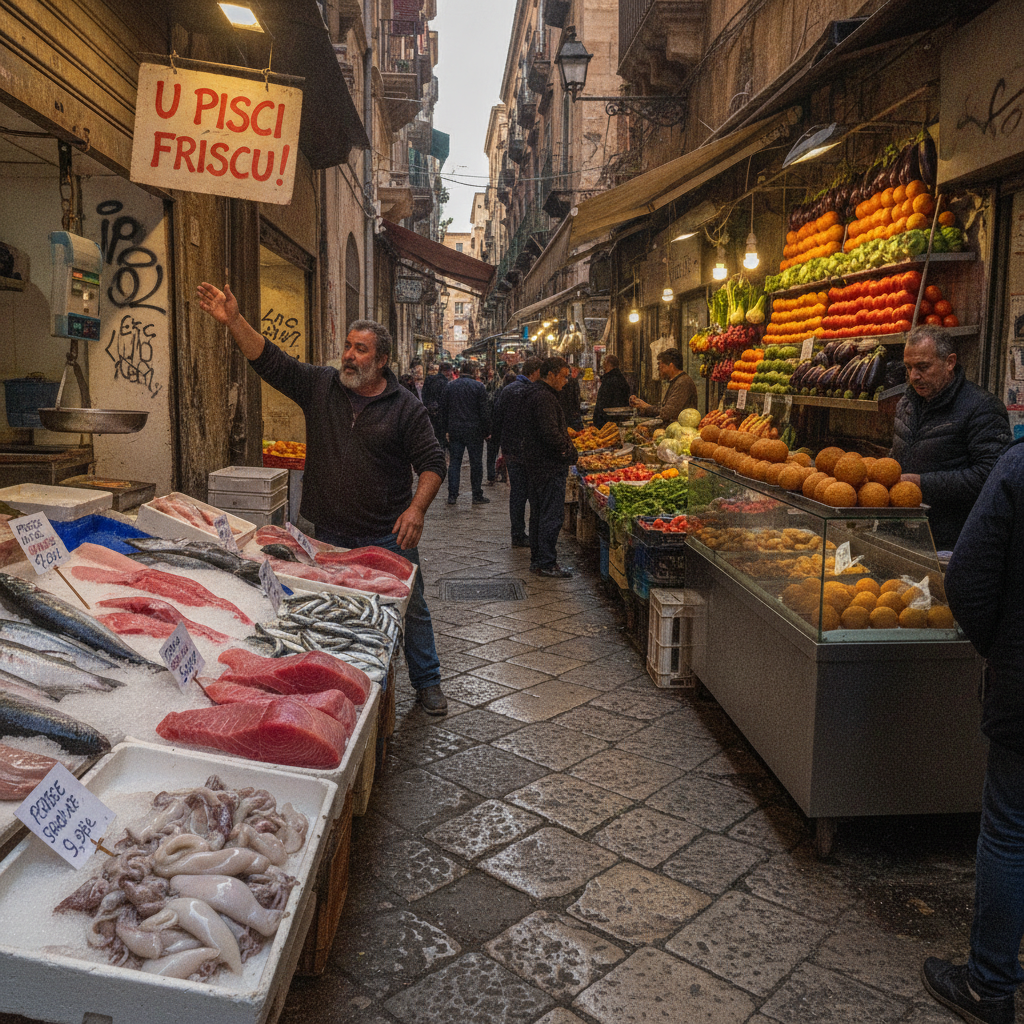
The Three Markets of Palermo — Ballarò, Capo & Vucciria
The three street markets of Palermo (the 'tre mercati storici di Palermo' — the three historic markets of Palermo that are the most vivid expression of the popular culture and the gastronomic tradition of the city): the Ballarò (the 'Mercato del Ballarò' — the oldest and the largest of the three markets, the market in the Albergheria neighbourhood adjacent to the Norman Palace, the market that has operated continuously since the Arab period (the 10th century): the most 'popular' (in the Italian sense of 'popolare' — the most authentically working-class) of the three markets, the market where the Palermo residents shop for the daily food and where the most authentic Palermo street food is found): the Capo (the 'Mercato del Capo' — the market in the neighbourhood behind the Cathedral of Palermo, the market running through the Via Porta Carini and the surrounding streets: the market known for the quality of the meat and the fish (the fish stalls of the Capo are the most celebrated in Palermo), the market with the most elaborate street theatre of the three markets (the fishmongers of the Capo are famous for the theatrical calling ('vucciria' — the 'shouting', the word that gives the third market its name) of the prices): the Vucciria (the 'Mercato della Vucciria' — the oldest of the Palermo markets, the market in the warren of streets around the Piazza San Domenico in the historic centre: the market that has been the subject of the most famous painting of Sicily (the 'Vucciria' by the Palermo painter Renato Guttuso (1912-1987), painted in 1974, the painting that depicts the visual cacophony of the Vucciria market stalls in the manner of the Flemish genre painting) and that has evolved in recent years from a daytime food market into the most animated nightlife area of Palermo.
- 5
Granita di Sicilia & the Sicilian Breakfast Tradition
The 'granita siciliana' (the 'Sicilian granita' — the frozen dessert that is the most distinctive breakfast food in Sicily and the most refreshing Sicilian summer experience): the granita (the granita siciliana — the semi-frozen slush drink of the Sicilian tradition: the granita made from the fruit juice (the almond milk ('granita di mandorla' — the most traditional Sicilian granita, made from the blanched and ground Sicilian almonds dissolved in the water and the sugar), the coffee ('granita di caffè' — the strong espresso frozen with the sugar into the grainy slush), the lemon ('granita di limone' — the Sicilian lemon juice frozen with the sugar), the strawberry ('granita di fragola'), the mulberry ('granita di gelsi' — the mulberry granita, the most seasonal and the most ephemeral of the Sicilian granitas, available only in June when the white mulberries of Sicily ripen), and the pistachio ('granita di pistacchio' — the pistachio granita made from the DOP pistachios of Bronte on the slopes of Mount Etna, the most prized pistachio in the world)): the Sicilian breakfast (the traditional Sicilian breakfast of the 'granita con brioche' — the granita served with the Sicilian 'brioche col tuppo' (the round brioche with the spherical 'top-knot' ('tuppo' — the Palermo word for the bun hairstyle) that is dipped into the granita or used to scoop it): the most unusual and the most satisfying breakfast in Italy — the granita and the brioche replacing the espresso and the cornetto of the mainland Italian breakfast tradition): the best granita of Palermo (the 'Bar Massaro' at the Piazza Pretoria, the 'Pasticceria Scimone' in the Vomero, and the 'Caffe Spinnato' on the Via Principe di Belmonte — the three most celebrated granita bars in Palermo).
- 6
Palermo's Arab-Norman Legacy in Food — The Arab Spice Route
The Arab culinary heritage of Palermo (the 'cucina araba di Palermo' — the Arab culinary tradition that has permeated the Sicilian cuisine since the Arab Emirate of Palermo (831-1072 AD) and that makes the Sicilian kitchen the most Arab-influenced cuisine in the Italian culinary tradition): the Arab ingredients (the Arab culinary ingredients in the Sicilian kitchen — the ingredients introduced to Sicily by the Arab emirs and the farmers of the Arab period: the saffron ('zafferano' — the saffron in the rice and the 'arancine'), the cinnamon ('cannella' — the cinnamon in the sweets and the 'caponata'), the sugar ('zucchero' — the sugar cane cultivation introduced to Sicily by the Arabs in the 9th century, the sugar refined and exported to Europe from the Arab-Norman Sicily in the 11th-12th centuries), the citrus fruits (the orange, the lemon, and the bergamot introduced to Sicily by the Arabs — the Arabic word for the orange 'naranga' giving the Italian 'arancia'), the aubergine ('melanzana' — from the Arabic 'al-badinjan'), the artichoke ('carciofo' — from the Arabic 'al-qurshuf'), and the sesame seed ('sesamo' — the sesame seeds on the Palermo bread rolls ('mafalda' and 'vastedda'))): the 'caponata' (the 'caponata alla palermitana' — the most characteristic Arab-influenced dish of the Palermo kitchen: the sweet-and-sour aubergine relish made with the fried aubergines, the celery, the capers, the olives, the onion, the tomato, the sugar, and the wine vinegar, the sweet-sour flavour combination ('agrodolce' — the 'sweet-acid') being the defining flavour profile of the Arab culinary tradition in the Sicilian kitchen): the marzipan (the 'pasta reale' — the 'royal paste' of the Sicilian confectionery tradition: the marzipan made from the ground Sicilian almonds and the sugar, shaped into the realistic representations of the fruit ('frutta martorana' — the marzipan fruits of the Palermo pastry tradition, named after the Martorana Church where the nuns first made them) and the vegetables, painted with the food colouring to achieve the most realistic representations).
Walk this route with audio
Stories play automatically as you reach each stop — no tapping needed.
More in palermo
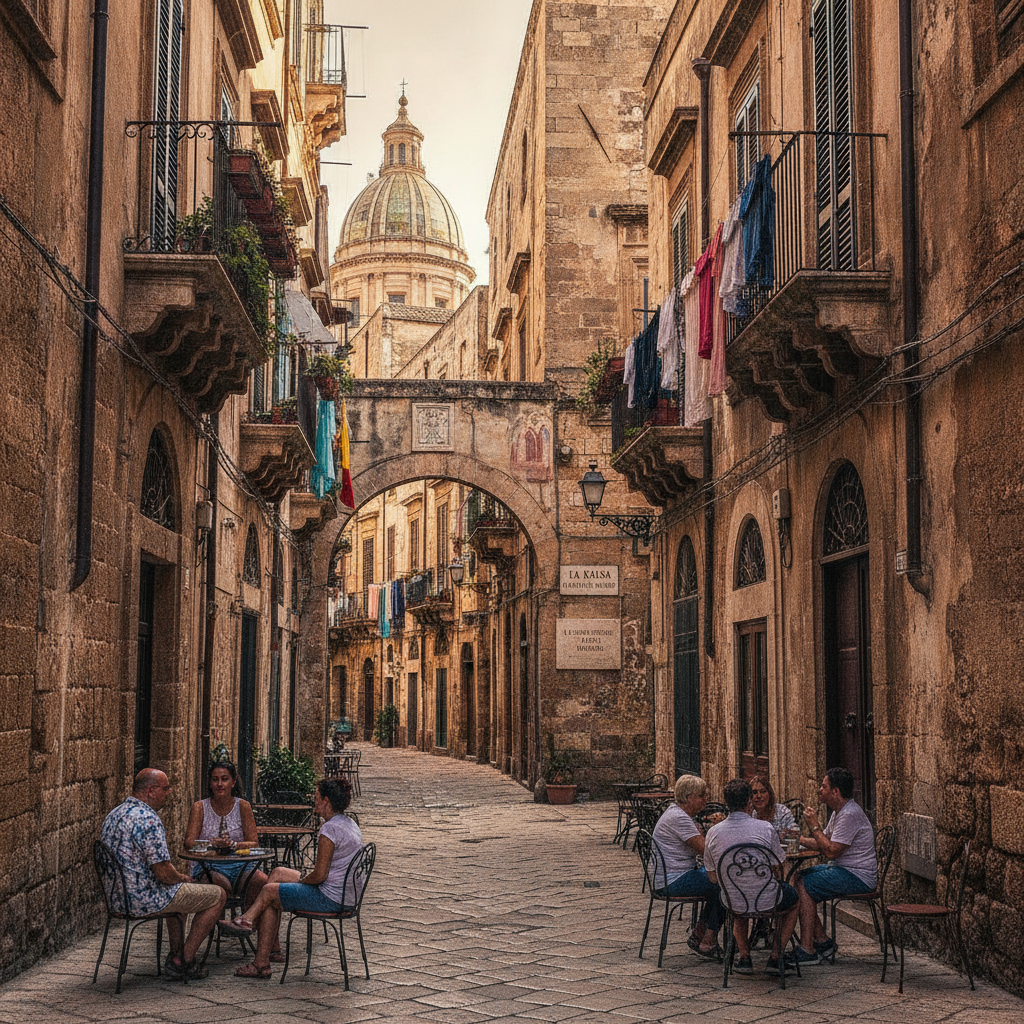
La Kalsa — The Arab Quarter and Palermo's Most Historic Neighbourhood
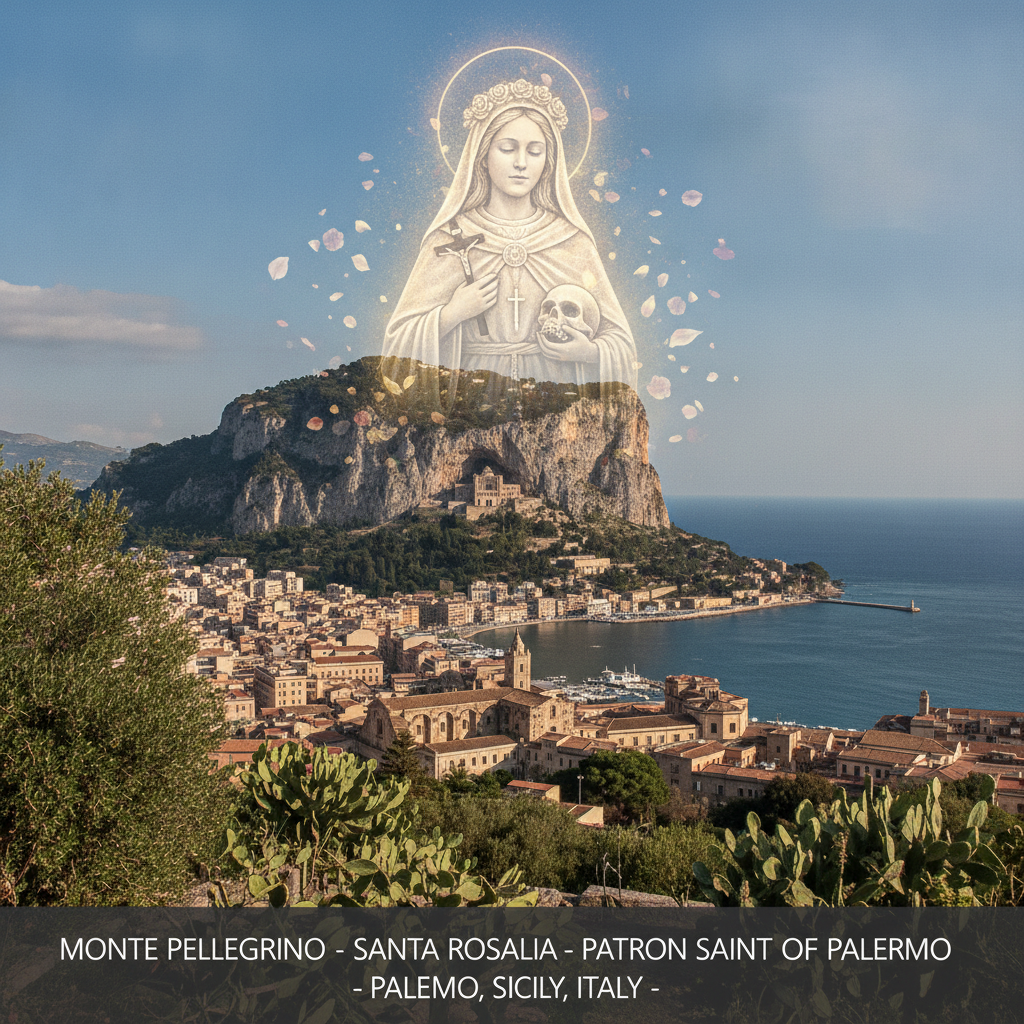
Monte Pellegrino, Santa Rosalia & the Patron Saint of Palermo
Cefalù — Norman Cathedral, Beach & the Perfect Sicilian Town
Quattro Canti, Baroque Palermo & the Spanish Viceroyalty Legacy
Arab-Norman Palermo, Palatine Chapel & UNESCO World Heritage Sicily