Quattro Canti, Baroque Palermo & the Spanish Viceroyalty Legacy
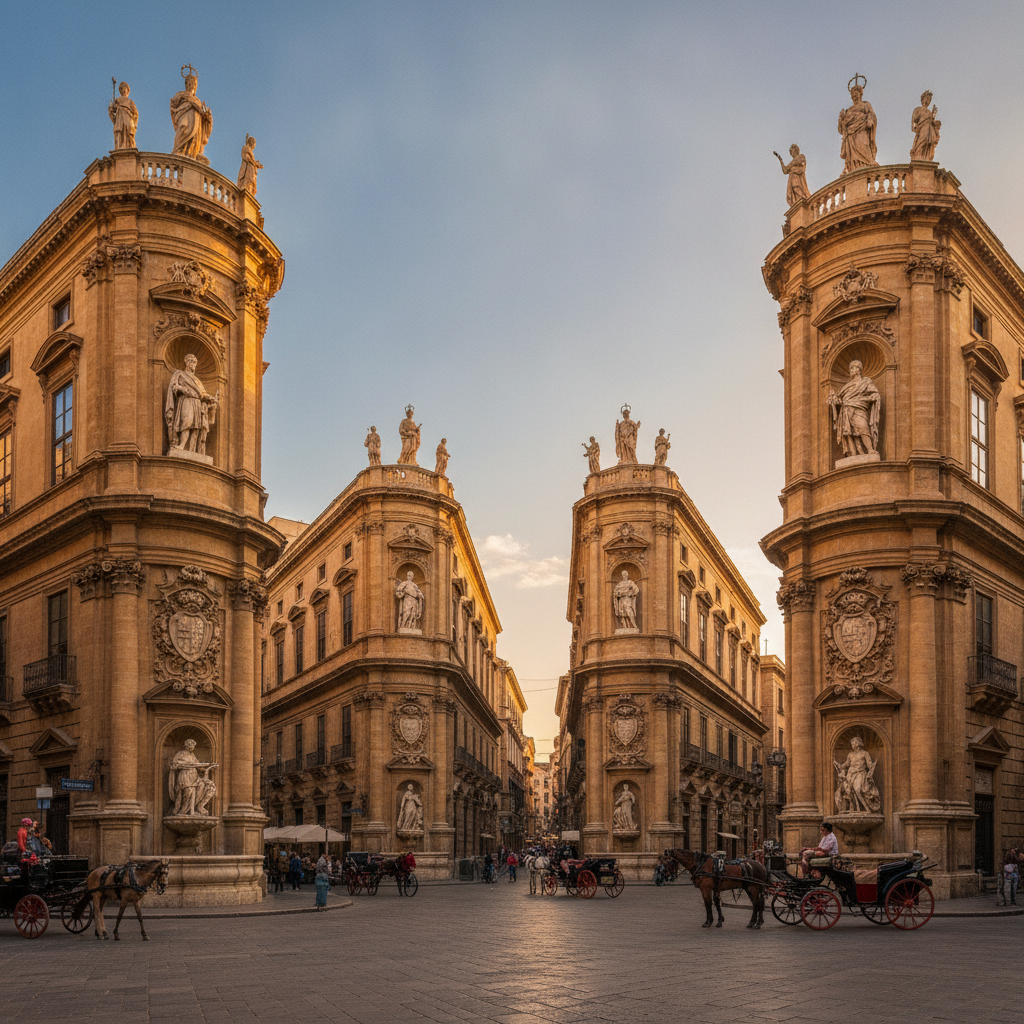
The 'Quattro Canti' (the 'Four Corners' — the baroque octagonal piazza at the intersection of the Via Maqueda and the Corso Vittorio Emanuele, created 1608-1620 during the Spanish Viceroyalty of Sicily) is the most theatrical Baroque urban space in Sicily and the heart of the Baroque historic centre of Palermo — the city that was the capital of the Spanish Viceroyalty of Sicily (1516-1713) and that contains the most extensive and the most varied collection of Baroque art and architecture in southern Italy.
- 1
Quattro Canti — The Theatre of the Spanish Viceroyalty
The 'Quattro Canti' (the 'Quattro Canti di Città' — the 'Four Corners of the City': the octagonal baroque piazza at the crossing of the two main streets of the historic centre of Palermo (the 'Via Maqueda' — named for the Spanish Viceroy of Sicily Juan de La Cerda, Duke of Maqueda, who ordered its construction in 1600 — and the 'Corso Vittorio Emanuele' — formerly the 'Cassaro', the main street of the Norman and Arab city): the commission (the Quattro Canti — the baroque urban composition created at the command of the Spanish Viceroy Diego Fernández de Córdoba, Marquis of Guadalcázar, in the years 1608-1620 to celebrate the Spanish Viceroyalty of Sicily and to demonstrate the urban ambition of the Spanish administration of the island): the four curved facades (each of the four facades of the Quattro Canti — the curved baroque facade divided into three horizontal registers: the fountain register (the lower register: the monumental fountain with the mythological sea god and the inscription in the Latin of the Spanish Viceroyalty), the royal register (the middle register: the full-length statue of one of the four Spanish kings of Sicily — Philip II, Philip III, Philip IV, and Charles II — in the Spanish royal armour with the sword and the sceptre), and the saint's register (the upper register: the full-length statue of one of the four female patron saints of the four 'mandamenti' (quarters) of Palermo — Santa Cristina, Santa Ninfa, Sant'Oliva, and Santa Agata — in the niche above the royal statue)): the Via Maqueda (the 'Via Maqueda' — the straight street running from the Quattro Canti to the Piazza Verdi (the 'Teatro Massimo' square) at the northern edge of the historic centre: the street of the Baroque churches and the palazzi of the Spanish Viceroyalty period).
- 2
Piazza Pretoria — The Fountain of Shame
The Piazza Pretoria (the 'Piazza Pretoria' — the piazza in the historic centre of Palermo adjacent to the Quattro Canti, the piazza dominated by the 'Fontana Pretoria' (the 'Pretoria Fountain' — the Renaissance marble fountain known to the Palermitani as the 'Fontana della Vergogna' (the 'Fountain of Shame')): the fountain (the Fontana Pretoria — the large circular marble fountain composed of three concentric basins (the lowest basin of 30 metres in diameter) with the 644 statues and the sculptural groups arranged on the concentric terraces rising from the outer basin to the central jet: the history of the fountain (the Fontana Pretoria — originally commissioned and carved in Florence between 1554 and 1555 for the garden of the Florentine nobleman Luigi di Toledo, the viceroy's brother-in-law, by the Florentine sculptor Francesco Camilliani (1530-1586): the fountain carved in the white Carrara marble in the Mannerist style (the 644 figures including the river gods, the sea creatures, the putti, and the allegorical figures of the months and the seasons): the transfer to Palermo (the fountain purchased by the City of Palermo in 1573 and transported from Florence to Palermo in 644 pieces (the sculptor Camilliani himself supervising the dismantling, the transportation, and the reassembly of the fountain in Palermo)): the 'Fontana della Vergogna' (the 'Fountain of Shame' — the popular name given to the fountain by the Palermitani (the people of Palermo) because of the naked figures on the fountain, the nudity of the fountain considered scandalous by the conservative Sicilian public of the 16th century): the piazza (the Piazza Pretoria — the piazza surrounding the fountain, flanked by the 'Palazzo delle Aquile' (the City Hall of Palermo) and the church of Santa Caterina d'Alessandria (the 16th-century convent church, the interior of which is one of the most elaborate Baroque interiors in Sicily)).
- 3
Oratorio di San Lorenzo & Serpotta's Stucco Masterpieces
The oratories of Palermo (the 'oratori' — the private oratories or confraternity chapels that represent the most refined expression of the Sicilian Baroque art and that contain the stucco decorations of the Palermo sculptor Giacomo Serpotta (1656-1732), the greatest master of the Baroque stucco in Italy): Giacomo Serpotta (the 'Giacomo Serpotta' — the Palermo sculptor (1656-1732) who is the greatest master of the Baroque stucco decoration in Italy and whose work in the oratories of Palermo represents the supreme achievement of the Italian Baroque decorative art: the Serpotta technique (the 'stucco serpottiano' — the stucco technique of Giacomo Serpotta: the white lime stucco ('calce e gesso' — the lime and the gypsum mixed to a precise formula that Serpotta kept secret during his lifetime) modelled in the detailed relief of the figurative and ornamental composition): the Oratorio di San Lorenzo (the 'Oratorio di San Lorenzo' — the confraternity oratory on the Via dell'Immacolatella in the Kalsa neighbourhood of Palermo, the oratory that contains the most celebrated Serpotta stucco decoration in Palermo and that was formerly the site of the most famous art theft of the 20th century: the 'Nativity' (the 'Natività' — the painting by Caravaggio (the 'Nativity with Saints Lawrence and Francis', painted 1609) that was the altarpiece of the Oratorio di San Lorenzo from 1609 until its theft on the night of October 17-18, 1969 by the Sicilian Mafia — the painting that has never been recovered and that is the most wanted stolen artwork in the world (after the Gardner Museum theft)): the Oratorio del Rosario di San Domenico (the 'Oratorio del Rosario di San Domenico' — the confraternity oratory in the Via dei Bambinai, the oratorio with the altarpiece by Antoon van Dyck ('Madonna of the Rosary with Saints', 1628) and the Serpotta stucco decoration of the walls (the most elaborate Serpotta stucco programme in Palermo, commissioned by the powerful Confraternita del Rosario di San Domenico).
- 4
Teatro Massimo — The Largest Opera House in Italy
The Teatro Massimo Vittorio Emanuele (the 'Teatro Massimo' — the opera house in the Piazza Verdi in the historic centre of Palermo, the largest opera house in Italy and the third-largest opera house in Europe (after the Paris Opéra and the Vienna State Opera)): the building (the Teatro Massimo — the neoclassical opera house built 1875-1897 to the design of the architect Giovanni Battista Filippo Basile (1825-1891) and completed by his son Ernesto Basile (1857-1932): the facade (the Teatro Massimo facade — the neoclassical portico facade with the six Corinthian columns and the two projecting wings, the facade overlooking the Piazza Verdi and the Via Maqueda): the dimensions (the Teatro Massimo — the auditorium of 3,200 seats (the largest auditorium capacity of any opera house in Italy), the stage (the second-largest stage in Europe — 38 metres wide and 49 metres deep), and the dome (the dome of the Teatro Massimo: the 28-metre diameter masonry dome, the second-largest dome on a theatre in the world after the Paris Opéra)): the Godfather scene (the closing scene of 'The Godfather Part III' (1990) directed by Francis Ford Coppola — the scene of the assassination on the steps of the Teatro Massimo, the film scene that is the most internationally famous image of the Teatro Massimo and that has made the opera house one of the most visited film locations in Europe: the film scene (the scene in which the character of Michael Corleone (Al Pacino) watches the opera 'Cavalleria Rusticana' (the Sicilian opera by Pietro Mascagni (1863-1945) based on the Giovanni Verga short story set in the Sicilian village of Vizzini) on the stage of the Teatro Massimo, the opera ending with the assassination on the steps of the opera house)).
- 5
La Zisa & the Arab Pleasure Palaces of Palermo
The 'La Zisa' (the 'Palazzo della Zisa' — the 'Palace of the Zisa' (from the Arabic 'al-aziz' — the 'glorious' or the 'magnificent'): the Arab-Norman pleasure palace built by the Norman King William I ('William the Bad', 1131-1166) and completed by William II ('William the Good', 1153-1189) in the 12th century, the palace now housing the 'Museo d'Arte Islamica' (the Museum of Islamic Art — the collection of Islamic art from Sicily, North Africa, the Middle East, and Iran)): the building (the Palazzo della Zisa — the rectangular pleasure palace (36 metres × 19 metres in plan, 15 metres in height) set in the centre of a large garden (the 'bostan' — the Arab garden: the garden with the fountains, the fish ponds, the orchards, and the flower gardens typical of the Arab pleasure garden tradition)): the Fountain Room (the 'Sala della Fontana' — the ground-floor reception hall of the Zisa, the most extraordinary surviving interior of the Arab-Norman pleasure palaces of Sicily: the hall (the rectangular hall of approximately 15 × 8 metres) decorated with the 'muqarnas' niches (the honeycomb stalactite decoration in the plaster of the vault), the Byzantine mosaic panels (the mosaic panels depicting the falconers and the peacocks in the paradisiacal garden setting), and the central floor channel with the running water (the 'salsabil' — the Islamic garden element of the water channel that runs from the fountain in the room through the channel in the floor and out into the garden beyond)): the 'Cubula' (the 'Cuba Soprana' or 'La Cubula' — the small Arab-Norman pavilion in the Villa Napoli garden, 2 km from the Zisa: the 12th-century bath pavilion of the Cuban pleasure grounds ('i fondi della Cuba'), the smallest and the most perfectly preserved of the Arab-Norman pleasure palace buildings of Palermo).
- 6
Palermo Catacombs — The Capuchin Friar Mummies
The 'Catacombe dei Cappuccini' (the 'Capuchin Catacombs of Palermo' — the underground burial complex beneath the Capuchin monastery church in the Zisa district of Palermo, the most extraordinary and the most disturbing burial site in Europe): the catacombs (the Catacombe dei Cappuccini — the underground corridors of approximately 8,000 mummies displayed in the niches, on the shelves, and hanging on the walls of the catacombs (the total length of the underground corridors approximately 200 metres): the history (the Catacombe dei Cappuccini — the catacombs established in 1599 when the Capuchin friars of the Palermo monastery found that the bodies of their deceased brothers, buried in the earth of the monastery, were being naturally mummified by the specific combination of the underground conditions of the Palermo subsoil (the nitrogenous soil, the high calcium content, and the stable temperature and humidity conditions)): the mummies (the mummies of the Catacombe dei Cappuccini — the 8,000 mummies of the Capuchin friars (the first to be buried, in 1599), the Palermo nobility, the professionals (the doctors, the lawyers, and the professors), the children, and the women: the mummies displayed dressed in their best clothing (the clothing they requested to be buried in — the men in their professional or ceremonial clothing, the women in their best Sunday dress, the children in their baptismal garments): the most famous mummy (the most famous mummy in the Catacombe dei Cappuccini — the 'Bambina Rosalia Lombardo' (the 'Child Rosalia Lombardo'): the 2-year-old girl Rosalia Lombardo who died in Palermo in 1920 and whose father, unable to accept her death, commissioned the embalming expert Alfredo Salafia to preserve her body: the 'Sleeping Beauty' of the Palermo catacombs, the mummy so perfectly preserved that the child appears to be asleep (the face showing almost no deterioration after 100 years)).
Walk this route with audio
Stories play automatically as you reach each stop — no tapping needed.
More in palermo
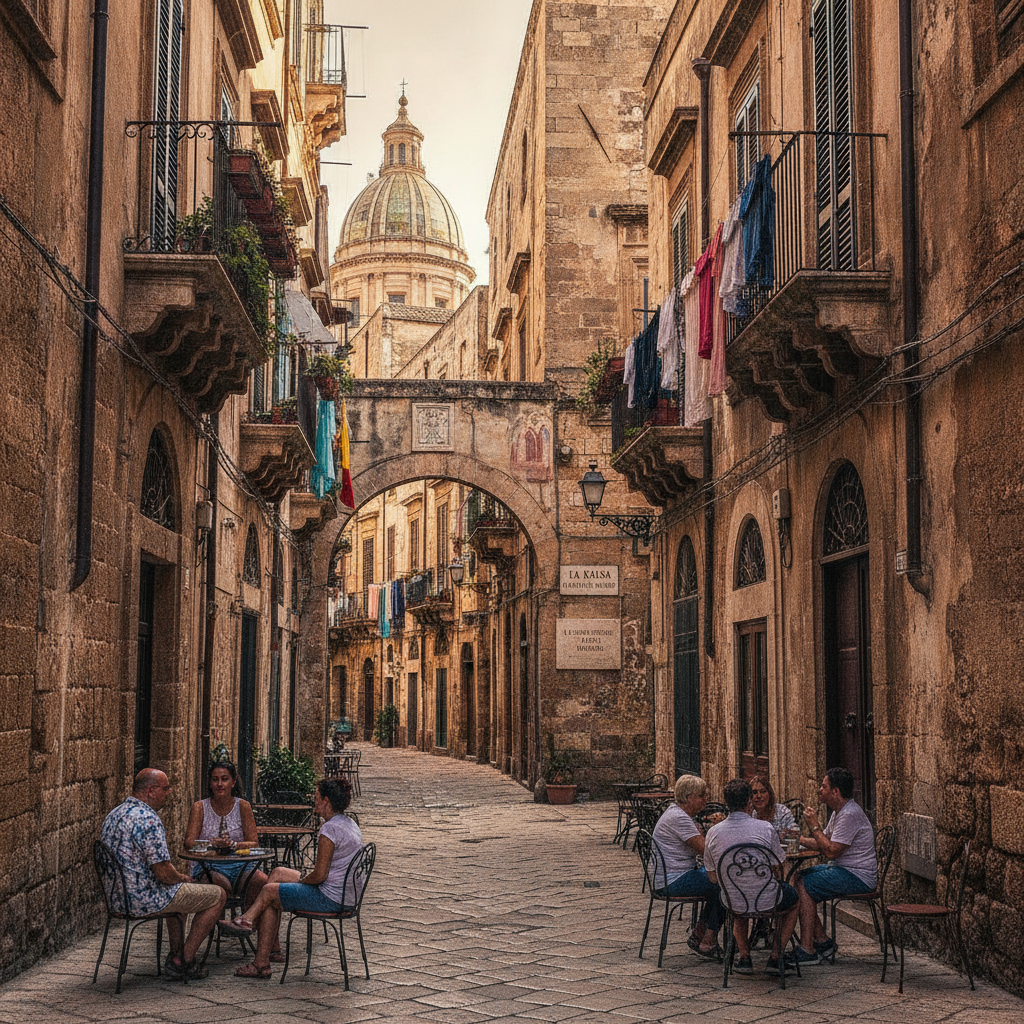
La Kalsa — The Arab Quarter and Palermo's Most Historic Neighbourhood
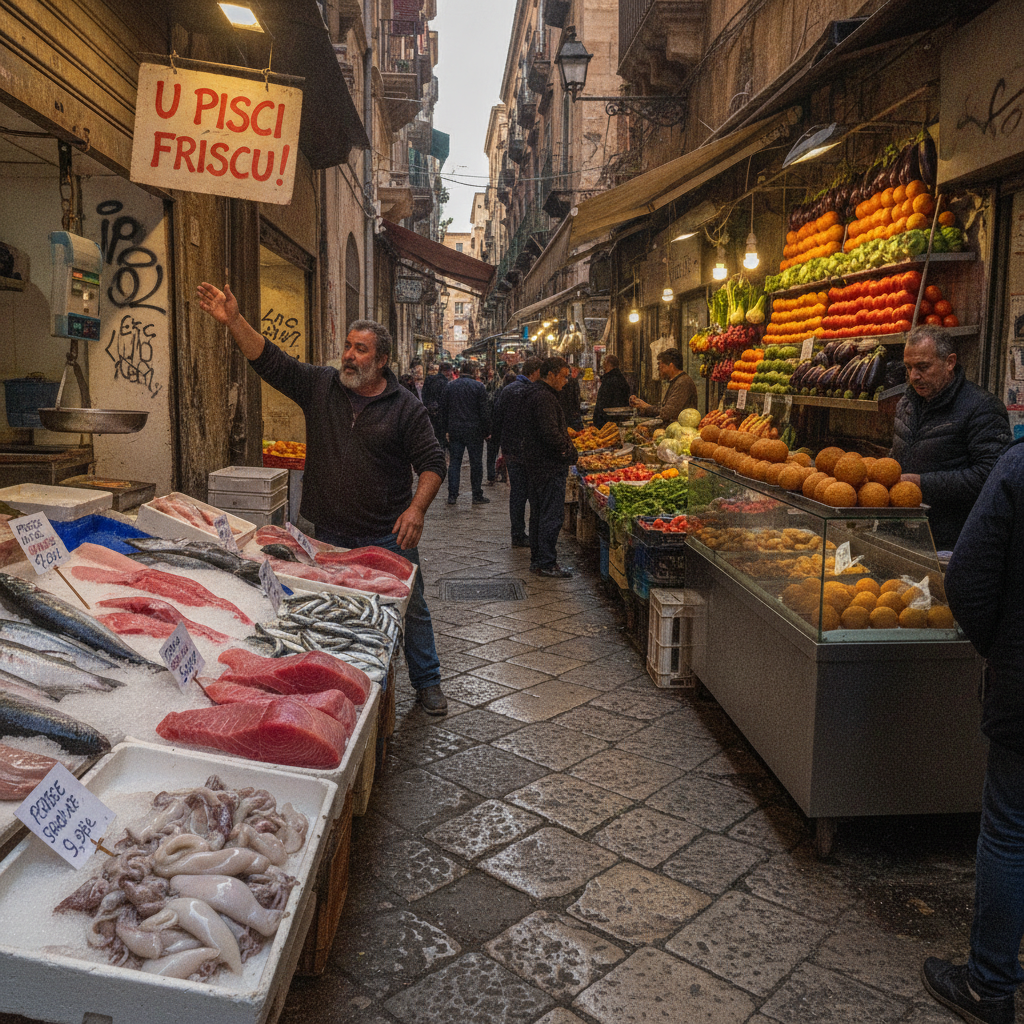
Palermo Street Food, Capo Market & the Sicilian Gastronomic Tradition
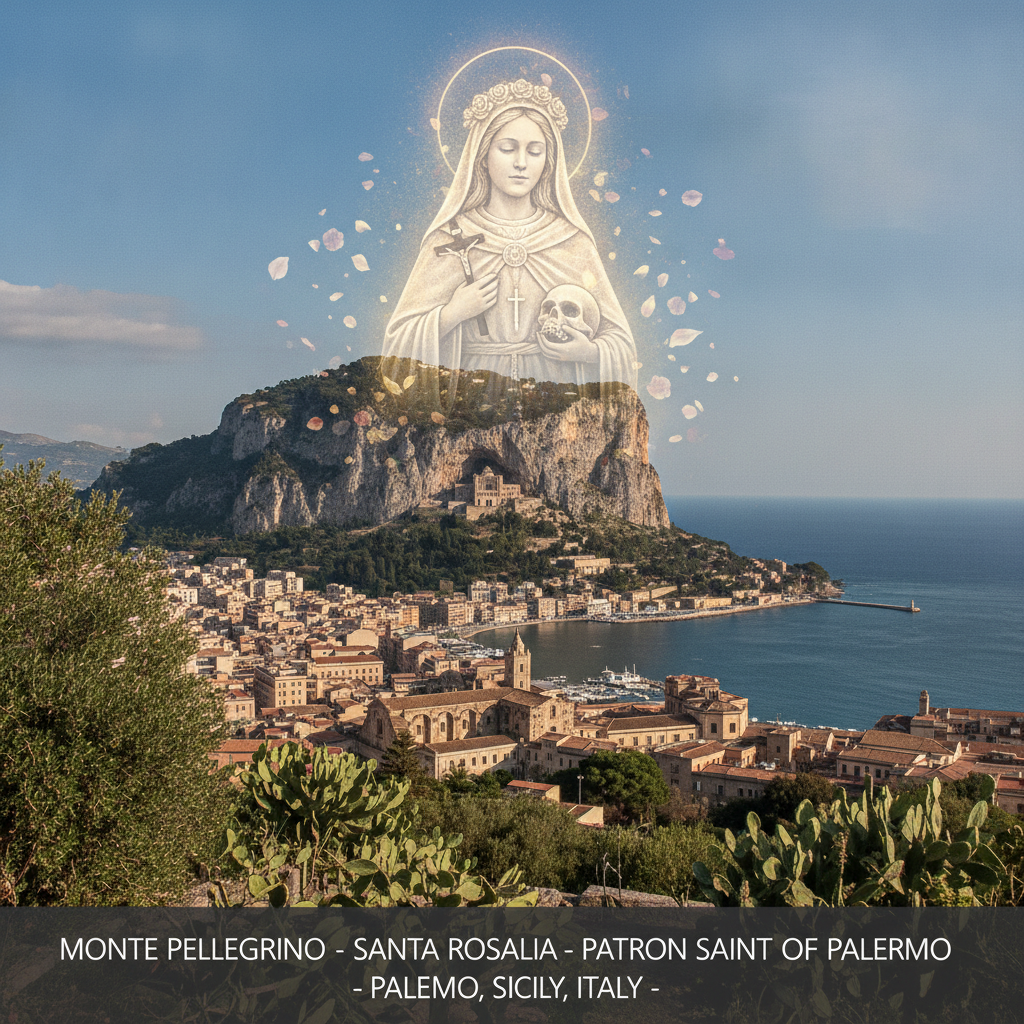
Monte Pellegrino, Santa Rosalia & the Patron Saint of Palermo
Cefalù — Norman Cathedral, Beach & the Perfect Sicilian Town
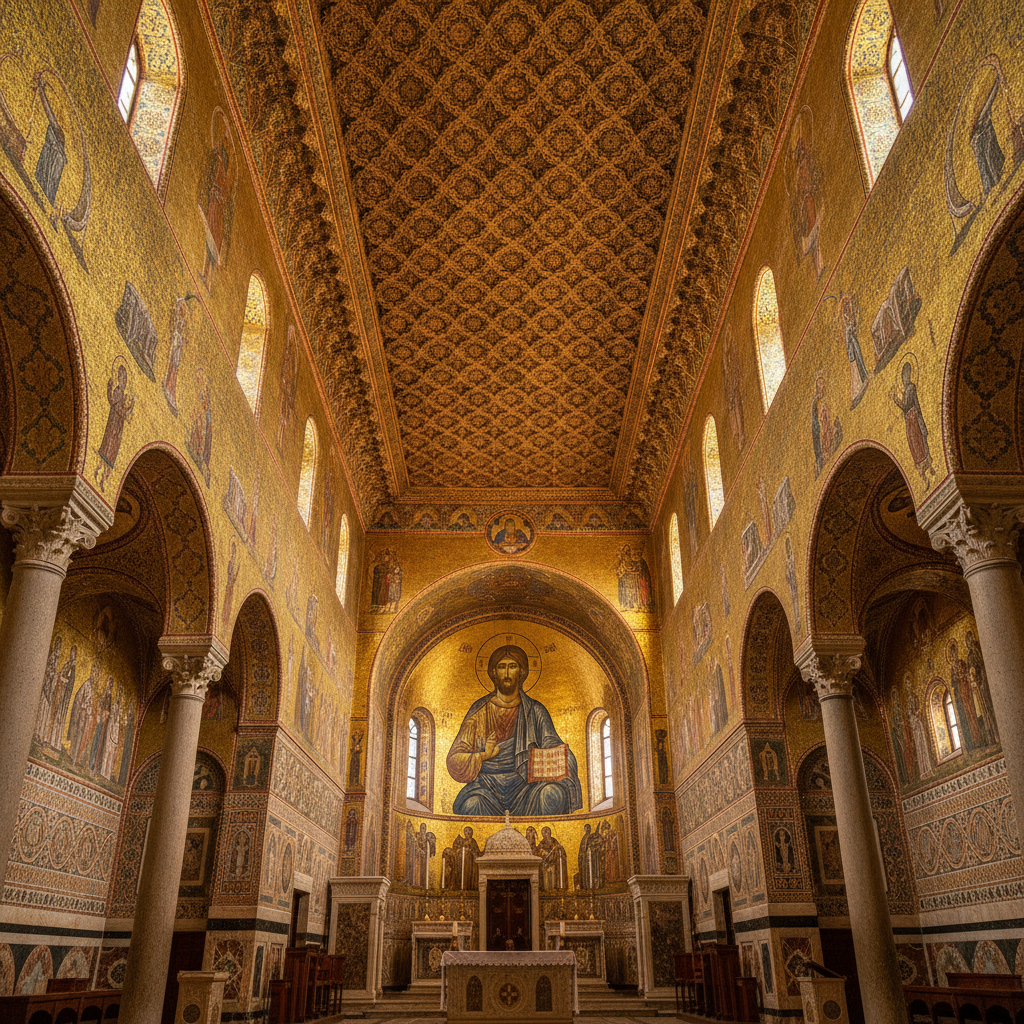
Arab-Norman Palermo, Palatine Chapel & UNESCO World Heritage Sicily