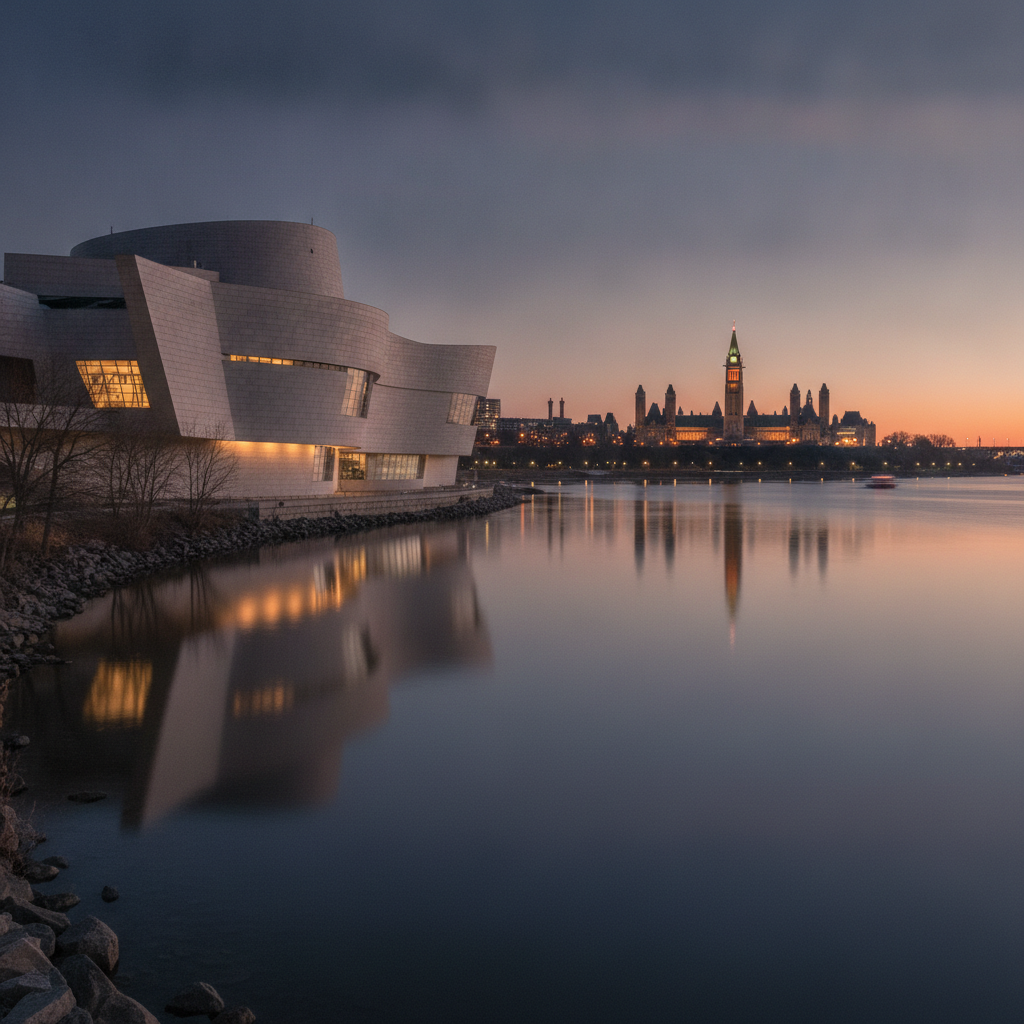
Ottawa: Second Coldest Capital City in the World Where 15000 People Commute on Ice, the Confederation Documents in Fireproof Vaults and the Lookout Where You Can See New York State
Understand that Queen Victoria chose a lumber town of 10,000 over Toronto and Montreal precisely because it was too small to have any existing power base and was harder for America to attack, follow 15,000 daily canal commuters skating to government offices past Parliament Hill on a UNESCO World Heritage Site with a BeaverTails kiosk open on the ice, read the original British North America Act of 1867 that created Canada in a fireproof vault at the national archives alongside Alice Munro manuscripts and immigration records for every person who arrived through Pier 21, hike to the Champlain Lookout escarpment in Gatineau Park where the entire Ottawa Valley is visible from a 200-metre limestone cliff and on clear days New York State appears at the horizon, trace the Ottawa Valley fiddle tradition to a regional style distinct from Cape Breton and Quebec City and then connect it to Bruce Cockburn who has been making music here for 50 years, and check your packing list for a city whose temperature swings 65 degrees between July and February making it the second coldest capital city in the world after Ulaanbaatar.
- 1
Ottawa as Capital City Comparison
Ottawa was chosen as capital of the Province of Canada by Queen Victoria in 1857 over the objections of politicians from Toronto, Montreal, Quebec City, and Kingston, each of which had stronger claims by population, commercial importance, and geographic centrality. The selection of Ottawa, then a rough lumber town of 10,000, was made precisely because it was not dominant in any existing power structure, was more defensible from American attack than any of the alternatives, and was on the boundary between English Upper Canada and French Lower Canada. The choice was widely mocked at the time: the Toronto Globe called it a subarctic lumber village and predicted the capital would fail. Ottawa has since grown to 1 million people and functions effectively as a capital city, but the debate about whether a purpose-built or relocated capital would serve Canada better has never entirely ceased. Canberra, the capital of Australia also selected for its midpoint location between competing cities Sydney and Melbourne and built from scratch after 1913, provides a comparison: both capitals are considered somewhat artificial constructions that lack the organic vitality of their countries true metropolitan centers but serve their constitutional functions effectively.
- 2
Ottawa Winter Commuting Culture
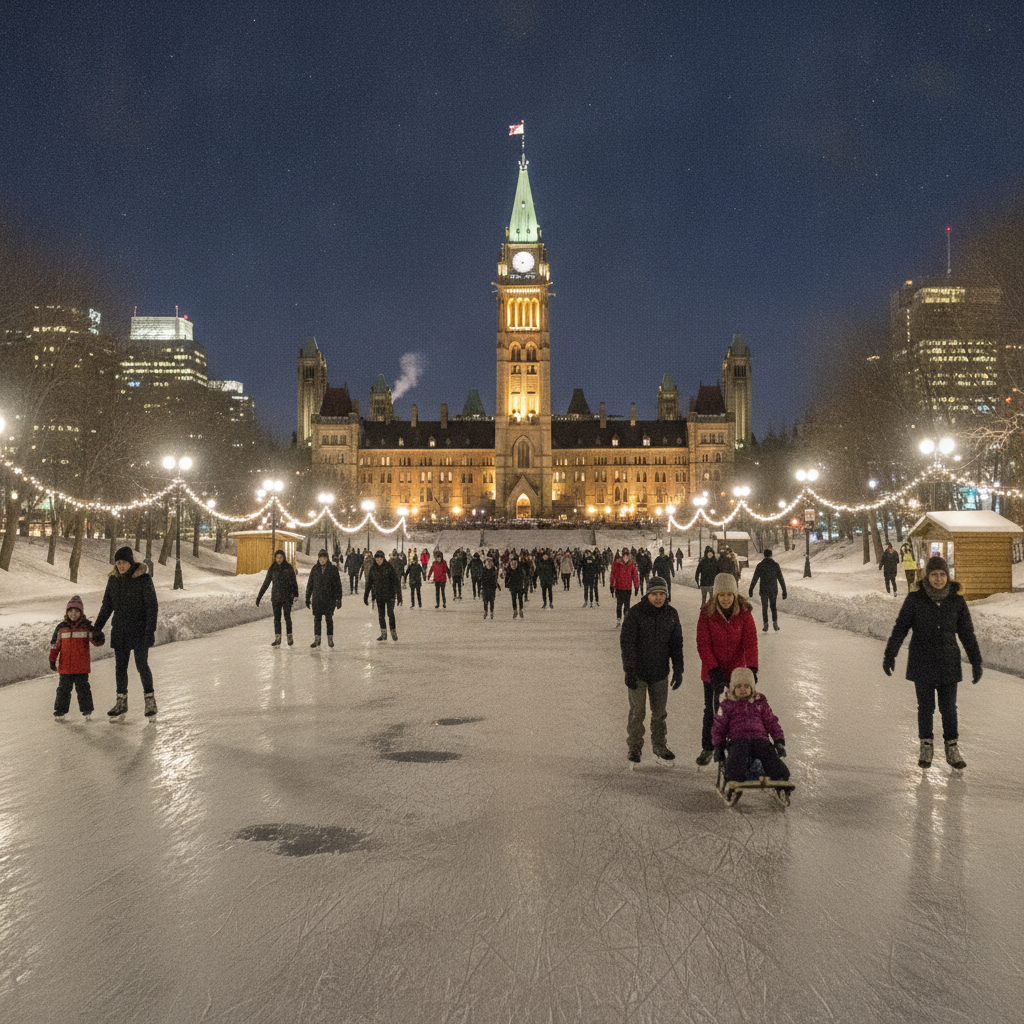
Ottawa has one of the most developed winter commuting cultures in the world, driven by a climate that produces reliable snow cover from November through March and a population that has adapted to extreme cold as a functional condition rather than an exceptional hardship. The Ottawa winter cycling community, while smaller than summer cycling, maintains year-round cycling infrastructure including plowed bike lanes and winter-specific cycling events. The Rideau Canal skateway commuter traffic, estimated at 15,000 to 20,000 uses per day during peak conditions, includes a significant proportion of people commuting to government and commercial offices in the downtown. Canal commuters stop at the BeaverTails kiosk and the hot chocolate stand that operate on the ice during skating hours. The NCC maintains two Zamboni machines and a crew of workers who monitor and groom the canal ice surface daily, removing snow after snowfall and flooding the surface to repair cracks. The Rideau Canal ice is assessed daily for safety and closed when conditions are unsafe. The experience of skating to work in a major capital city, passing under historic bridges with Parliament Hill visible in the distance, is one of the most distinctive daily experiences in the world and has generated international media coverage.
- 3
National Archives and Library and Archives Canada
Library and Archives Canada, the federal institution that holds the documentary heritage of the nation including the original Confederation documents, treaty documents, census records, immigration records, military service files, and creative heritage of Canadian authors, musicians, and artists, is headquartered in a brutalist concrete building on Wellington Street completed in 1967, with research facilities and reading rooms open to the public. The original confederation documents including the British North America Act of 1867, the document that created Canada, are held in fireproof vaults and available to researchers in facsimile. The immigration records in the collection, covering arrivals through Pier 21 in Halifax and other ports from the 1890s onward, are used by millions of Canadians researching their family histories. The collection of Canadian literary manuscripts, including papers of Alice Munro, Margaret Atwood, and Leonard Cohen, makes the archives a major destination for literary scholars. The census records of Canada from 1871 onward, many now digitized and searchable online through partnerships with genealogy services, represent one of the richest sources of Canadian social history available to the public.
- 4
Ottawa Gatineau Park Champlain Lookout Hiking
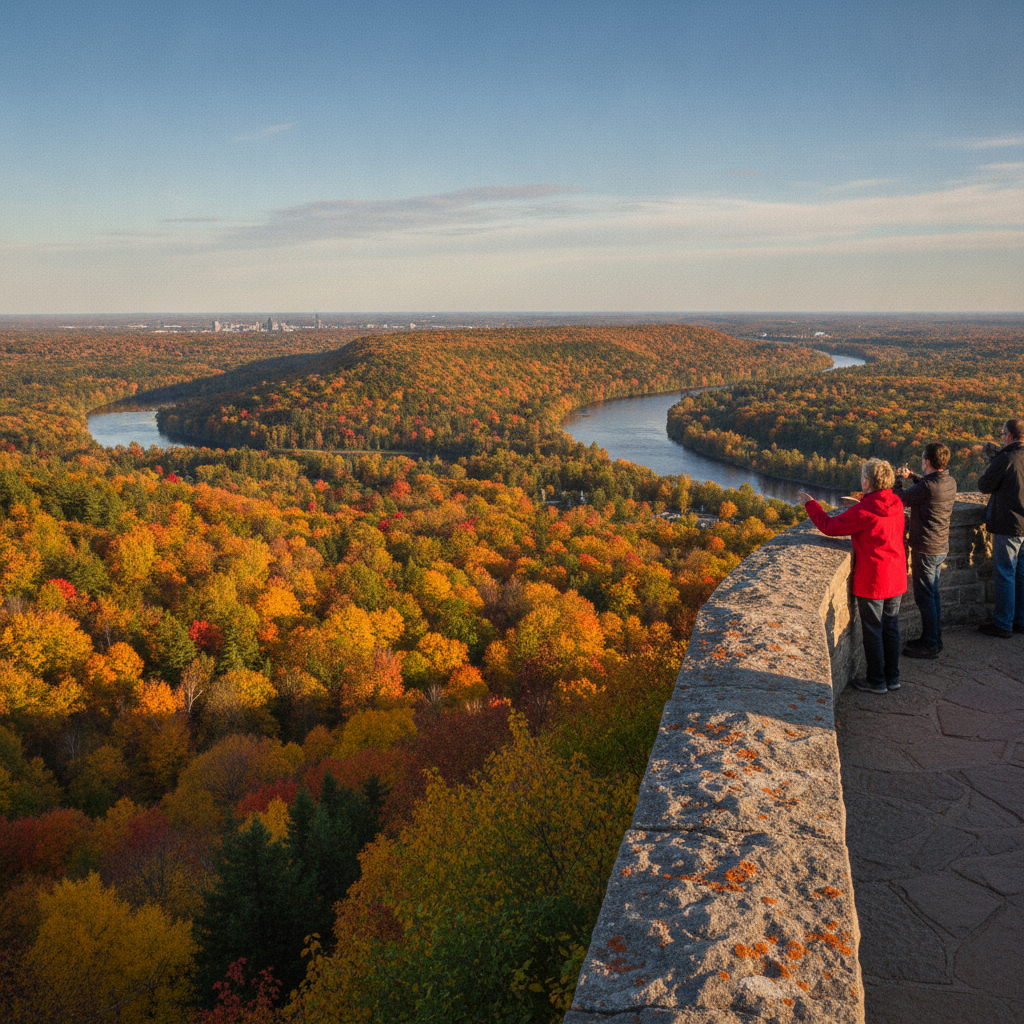
Gatineau Park in the Gatineau Hills north of the Ottawa River provides 165 kilometres of hiking trails ranging from short interpretive walks to multi-day backcountry routes on the Laurentian Highland, with the most popular destination being the Champlain Lookout at the edge of the Eardley Escarpment, a 200-metre limestone cliff from which the entire Ottawa Valley, the capital, and on clear days the Adirondack Mountains of New York State are visible. The trail to the Champlain Lookout from the nearest parking area is 4 kilometres return on a maintained path. The Wolf Trail, one of the most challenging hikes in the park, covers 15 kilometres through mixed boreal forest and Canadian Shield terrain with several lake viewpoints. The park contains 50 lakes, most with controlled public access for swimming and canoeing in summer and skating in winter. The Skyline Trail along the Eardley Escarpment ridge is considered the finest trail in the park for views, passing through meadows recovering from agricultural clearing over stands of old-growth white pine that escaped the 19th-century logging. Black bears, white-tailed deer, wolves, foxes, beavers, otters, and over 200 bird species inhabit the park.
- 5
Ottawa Music Heritage and Folk Revival
Ottawa has a distinctive place in Canadian popular music history through the Ottawa Valley folk revival and the tradition of musician development that produced artists including Bruce Cockburn, a songwriter who has released over 30 albums since 1969 and is considered one of the most important Canadian musicians in any genre. The Ottawa Valley fiddle tradition, a regional style of French-Canadian and Irish-influenced fiddling developed in the farming communities of the Ottawa Valley through the 19th century, is distinct from the Cape Breton and Quebec City fiddle traditions and has been documented and preserved through the Ottawa Valley traditional music community. The Ottawa Folk Festival, held annually since 1994 at Hog-Backs Falls Park, presents roots music, folk, and singer-songwriter traditions with a consistently strong program. The Ottawa Jazz Festival is one of the oldest jazz festivals in Canada. The local music venue scene is concentrated in the ByWard Market and Centretown areas, with venues including the NAC Studio, Ritual, and various bar stages providing development opportunities for local artists. The NFB (National Film Board) animation tradition in Canada has roots in Ottawa where the NFB had early studios and where the Animation Festival has been held since 1976.
- 6
Ottawa Climate and Seasons Practical Guide
Ottawa has one of the most extreme climates of any capital city in the world among cities with over 500,000 people, with summer temperatures regularly reaching 35 Celsius with high humidity and winter temperatures regularly reaching minus 30 Celsius with wind chill, a range of 65 degrees that places Ottawa alongside Ulaanbaatar, Mongolia and Astana, Kazakhstan in terms of climatic extremes among major capitals. The spring mud season in April, when frost leaves the ground and creates road damage and outdoor messiness, is a local institution. The fall foliage season in late September and early October, when the Gatineau Hills turn red, orange, and gold with maple, birch, and poplar colour change, is one of the finest fall foliage displays accessible from any capital city in the world. Practical visit windows are June through early September for warm weather outdoor activities, February for Winterlude and canal skating, and late September for fall colour. Hotels are fully booked for Canada Day. The NCC offers free public access to its major parks, pathway systems, and ceremonial grounds throughout the year. The Confederation Line light rail connects the airport to downtown in 25 minutes. Ottawa is the second coldest capital city in the world after Ulaanbaatar by average annual temperature.
Walk this route with audio
Stories play automatically as you reach each stop — no tapping needed.
More in Ottawa
Ottawa: The Constitution That Took 115 Years to Bring Home From Britain, the Playing Card Money Used When New France Ran Out of Coins and the Neighborhood Cleared in the 1960s That Is Still Empty
Ottawa: 130000 Federal Employees Who Never Lose Their Jobs in a Recession, the Sacred Falls That Were Industrialized for 150 Years and 1 Billion Year Old Rock Visible From Parliament
Ottawa: The Library Saved by a Clerk Who Closed One Door, an Unresolved Land Claim on the Ground Under Parliament and a Farm Doing Agricultural Research Since 1886 Inside the City
Ottawa: The Skating Rink That Is Also a UNESCO World Heritage Site, the Marshmallow Incident That Extinguished the Eternal Flame and the Most Photographed Spider in Canada
Ottawa: The Nobel Prize That Invented Peacekeeping, a Capital Built on Unceded Algonquin Land That Has Been in Legal Negotiation for 40 Years and the Only Bilingual National Theatre in the World