Ottawa: The Nobel Prize That Invented Peacekeeping, a Capital Built on Unceded Algonquin Land That Has Been in Legal Negotiation for 40 Years and the Only Bilingual National Theatre in the World
Attend a performance at the only bilingual national performing arts centre in the world on the Rideau Canal, walk Sussex Drive past the prime ministers residence to the French Embassy and the American ambassador house and understand that 125 countries maintain embassies in a city of 1 million people, skate the Rideau Canal at minus 15 in February during the Winterlude festival where ice sculptors make 2-metre works with chainsaws in a 10-hour competition, learn that the same foreign minister who won the 1957 Nobel Peace Prize for inventing UN peacekeeping also introduced universal health care and the current Canadian flag in five years as prime minister, cycle 900 kilometres of urban paths through a greenbelt of 20,000 protected hectares around the city core, and understand that the capital of Canada sits on Algonquin land whose ownership has been in formal legal negotiation since 1983 with no resolution.
- 1
Ottawa Arts and Culture Scene
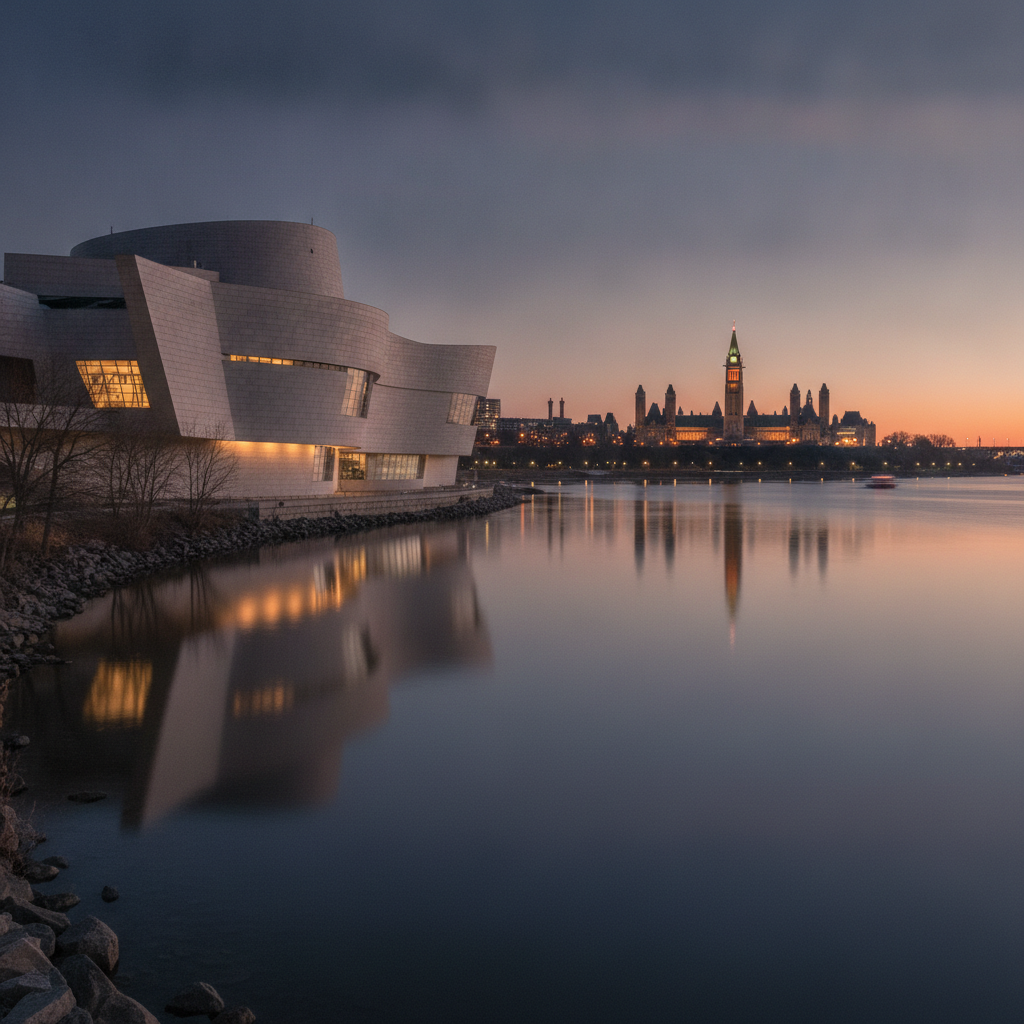
Ottawa has a national cultural infrastructure disproportionate to its size as a capital city, funded by federal cultural agencies whose headquarters are in Ottawa by design. The National Arts Centre, a brutalist concrete hexagonal building beside the Rideau Canal completed in 1969, is the only bilingual national performing arts centre in the world, presenting opera, orchestral music, French theater, English theater, and indigenous dance in a single institution. The NAC Orchestra, founded in 1969, is considered one of the finest orchestra in Canada. The Ottawa Symphony and various theater companies occupy the NAC stages. The Ottawa International Animation Festival, held annually since 1976, is one of the four major animation festivals in the world alongside those in Annecy, Zagreb, and Hiroshima. The Ottawa Art Gallery, reopened in 2018 in a dramatically expanded facility incorporating the historic Carnegie library, focuses on regional and national contemporary art. The arts community in Ottawa is smaller than Toronto or Montreal but is sustained by federal investment and a government class that attends cultural events as professional obligation and genuine interest.
- 2
Sussex Drive and Diplomatic Ottawa
Sussex Drive, the ceremonial boulevard running from Parliament Hill northeast to Rideau Hall, is the most architecturally significant street in Canada, lined with Confederation-era stone buildings housing the Prime Ministers official residence at 24 Sussex Drive, the Department of Foreign Affairs, the French Embassy, the residence of the United States Ambassador at Devonshire House, the Lester B. Pearson Building, and Rideau Hall itself at the far end. The French Embassy, housed in the Maison du Canada at 42 Sussex Drive, is one of the most significant diplomatic properties in Ottawa. Ottawa has over 125 foreign diplomatic missions, making it one of the largest diplomatic communities in the Americas outside Washington and New York. The Rockcliffe Park neighborhood east of Sussex Drive is the primary residential area for ambassadors and senior diplomats, with residential architecture of significant quality in a parkland setting. The National Capital Commission maintains Sussex Drive and the adjacent ceremonial landscape as part of its mandate to create a capital worthy of Canada.
- 3
Ottawa Winterlude Festival
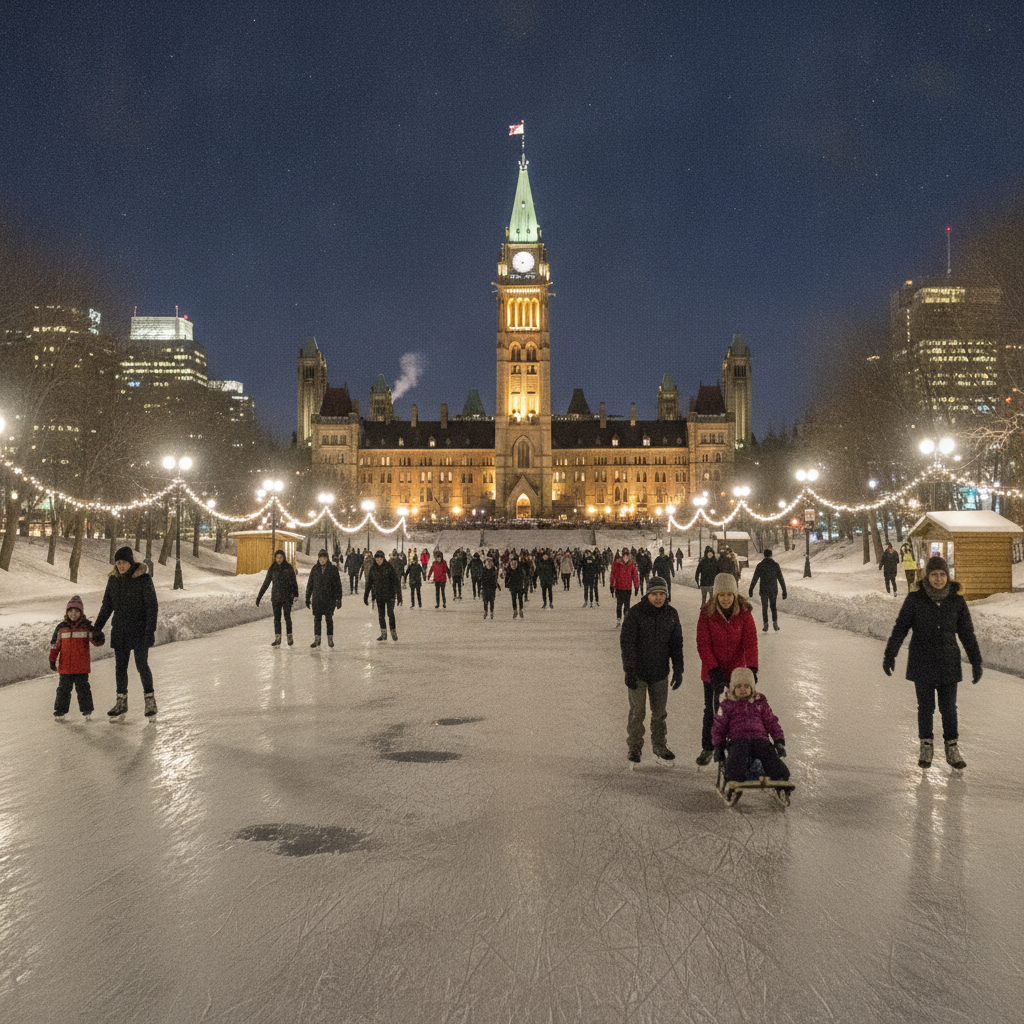
Winterlude, Ottawas annual winter festival held each February since 1979, celebrates the deep winter of the Ottawa Valley with ice sculpture competitions in Confederation Park, the Snowflake Kingdom childrens area in Jacques Cartier Park in Gatineau, and the Rideau Canal skating rink as its primary venue, drawing approximately 600,000 visitors to the Ottawa-Gatineau region during the three-weekend festival. The ice sculptures at Confederation Park are produced by national and international teams using chainsaws, chisels, and hand tools over a 10-hour competition period, with finished sculptures reaching 2 metres in height and remaining on display throughout the festival season. The Snowflake Kingdom in Jacques Cartier Park on the Gatineau side of the river features ice and snow slides, snow sculptures, and outdoor activities designed for children. Winterlude differs from the Quebec Winter Carnival in its family-focused programming and smaller scale but serves a similar function of normalizing and celebrating extreme winter weather rather than retreating from it. The Ottawa climate averages minus 15 Celsius in February with occasional wind chill reaching minus 40.
- 4
Lester Pearson and Canadian Diplomacy
Lester Pearson, the Canadian diplomat and politician who served as Prime Minister from 1963 to 1968, won the Nobel Peace Prize in 1957 for proposing the United Nations Emergency Force during the 1956 Suez Crisis, making him the only Canadian to win the Nobel Peace Prize and one of very few foreign ministers in any country to be so honored. Pearson introduced universal health care, the Canada Pension Plan, the Maple Leaf flag replacing the Red Ensign, and bilingualism as official federal policy during his five years as Prime Minister, making his government arguably the most consequential in reshaping Canadian national identity in the 20th century. The Lester B. Pearson Building on Sussex Drive houses the Department of Global Affairs Canada and is named in his honor. Pearson was a decorated World War I veteran who served in the infantry before being hit by a London bus during a nighttime blackout and invalided home. The Canadian foreign service tradition of multilateral diplomacy, peacekeeping, and middle-power internationalism that Pearson established remained dominant Canadian foreign policy for 60 years after his Nobel Prize.
- 5
Ottawa Cycling and Active City Infrastructure
Ottawa has invested substantially in cycling infrastructure since 2010, with over 900 kilometres of cycling paths and lanes including the Rideau River Eastern Pathway, the Ottawa River Pathway, and the Confederation Line protected cycling lane, making it one of the more cycling-friendly capital cities in North America despite a climate that makes winter cycling challenging. The Ottawa River Pathway running from Britannia in the west to Rockcliffe Park in the east connects major parks, beaches, and attractions along the river and is the most used recreational cycling route in the city. The NCC Greenbelt, a 20,000-hectare ring of protected green land around the urban core of Ottawa established in 1958, provides trails, farms, forests, and conservation areas within cycling distance of the downtown. The Ottawa cycling community has developed a winter cycling culture, with a significant proportion of cyclists commuting year-round. The cycling infrastructure connects to the Rideau Canal pathway in summer and the canal skating rink in winter, creating a seasonal alternation of transportation modes unique to Ottawa.
- 6
Ottawa Indigenous History and Algonquin Territory
Ottawa sits on the unceded traditional territory of the Algonquin Anishinaabe people, a fact that has been formally acknowledged in city council statements, federal government ceremonies, and academic events since the 1990s as awareness of Indigenous rights and territorial history has grown in Canada. The Algonquin Nation claim to the Ottawa Valley, including the site of the capital, has been in formal land claim negotiations with federal and provincial governments since 1983, making it one of the longest-running unresolved land claims in Canadian history. The Algonquin Anishinaabe people, who numbered in the thousands in the Ottawa Valley when Europeans arrived in the 17th century and were devastated by disease and displacement, today number approximately 8,000 in communities across Ontario and Quebec. The Victoria Island at the confluence of the Ottawa and Rideau rivers, adjacent to Parliament Hill, is considered a sacred site by the Algonquin and has been the location of protests and ceremonies. The Truth and Reconciliation Commission of Canada, which documented the harms of the residential school system in a 2015 report, has shaped federal policy and public consciousness regarding Indigenous history and rights.
Walk this route with audio
Stories play automatically as you reach each stop — no tapping needed.
More in Ottawa
Ottawa: The Constitution That Took 115 Years to Bring Home From Britain, the Playing Card Money Used When New France Ran Out of Coins and the Neighborhood Cleared in the 1960s That Is Still Empty
Ottawa: 130000 Federal Employees Who Never Lose Their Jobs in a Recession, the Sacred Falls That Were Industrialized for 150 Years and 1 Billion Year Old Rock Visible From Parliament
Ottawa: Second Coldest Capital City in the World Where 15000 People Commute on Ice, the Confederation Documents in Fireproof Vaults and the Lookout Where You Can See New York State
Ottawa: The Library Saved by a Clerk Who Closed One Door, an Unresolved Land Claim on the Ground Under Parliament and a Farm Doing Agricultural Research Since 1886 Inside the City
Ottawa: The Skating Rink That Is Also a UNESCO World Heritage Site, the Marshmallow Incident That Extinguished the Eternal Flame and the Most Photographed Spider in Canada