Olympia Modern Olympics: The 1896 Revival and Coubertin, the Ancient Site Natural Landscape, Alpheios and Kladeos River Setting, Ancient Olympia Village, the Nemea Games Revival, and the Olympic Museum
The Olympia modern connection route covers the Pierre de Coubertin and the 1896 Athens Olympic revival, the ancient site natural landscape of the Alpheios valley, the Alpheios and Kladeos river confluence setting, the Ancient Olympia village as the modern base, the Nemea Games revival experiment, and the International Olympic Academy and Olympic Museum.
- 1
Pierre de Coubertin: The 1896 Revival
Pierre de Coubertin, the French educator who proposed the revival of the Olympic Games as a vehicle for international peace and physical education at the 1892 Congress of the Union des Sports Athletiques in Paris, organized the first modern Olympics at Athens in 1896 with 241 athletes from 14 nations competing in 43 events. Coubertin visited Olympia and was photographed at the ancient site in the evocative image that became the foundational narrative of the modern Olympic movement. His heart was buried at Olympia in 1937 in the grove near the International Olympic Academy, the only part of his body not interred in Paris.
- 2
The Alpheios Valley Landscape: The Natural Setting
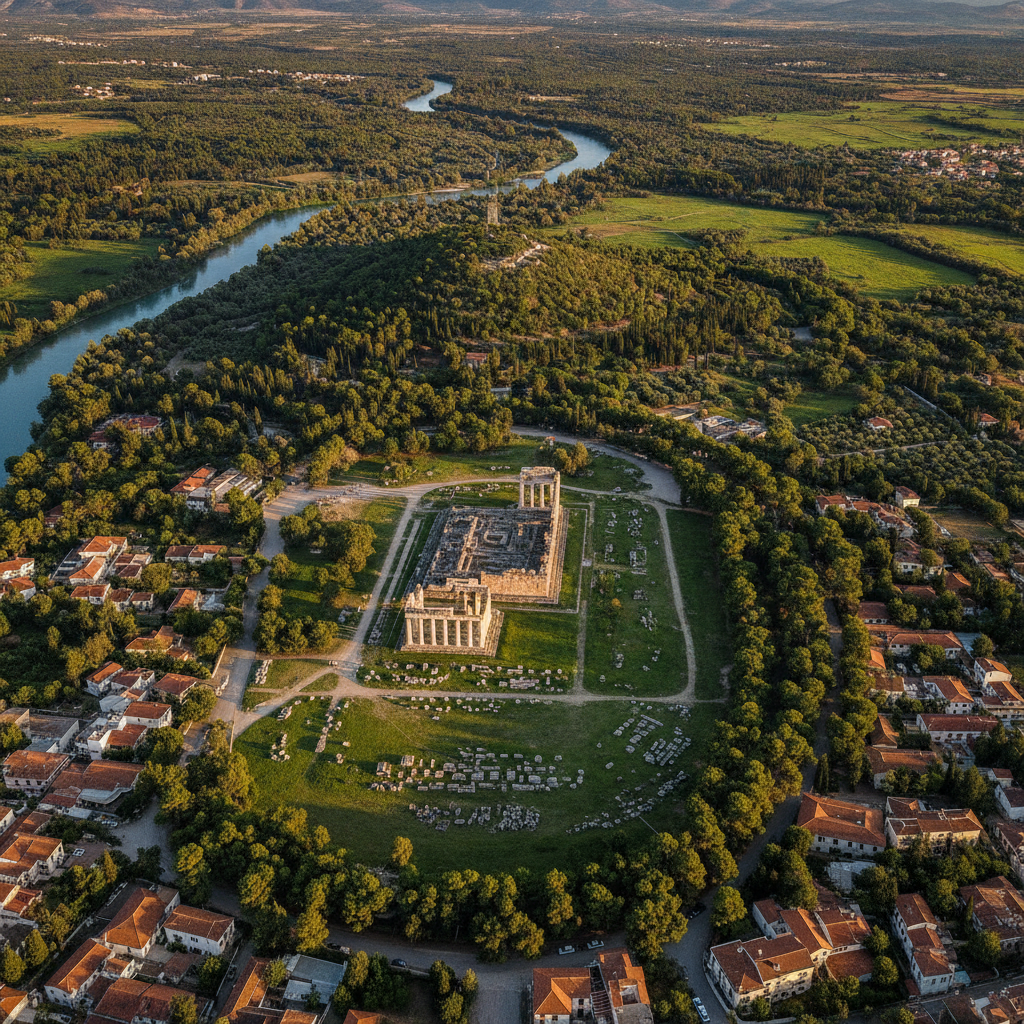
The ancient Olympia sanctuary, situated at the confluence of the Alpheios and the Kladeos rivers in the flat valley floor of the western Peloponnese, was chosen for its position in the fertile agricultural valley that could support the tent encampment of 50,000 visitors who arrived for the Games every 4 years. The Alpheios river, the largest river in the Peloponnese and the river that Herakles diverted to clean the Augean stables in the 6th Labor, floods the sanctuary site regularly and has buried the hippodrome and many of the Altis buildings under 2 meters of alluvial deposit.
- 3
The Kronos Hill: The Sacred High Ground
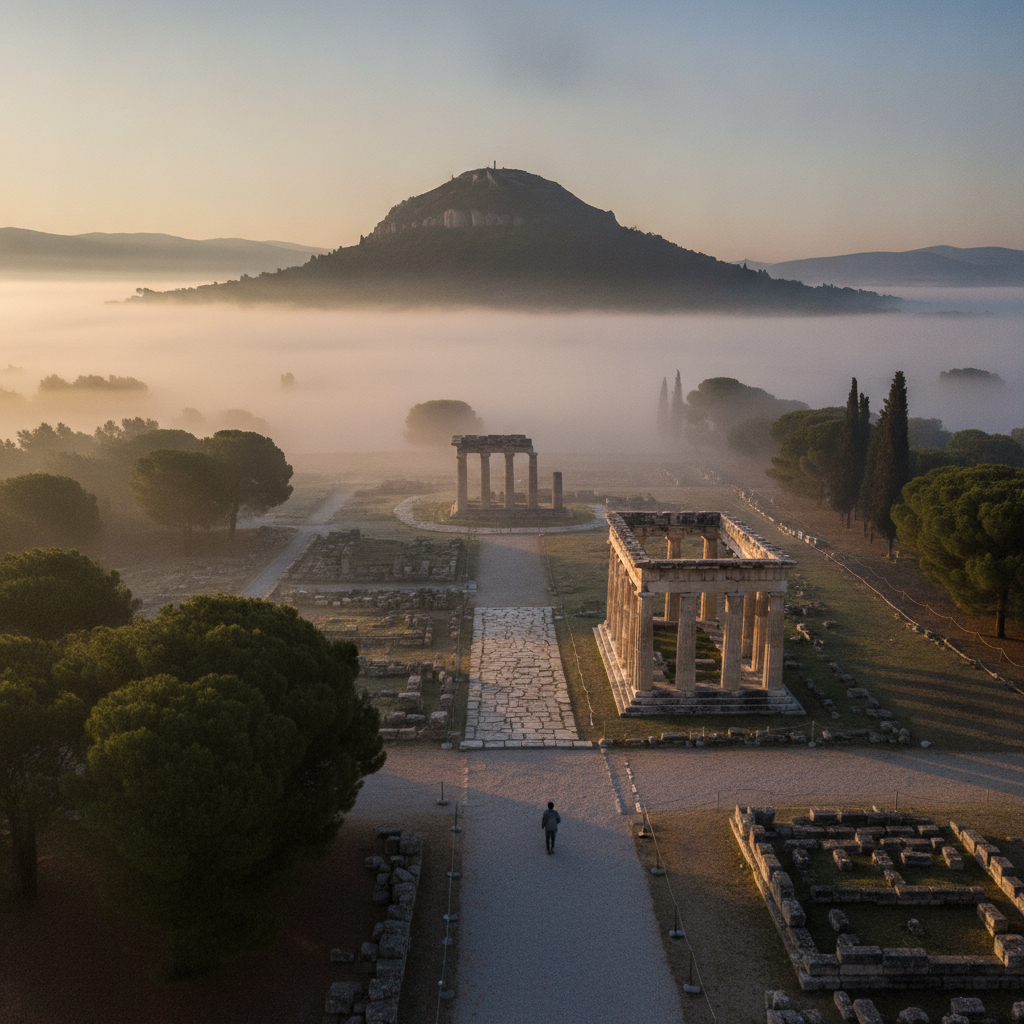
The Kronos hill, the small forested hill that rises immediately north of the Altis sanctuary and was named for the father of Zeus in the myth of the succession of the divine generations, is the most atmospherically complete natural element of the Olympia landscape and the viewpoint from which the entire sanctuary layout, the stadium, and the Alpheios valley are most clearly visible. The Kronos hill in the early morning, when the mist fills the valley and the pine forest on the hill is still and the sanctuary is empty of visitors, is the most evocative single landscape experience at Olympia.
- 4
Ancient Olympia Village: The Modern Base
The modern village of Ancient Olympia, the small tourist village adjacent to the archaeological site that has grown from the 19th century excavation camp into the collection of hotels, restaurants, and souvenir shops that serves the 2 million annual visitors, provides the base for the 2-day Olympia visit that the depth of the site and the museum justify. The village is the most commercially developed small village near a major Greek archaeological site and the accommodation most convenient for the visitor combining Olympia with the Kalavryta rack railway and the Patras ferry departure.
- 5
International Olympic Academy: The Living Institution
The International Olympic Academy at Ancient Olympia, founded in 1961 on the Coubertin proposal and operating since 1961 as the educational institution that trains Olympic officials, coaches, athletes, and sports journalists from 150 countries in the Olympic values and history, is the most important living institutional link between the ancient Games and the modern Olympics. The Academy sessions held each June near the ancient site are attended by the international sports community and the Olympic Academy sessions are the most significant continuing educational program based at an ancient athletic site anywhere in the world.
- 6
Nemea Games Revival: The Experiment in Ancient Sport
The Nemea Games revival, held at the ancient Nemea stadium near Corinth every 4 years since 1996 and open to any participant regardless of athletic ability, recreates the ancient Games format with barefoot running in the ancient costume, the athletes entry through the vaulted tunnel, and the wild celery wreath as the prize in the most complete reconstruction of an ancient Panhellenic athletic event ever organized. The Nemea revival provides the experiential complement to the Olympia museum visit and the most direct access to the ancient athletic experience available to the modern visitor.
Walk this route with audio
Stories play automatically as you reach each stop — no tapping needed.
More in Olympia
Olympia Olympic Victors: Pindar Victory Odes, Milo of Croton Wrestling, Leonidas of Rhodes Sprint, Diagoras Boxing Family, the Olive Wreath Crown, and the Social Meaning of Olympic Victory
Olympia Monuments: Nike of Paionios, Echo Stoa, Treasury Terrace of City-States, Bouleuterion and the Olympic Oath, Prytaneion Eternal Flame, and the Processional Route
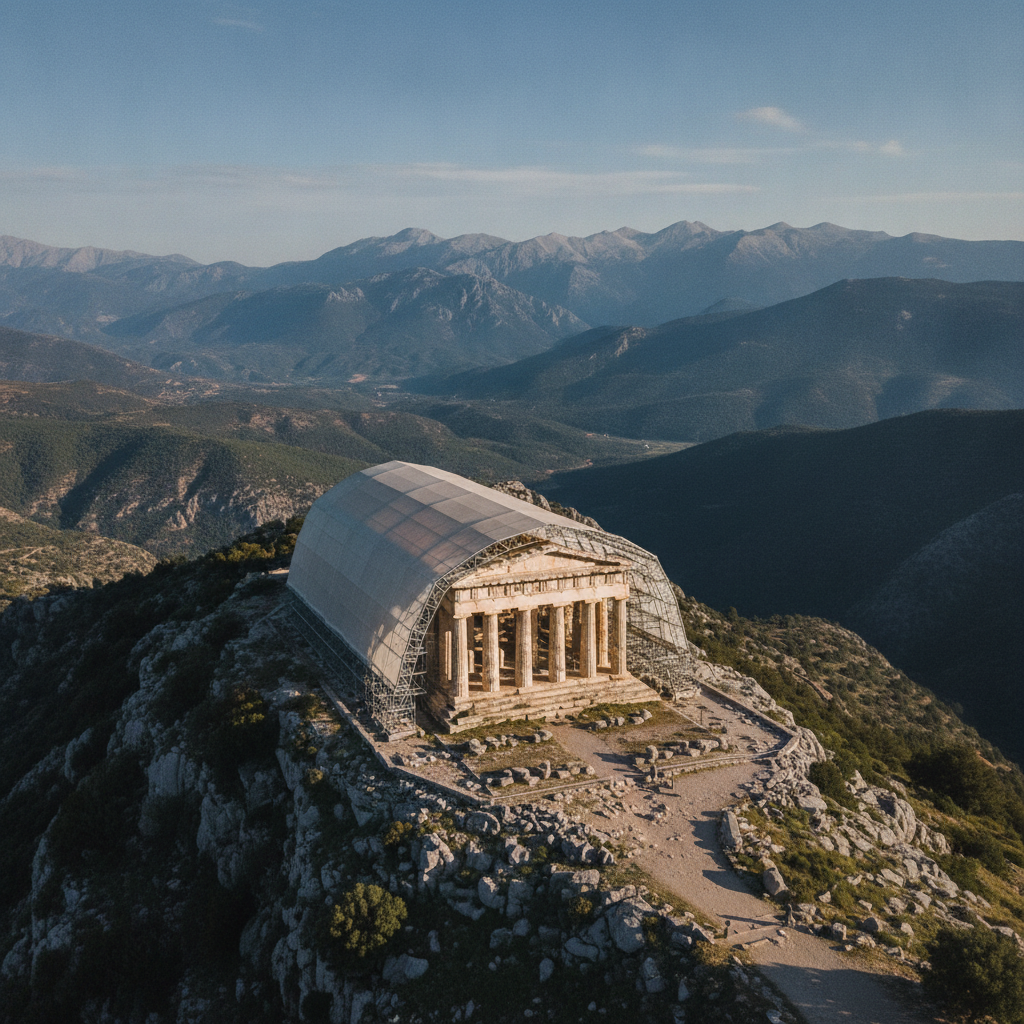
Olympia Peloponnese Excursions: Nestor Palace at Pylos, Bassae Apollo Temple UNESCO, Arcadian Mountain Landscape, Kyparissia Beach Town, Ancient Elis Region, and the Western Peloponnese Circuit
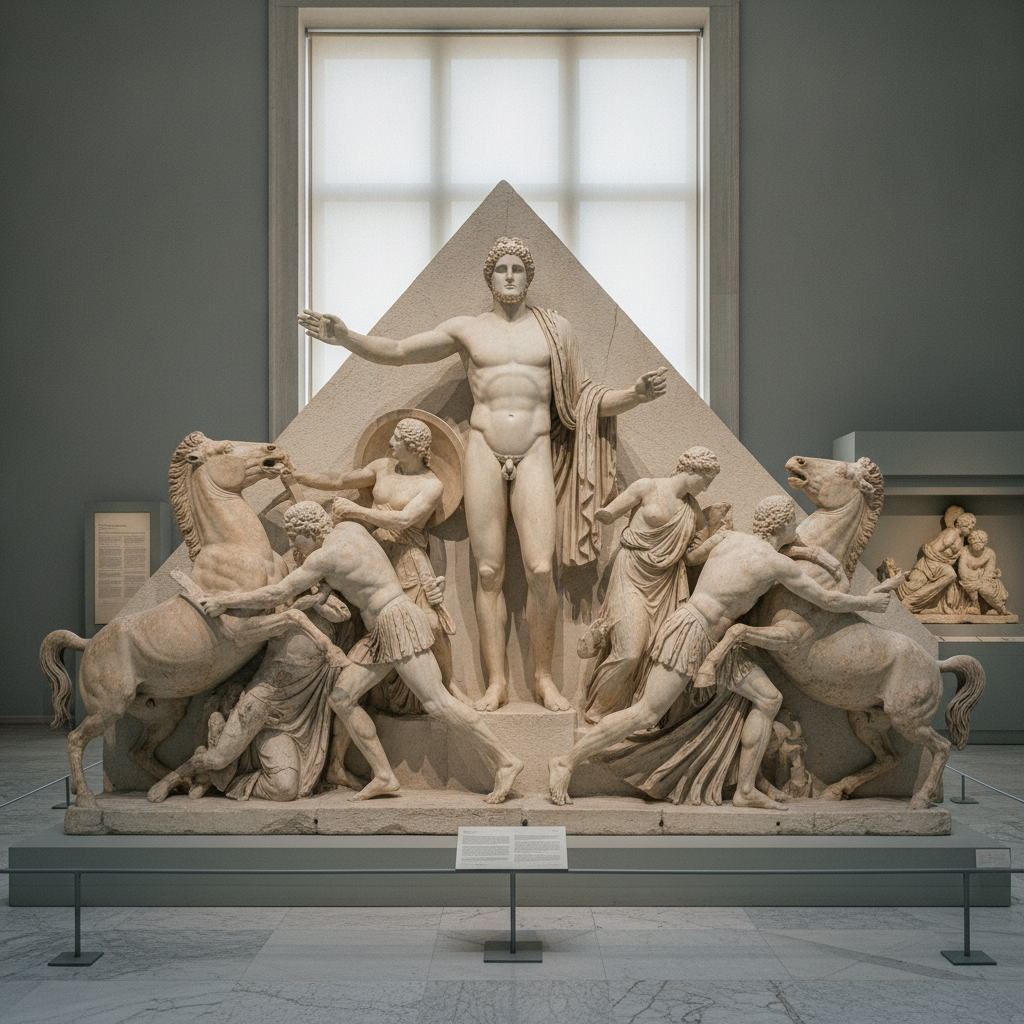
Olympia Museum Deep Dive: Zeus Temple East and West Pediments, Herakles Labors Metopes, Bronze Collection, and the Leonidas Sparta Thermopylae Connection to the Peloponnese Circuit
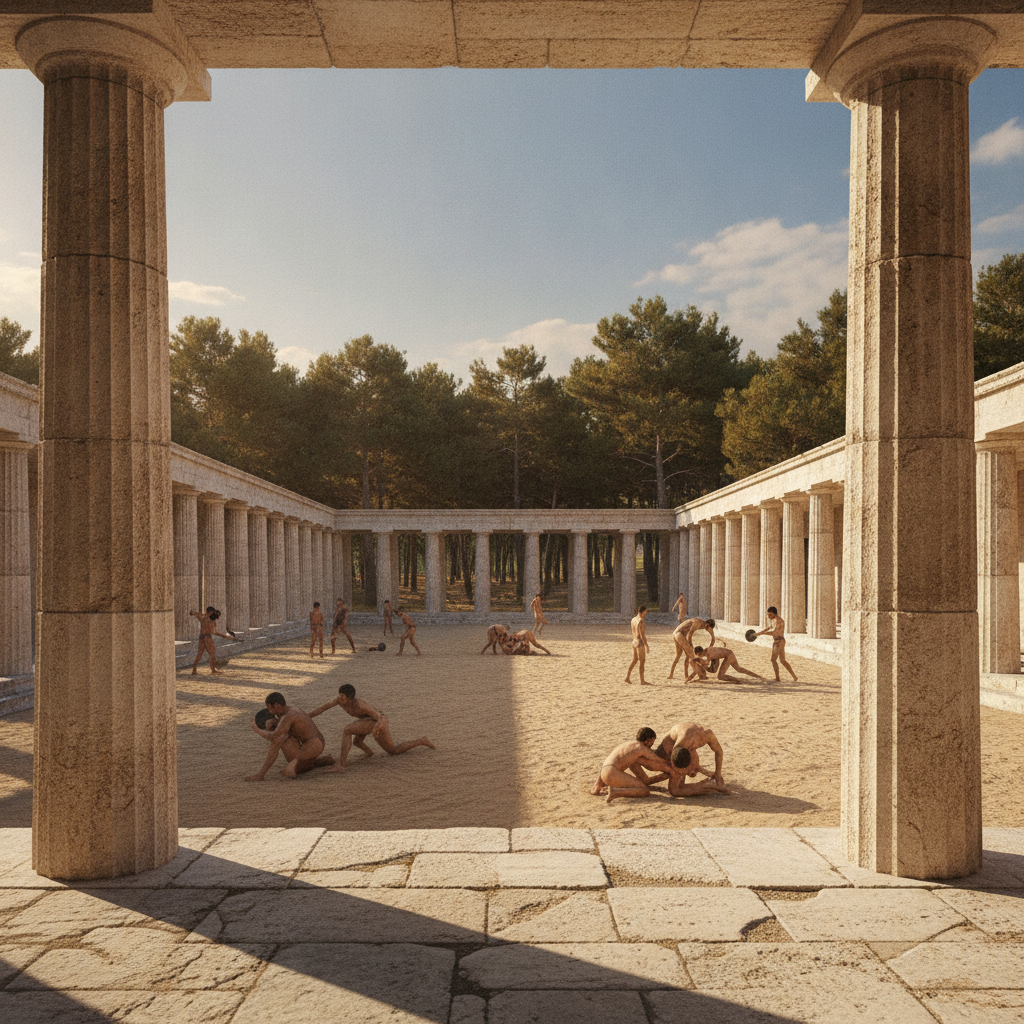
Olympia Art and Sport: The Pheidias Workshop, Zeus Statue Wonder Details, Palaestra Wrestling School, Ancient Gymnasium, the Hippodrome Horse Racing, and the Complete Athletes Training Circuit