The ¥2,000 Note Gate, the Battle That Killed 20–33% of the Island's Population & the World's Only Successfully Bred Captive Manta Rays
The Ryukyu Kingdom's unique dual-tributary position serving both Beijing and Edo simultaneously until 1879; the Cornerstone of Peace listing 241,000 names from all nations without hierarchy; the Churaumi's 3 captive whale sharks and the world's first bred manta rays; the Kerama Blue water that became a trademark colour term in Japanese travel writing; the Makishi Market's bring-your-own-to-the-upstairs-cook format unique in Japan; and the 30+ daily Tokyo–Naha ANA/JAL flights as the only Shinkansen-free major Japanese destination.
- 1
Shuri Castle – The Ryukyu Kingdom's Palace
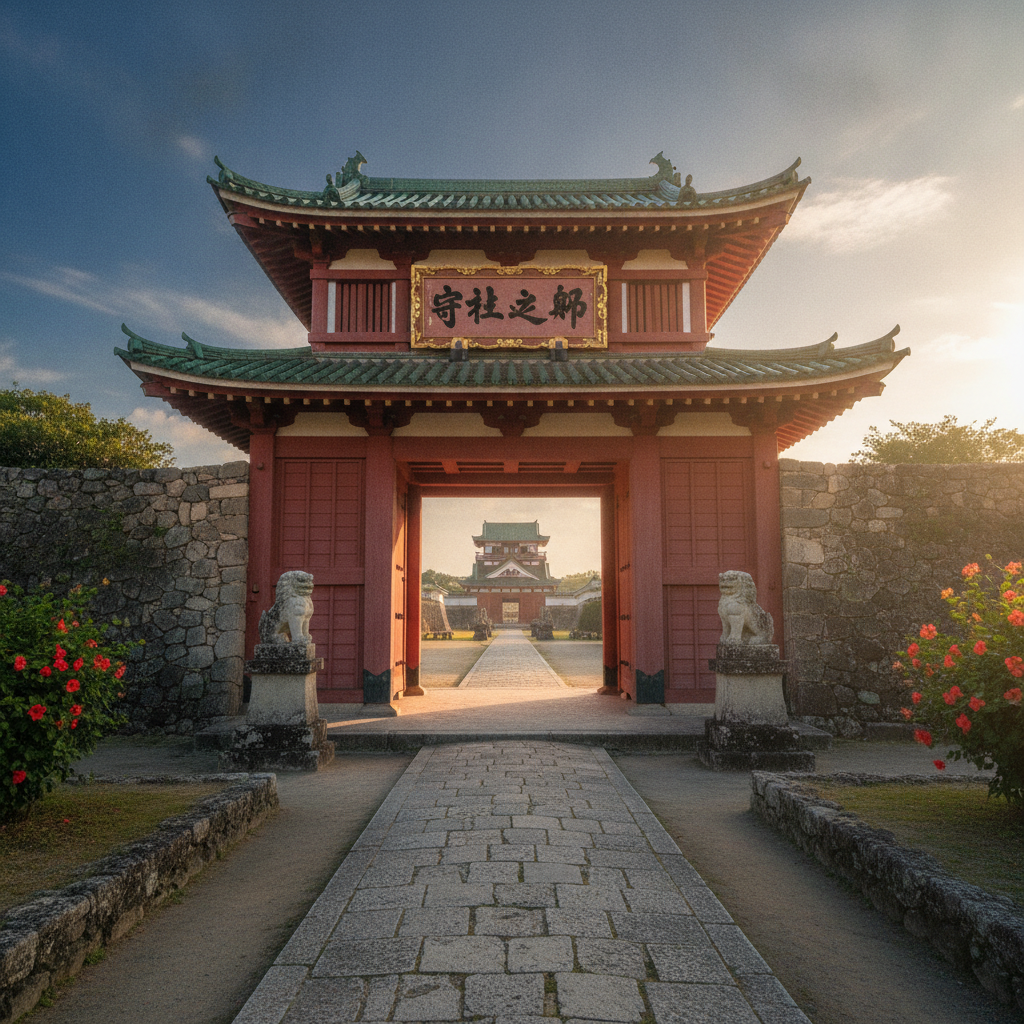
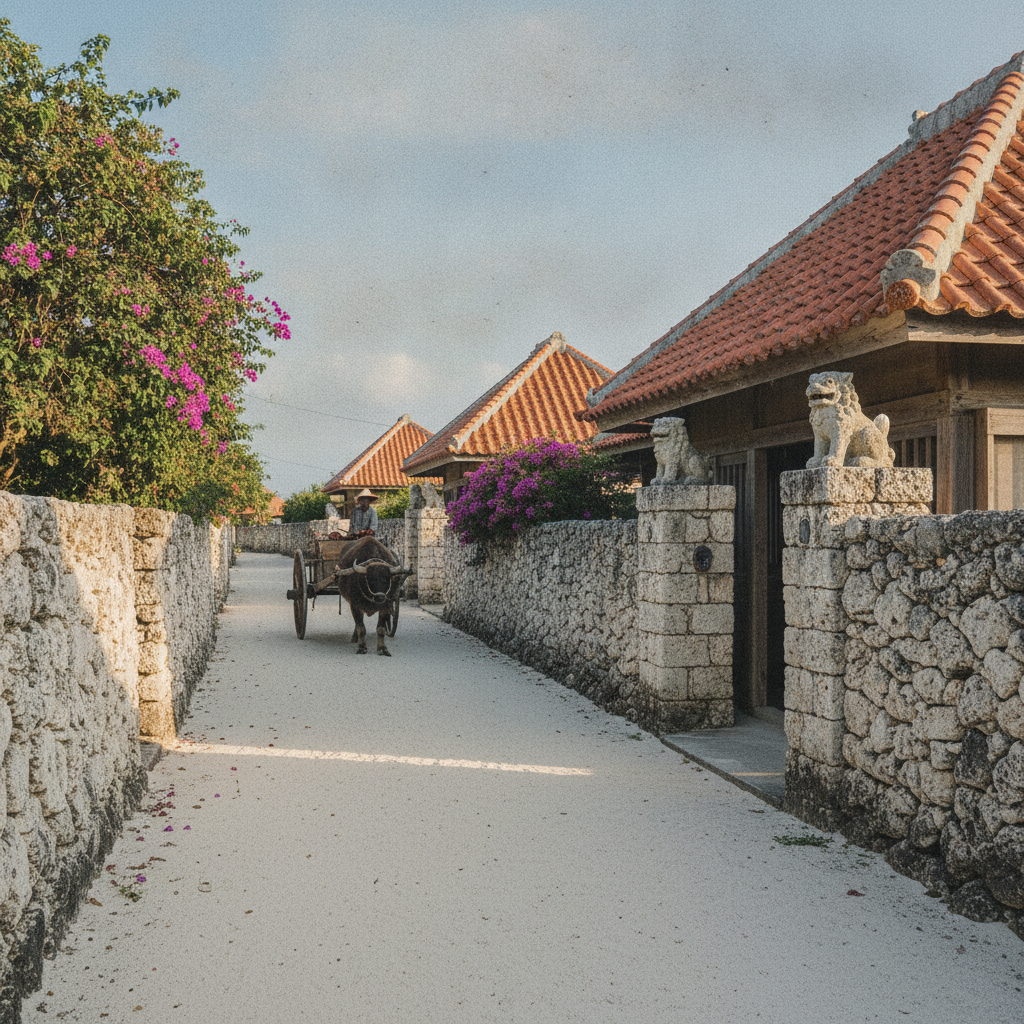
Shuri Castle (Shuri-jō—the restored palace of the Ryukyu Kingdom at 120 metres elevation above Naha: the kingdom that governed the Ryukyu Islands as an independent tributary state to both China and Japan from 1429 to 1879 when the Meiji government abolished the kingdom and incorporated Okinawa into Japan as a prefecture): the UNESCO World Heritage Site (listed 2000 as one of the 9 Gusuku Sites—the castles and related sites of the Ryukyu Kingdom) and the most significant historical monument in Okinawa. The Shureimon Gate (the ornamental gate at the approach to Shuri Castle—the gate whose image appears on the ¥2,000 banknote (the least-circulated denomination in Japan, released in 2000 specifically to mark the Okinawa G8 Summit)): the Chinese-influenced architectural style of the gate (the upswept roof with double eaves, the vermilion lacquer coating, and the Chinese calligraphic inscription ('Shuri-no-kuni'—'the land of propriety')) distinguishes Ryukyuan architecture from both Japanese and Chinese styles. The 2019 fire: the main Seiden (throne hall) and 6 other structures of Shuri Castle were destroyed in a fire on 31 October 2019—the fire cause is attributed to an electrical fault; the reconstruction began in 2020 with the target of 2026 completion for the main hall. The Ryukyuan political system (the system of tributary relationships maintained by the Ryukyu Kingdom with both the Qing Dynasty in China (sending tribute missions to Beijing every 2 years) and the Tokugawa shogunate in Japan (annual tribute to Satsuma Domain (Kagoshima)): the diplomatic position of the Ryukyu Kingdom as the only entity in East Asia maintaining simultaneous formal tributary relationships with both Chinese and Japanese political powers).
- 2
Okinawa's Battle History – The Last Major Battle of WW2
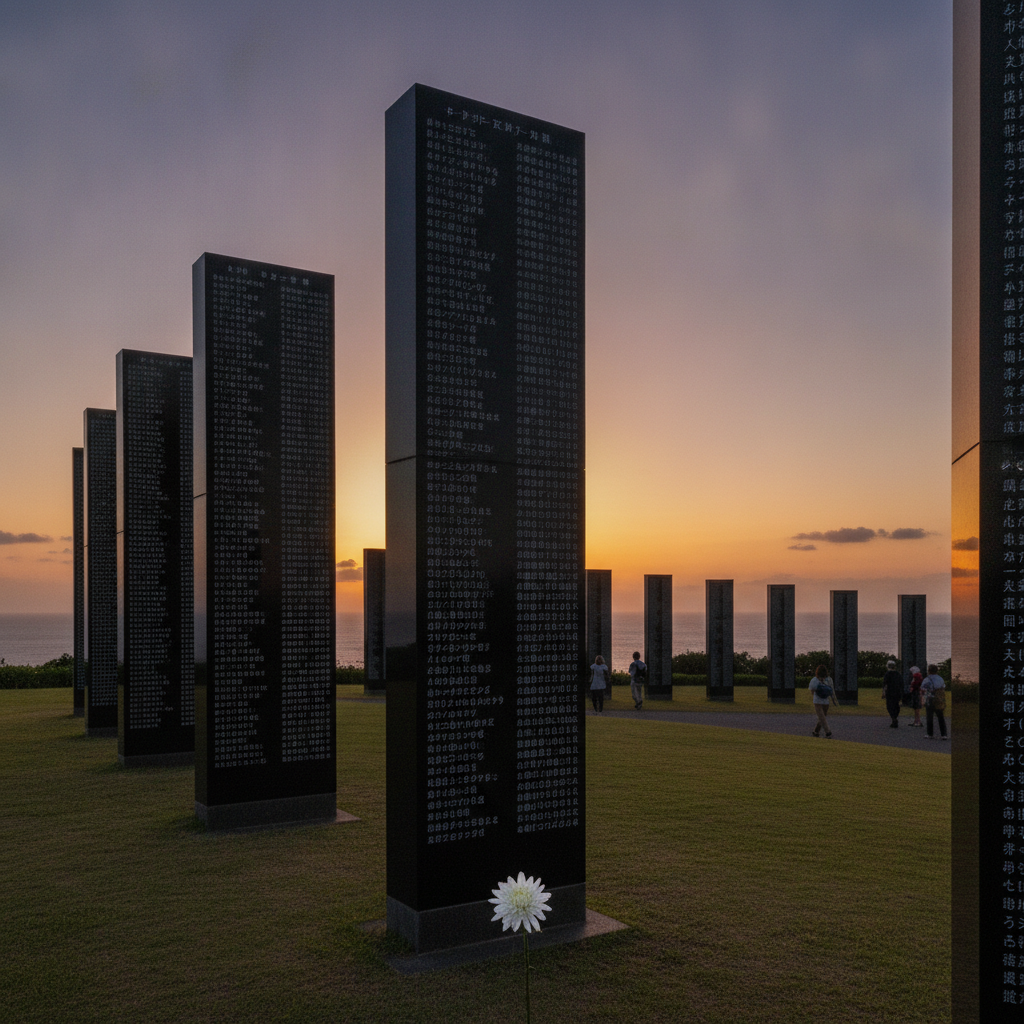
The Battle of Okinawa (Operation Iceberg—the April 1–June 22, 1945 Allied invasion of Okinawa (the 'Typhoon of Steel')—the largest amphibious assault in the Pacific War (approximately 180,000 US troops against approximately 110,000 Japanese defenders (including 39,000 Okinawan conscripts and approximately 30,000 auxiliary civilians)): the most costly battle of the Pacific War in total casualties, with approximately 12,000 US dead, 110,000 Japanese military dead, and 94,000–150,000 Okinawan civilian dead (20–33% of the pre-war Okinawan population). The Battle of Okinawa Memorial Day (23 June—the date of the Japanese command's final organized resistance ending in 1945; the annual memorial ceremony at the Cornerstone of Peace in Mabuni is attended by the Japanese Prime Minister, the Okinawa Governor, and representatives of all countries whose citizens died in the battle). The Cornerstone of Peace (the Heiwa no Ishiji—the memorial in Itoman City at the southern tip of Okinawa, where the fiercest fighting occurred; the monument lists the names of 241,000+ people who died in the battle from all nations, carved into 116 stone panels arranged in a semicircle): the most inclusive war memorial in Japan, listing every documented death (Americans, Japanese, Okinawans, Koreans, and others) by name without hierarchical distinction. The underground command post (the Shireikan Underground Headquarters—the Japanese 32nd Army headquarters tunneled into the Tomishiro Hill (the tunnel system dug by Okinawan schoolgirls conscripted as the Himeyuri Student Corps in 1944): the most evocative surviving physical space of the battle.
- 3
The Churaumi Aquarium & Northern Okinawa
The Okinawa Churaumi Aquarium (the aquarium in the Ocean Expo Park in Motobu, northern Okinawa—2 hours from Naha by bus): the world's second-largest aquarium tank (the Kuroshio Sea tank: 7,500-tonne capacity, 27 metres deep, 35 metres wide—the world's second-largest single aquarium tank after the Georgia Aquarium in Atlanta): the tank holds 3 whale sharks simultaneously (the largest number of captive whale sharks in any aquarium in the world) and 4 manta rays (the world's first successfully bred manta rays in captivity—the Churaumi breeding programme is the primary source of captive manta rays for aquariums globally). The whale shark feeding (the whale shark feeding event—twice daily at 10:00 and 15:00; the whale sharks (up to 8 metres long in the Churaumi tank) surface-feed on krill and small fish in the front section of the Kuroshio Sea tank): the most visually impressive feeding event in any aquarium. The Ocean Expo Park (the park surrounding the aquarium—the venue of the 1975 International Ocean Exposition; the park includes the Emerald Beach (the protected coral beach within the park boundary—one of the few coral-healthy beaches in northern Okinawa), the Tropical Dream Center (the tropical plant greenhouse), and the Oceanic Culture Museum (the traditional Pacific island navigation and fishing culture)).
- 4
Okinawa's Beaches & Diving
Okinawa's marine environment (the subtropical coral reef ecosystem—the Okinawa island chain's location in the warm Kuroshio Current and the Pacific typhoon belt creates a coral reef environment that is the northernmost significant reef system in the world and the most biologically diverse in Japan): the diving and snorkeling conditions. The main island beaches: the Emerald Beach (in the Ocean Expo Park compound—the most accessible safe swimming beach on the main island; the coral growing immediately off the beach is the best snorkeling within reach of Naha); the Manza Beach (the resort beach in Onna Village, 60 km north of Naha—the most developed resort beach area with the most consistent water quality). The island hopping (the smaller islands accessible from the Okinawa main island that provide the finest marine environment): Zamami Island (45 minutes by high-speed ferry from Naha Tomari Port; the most accessible outstanding diving destination from Naha—the Zamami coral garden at 15 metres depth is the single most biologically dense reef area accessible from the main island); Tokashiki Island (the 35-minute ferry from Naha Tomari Port; the Tokashiki Ahi Beach—the most consistently rated beach in Okinawa by marine quality); and the Kerama Islands (the 'Kerama Blue'—the specific colour of the Kerama Archipelago water that has become a trademark term in Japanese travel writing for extraordinarily clear, vivid blue water). The diving schools (the Naha dive centre network—the 50+ PADI-certified dive operators serving the Okinawa main island from Naha; the standard 2-tank boat dive from Naha Port to the offshore reef costs approximately ¥12,000–16,000 including all equipment).
- 5
Naha's Kokusai-dori & Makishi Market
The Naha city experience (the Okinawan capital with a population of 320,000): the most relevant commercial and cultural district for a first visit is the 1.6 km Kokusai-dori ('International Street'—the main tourist thoroughfare from the Kencho-mae intersection to the Makishi marketplace): the street's Okinawan character is concentrated in the Makishi Public Market (the market building, rebuilt in 2023 after the original 1950s building was reconstructed; the 2-floor market with the fresh produce ground floor and the restaurant second floor where you can take your purchases from the market below to be cooked upstairs—the 'bring your own and pay a preparation fee' market restaurant format that is unique in Japan). The Okinawan food at Makishi: the goya champuru (the bitter melon stir-fry with tofu, egg, and Spam—the signature Okinawan home dish that uses American canned meat (Spam) introduced during the post-war US occupation and now fully embedded in Okinawan cuisine); the sōki soba (the Okinawan pork rib ramen—the thick flat wheat noodle in a light pork-and-kelp broth topped with sōki (the braised pork spare rib): the signature Okinawan noodle dish, distinct from mainland ramen in the flat noodle and the lighter broth); the awamori (the Okinawan distilled rice spirit, the local equivalent of shochu, aged in clay pots and serving as the primary Okinawan celebratory drink since at least the 15th century).
- 6
Getting to & Around Okinawa – Practical Guide
Okinawa's logistics are distinct from any other Japanese destination because the island is not accessible by Shinkansen—all transport requires either a domestic flight (2h15m from Tokyo Haneda or Narita—the most common approach; ANA and JAL operate 30+ daily flights between Tokyo and Naha) or a 25-hour ferry from Osaka (the Arimura Sangyō or RKK Ryukyu Kaiun ferry services—the slow option used primarily by budget travelers and motorcycle tourists). From Osaka/Kyoto: the Peach Aviation LCC from Osaka Itami or Kansai Airport to Naha (1h55m; ¥5,000–15,000 depending on booking lead time): the most cost-efficient connection for the Kansai region. Within Okinawa: the Okinawa Yui Rail (the monorail running from Naha Airport to Shuri Castle—13 stations, 12.9 km, approximately 27 minutes end-to-end; ¥260–330; the only rail transport on the main island): the monorail covers the Naha city attractions but not the northern beaches or the Battle of Okinawa sites. Rental car (the most practical way to explore the main island beyond Naha): available from 15 rental companies at Naha Airport; the main road north from Naha to Motobu is a 2-hour drive on the expressway; driving on Okinawa uses the same left-hand-drive rule as mainland Japan; an international driving permit is required. The IC Card (the OKICA—the Okinawa IC transit card covering the Yui Rail and Naha City Bus): the most convenient payment method for city transit.
Walk this route with audio
Stories play automatically as you reach each stop — no tapping needed.
More in Okinawa
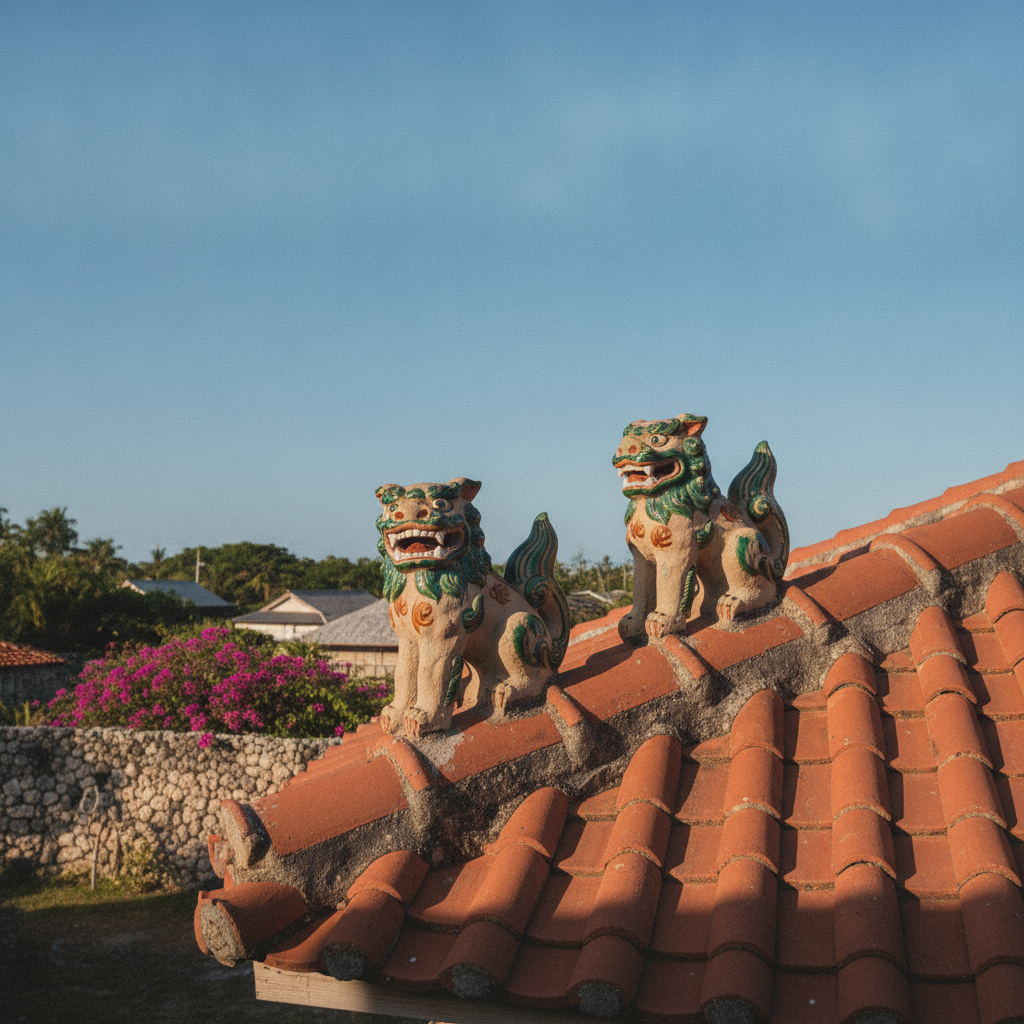
The Shisa That Has Kept Closed Mouth Since 1689, the Flightless Bird That Never Met a Predator Until 1910 & the Humpback Whales Passing Through the Kerama in February
The Oldest Distilled Spirit in Japan (Made from Thai Rice Imported via Siam in 1450), the Yonaguni Underwater Monument Nobody Can Agree On & the Language UNESCO Lists as Endangered with 10,000 Speakers
The Sanshin That Became the Shamisen, the Base That Covers 70.6% of Japan's US Military Land on 0.6% of Japan's Territory & the Village Where 80 Is Still Youth
The 222 Student Nurses Dismissed into a Live Battle Zone, the Mongoose That Failed to Kill the Habu but Destroyed the Flightless Bird & the Memorial That Lists American and Japanese Dead on the Same Panel