The Sanshin That Became the Shamisen, the Base That Covers 70.6% of Japan's US Military Land on 0.6% of Japan's Territory & the Village Where 80 Is Still Youth
The sanshin's journey from 16th-century Okinawa to Osaka traders to mainland Japanese shamisen; the US military base land use paradox and the Futenma relocation that has been ongoing since 1996 without resolution; Ogimi village's 3× centenarian rate and the Hara Hachi Bu 80%-full eating principle; the Bingata stencil-dyeing workshop and the Tsuboya ceramics lane; the 1984 taco rice invention near Kin Town base as direct American occupation culinary heritage; and Taketomi Island's complete traditional Okinawan village as Japan's most remote historic preservation district.
- 1
The Ryukyu Kingdom – 450 Years of Island Civilization
The Ryukyu Kingdom (1429–1879) was the most culturally distinctive independent polity in East Asia—the island civilization that developed a unique synthesis of Japanese, Chinese, Southeast Asian, and indigenous Austronesian elements into a culture (architecture, music, dance, textiles, ceramic, and language) that is recognizable as distinctly Okinawan to this day, 145 years after the kingdom's annexation by Japan. The three Okinawan cultural elements that most directly descend from the Ryukyu Kingdom era: the Eisa (the Okinawan bon-odori dance—the drumming dance performed during the Obon festival in August; the most energetic and visually distinctive folk dance in Japan; the community Eisa groups that perform in every Okinawan village during Obon—the festival of the dead—are the primary vehicle for Ryukyuan musical tradition); the Bingata (the Okinawan stencil-dyed textile—the richly coloured yellow, orange, and red fabric using hand-cut stencils and natural pigments to produce the most vivid Japanese textile tradition; distinct from the muted indigo of mainland Japanese textiles); and the Ryukyuan music (the sanshin—the 3-string snakeskin-bodied lute related to the Chinese sanxian but developed into a specifically Okinawan form by the 16th century; the origin instrument of the mainland Japanese shamisen, which was developed from Okinawan traders bringing the sanshin to Osaka in the 1560s): the sanshin playing tradition is maintained by approximately 50,000 registered players in Okinawa.
- 2
The US Military Presence & Modern Okinawa
The US military presence in Okinawa (the US Forces Japan bases concentrated on the main island—the largest concentration of US military bases in Asia outside South Korea; as of 2026, approximately 26 US military installations cover approximately 18% of the Okinawa main island's total land area (70.6% of all US military facilities in Japan are in Okinawa, which represents only 0.6% of Japan's total land area)): the most significant contemporary political issue in Okinawan society. The history of the bases: the US military occupied Okinawa from 1945 and maintained sovereignty over the islands until 1972 (the reversion to Japanese sovereignty—27 years of US administration following the 1945 battle), during which the base infrastructure was constructed. The base controversy (the relocation of Marine Corps Air Station Futenma—the air station in the middle of the densely populated Ginowan City, identified as 'the world's most dangerous air base' by former US Defense Secretary Donald Rumsfeld in 1995 because of its urban location; the planned relocation to the Henoko coastal reclamation site in Nago City has been ongoing since 1996 without resolution): the Henoko relocation is the most politically contentious construction project in postwar Japan. The economic dependency (the Okinawa Prefecture economy's estimated 6% direct dependence on US military expenditure—base employment, services to military personnel, and facility construction contracts—combined with the land compensation payments to Okinawan landowners whose property is used for bases): the economic relationship that makes the base issue more complex than a simple removal question.
- 3
Okinawa's Longevity Secret – The Blue Zone
Okinawa was designated one of the world's 5 'Blue Zones' (the term coined by National Geographic researcher Dan Buettner in 2000 for the geographic regions with the highest concentration of centenarians)—the specific geographic zone (the village of Ogimi in northern Okinawa and the surrounding communities of Kunigami district) where the proportion of people reaching 100 years old is approximately 3× the US national average. The traditional Okinawan diet (the pre-1990 traditional diet—the conditions under which the longevity statistics were generated; the post-1990 Okinawan diet has shifted significantly toward fast food and the longevity advantage has declined in younger generations): the traditional diet components associated with Okinawan longevity research include the goya (bitter melon—the vegetable whose amine compounds (momordicine and charantin) have been associated in laboratory studies with insulin sensitivity); the low caloric intake (the Hara Hachi Bu principle—the Confucian-derived Okinawan cultural practice of eating only to 80% of capacity); the purple sweet potato (the Okinawan beni-imo—the purple yam containing anthocyanin antioxidants at concentrations approximately 3× higher than blueberries); and the tofu (the Okinawan tofu is firmer and drier than mainland Japanese tofu and consumed at 3× the mainland per-capita rate). The Ogimi village visit (the 'village of long life' (Chouji no Sato)—the community's identity based on the longevity record is expressed in the welcome sign (the world-famous 'By 70, you are still a child; by 80, a youth; at 90, if the ancestors invite you to heaven, ask them to wait until you are 100').
- 4
Okinawa's Textiles & Craft Heritage
The Okinawan textile and craft tradition is the most distinctive in Japan—a direct expression of the Ryukyu Kingdom's trade network position between China, Japan, and Southeast Asia, and the most actively preserved traditional craft sector in Japan relative to the local population size. The Bingata (the Okinawan stencil-dyed fabric—the most internationally recognized Okinawan craft; the pattern stencils (型紙) are hand-cut from persimmon-tanned paper (the same stencil technology used in Japanese katagami textile stencils but developed independently in the Ryukyu Kingdom); the pigment range (the natural mineral and plant pigments that produce the characteristic Bingata colour palette: yellow from turmeric, orange from saffron and local ochre, and blue from indigo grown in the southern islands)): the Bingata stencil-dyeing workshops in Naha's Tsuboya district offer visitor classes (2-hour introduction; approximately ¥3,000). The Okinawa ceramics (Tsuboya-yaki—the pottery tradition of the Tsuboya district in Naha, established in 1682 under Ryukyuan court patronage by unifying the potters' workshops of three separate villages; the Tsuboya pottery uses the Okinawan clay with a distinctive creamy-grey body colour and applies the characteristically Okinawan botanical and fish pattern overglaze): the Tsuboya district walking street (the 'Yachimun Street'—the 200-metre ceramics shopping lane in Tsuboya) is the most concentrated craft retail experience in Okinawa. The Ryukyuan lacquerware (the Okinawan lacquer tradition—the 15th-century lacquerware production at the Ryukyu court used both the Japanese urushi lacquer technique and the Chinese painting-on-lacquer (Chinkin) technique; the resulting Ryukyuan lacquerware is a unique hybrid recognised as one of Japan's most valuable craft traditions).
- 5
Naha's Street Food & Awamori Bars
The Naha food and drink experience beyond the Makishi Market and the formal restaurants: the street food culture and the awamori bar circuit that constitute the most accessible local experience in the Okinawan capital. The sōki soba shops (the Okinawan noodle restaurants—the local equivalent of the ramen shop that appears on every block in the Naha commercial districts; the benchmark Naha sōki soba shops (the Paikaji near Makishi Station and the Hama soba near the Kokusai-dori): the order is typically a simple bowl of sōki soba with braised pork rib and the side dish of taco rice (the Okinawan adaptation of the Mexican taco filling (meat, cheese, lettuce, tomato, salsa) served over steamed Japanese rice—the most direct cultural artifact of the American occupation in Okinawan cuisine): the taco rice was invented in 1984 by the Parlor Senri restaurant near the Kin Town military base. The Awamori bars (the kkusu bar culture—the bars specializing in aged Okinawan awamori (the distilled spirit aged for 3 years in clay pots as 'kusu' or 'old sake')): the Okinawa awamori production (the 46 active distilleries in Okinawa Prefecture—the highest ratio of distilleries to population in Japan): the kusu bar circuit in the Matsuyama district (the bar and restaurant area north of Kokusai-dori is the most authentic evening district for Okinawan visitors who want to avoid the tourist-bar format of the main street).
- 6
The Yaeyama Islands – Okinawa's Outer Reach
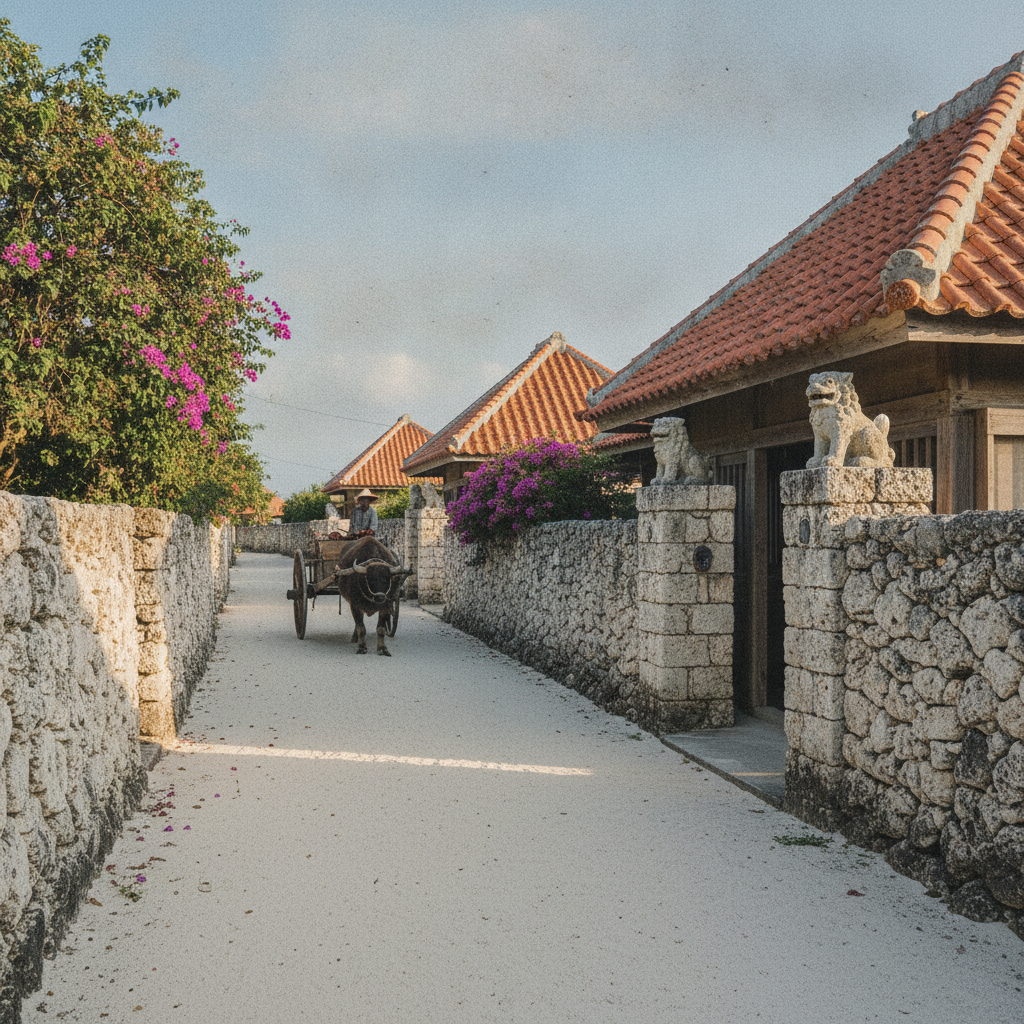
The Yaeyama Islands (the archipelago at the southwestern end of the Ryukyu chain, 400 km southwest of Okinawa's main island and 450 km east of Taiwan): the most remote and ecologically pristine islands accessible from Okinawa. Iriomote Island (the largest Yaeyama island—294 km² of which 90% is subtropical jungle; the Iriomote-Ishigaki National Park; the habitat of the Iriomote cat (Prionailurus iriomotensis—the critically endangered wild cat endemic to Iriomote Island with an estimated 100 individuals surviving; one of the world's most endangered felids): accessible by ferry from Ishigaki Island (40 minutes)). The Kabira Bay (the UNESCO designated bay on the northern coast of Ishigaki Island—the bay whose white sand, shallow turquoise water, and forested islets constitute the most-photographed Okinawan landscape outside the main island; the bay cannot be swum in due to the pearl oyster cultivation frames): the Kabira bay glass-bottom boat tour (20 minutes; ¥1,050) shows the pearl farm operation. The Yaeyama access: the only route to the Yaeyama is Ishigaki New Airport (from Okinawa Naha Airport: ANA or JAL, 55 minutes, ¥8,000–20,000 depending on booking; or direct from Tokyo Haneda, 3h15m). The Taketomi Island (the small island 10 minutes by ferry from Ishigaki—the entire village of Taketomi is a designated Preservation District for Groups of Historic Buildings: the traditional Okinawan house style (red-tile roof, coral-stone wall, and shisa lion-dog guardian figures on the eaves) is maintained in its complete village form, making Taketomi the most intact traditional Okinawan settlement surviving).
Walk this route with audio
Stories play automatically as you reach each stop — no tapping needed.
More in Okinawa
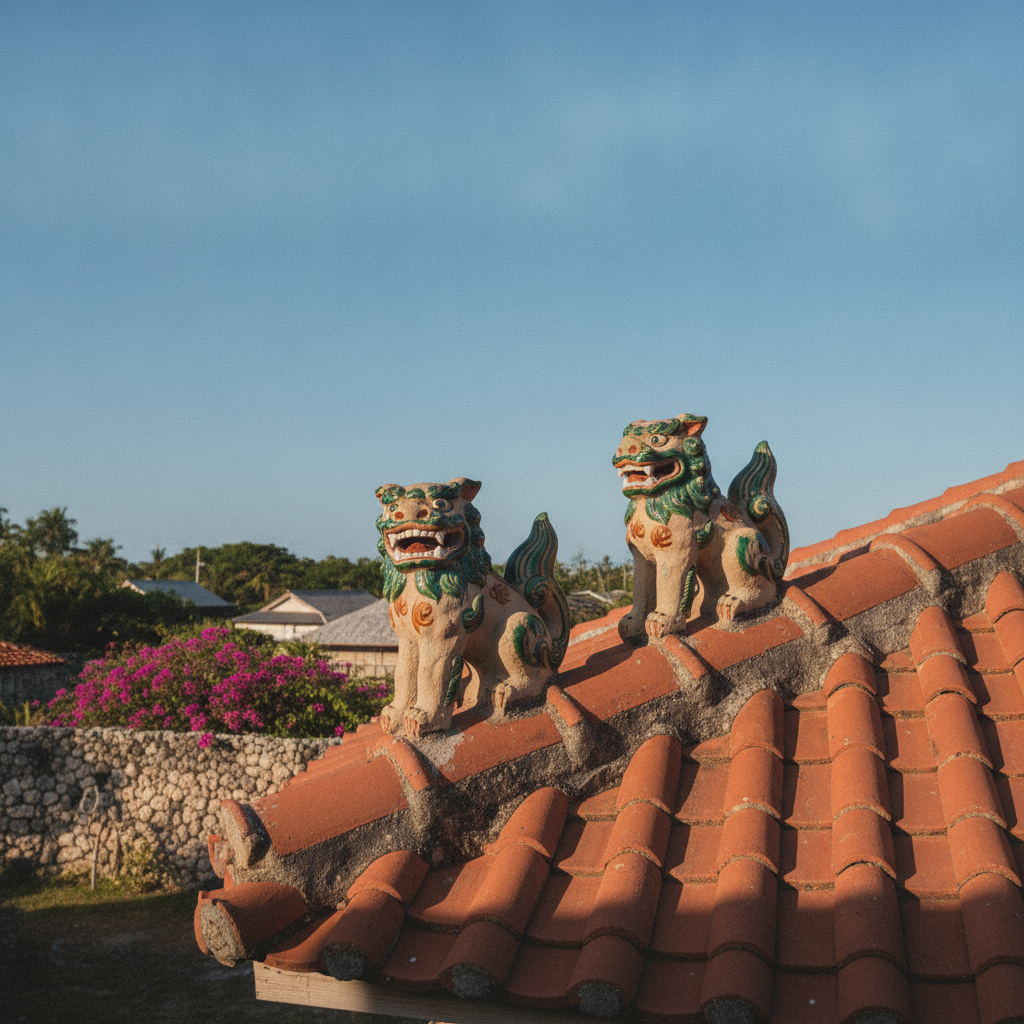
The Shisa That Has Kept Closed Mouth Since 1689, the Flightless Bird That Never Met a Predator Until 1910 & the Humpback Whales Passing Through the Kerama in February
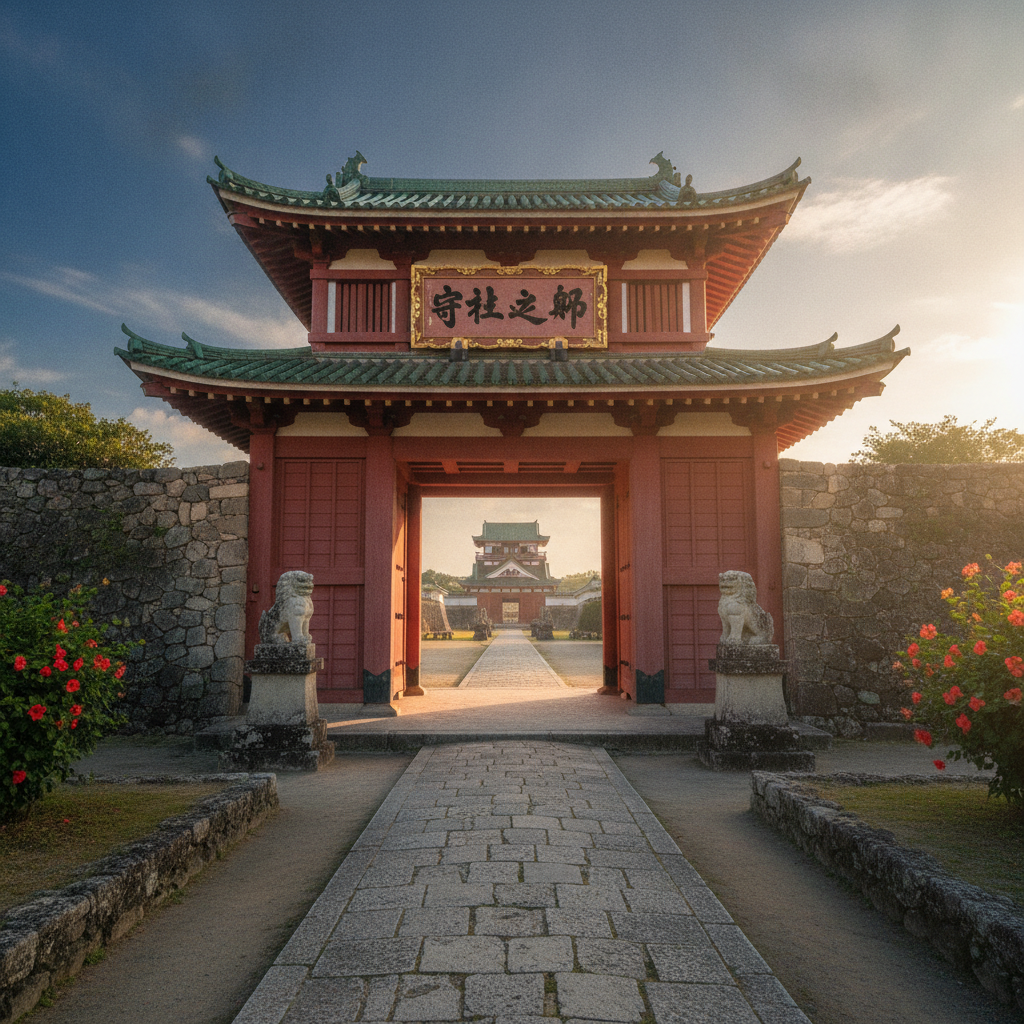
The ¥2,000 Note Gate, the Battle That Killed 20–33% of the Island's Population & the World's Only Successfully Bred Captive Manta Rays
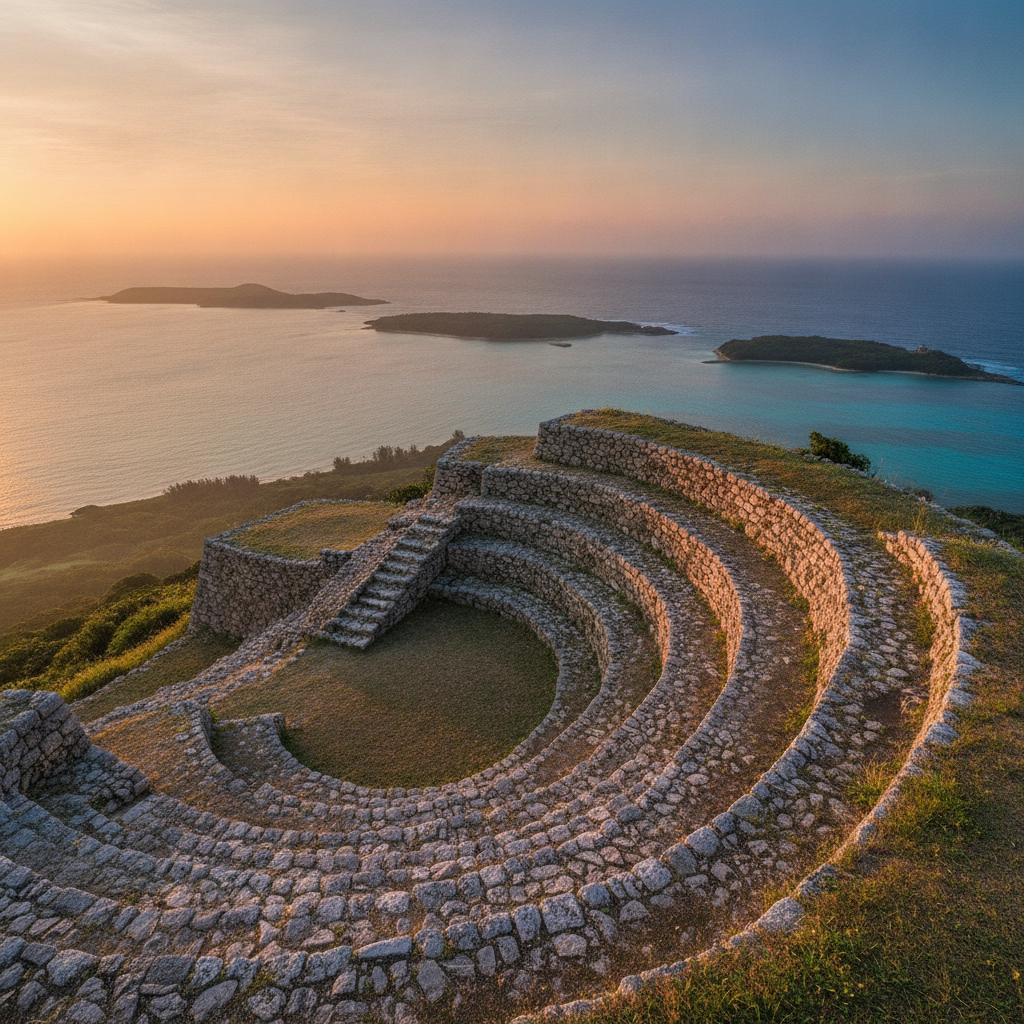
The Oldest Distilled Spirit in Japan (Made from Thai Rice Imported via Siam in 1450), the Yonaguni Underwater Monument Nobody Can Agree On & the Language UNESCO Lists as Endangered with 10,000 Speakers
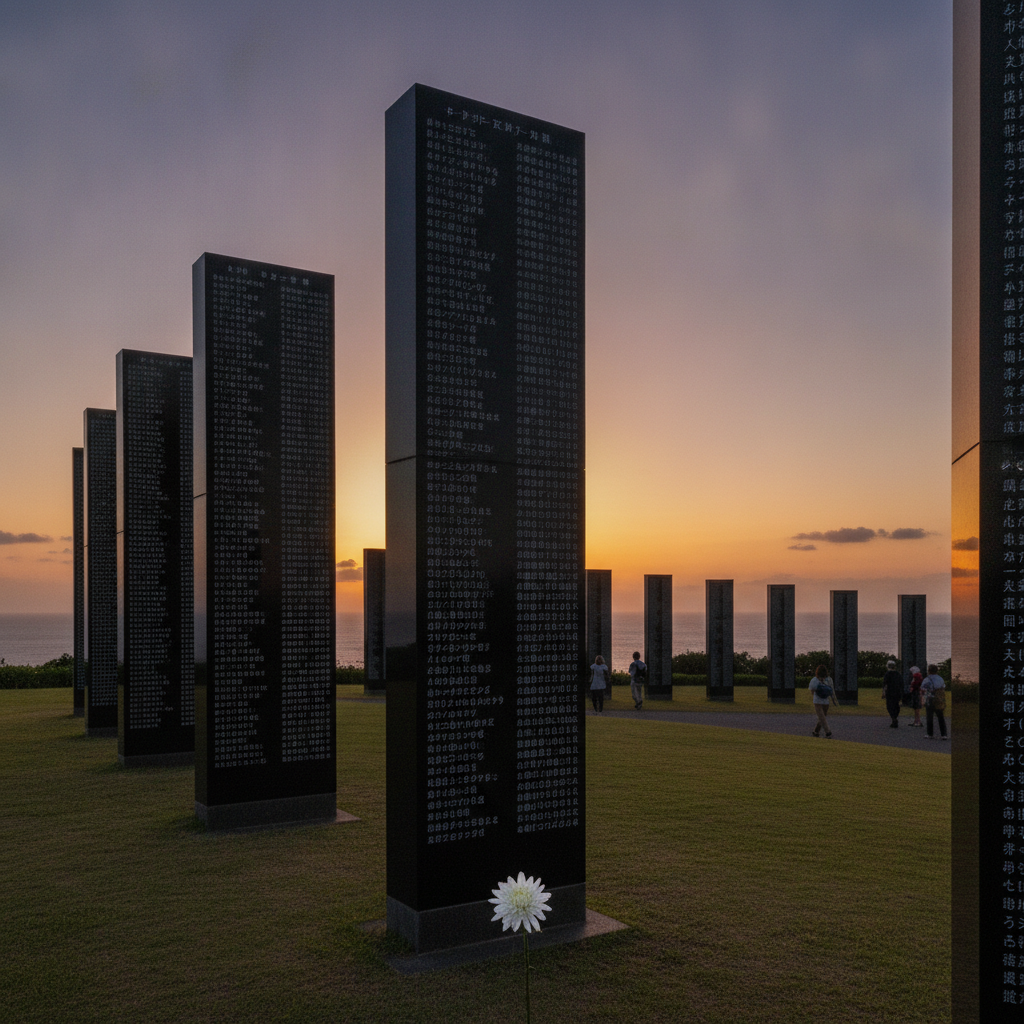
The 222 Student Nurses Dismissed into a Live Battle Zone, the Mongoose That Failed to Kill the Habu but Destroyed the Flightless Bird & the Memorial That Lists American and Japanese Dead on the Same Panel