The Oldest Distilled Spirit in Japan (Made from Thai Rice Imported via Siam in 1450), the Yonaguni Underwater Monument Nobody Can Agree On & the Language UNESCO Lists as Endangered with 10,000 Speakers
The awamori's 15th-century Thai origin via the Ryukyu Kingdom's Siamese trade route predating mainland shochu by 50 years; the Yonaguni Monument's unresolved human-vs-natural origin debate as the world's most argued dive site; the hammerhead school of 500–1,000 individuals at 30 metres in the Yonaguni channel; the Yui Rail's 13 stations as the only rail in Okinawa Prefecture; Uchinaaguchi as a UNESCO endangered language related to but not derived from Japanese; and the Nuchimasu Miyako Island salt as the highest mineral-content sea salt in Japan.
- 1
Okinawa's Ancient Gusuku Castles
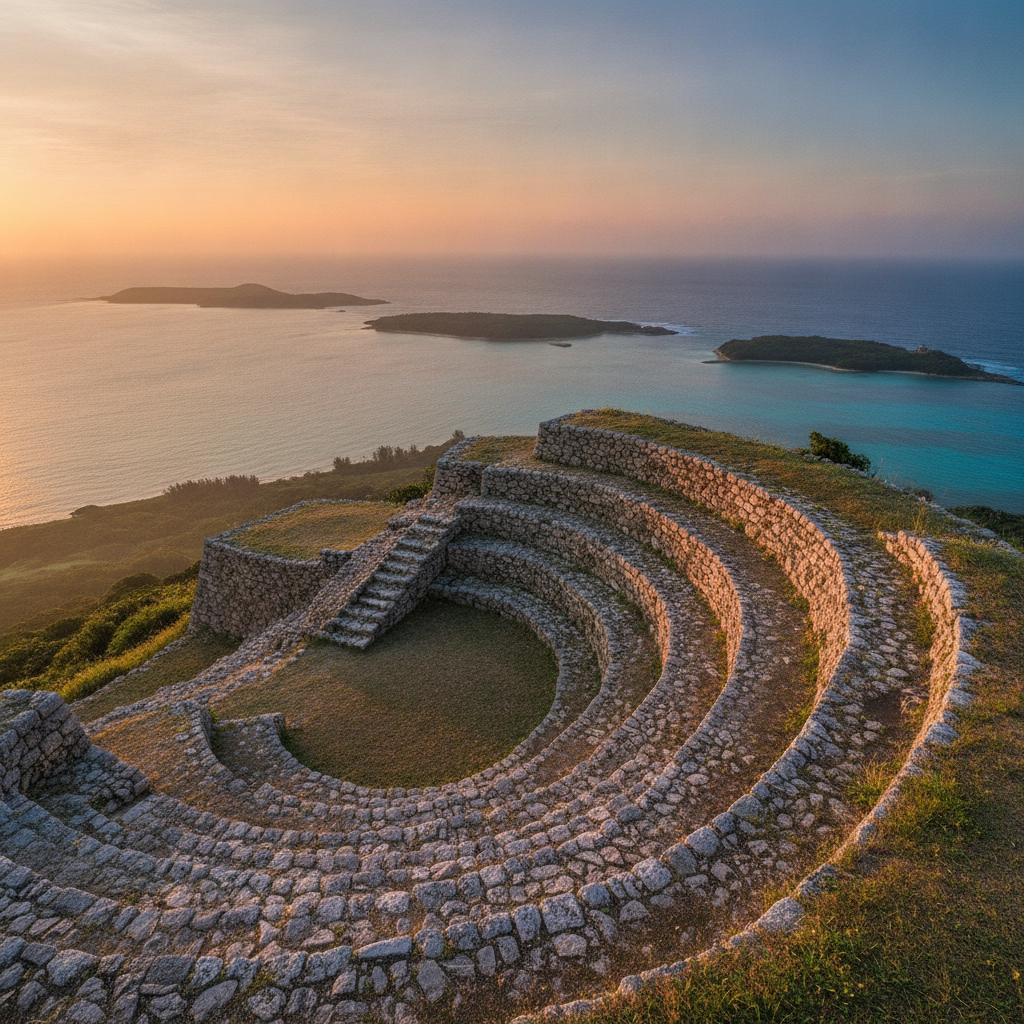
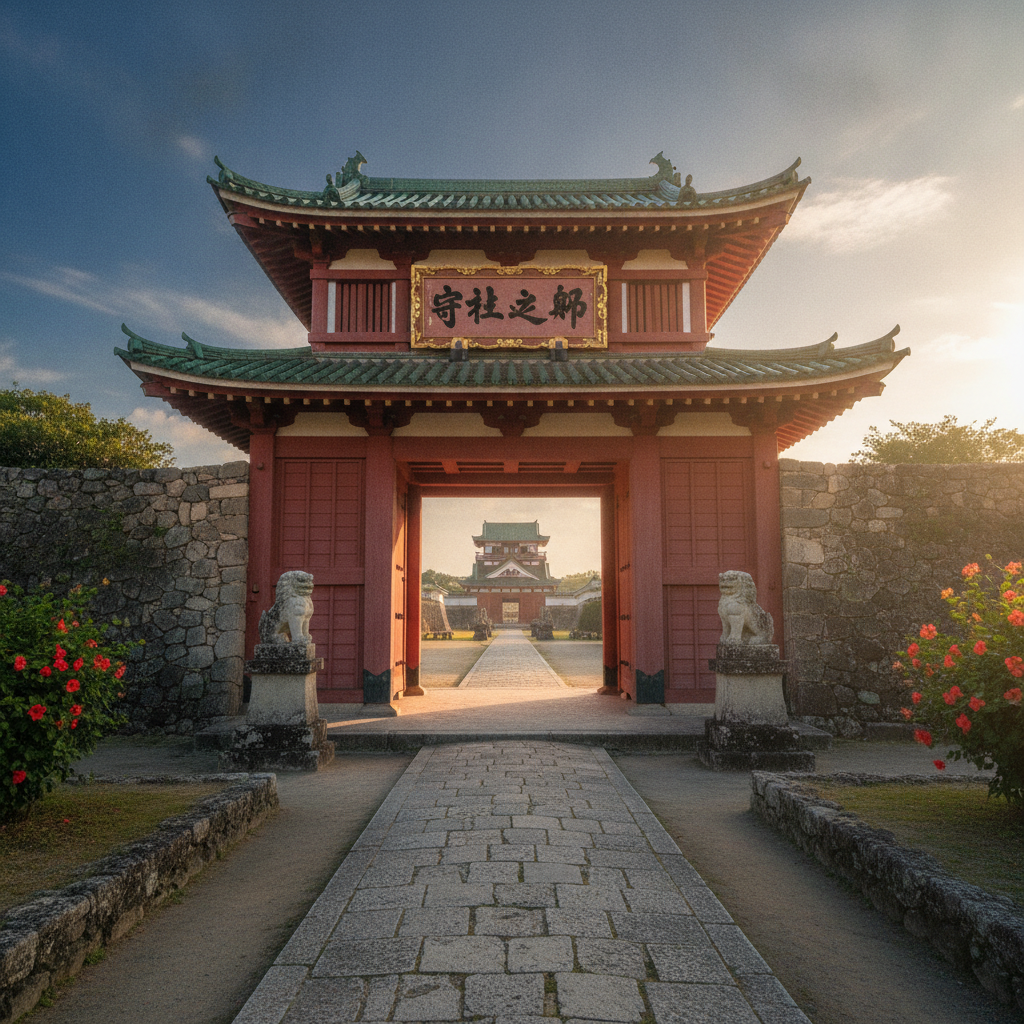
The Gusuku sites (the 9 UNESCO World Heritage Sites of the Ryukyu Kingdom listed in 2000 as the 'Gusuku Sites and Related Properties of the Kingdom of Ryukyu'—the term 'gusuku' (グスク) refers to the distinctive stone-walled fortifications built by the Ryukyuan rulers between the 12th and 17th centuries): the most complete collection of pre-modern stone fortification ruins in Japan. The three most significant gusuku accessible from Naha: Shuri Castle (the fully restored palace complex—the primary site); Katsuren Castle (the hilltop ruin overlooking Katsuren Bay, 40 km east of Naha by rental car—the castle that provides the most dramatic landscape setting (the coral-stone walls on the hilltop with 360-degree views of the Pacific and the Katsuren Peninsula): the castle of Amawari, the local lord who attempted to overthrow the Ryukyu Kingdom in the 1450s and whose failed rebellion is the basis of the most performed Okinawan opera (the Kumudunchi)); Nakijin Castle (the northern peninsula castle, 90 km north of Naha—the castle of the Hokuzan (Northern Mountain Kingdom) that was the last to be absorbed into the unified Ryukyu Kingdom in 1416; the most extensive stone wall ruin in Okinawa with 1.5 km of original walls surviving): the cherry blossom blooming at Nakijin Castle (late January–February) is the earliest cherry blossom in Japan and one of the most photographed Okinawan seasonal events. The Zakimi Castle (the western Okinawa gusuku famous for its convex-curved walls—the architectural feature unique to Ryukyuan castle architecture that provides structural resistance to the battering-ram entry technique).
- 2
The Okinawa Monorail & Naha City Walking
The Yui Rail (Okinawa Monorail—the single monorail line running 12.9 km from Naha Airport through central Naha to Shuri Station): the only public rail in Okinawa Prefecture and the transportation spine of any car-free Naha visit. The 13 stations and their practical use for visitors: Naha Airport (the arrivals terminal—the monorail platform is a 3-minute walk from the international arrivals gate (no shuttle required)); Akamine (the interchange for the Naha Tomari Port ferry terminal (20-minute walk or taxi)—the ferry to the Kerama Islands and the outer islands); Miebashi (the station for the Tsuboya pottery street (10-minute walk west)); Makishi (the station for the Makishi Public Market and the Kokusai-dori start (the western end of the tourist street is 2 minutes from this station)); Kencho-mae (the station for the Okinawa Prefectural government buildings and the Prefectural Museum & Art Museum (10-minute walk north)); Asahibashi (the station for the Naha New Port and the Naha Waterfront (the developed harbour area with the largest Lawson convenience store in Okinawa and the outdoor market)); Shuri (the terminal station for Shuri Castle (10-minute walk west up the hill)). The OKICA card (the IC transit card—purchased at any Yui Rail station for ¥500 (refundable deposit) + ¥500 minimum credit; works on the monorail and on the Naha City Bus network): the most convenient payment method for Naha city transit. The Kokusai-dori pedestrian experience (the best 2-hour Naha walk: from Makishi Station west down the main tourist street to the Rokkaku-dori side street market (the 'ichiba' market area—the covered side streets running south from the midpoint of Kokusai-dori where the locals shop rather than the tourist shops)—the produce, dried goods, and Okinawan snack vendors).
- 3
The Okinawan Awamori – Distilled History
The awamori (泡盛—the traditional distilled spirit of the Ryukyu Islands, the oldest distilled spirit produced in Japan): the most distinctively Okinawan beverage and the drink most directly connected to the island's Ryukyuan and Southeast Asian heritage. The awamori origin (the distillation technique was brought to the Ryukyu Islands from Siam (present-day Thailand) via the Ryukyu Kingdom's trade network in the 15th century, making awamori the oldest continuously produced distilled spirit in Japan (predating mainland Japanese shochu production by approximately 50 years)). The production method (awamori is made from Thai indica long-grain rice (not the Japanese japonica short-grain rice used in sake and mainland shochu)—the indica rice is fermented using Okinawan black koji mold (Aspergillus awamori) and then distilled in a pot still at approximately 30% ABV; the standard awamori): the black koji mold of Okinawa contains citric acid that prevents bacterial contamination in Okinawa's subtropical climate (the technical solution to distilling in a tropical environment that makes awamori fundamentally different from mainland Japanese spirits in its production environment). The kusu (the aged awamori—awamori stored in clay pots for 3+ years (the minimum to qualify as 'kusu'); the standard aging target is 10–20 years; the oldest surviving kusu stocks in Okinawa include bottles aged 40+ years preserved in protected distillery cellars): the most prestigious Okinawan drinking experience. The 46 active distilleries (the complete Okinawa awamori distillery network—concentrated on the main island but with notable distilleries on Ishigaki Island (the Yaeyama distilleries, producing a lighter-bodied awamori from the subtropical island water sources)).
- 4
Scuba Diving Okinawa – Where to Dive by Skill Level
The Okinawa diving overview (the dive destinations for first-time, intermediate, and advanced divers organized by geographic area): the most structured single guide to diving in Okinawa for a visitor planning their first or second diving trip to the island. Beginner dives from Naha (the boat dives departing from Naha Port to the offshore reef—the Keramas visible from the boat): the recommended entry: the Ama dive site on Zamami Island (3-metre average depth in the bay; the most protected dive site in the Kerama Archipelago for first open-water dives; the sand bottom with coral bommies and abundant sea turtles (the Kerama Islands support the densest sea turtle population in Japan)). Intermediate dives (the Yonaha Mae-hama reef at Miyako Island (3.5 hours from Naha by ferry or 45 minutes by flight from Naha): the wall dives at Miyako feature 30-metre visibility and the most diverse reef fish fauna in Okinawa): the Miyako Blue (the specific shade of the Miyako Island water—even more intensely blue than the Kerama Blue due to the greater ocean depth (the Ryukyu Trench, which reaches 7,460 metres at its deepest point, passes close to Miyako Island)). Advanced dives (Yonaguni Island—110 km from Taiwan): the Yonaguni Monument (the controversial underwater rock formation—the stepped terrace structure at 25–27 metres depth off the south coast of Yonaguni that appears to be a human-built terraced platform but is disputed between archaeologists arguing for natural formation and others arguing for anthropogenic construction (the debate has never been resolved)): the world's most argued-about single dive site. The hammerhead shark school at Yonaguni (November–June): the schooling scalloped hammerhead sharks (500–1,000 individuals) in the Yonaguni channel visible at 30–40 metres depth.
- 5
Okinawa's Public Markets & Souvenir Guide
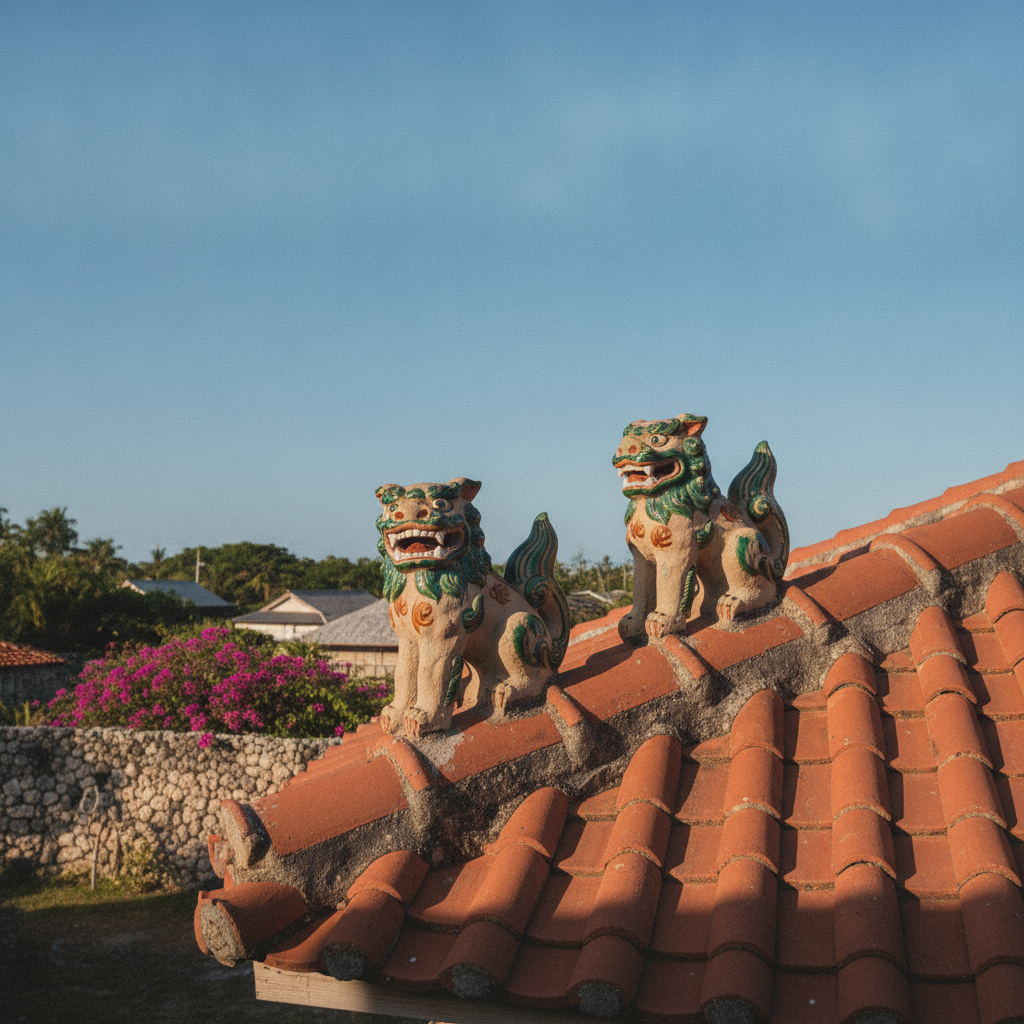
The Okinawa souvenir landscape (the guide to authentic Okinawan purchases that justify the price and the luggage space, organized by category and by where to buy them): the most practical guide to shopping in Okinawa. The craft souvenirs worth buying: Tsuboya-yaki shisa (the hand-painted ceramic lion-dog guardian pair from the Tsuboya district's Yachimun Street—the most reliably authentic craft souvenir in Okinawa; price range ¥2,000–30,000 depending on size and hand-painting detail); Bingata silk scarf (the factory-produced bingata fabric souvenir vs the hand-stenciled workshop product—the price difference (¥3,000 for factory prints vs ¥30,000+ for hand-dyed) reflects the difference between a print of the pattern and the actual stencil-dye craft); Ryukyuan lacquerware box (the small lacquerware boxes from the Naha craft shops—the most portable format of Okinawan lacquerware at ¥5,000–20,000 for a small tea container). The food souvenirs worth buying: beni-imo tart (the purple sweet potato tart—the single best-selling Okinawan food souvenir; the Nanahoshi Imo Tart or the Okashigoten brand are the most widely available brands, both at Naha Airport); Okinawan salt (the Nuchimasu (the crystallized sea salt from the Miyako Island evaporation facility—the highest sodium-free mineral content of any Japanese salt and the most awarded Japanese sea salt); awamori miniature (the 100ml–200ml kusu bottles are the most appropriate awamori souvenir at ¥1,500–5,000 for a quality aged product). The markets: Makishi Public Market for fresh produce and fish (the basement level); the Kokusai-dori craft shops for the factory bingata and printed souvenir items; the Tsuboya Yachimun Street for the ceramic shisa and studio pottery.
- 6
Okinawa vs. Mainland Japan – Understanding the Difference
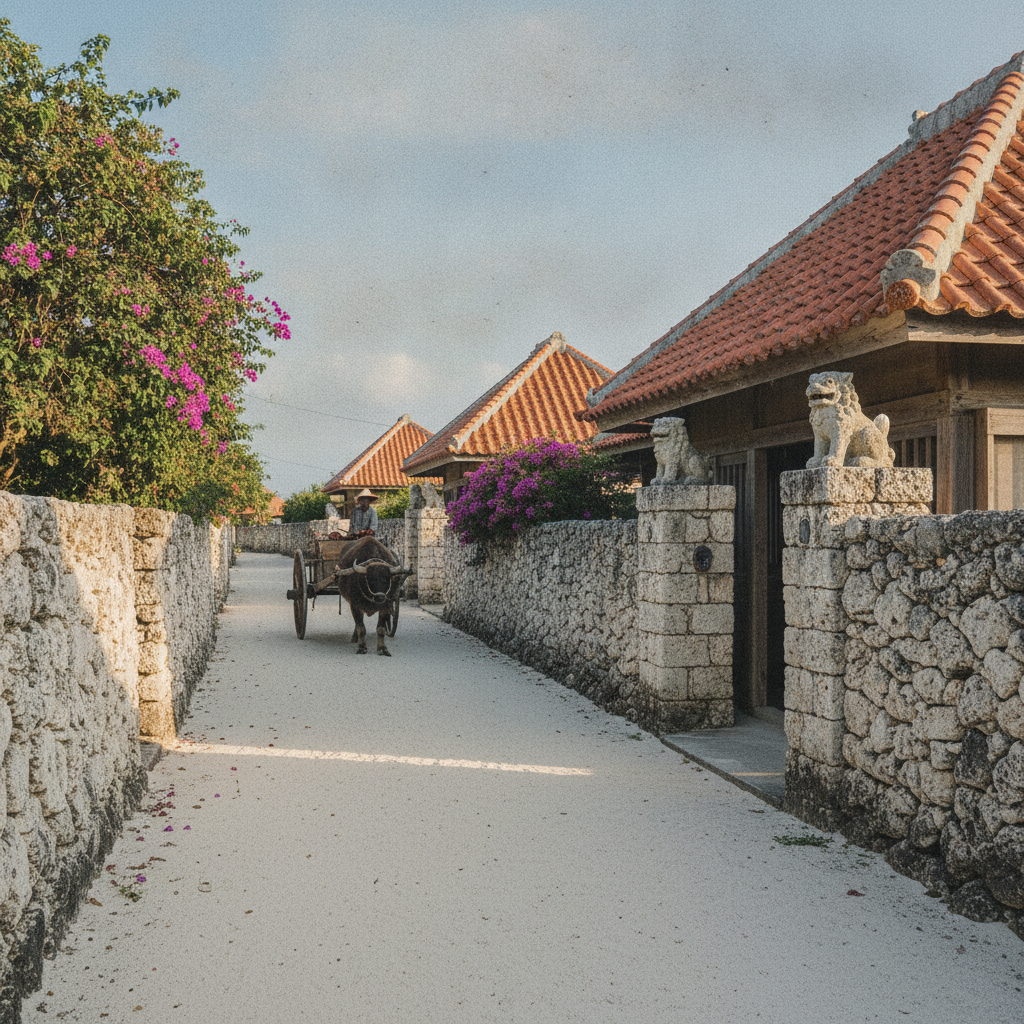
Understanding the Okinawa vs. mainland Japan contrast (the most important conceptual preparation for a first visit to Okinawa, particularly for a visitor coming directly from Tokyo, Kyoto, or Osaka): Okinawa is a Japanese prefecture since 1879 but is culturally, historically, linguistically, culinarily, architecturally, and ecologically unlike any other part of Japan—the contrast is greater than between any two mainland Japanese regions. The language (Okinawan Hogen—the Okinawan language (Uchinaaguchi): a language (not a dialect) related to Japanese through a common proto-Ryukyuan ancestor approximately 2,000 years ago, now spoken primarily by elderly Okinawans; Okinawan teenagers speak standard Japanese; the Okinawan greeting 'Mensooree' ('Welcome') heard at airports and hotels is Uchinaaguchi, not Japanese): UNESCO classifies Okinawan as an endangered language with approximately 10,000 fluent speakers remaining. The architecture (the Ryukyuan architecture of the gusuku, the Shuri Castle palace, and the traditional village houses with their red clay roof tiles and coral-stone walls): entirely distinct from the post-and-beam wood architecture of mainland Japan. The food (the Okinawan cuisine's use of pork, Spam, bitter melon, and awamori in a subtropical culinary environment shaped by trade with China and Southeast Asia and a 27-year American occupation): the most distinct regional cuisine in Japan. The religion (the Okinawan religious tradition—the combination of Ryukyuan animism (the 'noro' priestess tradition and the utaki sacred grove worship sites) with Buddhist and Shinto influences imported from mainland Japan): the utaki (sacred natural sites in the forest) are the primary Okinawan religious site format, distinct from both Buddhist temples and Shinto shrines.
Walk this route with audio
Stories play automatically as you reach each stop — no tapping needed.
More in Okinawa
The Shisa That Has Kept Closed Mouth Since 1689, the Flightless Bird That Never Met a Predator Until 1910 & the Humpback Whales Passing Through the Kerama in February
The ¥2,000 Note Gate, the Battle That Killed 20–33% of the Island's Population & the World's Only Successfully Bred Captive Manta Rays
The Sanshin That Became the Shamisen, the Base That Covers 70.6% of Japan's US Military Land on 0.6% of Japan's Territory & the Village Where 80 Is Still Youth
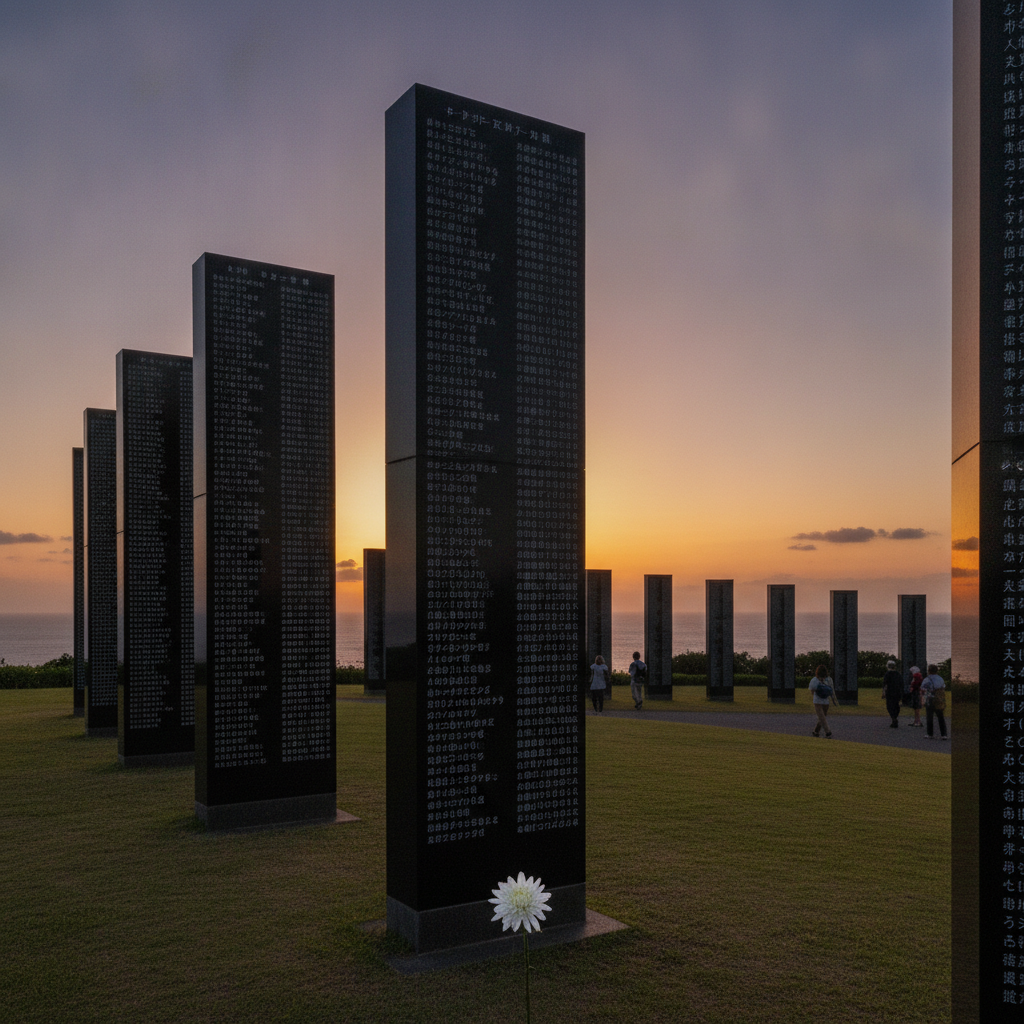
The 222 Student Nurses Dismissed into a Live Battle Zone, the Mongoose That Failed to Kill the Habu but Destroyed the Flightless Bird & the Memorial That Lists American and Japanese Dead on the Same Panel