The Shisa That Has Kept Closed Mouth Since 1689, the Flightless Bird That Never Met a Predator Until 1910 & the Humpback Whales Passing Through the Kerama in February
The 1689 Tomori Village stone shisa still in community care as the oldest surviving example; the Yambaru Kuina's evolutionary flightlessness destroyed by the mongoose introduced to control habu snakes; the hammerhead shark school at Yonaguni 110 km from Taiwan; the sanshin's 50,000 registered players and the Ryukyu Classical Dance at the National Theatre; the five Okinawan ingredients (goya, sōki, mozuku, beni-imo, Spam) as a political history map; and the January–March humpback whale passage through the Kerama as Japan's most accessible whale-watching.
- 1
Okinawa's Coral Reefs – Ecology & Diving
Okinawa's coral reef ecosystem (the subtropical Pacific reef system surrounding the Okinawa island chain—extending from the main island south to the Yaeyama Islands): the northernmost significant coral reef system in the world and the most biologically diverse marine environment in Japan. The main island reef health: the coral reef surrounding the Okinawa main island has suffered severe bleaching in recent decades (the 1998 mass bleaching event destroyed approximately 96% of Okinawa's shallow reef corals; partial recovery occurred by 2010–2015 but the 2023 bleaching event (the hottest sea surface temperatures ever recorded in the East China Sea) caused a new mass bleaching affecting approximately 70% of the recovered reef). The outer island reef health: the Kerama Islands and the Yaeyama reef systems are significantly healthier than the main island reef due to lower tourist pressure, lower agricultural runoff, and greater distance from urban heat island effects. The diving conditions: the Okinawa diving season runs year-round (the water temperature is 22°C in winter and 29°C in summer—no dry suit required in any season); the visibility ranges from 15–40 metres depending on season and location (the Kerama Islands at 30–40 metres and the Yaeyama at 25–35 metres in optimal conditions). The hammerhead shark aggregation (the Yonaguni Island hammerhead shark school—the largest aggregation of schooling hammerhead sharks visible from a single dive site in Asia; visible during the November–June period (the winter migration of scalloped hammerhead sharks (Sphyrna lewini) through the Yonaguni channel)): Yonaguni is the westernmost island of Japan, 110 km from Taiwan.
- 2
The Okinawan Shisa & Cultural Symbols
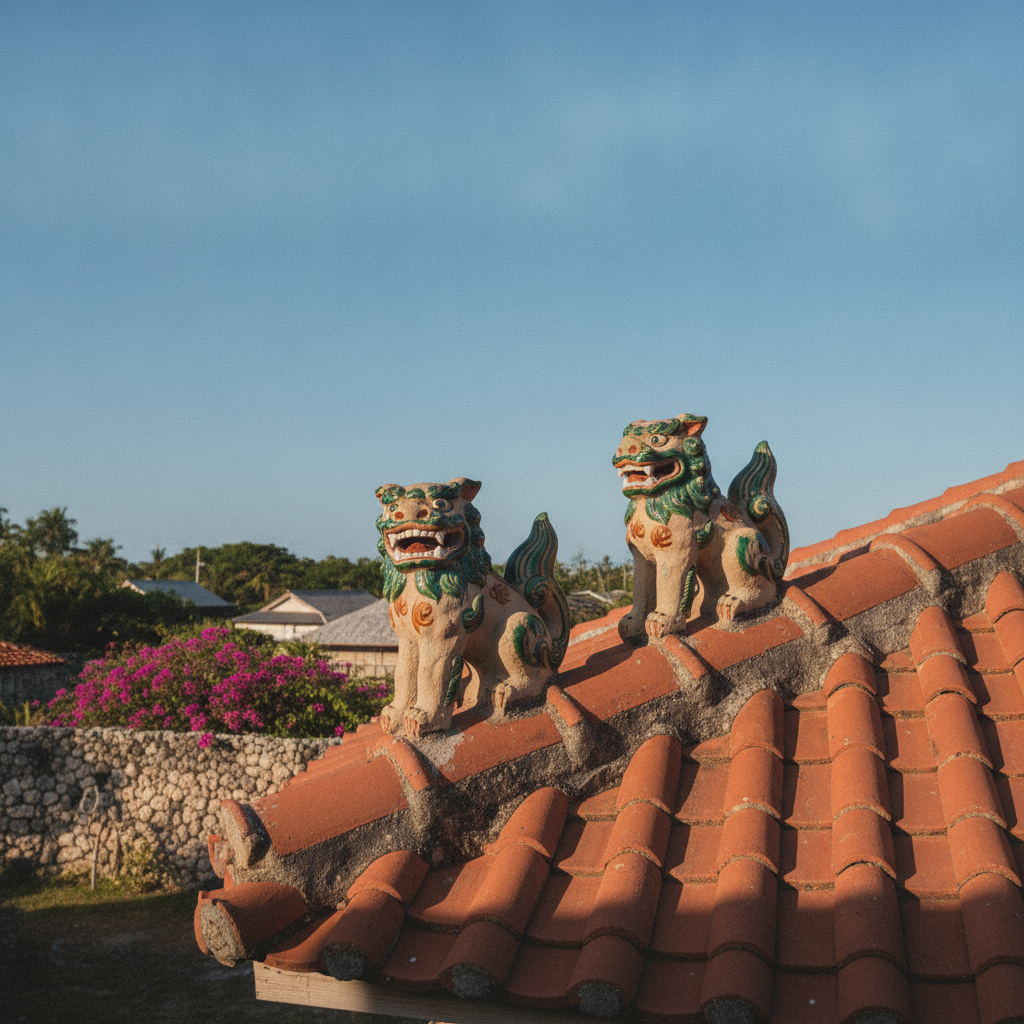
The Shisa (the Okinawan lion-dog guardian figure—the pair of ceramic or stone lion-dog figures placed on the roof ridges or gate posts of Okinawan homes, temples, and public buildings to ward off evil spirits): the most ubiquitous visual symbol in Okinawa and the craft object most associated with the islands internationally. The shisa origin (the shisa tradition derives from the Chinese lion-guardian (shishi) tradition transmitted to Okinawa through the Ryukyu Kingdom's trade with China—the earliest recorded Okinawan shisa is the stone lion of Tomori Village, carved in 1689 on the order of the king to protect the village from fire): the 1689 Tomori shisa is the oldest surviving Okinawan shisa and is maintained in the village's care (not in a museum) as a community protective object. The Shisa convention (the pair arrangement—one shisa has an open mouth (the male, releasing good fortune) and one has a closed mouth (the female, retaining good fortune): the convention is universal in Okinawa and follows the same open/closed pattern as the Japanese Niō temple guardian figures and the Chinese fu dogs). The ceramic shisa production (the Tsuboya district's primary commercial output—the hand-painted ceramic shisa in all sizes from 5 cm to 50 cm, all individually painted; the most collectable Okinawan craft item for both Japanese domestic and international visitors): the shisa is the only Okinawan craft that has been successfully marketed internationally to non-specialist buyers. The shisa on the monorail (the Yui Rail's train cars each carry a different shisa face painted on the nose—the 15 trains with 15 different expressions are an in-transit game for children and an unexpected encounter with the local cultural symbol in the most modern transport context).
- 3
Northern Okinawa – The Undeveloped Coast
The northern Okinawa (the Kunigami district and the Motobu Peninsula—the area north of Nago City that contains the island's least developed landscape): the part of Okinawa that most surprises visitors expecting a resort beach destination. The Yambaru Forest (the subtropical forest covering approximately 70% of the northern Okinawa's land area—the Yambaru National Park (designated 2016): the habitat of the Yambaru Kuina (Gallirallus okinawae—the flightless Okinawan rail, endemic to Yambaru forest and critically endangered with approximately 1,500 individuals): the Yambaru Kuina has been unable to fly since evolving in a mongoose-free island environment; the introduction of the Javan mongoose to Okinawa in 1910 (to control the habu snake population) has devastated the kuina population as the mongoose is a highly effective predator of the ground-nesting bird). The Hiji Waterfall (the 26-metre waterfall in the Yambaru National Park—accessible by a 45-minute forest trail from the trailhead 40 km north of Naha; the most rewarding single nature walk on the main island): the trail passes through subtropical forest with banyan tree aerial roots, tree ferns, and pandanus palms. The Ogimi longevity village (the northern coast village whose centenarian rate defines the Okinawa Blue Zone—the village's identity tourism (the welcome sign, the longevity restaurant serving the traditional diet, and the farm visits): the most self-aware longevity village in Japan and the one that has developed the most complete tourism infrastructure around the concept).
- 4
Ryukyuan Music & Dance – The Living Tradition
The Ryukyuan music and dance tradition (the performance arts of the Ryukyu Kingdom maintained in Okinawa and continued to the present day in regular performance at the Naha Cultural Center and the National Theatre Okinawa): the most distinctive living traditional arts in Japan. The sanshin (the 3-string snakeskin-bodied lute—the Okinawan instrument whose playing technique (the bachi, the plectrum made from water buffalo horn) and tuning system (distinct from the mainland shamisen) marks it as a separate instrumental tradition from the mainland): the sanshin music (the Ryukyu Koten Ongaku—the classical music of the Ryukyu Kingdom) is the most internationally performed Okinawan cultural practice. The Eisa (the community drumming dance of the Obon festival—the most widely practiced Okinawan folk art form, performed by community groups of all ages in every Okinawan village and city district during the August Obon period): the Naha Hari (the dragon boat racing festival in May—the most spectator-appropriate traditional Okinawan community event after the Eisa; the outrigger boat racing at the Naha Port, with teams of 32 paddlers competing): the most energy-intensive traditional event in Okinawa and the one that most directly connects to the Ryukyuan maritime culture. The Ryukyu Classical Dance (the formal court dance of the Ryukyu Kingdom—the slow, aesthetically refined dance form performed in the historical kimono of the Ryukyuan court, distinct from the dynamic Eisa folk dance in its tempo and conceptual register): performed at the National Theatre Okinawa (Naha) for public audiences on scheduled evenings.
- 5
Okinawan Food – The Complete Picture
The Okinawan culinary tradition is the most distinctive regional food culture in Japan—more distinct from mainland Japanese cuisine than any other regional tradition because of its geographic isolation, its Ryukyuan history, and its 27-year American occupation period (1945–1972) that permanently altered the ingredient base. The five defining Okinawan ingredients: the goya (bitter melon—the vegetable most associated with Okinawa internationally; available throughout the year in Okinawa (it grows in the subtropical climate) but seasonal in the mainland); the sōki (the braised pork spare rib—the primary protein in traditional Okinawan cuisine, reflecting the Chinese-influenced pork eating culture adopted by the Ryukyu court in contrast to the mainland Japanese preference for fish and chicken); the mozuku (the thin brown seaweed cultivated in Okinawa's protected bays—Okinawa produces 96% of Japan's mozuku supply; typically served in a rice vinegar dressing as a refreshing appetizer with a slight mucilaginous texture); the beni-imo (the purple sweet potato of Okinawa—the regional variant with higher anthocyanin content; used in Okinawan cuisine as a starch, as a natural colourant, and as the base for the beni-imo tart (the most purchased Okinawan souvenir at Naha Airport)); and the Spam (the American canned meat that entered Okinawan cuisine during the US occupation and has been genuinely incorporated as an ingredient in champuru stir-fries, Okinawan musubi (rice balls), and the Okinawan breakfast plate). The Okinawan food history is a map of the island's political history encoded in ingredients.
- 6
Okinawa Accommodation & Island Calendar
The Okinawa accommodation landscape reflects the island's dual character as a beach resort destination and a cultural heritage site. The resort hotel concentration: the Onna Village beach resort corridor (the 15-km stretch of resorts along the central Okinawan coast between Naha and Nago, including the OIST Okinawa Institute of Science and Technology area—the Busena Terrace, the Renaissance Okinawa, and the ANA InterContinental Manza Beach Resort): the international-chain beach resort standard. The Naha city hotels: the budget-to-business hotel concentration around the Kokusai-dori and the Yui Rail route (the Sotetsu Hotels Fresa Inn and the hotel chain properties at ¥8,000–15,000 per night): the most convenient option for exploring the cultural sites without a rental car. The Kerama and Yaeyama guesthouses (the small-scale guesthouses on the outer islands—the most authentic accommodation in the Okinawan island system): Zamami Island's 3 guesthouses (including the Pension Zamami where the owner organizes snorkeling tours and the morning whale watching from January–March). The seasonal calendar: the best swimming season (May–October—though the July–September typhoon risk makes May–June and September–October the optimal windows); the humpback whale season (January–March: the North Pacific humpback whale (Megaptera novaeangliae) population migrates through the Kerama passage and is visible from chartered whale-watching boats out of Zamami and Naha Tomari Port—the most accessible whale-watching in Japan by distance from a major city).
Walk this route with audio
Stories play automatically as you reach each stop — no tapping needed.
More in Okinawa
The ¥2,000 Note Gate, the Battle That Killed 20–33% of the Island's Population & the World's Only Successfully Bred Captive Manta Rays
The Oldest Distilled Spirit in Japan (Made from Thai Rice Imported via Siam in 1450), the Yonaguni Underwater Monument Nobody Can Agree On & the Language UNESCO Lists as Endangered with 10,000 Speakers
The Sanshin That Became the Shamisen, the Base That Covers 70.6% of Japan's US Military Land on 0.6% of Japan's Territory & the Village Where 80 Is Still Youth
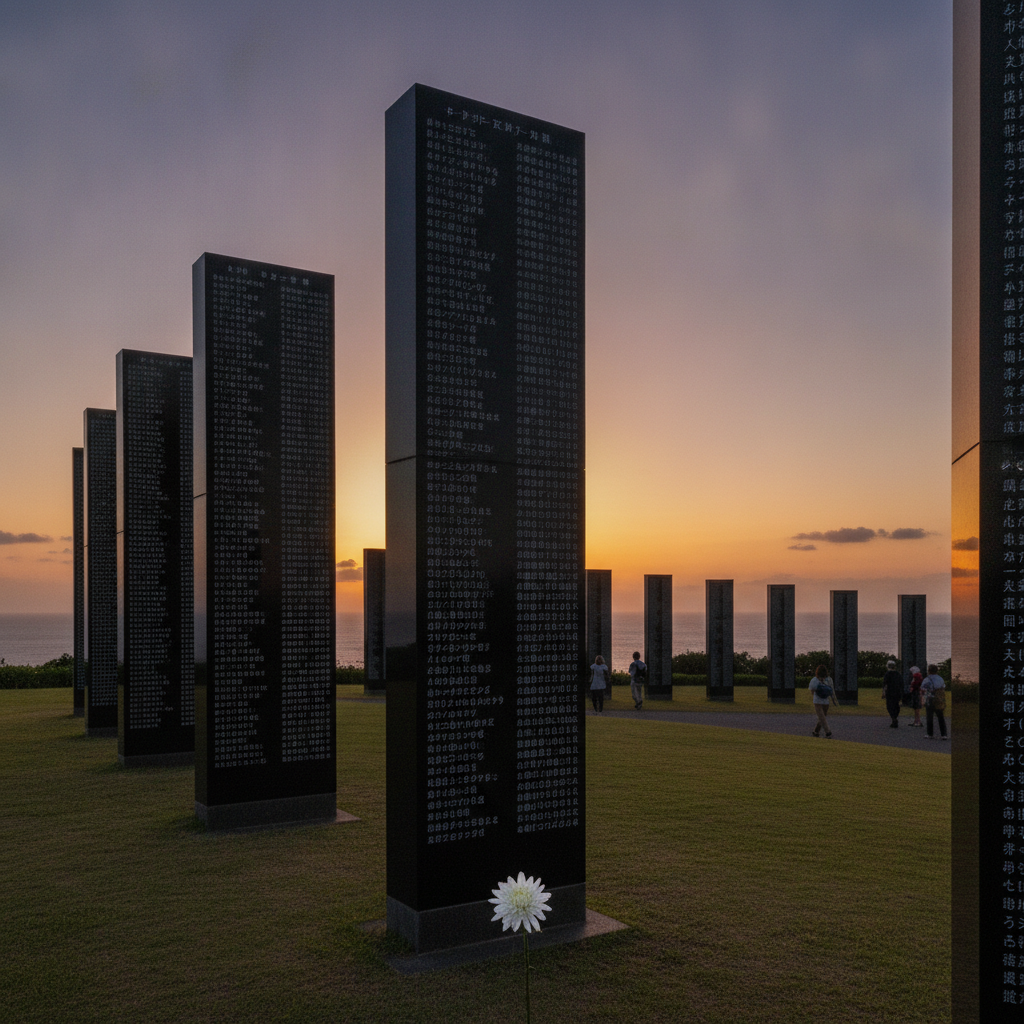
The 222 Student Nurses Dismissed into a Live Battle Zone, the Mongoose That Failed to Kill the Habu but Destroyed the Flightless Bird & the Memorial That Lists American and Japanese Dead on the Same Panel