Oaxacan Textiles Alebrijes and Black Clay: The Village Craft Traditions That Survived Because They Were Too Remote for Factory Competition and Now Feed a Global Market That Values Handmade More Than Ever
The craft production of Oaxaca state operates through a geographic specialization system in which different villages have maintained exclusive competence in different craft traditions for centuries: Teotitlan del Valle for hand-woven wool tapestry using natural dyes; San Bartolo Coyotepec for the black clay barro negro pottery produced without a wheel and fired to a metallic sheen; San Martin Tilcajete and Arrazola for the painted wood alebrijes, the fantastical animal sculptures created by Zapotec carvers; Ocotlan for a different textile tradition of embroidered blouses; and dozens of other communities for basketry, palm weaving, leather goods, and the specific regional food products that complement the craft market. The system has persisted partly because geographic isolation in the Oaxacan mountains protected these village industries from factory competition during the period when industrial production destroyed craft traditions throughout Mexico in the early 20th century, and partly because the craft traditions were embedded in community social structures — the tequio communal labor obligation, the cooperative management of craft cooperatives, the family workshop transmission of skills — that made individual defection from the craft tradition socially costly. The global market transformation that arrived in Oaxaca as tourism and export demand for authentic handmade craft objects from the 1970s onward found these village industries intact and available for commercial partnership, producing an economic relationship that has been genuinely beneficial for many craft producers while generating the familiar tensions of external market dependence that any traditional production system faces when it becomes commercially successful.
- 1
Teotitlan del Valle Wool Weaving
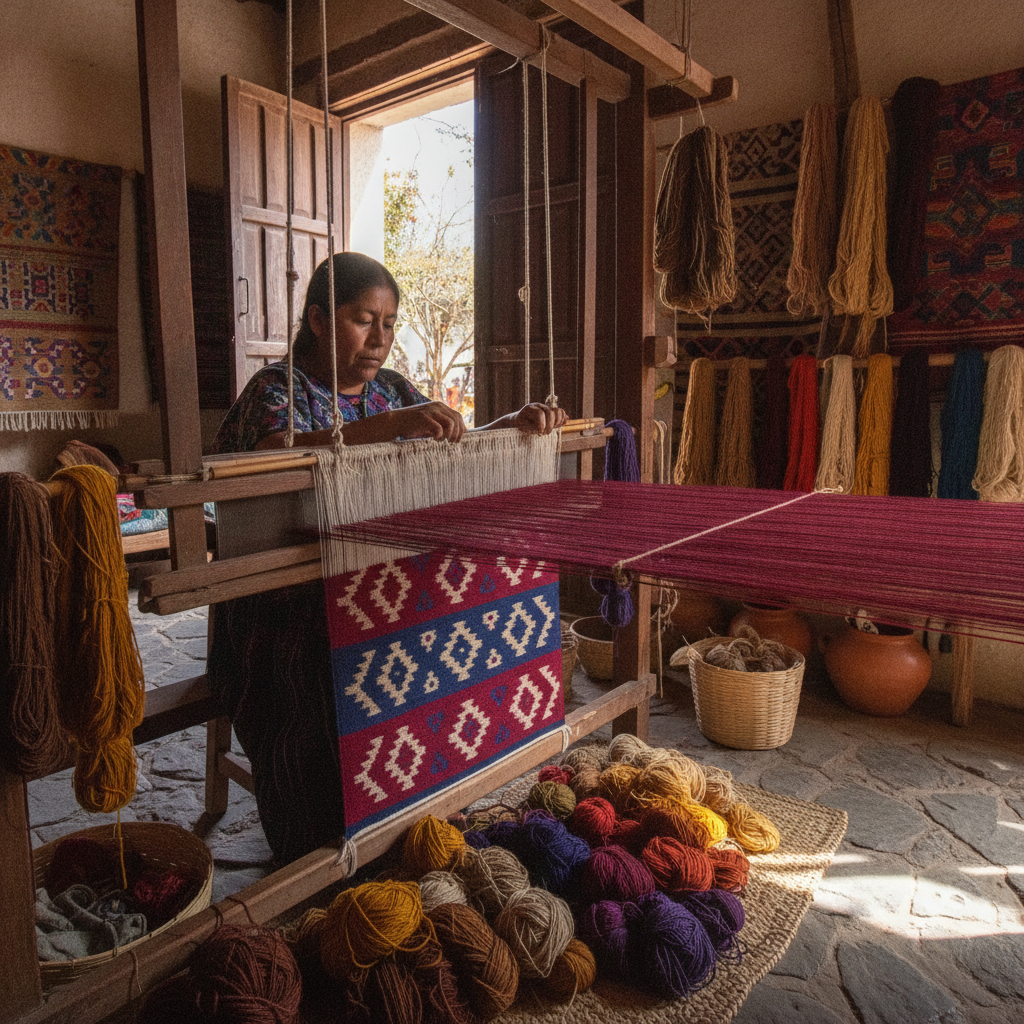
Teotitlan del Valle, the Zapotec community 31 kilometres east of Oaxaca city in the Tlacolula Valley that has woven wool tapestry rugs and textiles since at least the pre-Columbian period — transitioning from cotton and agave fiber to wool after the Spanish introduction of sheep in the 16th century — is the primary destination for serious textile buyers in Oaxaca and the community where the traditional natural dyeing techniques using cochineal insects, indigo plants, marigold flowers, and mineral pigments have been maintained alongside the synthetic dye adoption that cheaper production requires. The zapotec geometric designs of Teotitlan textiles, which represent cosmological symbols, natural forms, and abstract patterns derived from the pre-Columbian visual tradition, are woven on horizontal backstrap looms and treadle looms depending on the scale of the piece, with the finest pieces taking months of daily work to complete and selling for prices comparable to high-end contemporary art objects. The cochineal insect, Dactylopius coccus, which lives on nopal cactus and produces a brilliant crimson dye extracted by crushing the dried insects, is cultivated in Teotitlan on nopal plants maintained specifically for dye production. The color range achievable with cochineal combined with lime or citric acid modifiers extends from pink through crimson to deep purple, with each modifier producing a different pH shift in the dye bath that changes the resulting color. Teotitlan weavers who have established their own export brands and gallery relationships in the United States and Europe have built businesses of significant scale while maintaining traditional production methods.
- 2
Barro Negro San Bartolo Coyotepec
The barro negro, black clay pottery from San Bartolo Coyotepec 12 kilometres south of Oaxaca city, is produced from a specific clay deposit found only in and around this village that fires to a metallic black sheen in a reduction atmosphere — the low-oxygen firing condition that prevents the iron in the clay from oxidizing to a red color and instead reduces it to a grey and black metalite surface. The production technique requires no wheel: Oaxacan potters form the vessels by rotating a rounded base form called a mushroom on a flat disk rather than spinning a rotating wheel, producing forms that the hand shapes around the rotating base in a technique transmitted through family workshops across generations. The barro negro was traditionally unpolished and produced primarily utilitarian vessels until the 1950s when the master potter Dona Rosa Real de Nieto discovered that burnishing the unfired clay with a piece of quartz produced the metallic mirror-like surface that became the defining visual quality of barro negro art objects. Dona Rosa's innovation transformed barro negro from a utilitarian ware to a decorative art object and created the commercial market that now sustains approximately 30 percent of San Bartolo Coyotepec households. The scale range of contemporary barro negro production spans from fingernail-sized miniatures to vessels over one metre tall that required days to build and were fired in large outdoor kilns. The barro negro from San Bartolo has been certified as a geographic indication, meaning only production from the specific village using the traditional technique can be labeled authentic barro negro de Oaxaca.
- 3
Alebrijes Wood Carving and Fantasy Animals
The alebrijes of Oaxaca, the painted wood fantasy animals produced primarily in the communities of San Martin Tilcajete and San Antonio Arrazola in the Central Valleys, are one of the most internationally recognizable contemporary Mexican craft forms, characterized by the combination of natural wood carving that creates animal forms ranging from the naturalistic to the entirely fantastical with detailed painting in bright mineral and acrylic colors covering every surface in geometric patterns, spots, and flowers. The Oaxacan alebrije tradition is distinct from the papier-mache alebrijes of Mexico City artist Pedro Linares, who claimed to have invented the word alebrije after a fever dream in the 1930s, in both material — wood vs. papier-mache — and in the visual tradition that the Oaxacan carvers draw from, which is the Zapotec pre-Columbian animal imagery of the valley rather than the urban popular art context of Linares. The Jimenez family of San Martin Tilcajete, who include several brothers working in related but distinct styles, and the family workshop of Manuel Jimenez in Arrazola, who is credited with commercializing the wood carving tradition in the 1960s, represent the generational depth of a craft tradition that was largely workshop-based and family-transmitted before commercial success made it a viable primary occupation. The surface painting of alebrijes, which is executed by different family members than those who do the carving, represents a distinct technical skill involving the preparation of mineral pigments, the creation of fine brushes from cat fur, and the control of detail at a scale that requires hours of focused work per square centimetre.
- 4
Oaxacan Textile Markets and Fair Trade
The commercial infrastructure for Oaxacan craft has developed from the market stalls of the colonial period through the government-sponsored craft promotion programs of the 20th century to a contemporary system that includes the Mercado de Artesanias in Oaxaca city, where low-price craft production is concentrated for the volume tourist market, the gallery and boutique shops on the Macedonio Alcala pedestrian street, where curated selection is sold at prices reflecting the craft as art, and the direct-from-village sales operations maintained by communities and individual artisans who have developed their own export channels through fair trade certification and direct gallery representation in the United States and Europe. The Mujeres Artesanas de las Regiones de Oaxaca, MARO, a women's craft cooperative that has operated since 1986, represents 176 women artisans from 44 Oaxacan communities in a retail shop in the historic center that sells textile and craft production at prices that reflect a fair payment to the producer, and that has maintained this standard while competing with lower-price market stalls that pay producers significantly less. The tension between fair trade pricing and market competitiveness is the central economic challenge facing Oaxacan craft producers who want to maintain their traditional techniques, which are slow and labor-intensive, against the competition from faster, cheaper production methods that meet visual similarity standards at lower prices. The certification of geographic indications and appellations of origin for specific Oaxacan crafts, including barro negro, Oaxacan green pottery, and Zapotec textiles, has attempted to use legal frameworks to protect the economic value of authentic traditional production.
- 5
Oaxaca City Gentrification and Tourism Impact
Oaxaca city has experienced rapid gentrification since the mid-2010s as its international reputation as a food, craft, and cultural destination drove tourism from approximately 1 million annual visitors in 2010 to over 4 million in 2019, generating the transformation of the historic center from a mixed commercial and residential neighborhood serving the local Oaxacan population to an increasingly tourism-oriented zone where restaurants, mezcal bars, boutique hotels, and craft galleries have displaced the pharmacies, hardware stores, tortillerias, and working-class households that previously occupied the same spaces. The short-term rental market, concentrated in the historic center and the adjacent colonias Jalatlaco and Reforma, has converted residential properties from long-term rental to tourist accommodation at a rate that has increased housing costs and reduced availability for local residents, including the indigenous artisans and market vendors who need accommodation within walking distance of their work. The 2006 popular uprising in Oaxaca, the months-long teacher strike and social movement that occupied the historic center, had temporarily reduced tourism and provided a moment of political reflection about what kind of city Oaxaca wanted to be, but the subsequent recovery and intensification of tourism created conditions that the 2006 activists had explicitly opposed. The food scene transformation driven by international attention has been particularly dissonant: the traditional cocina oaxaquena cooking of market stalls and family restaurants has been supplemented by restaurants serving Oaxacan ingredients at prices accessible only to international tourists, creating a culinary dual economy that separates the food from the people who created it.
- 6
Oaxacan Coffee and the Sierra Mixe
The coffee-growing regions of Oaxaca, concentrated in the Sierra Mixe and the Sierra Norte at elevations between 1,000 and 2,000 metres where the combination of altitude, shade canopy, volcanic soil, and consistent rainfall creates ideal conditions for arabica coffee cultivation, produce some of the highest-quality specialty coffee in Mexico, sold under certifications including Fair Trade, organic, and shade-grown bird-friendly that connect the production practices of indigenous Mixe, Zapotec, and Chinantec coffee farmers to the specialty coffee market. The Mixe people, who call themselves Ayuujk and whose communities in the Sierra Mixe east of Oaxaca city at high elevation have maintained their cultural and linguistic distinctiveness from both the Zapotec and the Spanish colonial administration with particular effectiveness, are the primary producers of the specialty coffee that Oaxacan roasters export. The growing conditions in the Mixe highlands, where mist and cloud cover the coffee plants from direct sun for much of the growing season, produce a bean with lower acidity and more complex flavor development than lowland coffee, characteristics valued in the specialty coffee market. The coffee cooperative infrastructure in the Sierra Mixe, built through the organic certification movement of the 1990s that gave small-holder farmers access to premium prices in exchange for organic production practices, represents a successful example of the externally driven market transformation of indigenous agricultural production that produced genuine economic benefits while preserving traditional production landscapes.
Walk this route with audio
Stories play automatically as you reach each stop — no tapping needed.
More in Oaxaca
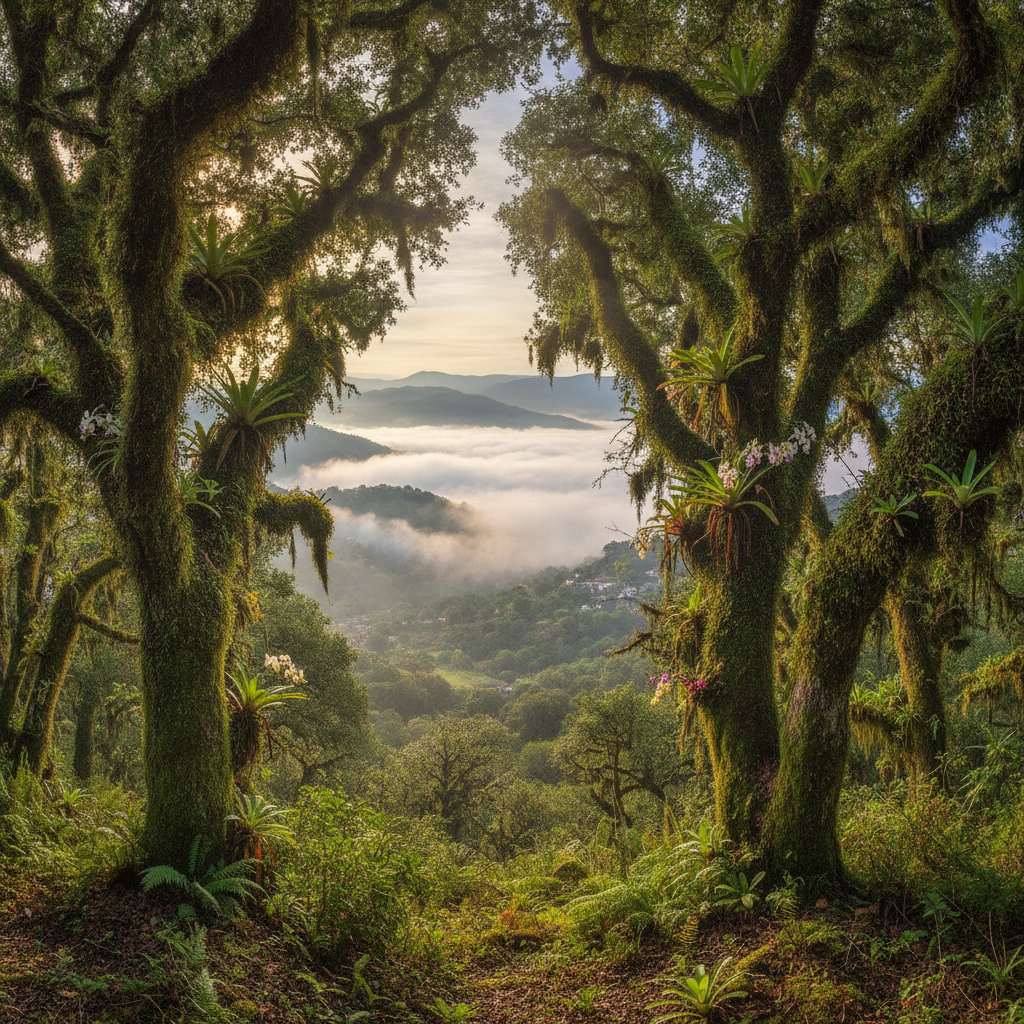
Oaxaca Landscape and Ecology: Cloud Forest Orchids in the Sierra Norte, the Monarch Butterfly Corridor Through the Sierra Sur, the Pacific Coast Turtle Nesting at Mazunte and the Lachatao Archaeological Botanical Garden
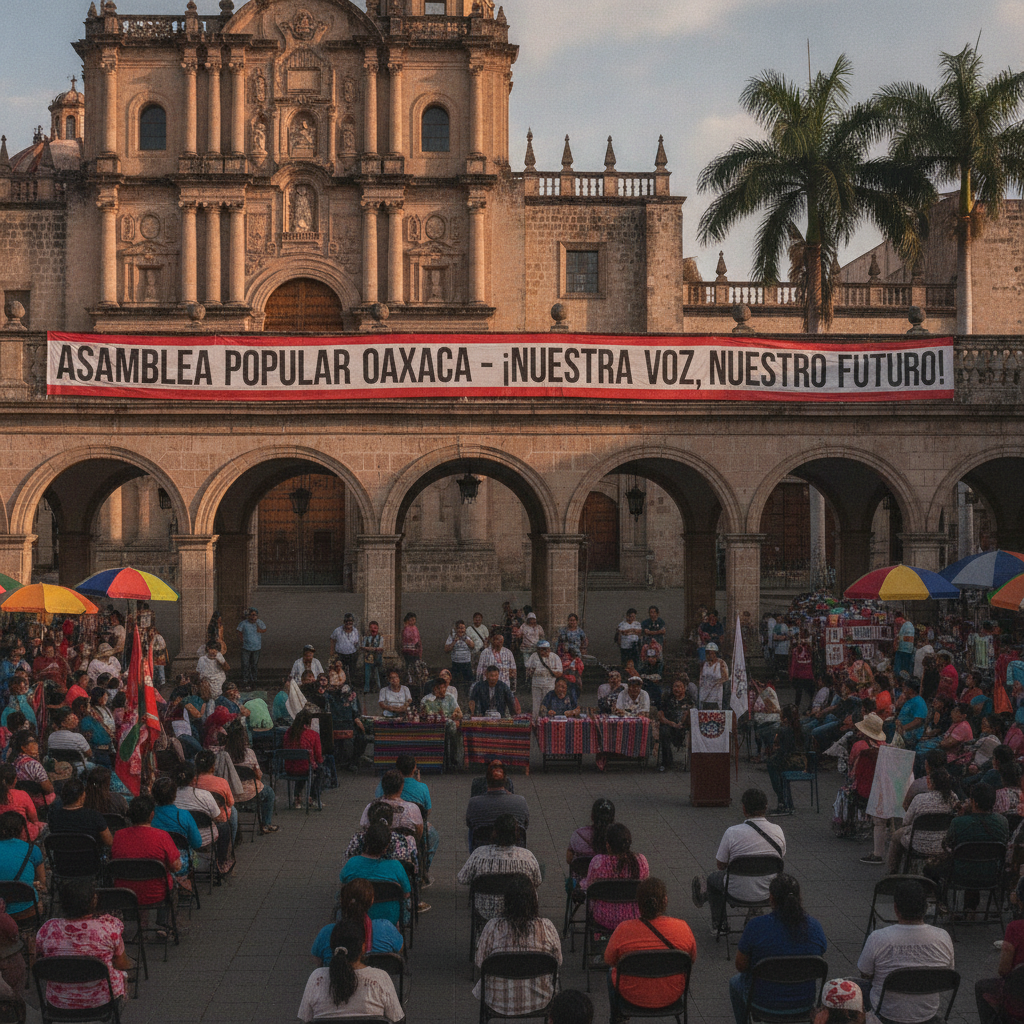
Oaxaca 2006 Uprising and the APPO: When Teachers Occupied the Zocalo for Six Months and the State Government Lost Control of Its Capital City in a Social Movement That the Rest of Mexico Watched and the International Press Covered as a Revolution
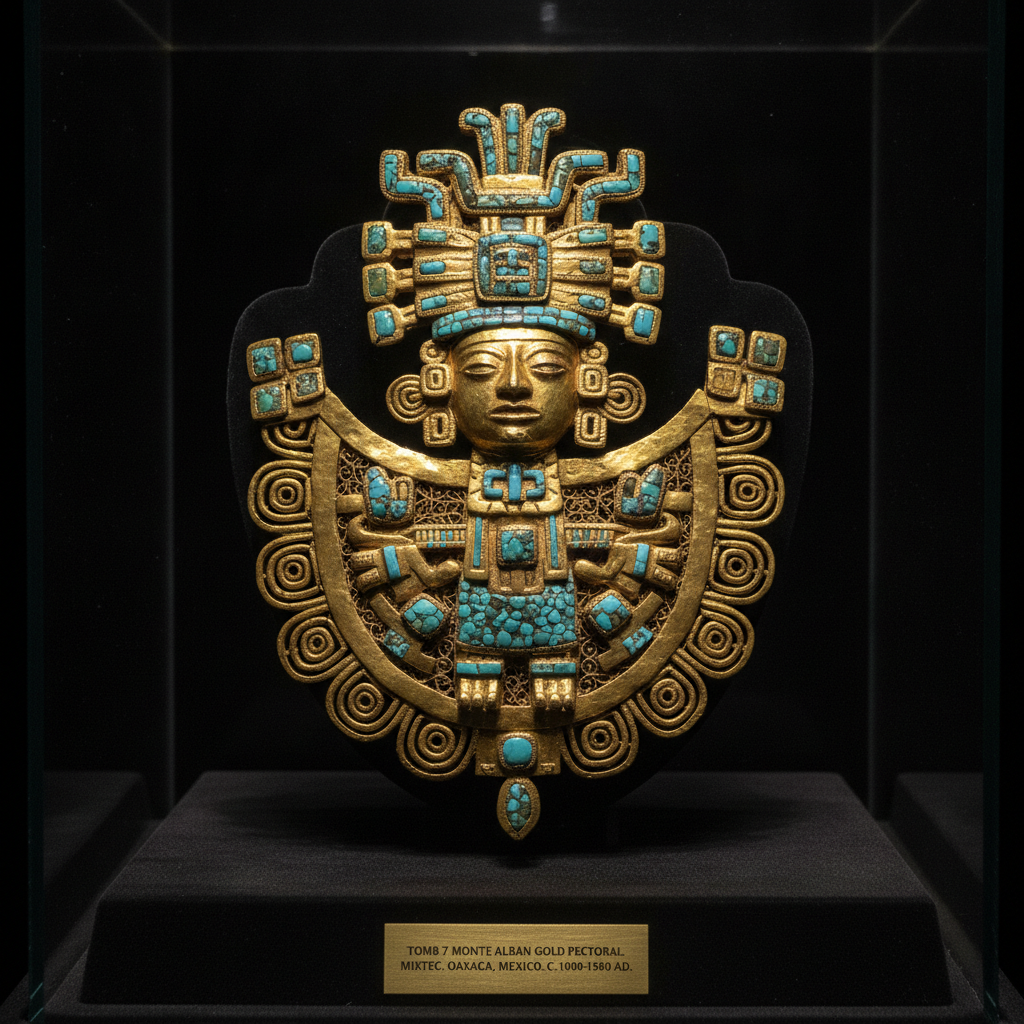
Zapotec and Mixtec Civilization: The Cloud People Who Built Monte Alban Before Rome Was an Empire, the Mixtec Codices That Are the Only Pre-Columbian Books Surviving Complete, and the Tomb 7 Gold That Changed What Scholars Knew About Pre-Columbian Metalwork
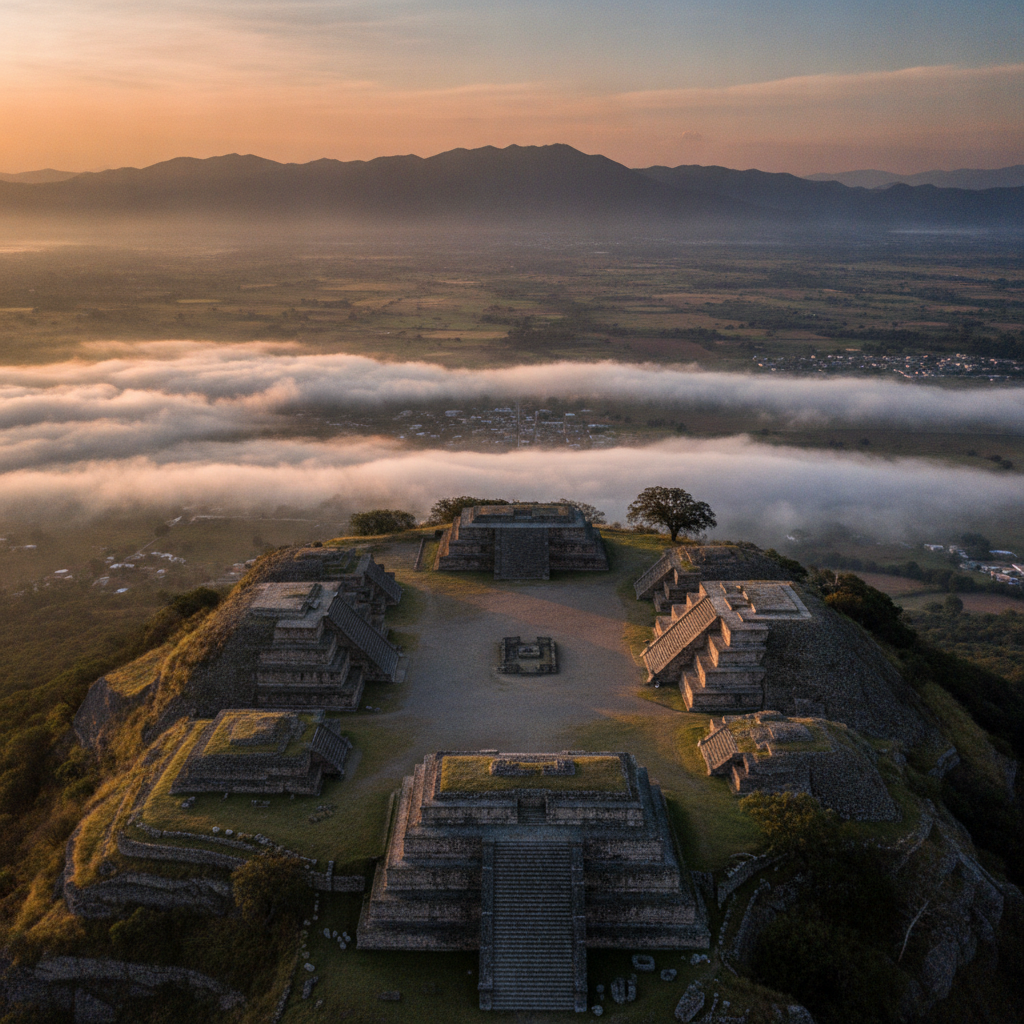
Oaxaca: The Valley City Below Monte Alban Where Zapotec Civilization Built Its Pyramid Capital, Where Mole Negro Takes Three Days to Make, and Where Every Street Has More Indigenous Cultural Survival Than Any Other City in Mexico

Oaxacan Markets Chocolate and Chapulines: The Mercado 20 de Noviembre Charcoal Corridor, the Chocolate Mills of the Mina Street and the Grasshopper Tradition That Foreign Food Writers Use as a Shortcut to Oaxaca and That Oaxacans Find Exhausting