Oaxaca: The Valley City Below Monte Alban Where Zapotec Civilization Built Its Pyramid Capital, Where Mole Negro Takes Three Days to Make, and Where Every Street Has More Indigenous Cultural Survival Than Any Other City in Mexico
Oaxaca de Juarez, the colonial capital of the southern Mexican state of Oaxaca at 1,550 metres elevation in the Valley of Oaxaca surrounded by the Sierra Norte and Sierra Sur mountain ranges, is the city where the visitor encounters the most complete intersection of pre-Columbian indigenous civilization, Spanish colonial architecture, contemporary indigenous art and craft, and the most complex regional cuisine in Mexico: the seven moles of Oaxaca, of which the mole negro with its 30-plus ingredients including chocolate, chile mulato, chile negro, and toasted chile chihuacle negro takes three days of preparation and represents the most sophisticated single dish in the Mexican culinary tradition. The city of 300,000 sits 9 kilometres from Monte Alban, the hilltop ceremonial center of the Zapotec civilization founded around 500 BCE and occupied continuously for 1,000 years as the largest and most powerful urban center in Mesoamerica before its collapse around 700 CE, leaving a complex of temples, ball courts, carved stone monuments, and an astronomical observatory that makes it the most significant pre-Columbian archaeological site visible from a major Mexican city. The 34 indigenous languages spoken in the state of Oaxaca, a number that exceeds the total indigenous language count of any other Mexican state, reflects the extraordinary ethnic and linguistic diversity of the Oaxacan mountain communities that maintained their separate identities through Zapotec imperial domination, Aztec expansion, Spanish colonial rule, and 20th-century Mexican nationalism without assimilating completely into any of these political systems.
1. Monte Alban Zapotec Hilltop Capital
- 1
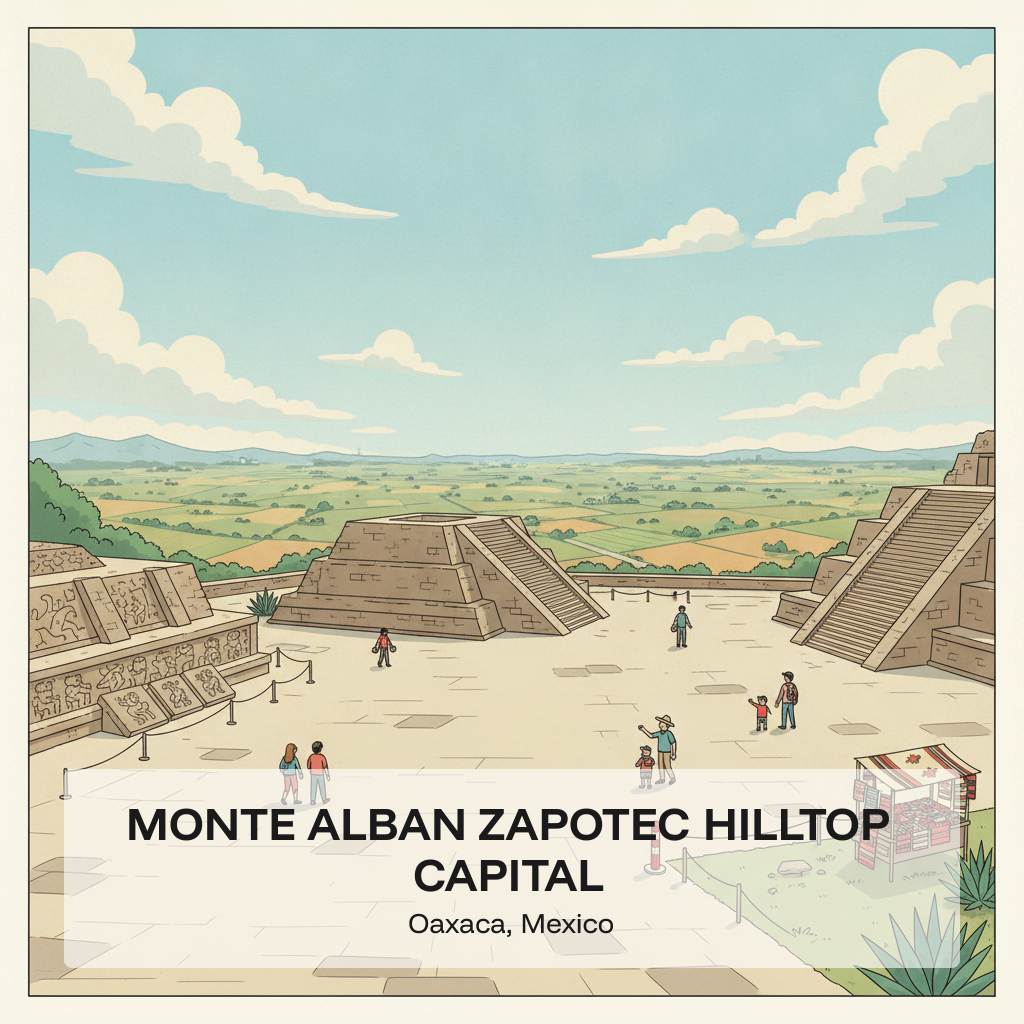
Monte Alban Zapotec Hilltop Capital
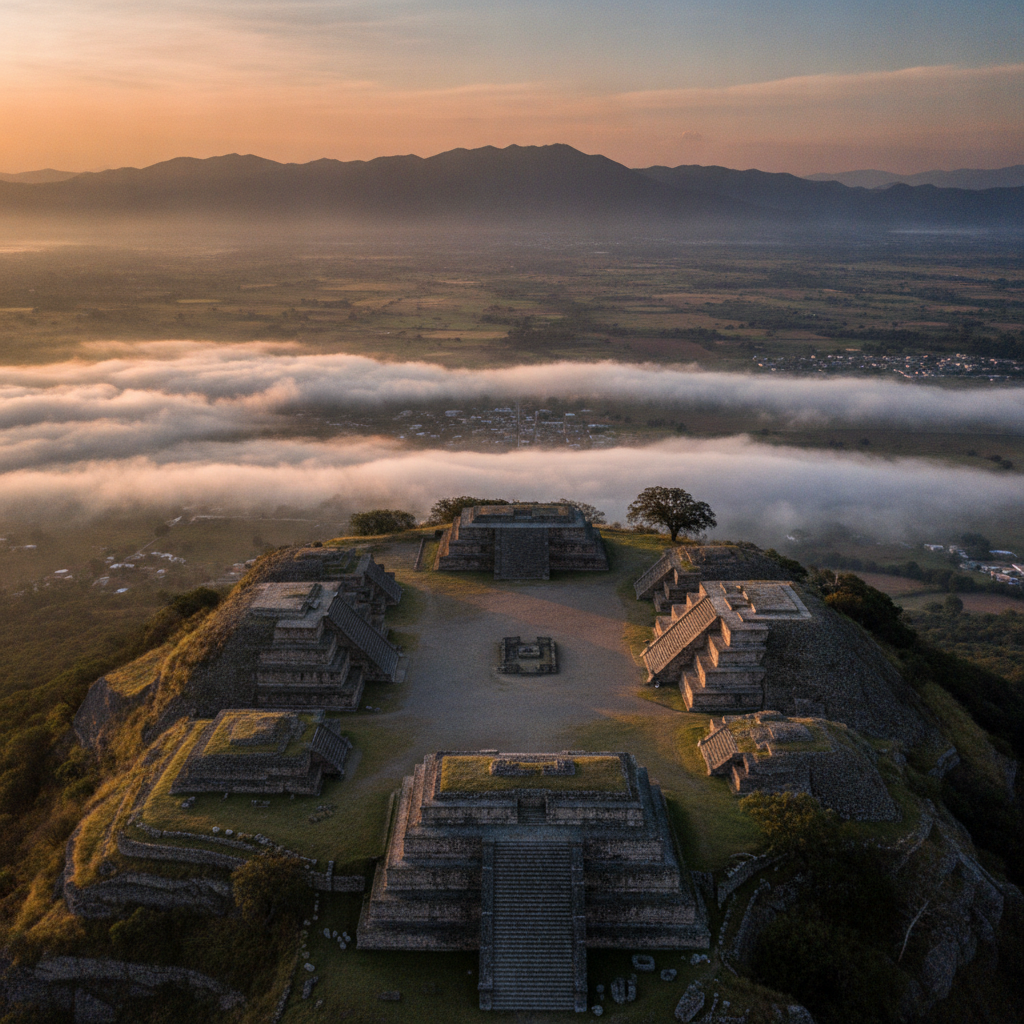
Monte Alban, the Zapotec ceremonial and administrative capital established on a artificially leveled hilltop in the Valley of Oaxaca around 500 BCE and occupied as the dominant urban center of the region for approximately 1,000 years before its gradual depopulation between 700 and 900 CE, is one of the most significant and visually dramatic pre-Columbian archaeological sites in the Americas: a complex of pyramidal platforms, ball courts, carved stone monuments, and administrative buildings spread across a hilltop that required the removal of the original peak and the construction of massive retaining walls to create the flat plaza surfaces where the city's ceremonial life was conducted. The site, now a UNESCO World Heritage designation shared with the historic center of Oaxaca city, is remarkable for its topographic ambition, the visible labor investment of a civilization that moved millions of cubic metres of earth and stone to create a sacred landscape on an inhospitable hilltop rather than in the fertile valley below, which appears to reflect the Zapotec ceremonial requirement for elevated sacred space visible from the entire valley. The carved stone figures called the Danzantes, approximately 300 stone slabs with carved human figures in contorted positions, originally believed to represent dancers and now interpreted as portraits of defeated enemy rulers or sacrificed captives, are among the most powerful sculptural works of pre-Columbian Mesoamerica. The astronomical observatory building at Monte Alban, oriented differently from the regular grid of the rest of the site to align with specific stellar events, reflects the Zapotec expertise in astronomical calculation that produced one of the most complex calendar systems in the ancient world.
- 2
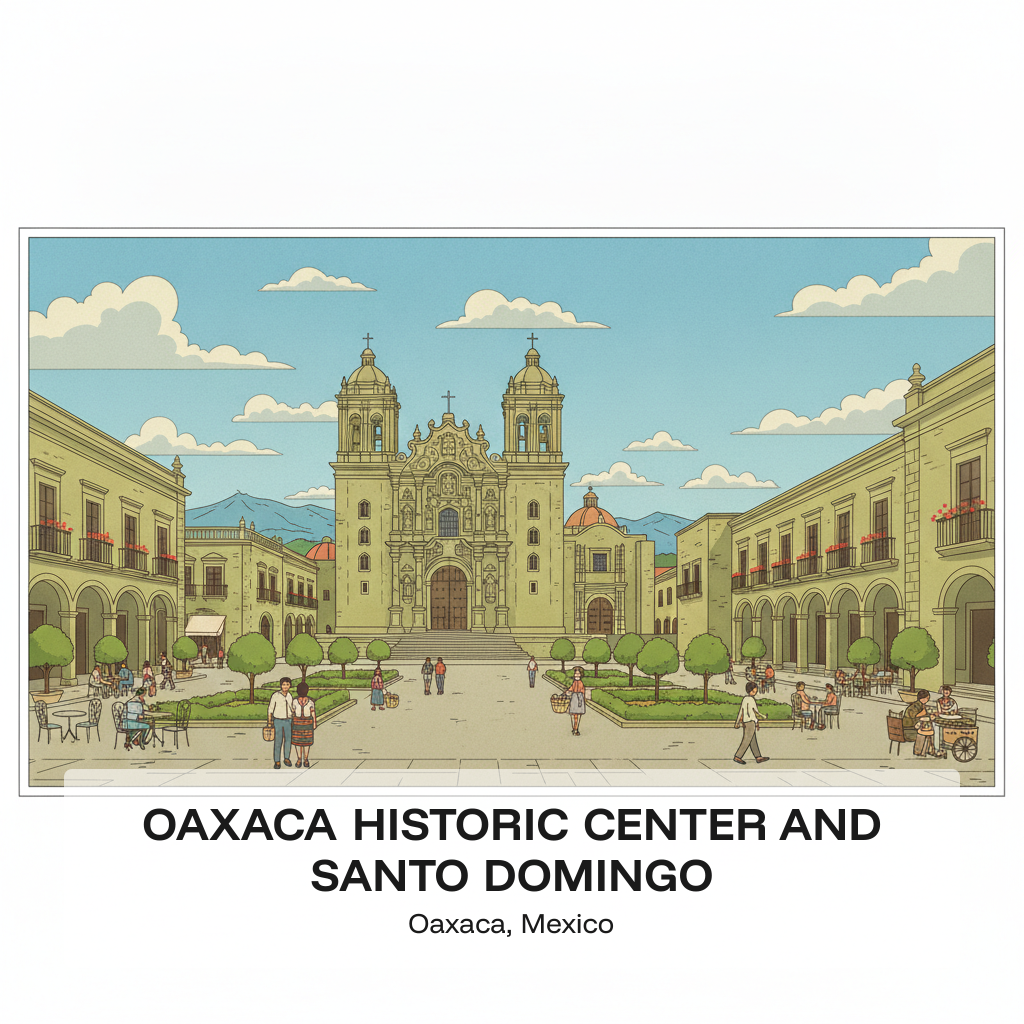
Oaxaca Historic Center and Santo Domingo
The historic center of Oaxaca de Juarez, designated a UNESCO World Heritage Site in 1987 along with Monte Alban, contains the finest ensemble of Spanish colonial architecture in southern Mexico, built in the characteristic regional style using the green volcanic stone called cantera verde that gives Oaxacan colonial buildings their distinctive color and that weathers to a warm silver-green patina under the intense Oaxacan sun. The Templo de Santo Domingo de Guzman, the Dominican church and former convent complex begun in 1572 and completed in 1731, is the masterpiece of Oaxacan colonial architecture, with a Baroque facade in cantera verde whose sculptural program covering the entire surface with saints, angels, and ornamental details is among the most elaborate in Mexico, and an interior whose main vault is decorated with an elaborate genealogical tree of the Dominican order in polychrome plaster relief descending from a central figure representing the Virgin Mary. The former convent of Santo Domingo, separated from the church by the Reform War secularization, is now the Museo de las Culturas de Oaxaca, housing the most significant collection of Zapotec and Mixtec gold jewelry from the Tomb 7 discovery at Monte Alban, including 121 gold objects of extraordinary craftsmanship. The Zocalo, the central plaza of Oaxaca, is the most continuously occupied public space in the city, with cafes under portal arcades facing the plaza where Oaxacans and visitors sit for hours watching the street life that extends from morning through late evening.
- 3
Oaxacan Cuisine and the Seven Moles
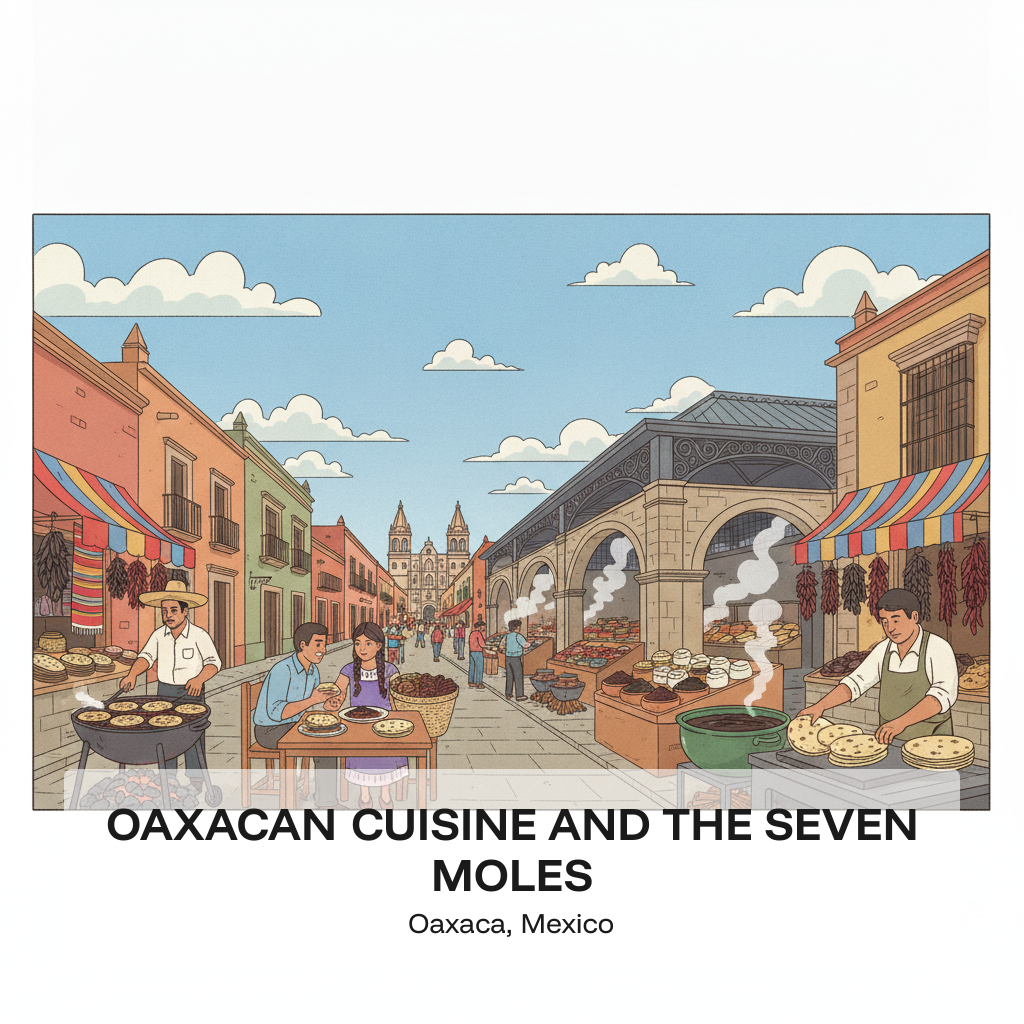
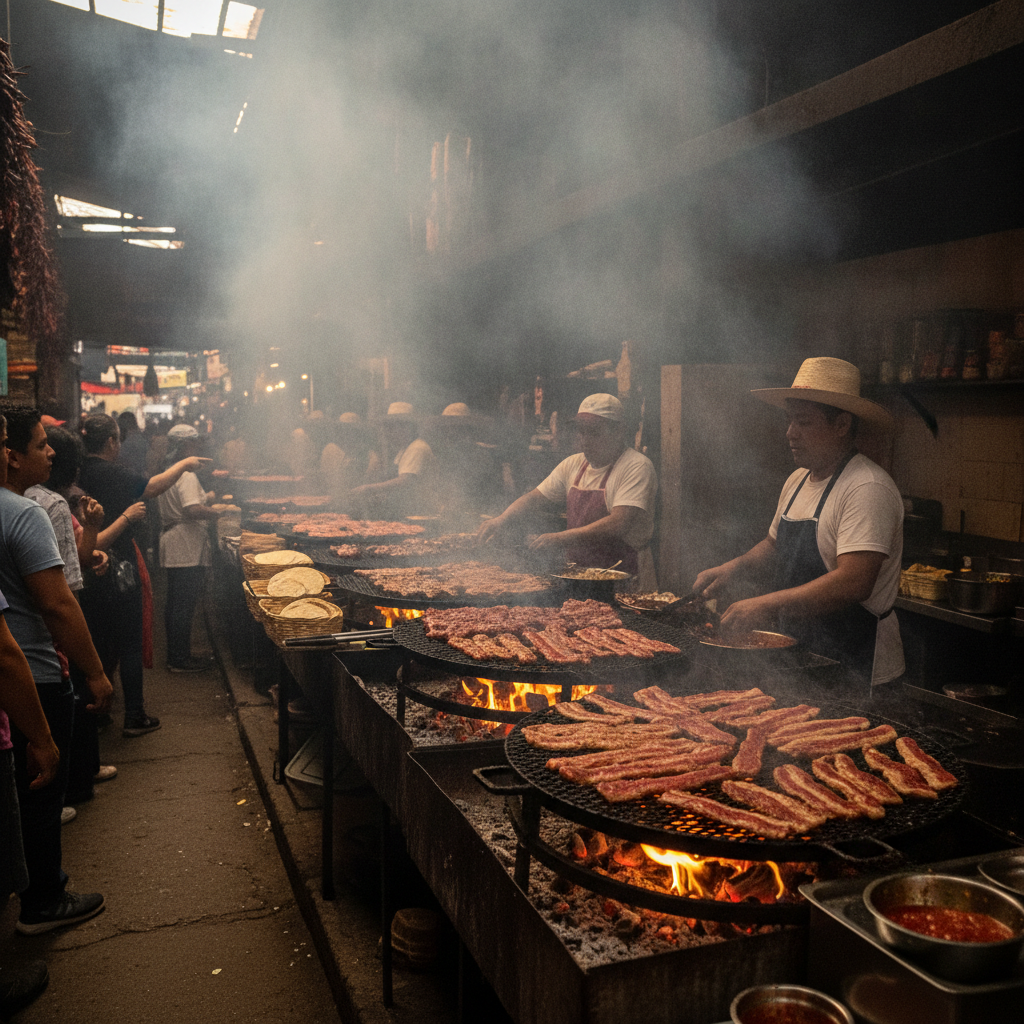
The cuisine of Oaxaca, recognized as one of the most complex and distinctive regional food traditions in Mexico and internationally awarded UNESCO Intangible Cultural Heritage status as part of Mexican cuisine in 2010, is built around the seven moles of the state: negro, coloradito, amarillo, verde, coloradito, estofado, and chichilo, each a distinct sauce preparation requiring different chile combinations, seeds, nuts, chocolate, fruits, herbs, and spices in proportions and sequences developed over generations of Zapotec, Mixtec, and Spanish colonial cooking. The mole negro, the most prestigious and labor-intensive of the seven, requires toasting and grinding dried chiles including the chile chihuacle negro, the chile mulato, and the chile pasilla negro, toasting the seeds, charring the tortilla and chile until nearly black, grinding chocolate, toasting the spices, and cooking the entire preparation for hours with turkey or chicken in a process that professional cooks describe as requiring three days from ingredient preparation to service. The tlayuda, the Oaxacan pizza-sized toasted corn tortilla spread with black bean paste, asiento unrefined pork fat, quesillo Oaxacan string cheese, and toppings of tasajo beef, cecina pork, or chorizo, is the street food that defines Oaxaca to its visitors and that is found in every market and on street grills throughout the city. The Mercado 20 de Noviembre, the food market dedicated to prepared meals two blocks from the Zocalo, is the primary destination for visitors seeking the full range of Oaxacan market food including the corridor of charcoal grills where vendors cook meat to order.
- 4
Mitla Mixtec Mosaic Ruins
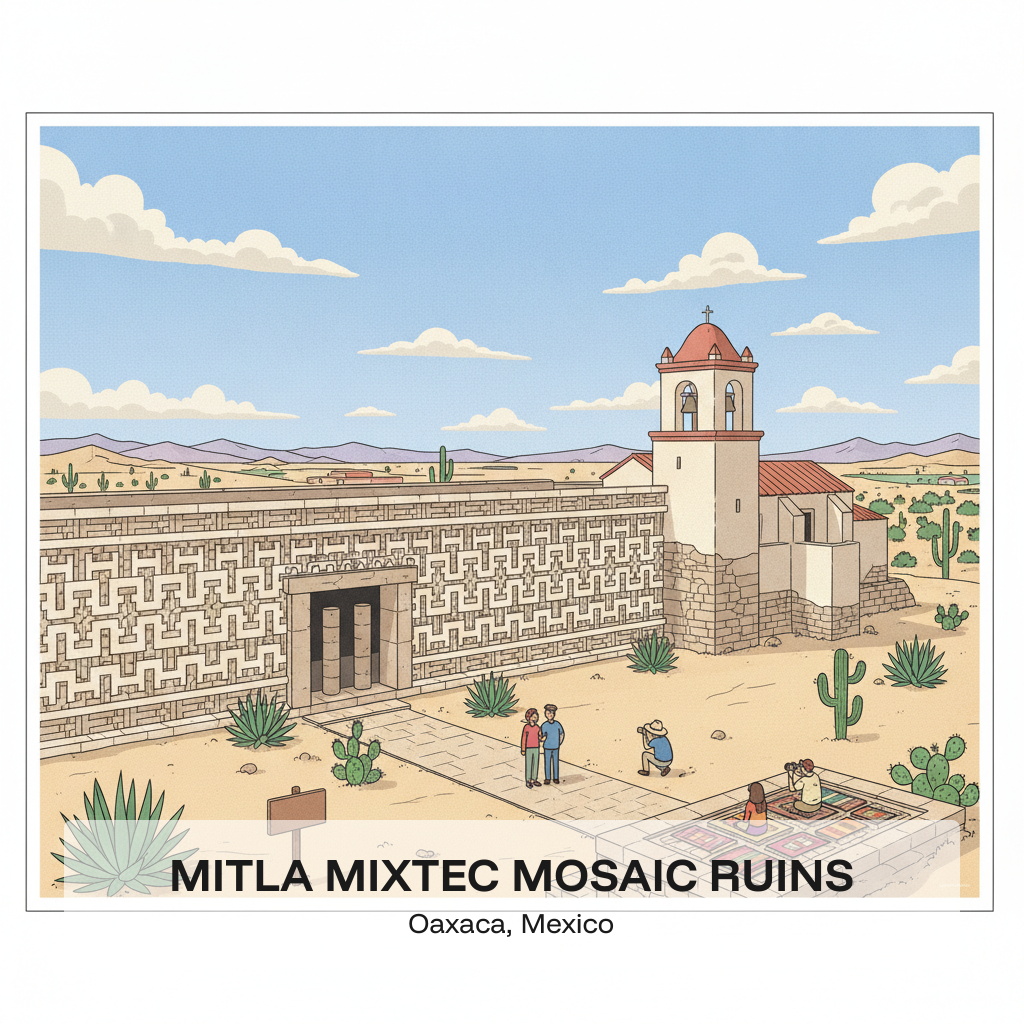
Mitla, the archaeological site 46 kilometres southeast of Oaxaca city in the Tlacolula Valley that served as the primary religious and mortuary center of the Zapotec civilization and then as an important Mixtec center after approximately 900 CE, is distinguished from all other pre-Columbian sites in Mexico by its extraordinary decorative stonework: geometric mosaic panels covering the interior walls of the palace and temple buildings in patterns of zigzags, stepped frets, and interlocking rectangles assembled from thousands of precisely cut stone pieces fitted together without mortar in a technique requiring stone-cutting precision unmatched elsewhere in Mesoamerica. The mosaic panels of Mitla are executed in 14 distinct geometric patterns across the five major building groups of the site, with the Hall of the Columns building in the Group of the Columns containing six monolithic stone columns, each 4 metres tall and weighing 20 tonnes, that supported the roof of a hall used for elite assembly. The site was partially incorporated into a Catholic church after the Spanish conquest, with the 16th-century Iglesia de San Pablo built directly on the foundations of one of the principal Mitla palaces, creating one of the most explicit examples of colonial religious superimposition on pre-Columbian sacred architecture in Mexico. The Zapotec name for Mitla was Lyobaa, meaning place of rest or tomb, reflecting the site's function as a burial complex for Zapotec high priests and rulers.
- 5
Hierve el Agua Petrified Waterfalls
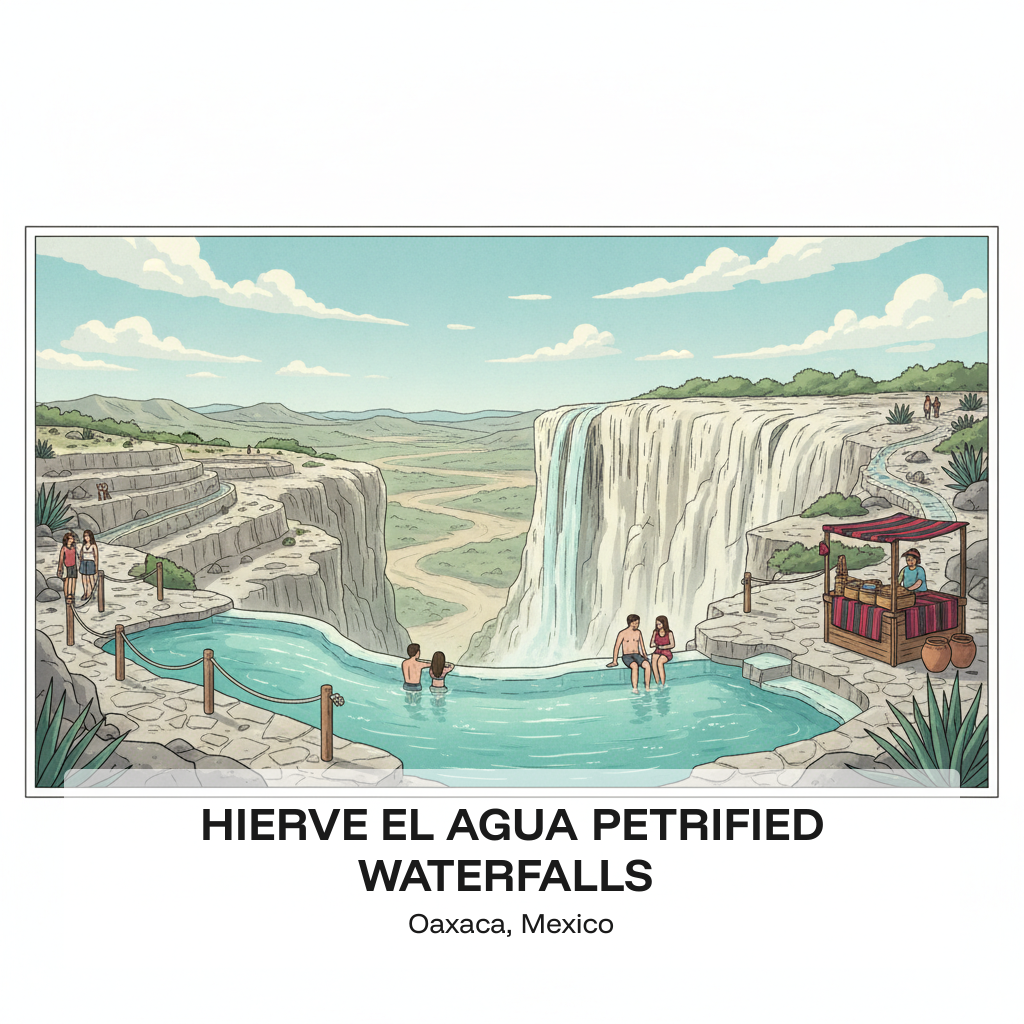
Hierve el Agua, the mineral spring complex 70 kilometres east of Oaxaca city in the Sierra Sur foothills at 1,700 metres elevation, consists of cliff-edge pools of mineral-laden water that have deposited calcium carbonate and other minerals over thousands of years to create cascading mineral formations that resemble frozen waterfalls, the largest of which drops 30 metres over the cliff edge and has been forming for an estimated 10,000 years. The springs that feed the pools emerge at a temperature slightly above ambient air and contain enough mineral content to create the characteristic white and grey formations, the result of the water supersaturated with calcium carbonate depositing mineral solids as it flows over the cliff edge and cools. The pools at the cliff edge are used for swimming, with the mineral content and the extreme elevation view over the valley making the experience unique. The archaeological irrigation channels at Hierve el Agua, carved into the rock to distribute spring water to terraced agricultural fields on the cliff side, are among the oldest documented irrigation infrastructure in Mesoamerica, with radiocarbon dating placing their construction at approximately 500 BCE. The site is located in Zapotec indigenous community territory and managed by a community cooperative that charges entrance fees and operates the food stalls and changing facilities. The access road is narrow and rough, and the site is busiest on Oaxacan holidays when regional visitors from the valley towns fill the pools.
- 6
Oaxacan Crafts Textiles and Markets
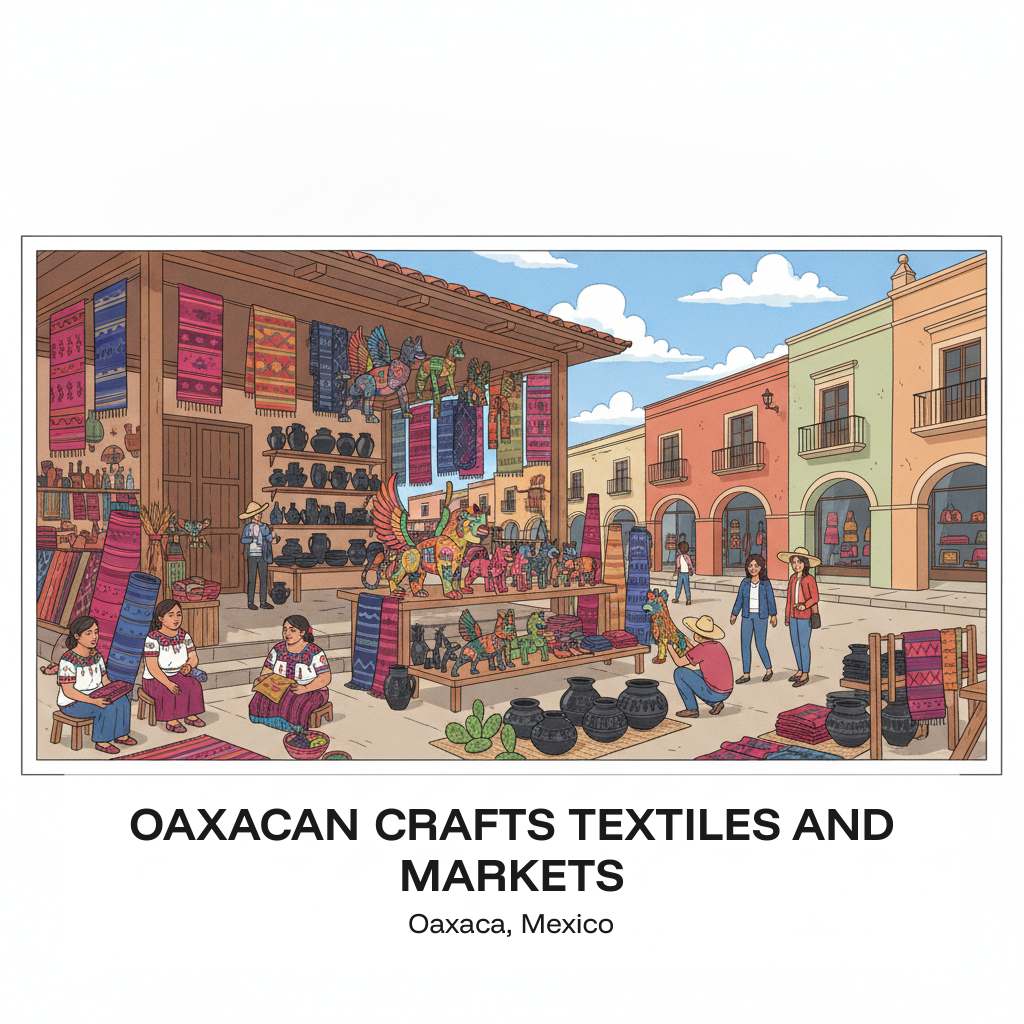
The craft production of Oaxaca state, distributed across the indigenous communities of the valley and the mountain regions in a system where different villages specialize in different crafts according to centuries-old tradition, constitutes one of the most diverse and internationally recognized indigenous craft economies in the world, with the black clay pottery of San Bartolo Coyotepec, the hand-woven wool textiles of Teotitlan del Valle using natural dyes derived from indigo, cochineal, and local plants, the hand-painted alebrijes fantasy animal sculptures of San Martin Tilcajete and Arrazola, the embroidered blouses of the Zapotec women of the Sierra Norte, and the mezcal distillation of the Miahuatlan and Yautepec regions each representing a complete artistic and economic tradition maintained by specific communities. The Mercado de Artesanias on the south side of the Oaxaca historic center and the gallery shops on Macedonio Alcala pedestrian street and Garcia Vigil sell craft objects ranging from inexpensive tourist-grade production to museum-quality collector items priced accordingly. The Saturday market of Tlacolula de Matamoros 31 kilometres from Oaxaca in the Tlacolula Valley is the largest indigenous market in the Oaxacan valley system, functioning as both a regional food and agricultural market and a craft sales venue that has operated continuously since the pre-Hispanic period. The cochineal dye insect, the Dactylopius coccus parasite of the nopal cactus that produces the intense crimson color used to dye Teotitlan textiles and that was among the most valuable export commodities of colonial New Spain, is still cultivated in the valley communities.
Walk this route with audio
Stories play automatically as you reach each stop — no tapping needed.
More in Oaxaca
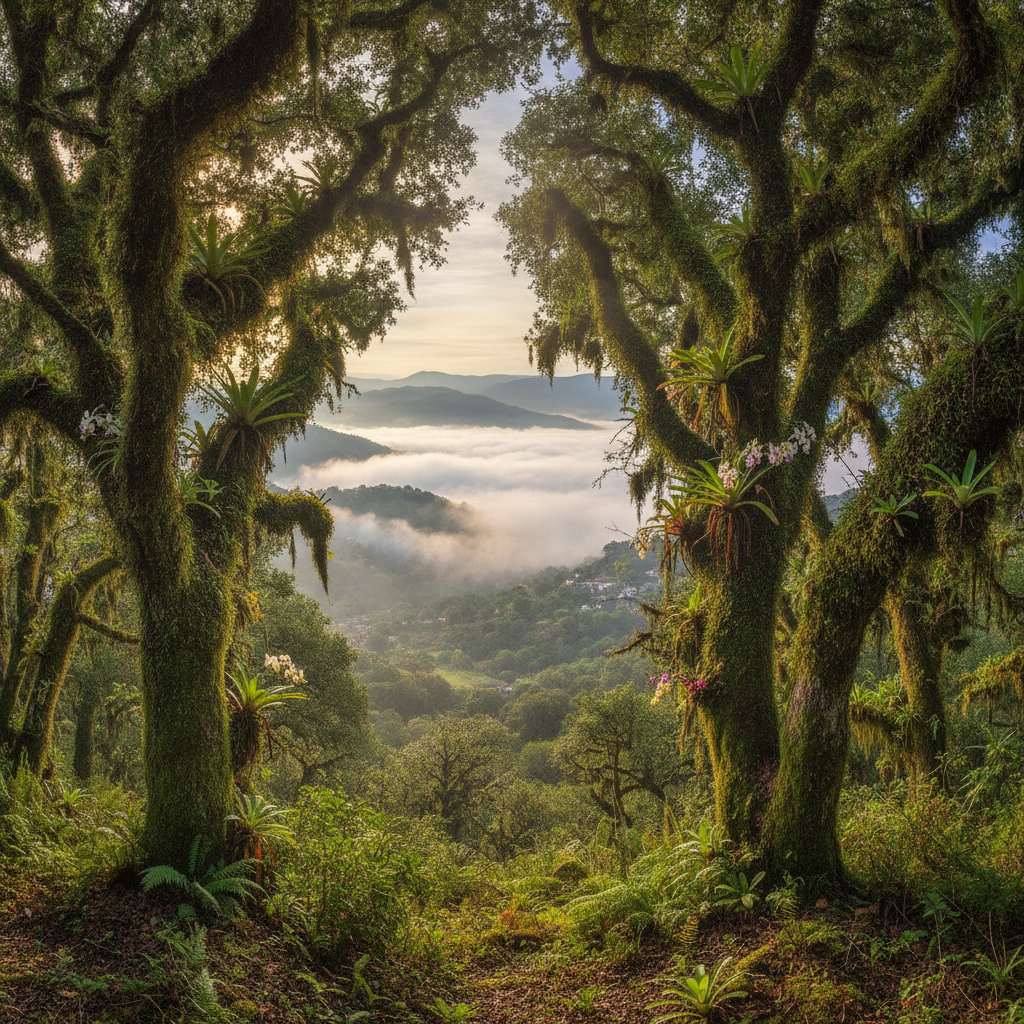
Oaxaca Landscape and Ecology: Cloud Forest Orchids in the Sierra Norte, the Monarch Butterfly Corridor Through the Sierra Sur, the Pacific Coast Turtle Nesting at Mazunte and the Lachatao Archaeological Botanical Garden
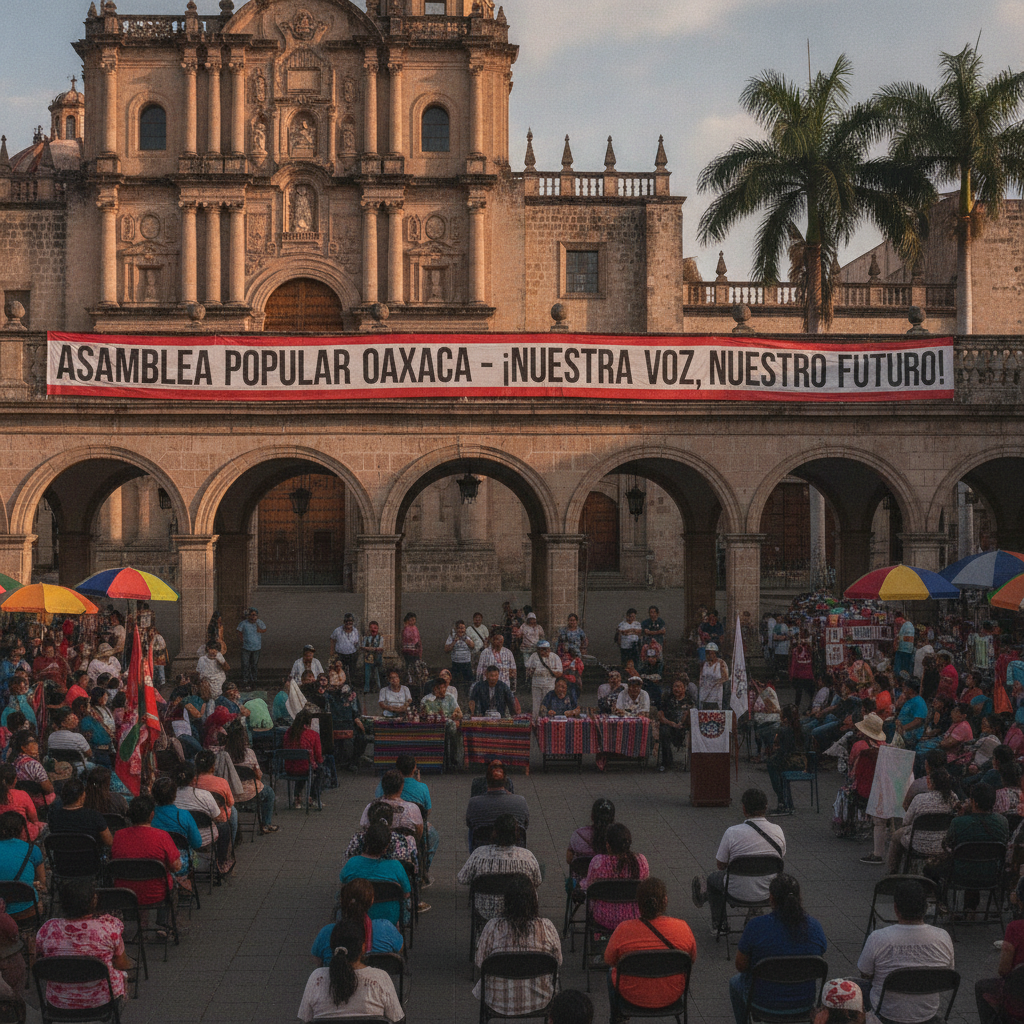
Oaxaca 2006 Uprising and the APPO: When Teachers Occupied the Zocalo for Six Months and the State Government Lost Control of Its Capital City in a Social Movement That the Rest of Mexico Watched and the International Press Covered as a Revolution
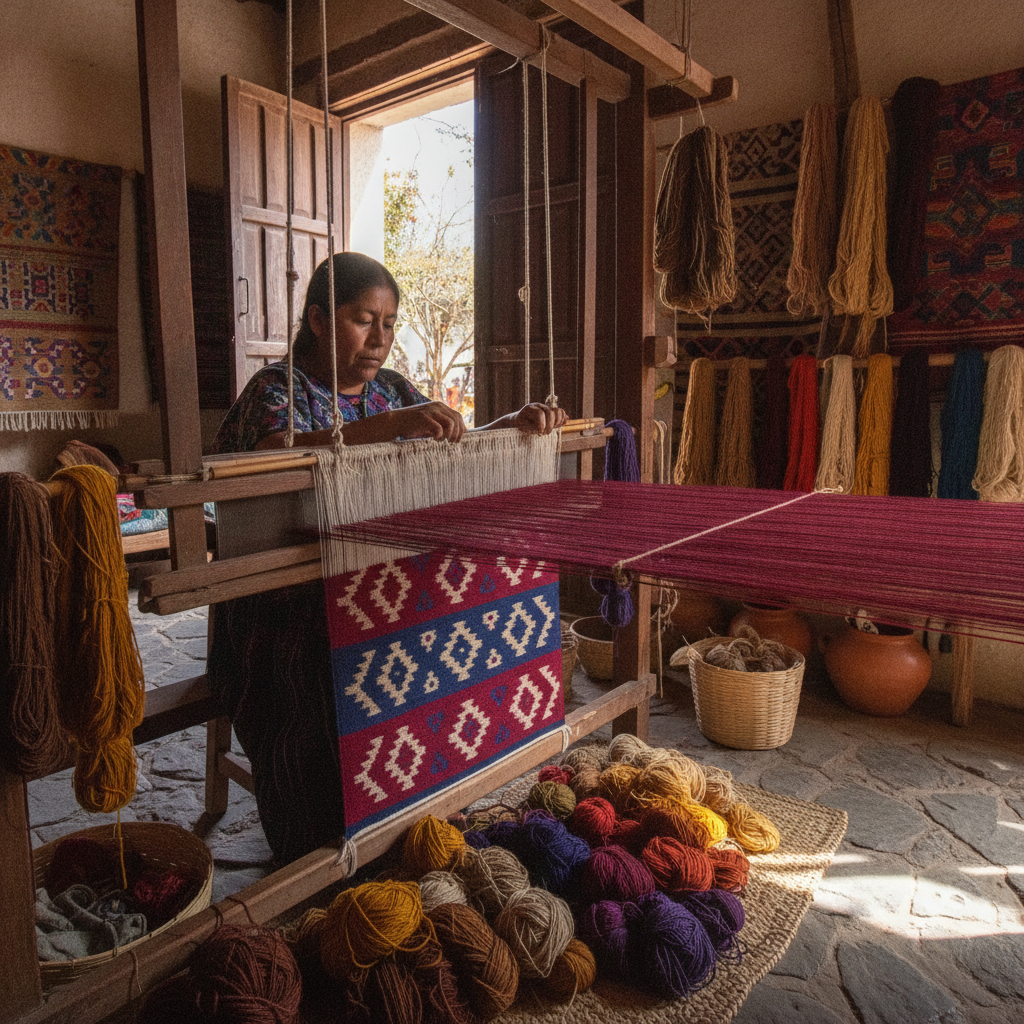
Oaxacan Textiles Alebrijes and Black Clay: The Village Craft Traditions That Survived Because They Were Too Remote for Factory Competition and Now Feed a Global Market That Values Handmade More Than Ever
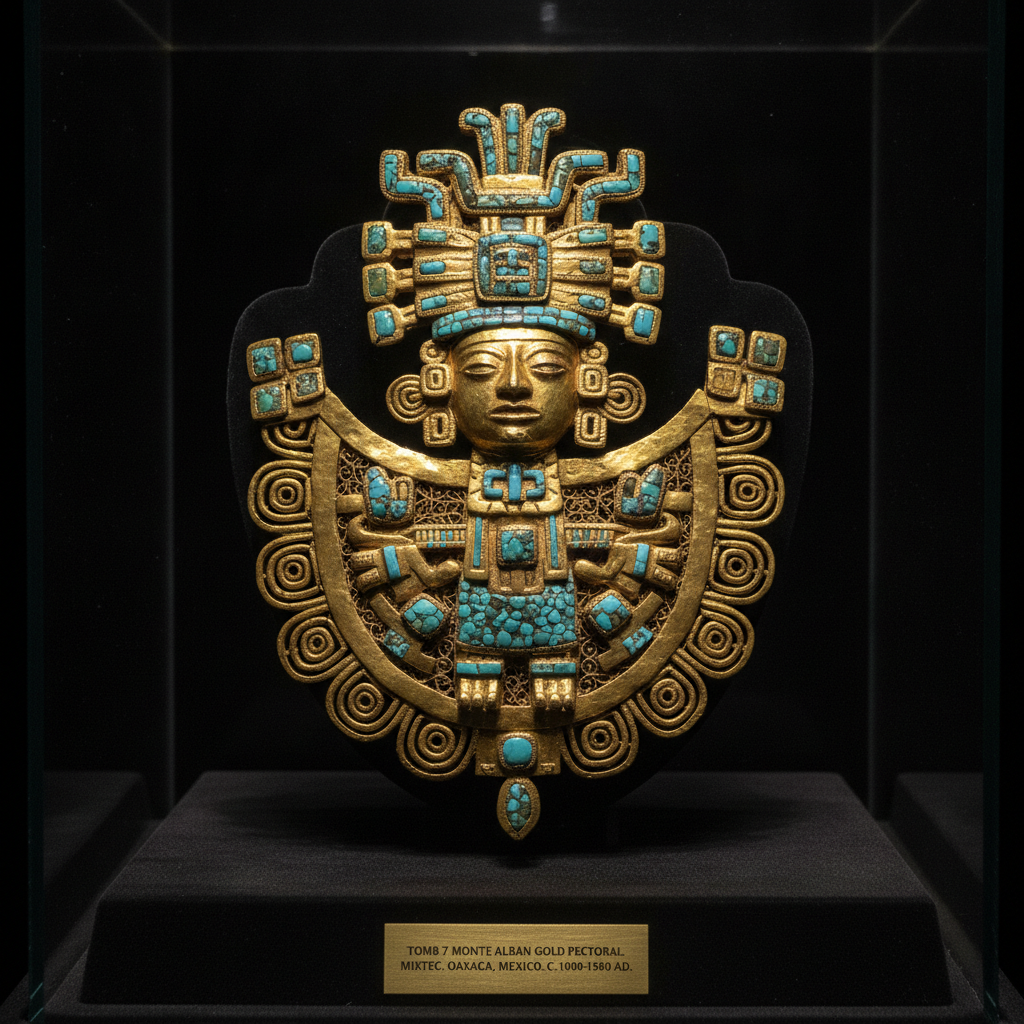
Zapotec and Mixtec Civilization: The Cloud People Who Built Monte Alban Before Rome Was an Empire, the Mixtec Codices That Are the Only Pre-Columbian Books Surviving Complete, and the Tomb 7 Gold That Changed What Scholars Knew About Pre-Columbian Metalwork
Oaxacan Markets Chocolate and Chapulines: The Mercado 20 de Noviembre Charcoal Corridor, the Chocolate Mills of the Mina Street and the Grasshopper Tradition That Foreign Food Writers Use as a Shortcut to Oaxaca and That Oaxacans Find Exhausting