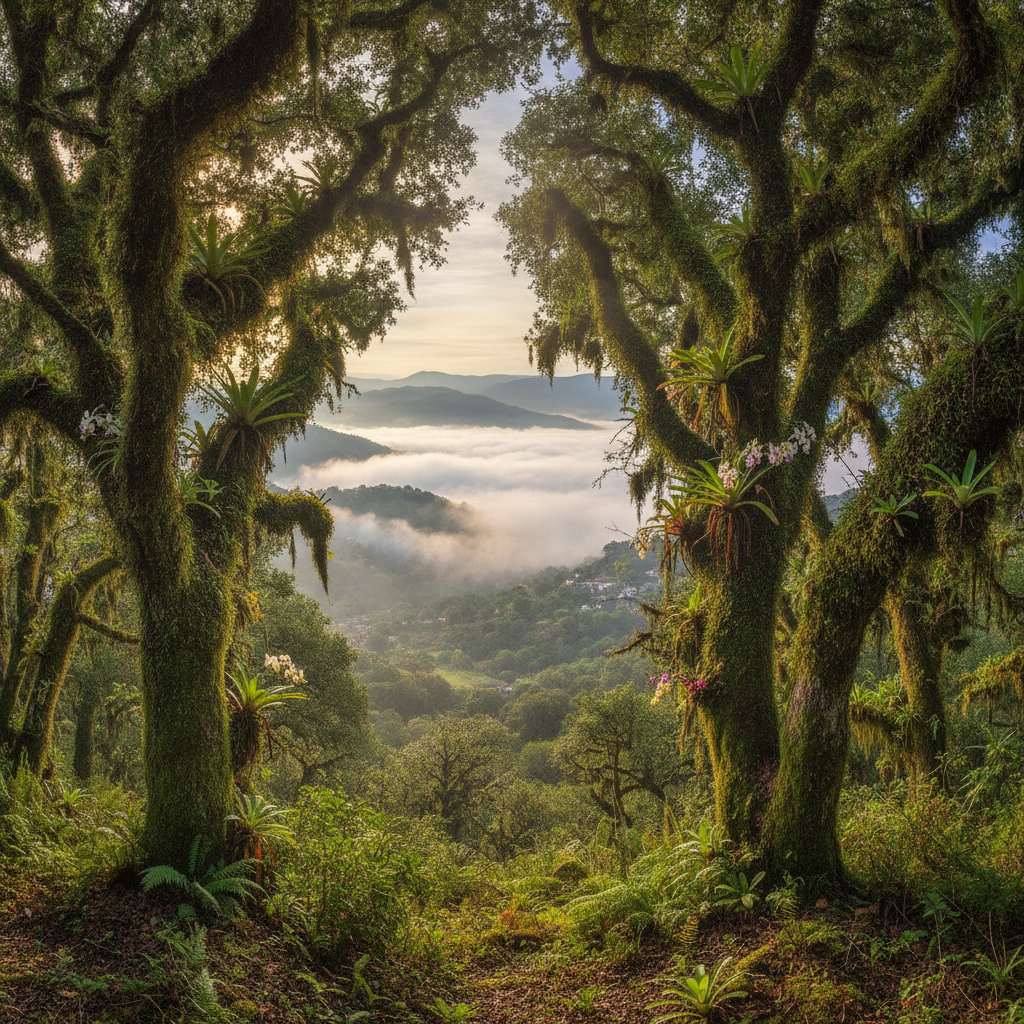
Oaxaca Landscape and Ecology: Cloud Forest Orchids in the Sierra Norte, the Monarch Butterfly Corridor Through the Sierra Sur, the Pacific Coast Turtle Nesting at Mazunte and the Lachatao Archaeological Botanical Garden
Oaxaca state is the most ecologically diverse state in Mexico, containing more plant species, animal species, and ecosystem types within its borders than any other Mexican state and more species of tree, bird, and reptile than most countries of equivalent area, a biodiversity record generated by the topographic complexity of a state that rises from sea level on both the Pacific and Gulf coasts to mountain peaks above 3,700 metres within horizontal distances of 150 kilometres. The combination of the Sierra Norte, Sierra Sur, and Sierra Mixe mountain systems with the Valley of Oaxaca lowland and the Pacific coastal lowland creates what ecologists call a biodiversity hotspot, a region where species diversity is extraordinarily high and endemic species — species found nowhere else on Earth — are concentrated in numbers disproportionate to the land area. The Sierra Norte cloud forest, the mountain ecosystem above 2,000 metres where perpetual mist maintains conditions for epiphytic plants including hundreds of orchid and bromeliad species growing on every tree surface, is accessible from Oaxaca city through the community ecotourism network of the Pueblos Mancomunados. The Pacific coastal lagoons of the state, particularly the Lagunas de Chacahua and the Ventanilla mangrove lagoon, provide critical nesting and feeding habitat for crocodiles, sea turtles, and migratory birds. The monarch butterfly migration passes through the Sierra Sur of Oaxaca during the October through November southbound migration, providing one of the most dramatic wildlife spectacles accessible from Oaxaca city.
- 1
Sierra Norte Cloud Forest Biodiversity
The cloud forest of the Sierra Norte, the mountain range immediately north of the Valley of Oaxaca rising to elevations of 3,000 metres above the valley floor, contains the most species-rich forest ecosystem in the Mexican highlands: an estimated 6,000 plant species in the state, of which a significant proportion are concentrated in the Sierra Norte cloud forest habitat where the combination of altitude, perpetual mist from the clouds that form against the mountain slopes, and the geological diversity of the substrate create microhabitat conditions for extreme plant diversity. The orchid family in the Sierra Norte is represented by over 700 species, making the Oaxacan highland cloud forest one of the most orchid-diverse regions in North America. The Lachatao community botanical garden in the Pueblos Mancomunados, developed by the Lachatao community as part of its ecotourism program, cultivates native plant species of the Sierra Norte including medicinal plants, orchids, and the tree species that characterize the cloud forest. The quetzal, the iridescent emerald green bird whose tail feathers were among the most valued luxury goods in pre-Columbian Mesoamerica, reaches the northern limit of its range in the Sierra Norte cloud forests of Oaxaca and can be observed at dawn in the forest canopy by visitors staying at the Pueblos Mancomunados cabanas during the April and May nesting season. The Sierra Norte provides 80 percent of the water supply for Oaxaca city through the springs that emerge from the forested limestone of the mountain base, making the conservation of the cloud forest directly relevant to the urban water supply in a way that urban residents are increasingly aware of.
- 2
Monarch Butterfly Migration Oaxaca Corridor
The monarch butterfly migration corridor through Oaxaca state, part of the multi-generational annual migration in which monarchs bred in the northern United States and Canada fly 4,000 kilometres to the overwintering forests of the Trans-Mexican Volcanic Belt in Michoacan and Estado de Mexico, passes through the Sierra Sur and Sierra de Miahuatlan in October and November as the southbound migration concentrates along ridgelines and thermals created by the mountain topography. The monarch migration in Oaxaca is less concentrated and therefore less visually spectacular than the overwintering sites in Michoacan where millions of butterflies cover the oyamel fir trees completely, but the Sierra Sur corridor provides an opportunity to observe the migration in flight against the mountain landscape, with concentrations visible at ridge crossings and in valley gardens where milkweed plants provide the nectaring fuel source. The milkweed plant, Asclepias species, whose presence is essential for monarch caterpillar feeding and whose abundance along the migration corridor determines migration success, grows in the traditional agricultural areas of the Oaxacan valleys and Sierra Sur where indigenous herbicide practices and the maintenance of uncultivated borders have preserved milkweed habitat that has been eliminated from intensively farmed areas of the migration corridor in the United States and Mexico. The monarch populations, which declined by over 90 percent between the 1990s and the 2010s, began partial recovery after 2020 following conservation program intensification in Mexico and the US milkweed restoration campaigns.
- 3
Oaxacan Pacific Coast and Sea Turtle Nesting
The Pacific coast of Oaxaca, a 500-kilometre stretch of Pacific shoreline that includes the resort town of Puerto Escondido, the backpacker village of Zipolite, and the turtle sanctuary town of Mazunte, provides critical nesting habitat for the olive ridley sea turtle, which arrives in mass synchronized nesting events called arribadas at the beaches of La Escobilla and Morro Ayuta, with individual arribadas involving hundreds of thousands of females hauling ashore simultaneously over three to seven days to dig nests and deposit eggs in one of the most extraordinary wildlife spectacles on the Pacific coast of the Americas. The turtle sanctuary infrastructure developed at Mazunte, the village whose economy was built on sea turtle slaughterhouse employment until the Mexican sea turtle ban in 1990 eliminated that industry, includes the cooperative Cosmeticos Naturales body care products company founded by Anita Roddick of The Body Shop and community members in 1994, the turtle observation programs managed by the Ventanilla community cooperative adjacent to the Ventanilla lagoon, and the Museo de la Tortuga marine turtle natural history museum. The surf break at Puerto Escondido, La Punta and the expert-only Zicatela Mexican Pipeline that breaks in tube form over a sandbar with wave heights reaching 6 metres, is one of the premier big wave surf spots in the Americas and the venue for the Puerto Escondido Cup international surfing competition. The Oaxacan coast is reachable from Oaxaca city by a 5-hour mountain highway descent or a 30-minute flight.
- 4
Yagul and Lambityeco Valley Archaeological Sites
Yagul, the Zapotec-Mixtec archaeological site 36 kilometres east of Oaxaca city in the Tlacolula Valley, contains an unusually well-preserved ball court — the largest in the Valley of Oaxaca — and a hilltop defensive fortification called the Fortaleza that provides panoramic views of the valley from a position that demonstrates the military and strategic dimension of the Zapotec urban landscape. The site was occupied continuously from approximately 1400 BCE through the Spanish conquest and contains the layered architectural evidence of multiple building phases spanning the Formative, Classic, and Post-Classic periods of Oaxacan prehistory. The UNESCO designation of the Yagul site as a core zone of the Oaxacan Valley prehistoric settlements preserves it within a broader agave and organ cactus landscape that is itself a cultural landscape shaped by millennia of human agricultural management. Lambityeco, a smaller site 25 kilometres from Oaxaca city on the road to Mitla, is notable for its exceptionally well-preserved stucco portraits of human faces on the facing walls of a royal palace building, showing two named individuals identified as a married couple who ruled the community around 700 CE, some of the only individually named and portrayed individuals in Classic Zapotec art. The portraits at Lambityeco, with their realistic facial modeling and identification glyphs, represent a level of individual portraiture in pre-Columbian Oaxacan art that is rarely encountered and that suggests a more complex tradition of personal commemoration than the standard interpretation of Zapotec art as primarily ceremonial and cosmological.
- 5
Oaxaca Birdwatching Endemics and Migration
Oaxaca state is one of the premier birdwatching destinations in the Americas, with a bird list of over 750 species including approximately 25 species endemic to the Oaxacan and adjacent highland regions, making it a priority destination for bird listers attempting to see species found nowhere else on earth. The endemic birds of Oaxaca include the Oaxacan sparrow, the Oaxacan hummingbird, the dwarf jay, the white-throated jay, and the Slater vireo, all restricted to specific highland habitats in the Sierra Norte or Sierra Sur. The Sierra Mixe, the least visited of the three Oaxacan mountain ranges due to its more difficult access, contains the highest endemism rates and the most intact habitat, producing the best birdwatching conditions in the state for species found only in that specific mountain system. The Oaxaca Birding Cooperative, a community organization connecting birdwatchers with local guides in the Sierra Norte and Sierra Mixe communities, provides both birdwatching expertise and economic benefit to the indigenous communities whose land management practices maintain the habitat the birds depend on. The Pacific slope of the Sierra Sur contains a gradient from tropical dry forest at the coast through cloud forest at the peaks that produces rapid habitat change over short horizontal distances, with corresponding changes in bird communities that experienced birders find among the most productive days of birding available anywhere in Mexico.
- 6
Oaxacan Ecology Environmental Politics
The environmental politics of Oaxaca, where the extraordinary biodiversity and the rights of indigenous communities to manage their traditional territories intersect with the ambitions of mining companies, renewable energy developers, and the Mexican federal government for access to Oaxacan resources, generates some of the most intense conflicts in Mexican environmental governance. The wind energy development in the Isthmus of Tehuantepec, where the Tehuantepec wind corridor is the strongest sustained wind resource in Mexico and one of the best in the Americas, has installed over 2,500 wind turbines in the landscape of the Isthmus since 2007, generating electricity for export to northern Mexican industrial consumers and for international corporations purchasing renewable energy certificates. The Isthmus Zapotec communities, particularly the Binizaa and Ikojts peoples, have been divided by the wind development: some community governments have signed land lease agreements with the energy companies and receive rental income, while others have organized opposition citing inadequate consultation, insufficient community benefit, and the disruption of agricultural and cultural landscapes by the turbine infrastructure. The gold and silver mining concessions in the Sierra Norte and Sierra Sur, several awarded to Canadian mining companies in the 2010s over the opposition of indigenous communities, represent a second major environmental conflict where federal mining law that gives concessions priority over community territorial rights collides with indigenous rights frameworks that the Mexican constitution nominally protects. The community consultations required under ILO Convention 169, which Mexico has ratified, are conducted inconsistently and often after rather than before concession decisions.
Walk this route with audio
Stories play automatically as you reach each stop — no tapping needed.
More in Oaxaca
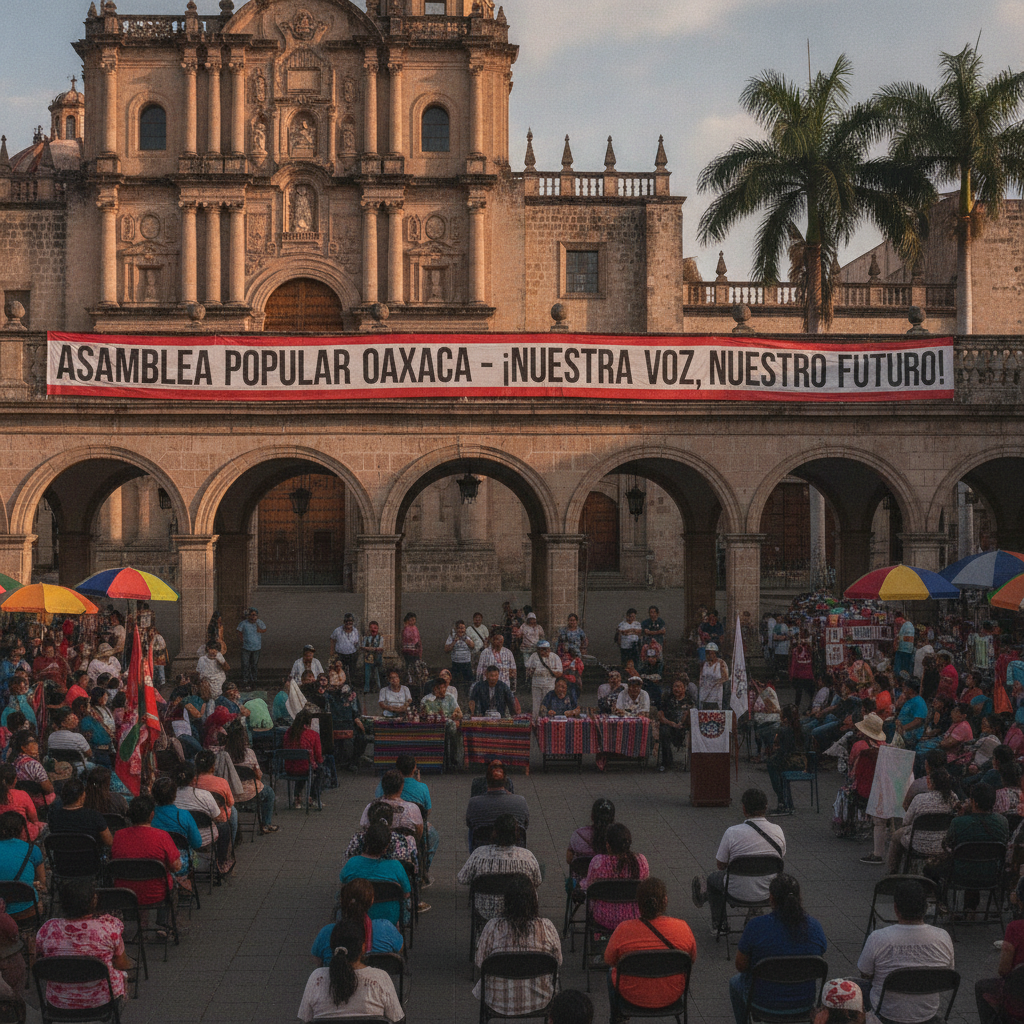
Oaxaca 2006 Uprising and the APPO: When Teachers Occupied the Zocalo for Six Months and the State Government Lost Control of Its Capital City in a Social Movement That the Rest of Mexico Watched and the International Press Covered as a Revolution
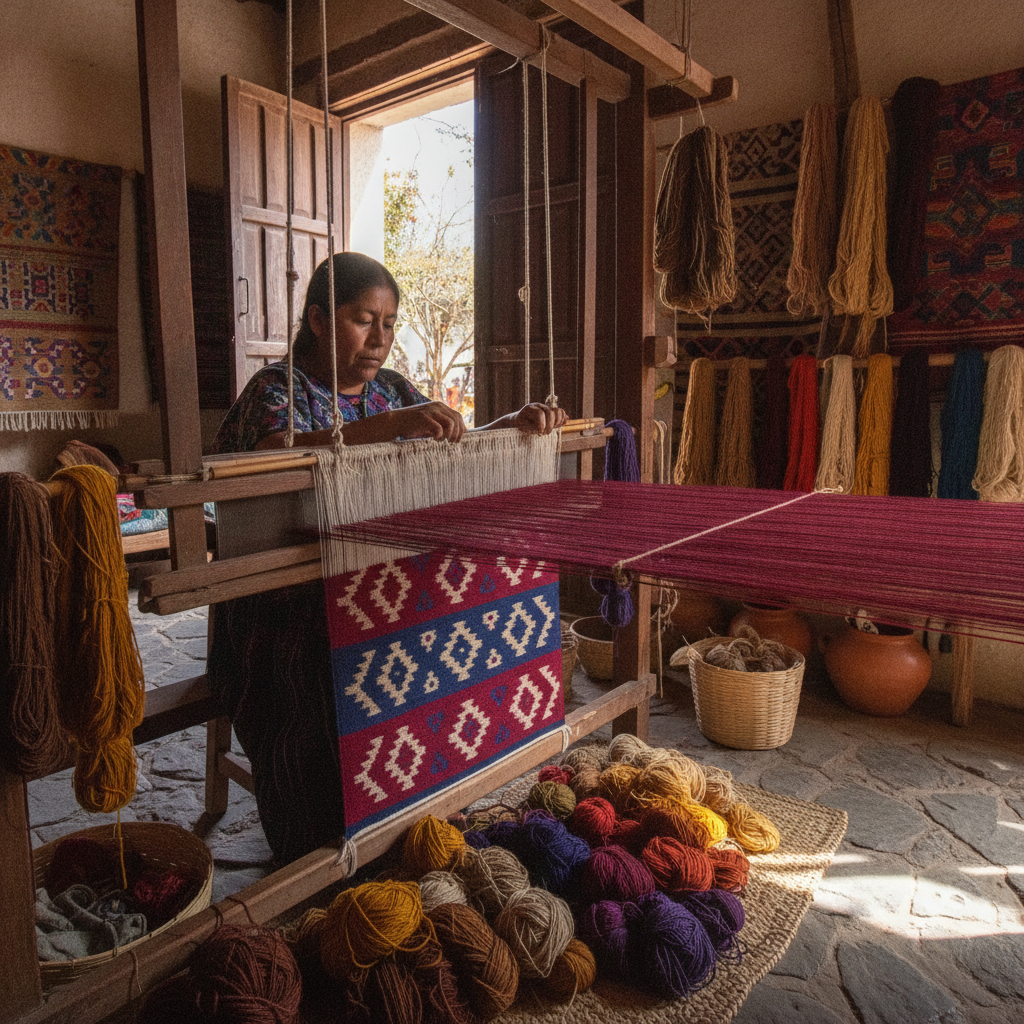
Oaxacan Textiles Alebrijes and Black Clay: The Village Craft Traditions That Survived Because They Were Too Remote for Factory Competition and Now Feed a Global Market That Values Handmade More Than Ever
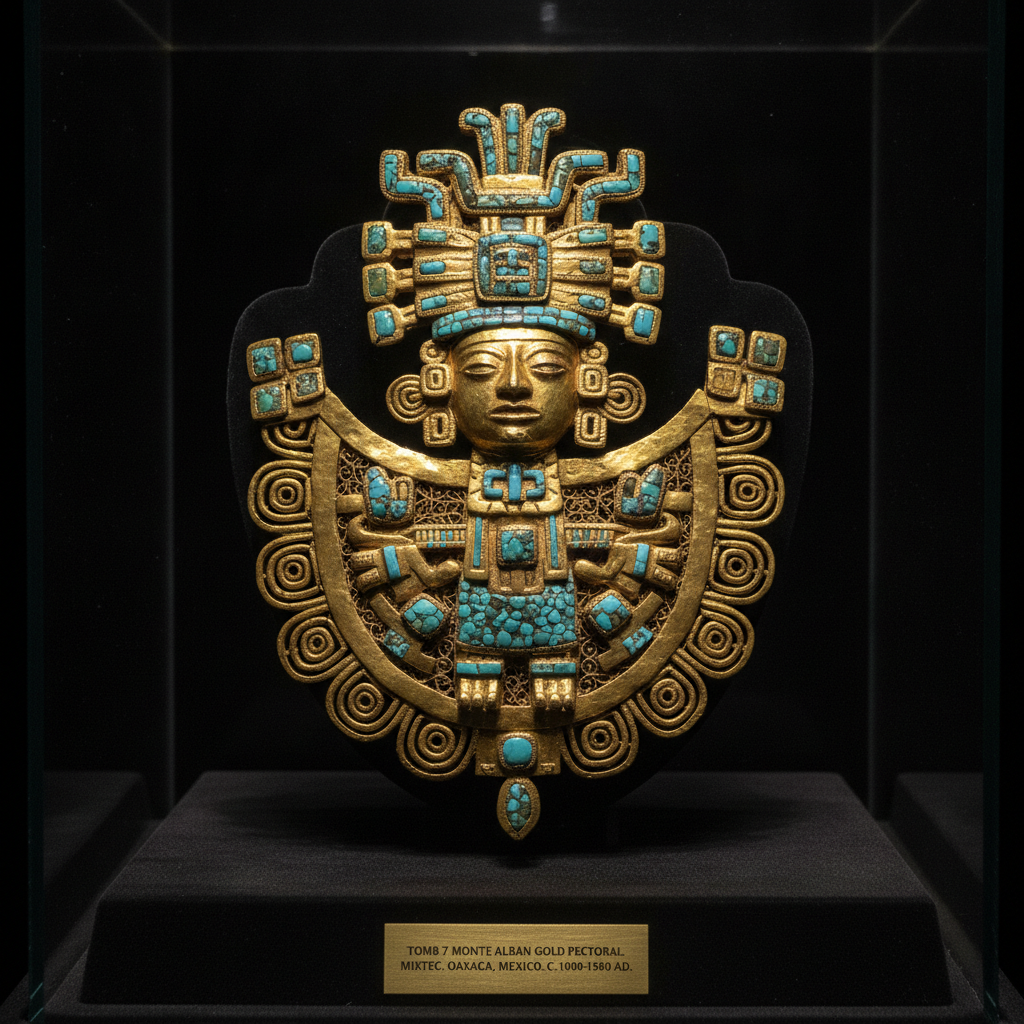
Zapotec and Mixtec Civilization: The Cloud People Who Built Monte Alban Before Rome Was an Empire, the Mixtec Codices That Are the Only Pre-Columbian Books Surviving Complete, and the Tomb 7 Gold That Changed What Scholars Knew About Pre-Columbian Metalwork
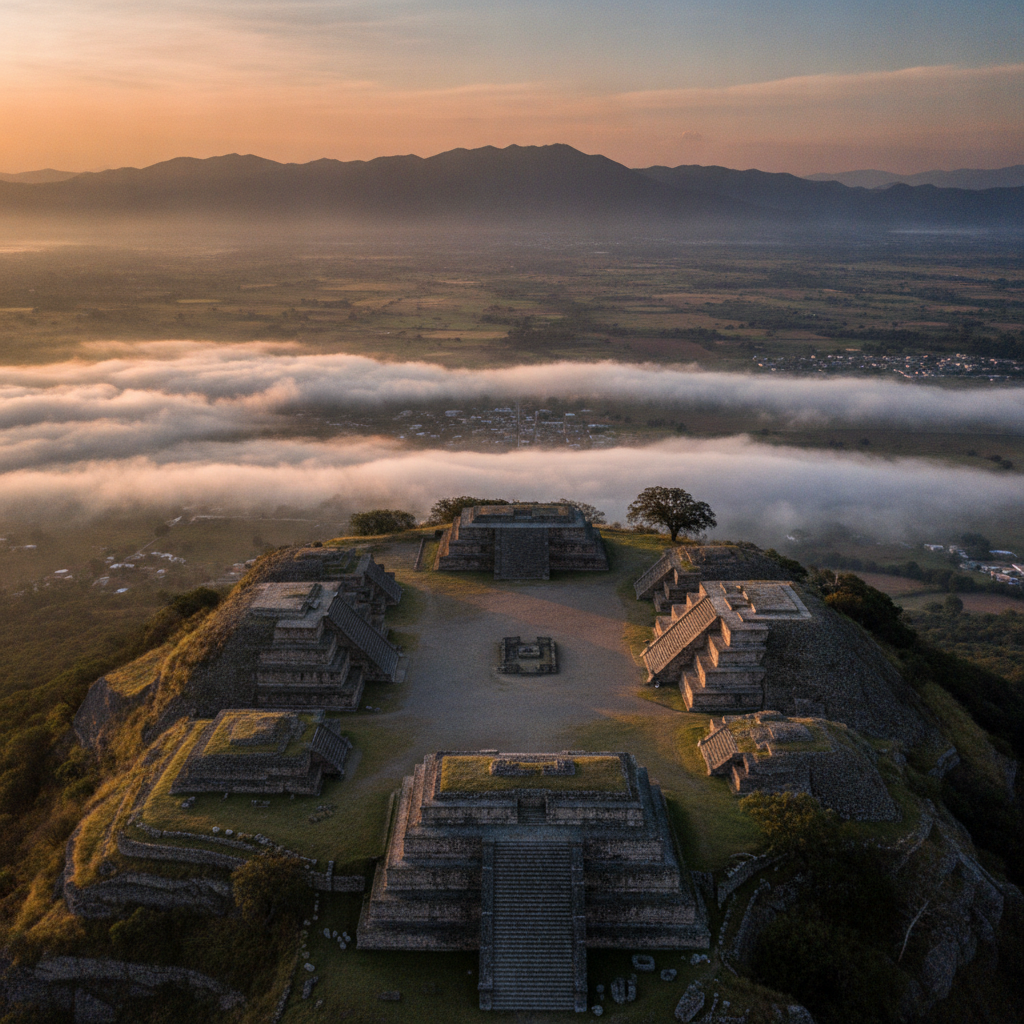
Oaxaca: The Valley City Below Monte Alban Where Zapotec Civilization Built Its Pyramid Capital, Where Mole Negro Takes Three Days to Make, and Where Every Street Has More Indigenous Cultural Survival Than Any Other City in Mexico

Oaxacan Markets Chocolate and Chapulines: The Mercado 20 de Noviembre Charcoal Corridor, the Chocolate Mills of the Mina Street and the Grasshopper Tradition That Foreign Food Writers Use as a Shortcut to Oaxaca and That Oaxacans Find Exhausting