The 680kg Mikoshi Carried by 50 People, the 251 Consecutive Annual Pilgrimages & the Secondary Falls Emerging From Cracks in a 20,000-Year-Old Lava Dam
The late-afternoon shrine visit when tour groups depart and the gold leaf catches oblique light; the Tōshō-gū Foundation Records construction diary documenting daily craftsmen counts from 1634; the illuminated Yōmei-mon at night and the winter Kegon Falls ice-face coloured illumination; the shogunal pilgrimage programme's 251 consecutive annual iterations from 1617 to 1868; the Kegon Falls 97-metre drop caused by lava dam thickness and the 12 secondary falls percolating through the porous lava; and the 2025–2030 timed-entry trial addressing the 3.5 million projected annual visitor target.
- 1
Nikkō's Spiritual Atmosphere – Dusk & Dawn at the Shrine
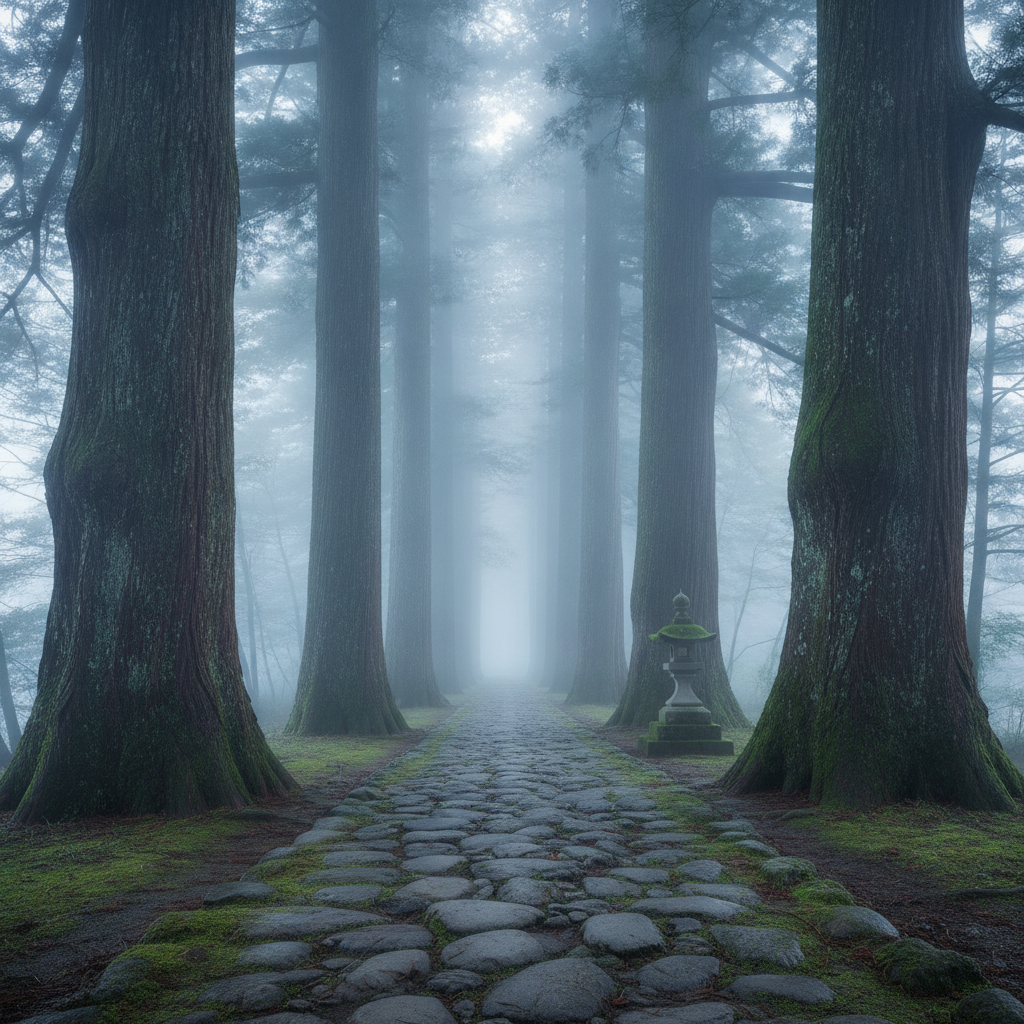
The Tōshō-gū in the hour before closing (16:30 in winter, 17:00 in summer—the shrine admits the last visitors 30 minutes before closing; the period from 15:30 onward sees rapid tour group departure and a return of quiet): the most underused strategy in Nikkō tourism is visiting the inner shrine precinct in the late afternoon when the changing light hits the gold leaf at an oblique angle, the cedar shadows lengthen, and the visitor population drops by 80%. The sound programme: the Tōshō-gū is never silent—the continuous cicada noise in summer (the Japanese cicada population in the cedar grove is among the densest in the Kantō region), the sound of the ceremonial bell at 12:00 and 16:00, and the wind in the 380-year-old cedar crowns overhead create a layered acoustic environment that is as specific to Nikkō as the visual decoration. The Futarasan Shrine at dusk (the most direct access to the pre-Tokugawa sacred landscape of Nikkō—the Futarasan main hall in the forest behind the Tōshō-gū, accessed through the connecting path 5 minutes from the Tōshō-gū rear gate; the hall faces the mountain and is oriented to receive the last light of the day on the mountain above): the final 20 minutes before Futarasan closes at 17:00 (winter) or 18:00 (summer) is the quietest time in the entire sacred precinct. The cedar grove dawn (06:00–07:00 before the shrine opens at 08:00): the approach avenue from the Shin-kyō bridge at dawn—no tourists, no vendors, the cedars in the morning mist—is the unstructured experience that many Nikkō overnight visitors cite as the most memorable moment of their visit.
- 2
The Tōshō-gū Treasury & Hidden Objects
The Tōshō-gū Treasure Museum (the museum building adjacent to the shrine entrance—the collection of objects from the Tokugawa family's dedicatory offerings to the shrine over 265 years, from 1617 to 1868): the 3,000+ objects include swords, armor, portable shrines (mikoshi), ceremonial textiles, lacquerware, and the documentary records of the shrine's construction and management. The most significant single object: the Tōshō-gū Foundation Records (the construction diary (Nikkō-Tōshō-gū Gochōsei Nikki) maintained by the shrine administrative officials during the 1634–1636 construction—the most detailed surviving record of a Japanese shrine complex construction programme; documenting the number of craftsmen per day, the materials sourced, the craftsmen's regional origins, and the sequence of construction decisions). The mikoshi (the portable shrines used in the May and October Grand Festivals—three mikoshi are stored in the Treasure Museum between festivals; the central Ieyasu mikoshi (the one that carries the deified spirit of Ieyasu during the procession) weighs 680 kg and is carried by 50 bearers): the three mikoshi are the most valuable objects regularly moved outside a Japanese shrine. The Nikkō sword collection (the donated swords—the most significant of which is the sword donated by the fourth shogun Tokugawa Ietsuna in 1651, a blade by the master swordsmith Echizen Yasutsugu who had the exclusive right to use the Tokugawa hollyhock family crest on his blades).
- 3
Nikkō at Night – The Illumination Events
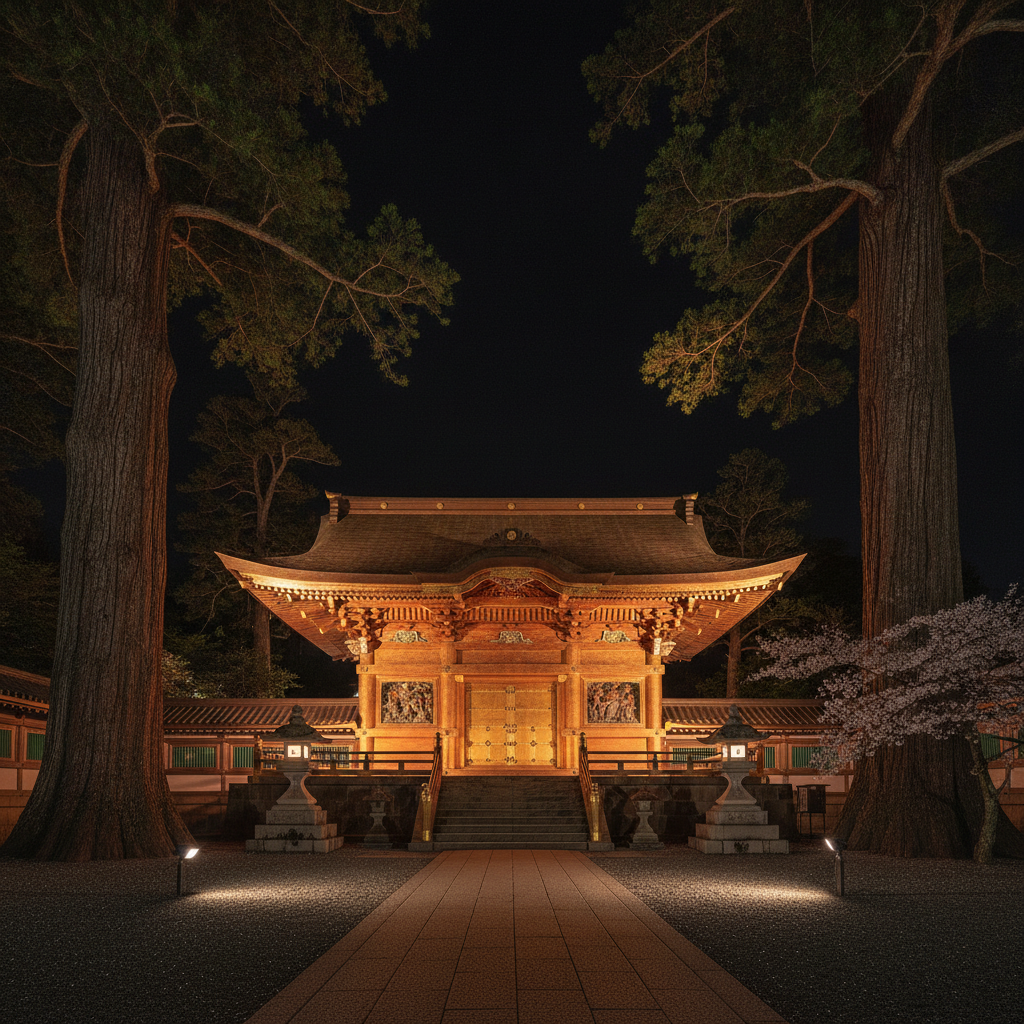
The Nikkō night illumination events are among the most dramatic in Japan: the combination of the gold leaf decoration that catches artificial light differently from natural light, the ancient cedar canopy that frames the illuminated buildings, and the absence of the day-trip crowd that defines daytime Nikkō creates an entirely different experience. The Tōshō-gū Night Illumination (the spring and autumn special evening illumination events—typically 3–4 nights in mid-April (cherry blossom period) and 3–4 nights in early November (maple foliage peak); the shrine is illuminated from 18:00–20:00 with LED lighting programmed to emphasize the gold leaf surfaces of the Yōmei-mon and the main hall): the illuminated Yōmei-mon in darkness is the most dramatic single sight in Nikkō. The Kegon Falls illumination (the annual winter Kegon Falls ice illumination—December through February: the ice formation on the 97-metre fall face is illuminated from the base observation platform in colours that shift every 30 seconds; the most unusually coloured night attraction in the Kantō mountain area). The Nikkō lantern path (the stone lanterns along the Tōshō-gū approach that were lit with candles during Edo-period ceremonies—the 3,000 candle ceremony during the October Grand Festival recreation: the approach path illuminated by individual candles in the stone lantern cups at 19:00, the most historically accurate illumination experience in Nikkō).
- 4
Nikkō's Relation to Edo (Tokyo) – The Shogunal Connection
The relationship between Nikkō and Edo (modern Tokyo) is one of the most significant political geography relationships in Japanese history. The distance (150 km from Edo to Nikkō): deliberately chosen by Ieyasu to be far enough from the capital to require a 3-day journey (placing the mausoleum beyond casual visiting range and reinforcing the pilgrimage character of the visit) but close enough for the shogunate to maintain control over the shrine administration. The shogunal pilgrimage programme (the annual spring pilgrimage from Edo to Nikkō, performed by the Tokugawa shogun or his representative in every year from 1617 to 1868—251 consecutive annual pilgrimages): the pilgrimage's economic impact on the Nikkō road communities (the post towns providing accommodation, food, and transport services for the shogunal entourage of 200–2,000 people, depending on the year's political context) made the Nikkō Kaido one of the most economically active roads in Edo-period Japan. The modern Tokyo connection: Nikkō's transformation from a 3-day journey to a 2-hour train ride fundamentally changed the shrine's social role—the pilgrimage that defined a year's relationship to the sacred took 3 days in the Edo period; the same journey now takes less time than a commute from Yokohama to Tokyo: the compression of sacred geography by railway is one of the defining cultural transitions of modern Japan.
- 5
Nikkō's Waterfalls Science – Why Three in One Valley
The three major waterfalls of Oku-Nikkō (Yudaki Falls, Ryūzu Falls, and Kegon Falls) form a single hydrological system: the water flows from the springs and snowfields above Lake Yuno → through Yudaki Falls (25 metres) into Lake Yuno → through the Yuno River into the Senjogahara wetland plateau → through the plateau drainage into the twin Ryūzu Falls (28 metres) into Lake Chūzenji → through the Kegon Falls (97 metres) over the caldera rim into the Daiya River below. The Kegon Falls geology: the 97-metre drop exists because the lava flow from Mount Nantai that created Lake Chūzenji (approximately 20,000 years ago) blocked the original Daiya River drainage and forced the river to overflow the lava rim at its lowest point—the rim height above the valley floor determines the fall height; the 97 metres represents the thickness of the lava deposit at the overflow point. The underwater falls (the 12 smaller falls that emerge from cracks in the lava face on either side of the main Kegon Falls—visible from the base observation platform as multiple streams of water emerging from the cliff face at various heights alongside the main fall): the secondary falls are fed by the lake water percolating through the porous lava dam and emerging at different elevations. The flow rates: the Kegon Falls maximum flow rate (the spring snowmelt peak in May–June: approximately 7.0 m³/s) versus the winter minimum (January–February: approximately 0.8 m³/s when the main fall partially freezes).
- 6
Nikkō's Future & Visitor Management
The Nikkō management challenge for the next decade is defined by two simultaneous pressures: the continued growth of international visitors (from 2.5 million annual to a projected 3.5 million by 2030) and the physical deterioration of 380-year-old structures that were not designed for this volume of visitors. The 2025–2030 conservation programme: the Tōshō-gū Board of Trustees' 5-year programme includes the photovoltaic canopy installation at the parking area to provide electricity for the climate-controlled storage of the most fragile textile objects currently in the open shrine halls; the replacement of the concrete path sections (laid in the 1970s for accessibility) with traditional natural stone; and the installation of the underground drainage system to manage the increased surface water from the de-forested parking areas north of the complex. The overtourism management (the most visible intervention): the Nikkō Tourism Board's timed-entry system for the inner Tōshō-gū (the Yakunin-mon inner gate—the gate that most visitors pass without noticing, controlling access to the inner precinct): the timed-entry system was trialled in 2024 with 15-minute entry windows; implementation constraints are significant because the system requires rerouting the coach tour programme which currently delivers 40% of visitor revenue. The smart tourism programme (the Nikkō Digital Heritage Navigation integration with visitor flow management—the app displays real-time crowd density at each shrine building and suggests routing alternatives when congestion exceeds threshold levels): the most technically sophisticated crowd management application at any Japanese heritage site.
Walk this route with audio
Stories play automatically as you reach each stop — no tapping needed.
More in Nikkō
The 1,200-Person Spring Procession Recreating 1617, the Blue-Grey Ice Wall at Kegon Falls in February & the Daikoku Hall Where Matte Black Beats Gold and Red
The Upside-Down Pillar, the 3cm Sleeping Cat & the 12,000 Cedar Trees Planted Because One Daimyo Couldn't Afford a Lantern
Kaempfer's 'Most Magnificent in the Whole World', the 50-Yen Foot Bath at 1,478 Metres & the October Grand Festival That Nobody Books For
The Taiyū-in Mausoleum That Art Historians Rate Higher Than the Tōshō-gū, 6 Weeks of Altitude-Staggered Foliage & the Buddhist Monks Who Made Nikkō's Tofu Famous