Nha Trang's Complete Picture: Whale Sharks at 5 Metres Depth in April, the Plague Bacillus Discoverer Who Retired Here in 1895 & the Resort Island With 8 Hotels Employing 5,000 People
The Sailing Club established in the early 1990s as the original Russian-expat party venue now competing with Sky Light for the Korean market; the Cà Ná anchovy as the raw material for Phú Quốc fish sauce's EU Geographical Indication—the only Vietnamese food product with European GI; volcanic mud at 37–40°C with sulfur and silica effective for skin exfoliation and muscle relaxation; whale sharks at 12 metres filter-feeding on plankton in April–May off Whale Island with 55–60% live coral cover at the reef; Alexandre Yersin discovering the plague bacillus in Hong Kong in 1894 then retiring to Nha Trang where he died in 1943; and Vingroup's Hòn Tre Island as the most complete expression of Vietnamese domestic luxury tourism ambition at USD 80–150/night.
- 1
The Nha Trang Night Scene – The Party Capital of Central Vietnam
Nha Trang's nightlife—the most intense and most international in central Vietnam—is concentrated along the Trần Phú Boulevard beachfront (the Sailing Club complex, the Sky Light club, and the Buddha Bar) and in the interior streets parallel to the beach (the Bùi Viện/Lê Thánh Tôn area—the 'backpacker streets' that operate until 03:00–04:00 in peak season). The Sailing Club: the Sailing Club Nha Trang (72-74 Trần Phú—the most famous venue in Nha Trang nightlife, established in the early 1990s by an Australian-Vietnamese couple; a complex of restaurant, bar, beach club, and nightclub occupying the prime beachfront position at the southern end of the main beach strip): the original venue for the Russian and international expat party culture that defined Nha Trang's nightlife reputation through the 2000s and 2010s. The Sky Light club (on the rooftop of the Novotel Premier Nha Trang): the highest nightclub in Khánh Hòa province, with views over the bay; the most popular venue for the Korean and Chinese tourist market that has partially replaced the Russian market. The beach party tradition: the Nha Trang beach parties (the NYE beach countdown event at the central beach—the largest outdoor New Year celebration in southern Vietnam after Ho Chi Minh City; the summer beach music festivals coordinated with the Vinpearl resort) attract approximately 100,000 participants at peak events.
- 2
The Nha Trang Seafood Economy – Fish Sauce & the Squid Fleet
The Nha Trang and Khánh Hòa province seafood economy—the most productive fishing sector in south-central Vietnam—produces the highest volume of squid, anchovy, and tuna in the Vietnamese fishing industry, and is the primary supplier of fish sauce raw material to the most famous fish sauce brands in the world. The fish sauce: the Cà Ná fish sauce (produced from the cá cơm anchovy caught off the Cà Ná coast, 120 km south of Nha Trang in Ninh Thuận province; the most prized raw material for Vietnamese fish sauce producers) is the ingredient base for the Phú Quốc fish sauce that carries the EU geographical indication (the only Vietnamese food product with a European GI designation). The Nha Trang squid fleet: the south-central Vietnamese squid fishing fleet (approximately 2,000 vessels in Khánh Hòa province alone) uses powerful lights to attract squid to the surface at night—the same squid boat lights that are visible from Ha Long Bay and from the cruise ships offshore of Nha Trang. The Dam Market (Chợ Đầm—the largest traditional market in Nha Trang, 500 metres west of the beach promenade; operating daily from 04:00–18:00): the primary commercial market of the city and the best place to observe the fish economy at first hand—the wholesale anchovy section (where the cá cơm from the overnight squid boats is sorted, graded, and sold to the fish sauce processors) is the most commercially significant single market section in the building.
- 3
The Nha Trang Spa & Mud Bath Circuit
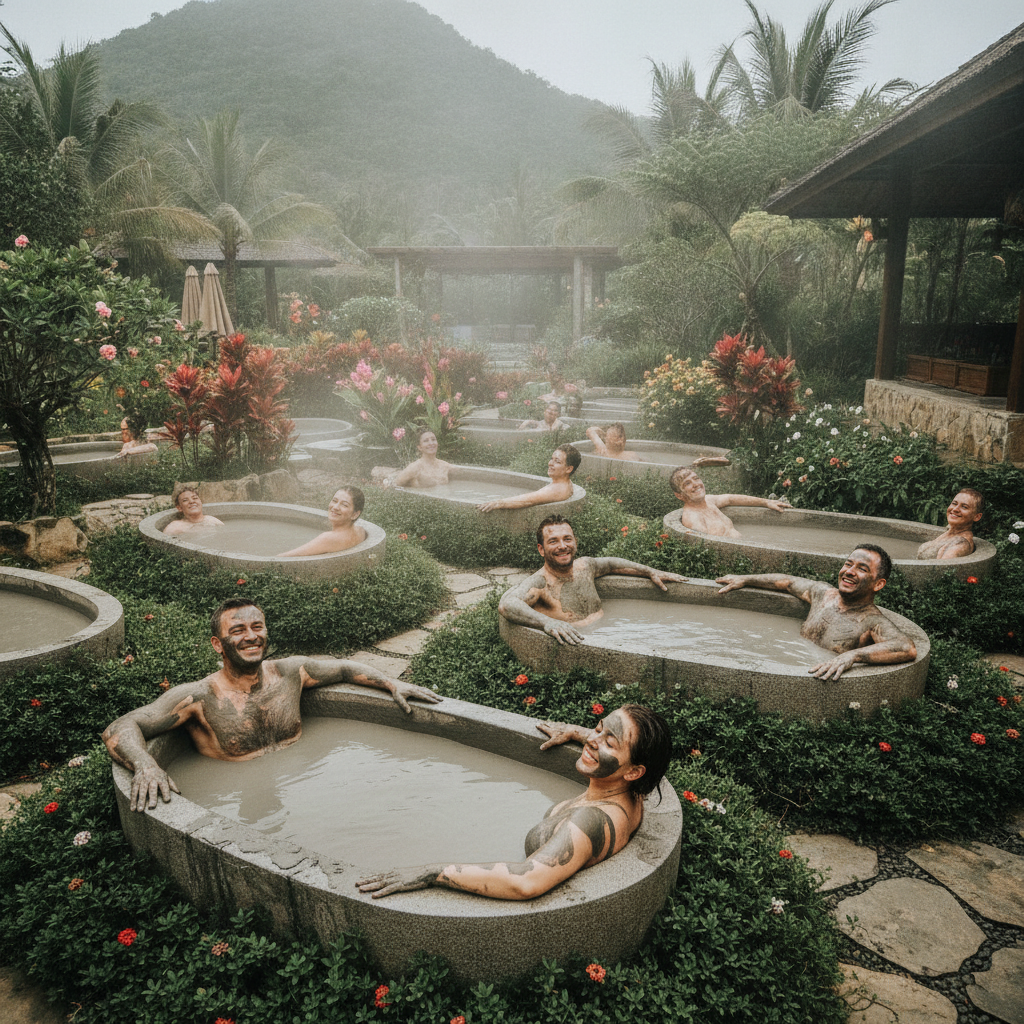
The Nha Trang mud bath (the volcanic mineral mud baths located at the Tháp Bà Hot Springs Center and the I-Resort, both on the northern outskirts of the city): the most unusual therapeutic experience in Vietnamese tourism—soaking in warm mineral-rich volcanic mud (at 37–40°C) in a private or communal outdoor bathtub, followed by rinsing in the mineral spring pools and then soaking in the hot mineral water pools—is the most distinctively Nha Trang activity and the treatment most requested by first-time visitors. The Tháp Bà Hot Springs Center (the most established mud bath facility—15 km north of the city centre, accessible by taxi in 20 minutes; the original and most expansive facility; the volcanic mud sourced from the thermal springs at the base of the hills): private mud bath tubs (for 2 people, USD 15–20 for a 30-minute mud soak), outdoor mineral pool terraces, and the attached restaurant and bar complex. The I-Resort (the most modern facility—10 km north of the centre, newer construction, cleaner facilities, more organised queue management): the preferred choice for international visitors who prioritise facility cleanliness over historical character. The physiological effects: the volcanic mud (high in silica, sulfur, and mineral salts) is empirically effective for skin exfoliation and temporary muscle relaxation; the sulfur component (the smell that first-time users find surprising) is the primary therapeutic agent; the most regularly measured benefit is the temporary improvement in skin texture and the sustained muscle relaxation from the combination of heat and mineral absorption.
- 4
Whale Island & the Remote Northern Khánh Hòa Coast
Whale Island (Đảo Cá Voi—the small island 60 km north of Nha Trang, accessible by speedboat in 1.5 hours or by overnight cargo boat; the only tourist accommodation facility is the Whale Island Resort, operating May–October only): the most remote and most undeveloped tourist destination accessible from Nha Trang, known for the whale shark encounters (Rhincodon typus—the world's largest fish, up to 12 metres long, filter-feeding on zooplankton in the April–May season when the plankton bloom attracts them to the surface waters around the island). The whale shark season: the whale shark encounters at Whale Island are most reliable from late March to early May; the encounters occur at depths of 5–15 metres (within recreational diving range) and typically last 10–30 minutes per sighting (the whale sharks are slow-moving surface feeders and do not change direction rapidly in response to divers, making them the most docile large marine animal encounter in Vietnam). The snorkelling conditions: the waters around Whale Island have some of the best visibility in the Khánh Hòa province coastal zone (15–25 metres in the May–August season); the reef at the island's north end has the highest hard coral coverage in the province (estimated 55–60% live coral cover) as a result of the limited tourist traffic. The access: the Whale Island Resort is the only accommodation on the island; day trips from Nha Trang (3 hours each way) leave limited time at the island and are generally not recommended—the overnight stay (May–October only; USD 80–120/person including meals) is the minimum for a meaningful whale shark encounter attempt.
- 5
The Nha Trang Cultural Heritage – The Khánh Hòa Museum & French Legacy
The Khánh Hòa Museum (the provincial museum of Khánh Hòa on Trần Phú Boulevard—2 blocks from the beach at the northern end of the promenade; the most comprehensive exhibition of the province's natural history, Cham civilisation, and Vietnam War history in the region): the most visited Vietnamese museum in the Nha Trang area after the Po Nagar Cham Towers. The French colonial legacy in Nha Trang: the Institut Pasteur de Nha Trang (the research facility established in 1895 by French bacteriologist Alexandre Yersin—the discoverer of the plague bacillus Yersinia pestis, the cause of the bubonic plague—who chose to retire in Nha Trang and lived there until his death in 1943; the Pasteur Institute he founded remains an active research facility and is the most visited non-beach heritage attraction in Nha Trang): the Yersin Museum (at the Institute—the most visited single heritage museum in Nha Trang; exhibits on Yersin's scientific work, his friendship with Paul Doumer (the French Governor-General of Indochina), and his life in Nha Trang including his telescope (Yersin discovered the plague bacillus in Hong Kong in 1894 and independently developed effective interventions against the disease during the Khánh Hòa plague outbreak of 1898)). The Nha Trang Cathedral (the Gothic Revival Catholic cathedral built on a natural rock outcrop above the train station—1928–1934; the most imposing colonial-era building in Nha Trang; an unusual contrast to the beach resort aesthetic of the surrounding city).
- 6
Nha Trang's Future & the Vinpearl Model
The Vinpearl model (the largest domestic tourism resort development in Vietnam—Sun Group and Vingroup, the two Vietnamese real estate conglomerates, have between them developed the most extensive integrated resort portfolios in the country, with Vinpearl Nha Trang on Hòn Tre Island being Vingroup's flagship property) represents the most ambitious domestic capital expression of Vietnamese tourism ambition: the full occupation of an entire offshore island (4.5 km²) for resort development, with 8 hotels, 8 restaurants, a golf course, a water park, a theme park, and a nature reserve all connected to the mainland by the 3.3-km cable car and the 7.5-km bridge-tunnel combination. The Vinpearl economic impact: the Hòn Tre Island resort employs approximately 5,000 people (the largest single private employer in Khánh Hòa province), generates approximately USD 200 million/year in revenue (roughly 20% of the province's total tourism income), and has raised the aspiration level of Vietnamese domestic tourism—the Vinpearl resort experience (at USD 80–150/night including access to the theme park and water park) established the first Vietnamese domestic luxury resort option for middle-class Vietnamese families. The Nha Trang evolution: the central beach strip (the aging international hotels of the 2000s and 2010s—Sheraton, Sunrise, Yasaka) is slowly being replaced by newer developments; the city is simultaneously losing its backpacker market (to Hội An and Đà Nẵng) and gaining a domestic luxury market (to the Vinpearl model); the question of which direction the city's tourism identity will consolidate around is unresolved.
Walk this route with audio
Stories play automatically as you reach each stop — no tapping needed.
More in Nha Trang
Nha Trang: The 817 CE Cham Towers Still Used for Hindu Pilgrimage, the Floating Wine Circle That Has Damaged Vietnam's Only Marine Reserve & the Soviet Navy's 23-Year Cam Ranh Bay Base That Created the Russian Tourist Market
Nha Trang's Hidden Depth: The Plague Bacillus Discoverer Who Built Vietnam's Radio System, the Longest Continuous Coral Reef Data Record in Southeast Asia & the Pink Salt Ponds 160km South
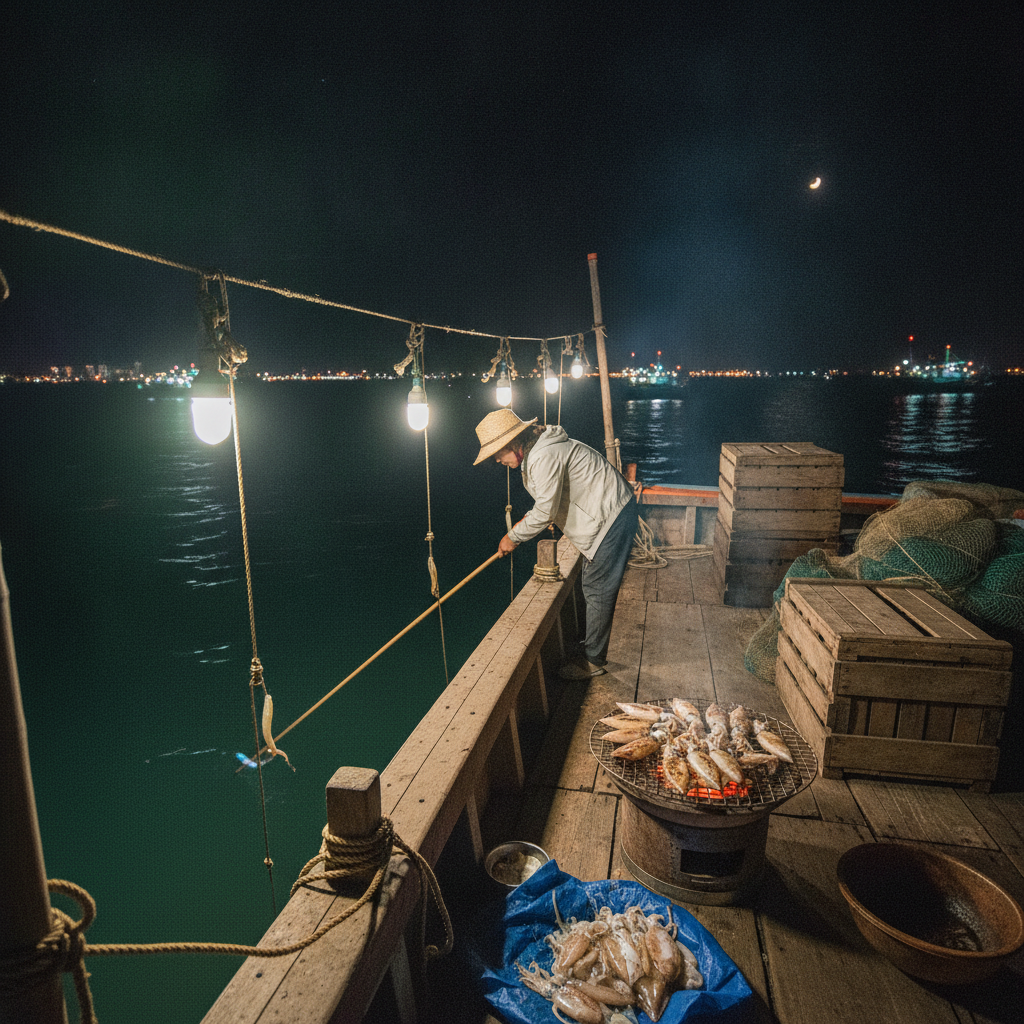
Nha Trang's Honest Assessment: The Original French Resort Since 1923 That Now Loses Beach Visitors to Phú Quốc, Squid Caught 3 Minutes Ago Tasting Different From Frozen & Sa Huỳnh Jar Burials Connecting to the Philippines
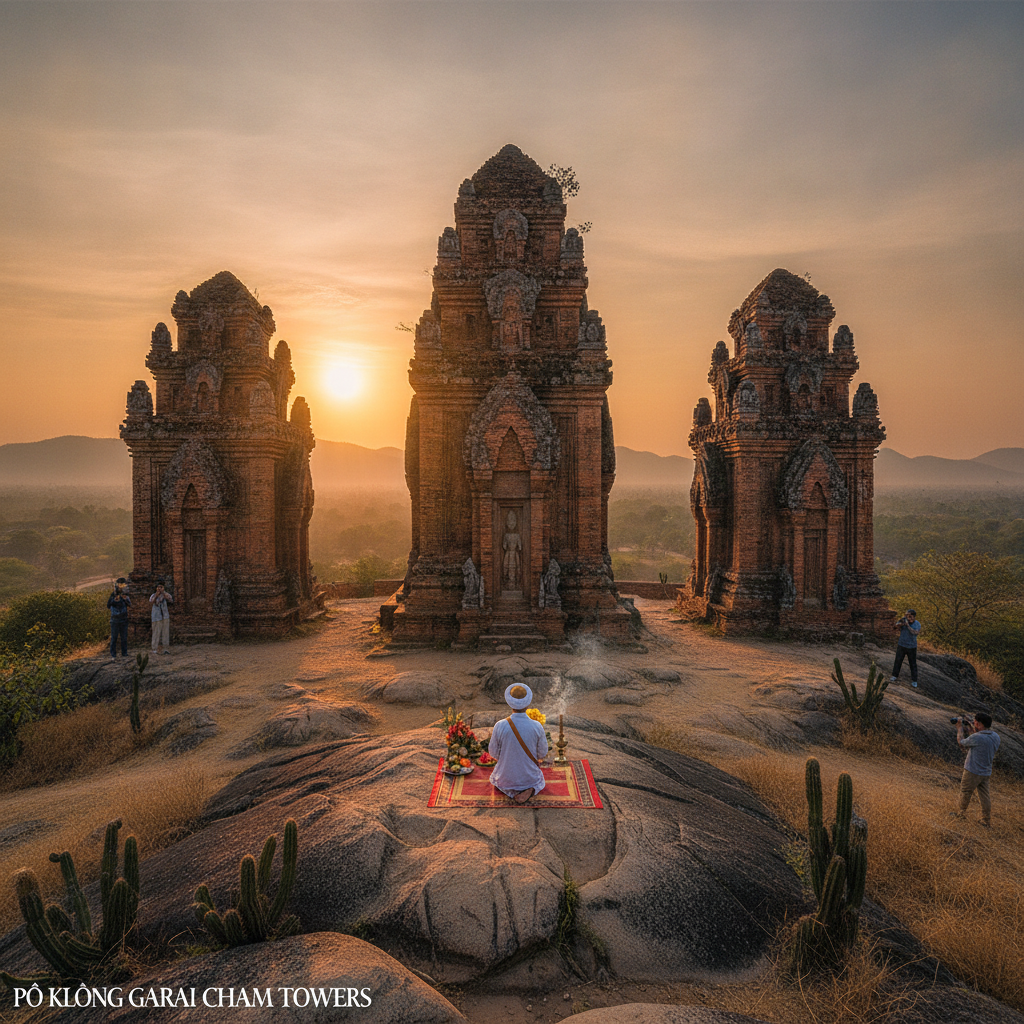
Nha Trang's Southern Arc: The Ngoạn Mục Pass to Đà Lạt's French Hill Station, the Cham Priest's 07:00 Puja at Pô Klông Garai & the Vietnamese Coastal Desert You Didn't Know Existed