Nha Trang: The 817 CE Cham Towers Still Used for Hindu Pilgrimage, the Floating Wine Circle That Has Damaged Vietnam's Only Marine Reserve & the Soviet Navy's 23-Year Cam Ranh Bay Base That Created the Russian Tourist Market
Tháp Bà Ponagar's active Cham Hindu pilgrimage in the third lunar month—four towers from an original larger complex at the Cái River estuary, 817 CE construction; Mun Island's 40% coral coverage protected area now experiencing anchor and fin damage from 500+ daily 4-Island Tour participants at the same 4 sites; the Soviet USD 1 billion annual assistance creating the military base connection that became the Aeroflot direct flight creating the 430,000 Russian visitor peak in 2019; the Long Sơn Pagoda white Buddha built in 1963 as one of 8 commemorative monuments to the self-immolation protests against the Diệm regime that produced Malcolm Browne's most influential photograph; and the Vinpearl resort island connected by the longest resort cable car in Vietnam at 3.3 km.
- 1
Nha Trang Bay & the Tháp Bà Ponagar Cham Towers
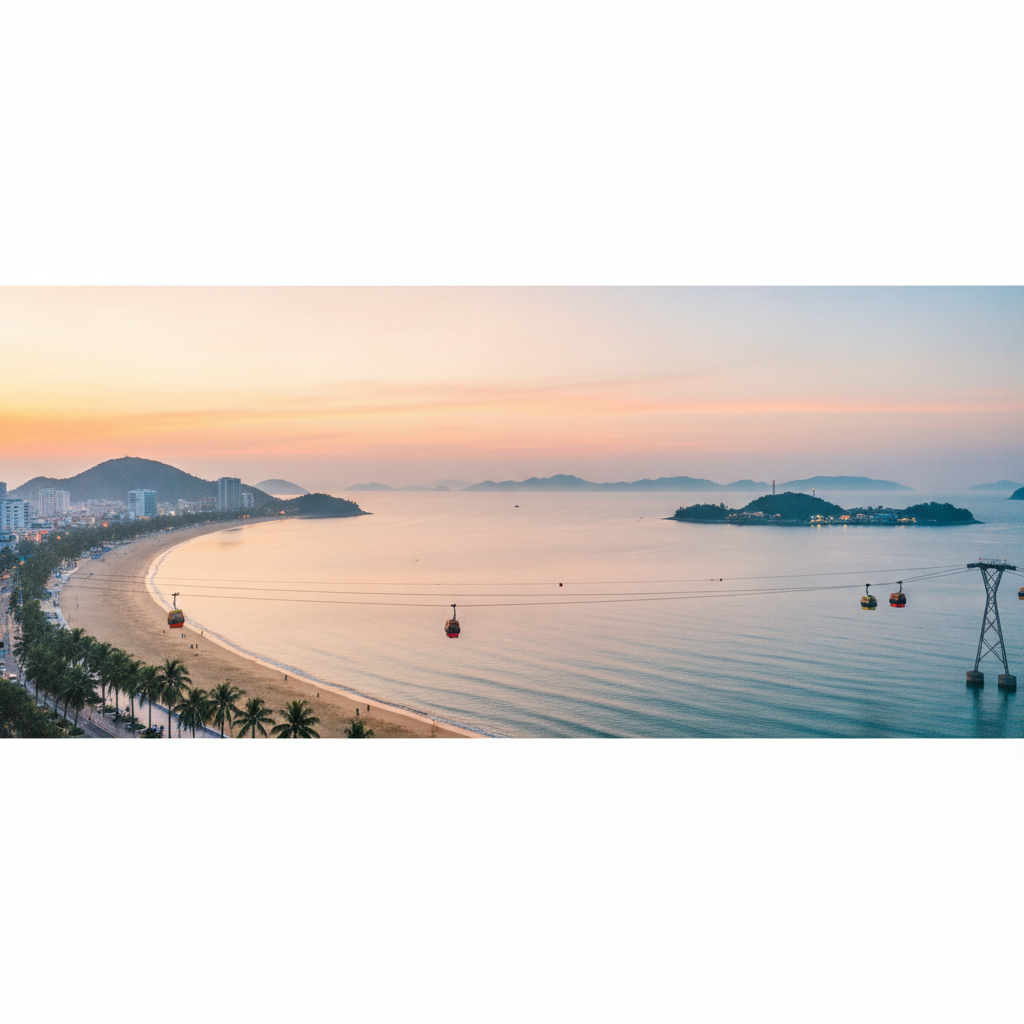
Nha Trang (the coastal city of 450,000 people in Khánh Hòa province, south-central Vietnam; 440 km north of Ho Chi Minh City by road; the most developed beach resort city in southern Vietnam and the most internationally recognised Vietnamese beach destination before the rise of Đà Nẵng) is built around one of the world's great natural harbours: Nha Trang Bay (a sheltered crescent of water enclosed by the outer islands and the Cù Lao peninsula, 6 km wide and 8 km deep, with a 6-km urban beach as its western edge). The beach: the Nha Trang central beach (Bãi Trước—'Front Beach'; the 6-km promenade facing east over the bay) is the most commercially developed beach in Vietnam—the beachfront promenade (Trần Phú Boulevard) lined with international hotels, restaurants, and nightclubs; the beach itself divided into sections managed by the adjacent hotels (beach chairs, umbrellas, and service available to hotel guests; the public sections becoming narrower as hotel development has expanded). The Tháp Bà Ponagar (the Po Nagar Cham Towers—the Hindu temple complex on a low hill 2 km north of the city centre, above the Cái River estuary; the most significant surviving Cham religious site in south-central Vietnam; four towers remaining of an original larger complex; the main tower built approximately 817 CE by the Cham Kingdom; the towers still active as a Hindu and Cham religious site—the primary pilgrimage destination for Cham Muslims and Cham Hindus in Khánh Hòa province, with major festivals in the third lunar month).
- 2
Nha Trang's Diving – The Best Accessible Diving in Vietnam
Nha Trang is the most established dive tourism destination in Vietnam: the combination of the warm South China Sea water (26–29°C year-round), the relatively clear visibility (10–20 metres in most sites), the accessible dive sites (a dozen named dive sites within 30 minutes by boat from the Nha Trang port), and the longest-established dive industry in the country (the first dive operators established in Nha Trang in the early 1990s, a decade before the current operators in Đà Nẵng or Phú Quốc) has made Nha Trang the logical choice for first-time Vietnam divers. The dive sites: Moray Beach (the best shore dive in Vietnam—accessible directly from the beach on Hon Mieu Island, maximum depth 18 metres, with a resident moray eel at 8 metres, lionfish, and a large school of silver jackfish); Mun Island (the most biodiverse dive site in Nha Trang—designated a marine protected area, with coral coverage of approximately 40% and fish diversity including Napoleon wrasse, bumphead parrotfish, and regular turtle sightings); the Whale Island offshore (the most remote site accessible from Nha Trang by liveaboard—whale sharks reported November–April when the plankton bloom attracts them to the shallow water). The dive industry: the Nha Trang dive operators (Rainbow Divers—the oldest and most established operator in Vietnam, founded by an Australian in 1995; Sailing Club Divers; Octopus Divers) offer the most complete range of PADI courses and fun dive options in Vietnam.
- 3
The Nha Trang Island Snorkelling Circuit – The 4-Island Tour
The Nha Trang 4-Island Tour (the most popular day trip from Nha Trang—a boat trip to 4 of the outer bay islands for snorkelling, swimming, and the famous 'sea floating bar' floating wine/beer circle; departing at 08:00 from Cầu Đá pier, returning at 17:00; approximately USD 12–20/person including lunch; approximately 500–800 participants per day in peak season) is the most socially intense boat trip in Vietnam. The four islands: Hon Mun (the marine protected area with the best coral snorkelling in the bay—the first stop on the tour); Hon Tam (the resort island with a beach club and the floating pontoon for swimming); Hon Mot (the smallest island, with the best visibility and the largest fish schools); and Hon Mieu (the largest inhabited island, with a marine aquarium and a small fishing village). The floating bar: the mid-tour stop (approximately 11:30, at the Hon Mun–Hon Tam anchor position) when the boat anchors in open water and the guests are invited to sit in a ring of interconnected life rings in the open sea while the barmen bring drinks from a floating tube—the most unique Vietnamese tourism format, widely photographed on social media, creating the party atmosphere that the 4-Island Tour is known for among the backpacker market. The management challenge: the 500+ daily participants in the 4-Island Tour, concentrated at the same 4 sites, have produced documented coral damage (anchor damage, fin damage, sunscreen contamination) at Hon Mun—the most visited and most damaged marine reserve in Vietnam.
- 4
The Nha Trang Russian Connection – Soviet-Era Ties & Modern Tourism
Nha Trang's Russian tourism relationship—the most unusual international tourism demographic in any Vietnamese city—reflects the deep Soviet-Vietnamese connection of the Cold War period: the Soviet Union provided approximately USD 1 billion in military and economic assistance to Vietnam annually from 1975–1991 (Vietnam's most important foreign relationship after Chinese withdrawal in 1979); Soviet technicians and military advisors were stationed in Cam Ranh Bay (30 km south of Nha Trang—the deep-water bay that was successively used as a US Navy base in the American War, then as a Soviet Navy base from 1979–2002—the most strategically important naval installation in Southeast Asia). The Russian tourism: the Soviet military families who served in Cam Ranh Bay were the first Russian visitors to Nha Trang (1979–1991); when the Soviet Union dissolved and the base closed (2002), the military connection was replaced by a commercial one—the direct Aeroflot flights from Moscow (established 2001—the first direct international long-haul flight to Nha Trang), the Russian tour operators, and the Russian-language infrastructure (Russian-language menus, Russian-speaking staff, Russian-owned restaurants and souvenir shops along Trần Phú Boulevard). The current market: Russian visitors to Nha Trang in 2019 (the pre-COVID peak year) numbered approximately 430,000—35% of all international arrivals; the COVID pandemic reduced the Russian market, and the 2022 invasion of Ukraine further disrupted Russian international travel; the Russian share has fallen to approximately 15–20% of international arrivals by 2023–2024.
- 5
The Long Son Pagoda & Nha Trang's Buddhist Architecture
The Long Sơn Pagoda (the most important Buddhist site in Nha Trang—located 500 metres west of the train station, at the base of the trẩy hill; the largest pagoda in Khánh Hòa province; originally built in the late 19th century, rebuilt multiple times after storm damage; the current structure dates from 1940 with subsequent additions): the approach (a wide avenue of mosaic-decorated dragons lining the staircase) and the summit (the 14-metre white reclining Buddha statue, visible from across the city—completed 1963 to commemorate the South Vietnamese Buddhist monks who self-immolated in protest against the Diệm government's anti-Buddhist policies). The Thích Quảng Đức connection: the 1963 Nha Trang Buddhist crisis was the direct precursor to the most famous single photograph of the Vietnam War—the self-immolation of Thích Quảng Đức at the Phú Lâm intersection in Saigon on 11 June 1963 (photographed by AP photographer Malcolm Browne—the image that Time magazine later named as one of the 100 most influential photographs in history). The white Buddha at the Long Sơn Pagoda was one of 8 commemorative Buddhist monuments built across South Vietnam in the months following the Thích Quảng Đức self-immolation; visiting the pagoda with this context transforms it from a standard architectural stop to a meditation on the religious politics that helped end the Diệm regime and accelerated the American commitment to Vietnam.
- 6
Practical Nha Trang – Access, Accommodation & the Muddled Tourist Economy
Getting to Nha Trang: the Cam Ranh International Airport (CXR—30 km south of the city centre; accessible by taxi in 45 minutes (USD 12–18) or by the airport bus (USD 2–3); direct connections to Hanoi, Ho Chi Minh City, and international routes to Seoul, Tokyo, Singapore, and Guangzhou; the Russian market has historically driven the Nha Trang airport's international capacity—Aeroflot's routes before 2022 connected Nha Trang directly to Moscow). The train: the Đà Nẵng–Nha Trang train (the SE1 Reunification Express—6–8 hours south, the most scenic train journey in Vietnam: the section through Quảng Ngãi, Bình Định, and Phú Yên provinces passes through a coastline of empty beaches, fishing villages, and mountains descending to the sea—the Mũi Nai and Đèo Cổ sections being the most dramatic). Getting around: the central Nha Trang beach area (the 6-km Trần Phú Boulevard) is walkable; taxis for the Cham towers and Long Sơn Pagoda. Accommodation: the Nha Trang accommodation market has been disrupted by the rapid growth of Vietnamese domestic chain hotels (Vinpearl Nha Trang occupying the entire Hòn Tre Island—the largest resort island in Vietnam, with 8 hotels, a golf course, and a theme park, connected to the mainland by a 3.3-km cable car) and by the international chains (Sheraton, Intercontinental, Ibis). When to visit: January–August (the dry season; sea conditions calm and clear; June–August the peak domestic season with the most crowded beach); avoid September–December (the northeast monsoon brings rough seas and reduced visibility for diving).
Walk this route with audio
Stories play automatically as you reach each stop — no tapping needed.
More in Nha Trang
Nha Trang's Complete Picture: Whale Sharks at 5 Metres Depth in April, the Plague Bacillus Discoverer Who Retired Here in 1895 & the Resort Island With 8 Hotels Employing 5,000 People
Nha Trang's Hidden Depth: The Plague Bacillus Discoverer Who Built Vietnam's Radio System, the Longest Continuous Coral Reef Data Record in Southeast Asia & the Pink Salt Ponds 160km South
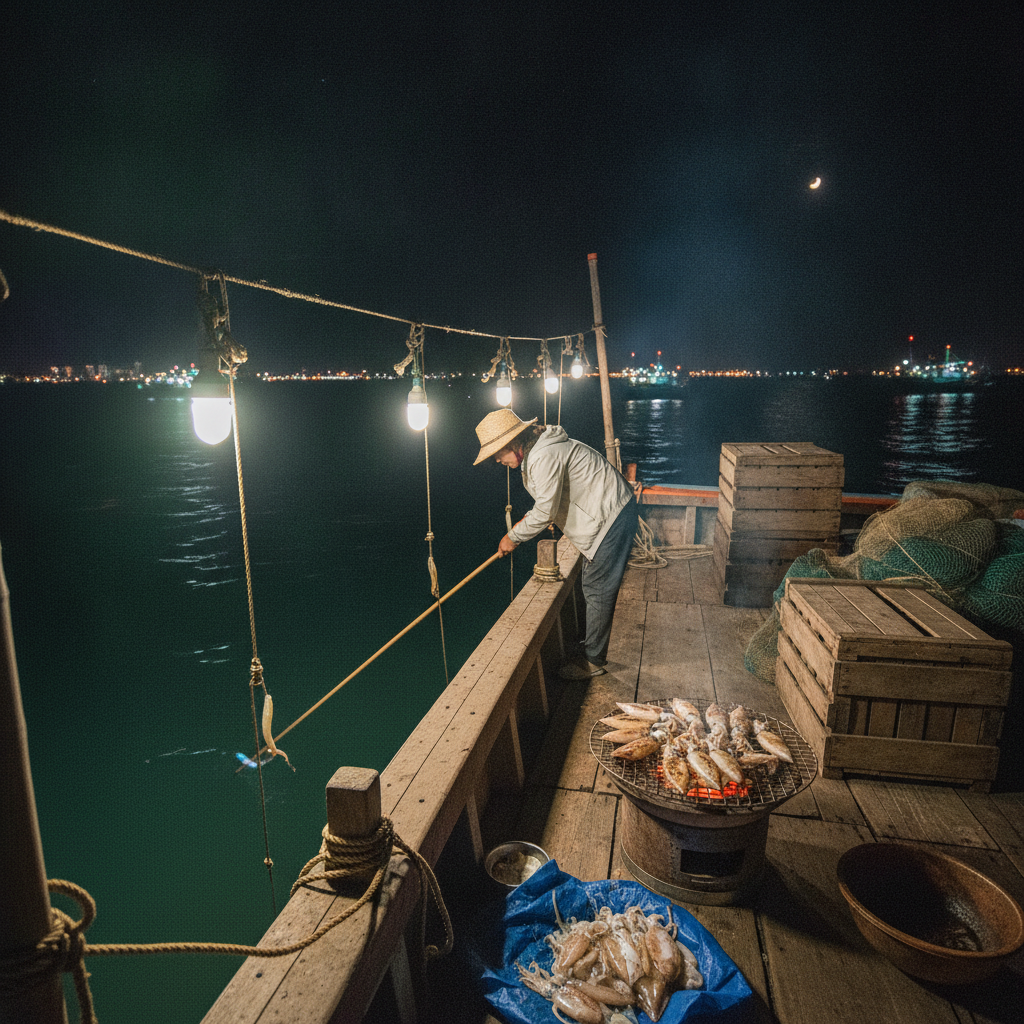
Nha Trang's Honest Assessment: The Original French Resort Since 1923 That Now Loses Beach Visitors to Phú Quốc, Squid Caught 3 Minutes Ago Tasting Different From Frozen & Sa Huỳnh Jar Burials Connecting to the Philippines
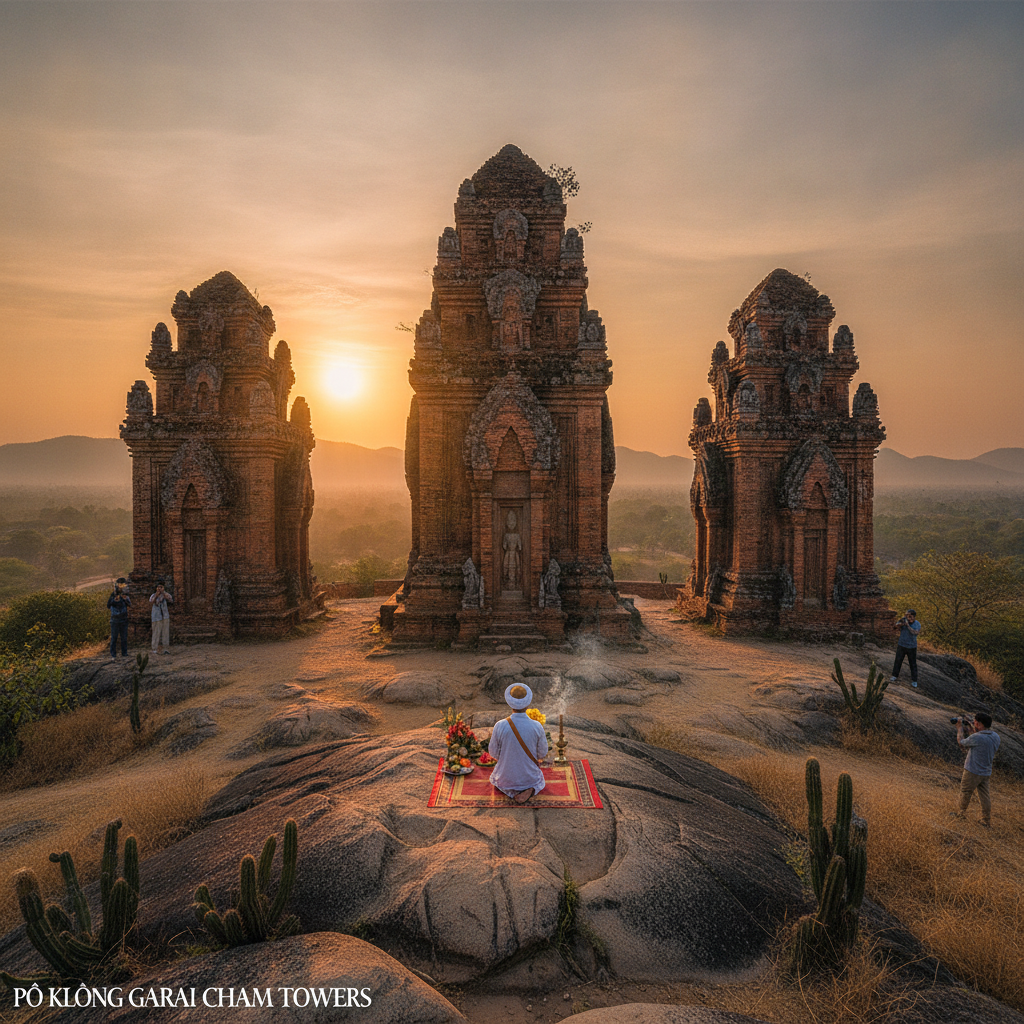
Nha Trang's Southern Arc: The Ngoạn Mục Pass to Đà Lạt's French Hill Station, the Cham Priest's 07:00 Puja at Pô Klông Garai & the Vietnamese Coastal Desert You Didn't Know Existed