Lower East Side & Chinatown: The Immigrant City
The Lower East Side—the neighborhood between Houston Street, the East River, Canal Street and the Bowery—was the most densely populated place on Earth in the early 20th century, when it housed the largest concentration of Jewish immigrants in the world: 330,000 people per square mile in 1910. The tenement buildings of Orchard, Essex and Delancey Streets were the entry point for hundreds of thousands of Eastern European Jewish immigrants; today the neighborhood's character has shifted (nightlife, galleries, gentrification) but its food institutions—Katz's Deli, Russ & Daughters, Economy Candy—remain among the best in New York. Just to the south is Chinatown, the largest Chinese-American community in the US and the most authentic Chinese food neighborhood outside China.
- 1
Tenement Museum — The Story of American Immigration
The Tenement Museum at 97-103 Orchard Street is the most important museum of immigration in the United States. The museum occupies two 19th-century tenement buildings (97 and 103 Orchard Street) whose apartments have been preserved or restored to represent specific periods in the lives of the immigrant families who lived in them between 1863 and 1935: a German Jewish family in the 1870s, an Italian Catholic family in the 1910s, a Polish Jewish family in the 1930s, a Puerto Rican family in the 1950s. Visits are by guided tour only (multiple tour options, each focusing on different apartments and time periods). The museum's shop sells excellent books on immigration history. Reserve tickets in advance—tours sell out. The surrounding streets of Orchard, Delancey and Essex were the commercial heart of the Jewish Lower East Side: pushcart markets, fabric shops and pickle barrels lined the sidewalks. The Essex Market (now at Delancey Street) descends from the original open-air market.
- 2
Katz's Delicatessen — The Greatest Deli in America
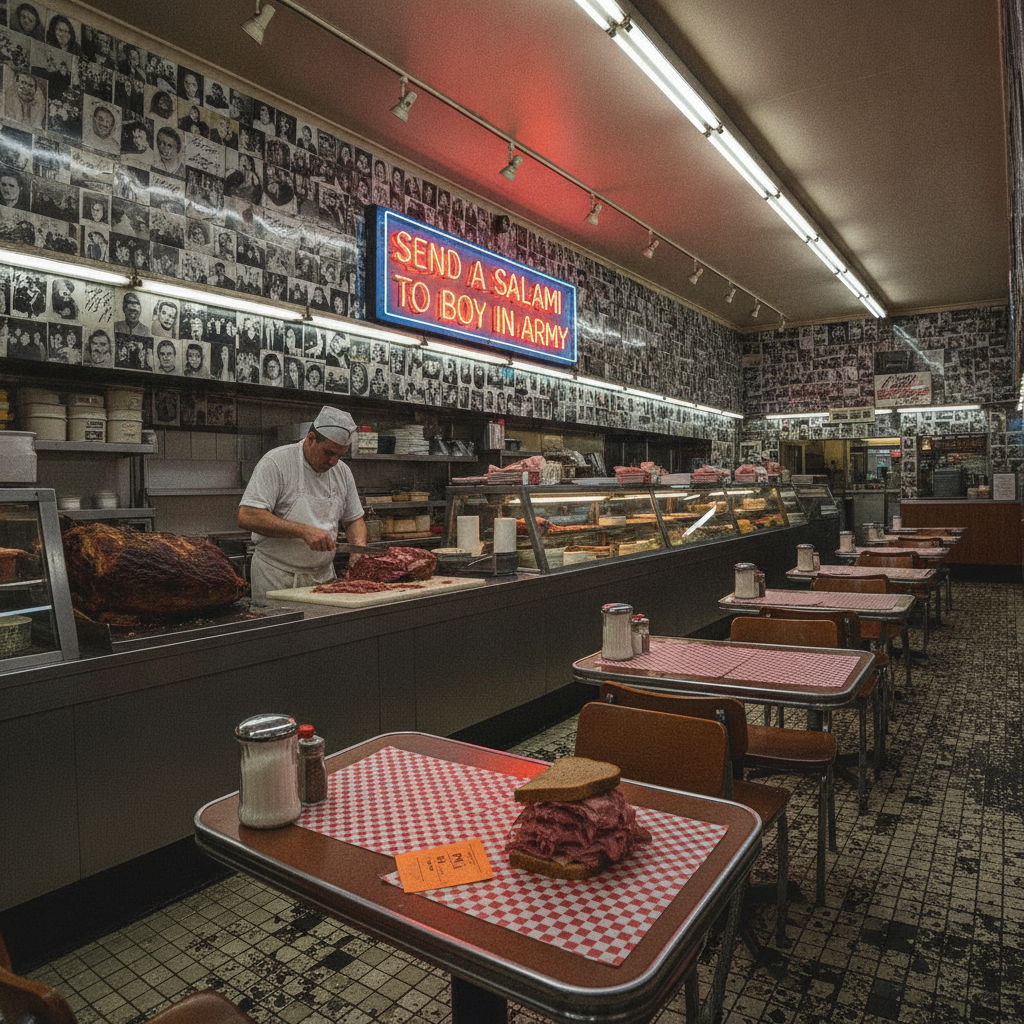
Katz's Delicatessen at 205 East Houston Street has been serving pastrami, corned beef and matzo ball soup since 1888, making it the oldest continuously operating Jewish deli in America. The interior has not changed in decades: fluorescent lighting, formica tables, walls covered in signed celebrity photos ('Send a Salami to Your Boy in the Army' is the most famous slogan), and countermen who hand-carve meat with theatrical expertise at the counter. The pastrami on rye (hand-cured, smoked and steamed in-house for 30 days) is arguably the best sandwich in New York. Table 11 is marked with a sign noting it is the table where Meg Ryan's famous 'I'll have what she's having' scene was filmed in When Harry Met Sally (1989). Order at the counter, take a ticket, and guard it: there is a $50 fine for lost tickets. Cash preferred; the line is always long on weekends.
- 3
Essex Market & Russ & Daughters — The Last Jewish Food Shops
Russ & Daughters at 179 East Houston Street—'The Appetizing Store'—has been selling smoked fish, caviar, cream cheese, bagels and pickled herring since 1914 when Joel Russ, a Polish immigrant, began selling herring from a pushcart on Orchard Street. The shop is notable for being the first American business named after daughters (Hattie, Ida and Anne Russ) rather than sons. The current shop is fourth generation; the menu is unchanged. Essential purchases: sable (cold-smoked black cod), Nova Scotia salmon, hand-rolled New York-style bagels (baked, not boiled-then-baked like Montreal bagels), and whitefish salad. The Russ & Daughters Café around the corner on Orchard Street serves the same products as plated dishes. The nearby Essex Market (175 Essex Street, a covered market relocated from its century-old site on the street) continues the neighborhood's market tradition with dozens of food vendors under one roof.
- 4
Chinatown — The Largest Chinese Community in the Americas
New York's Chinatown, centered on Mott Street and Canal Street south of Canal, is the largest Chinese-American community in the United States and the destination for the most authentic Chinese food in New York. The neighborhood has been Chinese-American since the 1870s (when Chinese laborers came east after building the transcontinental railroad) and grew dramatically after the 1965 Immigration Act ended national-origin quotas. Today it is home to over 100,000 Chinese-Americans and hosts the food of multiple Chinese regional cuisines: Cantonese (dim sum at Nom Wah Tea Parlor, the oldest dim sum restaurant in America, established 1920, at 13 Doyers Street); Fujianese (cheap seafood and noodles on Eldridge Street); and Sichuan. Doyers Street—a narrow, curved alley known as the 'Bloody Angle' because of Tong gang wars in the early 20th century—is now lined with barber shops and Vietnamese restaurants.
- 5
Di Palo's Fine Foods — Little Italy's Last Survivor
Di Palo's Fine Foods at 200 Grand Street (at the corner of Mott Street, on the border between Little Italy and Chinatown) is the last great Italian specialty food shop in New York's Little Italy—a neighborhood that was one of the most densely Italian in the world in the early 20th century and has shrunk to a few blocks as Chinatown expanded around it. Di Palo's was founded in 1925 by Savino Di Palo, an Italian immigrant from Basilicata; it is now in its fifth generation. The shop sells imported Italian cheeses (aged Parmigiano-Reggiano, burrata, fresh mozzarella made on the premises), cured meats, olive oils, pasta, truffles and prepared foods. A visit involves being handed samples by a Di Palo family member and being told the story of each cheese. Take a number; the shop is usually packed. The surrounding blocks of Mulberry Street (between Canal and Houston) still have Italian restaurants and social clubs, though the neighborhood is now primarily Chinese.
- 6
Manhattan Bridge — Engineering Under the El
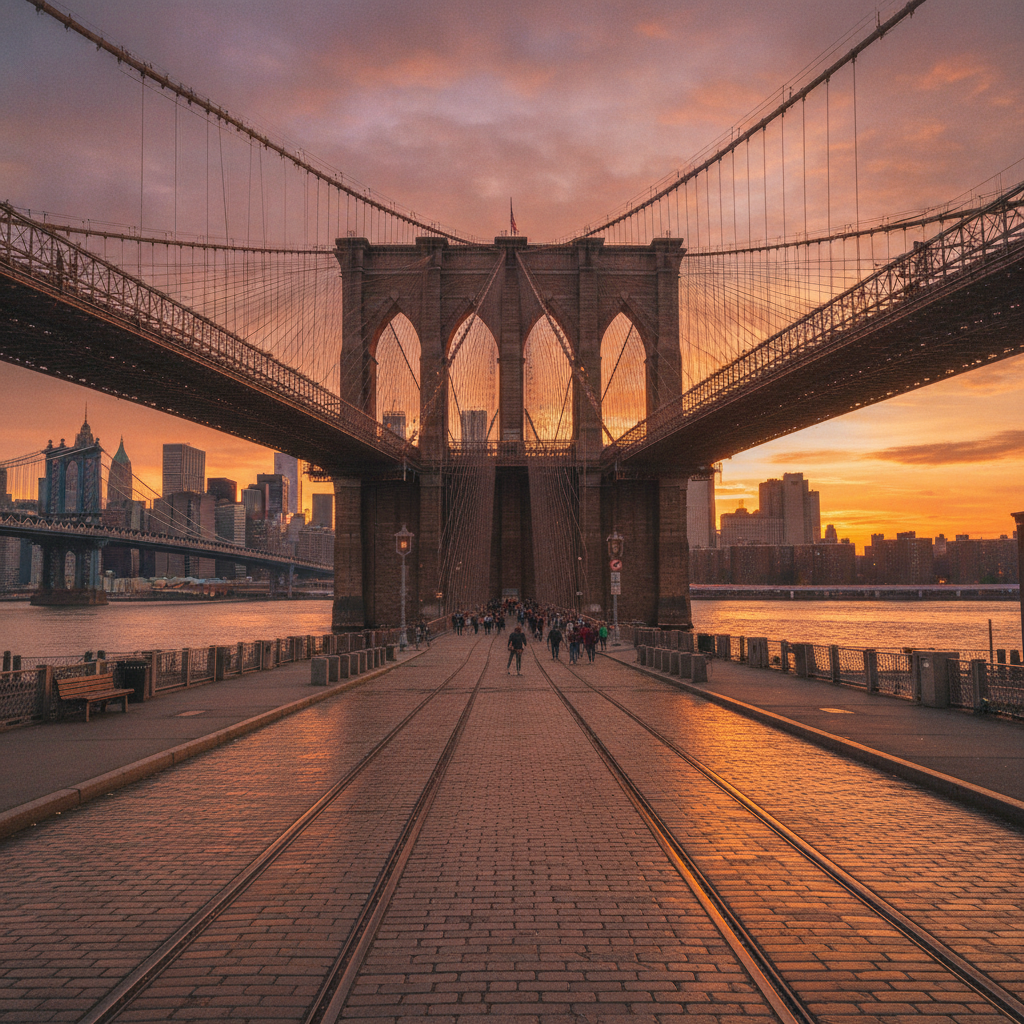
The Manhattan Bridge, opened 1909, is the less-famous sibling of the Brooklyn Bridge (built 26 years later, by a different engineering team, with a very different aesthetic: steel towers in neo-classical style rather than Roebling's Gothic stone). The approach to the Manhattan Bridge from the DUMBO side provides the most dramatic view of the bridge's structure: the massive steel anchorages, the double suspension cables, and the blue steel towers. The bridge carries 6 lanes of vehicle traffic, 4 subway tracks, and pedestrian and bicycle paths on separate cantilever footways outside the main structure. From the Manhattan side, the bridge's arch at the end of Canal Street provides one of the most unexpected urban vistas in New York: look back from the Canal Street entrance toward DUMBO and you will see a perfect framing of the Empire State Building between the towers—the view that appears constantly in New York photography. The Chinatown streets around the bridge approach (Canal Street, Bayard Street, Doyers Street) are among the most photogenic in New York.
Walk this route with audio
Stories play automatically as you reach each stop — no tapping needed.
More in new-york
Central Park & Museum Mile: Art, Nature & the Heart of Manhattan
Brooklyn: Food Markets, Art & the Best Views of Manhattan
Greenwich Village & SoHo: Bohemian Heart of Downtown Manhattan
Midtown Icons: Grand Central, Rockefeller Center & Times Square
The High Line & Hudson Yards: New York's Reinvented West Side