Brooklyn: Food Markets, Art & the Best Views of Manhattan
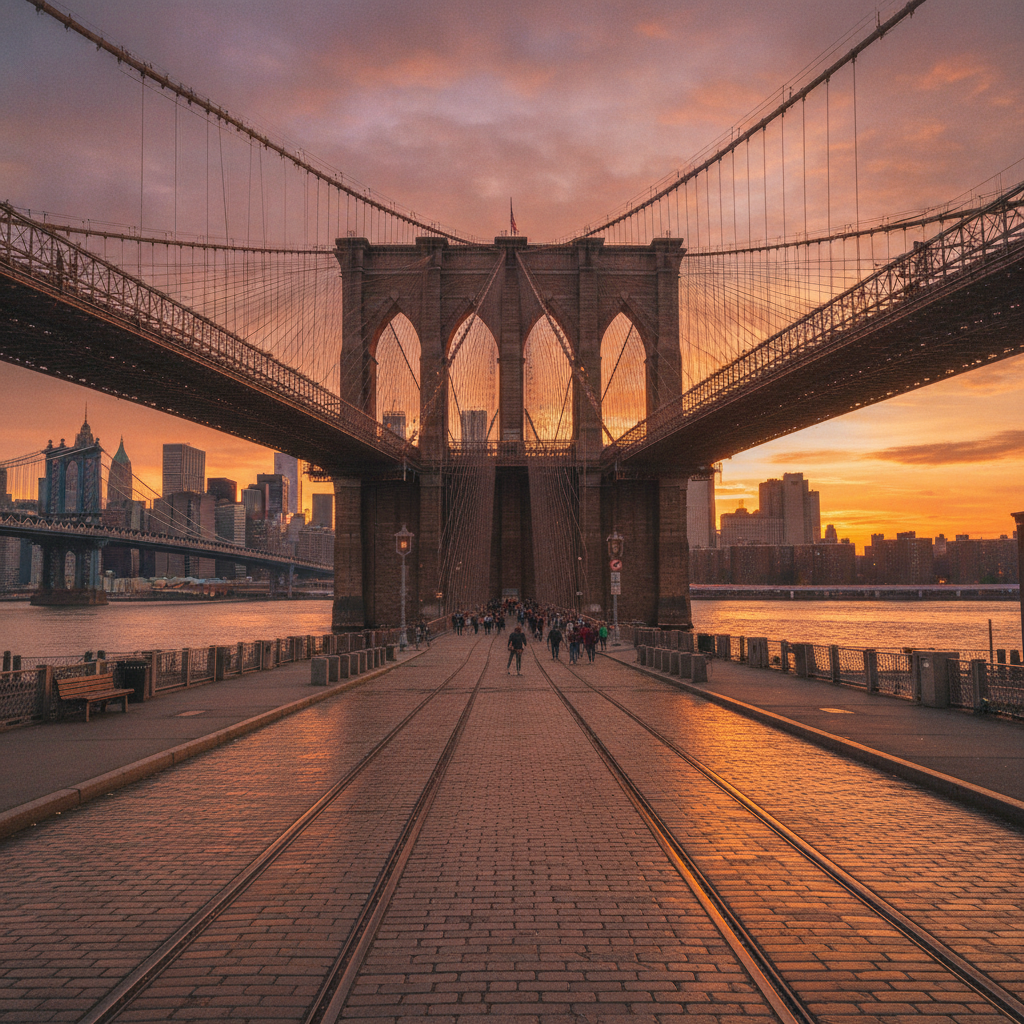
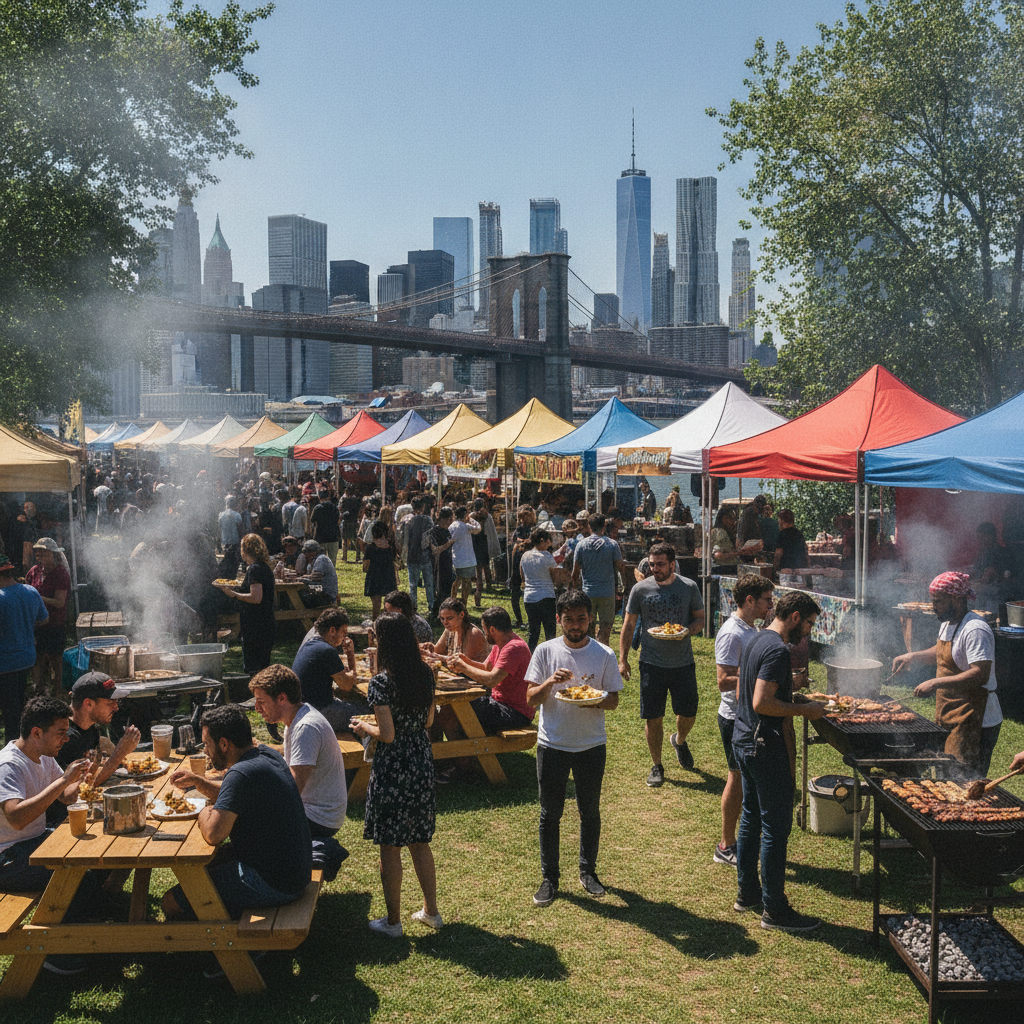
Brooklyn—New York's most populous borough and, since the early 2000s, the epicenter of the city's food, art and culture scenes—offers experiences unavailable in Manhattan: the Saturday food markets at Brooklyn Bridge Park (Smorgasburg, the largest open-air food market in America), the design district of DUMBO, the landmarked brownstones of Brooklyn Heights, the Victorian-era grandeur of Prospect Park, and the Brooklyn Museum (the second-largest art museum in New York). All of this, plus the most famous views of the Manhattan skyline available anywhere.
- 1
Brooklyn Bridge Park — The Best Waterfront in New York
Brooklyn Bridge Park, opened in 2010 on the former industrial waterfront of DUMBO and Brooklyn Heights (85 acres, 1.3 miles of waterfront), is the best public park in New York. The park has: a working pier with a restored 1922 carousel (Jane's Carousel, by Jean Nouvel) in a glass pavilion; lawns, picnic areas and playgrounds overlooking the Manhattan skyline; a pebble beach with kayak access; and views of the Brooklyn Bridge and Manhattan Bridge from below that are the most dramatic in the city. Smorgasburg—the largest open-air food market in the United States (100 vendors on Saturdays, April–October, at Pier 5)—is the best reason to time your visit to a Saturday morning. Other weekend markets at the park include the Brooklyn Flea (vintage goods, antiques, local makers). The park is free and open daily.
- 2
DUMBO & Jane's Carousel — The Instagram Capital of New York
DUMBO (Down Under the Manhattan Bridge Overpass) at the base of the Brooklyn Bridge is the most photographed neighborhood in New York: the view from the corner of Washington Street and Water Street (Manhattan Bridge framing the Empire State Building) is one of the most recognizable images in global photography. The neighborhood's 19th-century brick warehouses have been converted to galleries, design studios, tech startups and restaurants. Jane's Carousel—a 1922 Mangels carousel with 48 hand-carved wooden horses, lovingly restored by artist Jane Walentas over 27 years—sits in a Jean Nouvel glass pavilion on the waterfront at the foot of the Brooklyn Bridge. The carousel runs year-round (entry $2). The Archway—a tunnel of arching granite beneath the Manhattan Bridge—hosts regular markets, food events and art installations.
- 3
Brooklyn Heights Promenade — The Classic Manhattan Panorama
Brooklyn Heights—the neighborhood directly above Brooklyn Bridge Park, the first area in New York to receive historic district designation (1965)—is a neighborhood of extraordinary 19th-century brownstone rowhouses on tree-lined streets above the bluffs overlooking the East River. The Promenade (a half-mile pedestrian walkway cantilevered over the BQE expressway) offers the fullest panoramic view of Lower Manhattan available: the Financial District towers, the Brooklyn Bridge, the harbor and the Statue of Liberty in the distance. The streets of Brooklyn Heights itself—Willow Street (no. 108, 110, 112 are three Federal-style wood houses from the 1820s; no. 24 was a stop on the Underground Railroad), Pierrepont Street, Middagh Street—are among the most beautiful and well-preserved 19th-century streets in America. Henry Ward Beecher preached at Plymouth Church on Orange Street (still active); Truman Capote wrote Breakfast at Tiffany's in his basement apartment at 70 Willow Street.
- 4
Atlantic Avenue & Cobble Hill — Brooklyn's Middle Eastern Bazaar
Atlantic Avenue between Court Street and Hicks Street is Brooklyn's Middle Eastern commercial strip: a stretch of Lebanese, Yemeni, Syrian and Egyptian restaurants, specialty grocery stores, bakeries and import shops that has been a center of Arab-American life in Brooklyn since the 1940s. Key stops: Sahadi's (a Lebanese grocery founded in 1895, selling imported dried fruits, nuts, olives, cheeses and prepared foods—one of the best specialty food stores in New York); Damascus Bakery (founded in 1930 by an immigrant from Damascus, making pita bread using the same family recipe for four generations); and Waterfalls Café (traditional Arab coffee and pastries). The surrounding neighborhood of Cobble Hill—named after a small defensive hill used in the Battle of Brooklyn (1776)—is a landmarked historic district of Italian-American brownstones, independent bookshops and restaurants that has resisted gentrification more successfully than most of Brooklyn.
- 5
Prospect Park — Brooklyn's Central Park
Prospect Park (585 acres, designed by Olmsted and Vaux in 1867, the same pair who designed Central Park four years earlier and who considered Prospect Park their better work) is Brooklyn's great public park. Unlike Central Park, Prospect Park has a continuous 3.35-mile perimeter loop (the Long Meadow, the wooded Ravine, the Nethermead, the Boathouse) that can be walked or run without crossing a road. The Long Meadow—a 90-acre uninterrupted grassland—is the largest open meadow in any urban park in the United States. The Boathouse (1905, in Venetian Gothic style) now houses a visitors' center and Audubon Society nature programs. The Brooklyn Botanic Garden (adjacent, 52 acres, 12,000 plant species, paid entry) is famous for its Cherry Esplanade—the single greatest urban cherry blossom display in North America, peak in mid-April.
- 6
Brooklyn Museum — Art from Ancient Egypt to Jean-Michel Basquiat
The Brooklyn Museum, at Eastern Parkway and Washington Avenue, is the second-largest art museum in New York (560,000 square feet, 1.5 million objects, 17 curatorial collections) and one of the finest encyclopedic museums in the world. The building—a 1897 Beaux-Arts structure by McKim, Mead & White, with a 2004 James Stewart Polshek glass entrance pavilion—is monumental. Key collections: the Egyptian Art collection (one of the finest outside Egypt; the Mummy Gallery has 160 mummies); the American Identities galleries (Native American art to the present); the Judy Chicago feminist installation The Dinner Party (a permanent installation of a triangular table set for 39 historical women, from Primordial Goddess to Georgia O'Keeffe); and the Elizabeth A. Sackler Center for Feminist Art. The museum hosts the First Saturday free event (first Saturday of each month, free entry from 5–11pm, with music and special programming). Paid entry at other times; suggested donation.
Walk this route with audio
Stories play automatically as you reach each stop — no tapping needed.
More in new-york
Central Park & Museum Mile: Art, Nature & the Heart of Manhattan
Greenwich Village & SoHo: Bohemian Heart of Downtown Manhattan
Midtown Icons: Grand Central, Rockefeller Center & Times Square
Lower East Side & Chinatown: The Immigrant City
The High Line & Hudson Yards: New York's Reinvented West Side