Mardi Gras, Second Lines & the Carnival Culture of New Orleans
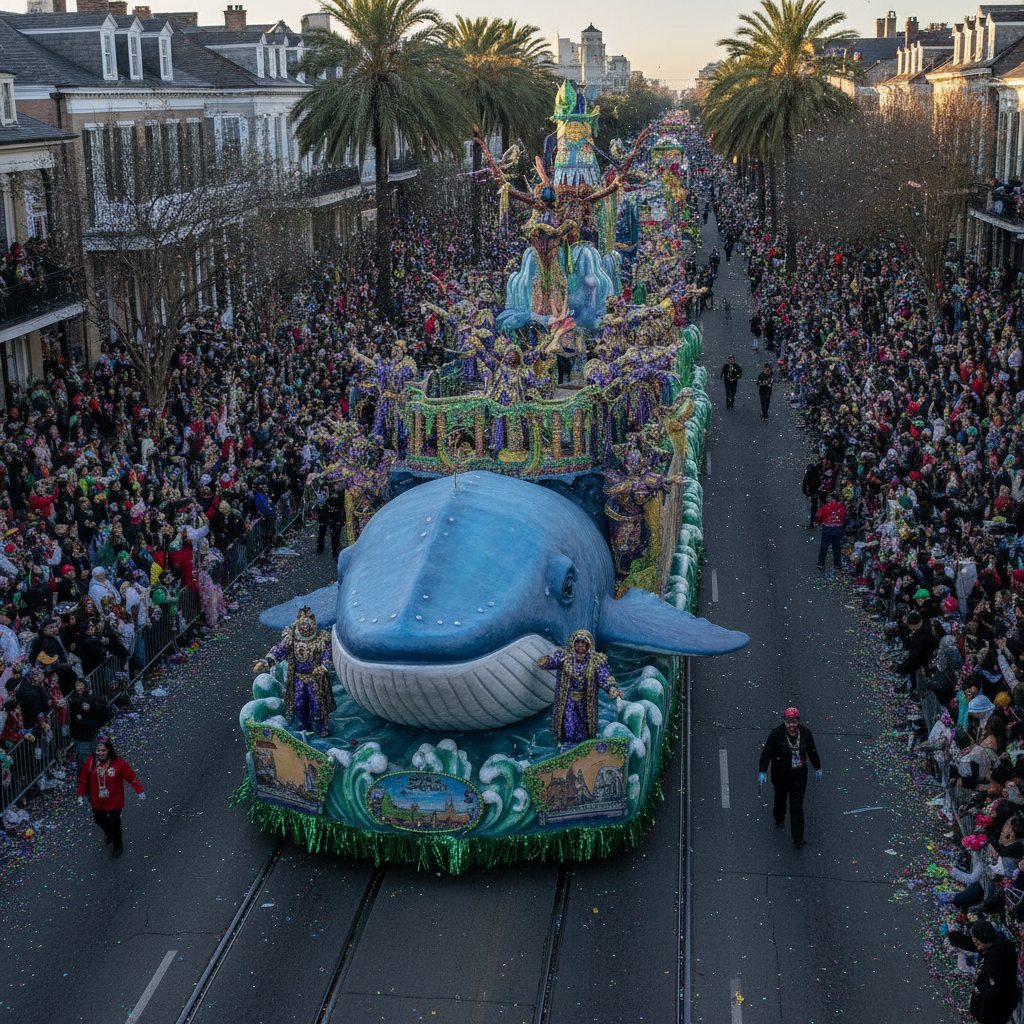
New Orleans Mardi Gras (the annual Carnival celebration in the weeks before Lent — the largest annual street festival in the United States, attracting approximately 1.4 million visitors during the peak Mardi Gras weekend (the last Saturday through Fat Tuesday before Ash Wednesday), and injecting approximately $1 billion into the New Orleans economy): Mardi Gras is not a single event but a season (the 'Mardi Gras season' begins on January 6 (Twelfth Night / Epiphany) and runs through Fat Tuesday).
1. The History of Mardi Gras in New Orleans
- 1
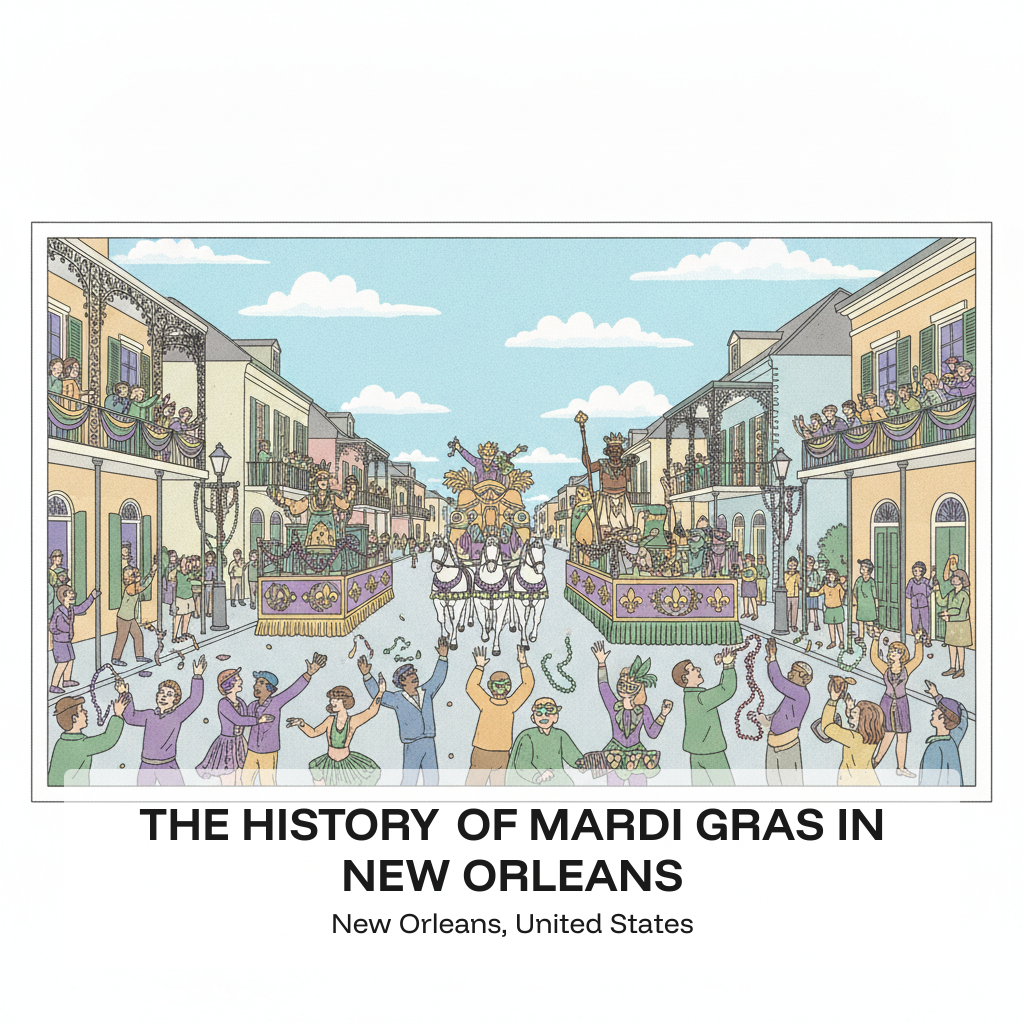
The History of Mardi Gras in New Orleans
Mardi Gras in New Orleans (the 'Carnival' — the French word for the season before Lent, from the Latin 'carne vale' ('farewell to meat') — the period of celebration and excess preceding the 40 days of Lenten fasting and abstinence): the history of Mardi Gras in New Orleans (the oldest Mardi Gras celebration in North America, begun by the French colonial settlers of Louisiana in the early 18th century): the French explorers Pierre Le Moyne d'Iberville and Jean-Baptiste Le Moyne de Bienville arrived at the mouth of the Mississippi River on March 2-3, 1699 — Mardi Gras Day — and named the area 'Pointe du Mardi Gras', establishing a tradition of celebration that has continued in Louisiana to the present day; the first Mardi Gras parade in New Orleans (the first organized parade is documented in 1837, when a group of masked revelers marched through the streets of the French Quarter with a horse-drawn float); the founding of the Krewe of Comus in 1857 (the Mystic Krewe of Comus — the first of the New Orleans Carnival 'krewes' (the private social organizations that organize and fund the Mardi Gras parades and balls) — established the template of the themed parade with elaborate floats, costumed riders, and 'throws' to the street crowd that all subsequent krewes have followed); the most famous krewes (the Krewe of Rex (founded 1872), the Zulu Social Aid and Pleasure Club (founded 1909 — the African-American krewe whose parade is the most beloved in the history of New Orleans Mardi Gras, the krewe famous for throwing hand-painted coconuts (the 'Zulu coconut' — the most prized Mardi Gras throw in New Orleans) and for the characterization of the krewe's Carnival royalty in traditional African tribal costume), and the super-krewes (the Krewe of Endymion (founded 1967 — the largest Mardi Gras parade in the world, with 3,000+ riders and 30+ floats) and the Krewe of Bacchus (founded 1968 — the krewe founded by the comedian Danny Kaye that pioneered the tradition of celebrity monarchs (the 'King Bacchus' position has been held by Bob Hope, Frank Sinatra, Henry Winkler, and numerous other celebrities))).
- 2
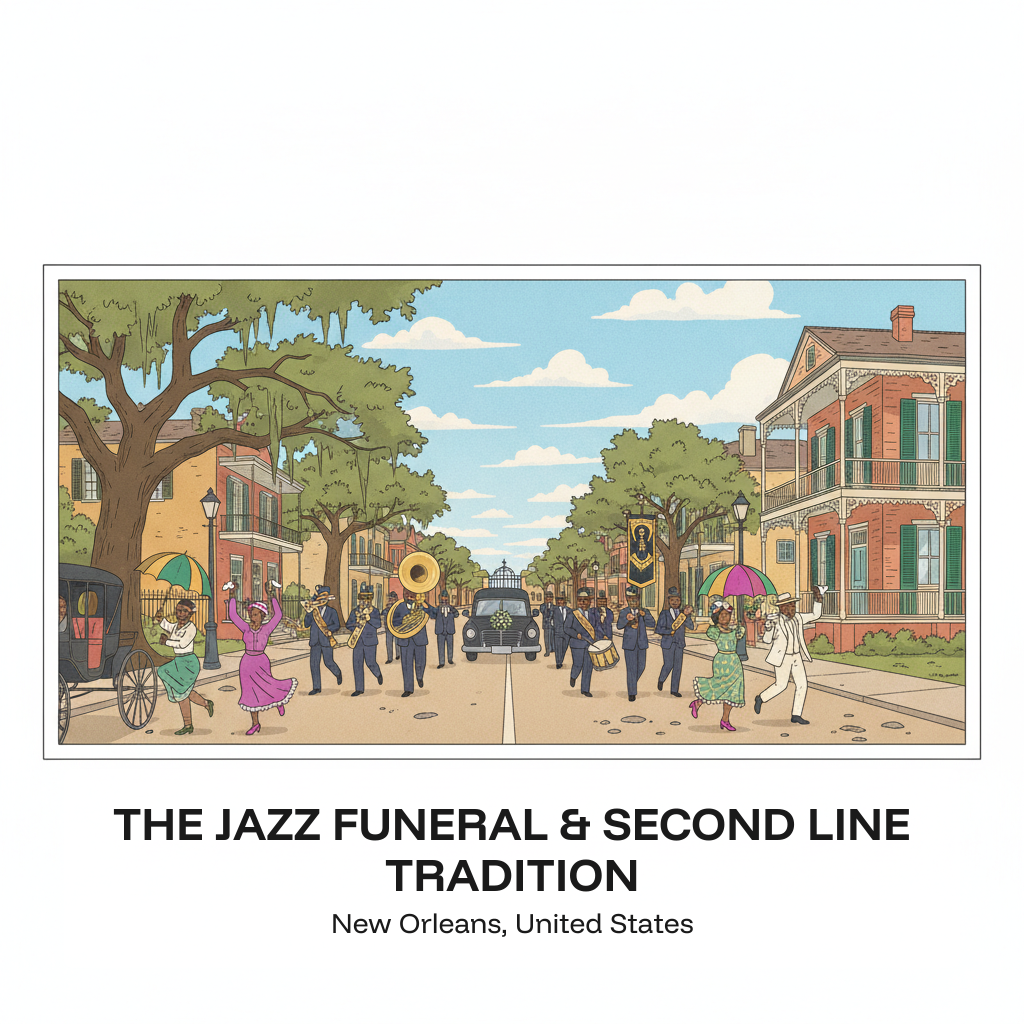
The Jazz Funeral & Second Line Tradition
The New Orleans jazz funeral (the uniquely New Orleans tradition of celebrating the life of a deceased person with a brass band procession through the streets — the 'jazz funeral' (the funerary custom that synthesizes African, Caribbean, French, and American musical traditions into a distinctive form of collective grief and celebration)): the jazz funeral structure (the procession begins at the funeral home or church where the service is held, with the brass band playing slow hymns (the 'dirges' — 'Just a Closer Walk with Thee', 'Amazing Grace', 'St. James Infirmary' (the most-played jazz funeral song in New Orleans, a song of African-American origin about the death of a woman as seen by her lover)) as the 'first line' (the family, close friends, and members of the social club or Masonic lodge to which the deceased belonged, the official mourners walking behind the coffin and hearse) processes to the cemetery; at the cemetery gates (as the body is 'cut loose' to be taken to its final rest inside), the dirges give way to the up-tempo celebration songs ('Oh When the Saints Go Marching In' — the most famous jazz funeral celebration song, the hymn that has become the internationally recognized anthem of New Orleans): the 'second line' (the dancers who follow the brass band in the streets after the body is interred — the joyful, high-stepping umbrella-twirling dancers in their Sunday clothes who dance the 'second line' dance (a rolling, hip-swaying walk turned into dance by the addition of rhythmic stepping, umbrella-twirling, and handkerchief-waving) that is the most distinctive and most joyous expression of New Orleans street culture).
- 3
St. Charles Avenue Streetcar & the Uptown Neighborhoods
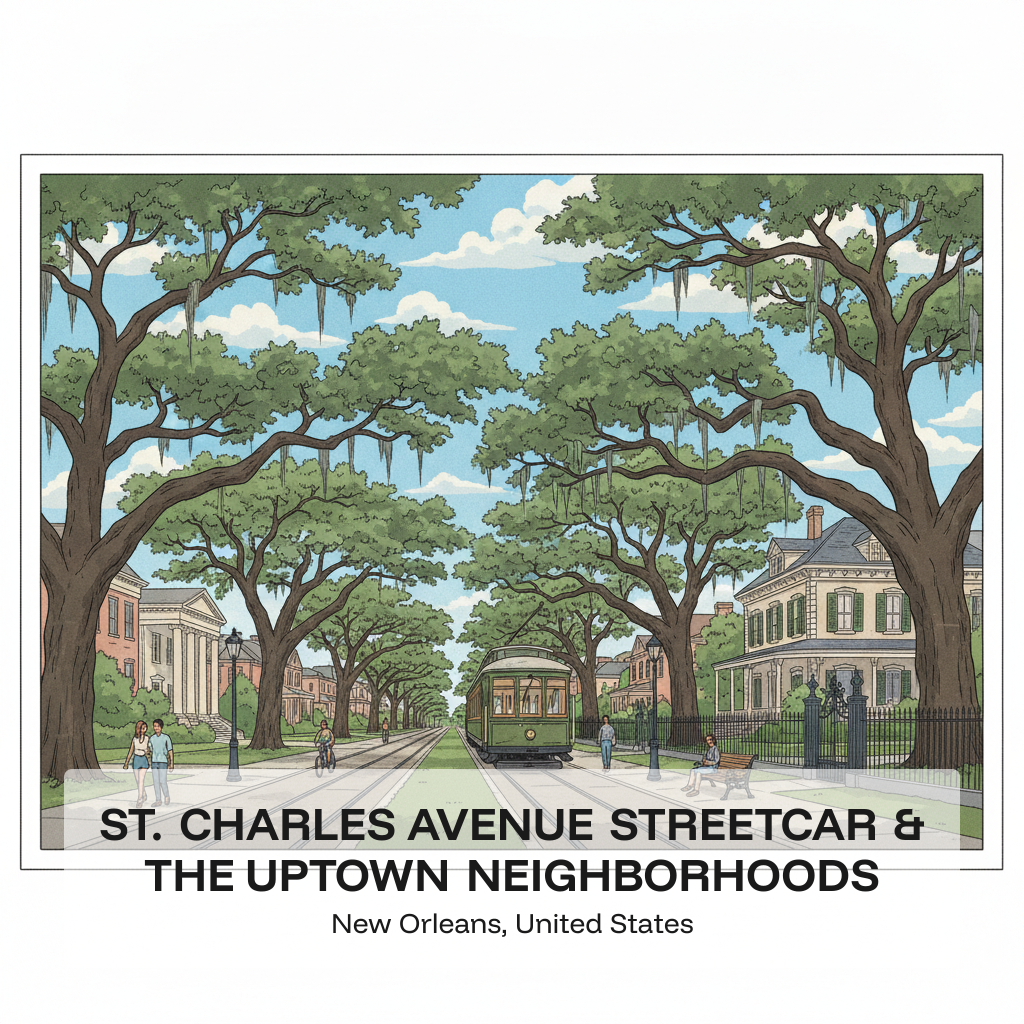
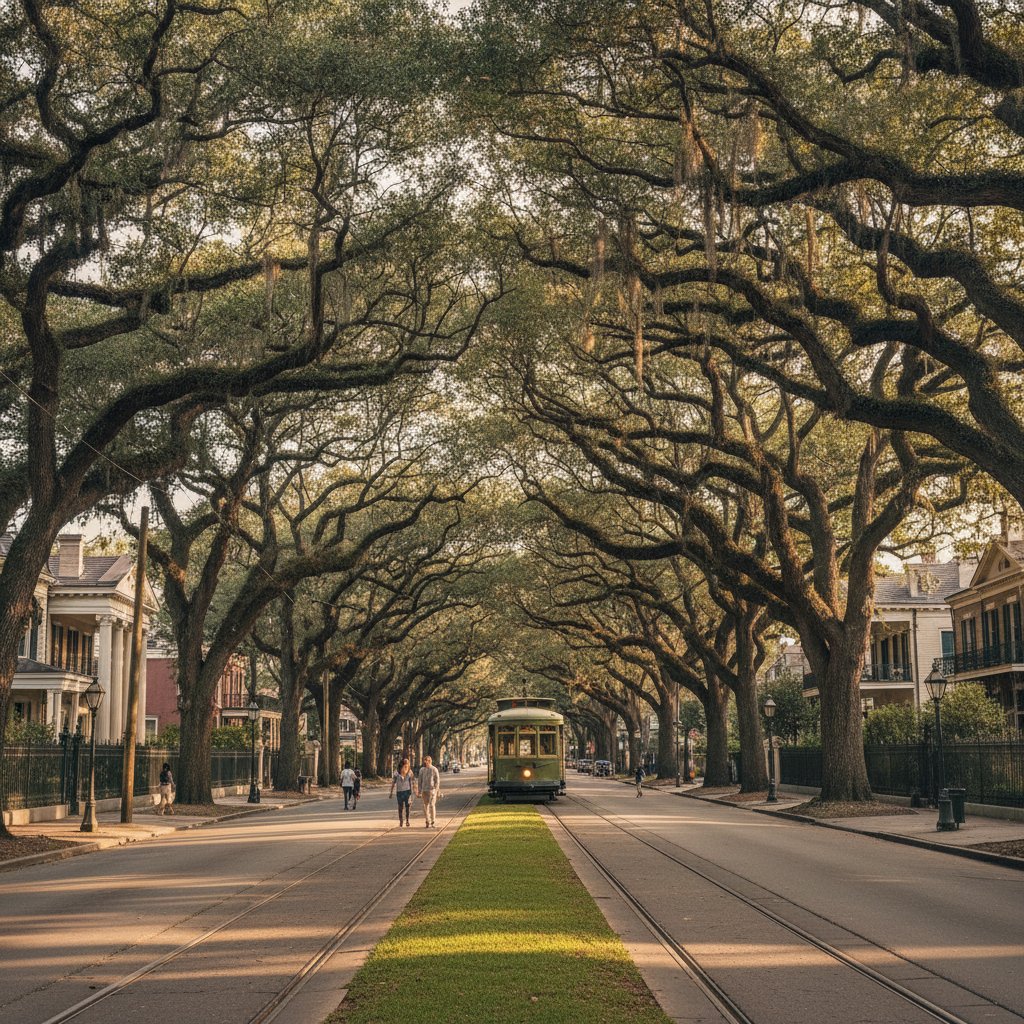
The St. Charles Avenue Streetcar (the New Orleans Regional Transit Authority streetcar line running along St. Charles Avenue from Canal Street to Carrollton Avenue — the oldest continuously operating streetcar line in the world (operated continuously since September 26, 1835, when the New Orleans and Carrollton Railroad began service (the 'railway' that was initially horse-drawn and later electrified in 1893)), the single most-iconic form of public transit in the United States): the St. Charles Streetcar (the olive-green (not red — the cars that are familiar from Tennessee Williams's play 'A Streetcar Named Desire' — Desire was the line that ran along Desire Street in the Ninth Ward, now replaced by buses — are the correct New Orleans olive green) 1922-vintage Perley Thomas streetcars that have operated on the line since 1923 (the PCC cars that replaced the original 1924 Perley Thomas cars were themselves replaced by the current Perley Thomas restorations in 1985)) runs the length of St. Charles Avenue through the grandest residential street in New Orleans: the Uptown mansions (the succession of Greek Revival, Italianate, and Queen Anne Victorian mansions on lots shaded by the massive Southern live oak trees that line the median (the 'neutral ground') of St. Charles Avenue, the most beautiful tree-shaded boulevard median in the American South).
- 4
Tremé — The Oldest African American Neighbourhood in the US
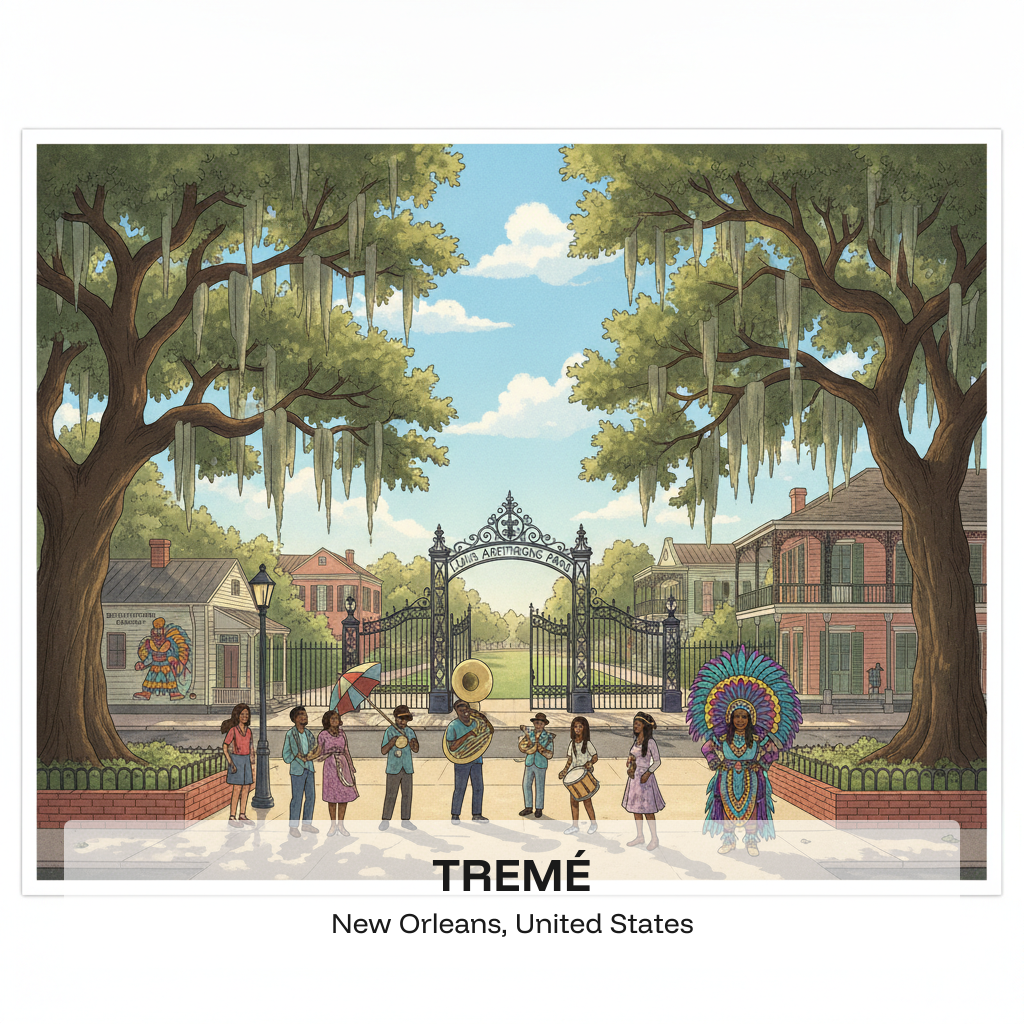
Tremé (the neighbourhood immediately west of the French Quarter, across North Rampart Street — the oldest African-American neighbourhood in the United States, established in the late 18th century as the residential area of New Orleans's large free Black community (the 'gens de couleur libres' — the free people of colour who formed the most significant free Black community in the antebellum American South, comprising approximately one-third of the population of New Orleans by 1860)): the Tremé neighbourhood (the neighbourhood that has been more responsible than any other single place for the development of American popular music — the birthplace and incubator of New Orleans jazz, the second-line brass band tradition, and the Mardi Gras Indian tradition): the Congo Square (the large open space in what is now Louis Armstrong Park (700 N Rampart Street) where enslaved Africans were permitted to gather on Sundays to play music, dance, and sell goods — the practice (documented from the 1740s and continuing until the 1830s) is the only documented survival of African musical and cultural practices in any American city, and the most direct antecedent of the music that became New Orleans jazz); the Backstreet Cultural Museum (1116 St. Claude Avenue — the museum dedicated to the Mardi Gras Indian tradition (the tradition in which African-American men spend all year hand-crafting elaborate feathered and beaded suits inspired by the regalia of Native American ceremonial costumes, then don the suits for Mardi Gras and Super Sunday to parade through the streets 'masking Indian' — the most visually spectacular folk art tradition in the United States)).
- 5
Bayou St. John & City Park — New Orleans's Natural Beauty
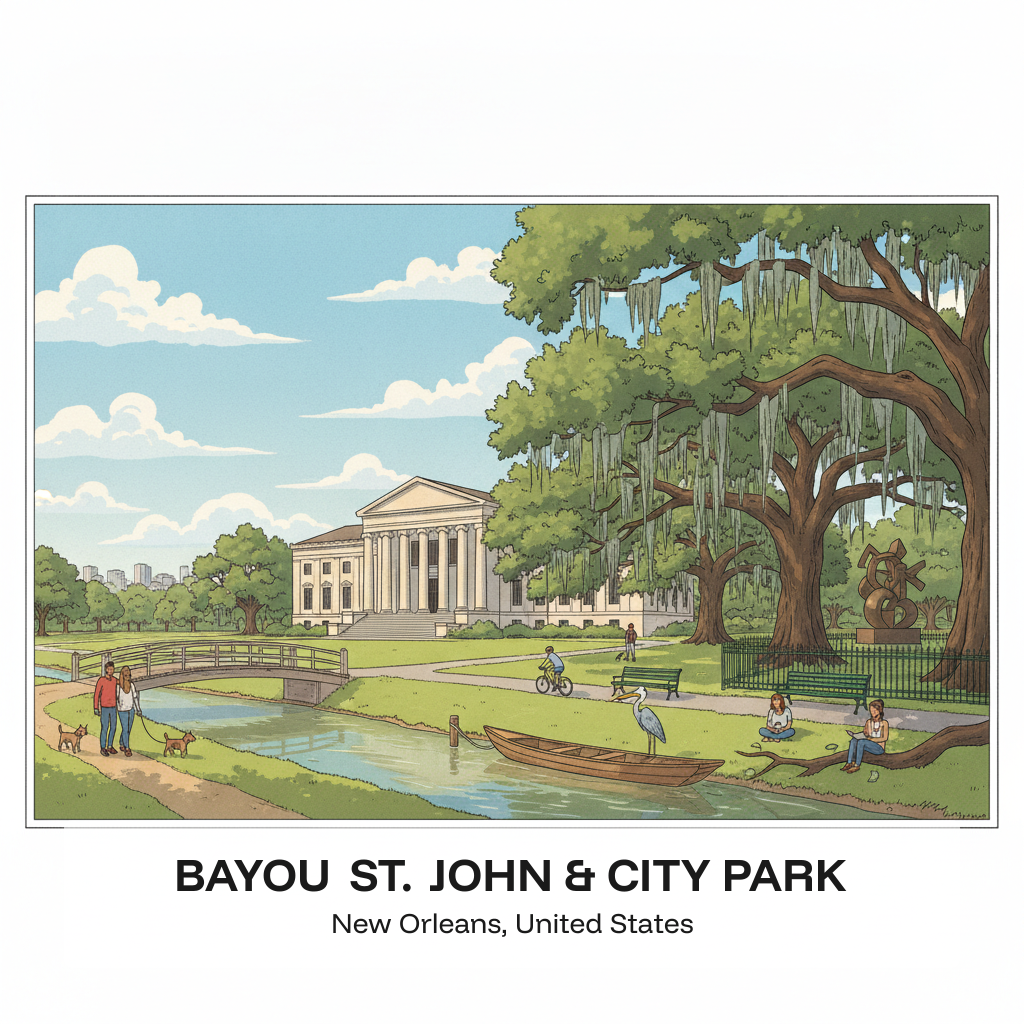
Bayou St. John (the natural waterway in the Mid-City neighbourhood of New Orleans, running from the Metairie Ridge (the natural ridge that marked the original southern shore of Lake Pontchartrain) south through City Park to the canal system of Mid-City — the oldest inhabited area of New Orleans (the Bayou St. John corridor was the preferred travel route of the indigenous Choctaw people who pre-dated French settlement, and the first European settlement in the area was established along the bayou in 1699)): the Bayou St. John landscape (the slow-moving, green-brown water of the bayou reflecting the Spanish moss-draped live oaks that line the banks — the most quintessentially Louisiana landscape accessible by public transport from the French Quarter): City Park (the 1,300-acre (526-hectare) urban park in the Mid-City neighbourhood, established 1854 on the former Allard Plantation — the second-largest urban park in the United States (after Fairmount Park in Philadelphia), and the park with the largest collection of mature live oak trees in the world (approximately 250 live oaks over 600 years old, the oldest trees in New Orleans): the City Park attractions: the New Orleans Museum of Art (NOMA — the fine arts museum at 1 Collins Diboll Circle in City Park, established 1911 — the finest art museum in Louisiana and the finest in the American Gulf Coast), the Besthoff Sculpture Garden (the 8.5-acre (3.4-hectare) outdoor sculpture garden adjacent to NOMA, with one of the finest collections of modern and contemporary sculpture in any American outdoor setting), and the City Park Botanical Garden.
- 6
New Orleans Food Culture — Creole, Cajun & the Greatest Culinary Tradition in America
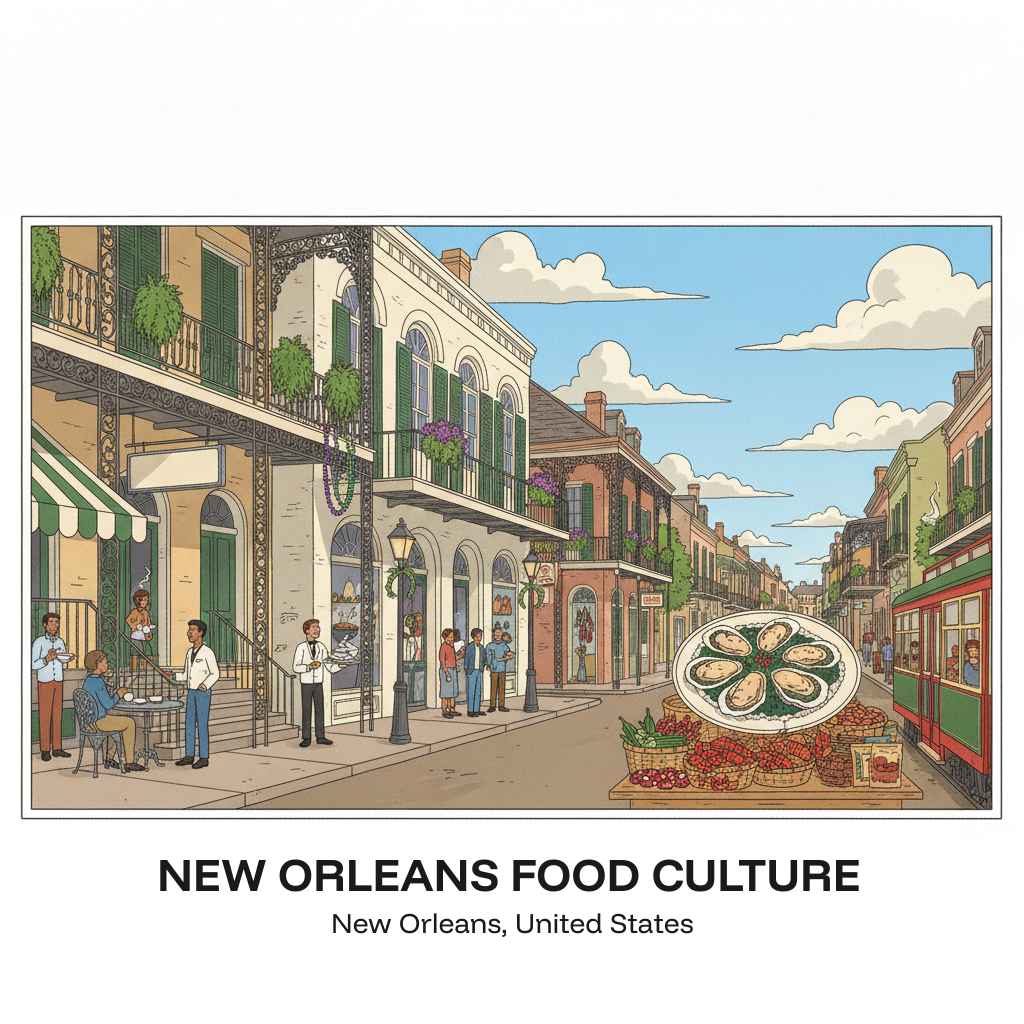
New Orleans food culture (the most distinctive, most historically layered, and (by the consensus of most food writers) the finest regional American food tradition — the synthesis of French Creole cooking (the haute cuisine adaptation of classic French techniques to the ingredients of Louisiana (the roux-based sauces, the filé (ground sassafras leaves) and okra used as thickening agents in gumbo, the court bouillon (the Creole fish stew), and the daube glacée (the gelatinized braised beef))), the African cooking traditions (the okra (Abelmoschus esculentus) that gives gumbo its name ('gumbo' is the Louisiana French corruption of 'ki ngombo', the Central African Bantu word for okra — the vegetable that serves as both the dominant ingredient and the thickening agent in the most famous dish of Louisiana Creole cooking), the rice dishes, the black-eyed peas (Vigna unguiculata — the 'Red Beans and Rice' (the traditional Monday dish of New Orleans, based on the West African tradition of cooking red kidney beans slowly with the bone from Sunday's ham), the most beloved comfort food of New Orleans), and the Cajun cooking traditions (the rustic French country cooking tradition of the Acadian settlers (the 'Cajuns' — the French-speaking Acadian settlers expelled from Nova Scotia by the British in the 1750s-1760s who settled in the bayou country of southwestern Louisiana, bringing their traditional French peasant cooking that adapted to Louisiana ingredients (the crawfish (Procambarus clarkii — the Louisiana crawfish, the primary ingredient of the Cajun crawfish étouffée, the crawfish boil, and the crawfish bisque), the andouille sausage, and the tasso ham)): the restaurants (Galatoire's (209 Bourbon Street, established 1905 — the most authentically Creole of the New Orleans grand old restaurants, famous for the Friday lunch (the traditional New Orleans Creole ritual of a 3-4 hour Friday lunch at Galatoire's, a custom that has continued since Prohibition), the Antoine's (713 St. Louis Street, established 1840 — the oldest restaurant in the United States in continuous operation at the same location, creator of Oysters Rockefeller (the dish invented by Jules Alciatore at Antoine's in 1899, made with oysters baked with a sauce of puréed fresh herbs, bread crumbs, butter, and Herbsaint (the New Orleans anise liqueur) — the most copied New Orleans restaurant dish in the world)), and Dooky Chase's Restaurant (the restaurant established 1941 by Edgar 'Dooky' Chase and his wife Leah Chase (1923-2019 — 'the Queen of Creole cuisine', the most respected restaurant cook in the history of New Orleans, the chef who served every civil rights leader from Thurgood Marshall and Martin Luther King Jr. to President Barack Obama at her restaurant in the Tremé neighbourhood).
Walk this route with audio
Stories play automatically as you reach each stop — no tapping needed.
More in new-orleans
Hurricane Katrina, the Lower Ninth Ward & New Orleans's Resilience
Garden District Mansions, St. Charles Streetcar & Uptown Life
Swamps, Bayous & Louisiana's Wild Cypress Country
Voodoo, Marie Laveau & the Supernatural Culture of New Orleans
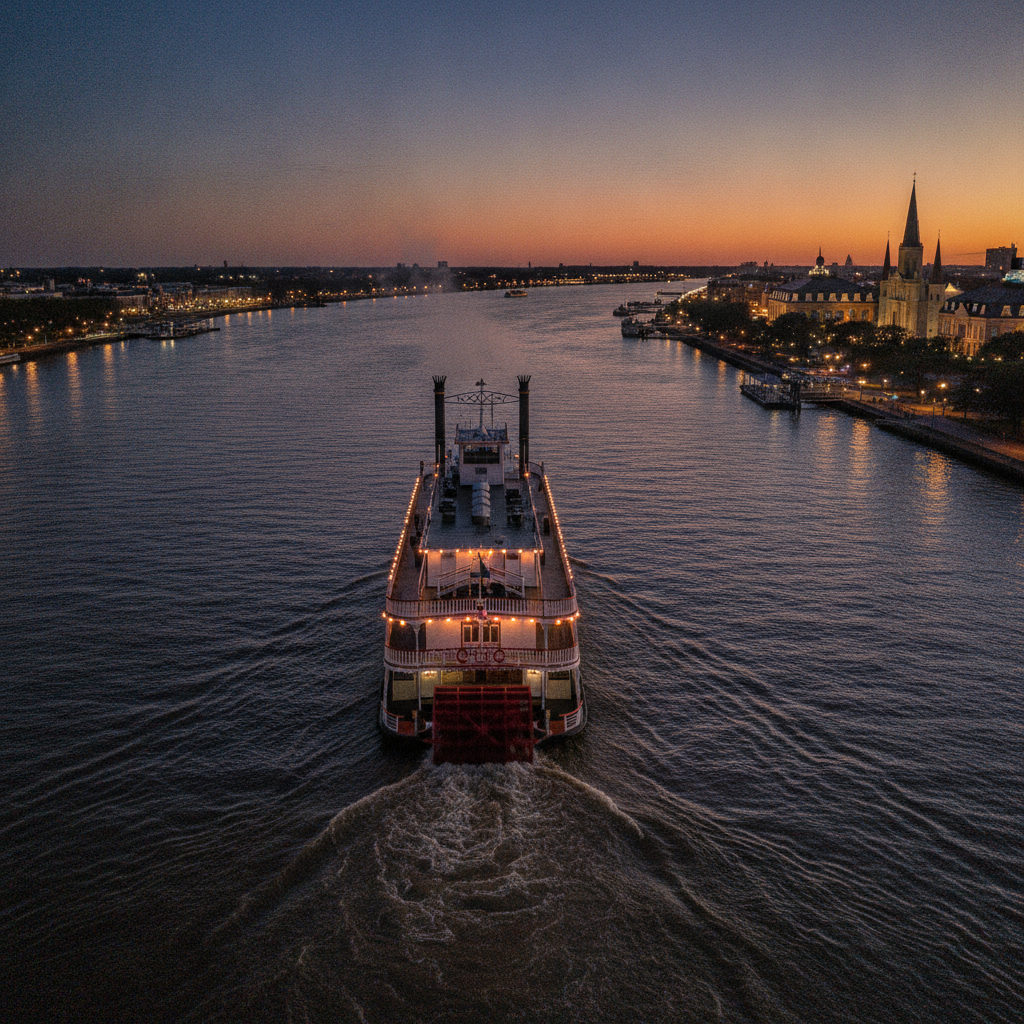
The Mississippi River, Steamboats & New Orleans's Port Heritage