The French Quarter, Jazz & the Soul of New Orleans
New Orleans (the city in Orleans Parish, Louisiana — population approximately 390,000 in the city, 1.27 million in the metro area — the most culturally unique city in the United States, the birthplace of jazz, the city of Mardi Gras, and the city whose French Creole and African heritage has produced the most distinctive food, music, and architectural culture of any American city): the French Quarter (Vieux Carré — 'Old Square') is the oldest urban neighbourhood in the Mississippi River valley and the most internationally famous neighbourhood in the American South.
- 1
Bourbon Street & the French Quarter's Entertainment Strip
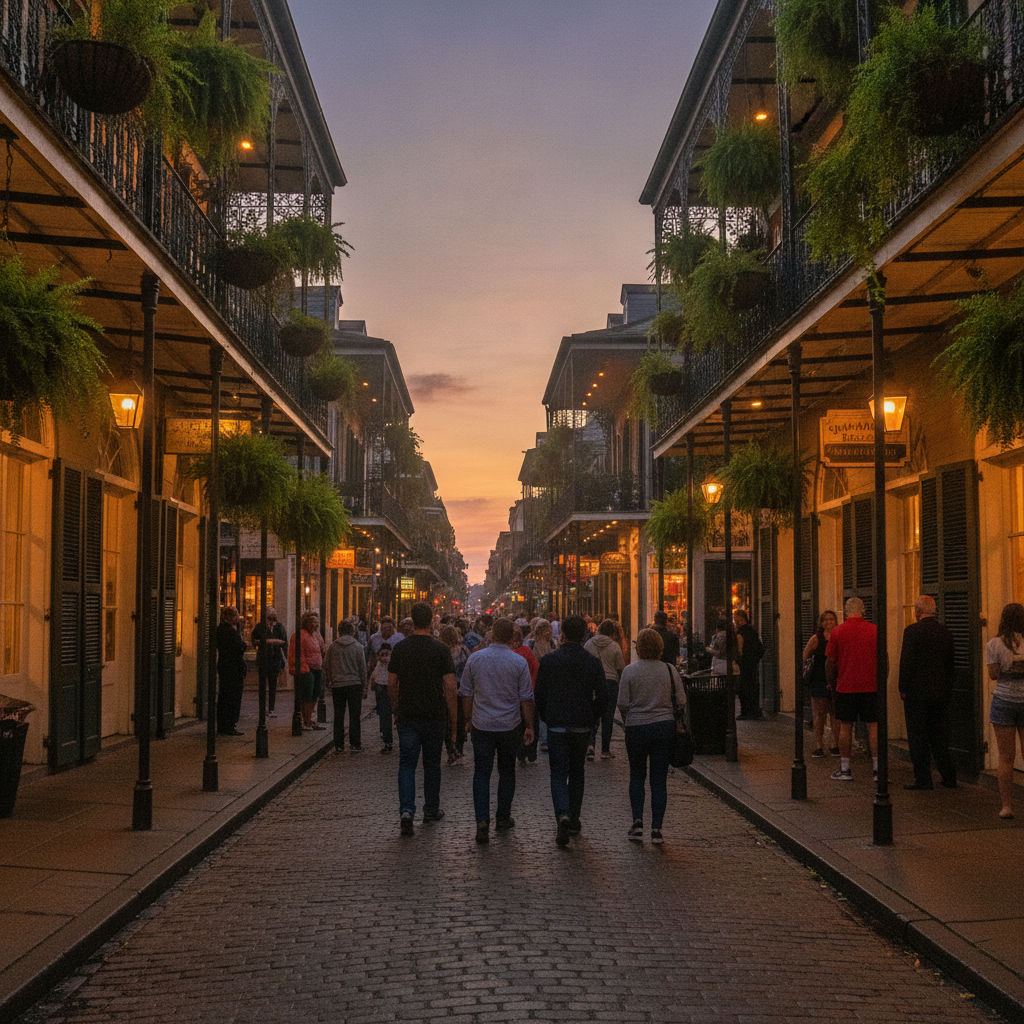
Bourbon Street (the entertainment and nightlife street running north-south through the centre of the French Quarter (Vieux Carré), named for the French royal family (the Maison de Bourbon — the ruling house of France when New Orleans was founded as a French colonial city in 1718 by Jean-Baptiste Le Moyne de Bienville) rather than for the American whiskey): the Bourbon Street experience (the most famous nightlife street in the American South and the most consistently misrepresented — Bourbon Street's reputation as a tawdry strip of bars and strip clubs is accurate for the 'lower' Bourbon Street (the section between Canal Street and St. Ann Street, where the go-cups (the plastic to-go cups that are legal throughout New Orleans under the city's 'open container' laws — one of only a handful of US cities to permit drinking alcohol in public spaces) flow from the bars and the loud rock and blues bands can be heard from blocks away) but misleading about the character of the full street (the 'upper' Bourbon Street, from St. Ann Street to Esplanade Avenue, is one of the quieter and more residential streets of the French Quarter, lined with the 18th and early 19th century Creole cottages and townhouses that represent the finest surviving French Creole domestic architecture in North America)): the true jazz experience of the French Quarter is not on Bourbon Street but at the traditional jazz clubs (Preservation Hall, Frenchmen Street, and the Spotted Cat).
- 2
Preservation Hall — The Cathedral of Traditional Jazz
Preservation Hall (726 St. Peter Street, French Quarter — the most famous traditional jazz venue in the world, established 1961 by Barbara Reid and Grayson Mills and later managed by Allan Jaffe (1935-1987) with the explicit mission of preserving and presenting traditional New Orleans jazz (the original style of jazz developed in New Orleans in the early 20th century, also called 'Dixieland' or 'trad jazz' — the collective improvisation style (all instruments improvising simultaneously within a defined harmonic structure) that preceded the 'swing' style and the bebop revolution)): the Preservation Hall experience (the 150-person capacity room — the small, deliberately un-air-conditioned room with the bare wooden benches, the ancient walls hung with photographs of the jazz masters who have played there, the cramped bandstand at the front): the Preservation Hall Jazz Band (the resident ensemble that has performed at Preservation Hall every night it has been open since 1961, currently led by tuba player Ben Jaffe (the son of Allan Jaffe), continuing the tradition of the founding bandmembers (the 'Old Masters' — musicians like Willie 'Bunk' Johnson, George Lewis, and Kid Thomas Valentine who were the direct links to the earliest era of New Orleans jazz)): the queue (the nightly line of visitors stretching around the block on St. Peter Street waiting to enter Preservation Hall) is the most authentic queue for live music in the United States.
- 3
Café du Monde — Beignets & Café au Lait Since 1862
Café du Monde (800 Decatur Street, at the corner of St. Ann Street in the French Quarter — the coffee stand and beignet café established 1862 in the original French Market, the oldest continuously operating café in the United States): the Café du Monde experience (the 24-hours-a-day, 7-days-a-week (closed only on Christmas Day and during hurricanes) outdoor and covered café seating at the edge of Jackson Square, facing the Mississippi River levee): the beignet (the 'Café du Monde beignet' — the square pillow of fried choux pastry dough (the deep-fried square doughnuts made from pâte à choux dough — the same French pastry dough used for profiteroles and éclairs — fried in hot oil until puffed and golden and immediately buried in a blizzard of powdered (icing) sugar from an enormous shaker, creating the characteristic white cloud of powdered sugar around the beignet plate that is the visual signature of the Café du Monde experience): the beignets (always ordered in sets of three — the 'order of beignets' (trois beignets) has been $3.51 (as of 2024), making Café du Monde the finest food value in New Orleans): the café au lait (the Café du Monde coffee — the chicory coffee (Community Coffee with chicory, the New Orleans tradition of blending roasted chicory root (Cichorium intybus) with ground coffee, a practice brought from France and established in New Orleans during the Civil War-era coffee shortages) mixed in equal proportions with scalded whole milk, served in a white ceramic cup — the most quintessentially New Orleanian beverage).
- 4
Jackson Square & St. Louis Cathedral — The Heart of the French Quarter
Jackson Square (the historic public square in the heart of the French Quarter, between Decatur Street and Chartres Street — originally the 'Place d'Armes' (the parade ground of the French colonial city of Nouvelle-Orléans)): the Jackson Square ensemble (the finest surviving ensemble of French colonial urban design in North America): the three elements of the Jackson Square ensemble: the St. Louis Cathedral (the Basilica of St. Louis, King of France — the Roman Catholic basilica at the north side of Jackson Square, built in its current form in 1850 (the third church on the site (the first church was built 1718, the second rebuilt after the 1788 fire that destroyed 856 buildings in New Orleans)) — the oldest continually active Roman Catholic cathedral in the United States (the Archdiocese of New Orleans was established 1793 — the oldest Roman Catholic archdiocese in the United States)); the Cabildo (701 Chartres Street — the 1795 Spanish colonial government building immediately west of the Cathedral, the site where the Louisiana Purchase was signed on December 20, 1803 (the transfer of approximately 2.1 million km² (828,000 sq miles) of North American territory from the French Republic to the United States, the land purchase that doubled the size of the United States at a cost of approximately $15 million (approximately $340 million in 2024 dollars)) — now the Louisiana State Museum); and the Presbytere (now the Louisiana State Museum's 'Living with Hurricanes: Katrina and Beyond' exhibition — the most significant museum of Hurricane Katrina in Louisiana).
- 5
Frenchmen Street — Where the Locals Hear Jazz
Frenchmen Street (the 3-block stretch of Frenchmen Street in the Faubourg Marigny neighbourhood immediately east of the French Quarter — the street that has replaced Bourbon Street as the primary live music destination for locals (as opposed to tourists) in New Orleans, with seven or more live music venues operating simultaneously on most evenings): the Frenchmen Street music scene (the street where the full range of New Orleans music is performed nightly, not just traditional jazz but also the second-line brass band music (the 'second line' — the dance procession that follows the jazz funeral brass band in the streets of New Orleans, now a cultural institution that takes place in neighbourhood social clubs and at street festivals throughout the year), the funk and soul music of the Tremé neighbourhood (the historically African-American neighbourhood adjacent to the French Quarter, the neighbourhood most associated with the African cultural roots of New Orleans music), the Cajun and Zydeco music from southwestern Louisiana, and the blues): the principal venues (the Spotted Cat Music Club (623 Frenchmen Street — the most beloved small jazz club in New Orleans among locals, famous for the free admission policy and the high quality of the traditional jazz and swing bands that perform there every night), the d.b.a. (618 Frenchmen Street), the Café Negril (606 Frenchmen Street), and the Three Muses (536 Frenchmen Street — the wine and cocktail bar with the finest kitchen of any Frenchmen Street venue)).
- 6
The Garden District — Antebellum Mansions & Live Oak Canopy
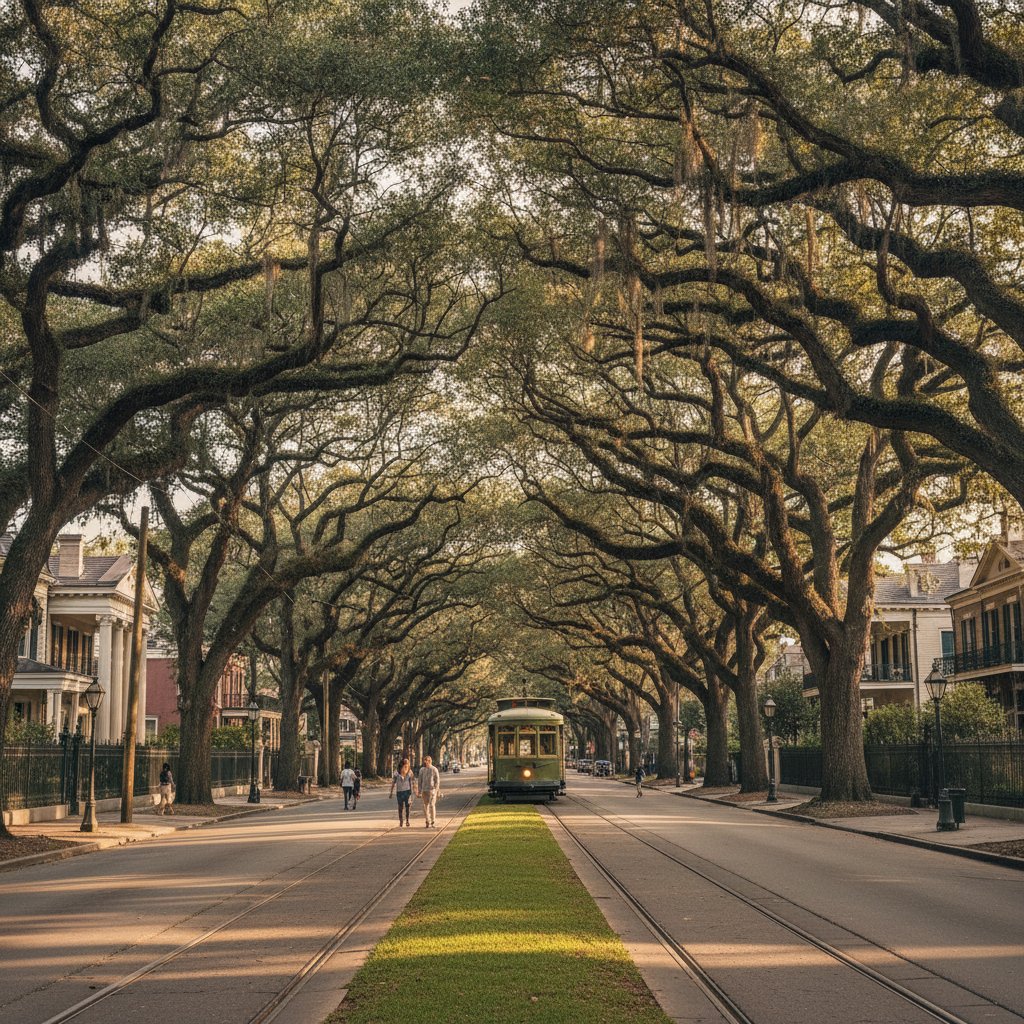
The Garden District (the historic residential neighbourhood in Uptown New Orleans, roughly bounded by Magazine Street, Louisiana Avenue, St. Charles Avenue, and Jackson Avenue — the 'American sector' of antebellum New Orleans, the neighbourhood developed after the Louisiana Purchase (1803) by the American (anglophone) settlers who arrived from the eastern United States and who built their grand houses in the American tradition (the Greek Revival and Italianate plantation-style mansions on large wooded lots) in conscious contrast to the Creole townhouses of the French Quarter): the Garden District's principal streets (Prytania Street and First, Second, Third, and Fourth Streets) are lined with the finest surviving antebellum residential architecture in the United States: the Payne-Strachan House (1849, 1134 First Street), the Brevard-Clapp House (1857, 1239 First Street — the house that was the fictional 'Mayfair Witches' house in Anne Rice's Mayfair Witches novels), the Colonel Short's Villa (1859, 1448 Fourth Street, with the famous 'cornstalk fence' — the cast-iron fence in the form of cornstalks, one of only two such fences surviving in New Orleans (the other is at 915 Royal Street in the French Quarter)), and numerous other Greek Revival and Italianate mansions; the live oak canopy (the magnificent Quercus virginiana trees — the massive Southern live oaks with their horizontal spreading branches draped in Spanish moss (Tillandsia usneoides — the epiphytic bromeliad that is the most characteristic visual element of the landscape of the Deep South) that line the major streets of the Garden District, creating a cathedral-like tunnel of shade that is the most atmospheric urban tree canopy in the United States.
Walk this route with audio
Stories play automatically as you reach each stop — no tapping needed.
More in new-orleans
Hurricane Katrina, the Lower Ninth Ward & New Orleans's Resilience
Garden District Mansions, St. Charles Streetcar & Uptown Life
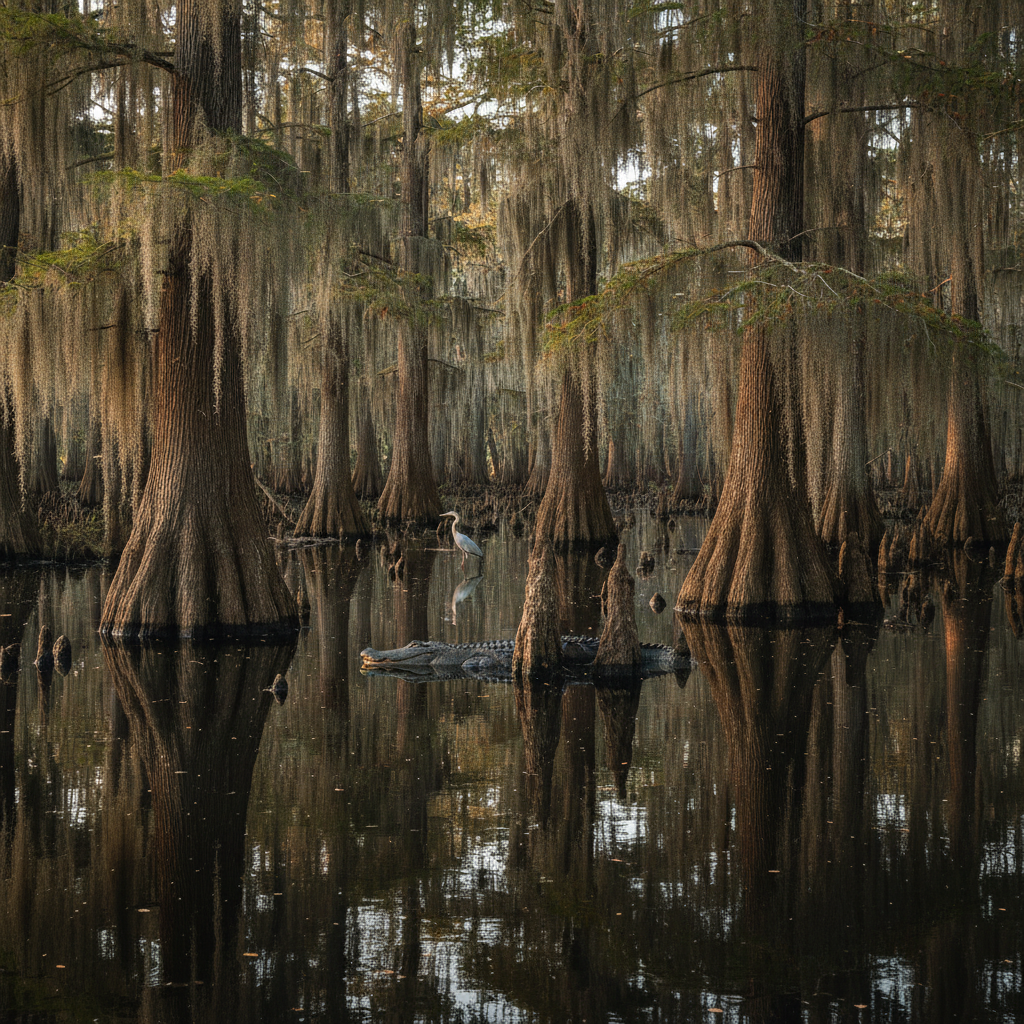
Swamps, Bayous & Louisiana's Wild Cypress Country
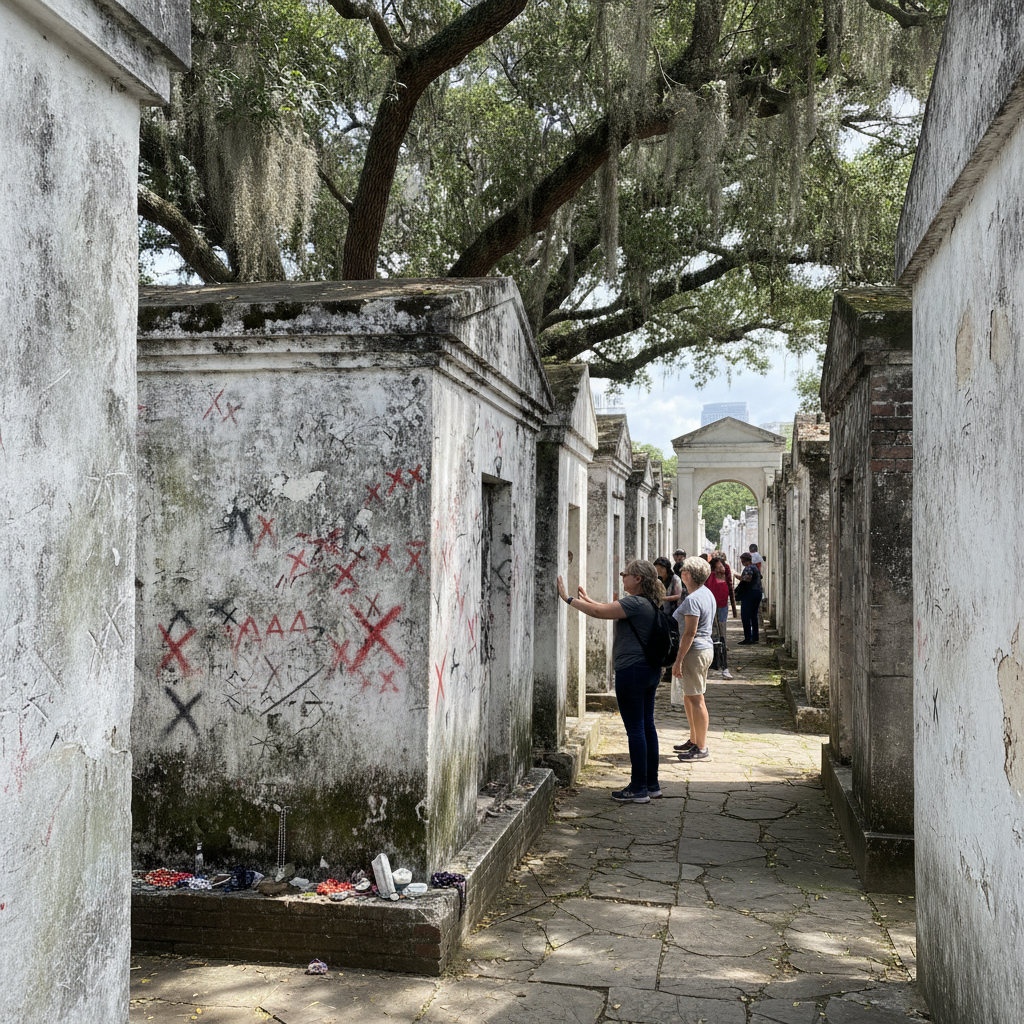
Voodoo, Marie Laveau & the Supernatural Culture of New Orleans
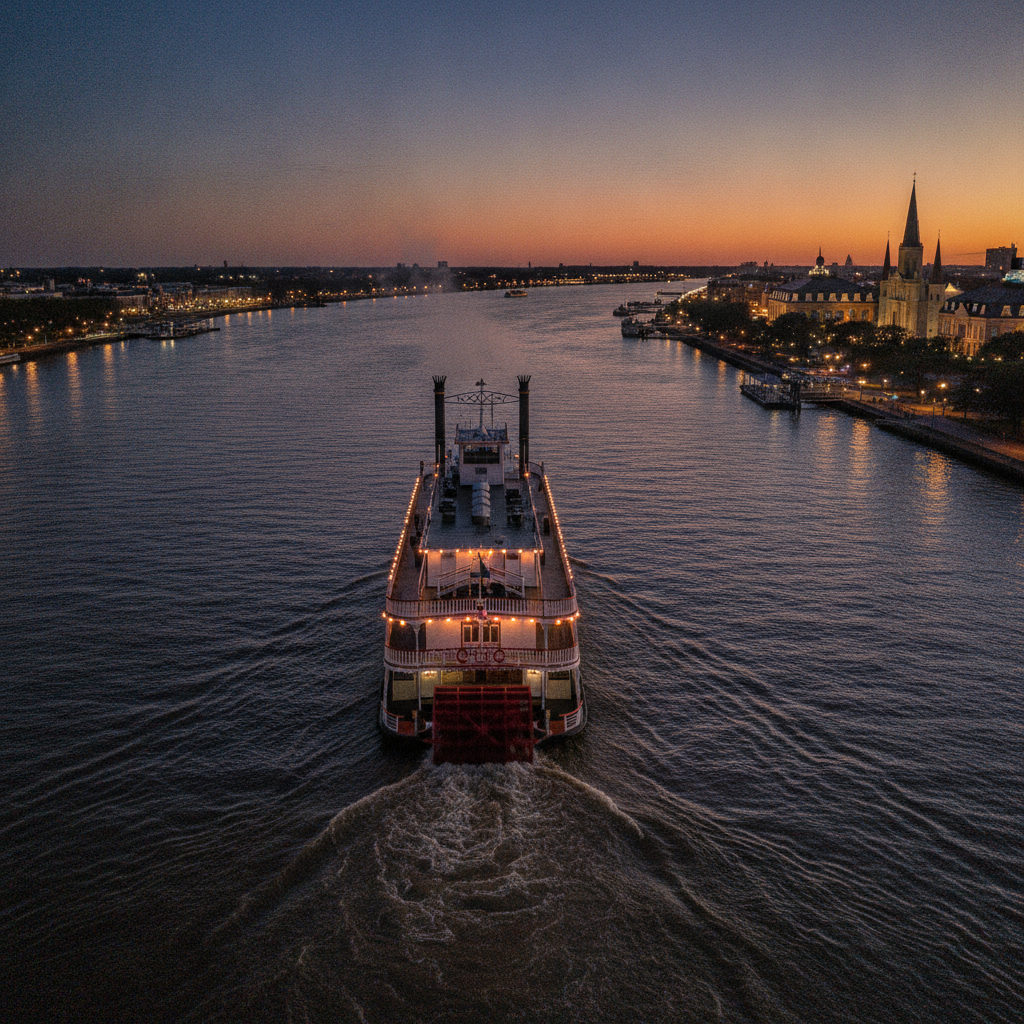
The Mississippi River, Steamboats & New Orleans's Port Heritage