The Ink-Maker Founded in 1577, the Deer Who Have Been Legally Protected Since 1302 CE & Japan's Smallest Five-Story Pagoda in an Azalea Ravine
The Nara sculpture trail's three media—bronze, hollow dry-lacquer, and clay—and the Nara Sculpture Map's one-day routing past the Ashura, Great Buddha, and 9 original clay Guardian Generals; Kobaien's ink sticks aged 20–50 years whose fragrance is considered a great sensory experience of Japanese craft; the deer's legal protection since 1302 CE and the Tsunokiri antler-trimming lasso ceremony in October; Muro-ji's smallest-in-Japan pagoda and its azalea season; the three Yamato Sanzan sacred mountains with pilgrimage routes predating Buddhism; and the 3-day Kumano Kodo extension from Nara through Yoshino to the world's largest torii gate.
- 1
Nara's Buddhist Art – The Sculpture Trail
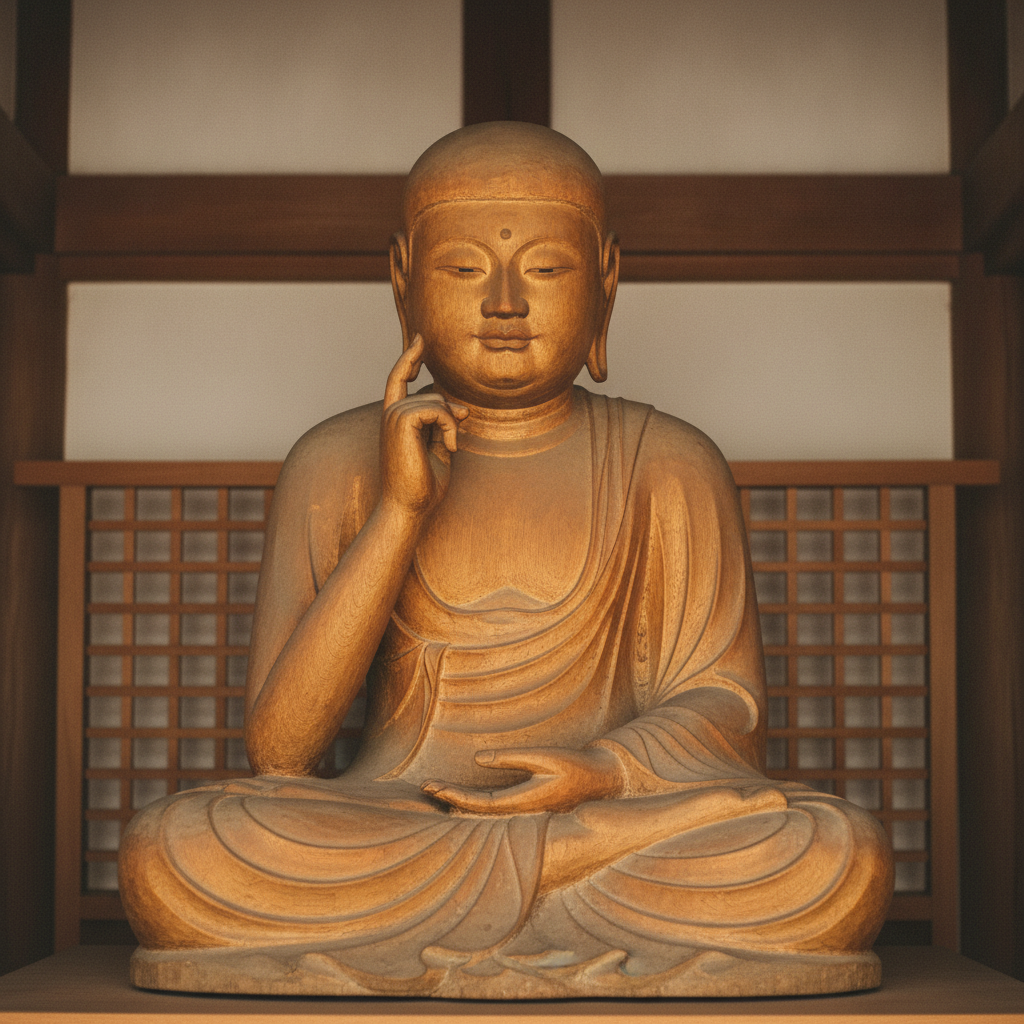
The Buddhist sculpture of the Nara period (710–794 CE) is the most significant body of religious art produced in Japan and the foundation of the entire subsequent Japanese sculptural tradition. The three primary media: bronze casting (the Great Buddha of Tōdai-ji—the bronze seated figure requiring 8 separate pourings; the Yakushi Buddha of Yakushi-ji—cast in one pouring and considered more technically accomplished than the Great Buddha by contemporary metallurgical analysis); hollow dry-lacquer (kanshitsu—the technique of building up cloth soaked in lacquer over a clay or wooden core, then removing the core; the Ashura of Kōfuku-ji and the Ganjin portrait of Tōshōdai-ji are the two finest surviving examples); clay modeling (the 12 Guardian Generals of Shin-Yakushi-ji—9 of the original 12 clay figures from 747 CE survive, constituting the largest intact group of Nara-period clay sculpture). The sculptors: Tori Busshi (the 7th-century immigrant sculptor whose Shaka Triad at Hōryū-ji is the oldest signed and dated sculpture in Japan); Unkei and Kaikei (the 12th-century masters who carved the Niō guardians at Tōdai-ji's Nandai-mon in 69 days—their later work at Kōfuku-ji represents the Japanese equivalent of the European Gothic sculpture revolution). The Nara Sculpture Map (available at the Nara National Museum): the most efficient routing for visiting the primary Nara-period sculptures in a single day (Kōfuku-ji Ashura in the morning, Tōdai-ji Great Buddha at midday, Shin-Yakushi-ji Guardian Generals in the afternoon—approximately 7 km on foot).
- 2
Nara's Ink & Craft Traditions
Nara's craft industries were established in the 8th century to supply the imperial capital with luxury goods and religious objects and have maintained continuous production for 1,300 years in several cases. Nara sumi (Nara ink—the highest-grade Chinese-style ink in Japan): Nara Prefecture produces approximately 90% of Japan's total sumi (ink stick) output; the ink-making technique (mixing pine soot with animal glue (nikawa) and kneading the mixture by hand, then pressing into wooden molds) was imported from China in the 7th century and has remained essentially unchanged. The Kobaien ink company (founded 1577 in Naramachi—the benchmark producer of high-grade sumi; the shop in the Naramachi district sells ink sticks at ¥2,000–100,000+ depending on the pine soot grade, aging period, and decorative painting on the stick surface): visiting the Kobaien shop requires knowing that the most expensive sticks are aged for 20–50 years and that the fragrance of high-grade sumi (a combination of pine soot carbon and aged nikawa) is considered one of the great sensory experiences of Japanese craft. Nara sarashi (bleached Nara linen—the traditional fabric technique): the linen is washed in river water and dried on outdoor frames in the summer sun to achieve the distinctive white. Akahadayaki (the Nara-style earthenware pottery fired without glaze at the Akahada kiln on Mount Kasuga—the unglazed red-brown surface used for tea ceremony utensils; the kiln has operated since the 17th century and the current 14th-generation master maintains the traditional firing technique).
- 3
The Deer as Cultural Object
The Nara deer (Cervus nippon—the same sika deer species as elsewhere in Japan, but classified as a separate cultural category in Nara by their sacred status and 1,300-year behavioral adaptation to human presence) are the most internationally recognized aspect of Nara tourism and the subject of more academic research than almost any other urban wildlife population in the world. The sacred status: the deer are historically considered messengers of the deity Takemikazuchi no Mikoto (the deity enshrined at Kasuga Taisha), who was said to have ridden a white deer to Nara from Mount Mikasa in Kashima (Ibaraki Prefecture) when the shrine was established. The legal protection: the Nara deer have been legally protected since 1302 CE (a ruling by the Kōfuku-ji Temple administration that killing a deer was punishable by death—the same penalty as murder). The population management: the current population of approximately 1,200 deer is managed by the Nara Deer Preservation Foundation (established 1892) which conducts the annual antler-trimming ceremony (Tsunokiri—held in October in the Tōdai-ji park area: the deer are lassoed by men in Shinto priest costume and their antlers sawn off with a hand saw in a 5-minute ceremony repeated for each deer, approximately 60–70 per day over 5 days). The deer injury statistics: approximately 120–150 visitors are injured by deer annually in Nara Park (the majority of injuries involve senbei theft—the deer using teeth and hooves to obtain crackers from visitors who attempt to hold on too long): the injuries are minor in almost all cases.
- 4
Muro-ji Temple – The Women's Kōya-san
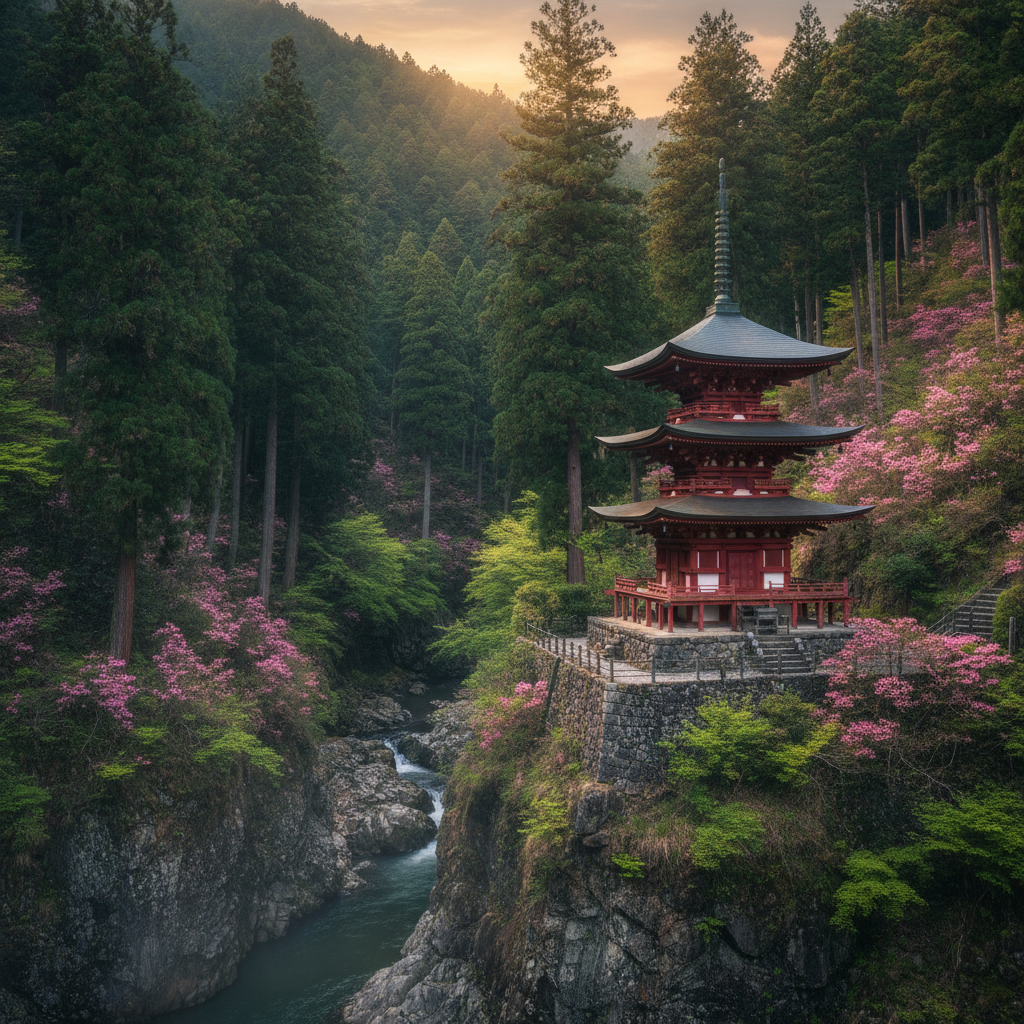
Muro-ji Temple (50 minutes southeast of Nara by Kintetsu Osaka Line to Muroguchi-Ōno, then a 15-minute bus to the temple; an 8th-century mountain temple built into the steep ravine of the Muroto River valley): the temple historically known as 'the Kōya-san that accepts women' because, unlike Kōya-san (the Shingon Buddhist headquarters in Wakayama which excluded women from its inner precinct until 1872), Muro-ji permitted female pilgrims from its founding. The 5-story pagoda (the smallest 5-story pagoda in Japan at 16 metres—outdoor pagodas typically measure 30–50 metres, and Muro-ji's scale creates an intimacy that the larger pagodas lack; the pagoda is surrounded by ancient cedar forest and sits on a narrow stone terrace cantilevered over the ravine): the most photographed pagoda in Japan for its scale relationship with the surrounding forest. The seasonal calendar (the late April and early May Muro-ji azalea bloom—the mountainside covered in pink, purple, and white azalea that frame the pagoda): the Muro-ji azalea period is considered the finest single-site floral display in the Kinki region after the Yoshino cherry blossom. The flood history (Typhoon No. 16 in 1998 knocked down a giant cedar tree that crushed the pagoda roof—the pagoda was restored by 2000): the restoration project is documented in the temple museum and provides a rare insight into the traditional timber joining techniques used to rebuild a Heian-period wooden structure.
- 5
Walking the Yamato Sanzan – Three Sacred Mountains
The Yamato Sanzan (the Three Sacred Mountains of Yamato—Mount Miwa, Mount Tonomine, and Mount Katsuragi in Nara Prefecture): the three sacred mountains that have anchored Yamato (ancient Nara) religious geography since the prehistoric period and whose pilgrimage routes predate the establishment of Buddhism in Japan. Mount Miwa (Ōmiwa Shrine's sacred mountain—the mountain with no hall; the oldest shintai worship site in Japan): the 3-km forest trail to the summit takes 90 minutes through cedar forest sacred since at least 300 CE. Mount Tonomine (the mountain shrine complex dedicated to Nakatomi no Kamatari—the 7th-century courtier who launched the Taika Reform of 645 CE and whose posthumous name Fujiwara became the founding name of Japan's most powerful aristocratic family; the Tonomine Daimyojin Shrine on the mountain summit): the 4 km approach road from Sakurai city takes approximately 2 hours on foot or 20 minutes by car. The Yamato Sanzan as a hiking circuit (the walking route connecting the three mountains was formalized in the Edo period as the Ōmine Oku-gake-michi—the pilgrimage trail system connecting Yoshino, the Kumano Kodo network, and the northern Yamato peaks): the interconnection of these routes within Nara Prefecture constitutes one of Japan's most significant pilgrimage landscapes and was designated UNESCO World Heritage as part of the Kumano Kodo Sacred Sites in 2004.
- 6
Nara to Kumano – The Ancient Pilgrimage South
The Kumano Kodo pilgrimage network (the UNESCO World Heritage ancient road system connecting the Kinki region's imperial and noble community in Kyoto and Nara to the three Kumano Grand Shrines at the southern tip of the Kii Peninsula—the most significant pilgrimage route in Japanese history) begins its southward journey from Nara. The Nara–Kumano connection: the Yoshino–Omine pilgrimage route (the mountain ascetic trail descending from Yoshino through the Ōmine mountain range to the Kumano Hongu Taisha shrine—200 km of mountain trail): the most physically demanding section of the Kumano Kodo network and the section most closely associated with the Shugendo mountain ascetic tradition. The accessible Kumano circuit from Nara (the standard 3-day extension for Nara visitors—Day 1: Nara to Yoshino by Kintetsu; Day 2: Yoshino to Hongu by bus and trail; Day 3: Hongu to Nachi Taisha by trail; return by JR Kisei Line to Osaka): the most historically significant 3-day walking extension available from any Japanese city. The Kumano Hongu Taisha (the largest torii gate in Japan at 34 metres—the Ōtorii of the former shrine site at Ōyu-no-hara, the original shrine location before the 1889 flood; visible from the Kumano River highway bridge): the scale of the gate in the empty rice field below the mountains is disorienting. The practical note: the Kumano buses run infrequently (2–3 per day on the main routes, 0–1 per day on the mountain routes); pre-booking accommodations at the limited Hongu onsen guesthouses (Kawayu Onsen, Yunomine Onsen) is essential.
Walk this route with audio
Stories play automatically as you reach each stop — no tapping needed.
More in Nara
The Bronze Buddha Cast in 749 CE, the Pillar Hole That Fits His Nostril & the Forest That Has Not Been Cut Since 841 CE
The World's Oldest Wooden Building, 30,000 Cherry Trees on a Sacred Mountain & the Noodle Tradition That Japan Claims to Have Invented
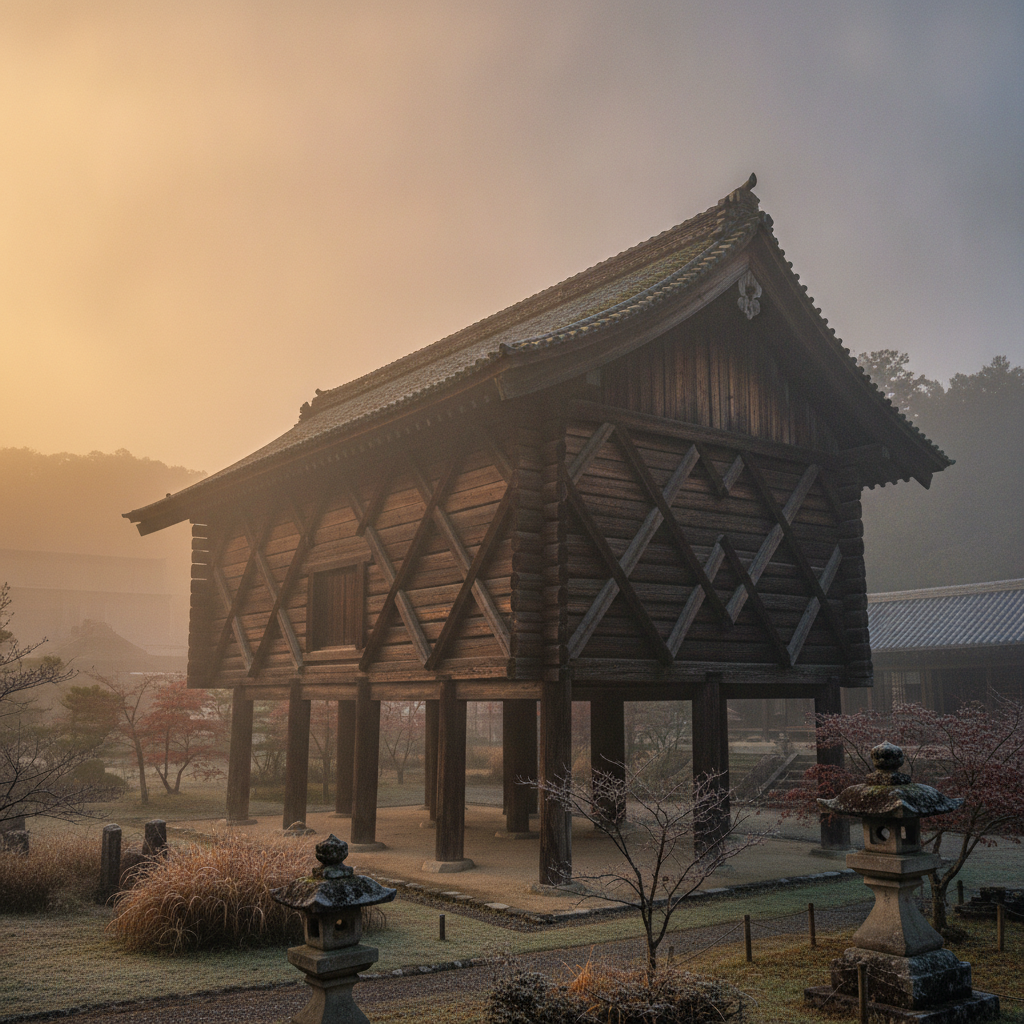
Heijō-kyō's 100,000-Person Capital, the Passive Climate Control Log Cabin With 9,000 Silk Road Objects & Japan's First Mountain God With No Hall
The Cherry Tree Planted as a Prayer That Started 30,000 Trees, the Roller Coaster With Vines Growing Through It & What the Great Buddha's Spiral Curls Look Like From Directly Below