The Cherry Tree Planted as a Prayer That Started 30,000 Trees, the Roller Coaster With Vines Growing Through It & What the Great Buddha's Spiral Curls Look Like From Directly Below
The Yoshino cherry's genetic origin in the Yoshino mountains and the 1,300-year tradition of planting trees as votive gifts to Kinpusen-ji; the 2022 PLOS ONE study confirming Nara deer bow as a learned cross-species gesture response; the Nara Dreamland abandoned 47-hectare park with the Aska roller coaster cars stopped mid-circuit; the Shōsōin's Sassanid Persian glass and Sogdian textile fragments as the easternmost Silk Road repository in existence; the 12th-century donor inscriptions on Kasuga Taisha's stone lanterns; and the gold spiral curls on the Great Buddha's head visible only from directly beneath the face.
- 1
Nara's Eating Scene – Restaurants & Markets
The Nara eating landscape offers genuine local food culture that rewards exploration beyond the major tourist arteries. The Omiwa Shrine area market (the morning market in Sakurai City near the Ōmiwa Shrine—stalls selling Miwa sōmen, Yamato vegetables (the traditional vegetable varieties of Yamato Province, including the Yamato round eggplant, the Yamato manganji pepper, and the Yamato kintoki sweet potato), and Miwa area pickles): the market operates Saturday and Sunday mornings from 07:00–10:00. The Naramachi lunch circuit (the independent restaurants in the Naramachi district cooking Nara-specific menus): Endo Imbiss (the German-Japanese fusion restaurant in a machiya space on the Naramachi main lane—the most unusual Naramachi restaurant, combining Nara produce with German brasserie technique), Tsukinoakari (the kaiseki lunch restaurant in a converted Edo-period warehouse serving a 3,000-yen set using Yamato vegetables and Miwa sōmen), and the multiple kakinoha-zushi counters on the Higashimuki arcade. The Nara market on Monday (the Nara Prefectural Wholesale Market open to the public on Monday mornings—the produce hall where the Yamato vegetable varieties are sold alongside fresh fish from the Seto Inland Sea): the most direct access to the local food supply chain in Nara. The sake tasting trail (the Miwa Sake Brewery Road in Sakurai, accessible in 30 minutes from Nara by Kintetsu—the 3 breweries along the Yamato River offering free tastings on Saturday mornings by advance reservation).
- 2
The Nara Deer in Research – What Scientists Have Learned
The sika deer of Nara Park are among the most intensively studied urban wildlife populations in the world—the combination of their long human habituation history, their documented sacred status, and their accessibility for observation and sampling has attracted ecologists, ethologists, behavioral biologists, and veterinarians to Nara from across Asia. Key findings: the Nara deer have a significantly lower cortisol (stress hormone) response to human approach than wild sika deer populations in the same region—the difference is attributable to multi-generational selection pressure rather than individual habituation (deer born in the park respond less stressfully to humans than deer introduced from wild populations even after equivalent exposure time). The deer bowing study (2022 research published in PLOS ONE—the study demonstrating that Nara deer bow in response to human bowing with a frequency significantly above chance, confirming that the behavior is a learned associative response to the food-solicitation gesture rather than a coincidental posture): the Nara deer bowing is now the most documented example of cross-species gesture learning in a non-primate wild animal. The tick study (the Nara deer carry the tick species Haemaphysalis longicornis at a prevalence rate significantly above regional wild deer populations—proximity to human food sources increases the nutritional quality and therefore the reproductive rate of the deer, which supports higher tick burdens): the finding has implications for urban wildlife management and tick-borne disease risk assessment in tourist areas.
- 3
Yoshino's Cherry Blossom Science & History
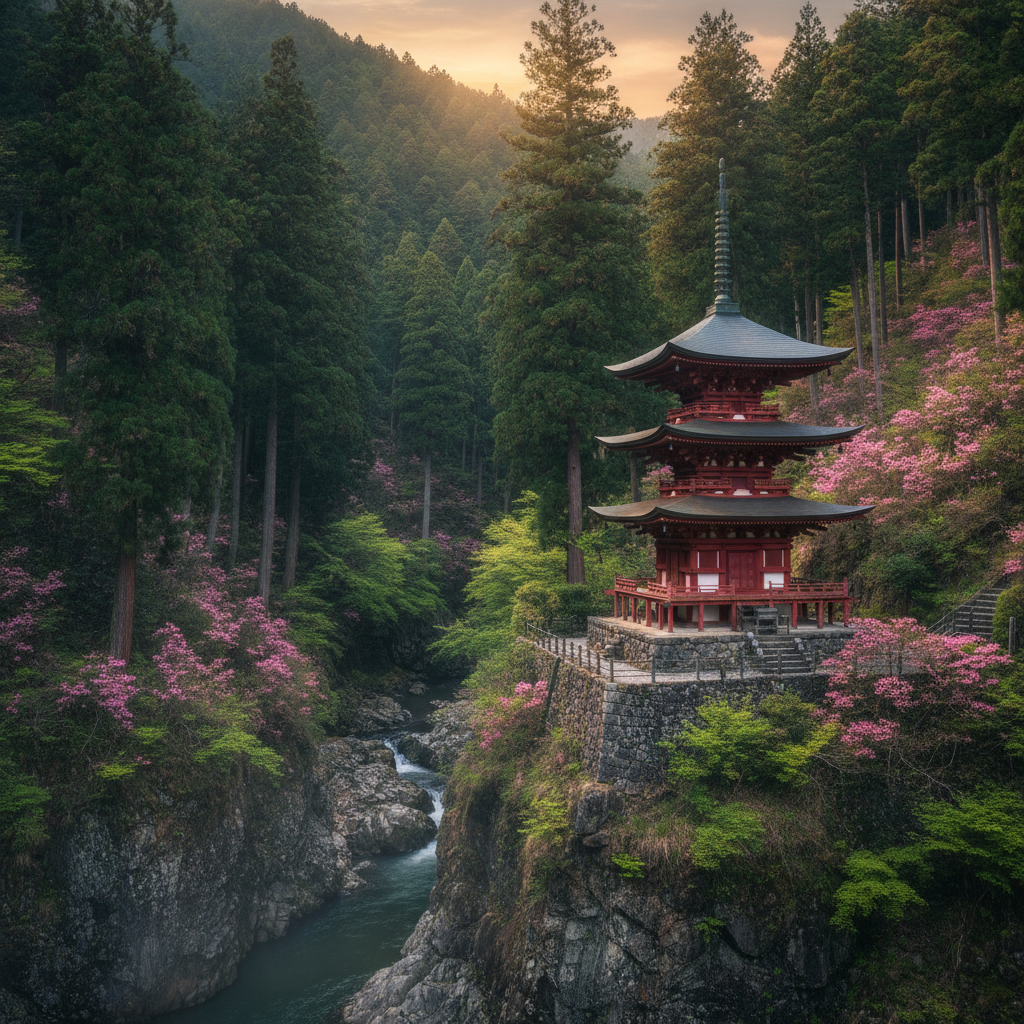
Yoshino's 30,000 cherry trees (the Yoshino cherry—Prunus × yedoensis, the species planted throughout Japan as the symbolic cherry blossom tree—are believed to have originated in the Yoshino mountain area, making the Yoshino population a genetic source for the nationally distributed ornamental cherry). The 1,300-year planting history: the Yoshino cherry trees are traditionally offered by pilgrims as votive gifts to the Kinpusen-ji Temple and the En-no-Gyōja (the 7th-century ascetic monk who founded Shugendo in the Yoshino mountains)—the tradition of planting a cherry tree as a spiritual offering was established by the temple in the 8th century and has been maintained continuously. The elevation banding (the four cherry zones—Shimo Senbon at 365 m, Naka Senbon at 450 m, Kami Senbon at 600 m, Oku Senbon at 800 m—bloom approximately 1 week apart, extending the total viewing period to 3–4 weeks in April): the elevation staggering means that it is possible to track the cherry blossom front up the mountain over successive weekend visits. The Yoshino crowd management (the mountain road that closes to private vehicles on peak bloom weekends—the Yoshino cable car is the only motorised access from the base; walking from Yoshino Station (16 minutes) is the most reliable access): estimated visitor numbers on peak Saturday in April are 100,000+, with queues for the cable car extending to 60+ minutes. The off-peak Yoshino (visiting in July–August when the mountain hiking trails and the temple are accessible without crowds and the Yoshino River swimming area operates).
- 4
Nara's Ghost Architecture – Abandoned Dreamland
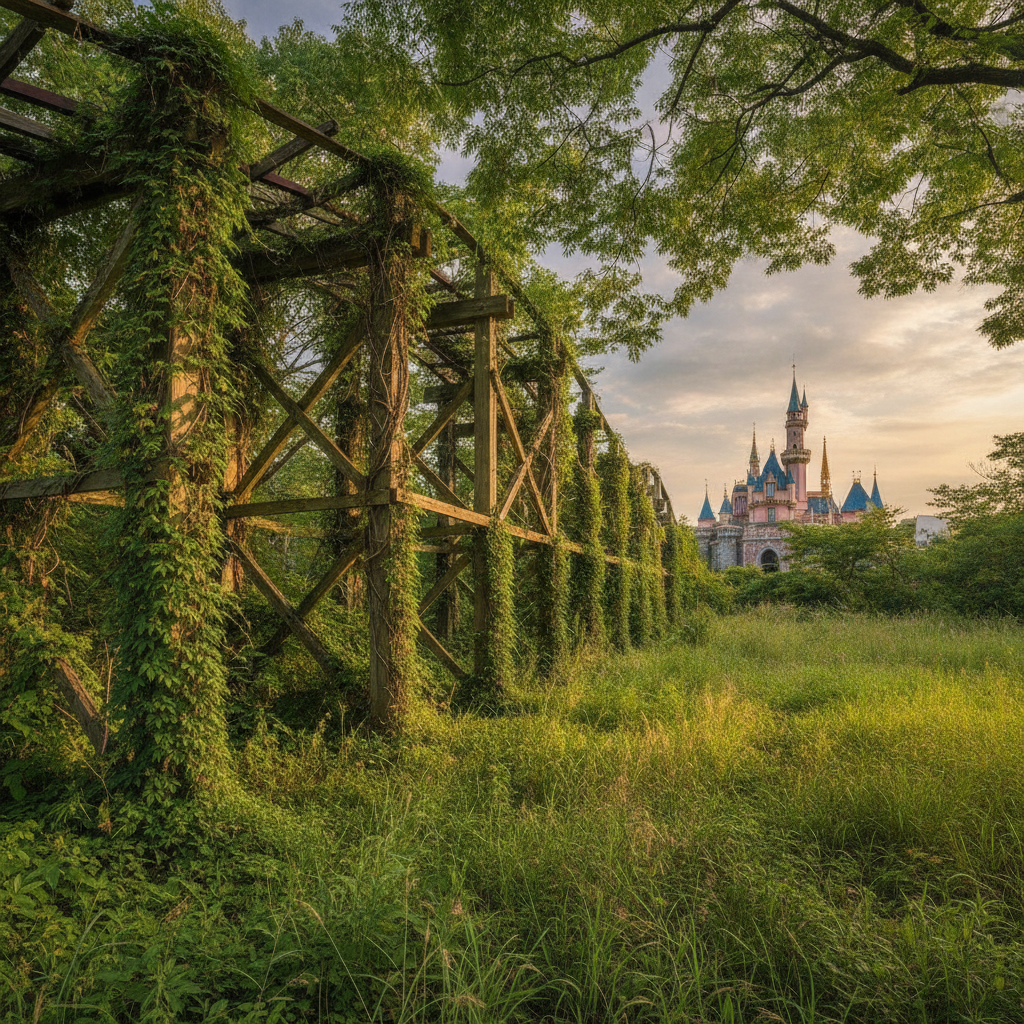
The Nara Dreamland site (the former theme park on the northern outskirts of Nara city—the 47-hectare park modeled directly on California's Disneyland, including a Main Street USA replica, a Sleeping Beauty Castle, and a roller coaster: open from 1961 to 2006 when visitor numbers had declined to unsustainable levels): now a legally accessible urban exploration site for guided tours (two operators: Nara Dreamland Urban Exploration Tours and the Kansai Urban Adventure Society offering weekend tours at ¥3,500–5,000 per person). The visual spectacle: the abandoned roller coaster (the 'Aska' wooden roller coaster—built in 1986, now with vegetation growing through the wooden structure, vines wrapping the support columns, and the track still intact with the cars stopped mid-circuit): the most visually dramatic abandoned infrastructure in the Kansai region. The legal situation: the site is private property (purchased in 2017 by a development company); the guided tours operate with property owner permission; solo trespass is illegal and has resulted in several arrests since 2016. The architecture of abandonment: the Main Street buildings (the painted facades now bleached and peeling, the artificial cobblestones heaved by tree roots, the plastic signage faded to illegibility): the Nara Dreamland architecture-of-abandonment is a documentation project for several Japanese architectural photographers, whose image series have been widely published in international design media. The planned redevelopment: the site has been slated for mixed residential and commercial development since 2019, with groundbreaking expected in 2025–2027 (dates have shifted repeatedly).
- 5
Nara's International Connections – Silk Road Terminus
Nara's position as the eastern terminus of the Silk Road (the overland and maritime trade routes that connected China, Central Asia, Persia, and the Mediterranean world—the Shōsōin collection contains objects from every point along this network) makes it the easternmost repository of ancient Silk Road material culture in existence. The evidence in the Shōsōin: the Biwa lute with camel caravan inlay (a Tang Chinese instrument depicting the Silk Road journey); the Persian-influenced glass vessels (the cobalt blue cut glass and the marbled polychrome glass techniques originating in the glassblowing traditions of the Sassanid Persian empire); the Central Asian textile fragments (the woven patterns from workshops in Sogdiana—the ancient Iranian-speaking civilization of modern Uzbekistan); and the ivory objects (African and Indian ivory worked in Tang Chinese and Japanese craft traditions simultaneously). The Silk Road diplomatic history: the Japanese embassies to the Tang court (the kentōshi—the official embassies dispatched from Nara to Tang Dynasty Chang'an at approximately 20-year intervals from 630 to 894 CE) were the mechanism by which Nara's cultural content arrived in Japan: the returning scholars, monks, artists, and craftsmen brought the material culture and intellectual content that filled the Shōsōin. The Silk Road Nara exhibition (the Nara Silk Road Exhibition, held at the Nara National Museum in 1988—the largest exhibition of Silk Road material culture ever assembled in Japan; the catalogue is still used as a reference work in Central Asian art history courses internationally).
- 6
Leaving Nara – What Stays With You
The Nara experience that persists after departure is typically not the monument but the relationship—the specific deer that bowed for senbei and then bit your bag; the scale of the Great Buddha that the photographs never quite convey; the silence of the Kasuga forest in the early morning before the path lanterns are extinguished; the Ashura's expression of simultaneous youth, sorrow, and supernatural power that you continue to interpret differently in each memory. The things to look for that most visitors miss: the hole in the Daibutsuden pillar and the queue of adults attempting to crawl through it; the gold that still gilds the Great Buddha's spiral curls if you stand directly beneath the face; the stone inscriptions on the approach lanterns at Kasuga Taisha (each inscription records the name of the donor and the year of donation—the oldest inscriptions date to the 12th century); the scale of the Nandai-mon Niō guardian figures (8.4 metres each—standing next to a Niō rather than photographing it from 20 metres provides an entirely different register of the sculpture's presence). The Nara takeaway (the recommended purchases—what to bring home): Kobaien ink stick (¥2,000–5,000 for a mid-grade stick; lasting decades and available in no equivalent quality outside Nara); kakinoha-zushi set (vacuum-packed for travel; available at Nara Station convenience shops); a deer shika senbei (illegal to import to most countries but worth attempting the conversation with the cracker vendor about the deer's feeding habits). The return visit reason: the annual Shōsōin Exhibition rotation means Nara is worth revisiting every 5 years for a new selection of the 9,000 objects that have been waiting in the log-cabin for 1,270 years.
Walk this route with audio
Stories play automatically as you reach each stop — no tapping needed.
More in Nara
The Bronze Buddha Cast in 749 CE, the Pillar Hole That Fits His Nostril & the Forest That Has Not Been Cut Since 841 CE
The World's Oldest Wooden Building, 30,000 Cherry Trees on a Sacred Mountain & the Noodle Tradition That Japan Claims to Have Invented
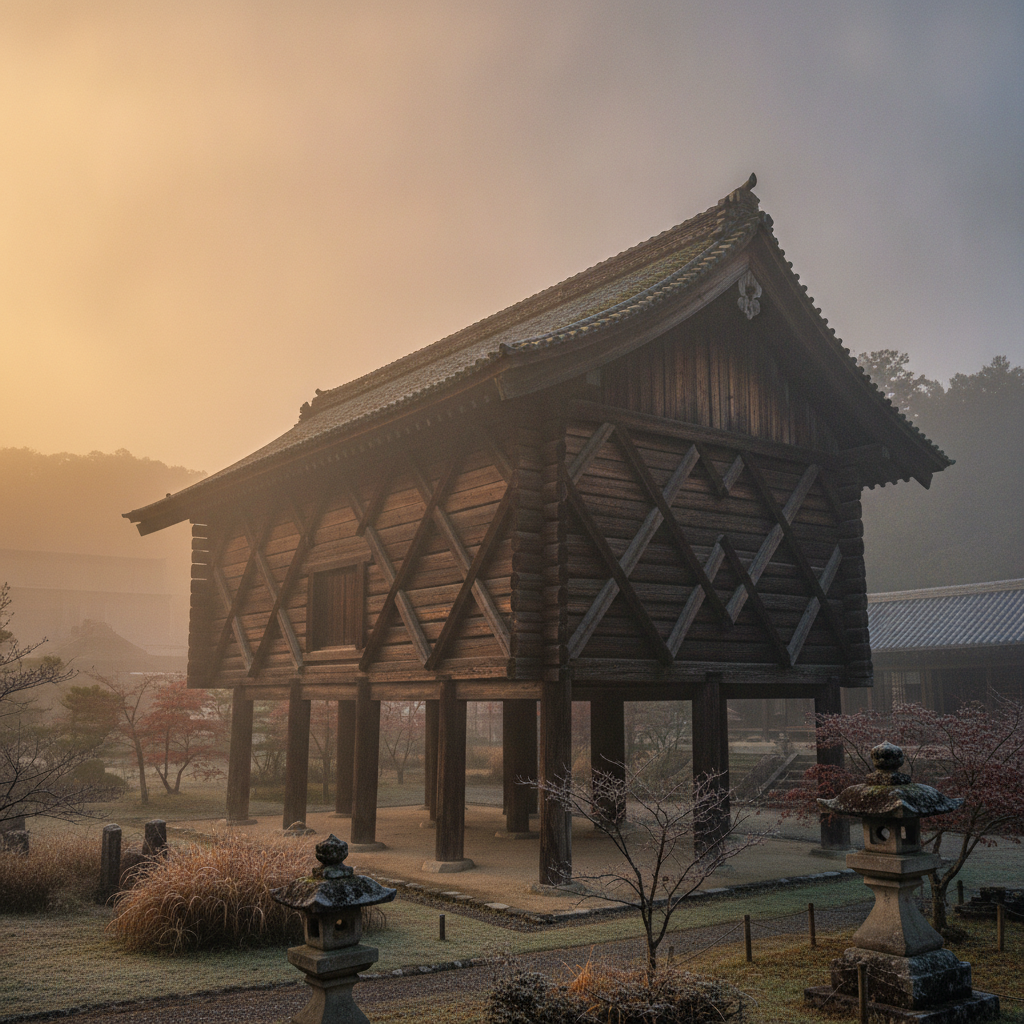
Heijō-kyō's 100,000-Person Capital, the Passive Climate Control Log Cabin With 9,000 Silk Road Objects & Japan's First Mountain God With No Hall
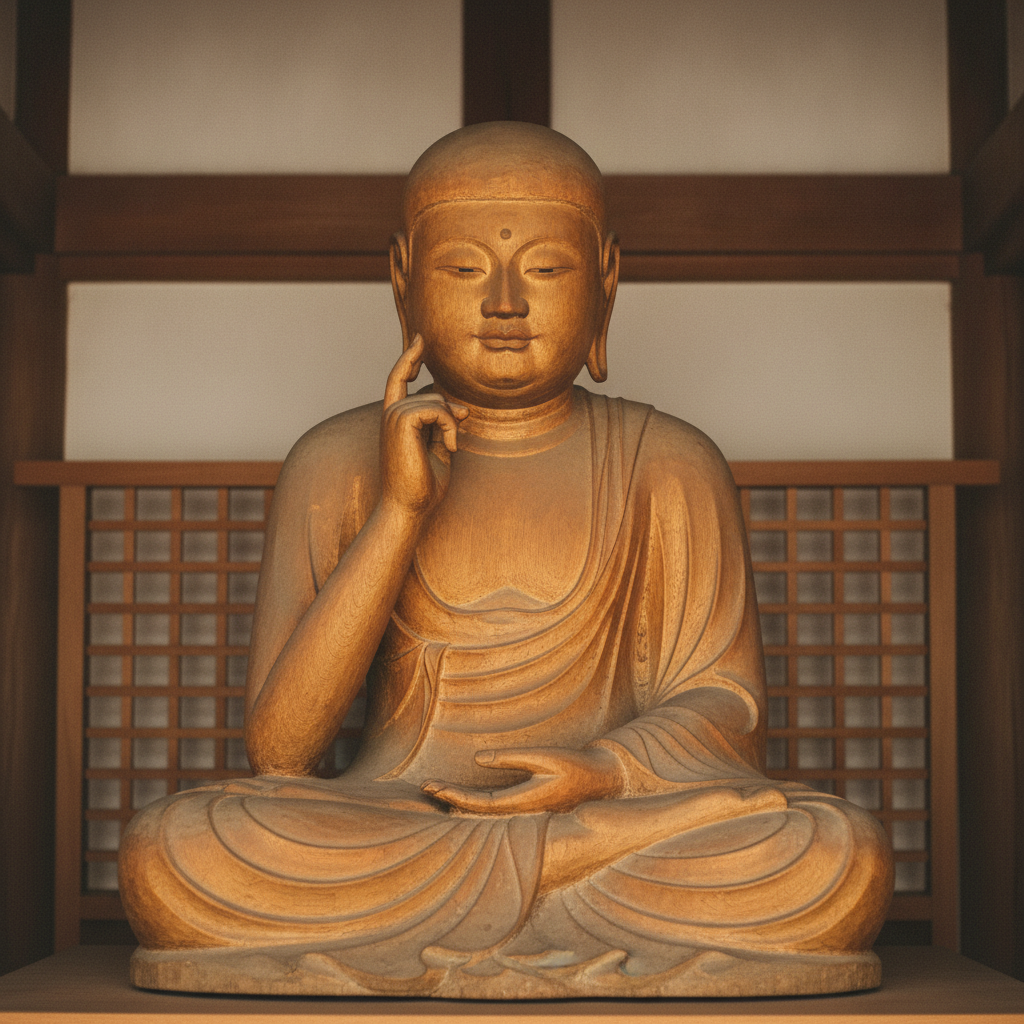
The 20,000 Lantern August Festival, Bruno Taut's 'Highest Expression of the Human Soul' & the Morning Ceremony Before the Great Buddha