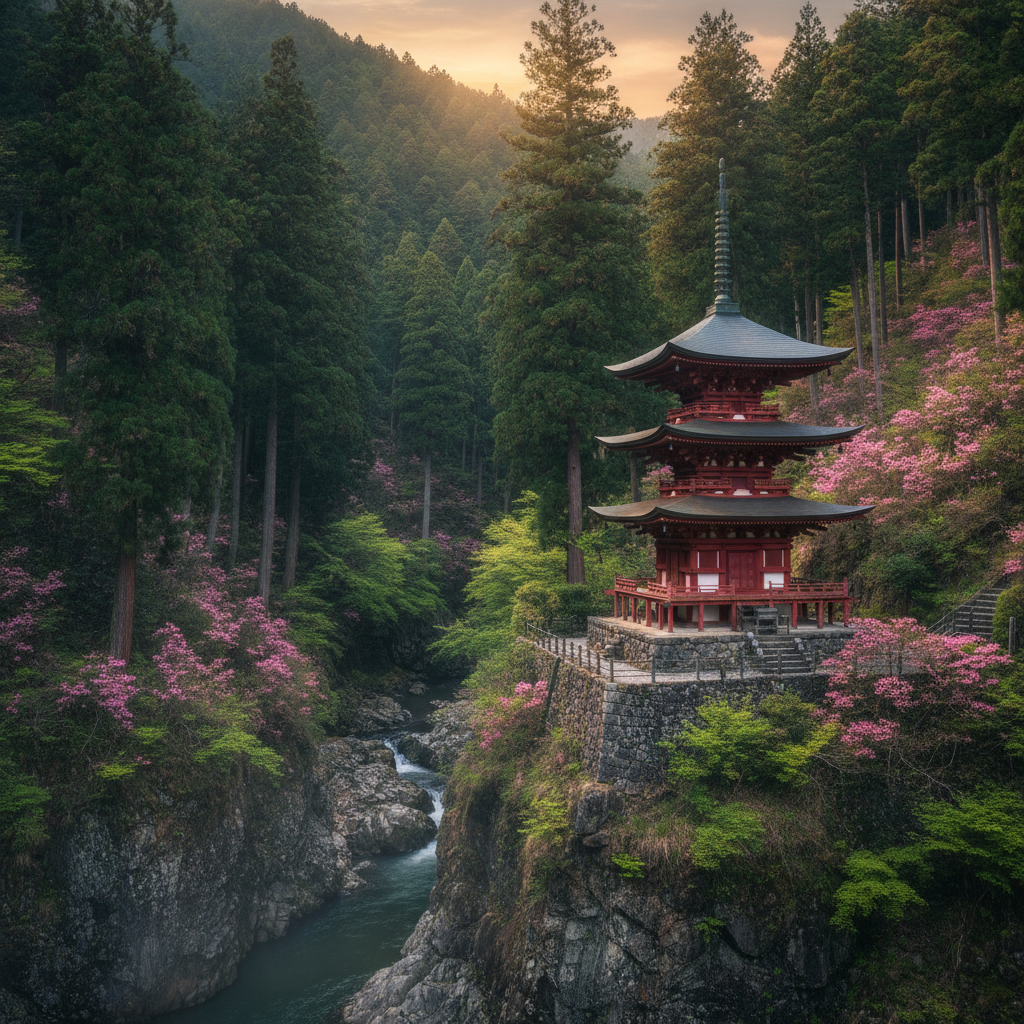
Heijō-kyō's 100,000-Person Capital, the Passive Climate Control Log Cabin With 9,000 Silk Road Objects & Japan's First Mountain God With No Hall
The Nara capital's Tang-style grid streets covering 25 km² and the political decision to abandon it for Kyoto when Buddhist temples grew too powerful; the Shōsōin log-cabin storehouse's triangular-log humidity control system operating unchanged for 1,270 years; the annual 3-week Shōsōin Exhibition where 60–70 objects rotate annually (never repeated consecutively); the Ōmiwa Shrine's mountain deity with no hall—the mountain itself is the divine body; Nara's spring sequence from January mountain burning through June fireflies; and the optimal Nara-vs-Kyoto decision tree for 2-week Japan itineraries.
- 1
Nara in the Heian Period – Capital of Ancient Japan
Nara (ancient name: Heijō-kyō) was Japan's first permanent capital from 710 to 784 CE—the period when Japan established the institutional structures (a Chinese-style bureaucratic government, a national Buddhist temple network, the Man'yōshū poetry collection, and the first histories) that defined Japanese civilization for the following millennium. The capital layout (Heijō-kyō was modeled directly on Tang Dynasty Chang'an—the rectangular grid of streets with the Imperial Palace at the north-center and the government ministries along the central avenue (Suzaku Avenue—the main north-south road 74 metres wide) extending southward to the Rajōmon Gate): the city covered approximately 25 km² and housed an estimated 100,000–200,000 people at its peak—the largest urban concentration in Japanese history until Edo (modern Tokyo) surpassed it in the 17th century. The Tenpyō cultural project (Emperor Shōmu's programme of cultural and religious construction during the 730s–750s—the commissioning of Tōdai-ji and its Great Buddha, the establishment of the 68-province kokubunji (provincial temple) network with Tōdai-ji as the head temple, and the patronage of the craft industries (metalworking, lacquer, textile) that produced the treasures now in the Shōsōin storehouse): the Tenpyō period is the creative peak of ancient Japanese civilization and Nara is its physical site. The move to Kyoto (784 CE—the court moved first to Nagaoka, then to Kyoto in 794 CE): the reasons for the move are debated (the most accepted explanation involves the political influence of Nara's Buddhist temples growing too powerful relative to the imperial court—the court chose to escape the religious establishment by founding a new capital).
- 2
The Shōsōin Storehouse – Ancient Japan's Treasure Chest
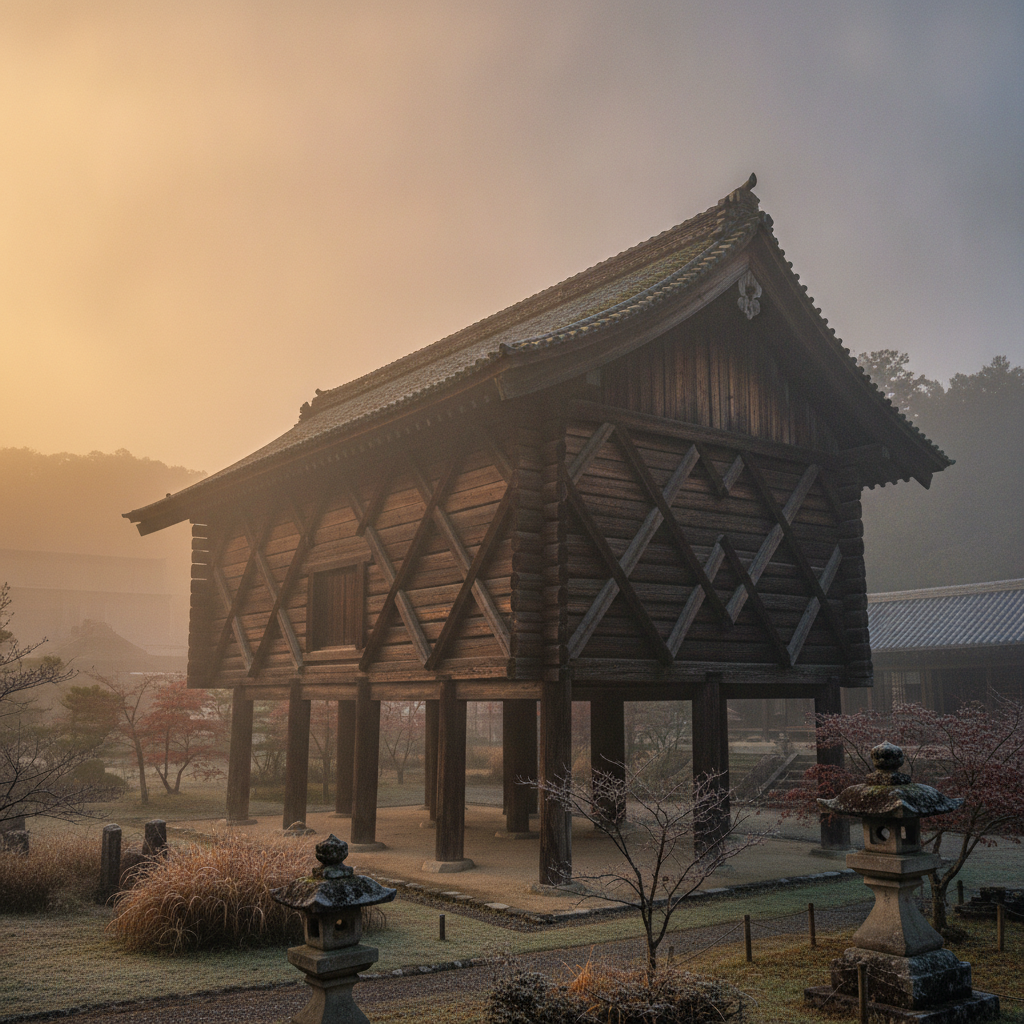
The Shōsōin storehouse (the raised log-cabin structure in the Tōdai-ji compound—the 8th-century imperial storehouse containing the personal possessions of Emperor Shōmu, donated to Tōdai-ji by Empress Kōmyō in 756 CE immediately after the emperor's death): the collection of approximately 9,000 objects constitutes the most important archive of 8th-century material culture in the world—objects from the Tang Dynasty in China, the Silk Road trade (Central Asian textiles and glass), Persian influences, and Japanese craft production of the Nara period are all represented in the single collection. The humidity control system (the log-cabin construction (azekura-zukuri)—the triangular-cross-section logs expand in humid weather, sealing the gaps between logs, and contract in dry weather, allowing ventilation—a passive climate control system that has maintained the correct humidity range for 1,270 years without mechanical assistance): the most effective pre-industrial climate control system in the world. The annual Shōsōin Exhibition (the Nara National Museum's autumn special exhibition, held for approximately 3 weeks in October–November): approximately 60–70 objects from the Shōsōin collection are displayed each year—the annual selection rotates and no object is shown twice in succession, making each year's exhibition unique. The logistical challenge: the exhibition attracts queues of 2–3 hours on weekends; timed online tickets (available from August) are essential. The most famous individual Shōsōin object: the Biwa lute with mother-of-pearl inlay showing a Silk Road camel caravan scene—a Tang-period instrument made in China and gifted to the Japanese emperor.
- 3
Spring Nara – Plum, Cherry & Deer Fawns
Nara's spring sequence (January through June) provides a continuously shifting set of natural and ceremonial events. January: the Wakakusa Yamayaki mountain burning (fourth Saturday—the dry winter grass set alight at 18:15 after fireworks; the burning hillside visible from the park). February: the Kasuga Mantōrō Lantern Festival (Setsubun—around 3 February: all 3,000 lanterns lit at Kasuga Taisha for the bean-throwing ceremony). March: the Omizutori torch ceremony at Nigatsudō (1–14 March: the pine torch sparks showered on the crowd below; the midnight water drawing on 12–13 March). The Nara plum (the Tsukigase Bairin plum orchard in Nara's Tsukigase area, 20 km east of the city—10,000 plum trees in a river valley; the most visited plum orchard in the Kinki region; peak blossom late February to mid-March). April: the Tōdai-ji Daibutsu-e spring ceremony and Yoshino cherry blossom peak. May–June: the deer fawning season (the woodland north of Tōdai-ji where does with fawns shelter; the fawn spotting from the main park path requires no trail divergence—fawns are visible from the gravel path in early June). The Nara spring conclusion: the firefly viewing at the Tsukigase River (late May to mid-June—the Tsukigase River firefly hatching is considered the finest accessible firefly event in the Kinki region, with the genji-botaru (the larger, slower-flashing species) visible from the riverside walking path at dusk).
- 4
Autumn Nara – Shōsōin Exhibition & Maple Fire
Autumn (October–November) is the most visited season in Nara for Japanese domestic tourists—the combination of the annual Shōsōin Exhibition, the momiji (maple) foliage, and the Kasuga Mantōrō Lantern Festival of Obon (mid-August) attracts the highest visitor numbers of the year. The Shōsōin Exhibition (Nara National Museum, October): the single most significant annual Japanese museum event for the study of ancient Asian art history. The Tōdai-ji Shūni-e (the autumn moon-viewing ceremony in October—the Daibutsuden illuminated at night with the full moon rising behind Wakakusa Hill): the single most beautiful night event in the Nara calendar and one of the least known internationally. The Kasuga Wakamiya On-Matsuri (the December Kasuga Shrine festival—held 15–18 December; the oldest surviving performance art festival in Japan, dating to 1136 CE; including dengaku (rice field dance), gagaku (court music), and bugaku (court dance) performed on an outdoor stage in the kasuga forest at night): the festival's 890-year continuous record without interruption makes it one of Japan's most significant living cultural traditions. The Nara Autumn Light-Up (the Nara Park autumn illumination of Tōdai-ji, Kōfuku-ji, and the Isui-en Garden in November): the illuminated 5-story Kōfuku-ji pagoda reflected in the Sarusawa Pond at night is the most reproduced Nara autumn image.
- 5
The Ōmiwa Shrine – Japan's First Mountain Deity
The Ōmiwa Shrine (the Mount Miwa Shinto shrine in Sakurai City, 20 minutes south of Nara by JR Manyo Mahoroba Line; the most ancient Shinto shrine in Japan): the shrine has no honden (main hall)—the object of worship is the mountain behind the shrine itself (Mount Miwa, 467 metres), and worshippers face the mountain to pray through the plain torii gate. The theological significance: the Ōmiwa Shrine is the primary evidence for the pre-Buddhist Shinto concept of shintai (the divine body being a physical object or landscape rather than a manmade statue)—Mount Miwa's deity (Ōmononushi no Kami) is understood to inhabit the mountain, which is therefore sacred and cannot be climbed without permission. The mountain climbing permission (visitors can apply to climb Mount Miwa by presenting themselves at the Sando-sha Pilgrimage Office at the shrine; the climb requires no permit but the trails are maintained as sacred paths; no eating, drinking, or leaving the trail): the 3 km return climb takes approximately 2 hours. The cedar circle (the shimenawa-wrapped cedar grove at the base of Mount Miwa—the cedar trees wrapped with sacred ropes marking the boundary of the mountain deity's presence): the Miwa cedar (yamato sugi) is the source of the cedar tradition in sake brewing (the cedar branch (sugidama) hung at sake brewery entrances nationwide originates from the Ōmiwa Shrine tradition of offering cedar to the sake deity). The Miwa sōmen (the noodle production of the surrounding Sakurai area—the 1,000-year tradition).
- 6
Nara vs Kyoto – Choosing Between Japan's Two Ancient Capitals
The standard Japan itinerary poses the Nara–Kyoto question: given proximity (42 minutes by Kintetsu express), which merits overnight time and which can be a day trip? The objective comparison: Kyoto has more temples (approximately 1,600 vs Nara's 8 UNESCO-listed sites), more restaurants, more ryokan, and a more developed tourist infrastructure. Nara has the deer, the largest Great Buddha, the world's oldest wooden buildings, and a significantly lower visitor density outside peak cherry blossom and autumn foliage periods. The historical sequence (710 CE—Nara; 794 CE—Kyoto): visiting Nara before Kyoto follows the historical sequence and helps contextualize the cultural development from the Nara to Heian periods. The overcrowding problem: Kyoto's most famous sites (Arashiyama, Fushimi Inari, Kinkaku-ji) are severely overcrowded from March through November—Nara's main sites (outside the Shōsōin Exhibition period in October) are crowded but manageable. The practical routing: for a 2-week Japan itinerary, the standard recommendation is 3–4 nights Kyoto with a full-day Nara excursion (covering Tōdai-ji, Kasuga Taisha, Naramachi, and Kōfuku-ji) and a half-day Hōryū-ji. For an itinerary focused on ancient Japan, reverse the emphasis: 2 nights Nara (using the early-morning park, the Hōryū-ji morning, and the evening Sarusawa Pond reflection) and day trips to Kyoto. The single most common Nara mistake: leaving before 17:00 and missing the park in the late-afternoon golden light when the deer return to the grass areas from the forest shade.
Walk this route with audio
Stories play automatically as you reach each stop — no tapping needed.
More in Nara
The Bronze Buddha Cast in 749 CE, the Pillar Hole That Fits His Nostril & the Forest That Has Not Been Cut Since 841 CE
The World's Oldest Wooden Building, 30,000 Cherry Trees on a Sacred Mountain & the Noodle Tradition That Japan Claims to Have Invented
The Cherry Tree Planted as a Prayer That Started 30,000 Trees, the Roller Coaster With Vines Growing Through It & What the Great Buddha's Spiral Curls Look Like From Directly Below
The 20,000 Lantern August Festival, Bruno Taut's 'Highest Expression of the Human Soul' & the Morning Ceremony Before the Great Buddha