Pompeii, Mount Vesuvius & Herculaneum — Cities Frozen in Time
The eruption of Mount Vesuvius on August 24-25, 79 AD (the most catastrophic volcanic eruption in European recorded history) buried the Roman cities of Pompeii, Herculaneum, Stabiae, and Oplontis under the pyroclastic surge and the volcanic ash, preserving them with extraordinary completeness until their rediscovery in the 18th century — together creating the most important archaeological complex in the world and the most vivid window onto Roman daily life in the 1st century AD.
- 1
Pompeii — The City Frozen in 79 AD
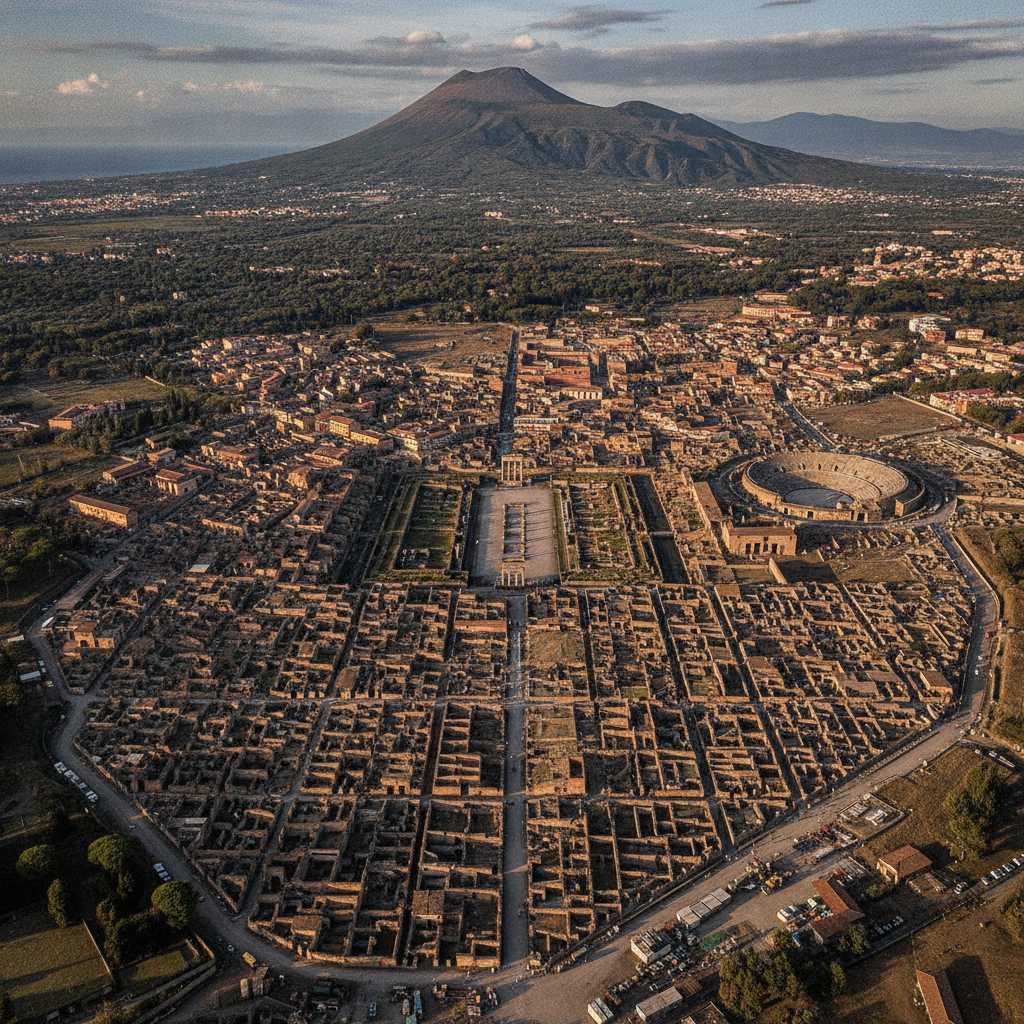
The 'Scavi di Pompei' (the 'Excavations of Pompeii' — the UNESCO World Heritage Site archaeological park of the Roman city of Pompeii, the city buried by the eruption of Mount Vesuvius in 79 AD and rediscovered in 1748): the history (Pompeii — the city of approximately 11,000-20,000 inhabitants on the south coast of the Bay of Naples, the commercial city at the mouth of the Sarno River: the city destroyed by the earthquake of 62 AD (the major earthquake that damaged Pompeii 17 years before the Vesuvius eruption and that left many buildings in a state of partial reconstruction when the eruption struck in 79 AD): the eruption of 79 AD (the eruption of Vesuvius that destroyed Pompeii: the eruption beginning at approximately 1 pm on August 24, 79 AD (the date disputed — some scholars argue for October 24, 79 AD based on the analysis of the food, the clothing, and the vegetation preserved in the eruption deposits), the eruption producing the column of ash, pumice, and gases that rose to a height of approximately 30 km above the crater: the first phase of the eruption (the 'Plinian phase' — named for the Roman administrator Pliny the Elder (23-79 AD) who died in the eruption while attempting to rescue the victims by boat): the pumice fall (the rain of pumice and ash falling on Pompeii from approximately 1 pm on August 24, the pumice accumulating to a depth of approximately 2-3 metres over the city in the 18 hours of the Plinian phase): the pyroclastic surges (the pyroclastic surges — the fast-moving flows of superheated volcanic gas, ash, and rock fragments moving at 100-300 km/h that killed the inhabitants who had survived the pumice fall and that buried Pompeii under the further 4-5 metres of volcanic material): the 'casts' (the 'calchi' — the famous plaster casts of the Pompeii victims: the technique developed by the archaeologist Giuseppe Fiorelli (1823-1896) in 1863 of pouring liquid plaster into the cavities left by the decomposed bodies of the victims in the volcanic deposit, producing the remarkable three-dimensional casts of the final postures of the Pompeii victims (the most moving and the most famous archaeological discovery of modern times)).
- 2
Herculaneum — The Better Preserved City
Herculaneum (the 'Ercolano' — the Roman city of Herculaneum 8 km west of Pompeii, the city that was buried by the same Vesuvius eruption of 79 AD but preserved in a different and in many ways superior manner to Pompeii): the comparison (Herculaneum vs Pompeii — the key differences: the burial material (Pompeii buried by the pumice and the ash of the Plinian phase, Herculaneum buried by the pyroclastic surge material (the 'surge deposits' — the fast-moving hot pyroclastic flows that buried Herculaneum to a depth of 15-25 metres, the greater depth of burial that has preserved the organic materials of Herculaneum (the wooden furniture, the wooden floors, the papyrus manuscripts, the cloth, and the food) that did not survive at Pompeii because of the lower burial depth and the subsequent exposure to the rain and the air): the population of Herculaneum at the time of the eruption: approximately 4,000-5,000 inhabitants, the city of the wealthy Roman citizens and the prosperous artisans (the finer quality of the houses and the decorations of Herculaneum compared to the more commercial and the more working-class character of Pompeii): the excavation (the excavation of Herculaneum — begun in 1738 under the orders of King Charles III of Bourbon (the King of Naples who ordered the first systematic excavation of the buried cities): the excavation tunnels of the 18th century (the Bourbon excavators digging tunnels through the 15-25 metres of pyroclastic material to reach the buried buildings of Herculaneum) and the open-air excavations of the 20th century (the Amedeo Maiuri excavations of 1927-1958 that opened the central area of Herculaneum to the open air): the Villa dei Papiri (the 'Villa dei Papiri' — the most extraordinary private house of the ancient world: the 250-metre long luxury villa on the Herculaneum coastline (now buried under the modern city of Ercolano) that contained the library of approximately 1,800 papyrus scrolls (the 'Papiri Ercolanesi' — the only surviving library from the ancient world, the scrolls carbonized by the heat of the pyroclastic surge and now being deciphered using the multi-spectral imaging technology and the synchrotron X-ray tomography).
- 3
Mount Vesuvius — The Most Famous Active Volcano in the World
The Mount Vesuvius ('Monte Vesuvio' — the most famous and the most studied active volcano in the world, the 1,281-metre stratovolcano on the south coast of the Bay of Naples): the geology (Mount Vesuvius — the complex volcanic system of the 'Somma-Vesuvio': the ancient caldera of 'Monte Somma' (the older volcano, the caldera rim of which forms the northern and northeastern arc of the summit area of Vesuvius, the caldera formed by the collapse of the ancient Somma stratovolcano approximately 17,000 years ago) and the younger 'Vesuvio' cone (the cone that has grown inside the Somma caldera since the eruption of 79 AD, the cone that reached its maximum height of approximately 1,335 metres in the early 20th century before the 1944 eruption reduced it to its current height of 1,281 metres)): the 79 AD eruption (the eruption of Vesuvius of August 24-25, 79 AD — the 'Plinian eruption' that buried Pompeii, Herculaneum, Stabiae, and Oplontis and killed an estimated 2,000-16,000 people (the number disputed by the modern scholars): the most documented volcanic eruption in ancient history (the eruption witnessed and described by the Roman writer Pliny the Younger (61-113 AD) in two letters to the historian Tacitus, the letters that are the primary source for the events of the eruption and that gave the name 'Plinian eruption' to the type of volcanic eruption characterized by the high column of ash): the summit crater (the summit crater of Vesuvius — the oval crater of 450 metres in diameter and 300 metres in depth (the 'Gran Cono' crater), accessible via the 860-metre summit trail from the crater car park at 1,000 metres altitude: the crater walk (the walk around the rim of the Vesuvius crater — the most popular excursion near Naples, the walk offering the panoramic views of the Bay of Naples, the Sorrentine Peninsula, and the islands of Capri, Ischia, and Procida).
- 4
The Bay of Naples — Capri, Ischia & Procida
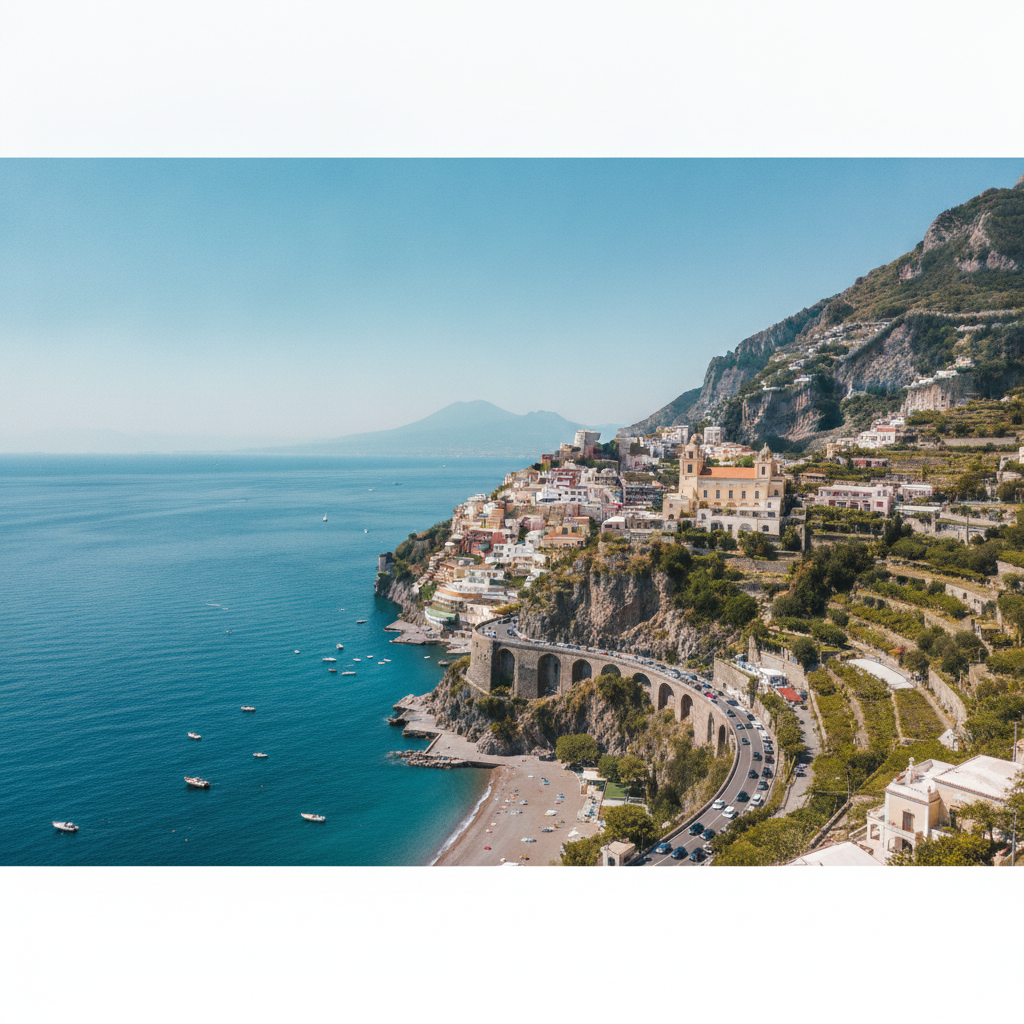
The Bay of Naples ('Golfo di Napoli' — the bay of the Tyrrhenian Sea on the west coast of Italy, enclosed by the Sorrentine Peninsula to the south and the Campi Flegrei (Phlegraean Fields) to the north, the bay that is one of the most beautiful and the most historically significant bays in the Mediterranean): the islands (the three islands of the Bay of Naples — the three inhabited islands visible from the waterfront of Naples): the Capri (the 'Capri' — the island at the southern entrance to the Bay of Naples, 30 km south of Naples: the most famous island in Italy, the island of the Roman Emperor Tiberius (who ruled the Roman Empire from the island from 26 to 37 AD from his 12 villas, the most important of which is the 'Villa Jovis' on the highest point of the island): the 'Grotta Azzurra' (the 'Blue Grotto' — the sea cave on the northwest coast of Capri, the cave lit by the electric blue light of the Mediterranean sunlight filtered through the underwater opening (1.2 metres high at low tide), the most visited natural attraction in the Bay of Naples): the Ischia (the 'Ischia' — the island at the northern entrance to the Bay of Naples, 30 km west of Naples: the largest island in the Bay of Naples (the island of 46 km² and 60,000 permanent inhabitants), the island known for the thermal spas (the 'terme di Ischia' — the volcanic hot springs of the island, the most popular thermal spa destination in Italy for the German and Austrian tourists): the Procida (the 'Procida' — the smallest of the three Bay of Naples islands (the island of 3.7 km² and 10,000 inhabitants): the most authentic and the least touristic of the three islands, the island of the colourful houses (the 'casette' of Procida — the small, brightly coloured houses of the Marina Corricella, the most photographed view of the Bay of Naples after the Blue Grotto of Capri) that make Procida one of the most photogenic villages in Italy: the 'Capitale Italiana della Cultura' (Procida was designated the Italian Capital of Culture for 2022).
- 5
Phlegraean Fields & the Erupting Supervolcano
The Campi Flegrei (the 'Phlegraean Fields' — the 'Fields of Fire': the large volcanic caldera west of Naples, the most geologically active area in Italy and one of the most geologically dangerous areas in Europe): the geology (the Campi Flegrei — the large caldera (approximately 12 km in diameter) created by the collapse of the Campanian Ignimbrite supervolcano approximately 39,000 years ago (the largest volcanic eruption in Europe in the past 200,000 years): the caldera system (the Campi Flegrei caldera — the caldera that encompasses the entire western bay of Naples (the Pozzuoli Bay), the towns of Pozzuoli, Bacoli, Baia, and Monte di Procida, and the Phlegraean coast: the volcanic activity (the volcanic activity of the Campi Flegrei caldera — the caldera that is in a state of constant activity ('bradyseism' — the 'slow earthquake': the gradual upward and downward movement of the ground surface caused by the movement of the underground magma, the ground of Pozzuoli having risen by approximately 3 metres between 1950 and 2024 as the magma chamber beneath the Campi Flegrei fills with the new magma): the current state of alert (the Campi Flegrei caldera — at the 'yellow' alert level (the second of four levels) since 2012, the alert level raised to 'orange' (the third level) in 2023 as the seismicity and the ground deformation of the caldera increased): the Solfatara (the 'Solfatara di Pozzuoli' — the volcanic crater within the Campi Flegrei caldera, 5 km west of Naples: the crater with the fumaroles (the steam and sulfur gas vents), the bubbling mud pools, and the sulphurous ground that give the Campi Flegrei their name and their dramatic and slightly alarming character.
- 6
Castel dell'Ovo & the Naples Waterfront
The Castel dell'Ovo (the 'Castle of the Egg' — the medieval sea castle on the tiny islet of Megaride in the Bay of Naples, the oldest castle in Naples and the most iconic landmark of the Naples waterfront): the name (the Castel dell'Ovo — the name derives from the legend (first mentioned in the 13th century) that the Roman poet Virgil (70-19 BC) placed a magical egg ('l'uovo' — the 'egg') in the foundations of the castle: the legend states that the destiny of Naples is linked to the fate of this magical egg — when the egg breaks, the castle will fall, the city will be flooded, and the hills will flatten): the history (the Castel dell'Ovo — the castle built on the islet of Megaride, the site of the first Greek settlement in the Bay of Naples ('Partenope' — the Greek colony of the 9th-8th century BC, the predecessor of the Greek city of Neapolis): the castle built by the Norman King William I of Sicily ('William the Bad', 1131-1166) in the 12th century on the ruins of the Roman 'Villa of Lucullus' (the luxury villa of the Roman general and gourmet Lucius Licinius Lucullus (118-56 BC), one of the wealthiest Romans of the late Republic who retired to his Neapolitan bay villa to cultivate the fishes in the first marine fish ponds ('piscinae') in Italy): the Lungomare Caracciolo (the 'Lungomare Caracciolo' — the seafront promenade of Naples, running 3 km along the Bay of Naples from the Castel dell'Ovo to the Mergellina harbour (the 'Porto di Mergellina'): the promenade with the views of the bay (the most famous view in Naples: the Castel dell'Ovo in the foreground, Vesuvius steaming in the background, and the Bay of Naples in between), the promenade that is the principal walking and jogging route of the Neapolitans.
Walk this route with audio
Stories play automatically as you reach each stop — no tapping needed.
More in naples
Naples Historic Centre, Spaccanapoli & the UNESCO Underground City
Via Toledo, Spanish Quarter & Neapolitan Street Life
Pizza Margherita, Street Food & Naples as the Gastronomic Capital of Italy
Caserta Royal Palace — The Versailles of Italy
Teatro San Carlo — The World's Oldest Opera House