Pizza Margherita, Street Food & Naples as the Gastronomic Capital of Italy
Naples is the birthplace of pizza (the world's most popular food — the wood-fired flatbread with the tomato, the mozzarella, and the basil, invented in Naples in the 18th century and elevated to the status of the UNESCO Intangible Cultural Heritage of Humanity in 2017 with the inscription of the 'Art of the Neapolitan Pizzaiuolo') and the city with the richest street food tradition in Italy — the city of the 'sfogliatella' (the flaky shell-shaped pastry), the 'baba au rhum' (the rum-soaked yeast cake), and the 'caffè espresso napoletano' (the most intense coffee culture in the world).
- 1
Pizza Napoletana — UNESCO Intangible Cultural Heritage
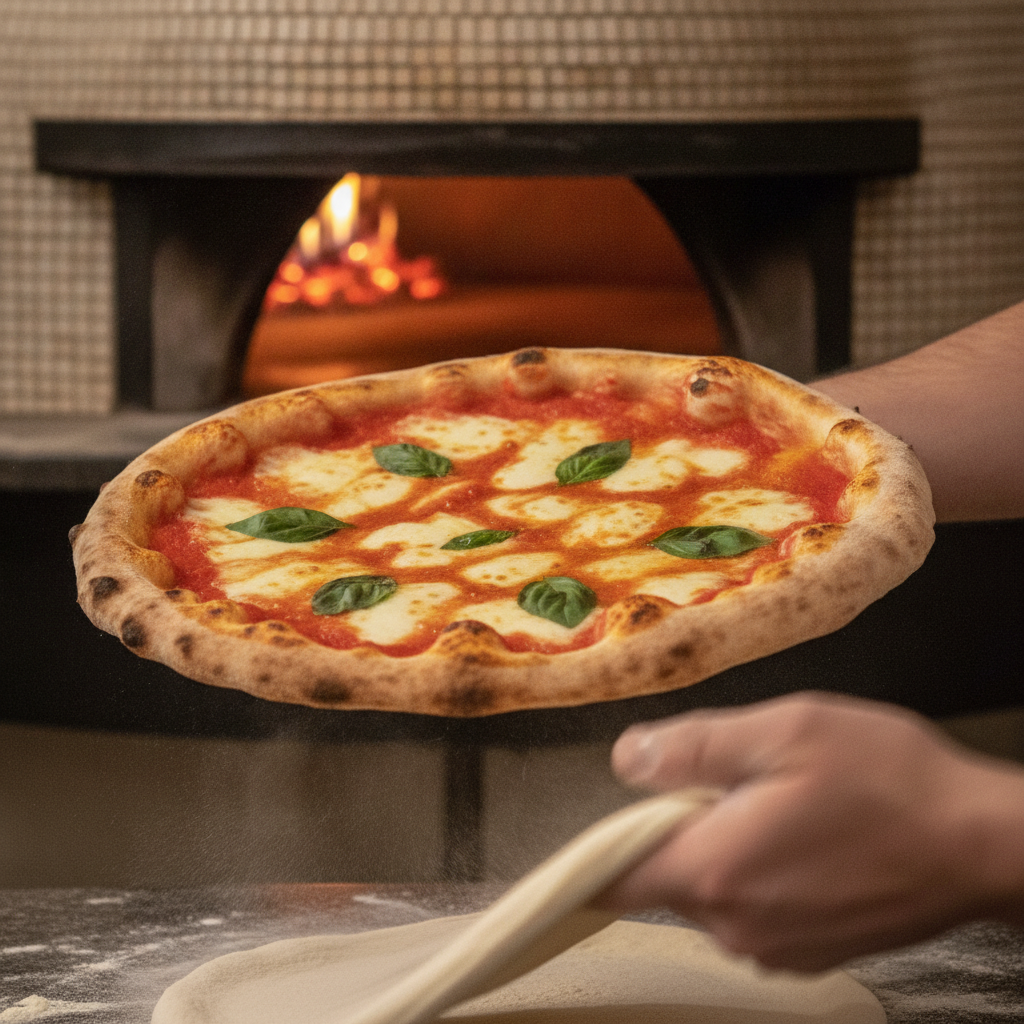
The 'pizza napoletana' (the Neapolitan pizza — the UNESCO Intangible Cultural Heritage of Humanity (inscribed on the UNESCO list in December 2017 as the 'Art of the Neapolitan Pizzaiuolo'): the history (the pizza napoletana — the history of the pizza in Naples: the pizza (the word 'pizza' first documented in a Latin text in Gaeta in 997 AD, but the modern pizza (the round, flat bread topped with the tomato and the cheese) developed in Naples in the 18th century (the tomato arriving in Naples from the Americas in the 16th century, initially regarded as an ornamental plant (the 'pomodoro' — the 'golden apple'), but adopted by the poor population of Naples ('il popolo basso') as a cheap and flavourful food in the 18th century): the 'pizza Margherita' (the 'pizza Margherita' — the pizza created in 1889 by the pizzaiolo Raffaele Esposito of the 'Pizzeria Brandi' (now the 'Pizzeria Brandi di Port'Alba') in Naples for Queen Margherita of Savoy (the wife of King Umberto I of Italy, who visited Naples in June 1889): Esposito creating three pizzas for the queen, the queen preferring the pizza with the tomato, the fior di latte, and the basil (the colours of the Italian flag — the 'Tricolore'), the pizza subsequently named 'pizza Margherita' in her honour): the 'Associazione Verace Pizza Napoletana' (the 'AVPN' — the 'True Neapolitan Pizza Association', founded in Naples in 1984 to codify and to protect the authentic Neapolitan pizza tradition: the AVPN 'Disciplinare' (the Specification — the document that defines the authentic Neapolitan pizza): the ingredients of the authentic pizza napoletana: the '00' flour (the finely milled soft wheat flour), the water (the soft water of Naples — the water from the Serino aqueduct, the soft water of 0-1° French hardness that gives the Neapolitan pizza dough its characteristic extensibility), the salt, and the yeast (the natural sourdough starter or the fresh baker's yeast — no dry yeast), the leavening (the dough leavened for 8-24 hours at room temperature), the tomatoes (the 'Pomodoro San Marzano dell'Agro Sarnese-Nocerino DOP' — the San Marzano DOP tomato from the Sarno plain beneath Vesuvius, the elongated plum tomato with the sweet, low-acid flavour that is the essential topping of the authentic pizza Margherita), the mozzarella (the 'fior di latte dell'Appennino Meridionale' — the cow's milk mozzarella of the southern Apennines, or the 'Mozzarella di Bufala Campana DOP' — the buffalo milk mozzarella of Campania), the wood-fired oven (the 'forno a legna' — the traditional wood-fired pizza oven of Naples, the domed refractory brick oven that reaches the operating temperature of 450-500°C (840-930°F): the pizza (the authentic pizza napoletana — cooked for 60-90 seconds in the wood-fired oven at 450-500°C, the result: the thin, soft centre with the charred, puffy rim ('cornicione') and the 'leopard spotting' (the irregular charred spots on the bottom and the cornicione produced by the intense heat of the wood fire).
- 2
The Great Naples Pizzerias — L'Antica Pizzeria da Michele & More
The great pizzerias of Naples (the most celebrated pizza establishments in the city that is the world capital of pizza): the L'Antica Pizzeria da Michele (the 'L'Antica Pizzeria da Michele' — the most famous pizzeria in Naples and arguably the most famous pizzeria in the world: the pizzeria founded in 1870 by Michele Condurro and still operated by the Condurro family, the pizzeria that serves only two types of pizza ('pizza Margherita' and 'pizza Marinara' — the simple pizza of the tomato, the garlic, the oregano, and the olive oil without cheese, named for the 'marinai' (the sailors) who ate it because it kept fresh without the cheese during the sea voyage): the pizzeria famous for the queue ('la fila') that forms outside the entrance in the Via Cesare Sersale from early morning and that can extend to a 2-hour wait at peak times: the 'Pizzeria Gino Sorbillo' (the 'Pizzeria Gino Sorbillo' on the Via dei Tribunali — the pizzeria founded in 1935 by Luigi Sorbillo (the patriarch of a family of 21 children, each of whom became a pizzaiolo — 'pizzaioli') and now operated by the grandson Gino Sorbillo, the most successful ambassador of the Neapolitan pizza tradition to the wider world (Sorbillo has opened the branches of his pizzeria in Milan, Rome, New York, Miami, Tokyo, and Dubai)): the 'Pizzeria Starita' (the 'Pizzeria Starita a Materdei' in the Materdei neighbourhood — the historic pizzeria founded in 1901, the pizzeria famous for the 'pizza fritta' (the 'fried pizza' — the pizza dough fried in the lard (or in the olive oil in the modern version), the predecessor of the baked pizza that was the most common form of pizza in Naples until the late 19th century): the 'Pizzeria Di Matteo' (the 'Pizzeria Di Matteo' on the Via dei Tribunali — the pizzeria famous for serving the pizza Margherita to US President Bill Clinton during his visit to Naples in 1994 for the G7 summit, the pizzeria known for the 'pizza fritta' and the 'frittura' (the fried street food snacks — the 'pizzette fritte' (the small fried pizza bites), the 'cuoppo' (the paper cone of the fried street food), and the 'crocchè' (the potato croquette filled with the melted fior di latte cheese)).
- 3
Sfogliatella, Babà & Neapolitan Pastry Tradition
The pastry tradition of Naples (the 'arte dolciaria napoletana' — the Neapolitan pastry tradition, one of the richest and the most original pastry traditions in Italy, the tradition that has produced some of the most iconic Italian pastries): the sfogliatella (the 'sfogliatella' — the most iconic Neapolitan pastry, the shell-shaped pastry of the flaky, layered dough ('pasta sfoglia' — the 'puff pastry') with the semolina and the ricotta filling: the sfogliatella 'riccia' (the 'curly sfogliatella' — the traditional form with the characteristic layered, flaky exterior formed by the rolled and folded pastry dough, the pastry that resembles the shell of a lobster or the scales of a fish) and the sfogliatella 'frolla' (the 'shortcrust sfogliatella' — the version with the shortcrust pastry shell rather than the flaky pastry, rounder in shape, softer in texture): the origin (the sfogliatella — the pastry believed to have been invented by the nuns of the Convent of Santa Rosa on the Amalfi Coast in the 17th century and subsequently popularized in Naples by the pastry chef Pasquale Pintauro who opened the pastry shop at 275 Via Toledo in 1818 and began selling the sfogliatella to the people of Naples): the 'babà' (the 'babà al rhum' — the Neapolitan 'babà': the individual yeast cake (the 'savarin' dough — the light, enriched yeast dough with the butter and the eggs) soaked in the rum syrup, the pastry that arrived in Naples from the French court (the 'baba au rhum' of the French pastry tradition) and was adopted by the Neapolitan pastry tradition as a characteristic Neapolitan product: the best babà in Naples are served with the fresh cream ('panna montata') and with the wild strawberries ('fragoline di bosco') in season: the 'Pasticceria Capone' (the most celebrated pastry shop in the Naples historic centre), the 'Gran Caffè Gambrinus' (the 'Gambrinus' — the most historic café in Naples, established 1860, the café on the Piazza del Plebiscito that has served the Neapolitan intellectual life since the Belle Époque).
- 4
Caffè Napoletano — The Most Intense Coffee Culture in the World
The coffee culture of Naples (the 'caffè napoletano' — the Neapolitan coffee tradition, the most intense and the most distinctive coffee culture in Italy, the tradition that defines the coffee culture of the entire southern Italy): the Neapolitan espresso (the 'caffè napoletano' — the Neapolitan espresso: the coffee that is widely regarded by the Italians themselves as the best espresso in Italy (the debate between the Neapolitans and the Milanese about the relative quality of their espresso is one of the most enduring food debates in Italy — the Neapolitans claiming that the soft water of Naples (the water of the Serino aqueduct, with its low mineral content and its low hardness) is the secret of the superior flavour of the Neapolitan espresso, the water that extracts the coffee compounds more gently and with less of the mineral interference of the hard water of Milan and Rome)): the 'caffè sospeso' (the 'suspended coffee' — the Neapolitan tradition of the 'caffè sospeso': the tradition (first documented in the early 20th century in the cafés of Naples) of paying for a second coffee (a 'suspended' coffee) at the same time as paying for one's own coffee, the suspended coffee remaining available for the person in need who enters the bar and asks 'C'è un caffè sospeso?' (Is there a suspended coffee?): the tradition of the 'caffè sospeso' as an expression of the Neapolitan culture of mutual aid ('mutuo soccorso') and the culture of generosity to strangers ('l'ospitalità napoletana'): the Gran Caffè Gambrinus (the 'Gran Caffè Gambrinus' — the most historic and the most celebrated café in Naples, established in 1860 at 1 Piazza del Plebiscito: the café that has served the intellectual life of Naples for over 160 years, the café frequented by the writers Oscar Wilde (1854-1900), the sculptor Gabriele D'Annunzio (1863-1938), and the composer Enrico Caruso (1873-1921)): the Art Nouveau interior (the extraordinary Art Nouveau interior of the Gran Caffè Gambrinus — the gilt mirrors, the frescoed ceilings, the marble floor, and the belle époque furnishings that make the Gambrinus the most atmospheric café interior in Naples).
- 5
Mercato della Pignasecca & Street Food of the Historic Centre
The street food of the Naples historic centre (the 'cibo da strada napoletano' — the Neapolitan street food tradition, one of the most vibrant and the most varied street food cultures in Europe): the Mercato della Pignasecca (the 'Pignasecca Market' — the open-air street market at the edge of the Spanish Quarter ('Quartieri Spagnoli'), the most authentic and the most crowded street market in the Naples historic centre: the market stalls of the Pignasecca (the fish stalls with the Mediterranean fish and shellfish — the 'alici' (the anchovies), the 'seppie' (the cuttlefish), the 'polpi' (the octopus), the 'ricci di mare' (the sea urchins), and the 'cozze' (the mussels) from the Gulf of Naples), the vegetable stalls with the Campanian produce (the 'pomodori San Marzano' (the San Marzano DOP tomatoes from the Sarno plain), the 'friarielli' (the Neapolitan broccoli rabe — the bitter green leaf vegetable that is the essential accompaniment to the 'salsiccia napoletana' (the Neapolitan pork sausage) on the classic Neapolitan pizza), and the 'papaccelle' (the small pickled Neapolitan peppers)): the street food of the Quartieri Spagnoli (the street food of the Spanish Quarter — the quartiere adjacent to the Pignasecca market: the 'o' per e o' muss' (the traditional Neapolitan street food of the pig's feet ('piede di maiale') and the pig's snout ('muso di maiale') cooked in the lard and eaten from the paper, the most challenging and the most traditional Neapolitan street food), the 'fritture' (the fried food stalls — the 'cuoppo di frittura' (the paper cone of fried seafood and vegetables), the 'pizza fritta' (the fried pizza), and the 'montanara' (the small, round fried pizza dough topped with the tomato and the basil) that are the staple street food of the Naples historic centre).
- 6
Neapolitan Ragù & the Sunday Lunch Tradition
The Neapolitan ragù (the 'ragù napoletano' — the Neapolitan meat sauce, the most famous and the most beloved dish of the Neapolitan kitchen, the dish that defines the Sunday lunch culture of Naples and that has been the subject of more poetry, prose, and culinary scholarship than any other dish in the Italian culinary tradition): the ragù (the ragù napoletano — the slow-cooked meat sauce of Naples: the sauce made from the large cuts of pork and beef (the 'braciole' — the rolled and tied slices of beef or pork filled with the raisins, the pine nuts, the hard-boiled eggs, and the parsley, the 'tracchiulelle' — the small pork ribs, the 'cotiche' — the pork rind, and the 'polpette' — the meatballs of the Neapolitan tradition) cooked for a minimum of 4 hours (and ideally 6-8 hours) in the San Marzano tomato purée, the wine (the 'Lacryma Christi' — the 'Tears of Christ' wine from the slopes of Vesuvius), and the lard: the cooking (the cooking of the ragù napoletano — the slow cooking over the very low flame ('a famma lenta' — the 'slow flame') for the minimum 4 hours but ideally for the 'otto ore' (the 8 hours) that gives the authentic ragù its characteristic deep red-brown colour, its concentrated flavour, and its characteristic consistency: the sauce (the sauce of the ragù napoletano — the sauce that is simultaneously served as the pasta sauce for the 'ziti spezzati' (the broken ziti pasta — the traditional pasta of the Neapolitan ragù, the long tubular pasta broken by hand into irregular pieces before cooking) and as the cooking liquid of the meat that is served as the 'secondo' (the second course) after the pasta: the Sunday lunch ritual of Naples (the 'pranzo della domenica napoletano' — the Sunday lunch ritual of the Neapolitan family: the ragù put on the stove at 7 am and left to cook slowly until 1 pm when the family gathers for the Sunday lunch of the pasta 'o ragù' followed by the meat cooked in the ragù, the ritual that is the most important weekly social event in the Neapolitan family.
Walk this route with audio
Stories play automatically as you reach each stop — no tapping needed.
More in naples
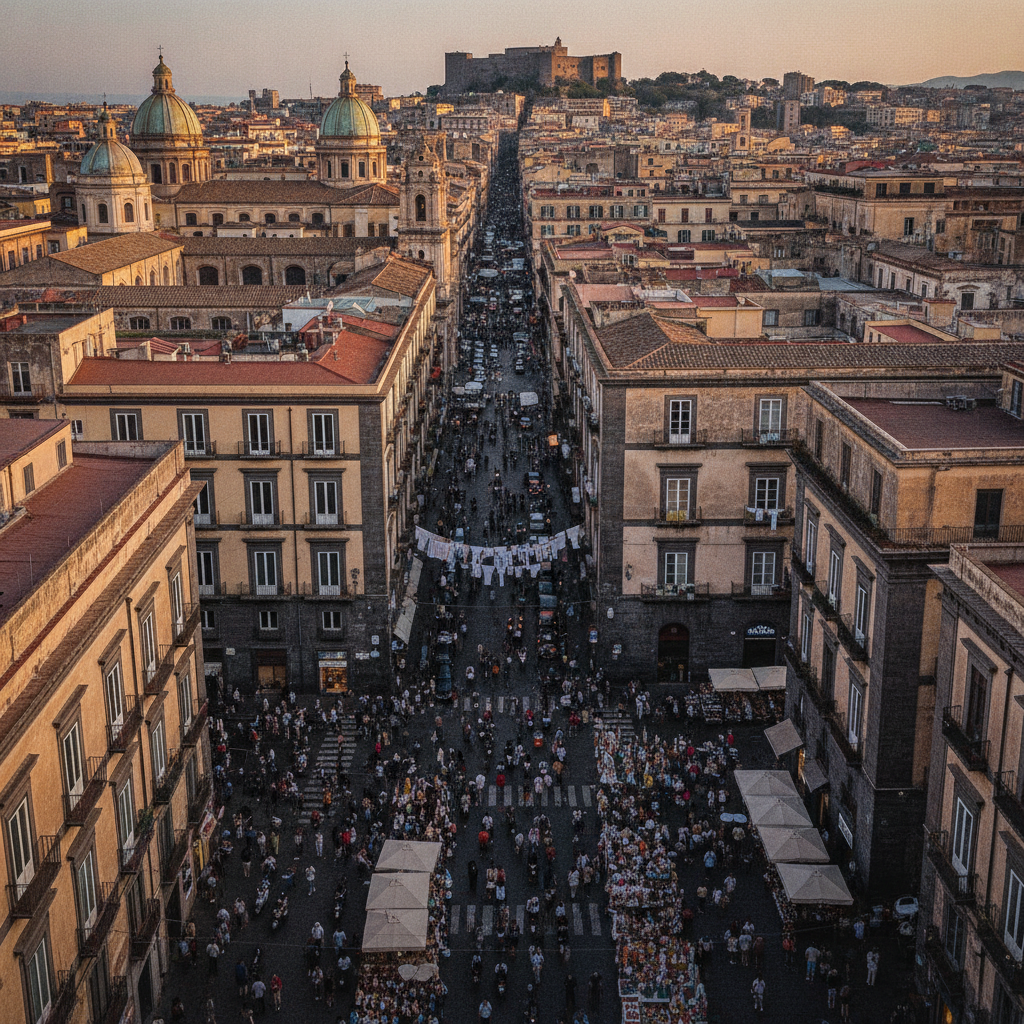
Naples Historic Centre, Spaccanapoli & the UNESCO Underground City
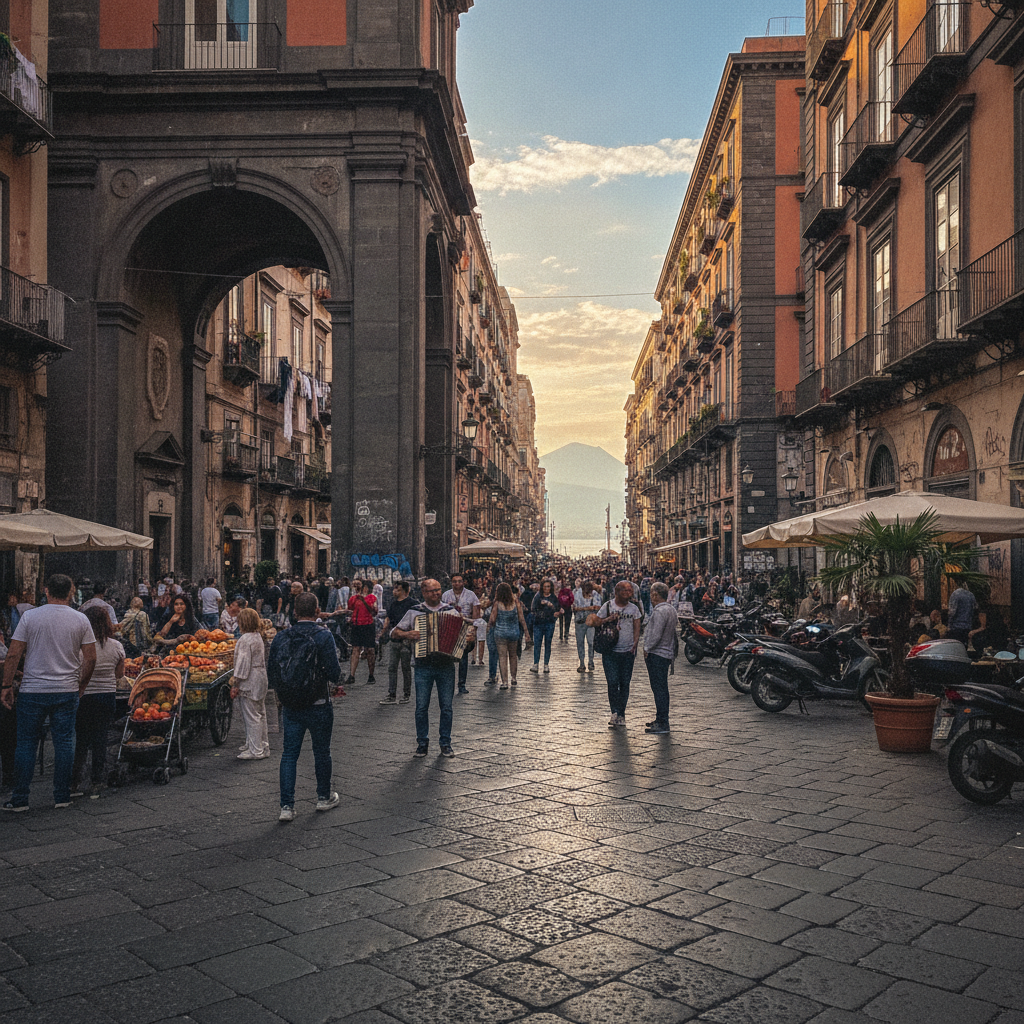
Via Toledo, Spanish Quarter & Neapolitan Street Life
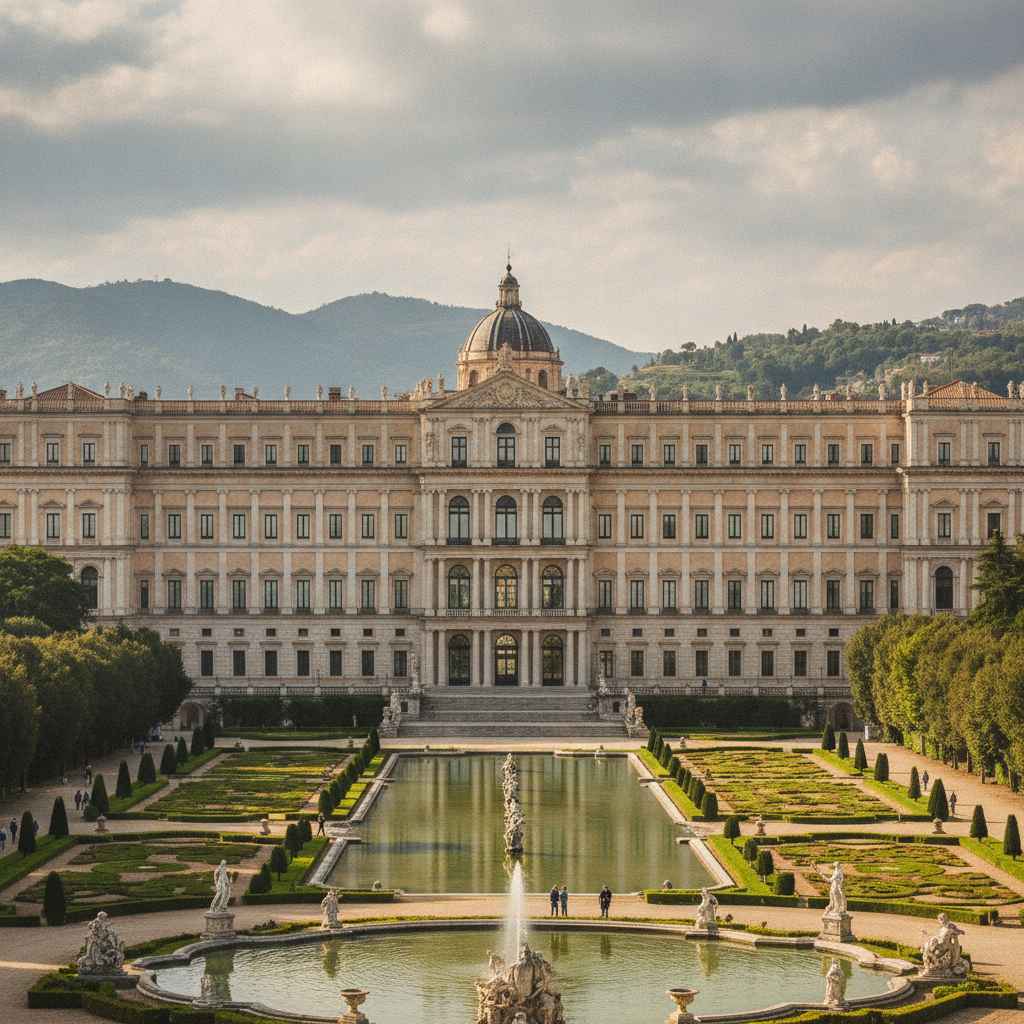
Caserta Royal Palace — The Versailles of Italy
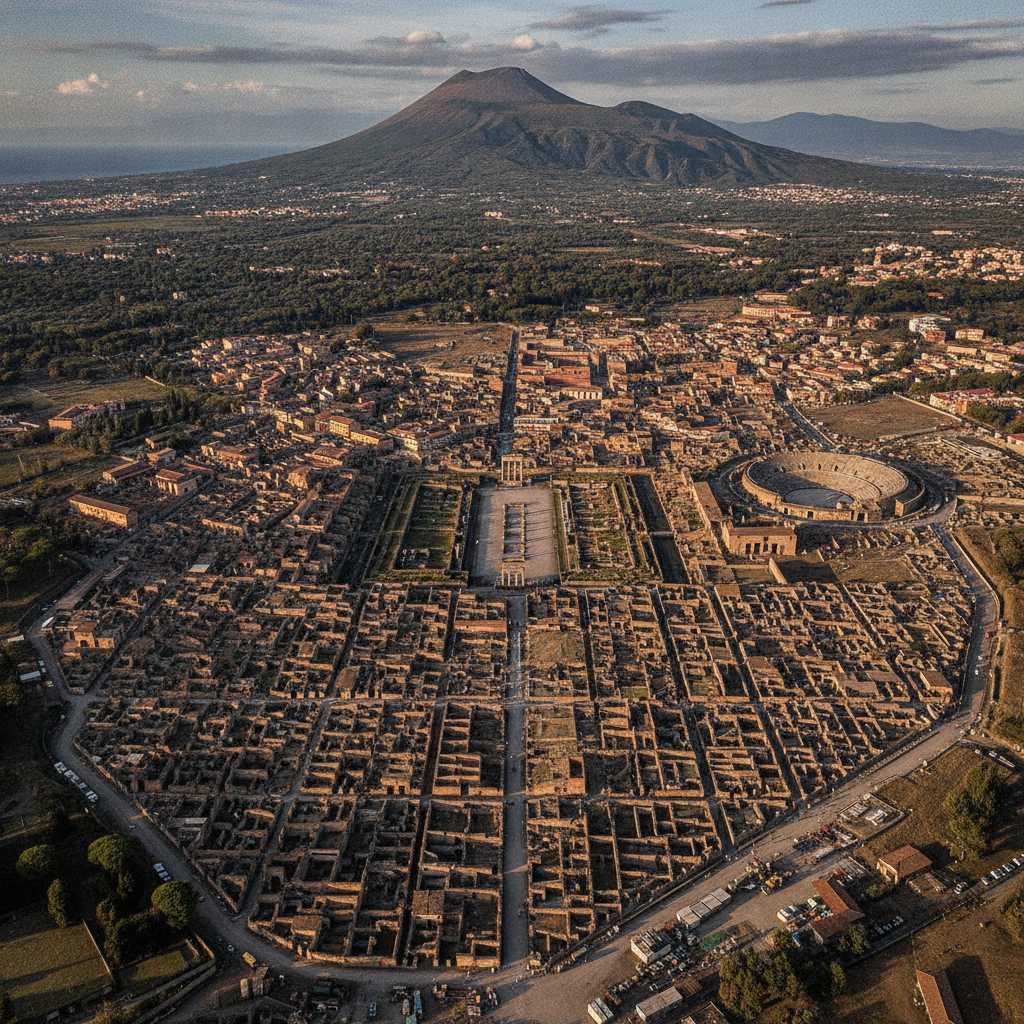
Pompeii, Mount Vesuvius & Herculaneum — Cities Frozen in Time
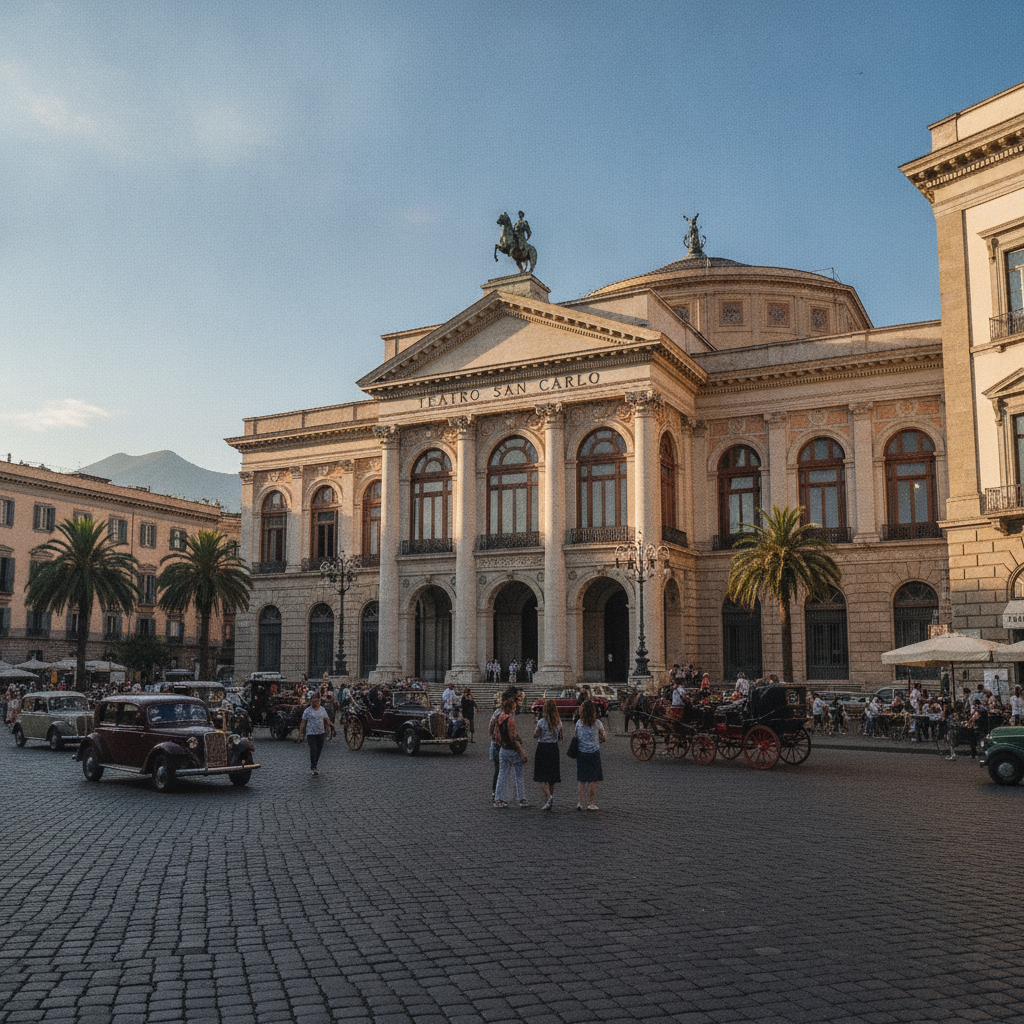
Teatro San Carlo — The World's Oldest Opera House