Mykonos Chora — Little Venice, the Windmills & the Labyrinth of the Old Town
Mykonos (the island of 10,000 permanent residents in the central Cyclades, the most internationally recognizable Greek island after Santorini, the combination of the iconic white-cubist architecture of Chora with the internationally oriented party culture and luxury beach club scene making it the most expensive destination in Greece) is built around Chora — the old town — whose labyrinthine street plan was deliberately designed to confuse pirates.
1. Chora — the White Labyrinth
- 1
Chora — the White Labyrinth
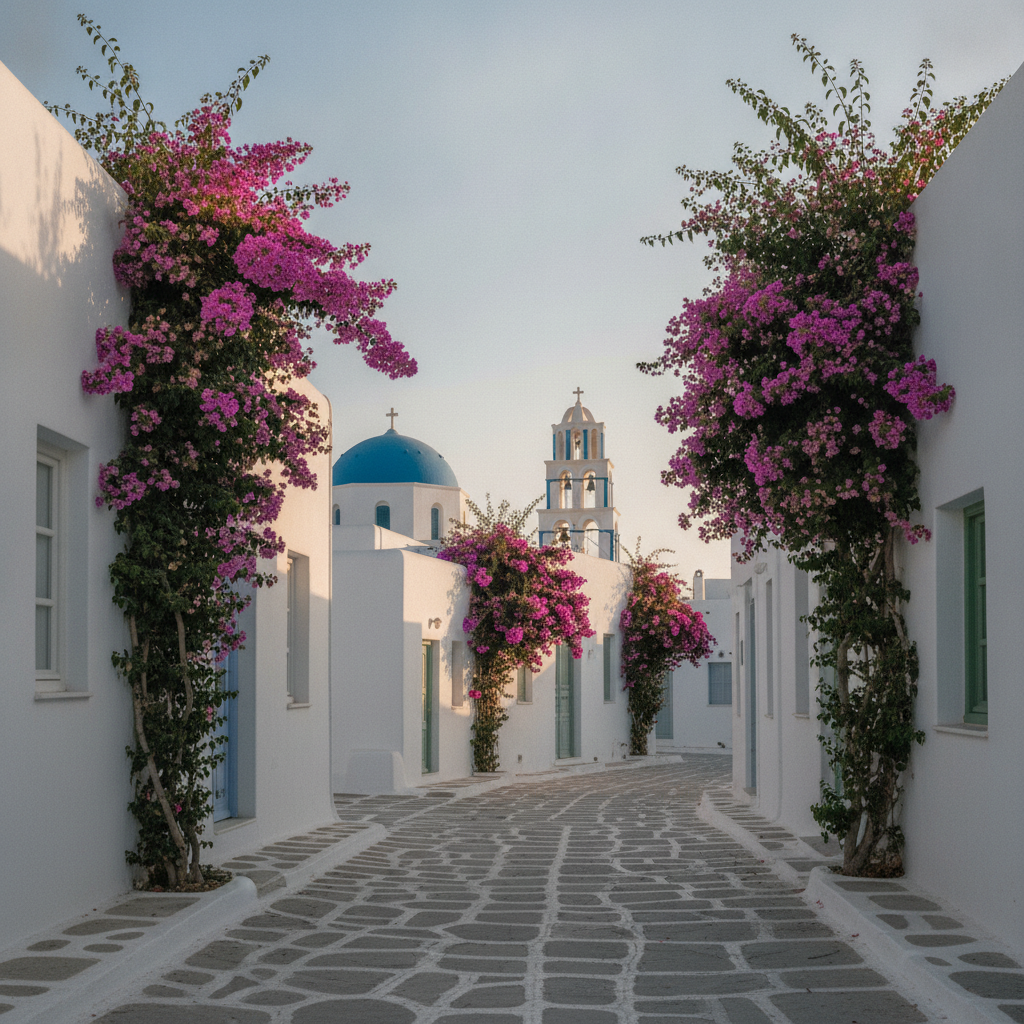
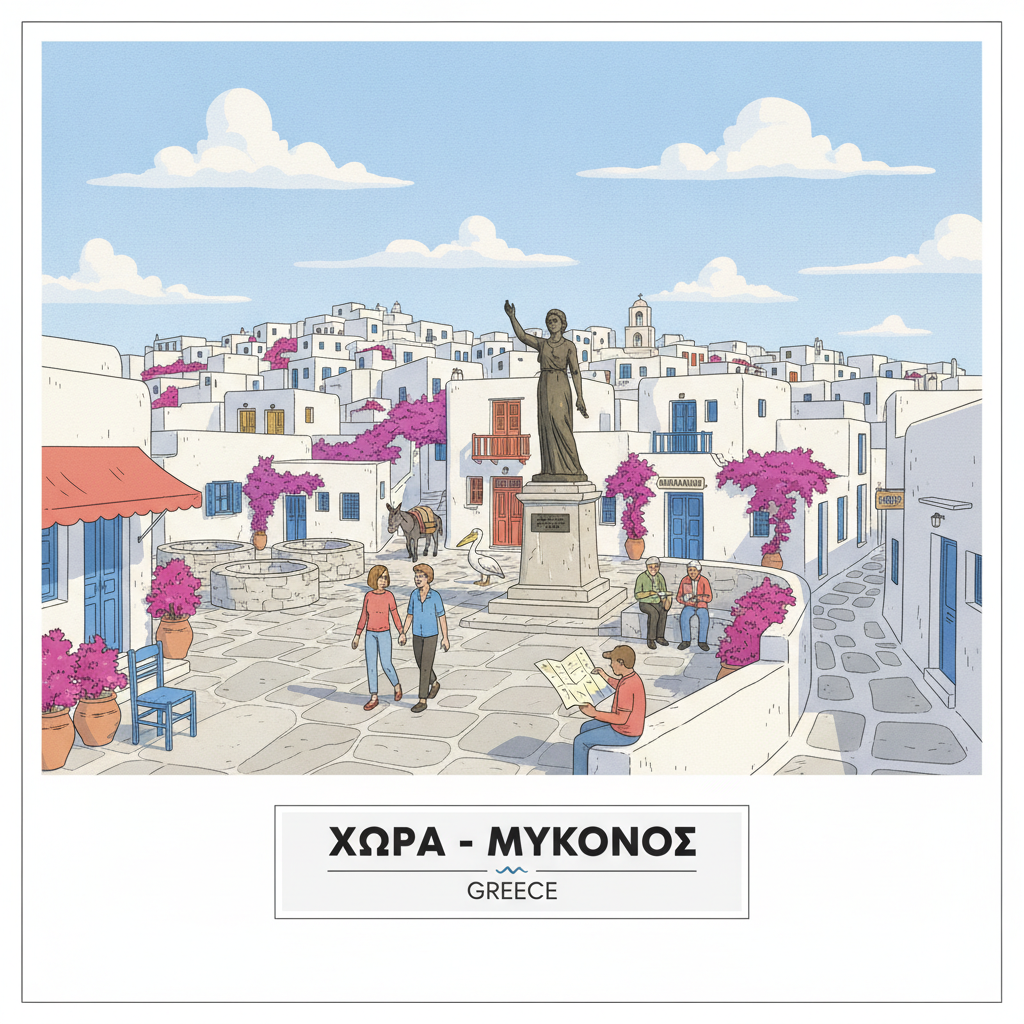
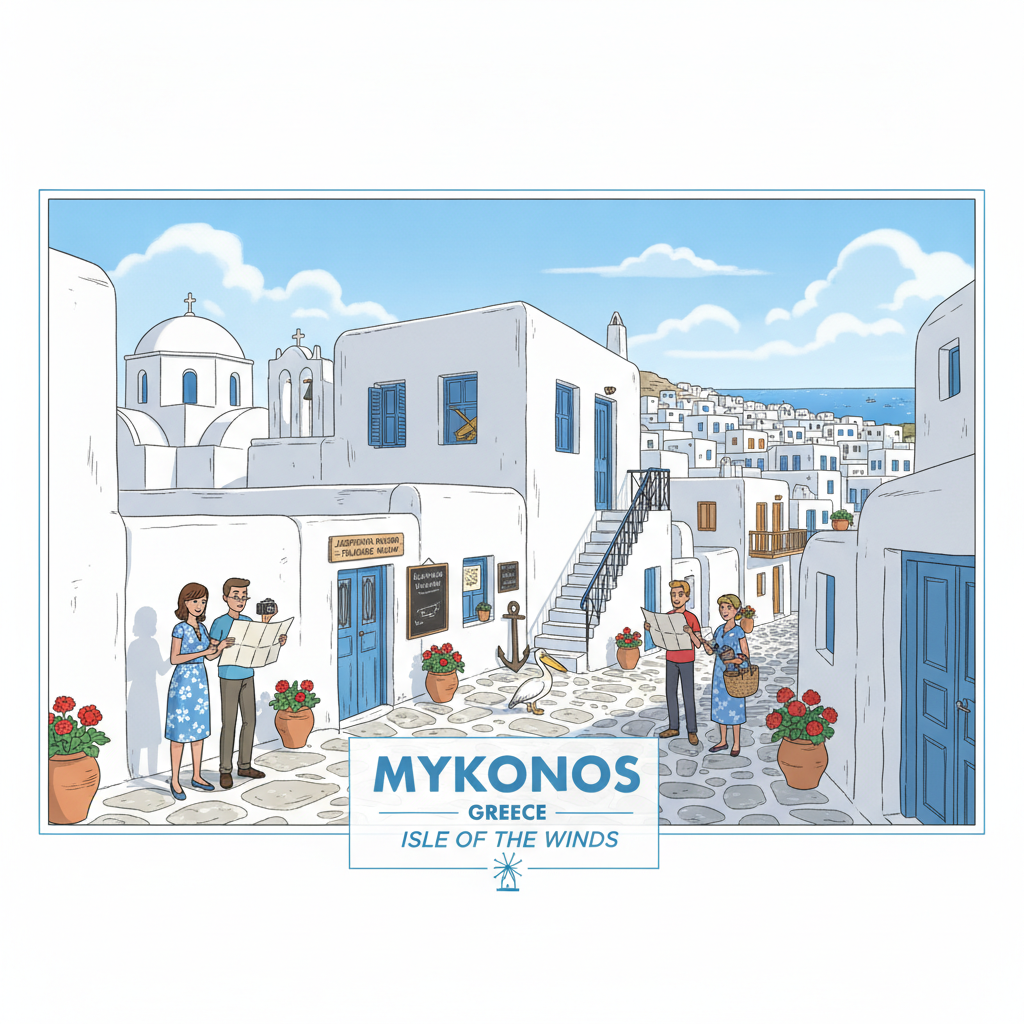
Chora (Mykonos Town, the capital of the island, population 6,000 permanent residents expanding to 40,000+ in July-August, the UNESCO-recognized traditional settlement, the white-washed cubic architecture with coloured wooden doors and bougainvillea the most reproduced image of the Cyclades) is built on a headland at the western end of the island with its street plan specifically designed to confuse marauding pirates — the narrow alleys bending every 3-5 metres, the passages narrowing to 1m width, dead-ends appearing without warning, the streets without street signs until 2009. The Manto Square (the central square of Chora, the statue of the heroine Manto Mavrogenous — the Mykoniot noblewoman who funded the Greek War of Independence at personal expense — the gathering point for the island's permanent residents and the starting point for the labyrinth walk) and the Three Wells (the 18th-century public cisterns at the edge of the old market, the water source for the island before mains water arrived in 1988) are the two anchors in the maze.
- 2
Little Venice — Balconies Over the Aegean
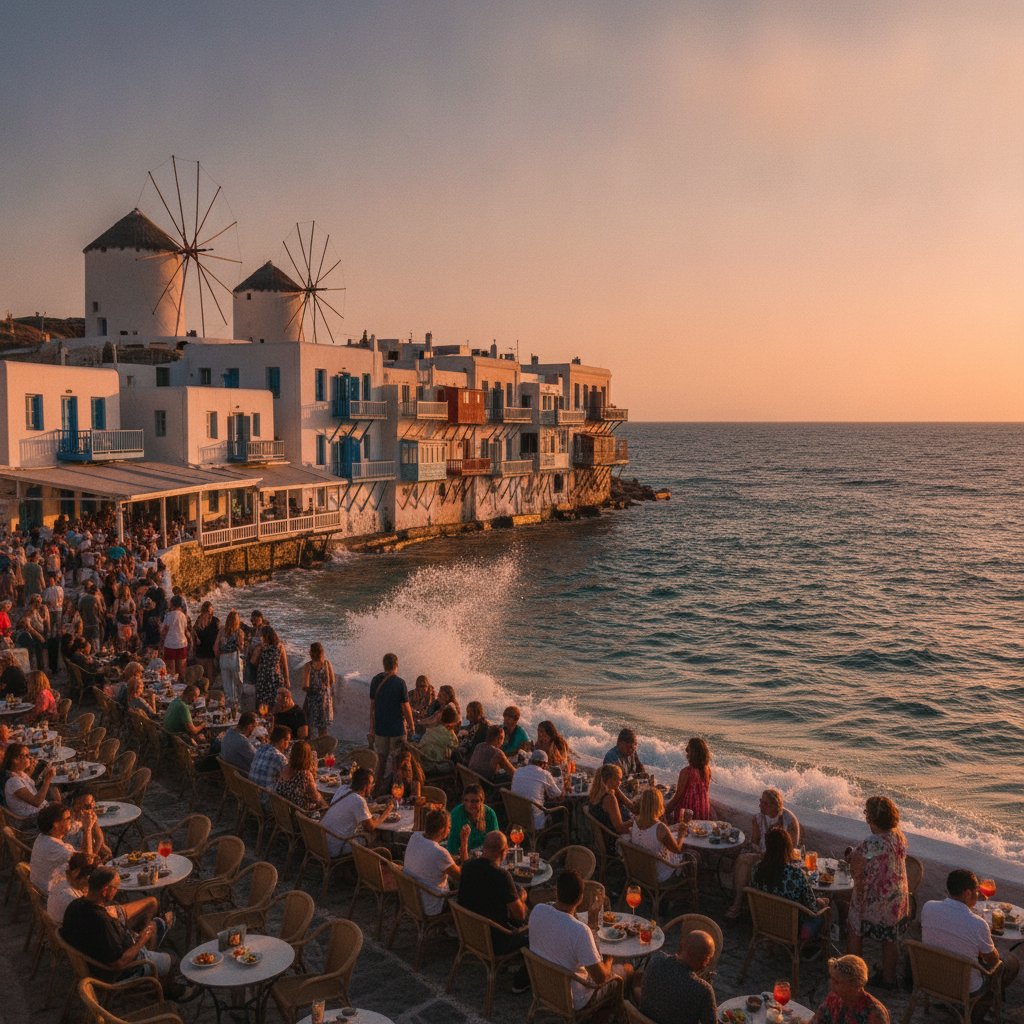
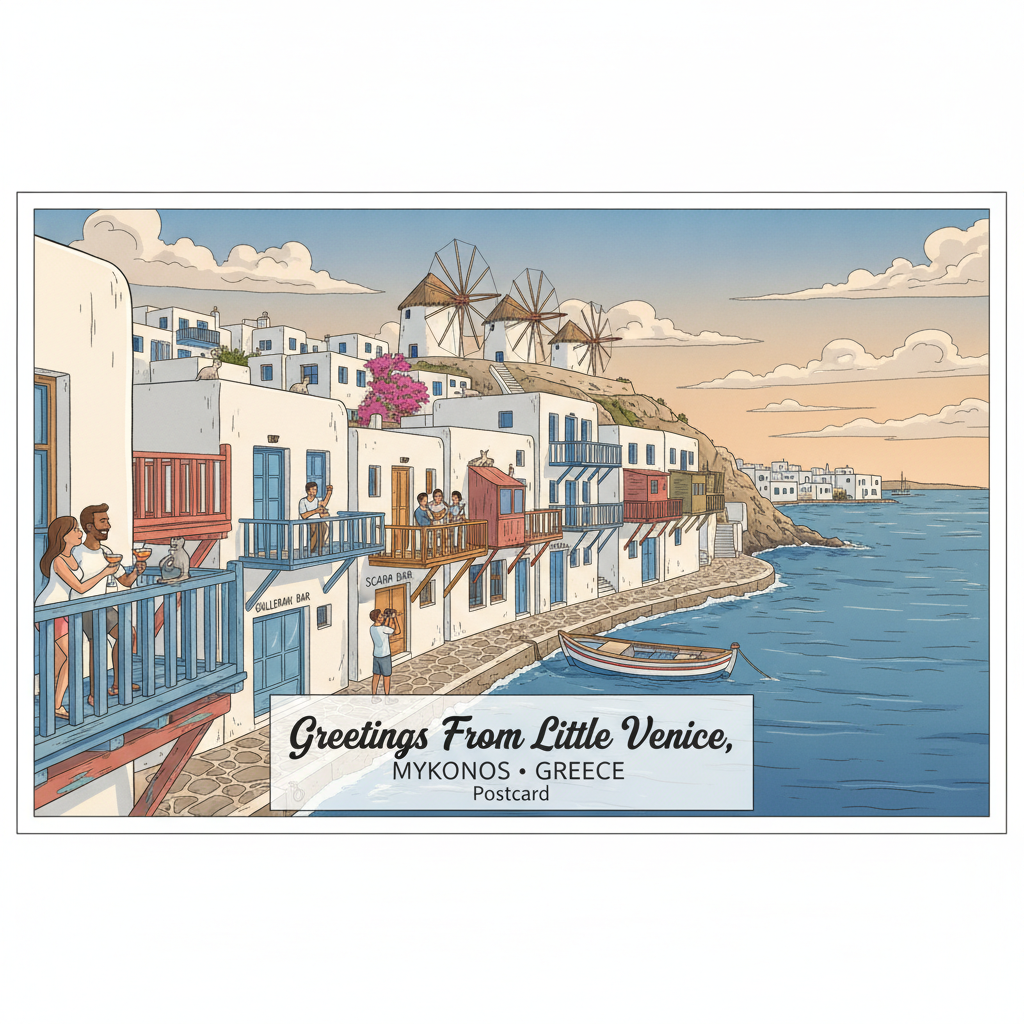
Little Venice (the Alefkandra district of Mykonos Chora, the row of 18th-century sea captains' mansions built directly on the western waterfront of the port headland, the houses' foundations in the sea and their multi-coloured wooden balconies and terraces cantilevered 2-3m over the water, the waves breaking directly below the dining tables, the most atmospheric cocktail-hour location in the Cyclades) is where the sunset aperitivo ritual takes place — the cocktail bars occupying the ground floors of the captains' houses charge €15-22 for cocktails and €10-12 for beer, but the position (sitting on the wooden balcony with the Aegean directly below and the Alefkandra windmills above) is the correct setting for the Mykonos experience. The ideal timing: arriving at Little Venice 1-1.5 hours before sunset (the sunset over the Aegean visible directly from the west-facing balconies, the best position being the tables of the Galleraki bar or the Scarpa bar on the front row).
- 3
The Windmills of Kato Mili — the Mykonian Icon
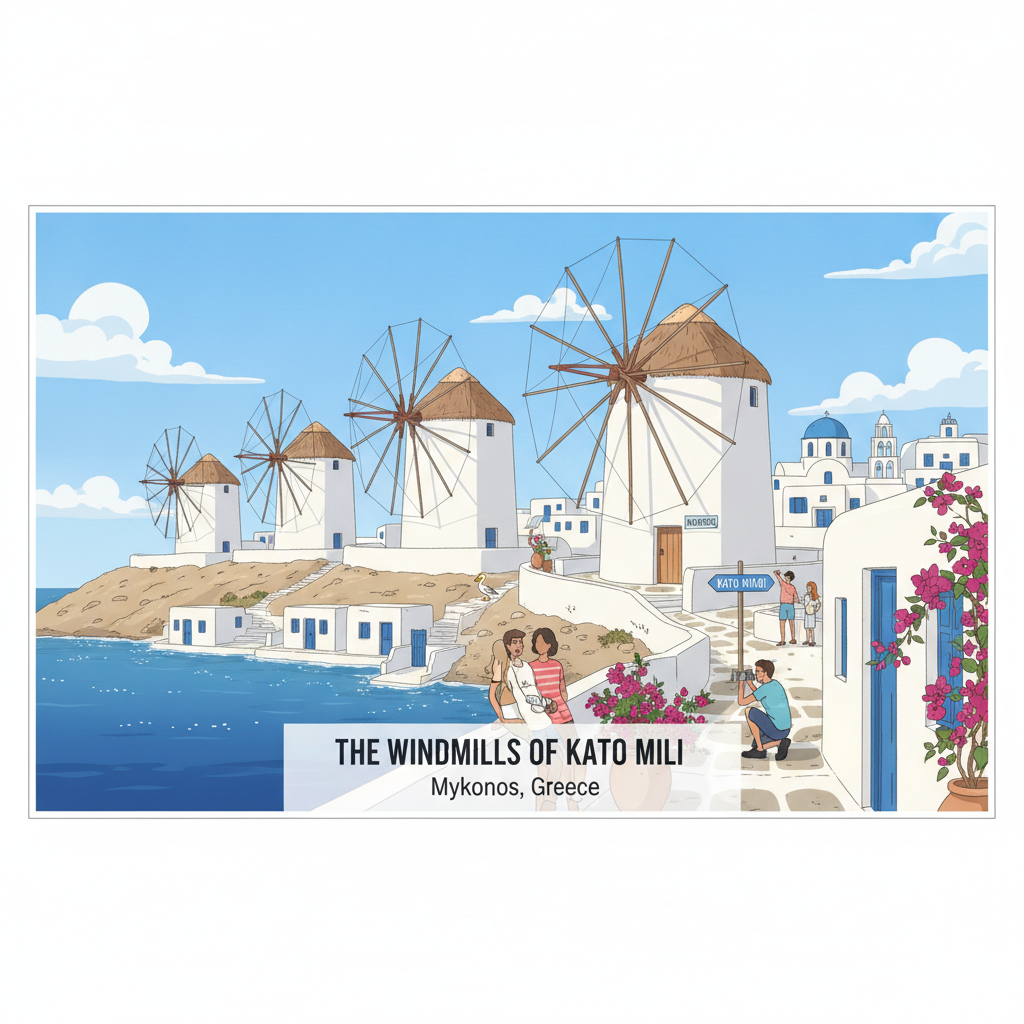
The Kato Mili windmills (the 7 white cylindrical windmills on the Chora headland above Little Venice, built by the Venetians in the 16th century to mill the grain from the Aegean islands, the windmills' sails removed long ago but the structures maintained as the defining visual element of Mykonos — appearing in the background of more photographs than any other element on the island) are accessible from Little Venice by a 3-minute walk up the stepped path. The windmill of Bonis (the only windmill open as a museum, the Folklore Museum of Mykonos occupying the lower windmill, €2, the reconstructed milling machinery visible, open June-September daily 4pm-9pm) provides the mechanical context. The correct photograph: shooting from the Little Venice balcony level looking up at the windmills with the Aegean in the foreground takes 3-4 minutes of position adjustment to find the precise angle where the mill sails frame the caldera of the sea below.
- 4
Paraportiani — the Most Photographed Church in Greece
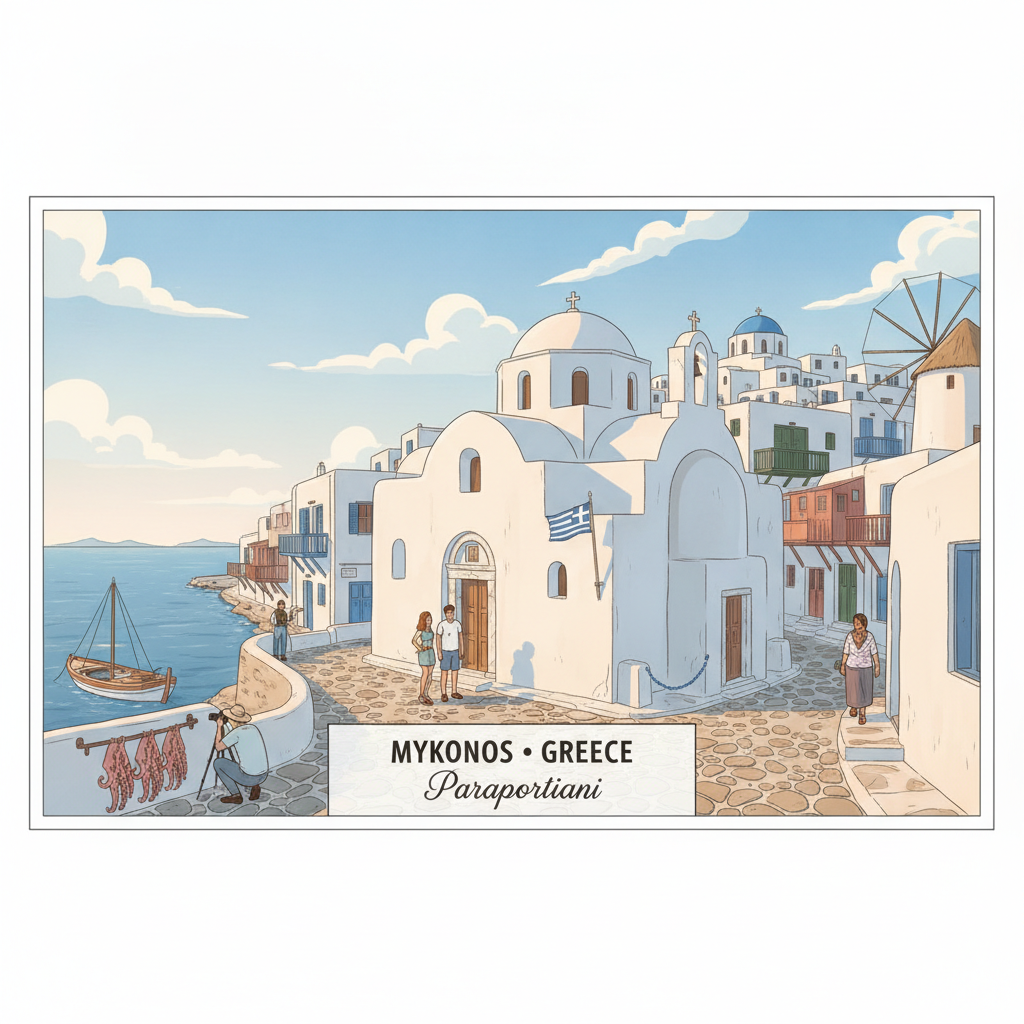
Paraportiani (the whitewashed church complex at the edge of the Kastro district of Chora, above Little Venice, the complex consisting of 5 individual chapels built between the 14th and 17th centuries, the chapels merged into a single asymmetric organic sculptural mass through successive additions, the whole structure replastered in blinding white lime every year before Easter — the effect of the lime plastering giving the building its characteristic soft rounded edges and the texture that appears hand-modelled rather than architectural, the building often cited as the most photographed Orthodox church in the world) is technically a private religious building open to services only, but the exterior is always accessible. The correct photography time: 6-8am before the day-tripper crowds from the cruise ships arrive, the soft morning light from the east casting long shadows across the whitewashed relief of the chapel surfaces.
- 5
The Folklore Museum — Pirates, Sea Captains & Domestic Life
The Mykonos Folklore Museum (Kastro, the 18th-century sea captain's house next to Paraportiani, the most complete collection of traditional Mykonian objects, €4, open April-October Tuesday-Sunday 10am-2pm and 5pm-9pm, the collection including the navigational instruments of the Mykonian merchant fleet — the compasses, charts, and sextants of the island's golden age of seafaring in the 18th-19th centuries when the Mykonian merchant fleet was one of the largest in the Aegean) and the Aegean Maritime Museum (Enoplon Dynameon 10, the dedicated maritime museum in a neoclassical Chora mansion, €4, open April-October daily 10.30am-1pm and 6.30pm-9pm, the ship models, nautical instruments, and lighthouse lanterns documenting the Cycladic maritime tradition from the Bronze Age to the 20th century, the collection of 19th-century maps of the Aegean the most significant cartographic collection in the islands) together provide the historical counterpoint to the island's contemporary luxury tourism identity.
- 6
Pelican of Mykonos — the Island's Living Mascot
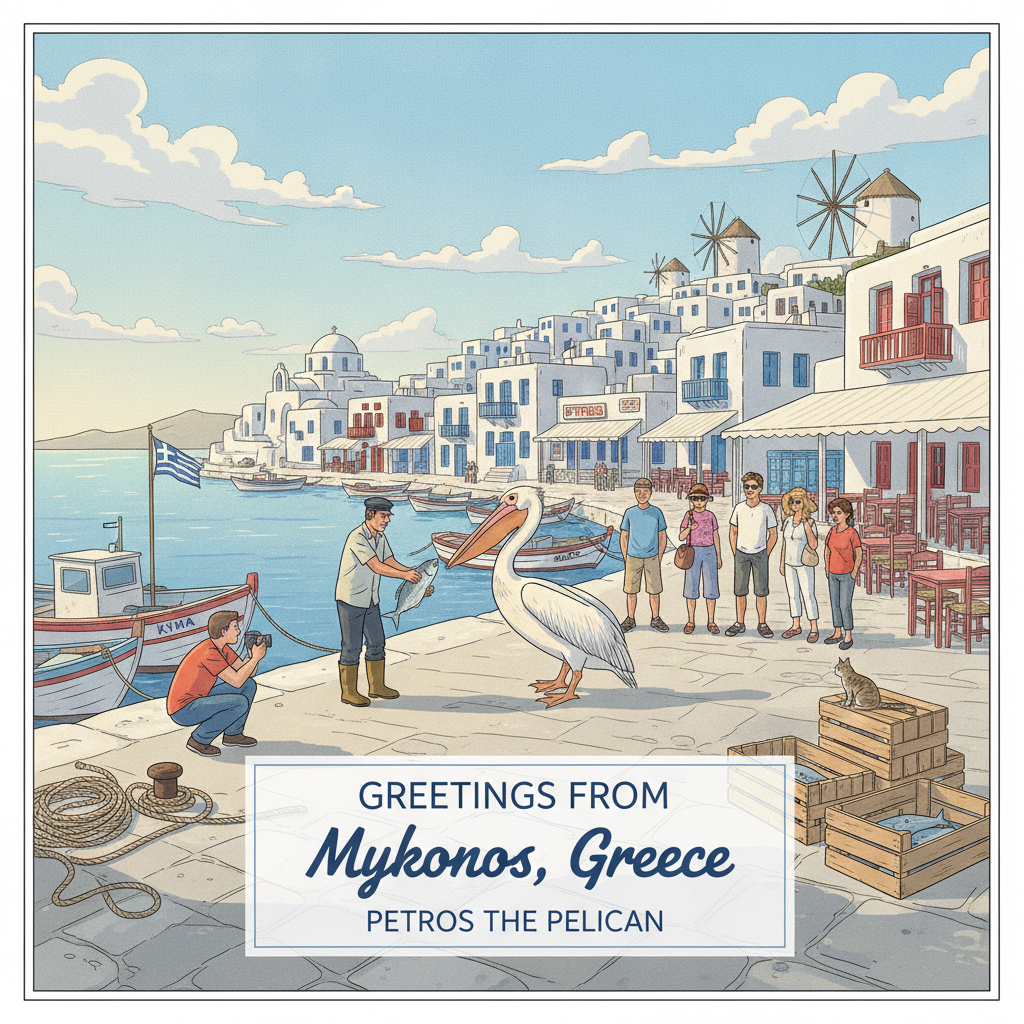
Petros the Pelican (the great white pelican who arrived on Mykonos in 1954 after being found injured by the fishermen, who nursed the bird back to health and kept it as the town mascot, the pelican becoming the official symbol of Mykonos — the current pelican 'Petros III' is the third bird to carry the name since the original Petros died in 1985, the pelican's daily promenade through the Chora streets and the fishing harbour a fixed element of Mykonos town life from 8am-noon, the pelican accepting fish from the fishermen and fish from tourists holding out scraps, the bird making an unpredictable circuit of the harbour, the fish market, and the Manto Square) is the one element of Mykonos entirely free of commercial development and unchanged since 1954. Approaching the pelican: the bird tolerates close approach (within 1-2m) for photography but will snap at hands reaching towards it; the pelican spends the early morning at the small fishing harbour on the north side of the port, identifiable by the crowd of people with cameras following it.
Walk this route with audio
Stories play automatically as you reach each stop — no tapping needed.
More in mykonos
Mykonos Food — Kopanisti, Loukoumades & the Local Taverna Tradition
Mykonos Beaches — Paradise, Super Paradise, Elia & the Beach Club Circuit
Mykonos Nightlife — Cavo Paradiso, Scorpios, the Chora Bar Circuit & Gay Mykonos
Delos — the Sacred Island of Apollo, UNESCO World Heritage & the Aegean's Greatest Ancient Site