Mykonos Food — Kopanisti, Loukoumades & the Local Taverna Tradition
The Mykonos food tradition (historically one of the most distinctive in the Cyclades, the island's cheese, bread, and honey products developing their specific character from the island's endemic animal breeds and the thyme-oregano-covered hillsides) survives alongside the international restaurant scene at the traditional tavernas of Chora and the food shops of the old market.
- 1
Kopanisti — the Spicy Mykonian Cheese
Kopanisti PDO (the characteristic cheese of Mykonos and several neighbouring Cycladic islands, made from full-fat goat's and cow's milk curdled and then fermented with wild yeasts and bacteria for 3-4 weeks at room temperature, the fermentation developing the strongly pungent, spicy, and blue-cheese-like character that distinguishes kopanisti from all other Greek cheeses — the PDO protection covering the specific fermentation method and the geographic origin, the cheese available at the Mykonos market cheese shops at €8-14 per 200g) is the defining local food product. The correct uses: as a meze spread on the local Mykonian paximadi (the twice-baked rusk bread, harder than the standard Greek paximadi, made from barley or wheat), with the local thyme honey as the counter-sweet element, or as the filling for the Mykonian loukoumades pastry. The cheese shops in Chora (the Mykonian Spiti food shop at Manto Square, the Mykonos Deli on Matoyianni Street) are the sources for the authentic product rather than the supermarket packaged versions.
- 2
Loukoumades — the Honey Doughnuts
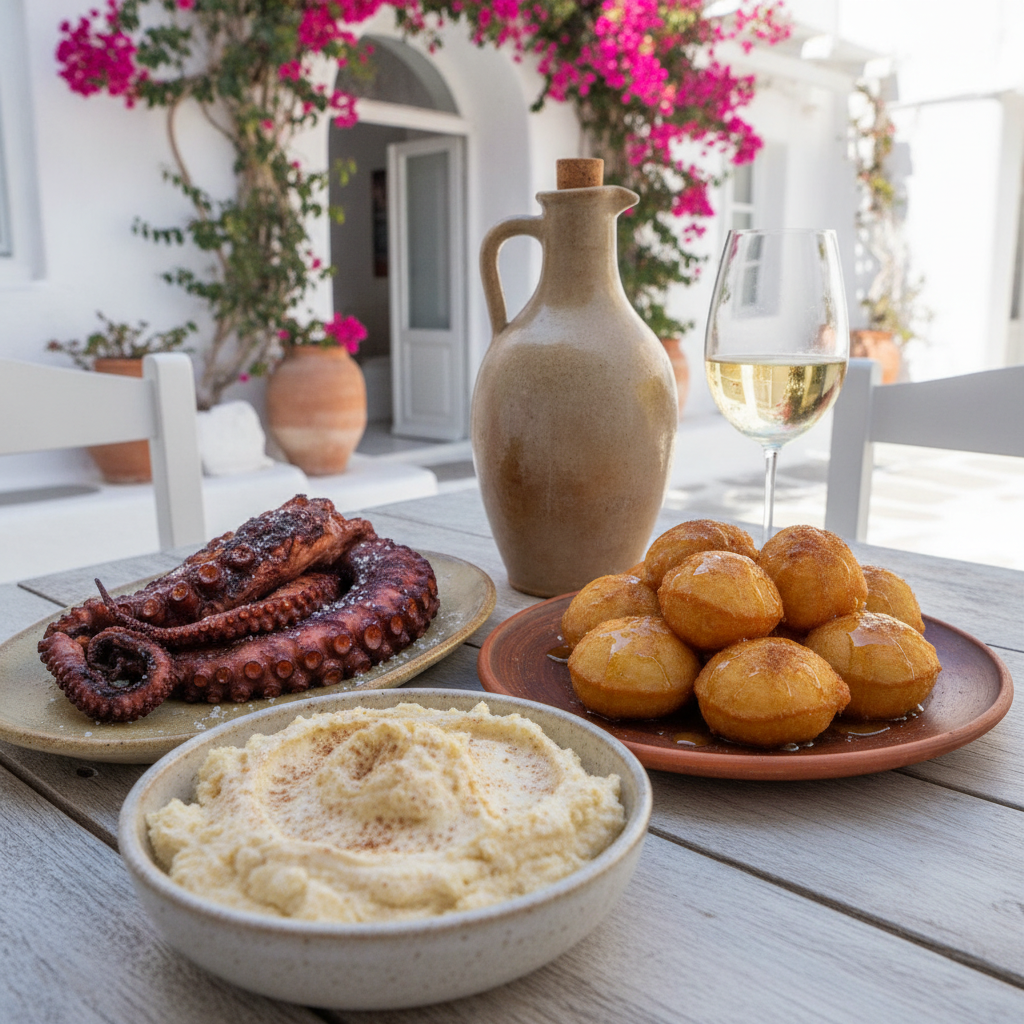
Loukoumades (the fried honey doughnuts of the Greek-Levantine culinary tradition, made on Mykonos in the traditional form — small round dough balls fried in olive oil until golden, then soaked in local thyme honey and dusted with cinnamon, the dough leavened with wild yeast, the frying in olive oil giving them a different character from the seed-oil versions common on the mainland, the Mykonos loukoumades distinguished by the use of the island's own thyme honey) are the correct Mykonian street food dessert. The correct source: the dedicated loukoumades shop at the entrance to the old market (the shop operating since 1956, the production visible through the glass — the round dough balls dropping into the olive oil, the emerging golden spheres transferred immediately to the waiting honey bath, served immediately in a paper cone, €4-6 per portion of 10 loukoumades, the best consumed in the first 5 minutes before the outer crust softens).
- 3
Mykonian Sausage and Dried Meats
The Mykonian sausage tradition (the loukaniko Mykonou, the pork sausage seasoned with orange peel, fennel seeds, and black pepper, traditionally dried and smoked in the stone outbuildings of the island's farmhouses, the texture and flavour concentrated by the drying process, the sausage sliced and served as meze at the traditional tavernas or grilled and served as a main course) and the apaki (the Mykonian smoked pork fillet, brined in wine and vinegar then cold-smoked over aromatic herbs, the dark brown exterior concealing a red-pink interior of concentrated pork flavour, similar to but distinct from the Cretan apaki) are the island's cured meat products. Available at: the Petros Koukas deli on Matoyianni Street (the island's best-stocked traditional deli, the complete Mykonian cured meat range, open 9am-midnight in season), and at the traditional tavernas that serve the complete Mykonian meze plate (the combination of kopanisti, loukaniko sausage, apaki, capers, and the local paximadi rusk constituting the correct Mykonian mezedakia spread).
- 4
Niko's Taverna and the Old Market Traditional Restaurants
The old market restaurants (the cluster of traditional Greek tavernas on the lanes behind and parallel to the harbour, the correct dining alternative to the tourist-price waterfront restaurants): Niko's Taverna (the family taverna since 1964, the most reliably traditional cooking in Chora at the most sustainable prices — the moussaka at €14, the grilled octopus at €16, the souvlaki at €12, the fresh fish at €18-25/kg, the interior unchanged since the 1970s, the service from the same family), Fokos Taverna (the Chora branch of the taverna of the same name on the north coast beach, the traditional island cooking in a courtyard setting), and the bakery on the main market lane (the traditional Mykonian bread, the sesame-covered circular loaves and the paximadi rusks, the bread baked from 5am and available from 7am, the bakery identifying itself by the bread baskets outside — the bread at €2-4 per loaf the most cost-effective food on the island).
- 5
Thyme Honey and Local Beekeeping
Mykonos thyme honey (the product of the island's 300+ hive beekeeping operations, the bees foraging on the wild thyme, oregano, and lavender of the rocky hillsides — the combination of volcanic-origin soil, high mineral content in the plants, and the wind-concentration of essential oils in the low-growing Cycladic vegetation producing a honey with extraordinary aromatic intensity compared to mainland thyme honey, the honey darker amber in colour than standard thyme honey, the flavour simultaneously sweet and herbal with a long bitter-thyme finish) is available at the island's food shops at €8-15 per 500g jar for the local production. The beekeeping tradition (the island's landscape still covered with wild thyme despite the tourism development of the coastal areas, the hives in the rocky inland plateau visible along the road from Chora to Ano Mera) is supported by the low agricultural pressure on the interior of the island, which remains essentially wild. The pairing (Mykonian thyme honey on kopanisti cheese with paximadi — the correct 3-ingredient Mykonian breakfast) is the most immediate food cultural experience the island offers.
- 6
Ano Mera — the Inland Village and Monastery
Ano Mera (the only inland village of Mykonos, 8km east of Chora, the geographical centre of the island, population 800, the most traditional village on the island — the central square with the Monastery of Panagia Tourliani visible from the main road, the cafes and tavernas serving the local community rather than tourists, accessible by bus from Chora at €2) contains the Monastery of Panagia Tourliani (the 16th-century monastery with its elaborately decorated marble bell tower, the monastery church with the carved Italian marble iconostasis and the collection of 16th-18th century Byzantine icons, open to visitors daily 9am-1pm and 5pm-9pm, dress code required, the monastery maintaining a small museum of ecclesiastical art and vestments) and the practical alternative taverna circuit (the three tavernas on the main square of Ano Mera serving traditional Greek food at genuinely local prices — the moussakas at €9-11, the grilled meats at €10-14, the total bill for two with wine at €30-40 versus €100-150 in the Chora waterfront restaurants for identical food). The Ano Mera Sunday market (the weekly market on the central square, the island's permanent residents shopping for produce, the experience of Mykonos as an ordinary Greek village rather than a luxury destination).
Walk this route with audio
Stories play automatically as you reach each stop — no tapping needed.
More in mykonos
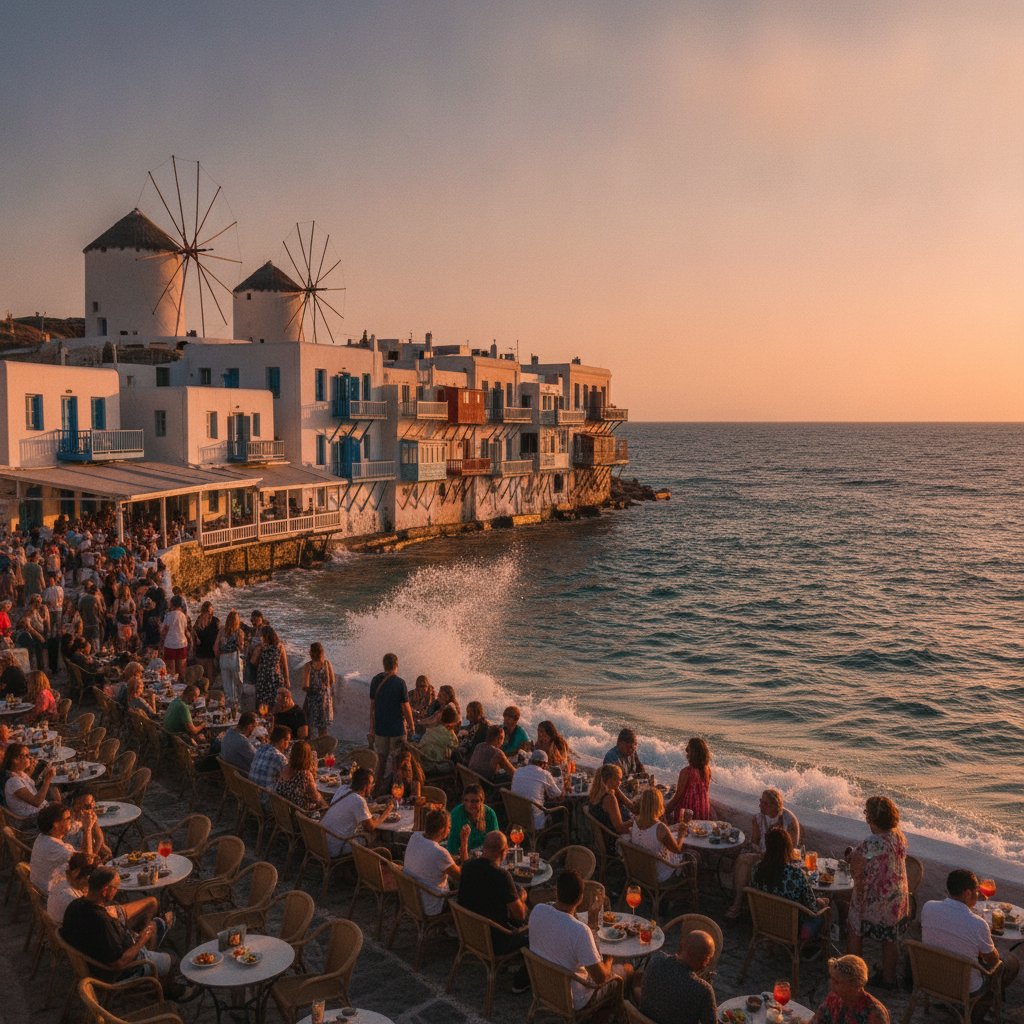
Mykonos Chora — Little Venice, the Windmills & the Labyrinth of the Old Town
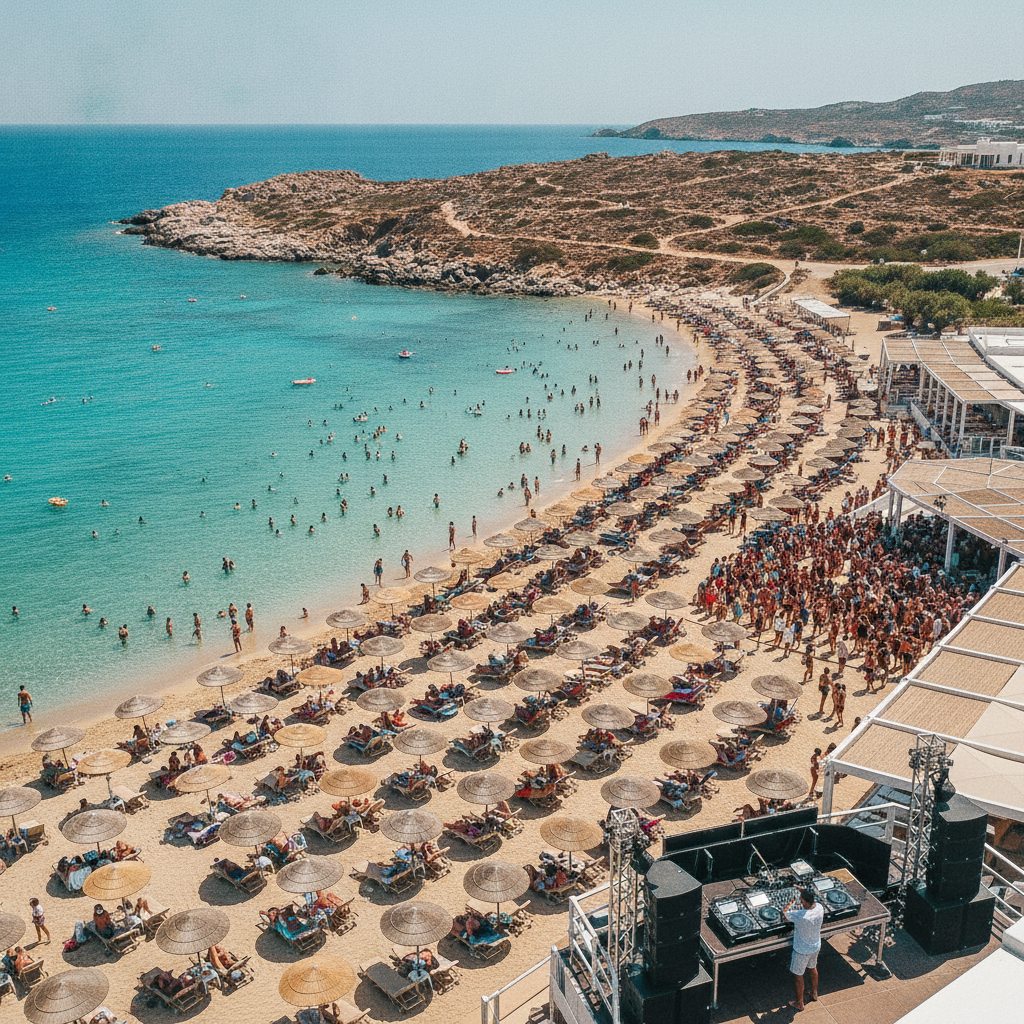
Mykonos Beaches — Paradise, Super Paradise, Elia & the Beach Club Circuit
Mykonos Nightlife — Cavo Paradiso, Scorpios, the Chora Bar Circuit & Gay Mykonos
Delos — the Sacred Island of Apollo, UNESCO World Heritage & the Aegean's Greatest Ancient Site