Delos — the Sacred Island of Apollo, UNESCO World Heritage & the Aegean's Greatest Ancient Site
Delos (the tiny island 5km west of Mykonos, 3.4km squared in area, uninhabited since the 1st century BCE, the most sacred site in the Aegean — the mythological birthplace of Apollo and Artemis, the twin children of Zeus and Leto — one of the most important archaeological sites in Greece and a UNESCO World Heritage Site since 1990) is the essential half-day excursion from Mykonos.
- 1
The Mythology — Birthplace of Apollo and Artemis
The mythology of Delos: Zeus seduced the Titaness Leto, who became pregnant with twins; Hera, Zeus's wife, in jealousy forbade every land from giving Leto shelter for the birth. Delos — then the floating island of Ortygia, untethered to the seabed — was the only place willing to accept Leto. The birth of Apollo (the god of light, music, prophecy, and reason, the most important deity of the classical Greek pantheon after Zeus) and Artemis (the goddess of the hunt, the moon, and childbirth) on Delos transformed the island into the most sacred site in the Aegean. Zeus anchored the island to the seabed as reward. The subsequent history (the Sanctuary of Apollo attracting pilgrims and tribute from every Aegean city-state for 1,000 years, the island growing into the most important commercial port in the eastern Mediterranean by the 2nd century BCE, the sack of the island by the generals of Mithridates of Pontus in 88 BCE killing 20,000 people and effectively ending the island's history, the island never reoccupied at scale) makes Delos the most historically complete ancient site in the Aegean.
- 2
The Sanctuary of Apollo — the Three Temples
The Sanctuary of Apollo (the sacred precinct on the western coast of Delos, the most sacred ground in the Aegean, the three temples of Apollo built between the 7th and 3rd centuries BCE — the Delian Temple, the Athenian Temple, and the Temple of the Delians — the temples' foundations still clearly visible in plan, the columns of the Athenian Stoa partially standing) contains the most concentrated sacred architecture in the Cyclades. The Propylaea (the monumental gateway to the sanctuary, the threshold that all pilgrims crossed after disembarking — the ritual of purification required: no birth or death was permitted on Delos, pregnant women and the dying were ferried to the neighbouring island of Rheneia), the Sacred Way (the processional route from the harbour to the temples, lined with ex-voto statues and treasury buildings from the city-states of the Aegean), and the Artemision (the Temple of Artemis, the twin temple to the Delian Apollo opposite his main sanctuary) are the three principal sacred structures.
- 3
The Terrace of the Lions — the Archaic Marble Lions
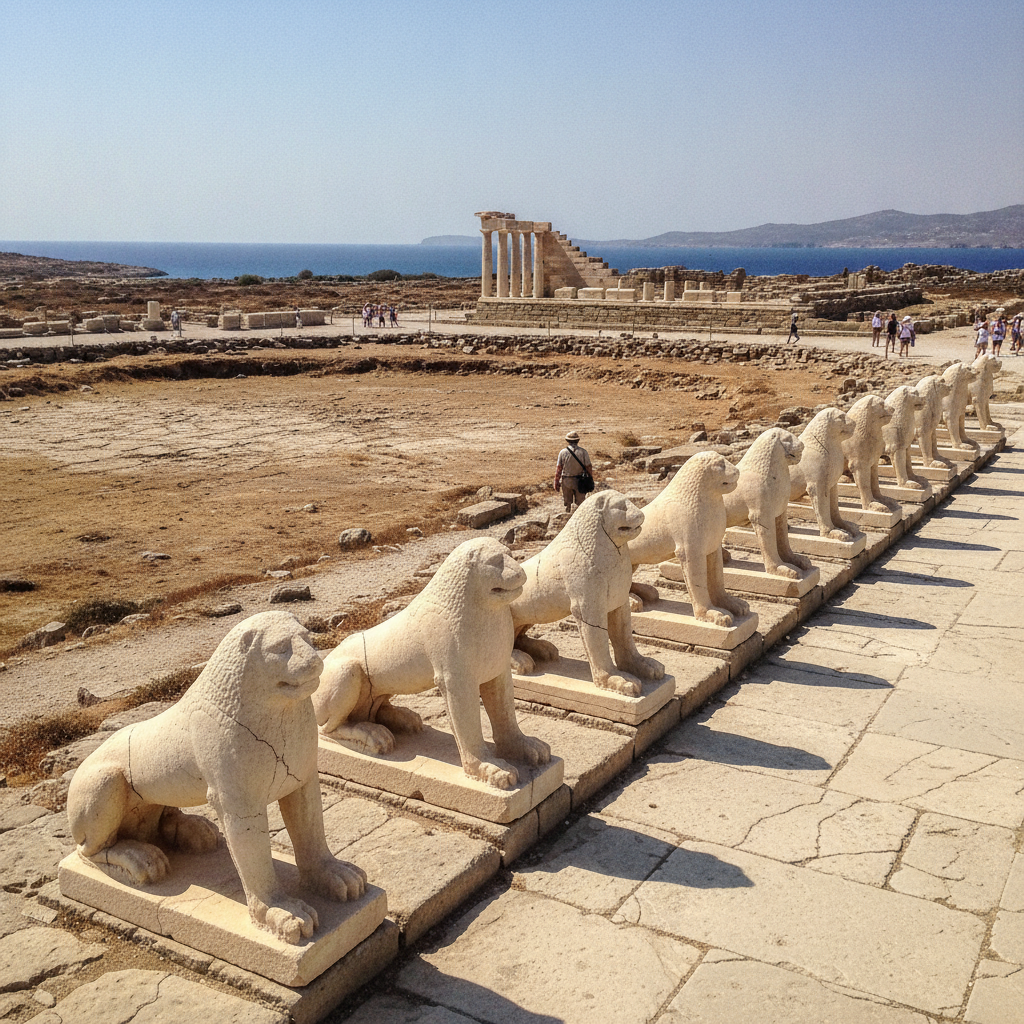
The Terrace of the Lions (the Avenue of the Lions, the row of 9 surviving archaic marble Naxian lions facing the Sacred Lake, originally 16 lions dedicated by the Naxians in the 7th century BCE as guardians of the sacred lake where Apollo was born according to some traditions, the lions in a crouching alert posture, their original paint long faded, the bodies heavily weathered by 2,700 years of Aegean weather, the surviving original lions now in the Delos Museum with reproductions on the terrace) is the most photographed element of the Delos site. One of the original lions was taken to Venice in the 17th century by the Venetian admiral Morosini and now guards the Arsenal of Venice — the body in Venice identifiable by the 18th-century runic inscriptions carved by Varangian guards who served the Byzantine Empire. The Sacred Lake (the circular depression below the terrace where the Sacred Lake existed until it was drained in 1925 for malaria prevention, the Sacred Palm — the sacred tree under which Leto gripped during the birth of Apollo, today represented by a single palm tree planted in 1929) is below the terrace.
- 4
The Theatre Quarter — the Commercial City
The Theatre Quarter (the residential and commercial district of ancient Delos southeast of the sanctuary, the most extensively excavated urban neighbourhood in the ancient Aegean, the 3rd-2nd century BCE houses with their atrium plans, mosaic floors, and painted walls standing to 1-2m height over an area of several hectares) reveals Delos as a commercial metropolis rather than merely a sanctuary — the House of the Dolphins (the mosaic floor of two dolphins ridden by Eros figures, one of the finest Hellenistic floor mosaics in Greece), the House of the Masks (the theatrical masks mosaic, the Dionysus on a panther mosaic), and the House of Dionysus (the Dionysus-on-panther floor mosaic, the best-preserved and most complete large mosaic on Delos) are the three primary artistic highlights of the quarter. The Theatre (the 3rd-century BCE stone theatre seating 5,500 spectators, the cavea carved into the hillside, the orchestra circle still intact) and the three cisterns supplying the theatre and the district are the engineering highlights.
- 5
The Delos Museum — the Archaic and Classical Collections
The Delos Archaeological Museum (the purpose-built museum in the centre of the archaeological site, open to all visitors with the site ticket, the collection organized around the sanctuary, the commercial city, and the domestic life of ancient Delos) holds the original Terrace of the Lions (the 9 surviving archaic lions now inside the museum with their replicas outside on the terrace), the colossal statue of Apollo (the 8.5m high archaic marble kouros, the most important surviving large-scale archaic sculpture in Greece after the Sounion kouros, the statue shattered and the fragments reassembled — the hand and part of the torso on display, the scale giving the immediate impression of what the sanctuary looked like to ancient visitors), and the collection of household objects from the Theatre Quarter (the domestic pottery, the bronze vessels, the glass perfume bottles, the cosmetic implements of the Hellenistic commercial city's residents — the most intimate collection of ancient domestic material in the Cyclades).
- 6
Delos Practical — the Boat, the Timing & the Museum
Delos logistics from Mykonos: the official ferry (the wooden boats departing from the Mykonos Old Harbour at 9am, 10am, and 11am daily April-October, returning from Delos at 12pm, 1pm, 2pm, and 3pm, the crossing 30 minutes, €20 round-trip per person, tickets at the harbour kiosks, the last return at 3pm strictly enforced — missing the last boat means spending the night on an uninhabited island, which is prohibited). The site entry fee (€12 adults, included the museum, the combined ticket with the site and museum is the only ticket available). The correct visit duration (3-4 hours for a thorough visit of the sanctuary, the Theatre Quarter, and the museum; 2 hours minimum for the sanctuary and the terrace of the lions only). Essential items: 2 litres of water minimum (no shade and no water sources on the site), sun protection (the site is entirely exposed), and closed-toe shoes (the ancient stone is uneven). The site closes at 3pm in summer (the same time as the last boat), the site management's policy creating a strict 3pm deadline that the boat schedule enforces.
Walk this route with audio
Stories play automatically as you reach each stop — no tapping needed.
More in mykonos
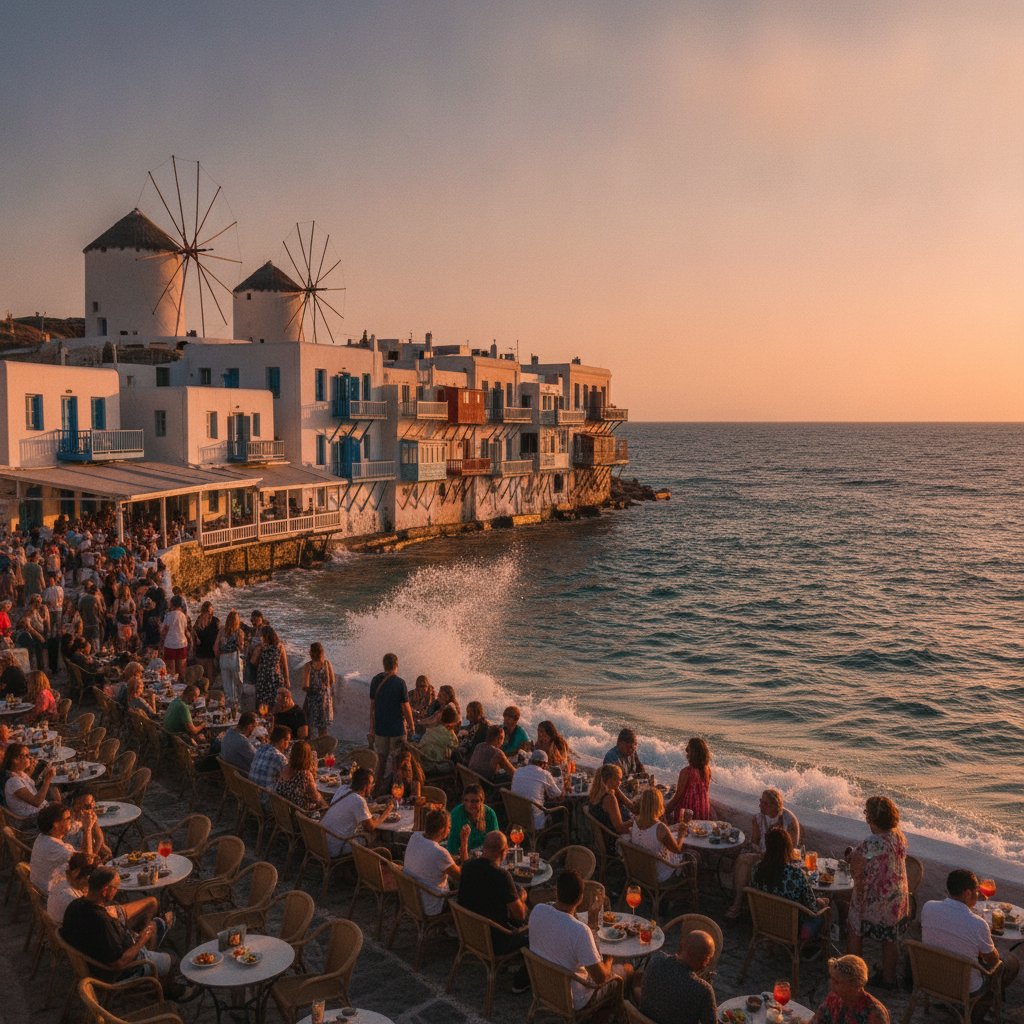
Mykonos Chora — Little Venice, the Windmills & the Labyrinth of the Old Town
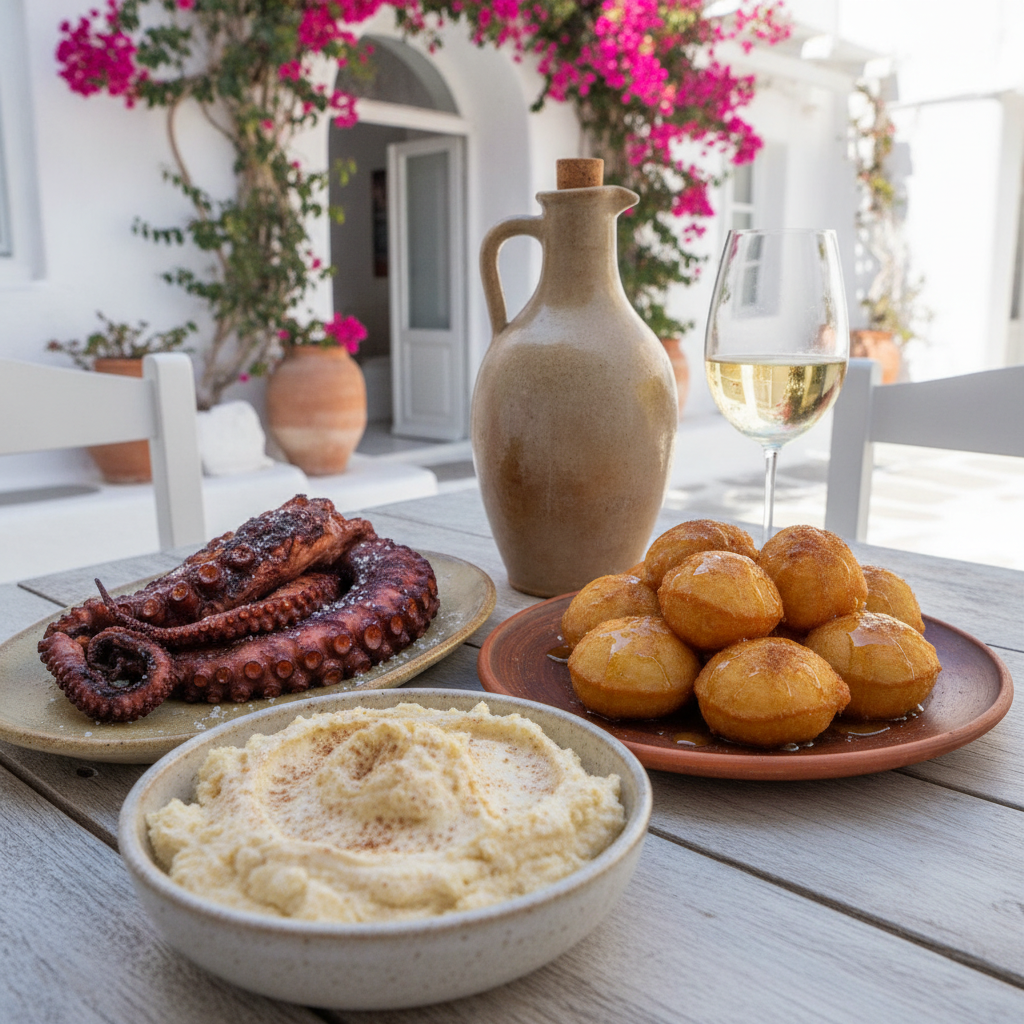
Mykonos Food — Kopanisti, Loukoumades & the Local Taverna Tradition
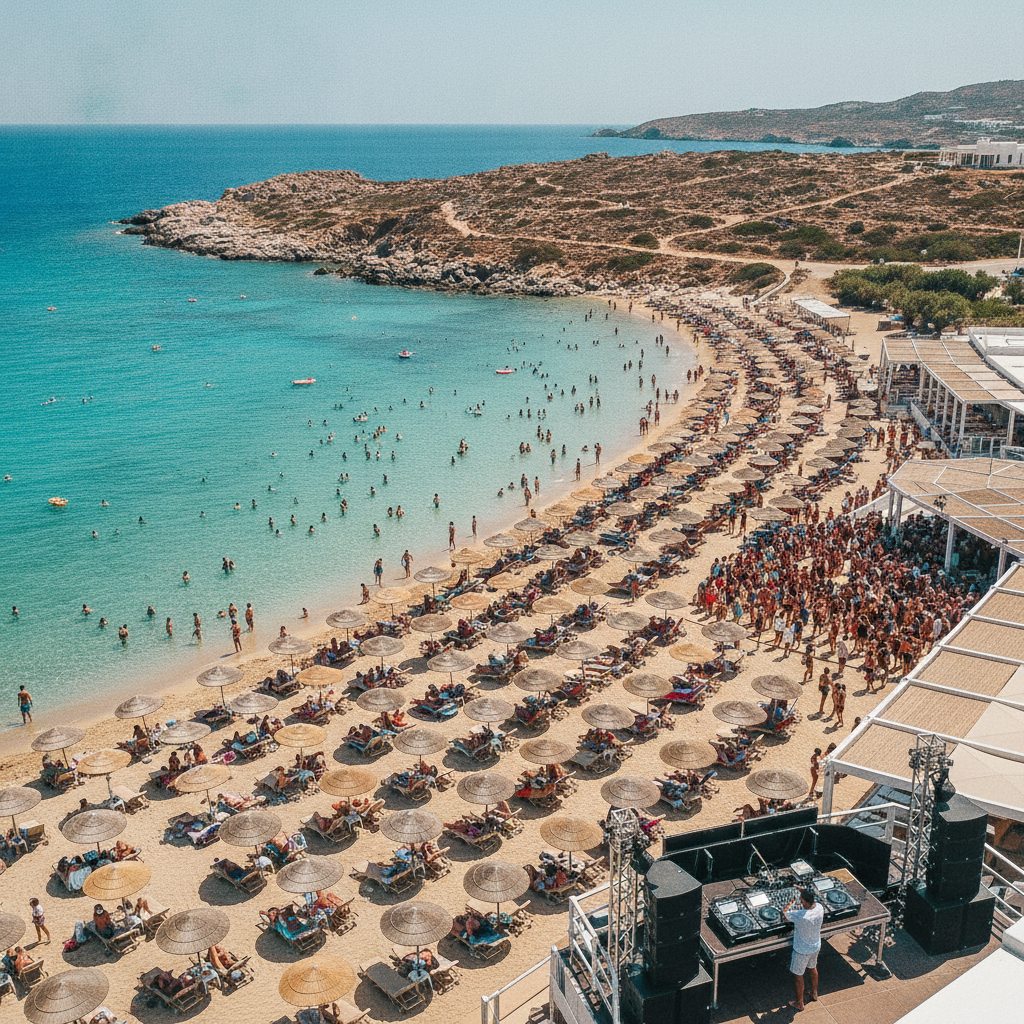
Mykonos Beaches — Paradise, Super Paradise, Elia & the Beach Club Circuit
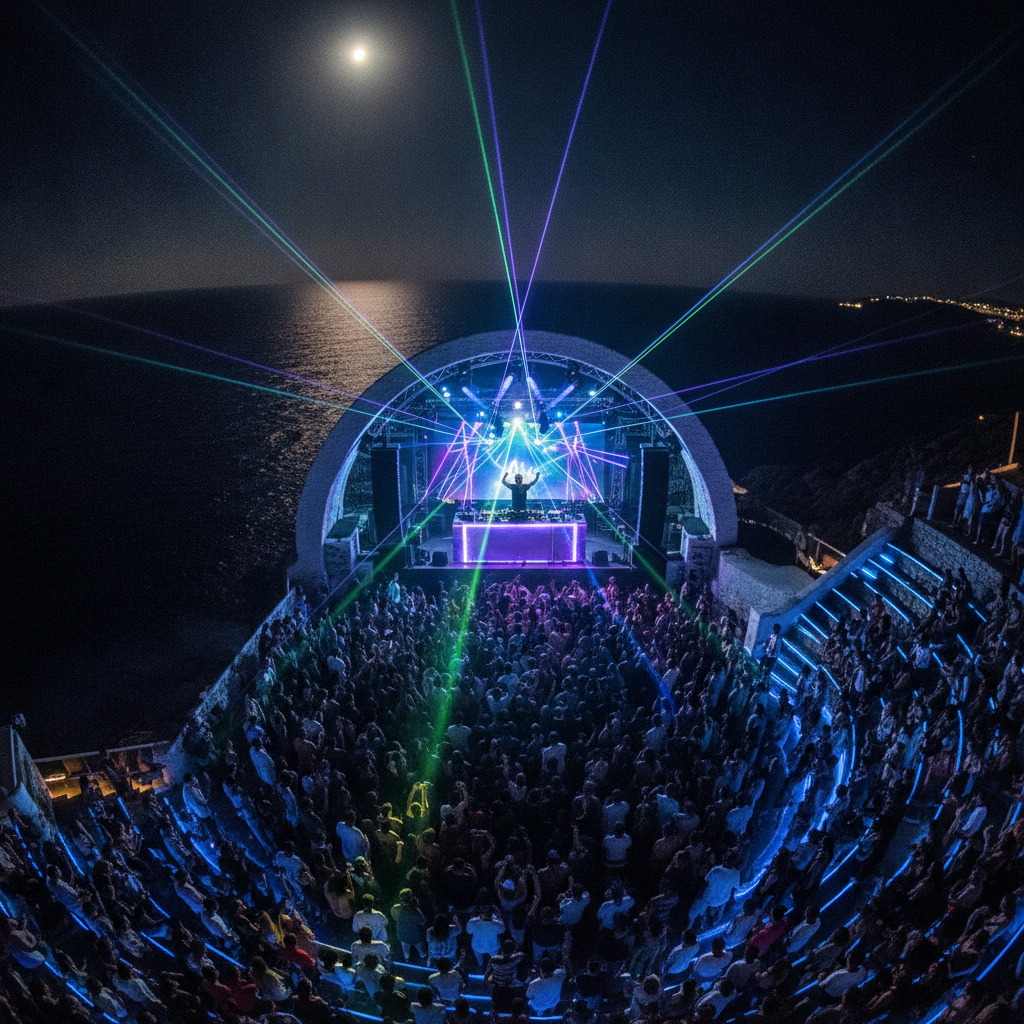
Mykonos Nightlife — Cavo Paradiso, Scorpios, the Chora Bar Circuit & Gay Mykonos