Muscat's Deep History: Portuguese Forts, the Omani Zanzibar Empire & the Jebel Akhdar Mountain Drive
Trace Oman's maritime empire—Portuguese forts built in 1507 still guarding the harbour, Omani sultans who controlled Zanzibar's slave and clove trade and whose dynasty still rules today, Baluch soldiers recruited as palace guards in the 18th century whose descendants number 300,000 in modern Oman, and the switchback mountain drive to Jebel Akhdar's rose gardens at 2,000 metres where an infinity pool overhangs a 1,000-metre gorge.
- 1
Portuguese Oman (1507–1650) – The Forgotten Colonial Era
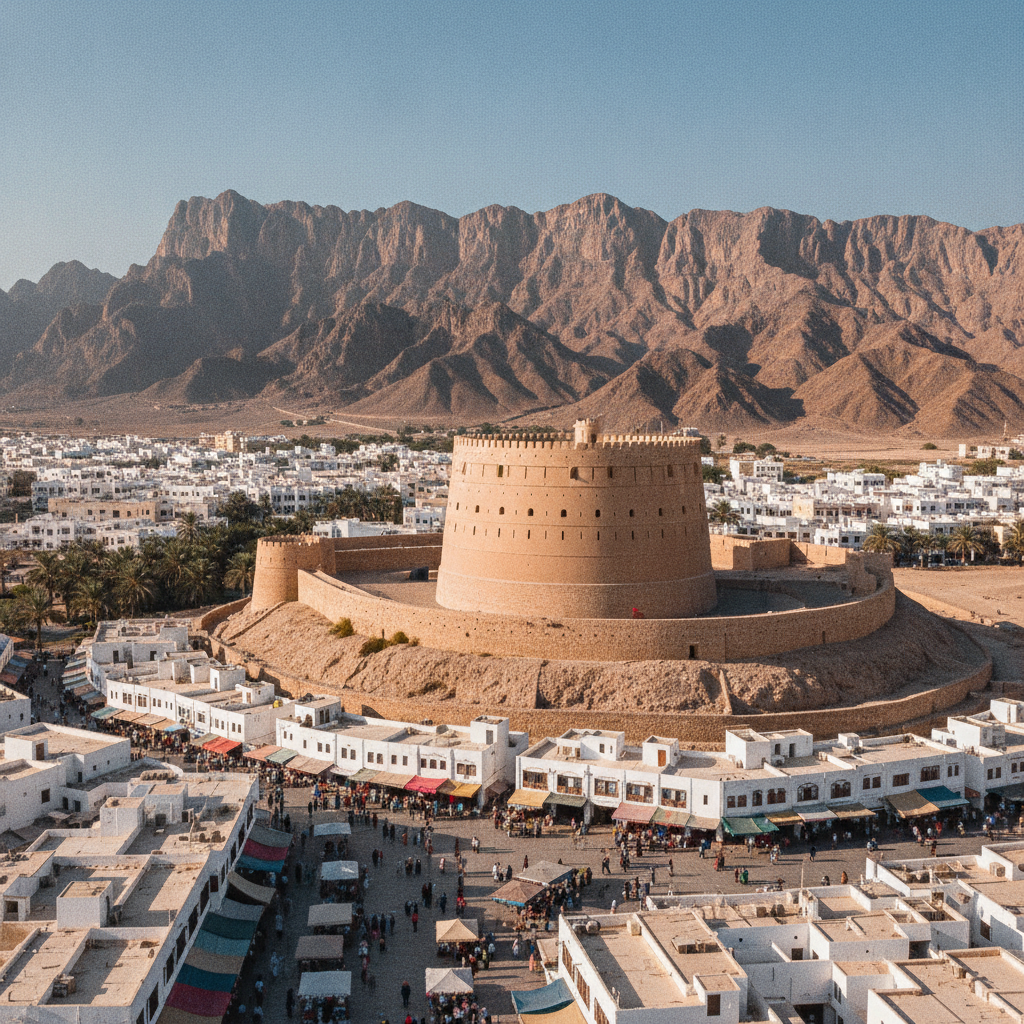
Portugal's occupation of Muscat (1507–1650) was one of the earliest European colonial presences in the Indian Ocean—the twin forts of Al Jalali and Al Mirani that still guard Muscat's harbour were Portuguese constructions. The Portuguese controlled the Arabian Sea trade routes from their Indian Ocean network (Goa, Hormuz, Muscat, Mombasa, Malacca) and taxed every ship passing through the Strait of Hormuz. Omani resistance to Portuguese rule, led by the Yarubi imams, eventually expelled the Portuguese in 1650—the same year the English East India Company was establishing its first permanent presence in India.
- 2
Omani Maritime Empire – Zanzibar to Baluchistan
At its peak in the 18th–19th centuries, the Omani Empire stretched from Baluchistan (modern Pakistan) to East Africa. Zanzibar was an Omani colony from 1698; the slave and ivory trade through Muscat-controlled Zanzibar made the Al Said dynasty enormously wealthy. The Omani-Arab dynasty that founded Zanzibar's sultanate (1856) and the Kenyan coast's Swahili culture are directly traceable to Muscat. The clove plantations of Zanzibar (introduced by Omani planters in the 1810s) still produce 75% of the world's cloves. This maritime history explains Muscat's African and Indian cultural inflections.
- 3
The Baluch Community in Oman
Oman's Baluch community—Baluchis from what is now Pakistan's Baluchistan province—have been present in Oman since the 18th century, when the Omani sultans recruited Baluch soldiers as palace guards. The community numbers approximately 300,000 in Oman today (mostly second and third generation, with Omani citizenship). Baluchi dishes—sajji (whole roasted lamb) and Baluchi bread—have influenced Omani cuisine. The Baluch soldiers' distinctive white robes and traditional muskets are a feature of state ceremonial occasions. The community maintains the Baluchi language and cultural traditions.
- 4
Qurm Nature Reserve & Muscat's Green Spaces
Qurum (Qurm) Natural Park—a mangrove nature reserve in the middle of Muscat's urban area—is one of the few mangrove ecosystems in the Gulf. The park's boardwalk through the mangroves is accessible at any time; herons, flamingos, and migratory birds use the reserve. The adjacent Qurum Beach is Muscat's most popular city beach—clean sand, calm swimming, and the Jawaharat A'Shati complex of restaurants and cafés nearby. Muscat's urban parks are maintained to an exceptional standard—the city's commitment to green space is visible throughout the residential neighbourhoods.
- 5
Muscat's Traditional Music – Al-Razha & Fijiri
Omani traditional music is extraordinarily diverse—each region has distinct styles reflecting the cultural mixing of Arab, African, Indian, and Baluchi traditions. Al-Razha (a men's line dance with swords and rifles, performed at weddings and national occasions) is the most widely recognised Omani tradition. Fijiri music—a pearl-diving tradition brought from the Gulf via East Africa—is performed with complex polyrhythmic percussion and improvised vocal style. The Royal Oman Symphony Orchestra (founded 1985) performs at the Opera House; Omani traditional music festivals are staged at the Muscat Festival.
- 6
Muscat's Most Beautiful Drive – The Mountain Road to Jebel Akhdar
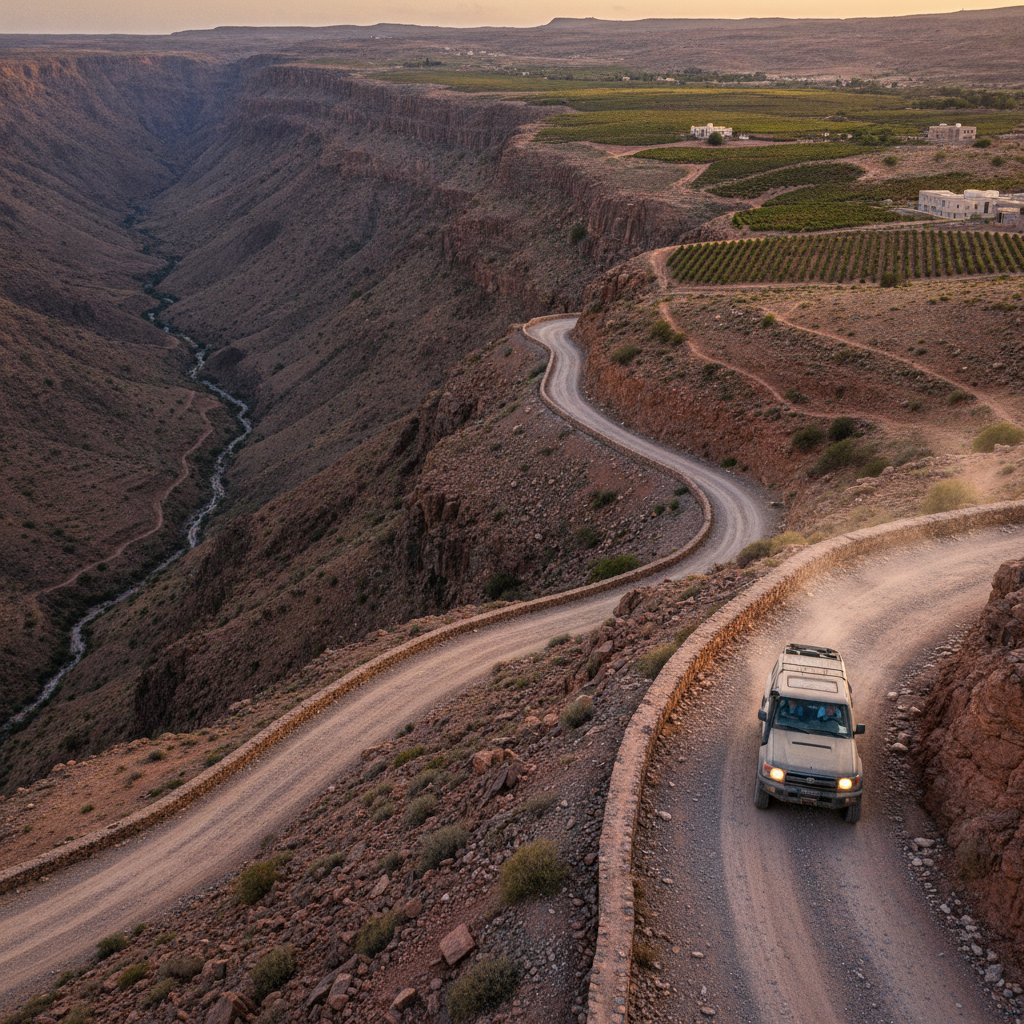
The drive from Muscat to Jebel Akhdar via Nizwa is one of the Arabian Peninsula's great road journeys—the Al Batinah coastal plain gives way to the Hajar Mountain foothills, then to the dramatic switchbacks of the Jebel Akhdar access road (4WD mandatory above the checkpoint). The 180 km route passes the Birkat Al-Mawz ruins, the Falaj Daris traditional irrigation system (UNESCO World Heritage), and arrives at the plateau where roses, pomegranates, and apricots grow at 2,000 metres altitude. The Anantara resort's infinity pool overhangs the gorge for the most dramatic lunch stop in Oman.
Walk this route with audio
Stories play automatically as you reach each stop — no tapping needed.
More in Muscat
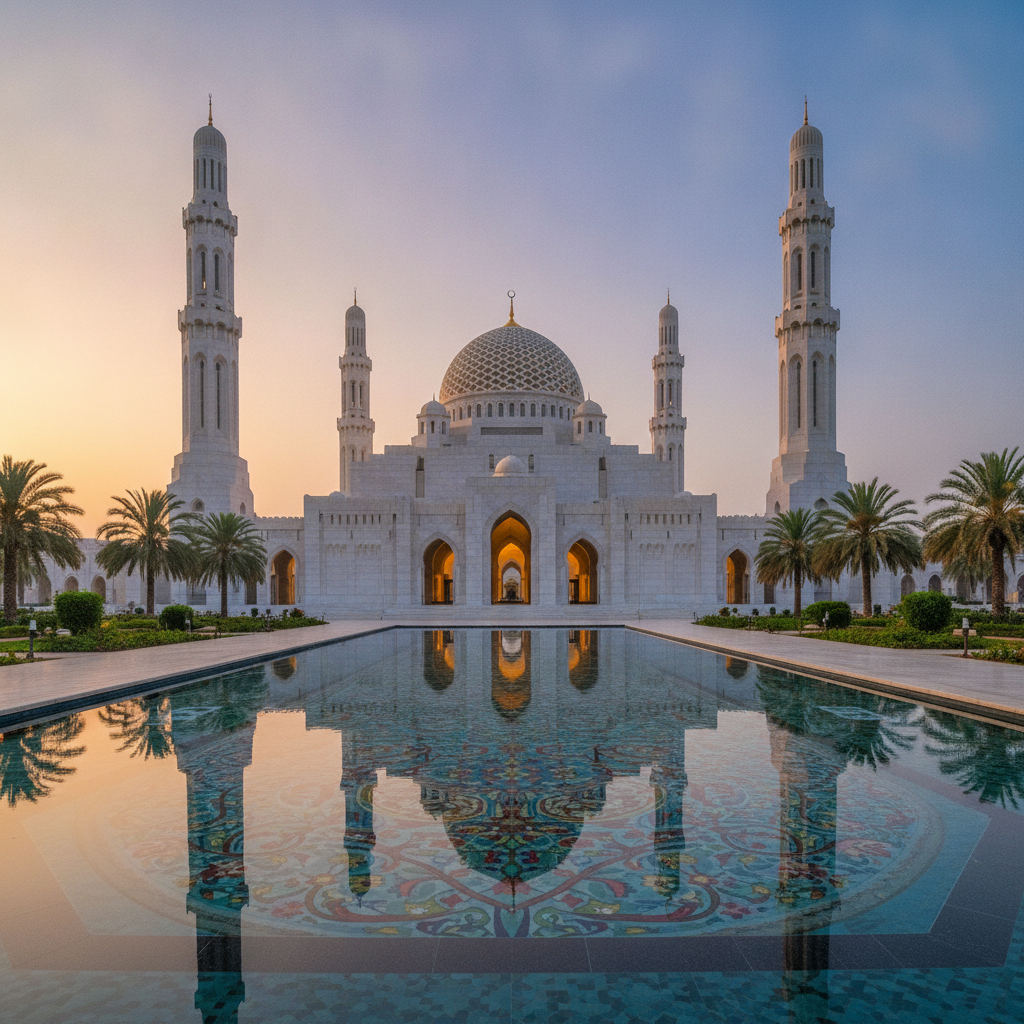
Muscat Essentials: Grand Mosque, Mutrah Souq & the Arab World's Premier Opera House
Muscat Context: Ibadi Islam's Diplomatic Moderation, Muscat vs Dubai & Vision 2040
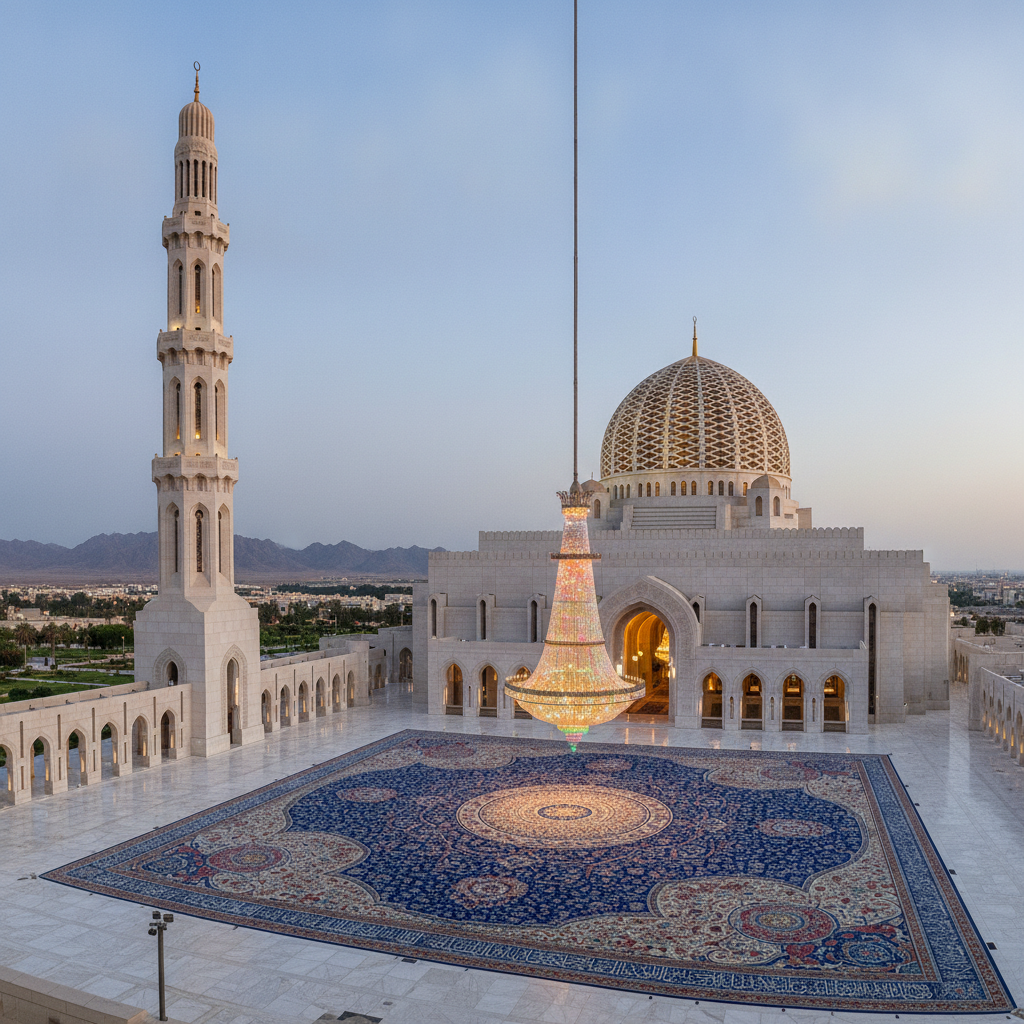
Muscat Essential: The Sultan Qaboos Grand Mosque, the Mutrah Souq, the Muttrah Corniche, the Royal Opera House, and the Most Architecturally Elegant Single Gulf Capital
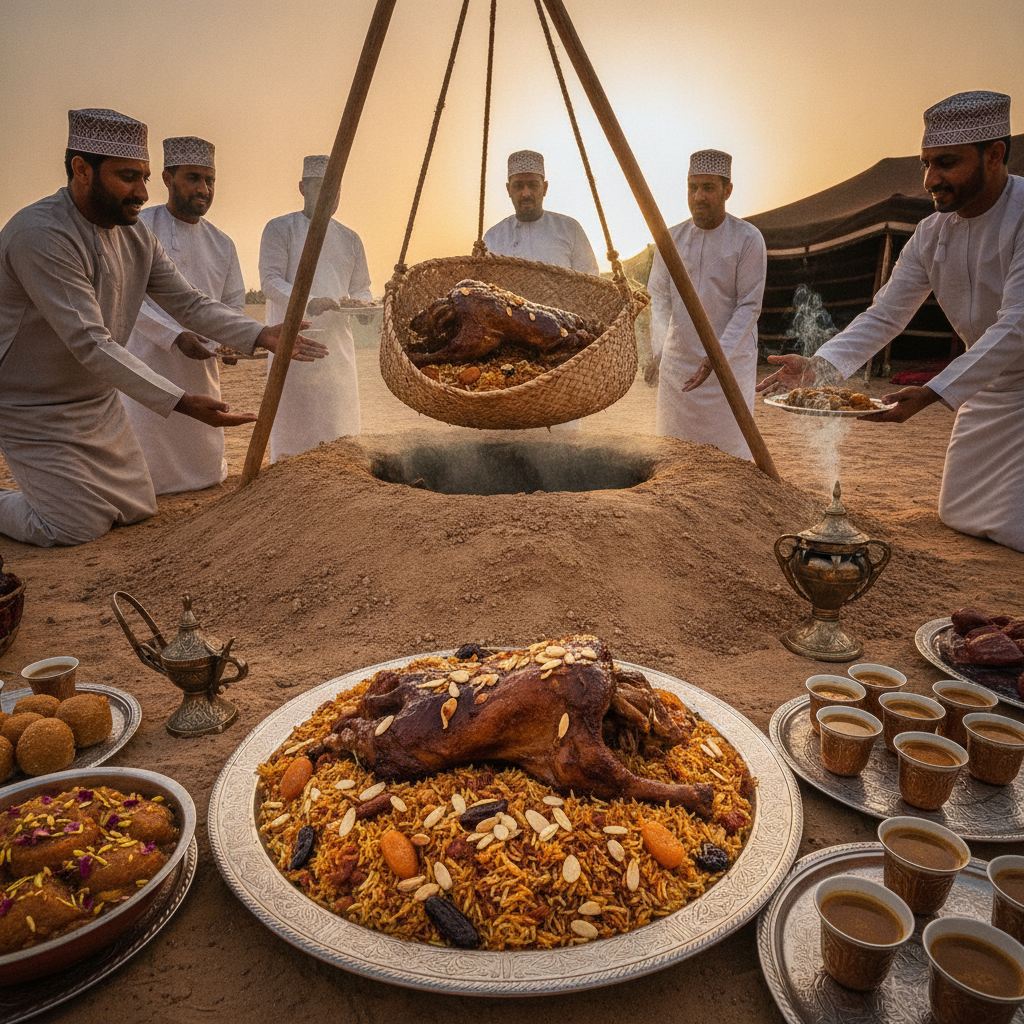
Muscat Food: The Shuwa Underground Lamb, the Omani Halwa, the Frankincense Coffee, the Mutrah Fish Market, and the Most Hospitably Generous Single Gulf Food Culture