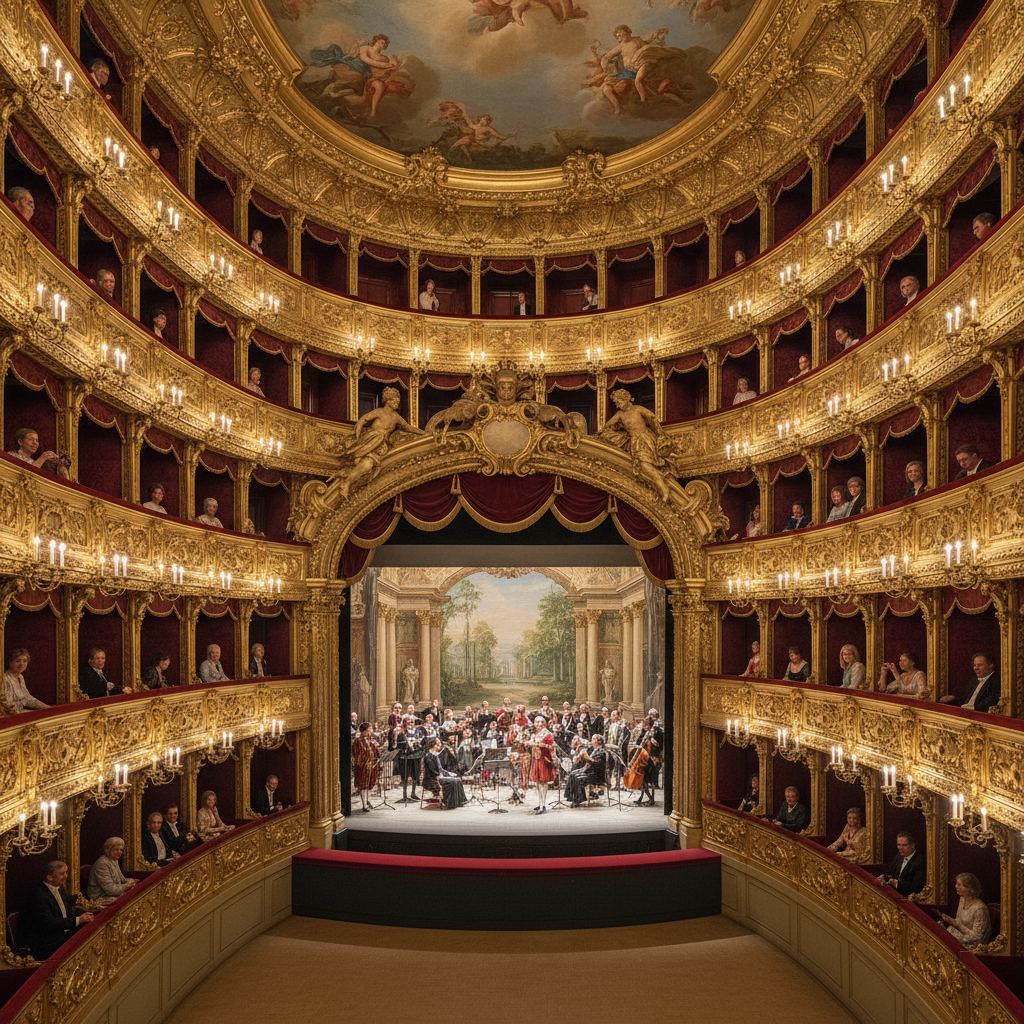
Munich — Viktualienmarkt, Beer Halls, the Isar, Dachau & Day Trips
Munich's daily life runs through the Viktualienmarkt, the Isar banks, and the beer halls — the most complete city for Bavarian food, river culture, and the honest confrontation with 20th-century German history.
- 1
The Viktualienmarkt — Munich's Daily Food Theatre
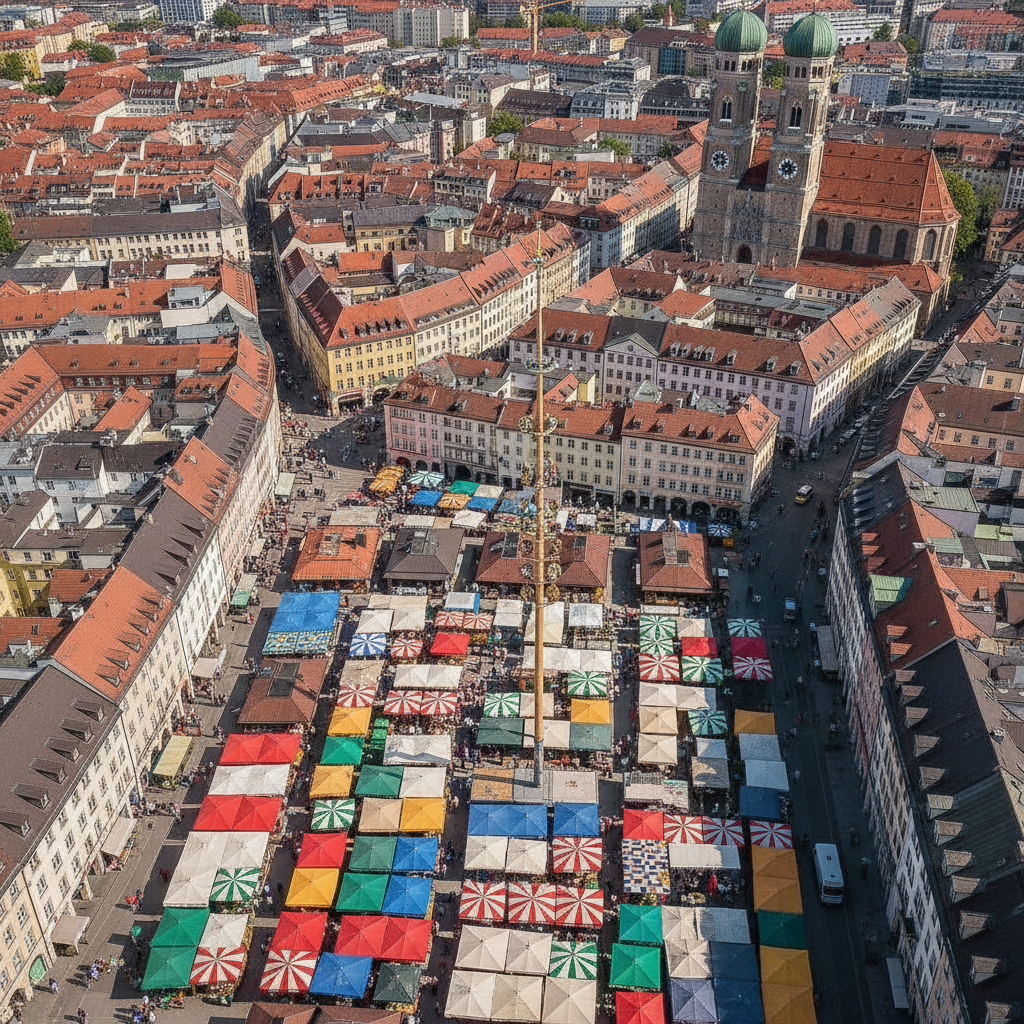
Viktualienmarkt (the daily open-air food market at the heart of the Munich Altstadt, the most celebrated food market in Germany and the most directly accessible expression of the Bavarian food tradition for the visitor): the market (the 9,000 square metre permanent outdoor market immediately south of the Marienplatz, open Monday-Saturday 8am-8pm, the 140 permanent market stalls each with the speciality product — the market the direct continuation of the medieval Munich grain and livestock market established on the same site in 1807, the Maypole at the centre the traditional Munich market ornament repainted and re-erected each May Day with the 28 figures depicting the Bavarian craft guilds, the beer garden with the 1,000 seats the most central outdoor drinking space in Munich operated by the rotating Oktoberfest breweries on monthly rotation), the Bavarian food products (the essential purchases at the Viktualienmarkt: the Weisswurst at the Metzgerei Neuner stall for €3.50 per pair — the freshly made daily white veal sausage, eaten with the Bavarian sweet mustard and the Laugenbrezel (salt pretzel); the Obazda at the Standl 28 — the Bavarian camembert and butter cream cheese seasoned with caraway and onion, the most traditional Bavarian cheese spread, €5 per 200g; the Erdbeeren (strawberries) from the Scheyern monastery stall in June the most fragrant in the market; and the Auerbach Feinkost for the Lebkuchen gingerbread and the marzipan in the pre-Christmas season), the Schrannenhalle (the 1851 grain market hall at the east edge of the Viktualienmarkt reconstructed in 2005 — the glass and iron market hall with the specialist food shops: the Rischart bakery, the Eataly Munich on two levels, and the Japanese food specialist Tencho — the most architecturally contrasting addition to the traditional market), the flower market (the cut flowers and the seasonal plant stalls on the south edge of the Viktualienmarkt — the most vibrant single section of the market in the spring when the Alpine wildflower bunches and the lily of the valley appear from mid-April, the flower section the most visited non-food area of the Viktualienmarkt) and the Müller Baths (the Müllersches Volksbad at Rosenheimer Strasse 1, the 1901 Art Nouveau public swimming baths adjacent to the Isar — the most ornately decorated public pool building in Germany with the 4m-high tile murals and the wrought-iron gallery columns, the 50m lap pool and the Russian-Roman bath section, €5.50 adults, the most atmospheric single public swimming experience in Munich).
- 2
The Hofbräuhaus and the Munich Beer Hall Tradition
Hofbräuhaus (the Staatliches Hofbräuhaus am Platzl 9, the most famous single hospitality establishment in the world by international brand recognition — the 1589 state brewery beer hall 200m from the Marienplatz, the building the most visited tourist attraction in Munich after the English Garden and the Deutsches Museum): the history (the Hofbräuhaus founded 1589 by Duke Wilhelm V as the royal brewery of the Wittelsbach court, the current building the third on the same site — the 1897 building the last surviving, the ground floor Schwemme (main hall) with the barrel-vault ceiling frescoes and the 1,000 seats the most atmospherically Bavarian large-scale drinking space in existence, the Hofbräuhaus the venue of the 1919 founding meeting of the NSDAP and the 1920 Hitler speech to 2,000 attendees — the most historically consequential single beer hall in the 20th century), the beer (the Hofbräu Original — the Munich lager brewed to the 1516 Reinheitsgebot purity law at 5.1% ABV, served in the 1-litre ceramic Masskrug at €11.90 per litre, the pretzel at €4, the Obazda cream cheese at €7, the Schweinshaxe (roast pork knuckle) at €22 the most ordered food item), the music (the Hofkapelle band performing Bavarian folk music on the ground floor Schwemme Monday-Saturday from 11am and on weekends — the brass band the most widely photographed Bavarian music performance in existence, the musicians in the Tracht (traditional costume) the most visited live folk music in Germany), the Festsaal (the banquet hall on the upper floor — the 1,300-seat ceremonial hall with the Bavarian folk paintings on the ceiling vaults, the venue for the Oktoberfest banquet dinners and the New Year events, the most formally Bavarian of the Hofbräuhaus rooms) and the Augustiner Keller (the Augustiner-Keller at Arnulfstrasse 52, the 5,000-seat beer garden the largest traditional Biergarten in Munich and the preferred evening drinking destination for the Munich local — the Augustiner Edelstoff the most critically respected Munich lager at €10.20 per litre, the chestnut trees shading the garden the oldest surviving beer-garden tree canopy in Munich, the most naturally atmospheric of all the large Munich beer gardens).
- 3
The Isar River — Munich's Natural Living Room
Isar River (the Isar flowing north through Munich from the Bavarian Alps to the Danube tributary, the river the primary natural feature of the Munich urban landscape — the Isar banks within the city limits the most actively used riverside green space in Germany): the Isar renaturalisation (the Isar renaturalisation project 2000-2011 — the 8km riverbank restoration from the Großhesselohe weir south to the Marienklause north, the concrete bank lining of the 1930s replaced with natural gravel beds, the river width widened from 25m to 90m in the restored sections, the project the most extensive urban river renaturalisation in Europe at time of completion, the Flaucher gravel island the most visited urban riverside recreation area in Munich with the 2,000+ visitors per summer weekend), the Isar swimming (the Isar the only city river in Germany where swimming is officially designated and permitted in the urban centre — the swimming areas at the Flaucher, the Tierpark gravel bank, and the Marienklause bridge sections, the water temperature 16-20 degrees in July-August, the current at 2 m/s making entry from the gravel banks essential and exit only at designated points downstream), the Flaucher beer garden (the Biergarten am Flaucher at Isarauen 8 on the Flaucher gravel island — the 1,200-seat beer garden with the Isar current audible from every table, the most naturalistic beer garden setting in Munich, the Paulaner Kellerbier the primary beer served, the gravel beach below the beer garden terrace the best combination of beer garden and river swimming in the city), the Tierpark Hellabrunn (the Munich Zoo at Tierparkstrasse 30 on the Isar bank — the most visited urban zoo in Germany with 750 animal species in the zoo-geographic landscape layout, the 'geo-zoo' concept first introduced here in 1928 where animals are grouped by continent rather than species, CHF 20 adults), the Eisbach wave (the artificial standing wave on the Eisbach channel at the English Garden south entrance — the permanent surfing wave the most extraordinary single urban sports phenomenon in Germany, the wave surfed year-round from a waiting queue of 20+ surfers, visible from the Eisbach bridge at no cost) and the Marienklause (the Marienklause at the north bank of the Isar opposite the Gärtnerplatz — the 1866 Neo-Gothic river chapel on the Isar bank, the most unexpectedly picturesque single medieval-style chapel in the Munich urban landscape, the chapel visible from the Corneliusbrücke with the Isar current below and the Gärtnerplatz district behind).
- 4
Dachau Concentration Camp Memorial — Historical Necessity
KZ-Gedenkstätte Dachau (the Dachau Concentration Camp Memorial at Alte Römerstrasse 75, Dachau — the most historically important single site of Nazi-era documentation accessible from Munich, at 16km northwest of the city centre): the history (the Dachau camp the first Nazi concentration camp, established March 22 1933 — 12 days after Hitler's appointment as Chancellor — as a model for all subsequent Nazi camps, the camp operational for the entire 12-year period of the Third Reich, the 200,000 prisoners from 30+ countries who passed through the camp, the 41,500 documented deaths at the site including the death marches of the final weeks, the camp liberated by the US Army on April 29 1945), the memorial (the memorial site on the original camp grounds — the Jourhaus entrance gate with the 'Arbeit Macht Frei' inscription, the reconstructed Barrack X with the crematorium and the gas chamber, the prisoner roll-call square (Appellplatz) at original size, the museum in the administration building with the permanent exhibition 'Dachau Concentration Camp 1933-1945', the most comprehensively documented single camp museum in Germany, free entry), the international memorials (the 3 religious memorial chapels on the camp grounds — the Roman Catholic Mortal Agony of Christ Chapel 1960, the Protestant Chapel of Reconciliation 1967, and the Jewish Memorial 1967 — the 3 memorials together the most architecturally considered set of religious memorials at any concentration camp site), the practical (the memorial open Tuesday-Sunday 9am-5pm, last entry 4pm, closed Monday, the guided tours in English at 11am and 1pm daily at €5 per person above the free admission, the S-Bahn S2 from Munich Hauptbahnhof to Dachau in 25 minutes at €5.80 then the 726 bus to the memorial at €2.40, the total travel time from Munich centre 45 minutes) and the significance (the Dachau memorial the single most important educational destination from Munich — the most historically necessary visit for any traveller to Munich who wishes to understand the 20th-century German history from which the modern democratic Germany emerged, 1 million visitors per year making it the most visited single educational destination in Bavaria).
- 5
Munich Architecture — Königsplatz, Maximilianstrasse & Jugendstil
Munich architectural highlights (the Munich buildings and spaces that complement the Pinakotheken and the Residenz for the visitor with the specific interest in architecture and the lesser-visited cultural sites): Königsplatz (the Königsplatz — the 1830 neoclassical square designed by Leo von Klenze for Ludwig I as the Bavarian 'Athen on the Isar', the Glyptothek and the Antikensammlungen facing each other across the grass rectangle framed by the Propyläen gateway — the most formally Athenian urban space in northern Europe, the Nazi party rally site of the 1930s now a calm grass square of deliberate quietness, the most complete surviving Klenze neoclassical ensemble), the Maximilianstrasse (the Maximilianstrasse from the Nationaltheater east to the Maximilianeum on the Isar bluff — the 1852 Maximilian II boulevard with the unique 'Maximilianstil' hybrid of Neo-Gothic and English Tudor on the street facades, the Maximilianeum at the east end the 1874 parliament building of the Bavarian Landtag where scholarship students still reside in the upper floors above the parliament chamber — the most unusually combined building function in German civic architecture), the Müllersches Volksbad (the 1901 Jugendstil public baths at Rosenheimer Strasse 1 — the most lavish public bath building in Germany, the entrance hall with the tile mosaics and the carved woodwork the most ornately decorated public interior in Munich outside the royal buildings, the 50m pool and the Roman Bath section, €5.50 adults), the Odeonsplatz (the Odeonsplatz at the north end of the Ludwigstrasse — the Theatinerkirche yellow Baroque facade, the Feldherrnhalle loggia modelled on the Florentine Loggia dei Lanzi, the site of the November 9 1923 Beer Hall Putsch confrontation where police fired on the Nazi marchers — the most historically consequential single street intersection in Weimar Republic Germany, the plaque at the Feldherrnhalle base the most specific address of a failed putsch in European history) and the Gasteig (the Gasteig Kulturzentrum at Rosenheimer Strasse 5, the 1985 red-brick cultural centre the most important performance venue in Munich — the Philharmonie hall the primary concert venue of the Munich Philharmonic Orchestra, the most acoustically respected concert hall in Germany after the Berlin Philharmonie, the Gasteig HP8 interim venue at Hans-Preißinger-Strasse 8 in use while the Gasteig undergoes renovation until 2028).
- 6
Neuschwanstein and Bavarian Alpine Day Trips
Bavarian day trips from Munich (Munich the most strategically located city for Alpine day trips in Germany — the Austrian border 50km south, the Zugspitze 90km, and Neuschwanstein 120km making Munich the ideal base for the Bavarian landscape): Neuschwanstein Castle (the Neuschwanstein Castle above Füssen at 120km from Munich — the 1886 Ludwig II fantasy castle the most visited single building in Germany after the Cologne Cathedral at 1.4 million visitors per year, the white limestone towers on the Schwangau cliff the direct inspiration for the Disney Sleeping Beauty Castle and the archetypal image of the German fairy-tale castle, accessible by Bayern-Ticket train to Füssen in 2 hours + bus to the castle base + 30-minute uphill walk, the timed-entry castle ticket €15 adults must be pre-booked online 2-4 weeks in advance in July-August, the Marienbrücke (Mary's Bridge) above the castle the most photographed vantage point for the castle exterior), Hohenschwangau (the Hohenschwangau Castle across the valley from Neuschwanstein — the 1837 yellow castle the childhood home of Ludwig II, the more intimate and personal of the two Füssen castles with the original Ludwig II bedchamber and the star-projecting ceiling lamp that projected the night sky onto the bedroom ceiling, €20 adults, the most personally revealing royal interior in Bavaria), the Starnberger See (the Starnberger lake 25km south of Munich — the most fashionable lakeside resort for the Munich upper-income residential population, accessible by S-Bahn S6 in 35 minutes at €5, the lake 21km long with the free swimming at the Seebad Ambach beach, the site of Ludwig II's mysterious 1886 drowning), the Zugspitze (the Zugspitze at 2,962m the highest mountain in Germany, accessible from Garmisch-Partenkirchen by the Zugspitzbahn rack railway — the Garmisch station 90km from Munich, 80 minutes by train, the summit the most panoramic viewpoint in Germany with the view into Austria, Italy, and Switzerland on clear days, the summit ticket €64 adults return from Garmisch) and the Chiemsee Herrenchiemsee (the Herrenchiemsee Palace on the Chiemsee lake island 80km east of Munich — the Ludwig II Versailles replica with the Hall of Mirrors 10m longer than the Versailles original at 98m, the most ambitiously imitative building project in 19th-century European royal architecture, accessible from Munich by train to Prien am Chiemsee in 60 minutes then by ferry to the island, the palace tour at €10 adults the most theatrically grand interior in Bavaria after the Munich Residenz).
Walk this route with audio
Stories play automatically as you reach each stop — no tapping needed.
More in munich
Munich — Residenz, Schleissheim, Starnberger See, Christmas Markets & Parks
Munich — Deutsches Museum, Pinakotheken, FC Bayern, Jewish History & Neighbourhoods
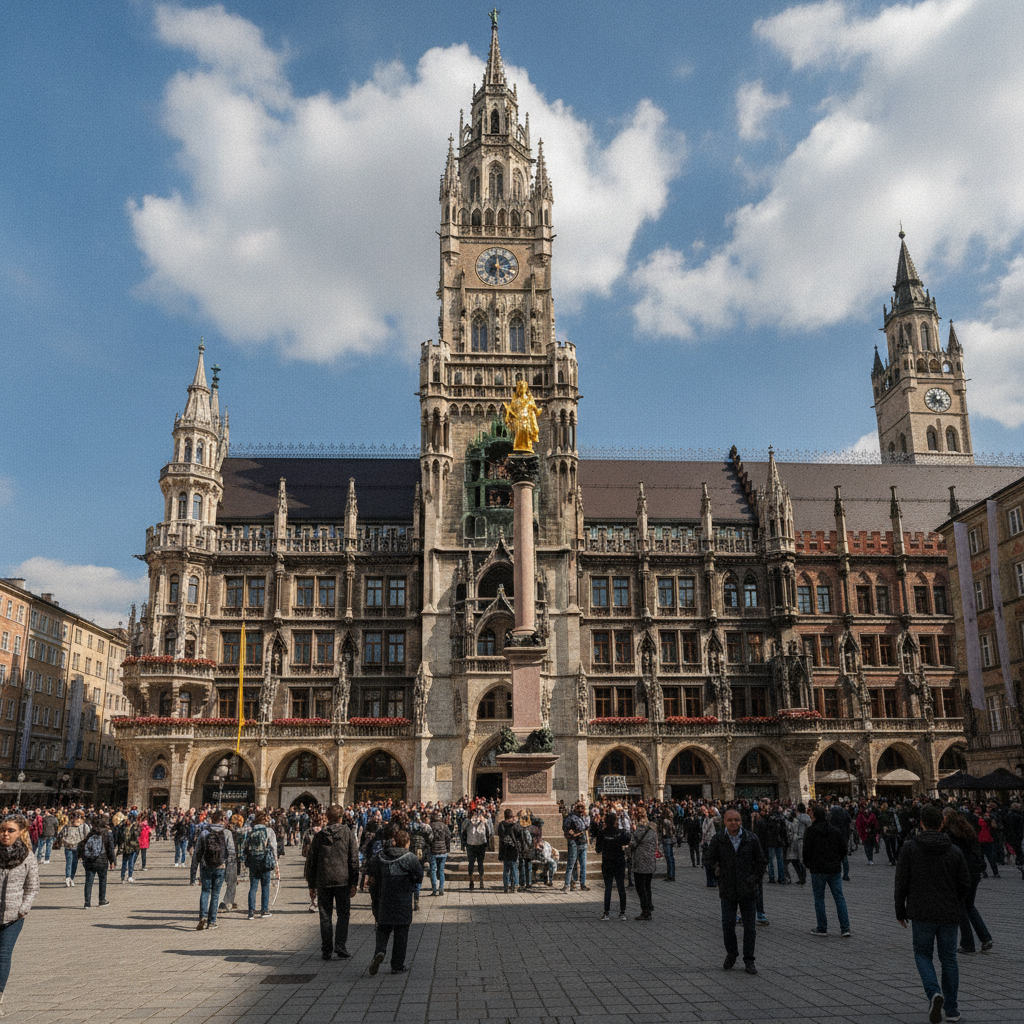
Munich — Marienplatz, Englischer Garten, Oktoberfest & the Pinakotheken
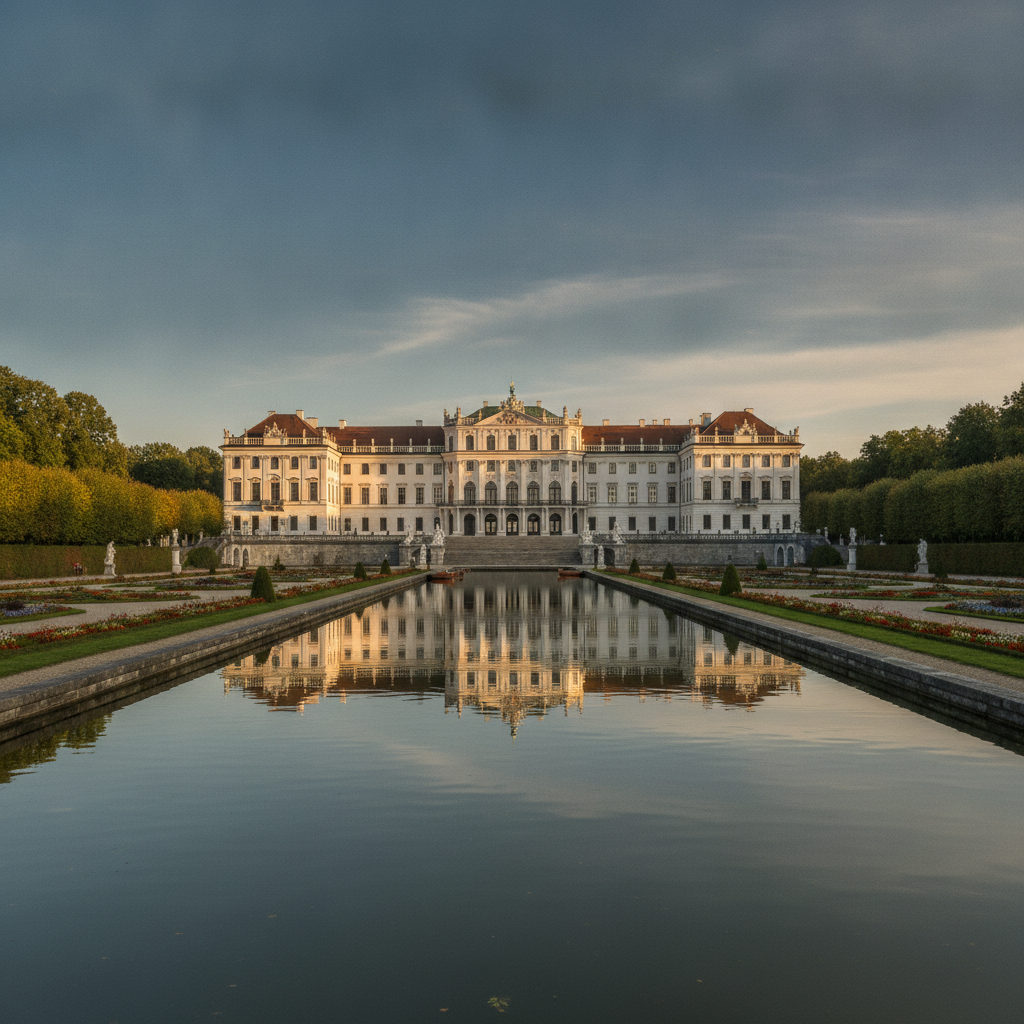
Munich — Nymphenburg Palace, BMW Welt, Opera, Nightlife & the Practical Guide