Munich — Nymphenburg Palace, BMW Welt, Opera, Nightlife & the Practical Guide
Munich rewards deeper exploration: the Wittelsbach Nymphenburg Palace, the architecturally remarkable BMW Welt, the world-class Bavarian State Opera, and one of Germany's most vibrant student and nightlife districts.
- 1
Nymphenburg Palace — the Wittelsbach Summer Residence
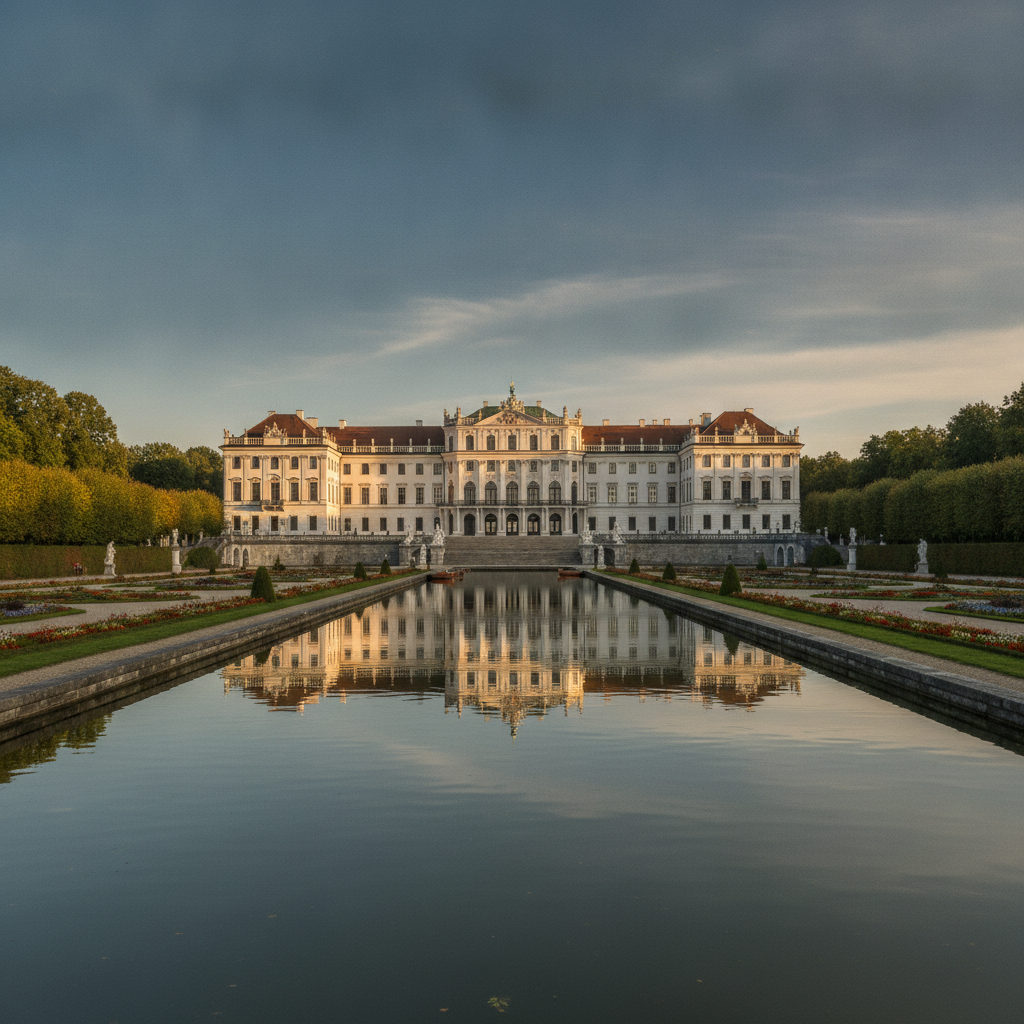
Schloss Nymphenburg (Nymphenburg Palace, the summer residence of the Wittelsbach kings at the west end of Munich — the largest palace in Munich and the most architecturally ambitious Baroque complex in Bavaria, the 600m-wide palace and gardens the most spatially overwhelming royal residence in southern Germany): the palace exterior (the central corps de logis of 1664 with the 5 wings extending 600m — the most horizontally extensive single royal facade in Germany after the Herrenchiemsee, the forecourt (Ehrenhof) approached by the broad avenue from the Rotkreuzplatz tram stop), the Schönheitsgalerie (the Gallery of Beauties — the collection of 36 portraits of women considered beautiful by King Ludwig I commissioned between 1827-1850 including the dancer Lola Montez whose scandalous affair with Ludwig contributed to his abdication in 1848, the most gossiped-about single portrait gallery in Bavaria, included in the palace ticket at €15 adults), the Amalienburg (the hunting lodge at the southwest corner of the park — the 1734 Rococo pavilion designed by François de Cuvilliés, the Hall of Mirrors inside the most exquisitely decorated Rococo room in Germany, more intimate and more detailed than the Versailles Hall of Mirrors), the Nymphenburg Canal (the 2km canal from the palace entrance to the Blutenburg — the most atmospherically formal water feature in Munich, frozen and skated in January-February, the most Munich of all winter images), the Marstallmuseum (the royal stables museum with the Wittelsbach royal carriages and sleighs including the golden coronation coach, included in the Nymphenburg Palace ticket) and the Palace Park (the 180-hectare English Garden-style park — the deer free-roaming in the park the most unexpected wildlife encounter in the Munich city limits, the Badenburg lakehouse the rowing destination within the grounds).
- 2
The BMW Welt and Olympic Park
BMW Welt (the BMW World at Am Olympiapark 1 — the 2007 Coop Himmelblau building the most architecturally dramatic single corporate visitor centre in Germany, the double-cone steel-and-glass structure the primary BMW brand experience destination): the building (the BMW Welt exterior — the 73m double cone of the 'cyclone' roof structure supported by a single steel pylon, the glass facade wrapping the entire building perimeter, the most complex single structural engineering achievement in Munich since the Olympiastadion tent roof, free entry), the car delivery theatre (the BMW Welt the primary venue for customer delivery of new BMW vehicles — 35,000 vehicles per year delivered here, the most dramatically staged car delivery in the automotive world, visible from the visitor gallery at no cost), the BMW Museum (the bowl-shaped 1972 concrete building adjacent to the Welt — the permanent collection of BMW motorcycles and cars from 1916 to present, CHF 10 adults), the Olympiapark (the 1972 Munich Olympics site — the Olympiastadion, the Olympiahalle, and the Olympiaturm the 3 primary structures, the Frei Otto tent-roof design the most influential single architectural innovation in 20th-century sports architecture, the roof walk tours at CHF 19 adults), the Olympiaturm (the 291m Olympic Tower — the observation deck at 190m the best single 360-degree view of Munich with the Alps visible on clear days, the Frauenkirche domes and the Allianz Arena simultaneously visible, CHF 11 adults, daily 9am-midnight) and the Allianz Arena (the 2005 Herzog & de Meuron football stadium at Werner-Heisenberg-Allee 25 — the ETFE membrane exterior illuminated in red for FC Bayern, blue for TSV 1860, and white for national team, the most visually distinctive sports venue in Germany, the stadium tour at CHF 19 adults on non-matchdays).
- 3
Munich Food Scene — Beyond the Weisswurst
Munich food culture (Munich the most gastronomically rich city in Germany by the combination of the Bavarian tradition, the international immigration, and the highest restaurant density per capita in the German states): the Bavarian classics (the essential Munich dishes: the Weisswurst (white veal sausage, served until noon with sweet mustard and pretzel, best at the Zum Franziskaner at Residenzstrasse 9 or the Café Luitpold at Brienner Strasse 11), the Schweinshaxe (roast pork knuckle with the dark beer jus and the potato dumpling, best at the Haxnbauer at Sparkassenstrasse 6 or the Wirtshaus in der Au at Lilienstrasse 51), the Obazda (the Bavarian camembert and butter cream cheese at every beer garden), and the Dampfnudel (the steamed sweet yeast dumpling with the vanilla sauce, the most specific Bavarian dessert, at the Dampfnudel Uli at Prälat-Zistl-Strasse 8), the Schmalznudel (the fried pastry at the Café Frischhut at Prälat-Zistl-Strasse 8, open from 5am, the most specifically Munich morning pastry), the Prinzregenten Torte (the Bavarian layer cake of 8 sponge layers with buttercream and chocolate glaze, at the Café Kreutzkamm at Maffeistrasse 4 the most historically authentic version, the cake the most celebrated single Munich cake since 1886)), the markets (the Viktualienmarkt daily Monday-Saturday 8am-8pm, the Auer Dult flea market at the Au meadow 3 times per year in May, July, and October — the most historically longstanding outdoor flea market in Bavaria with the second-hand books, the antique crockery, and the Bavarian crafts, the largest market of the 3 in October), the international food (the Munich Gärtnerplatzviertel and the Maxvorstadt the most internationally diverse dining neighbourhoods — the Japanese restaurant concentration around the Gärtnerplatz the second-largest outside Düsseldorf in Germany, the Turkish community market at the Elisabethmarkt the best Mediterranean produce source in Munich), the Michelin (Munich holds 14 Michelin-starred restaurants — the most of any German city after Berlin and Hamburg — the Atelier at the Bayerischer Hof (2 stars) and the Tantris at Johannesstrasse 3 (2 stars) the most historically prestigious, the Tantris the most celebrated single German restaurant outside Berlin by continuous recognition since 1973) and the Augustiner Edelstoff (the Augustiner Edelstoff pale lager the single best Munich beer by critical consensus — the naturally carbonated, unpasteurised beer from the 1328 brewery served from wooden barrels (not kegs) in the Augustiner beer halls and gardens, the most specifically authentic Bavarian beer-drinking experience in Munich at the Augustiner Stammhaus at Neuhauser Strasse 27).
- 4
Munich by Night — Classical Music, Theatre and Nightclubs
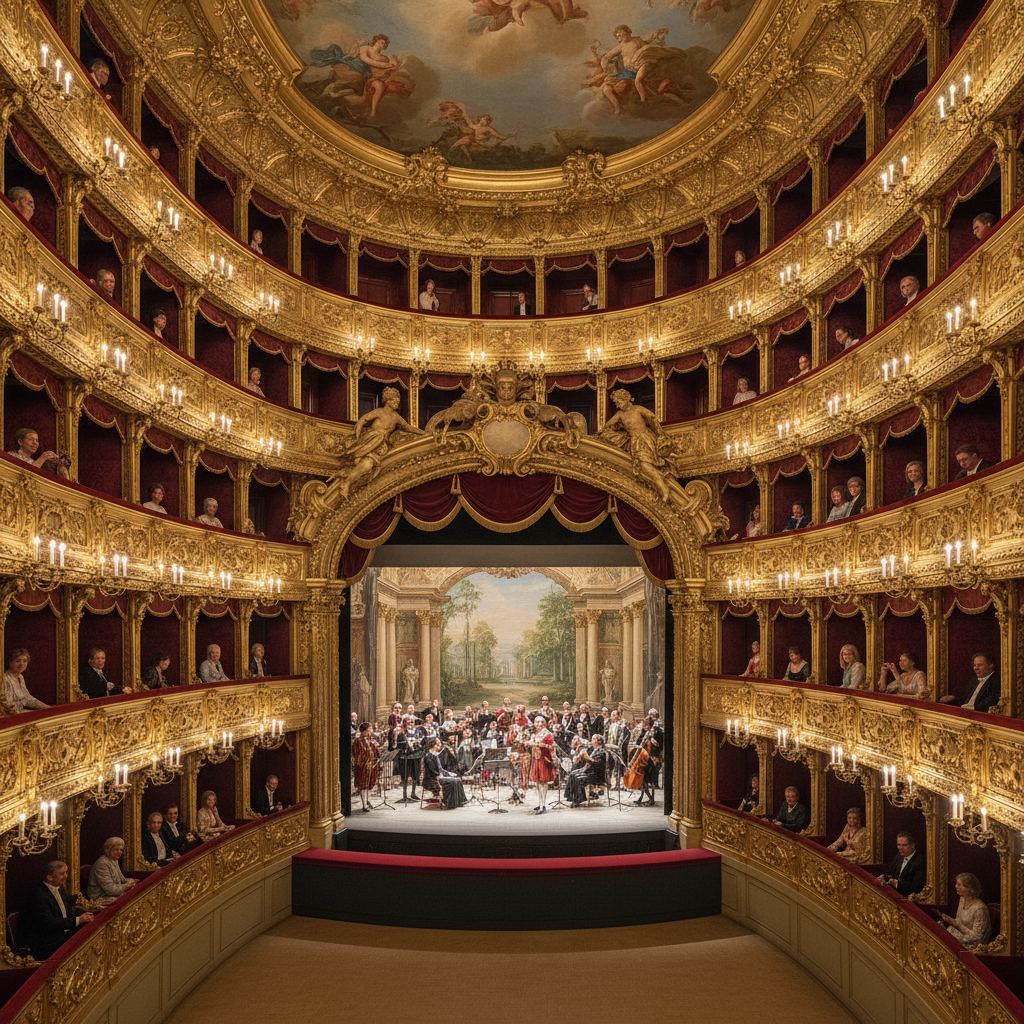
Munich nightlife (Munich the most culturally complete German city after Berlin for the combination of the classical performing arts and the electronic music club scene — the Bavarian State Opera the premier opera house in Germany, and the Blitz and the Rote Sonne among the most internationally respected techno clubs in Europe): the Bavarian State Opera (the Bayerische Staatsoper at Max-Joseph-Platz 2 — the National Theatre building of 1818 the most formally imposing opera house in Germany, the company one of the top 5 opera companies in the world by season programme and by singing ensemble, the season from September to July with 350 performances per year, the single-night tickets from €10 for the standing room (Stehplatz) to €400 for the premiere seats, the Opernfestspiele in July the most intensively programmed 4-week summer opera festival in Germany), the Nationaltheater building (the Max-Joseph-Platz neoclassical facade of 1818 the most formally correct neoclassical theatre exterior in Germany — the 6-column Corinthian portico the most visited single opera house facade in the German-speaking world after the Vienna Staatsoper, the interior rebuilt after the WWII bombing using the original historical photographs to exact period specification, the most accurately reconstructed 19th-century opera interior in Germany), the Munich Philharmonic (the Münchner Philharmoniker based at the Gasteig HP8 interim venue at Hans-Preißinger-Strasse 8 during the main Gasteig renovation — one of the top 10 symphony orchestras in the world by conductors held (Celibidache, Levine, Thielemann), the standard seat at €25-110, the season September-June), the club scene (the Munich electronic music clubs: the Blitz at Reeperbahn 10 in Neuhausen — the most internationally booked DJ club in Munich for the Berlin-standard techno, open Friday-Saturday from midnight; the Rote Sonne at Maximiliansplatz 5 — the intimate basement club the most critically respected for the experimental electronic programme; the Kultfabrik and the Optimolwerke at the Steinerstrasse the most concentrated multi-club complex in Munich with 10+ venues in the former factory buildings, the most similar Munich experience to the Berlin Berghain district) and the Volkstheater (the Volkstheater München at Brienner Strasse 50 — the Munich city people's theatre specialising in the Bavarian-language drama and the politically engaged contemporary productions, the most theatrically challenging mainstream theatre programme in Munich, the single ticket from €14, the most accessible high-quality drama in Munich by price-to-production ratio).
- 5
Maxvorstadt and the University District
Maxvorstadt (the university neighbourhood west of the Altstadt and north of the Hauptbahnhof — the most concentrated single student and cultural neighbourhood in Munich, the district containing the Ludwig-Maximilians-Universität, the Technische Universität München, the 5 major museums of the Kunstareal, and the Akademie der Bildenden Künste): the LMU (the Ludwig-Maximilians-Universität München at Geschwister-Scholl-Platz 1 — the largest university in Germany by student count at 52,000 students, the 1840 Klenze main building the most formally imposing university exterior in Germany south of the Humboldt-Universität, the Lichthof (light court) at the centre of the main building the most architecturally impressive university interior in Munich, accessible to visitors during term time, the White Rose memorial plaques at the main entrance commemorating the Sophie and Hans Scholl student resistance cell and their arrest at the LMU in 1943), the Schwabing street life (the Leopoldstrasse from the Siegestor south to the Münchner Freiheit north — the 2km boulevard the most culturally animated single street in Munich, the Siegestor (Victory Gate) of 1843 with the post-WWII peace inscription the most philosophically honest civic monument in Munich, the terrace cafés on the Münchner Freiheit the most visited outdoor café area in the Schwabing-Maxvorstadt district), the Akademie der Bildenden Künste (the Munich Academy of Fine Arts at Akademiestrasse 2 — the Neo-Renaissance 1887 building the institutional home of the Blaue Reiter group (Kandinsky and Klee studied here) and the most historically significant single fine arts academy in 20th-century German modernism, the open exhibitions of student work each July the most accessible view of contemporary Munich artistic output), the Theresienwiese (the Theresienwiese meadow 1km south of the Maxvorstadt — the 42-hectare meadow the Oktoberfest site, the Bavaria statue at 18.5m the most imposing civic statue in Munich visible from the meadow, the Ruhmeshalle 1853 neoclassical gallery of Bavarian historical worthies behind the statue, free and daily) and the Amalienstrasse cafés (the Amalienstrasse and the Türkenstrasse the primary café-bar streets of the student Maxvorstadt — the most café-dense single area in Munich with the highest student population, the Schwarzes Café at Türkenstrasse 9 the most historically atmospheric of the traditional student cafés, open continuously from Monday morning to Saturday midnight, the most reliable late-night food source in the Maxvorstadt neighbourhood).
- 6
Munich Practical — Seasons, Events and the Essential Logistics
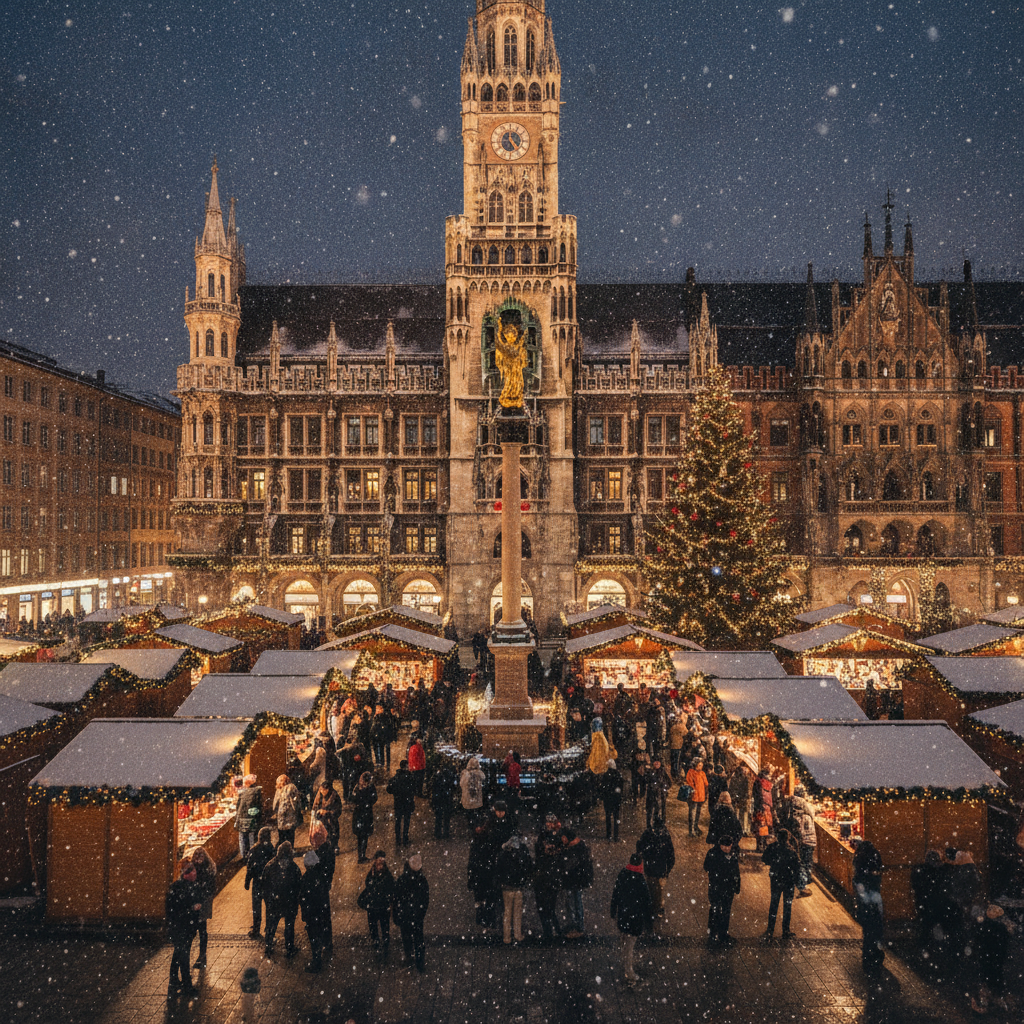
Munich practical guide (the essential logistics for a Munich visit — transport, the best seasons, the annual events calendar, and the neighbourhood orientation): the seasons (the best time to visit Munich: May-June for the beer garden opening season at its freshest with the new chestnut leaves and the full Maypole re-erection rituals; July for the Opera Festival and the warmest English Garden weather (26-28 degrees, the Isar swimming at 20 degrees); the Oktoberfest last 2 weeks of September to first Sunday of October the most internationally attended season (book hotels 12 months in advance and expect the 30% price premium); November-December for the Christkindlmarkt at the Marienplatz — the most architecturally framed Christmas market in Germany in the shadow of the Neues Rathaus, free entry, early December before the main crowd arrival the most peaceful), the transport (the MVV Day Ticket at €9.70 adults the most cost-efficient single-day transport option covering all public transport from 9am to 6am the following day, the S-Bahn S1 and S8 from the airport to the Hauptbahnhof in 42 minutes at €13.60, the 4-trip strip ticket (Streifenkarte) the best value for the 2-3 day visitor), the Christkindlmarkt (the Munich Advent Christmas market at the Marienplatz — the 14th-century market tradition the most historically continuous urban Christmas market in Germany, the stalls open the first Saturday of Advent to December 24, the glühwein (mulled wine) in the ceramic cup at €4-5, the Zimtsterne (cinnamon star cookies) and the Lebkuchen (gingerbread) the most purchased edibles), the Starkbierfest (the Strong Beer Festival in March — the secondary Munich beer festival at the Paulaner Salvator Keller on the Nockherberg, the Paulaner Salvator at 7.9% ABV the original strong beer of the Lenten season (the monks drank it as 'liquid bread'), the Starkbierfest the most authentically Munich of all the non-Oktoberfest beer events, tickets €40-60 including table reservation, last 3 weeks of March) and the distances (the key distance reference for the Munich visitor: the Marienplatz to the English Garden south entrance 15 minutes on foot; to the Deutsches Museum 20 minutes on foot; to the Nymphenburg Palace 30 minutes by tram; to the Olympiapark 30 minutes by U-Bahn; to Dachau Memorial 45 minutes by S-Bahn; to Neuschwanstein Castle 2.5 hours by train — all reachable as day excursions from a central Munich hotel).
Walk this route with audio
Stories play automatically as you reach each stop — no tapping needed.
More in munich
Munich — Residenz, Schleissheim, Starnberger See, Christmas Markets & Parks
Munich — Deutsches Museum, Pinakotheken, FC Bayern, Jewish History & Neighbourhoods
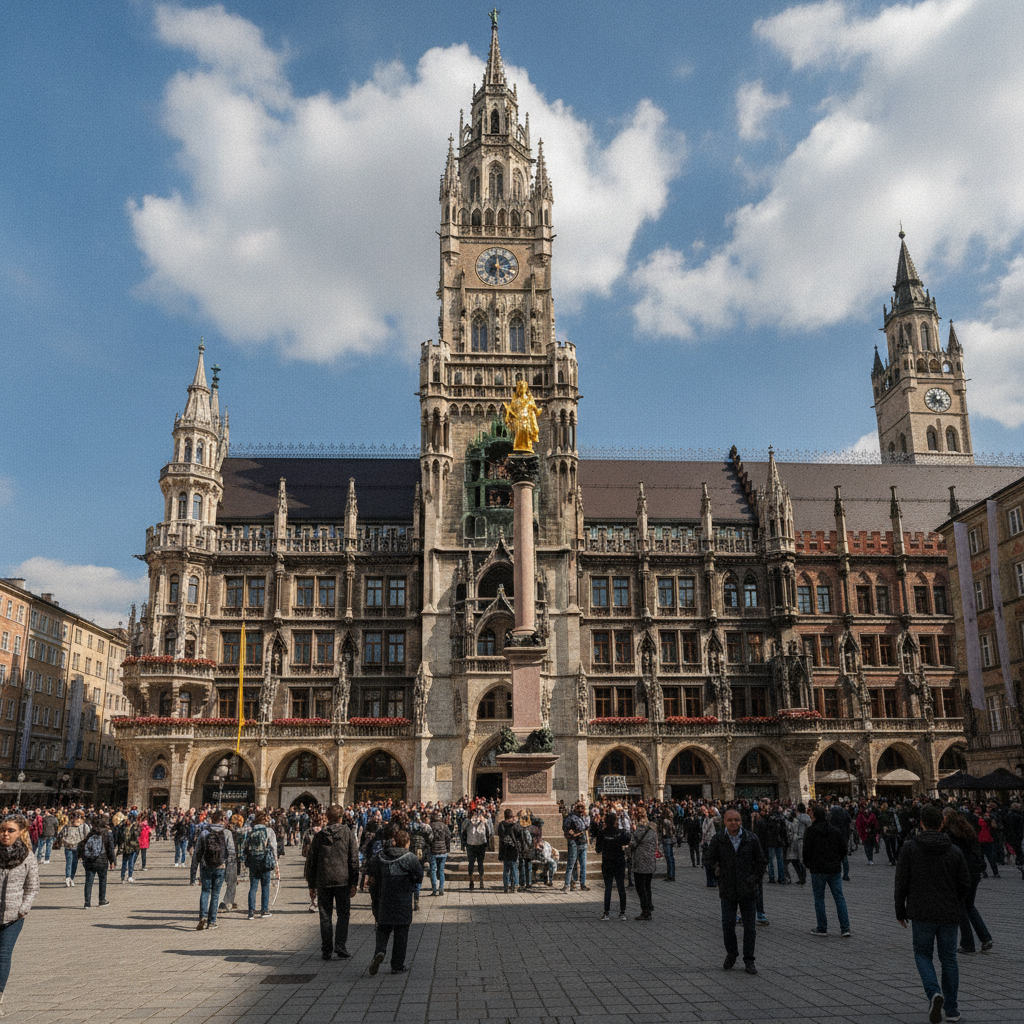
Munich — Marienplatz, Englischer Garten, Oktoberfest & the Pinakotheken
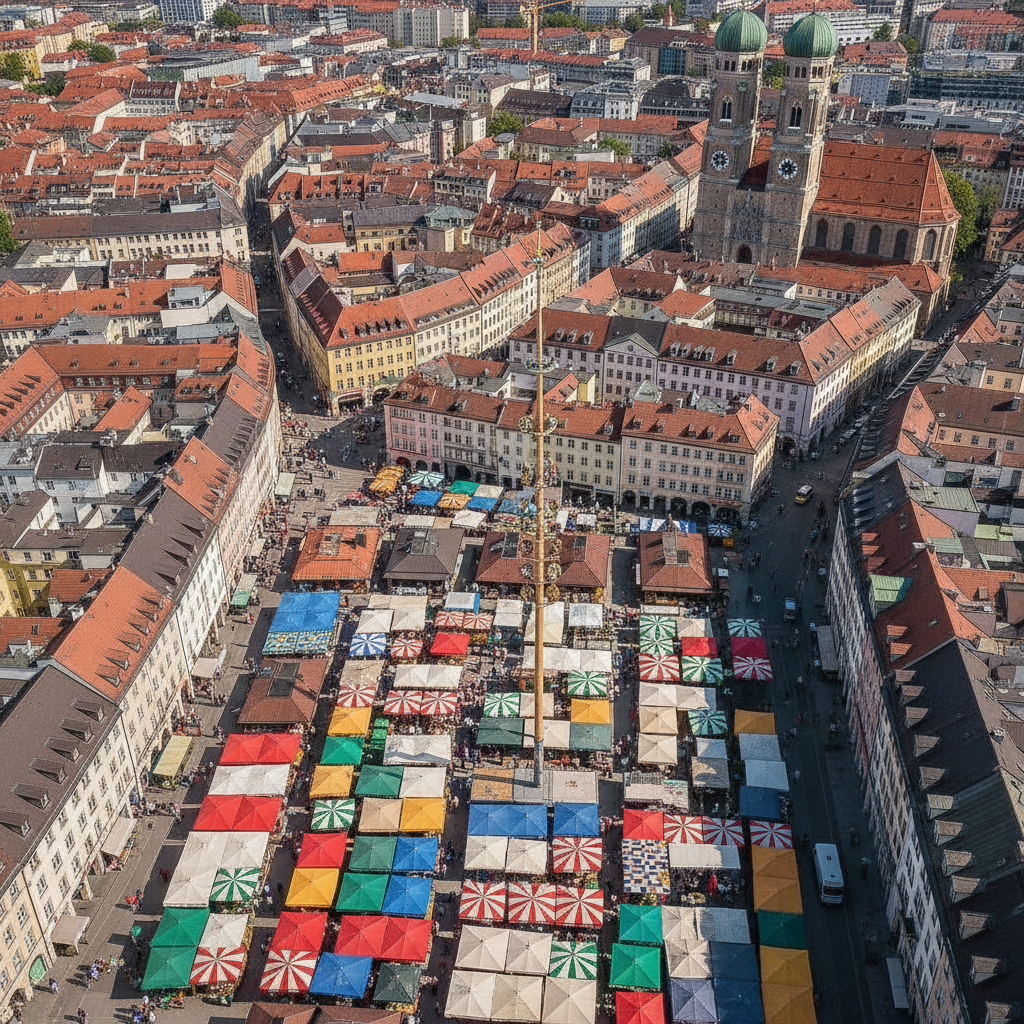
Munich — Viktualienmarkt, Beer Halls, the Isar, Dachau & Day Trips