Old Montreal, Notre-Dame Basilica & the History of New France
Montreal (the largest city in the province of Quebec, Canada — population approximately 2.1 million in the city and 4.2 million in the Greater Montreal Area — the most European city in North America, the city whose French language and culture (the 'francophone' majority — approximately 65% of the Montreal metropolitan population speaks French as their first language) give it a character entirely distinct from any other North American city): Old Montreal (Vieux-Montréal — the historic district of the city on the north bank of the St. Lawrence River, the site of the original French colonial settlement of Ville-Marie (1642)) is the most historically significant neighbourhood in Canada and one of the most beautiful historic urban districts in the Western Hemisphere.
- 1
Notre-Dame Basilica — Canada's Most Beautiful Church
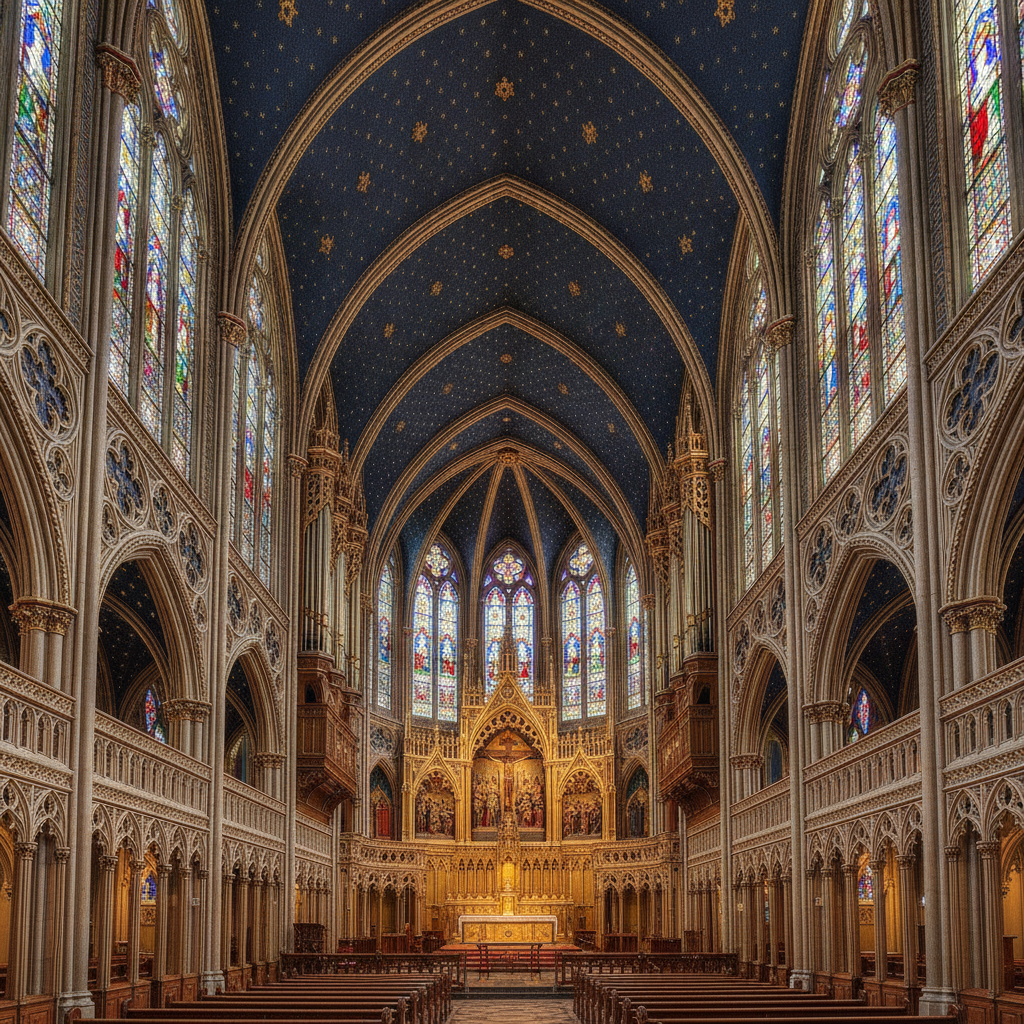
Notre-Dame Basilica (Basilique Notre-Dame de Montréal — 110 Notre-Dame Street West, Old Montreal — the Gothic Revival basilica designed by James O'Donnell (1774-1830) and built 1824-1829): the interior (the most magnificent Gothic Revival interior in North America — the deep blue ceiling painted with gold stars, the carved white pine woodwork, the 56 stained glass windows depicting scenes from the history of Montreal (the unusual iconographic program — scenes of the arrival of the French colonists, the founding of Ville-Marie, and the history of the Catholic Church in New France, rather than the conventional Biblical scenes)): the history (the basilica built to replace the smaller Notre-Dame Church (1672) that had served the parish since the early French colonial period — the new basilica designed to be larger than St. Patrick's Cathedral in New York and more magnificent than any church in North America): the Aïda light show ('AURA' — the spectacular nighttime immersive light and sound show projected on the interior of Notre-Dame Basilica, using the basilica as the 'canvas' for a 45-minute multimedia spectacle that is the most popular paid attraction in Montreal): the funerals and concerts (Notre-Dame Basilica as event venue — the basilica that has hosted the state funeral of Pierre Elliott Trudeau (September 2000), the wedding of Céline Dion (December 1994), and concerts by Céline Dion, Andrea Bocelli, and other major international performers).
- 2
Place d'Armes & Old Montreal's Historic Heart
Place d'Armes (the historic public square at the centre of Old Montreal, between Notre-Dame Basilica and the New York Life Building (the 1888 Richardson Romanesque office building that was the first skyscraper in Montreal) — the square that has been the civic heart of Montreal since the French colonial period): the Place d'Armes ensemble (the architectural ensemble surrounding the square — the finest collection of historic commercial architecture in Canada): the buildings surrounding Place d'Armes (the Sulpician Seminary (left of Notre-Dame Basilica — the 1685 building that is the oldest building in Montreal in its original location, the residence of the Sulpician priests who founded Ville-Marie in 1642 and who owned the entire island of Montreal until 1854), the New York Life Building (511 Place d'Armes — the red sandstone Richardson Romanesque office building of 1888, the first building in Montreal to use a steel frame and to be served by elevators, effectively making it the first 'skyscraper' in Montreal)), the Aldred Building (507 Place d'Armes — the 1931 Art Deco office tower in the New York Art Deco style, inspired by the Empire State Building and the Rockefeller Center): the monument (the bronze monument to Paul de Chomedey de Maisonneuve (1612-1676) — the French soldier who founded Ville-Marie (the original French colonial settlement that became Montreal) on May 17, 1642, at the centre of Place d'Armes — the most historically significant public monument in Montreal).
- 3
Rue Saint-Paul & Old Montreal's Cobblestone Streets
Rue Saint-Paul (Saint-Paul Street — the oldest commercial street in Canada, running east-west through the heart of Old Montreal between McGill Street and Berri Street): the Rue Saint-Paul experience (the 1-kilometre (0.6-mile) cobblestone street lined with 17th, 18th, and 19th-century stone buildings housing galleries, restaurants, boutiques, and hotels): the architecture of Rue Saint-Paul (the continuous streetwall of grey limestone buildings (the 'Montreal grey stone' — the Trenton limestone quarried on the banks of the St. Lawrence River and used for virtually all construction in Montreal from the French colonial period through the early 20th century), ranging from the 3-4 storey commercial buildings of the 18th and early 19th centuries to the more elaborate Victorian commercial architecture of the 1860s-1890s): the galleries (Old Montreal has the highest concentration of art galleries of any neighbourhood in Canada — the galleries on Rue Saint-Paul and the adjacent streets exhibit the works of Quebec artists in the historic stone buildings): the restaurants (Rue Saint-Paul is lined with restaurants occupying the ground floors of the historic buildings, from the casual bistros (Le Cartet (106 McGill Street — the Old Montreal institution serving classic Quebec cuisine for breakfast and lunch) to the fine dining (Toqué! (900 Place Jean-Paul-Riopelle — the fine dining restaurant established 1993 by chef Normand Laprise, the most acclaimed restaurant in Montreal and consistently rated among the top 100 restaurants in the world)).
- 4
The Old Port of Montreal & St. Lawrence River
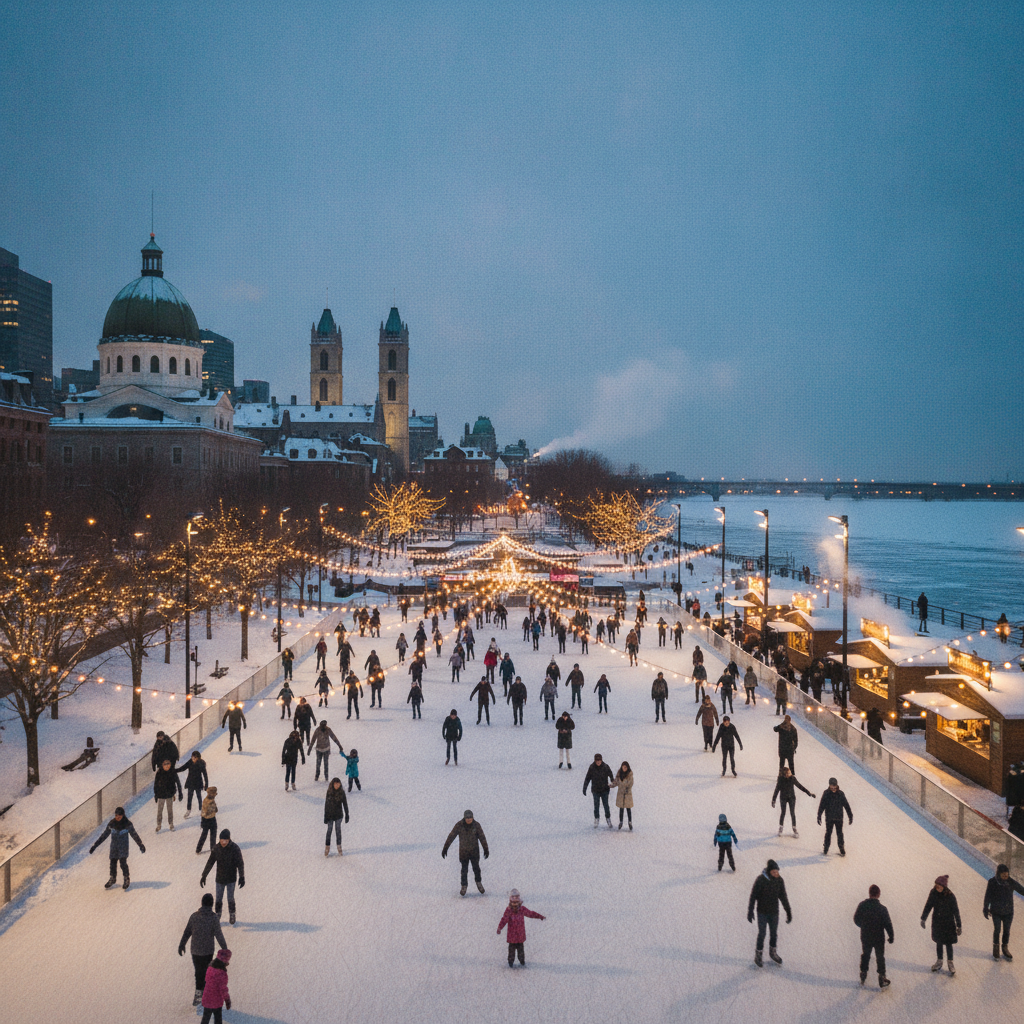
The Old Port of Montreal (Vieux-Port de Montréal — the 2.5-kilometre (1.5-mile) stretch of former port infrastructure along the St. Lawrence River at the south edge of Old Montreal, converted into a public park, promenade, and attraction complex between 1992 and 2002): the Old Port transformation (the transformation of the working port (the port that made Montreal the commercial capital of Canada from the early 19th century through the mid-20th century — the port through which the grain, timber, and manufactured goods of the Canadian interior flowed to Britain and Europe) into the most popular park and public space in Montreal): the Old Port attractions (the Promenade du Vieux-Port (the 2.5-km paved promenade along the river, offering the finest views of the St. Lawrence River and the south shore of Montreal), the Bonsecours Market (333 Rue de la Commune — the 1847 cast-iron domed market building that served as Montreal's city hall and public market for much of the 19th century, now a heritage building housing boutiques and temporary exhibitions), the Montreal Science Centre (King Edward Pier — the interactive science museum and IMAX theatre in the former port warehouse buildings), the ice rink (the outdoor skating rink at the Old Port in winter — one of the most popular public skating rinks in Montreal, in an outdoor setting on the former port alongside the St. Lawrence River)): the St. Lawrence River (the river at Montreal — the river that at Montreal is approximately 1.5 km (1 mile) wide, flowing at approximately 5-7 km/h, the river that carries the water of the Great Lakes to the Atlantic Ocean).
- 5
Bonsecours Market & the Old Montreal Restaurant Scene
Marché Bonsecours (333 Rue de la Commune, Old Montreal — the 1847 Neo-Classical public market building with the distinctive cast-iron dome and the twin hexagonal bell towers, the building that served as Montreal's principal market hall from 1847 to 1963 and briefly as Montreal's city hall (1849-1852, when the previous City Hall was burned down by loyalists protesting the Rebellion Losses Bill)): the Bonsecours Market today (the building, a National Historic Site of Canada, now houses boutiques selling Quebec-made crafts, fashion, and design objects, and temporary exhibitions): the Old Montreal restaurant scene (Old Montreal has the highest concentration of fine dining restaurants in Montreal, with the neighbourhood's historic stone buildings providing the atmospheric backdrop for some of the finest meals in Canada): the key restaurants: Toqué! (900 Place Jean-Paul-Riopelle — the restaurant established 1993 by Normand Laprise and Christine Lamarche, the most influential restaurant in the history of Montreal cuisine, the restaurant that pioneered the 'terroir' (local ingredients) approach to fine dining in Quebec 20 years before it became standard practice across North America); Le Serpent (257 Rue Prince — the Italian-influenced restaurant in a former foundry building, one of the most atmospheric dining rooms in Montreal); and Garde Manger (408 Rue Saint-François-Xavier — the restaurant of celebrity chef Chuck Hughes, famous for the lobster poutine and the industrial-chic décor).
- 6
Pointe-à-Callière Museum — Montreal's Archaeological Site
Pointe-à-Callière Museum (Musée d'archéologie et d'histoire de Montréal — 350 Place Royale, Old Montreal — the archaeology and history museum established 1992 on the exact site where Paul de Chomedey de Maisonneuve founded Ville-Marie (the original French colonial settlement that became Montreal) on May 17, 1642): the museum site (the museum is built on the archaeologically excavated site of the original Ville-Marie settlement — the foundations and remains of the buildings, sewers, and infrastructure of 350+ years of Montreal urban history are visible through glass floors and in underground galleries): the underground galleries (the network of underground passages that follow the archaeological excavations below Old Montreal, revealing the successive layers of urban development from the 1642 Ville-Marie settlement (the stone fortifications, wooden buildings, and middens of the original French colonial settlement) through the British colonial period (the 18th-century stone buildings, the collector sewer system) to the 19th-century port expansion): the multimedia show (the archaeological museum's signature multimedia presentation — the 20-minute theatrical show in the main atrium of the museum in which holograms of historical figures (Maisonneuve, the Iroquois chief Atironta, the Sulpician priest Jeanne Mance) re-enact the founding of Montreal and the early history of New France — the finest introduction to Montreal history available at any attraction in the city).
Walk this route with audio
Stories play automatically as you reach each stop — no tapping needed.
More in montreal
Montreal in Winter — Skating, Snowshoeing & Embracing the Cold
Montreal's Gay Village, Pride Festival & LGBTQ+ Culture
The Olympic Stadium, Biodôme & Parc Jean-Drapeau
Saint Joseph's Oratory, Brother André & Montreal's Religious Heritage
Mount Royal Park, the Plateau & Montreal's Bohemian Heart