Uruguay and Progressive Politics: Social Democracy on the Rio de la Plata
Uruguay has long distinguished itself within Latin America as a country of progressive social policy, functional democratic institutions, and relatively low inequality by regional standards. The Batllista tradition of state intervention in the economy and social welfare, established in the early 20th century by President Jose Batlle y Ordonez, created the foundations for a welfare state unusual in South America. The return to democracy in 1985 after the 1973 to 1985 military dictatorship was followed by progressive legislative changes that made Uruguay an international reference point for drug policy reform, same-sex marriage, and abortion rights. The presidency of Jose Mujica from 2010 to 2015, the former Tupamaro guerrilla who lived in a farmhouse and donated most of his presidential salary to charity, became globally famous as an embodiment of a different approach to political leadership.
- 1
Batllismo and the Early Welfare State
Jose Batlle y Ordonez, who served two presidential terms from 1903 to 1907 and 1911 to 1915, transformed Uruguay from a conventional Latin American oligarchic republic into one of the world's first welfare states, implementing reforms including the eight-hour working day, minimum wage legislation, free secondary education, the abolition of the death penalty, the legalization of divorce, and the nationalization of strategic industries including the national bank, insurance, electricity, and telephone. The Batllista ideology drew from European social democracy and from the specific Uruguayan context of a small country dependent on cattle and wool exports whose leadership had the political will to redistribute agricultural wealth into public services. The University of the Republic, founded in Montevideo in 1849 and consistently free and public since the Batllista era, is the primary higher education institution in Uruguay and has been a center of progressive thought and political opposition throughout the country's modern history. The legacy of Batllismo created the strong Uruguayan expectation of state services in health, education, and social welfare that continues to shape political discourse even in periods when market-liberal governments have reduced state involvement.
- 2
The Tupamaro Movement and the Military Dictatorship
The Movimiento de Liberacion Nacional, known as the Tupamaros, was an urban guerrilla movement active in Uruguay from 1963 to 1972 that drew from leftist students and urban workers, conducting bank robberies, kidnappings of political and business figures, prison breaks, and armed propaganda actions in a strategy of exposing the contradictions of Uruguayan liberal democracy. The Tupamaro leadership included Jose Mujica, who was captured and spent 14 years in solitary confinement before being released in the 1985 democratic transition. The military coup of June 1973, which ended Uruguayan democracy with the backing of business and military sectors alarmed by the Tupamaro violence and the broader leftist political movements, imposed a dictatorship that lasted until 1985, during which thousands of Uruguayans were detained and tortured, exile became a mass phenomenon, and cultural expression was severely restricted. The transition to democracy in 1985 involved an amnesty for military human rights violators, the Ley de Caducidad, that generated ongoing controversy and legal challenges; the amnesty was upheld in two referendums but continued to be challenged by human rights organizations and partially overridden by subsequent legislation.
- 3
Jose Mujica: The World's Most Humble President
Jose Mujica, elected president of Uruguay in 2009 and serving from 2010 to 2015 at the age of 74 after decades as a Tupamaro guerrilla, senator, and minister, became an international figure of unusual fame for a leader of a small country through the combination of his austere personal lifestyle, his philosophical public statements on consumption and happiness, and his government's record of progressive legislation. Mujica and his wife Lucia Topolansky, a former senator, lived during his presidency on a small farm outside Montevideo and drove an old Volkswagen Beetle, donating approximately 90 percent of his presidential salary to charity after keeping an amount equivalent to the average Uruguayan wage. His interviews and speeches drew international media attention for their content rather than their form: Mujica consistently argued that the pursuit of economic growth and material consumption as measures of national success were producing unhappiness and environmental destruction, and that a good life was one of moderation, freedom, and time for the things that mattered. The progressive legislation of his presidency included the legalization of same-sex marriage in 2013, the legalization of cannabis in 2013 making Uruguay the first country in the world to fully legalize recreational marijuana, and the expansion of reproductive rights.
- 4
Cannabis Legalization and the Uruguayan Drug Policy Experiment
Uruguay became the first country in the world to fully legalize the production, sale, and consumption of recreational marijuana in December 2013 under the Mujica government, creating a regulatory framework that positioned the state as the sole legal producer and seller of cannabis, with distribution through registered pharmacies to registered Uruguayan residents. The policy was motivated by a public health and security analysis that concluded that prohibition had failed to reduce consumption while creating criminal markets that funded organized crime; the regulated market approach was designed to eliminate the criminal market while applying quality and dosage controls that prohibition could not provide. The implementation was slow: pharmacies were reluctant to participate initially due to bank compliance concerns and logistical challenges, and the system required years to reach full operation. International tourists cannot legally purchase cannabis through the Uruguayan system, which is restricted to registered residents; the tourism market for cannabis in Uruguay is therefore less developed than in the Netherlands or US states with recreational legalization. The Uruguayan experiment has been closely studied by drug policy researchers and governments worldwide as one of the most complete examples of full state-regulated cannabis legalization in a national context.
- 5
Colonia del Sacramento: The UNESCO Colonial City Across from Buenos Aires
Colonia del Sacramento, located approximately 180 kilometers west of Montevideo on the Rio de la Plata shore directly across from Buenos Aires, is a UNESCO World Heritage Site for its exceptionally well-preserved colonial urban fabric representing a contested settlement history between Spanish and Portuguese colonial powers. The Barrio Historico of Colonia, a compact peninsula of cobblestone streets, whitewashed and tiled colonial houses, and colonial-era fortifications, represents one of the most complete surviving examples of Spanish-Portuguese colonial town planning in South America. The city was founded by the Portuguese in 1680 as Nova Colonia do Sacramento to establish a trading post opposite Buenos Aires, and changed hands multiple times between Spanish and Portuguese control before becoming part of independent Uruguay in 1828. The ferry crossing from Buenos Aires to Colonia takes approximately one hour on the fast ferry or three hours on the slow ferry, making it the most popular day trip from Buenos Aires and a standard Uruguay excursion for Argentina visitors. From Montevideo, Colonia is reached in approximately two and a half hours by bus or car, making it a viable day trip in the other direction.
- 6
Punta del Este: Uruguay's International Resort and Art Scene
Punta del Este, the international resort city on a peninsula extending into the Atlantic approximately 140 kilometers east of Montevideo, is one of the most prestigious summer resort destinations in South America, drawing Argentine and Brazilian visitors alongside international tourists for beach holidays, yacht events, and the art scene that concentrates in the summer months. The Casapueblo, a whitewashed organically shaped building on the Punta Ballena headland west of Punta del Este, was the home and studio of the Uruguayan artist Carlos Paez Vilaro and is now a hotel and museum; the structure, built by Paez Vilaro over decades by hand in the style of Mediterranean hill villages, is the most distinctive architectural landmark of the Uruguayan coast. The La Brava and La Mansa beaches of Punta del Este separate the rougher Atlantic-facing surf beach from the calmer bay-side beach, with the ferry port and the Gorlero Avenue commercial strip between them. The New Year's Eve celebration in Punta del Este, when the Argentine summer holiday period coincides with the international new year gathering, is one of the most attended events on the South American social calendar. The Casapueblo hotel hosts a sunset ritual each evening when the recorded voice of Paez Vilaro recites a poem as the sun goes down; the performance has become a cult attraction of the Uruguayan coast.
Walk this route with audio
Stories play automatically as you reach each stop — no tapping needed.
More in Montevideo
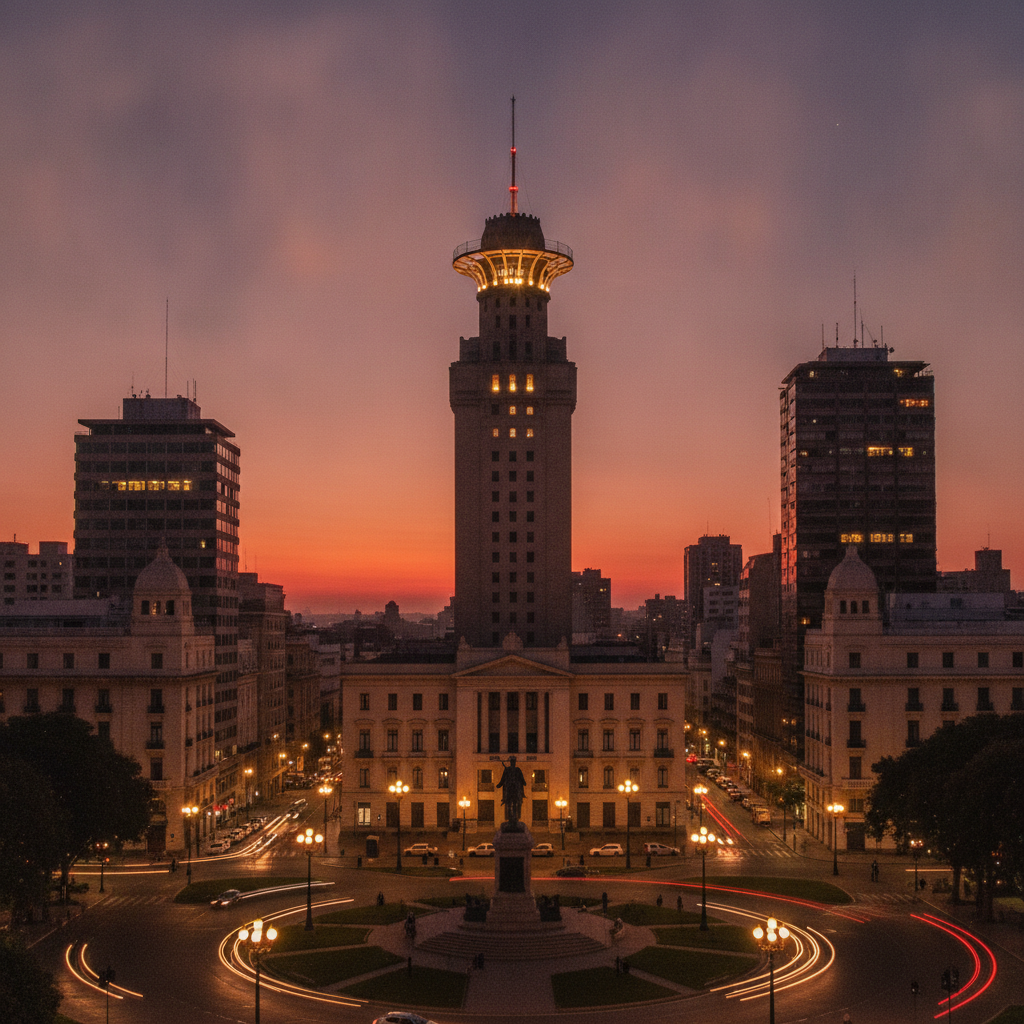
Montevideo Architecture and Neighborhoods: Art Deco, Pocitos, and the Coastal Suburbs
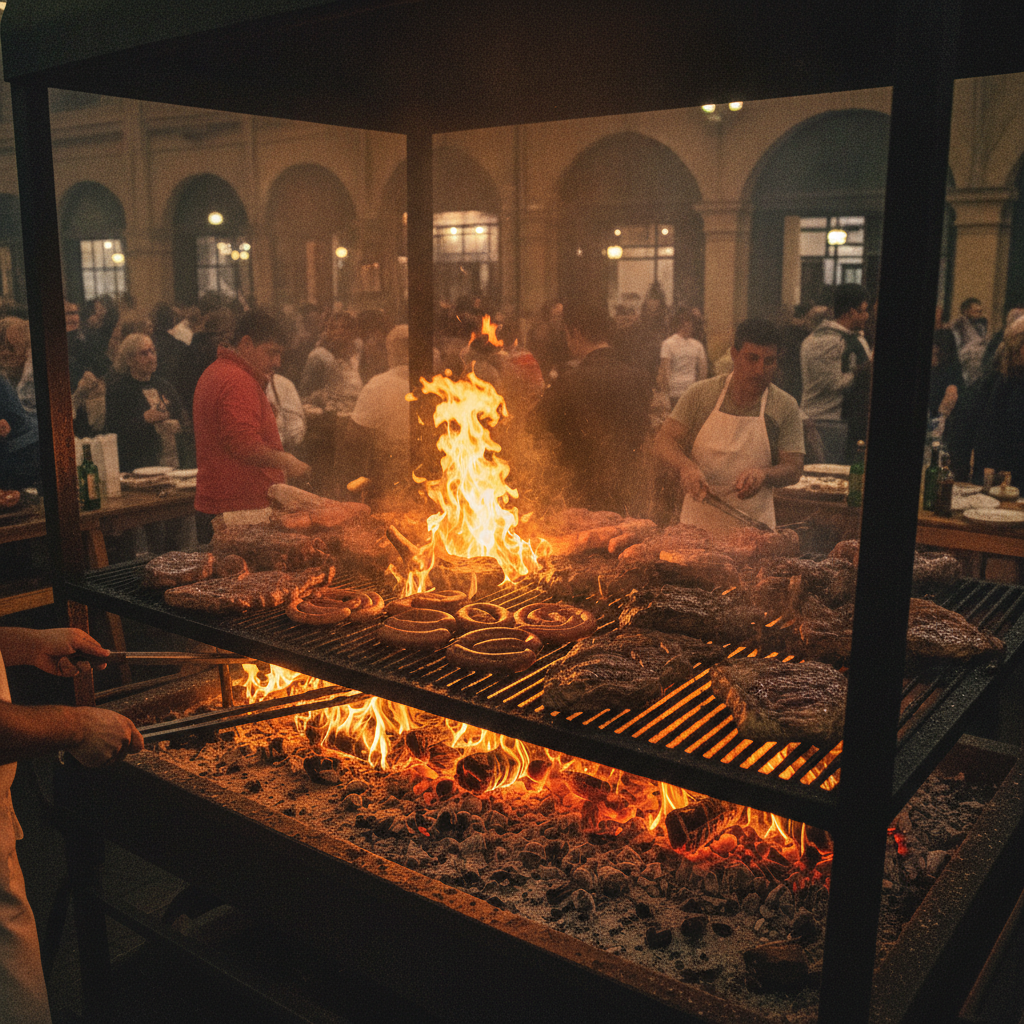
Montevideo Food: Asado, Chivito, Dulce de Leche, and the Uruguayan Table
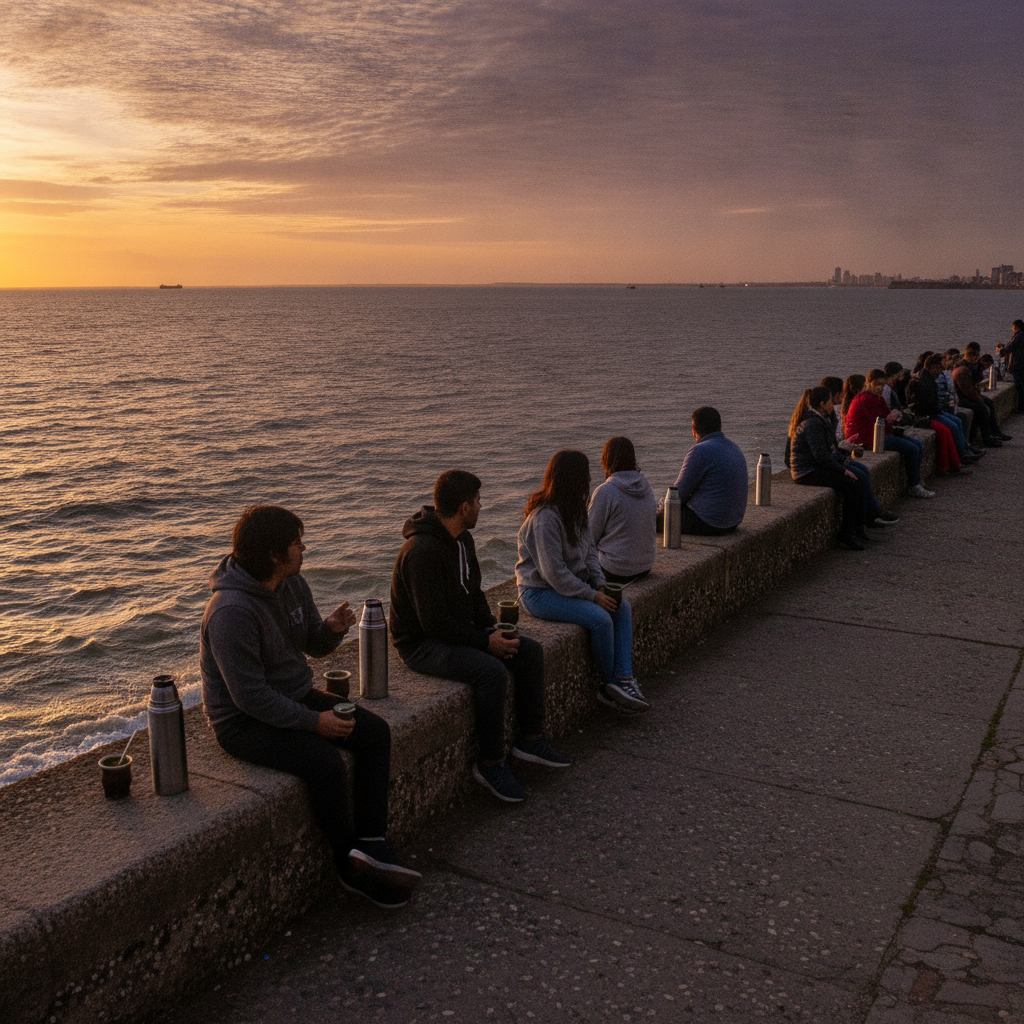
Montevideo: The Rambla, Tango, and the Most Liveable Capital in Latin America
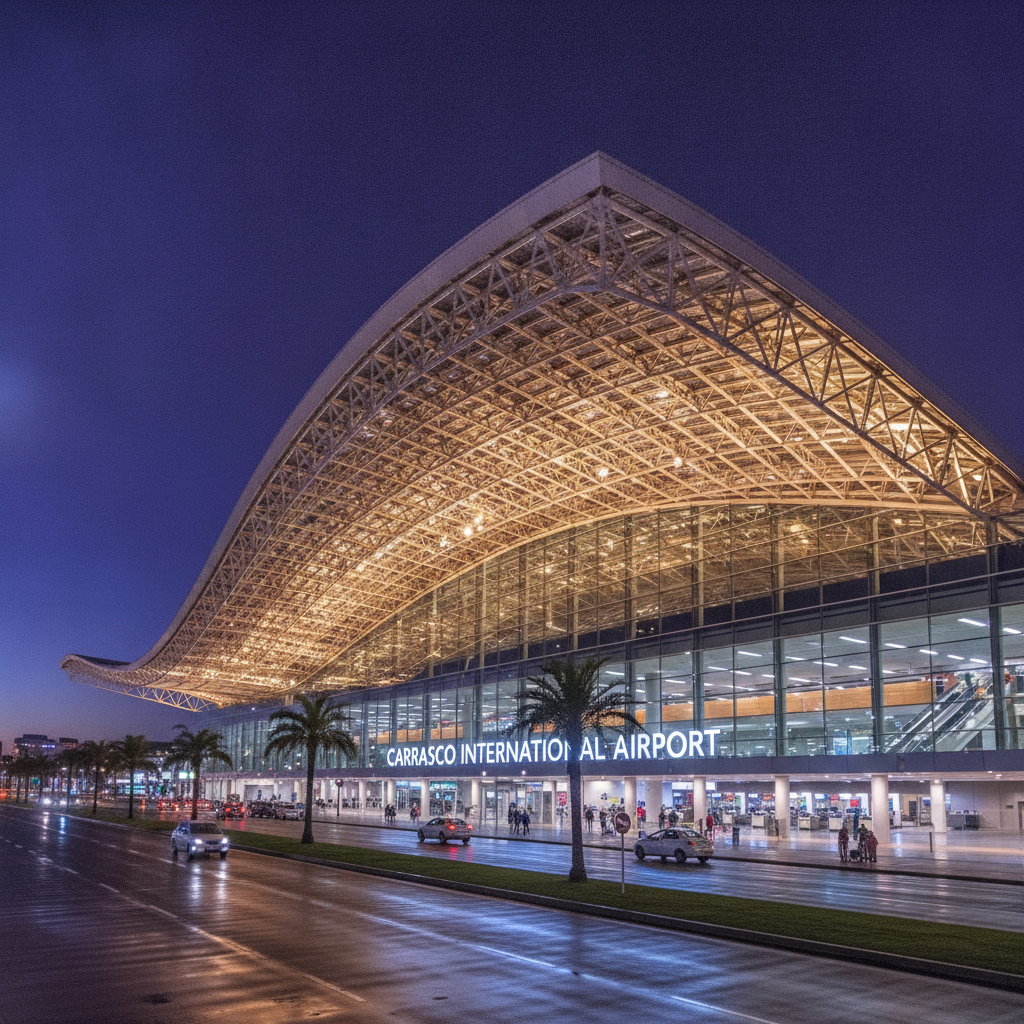
Montevideo Practical Guide: Getting There, Transport, Buenos Aires Ferry, and Uruguay Circuit
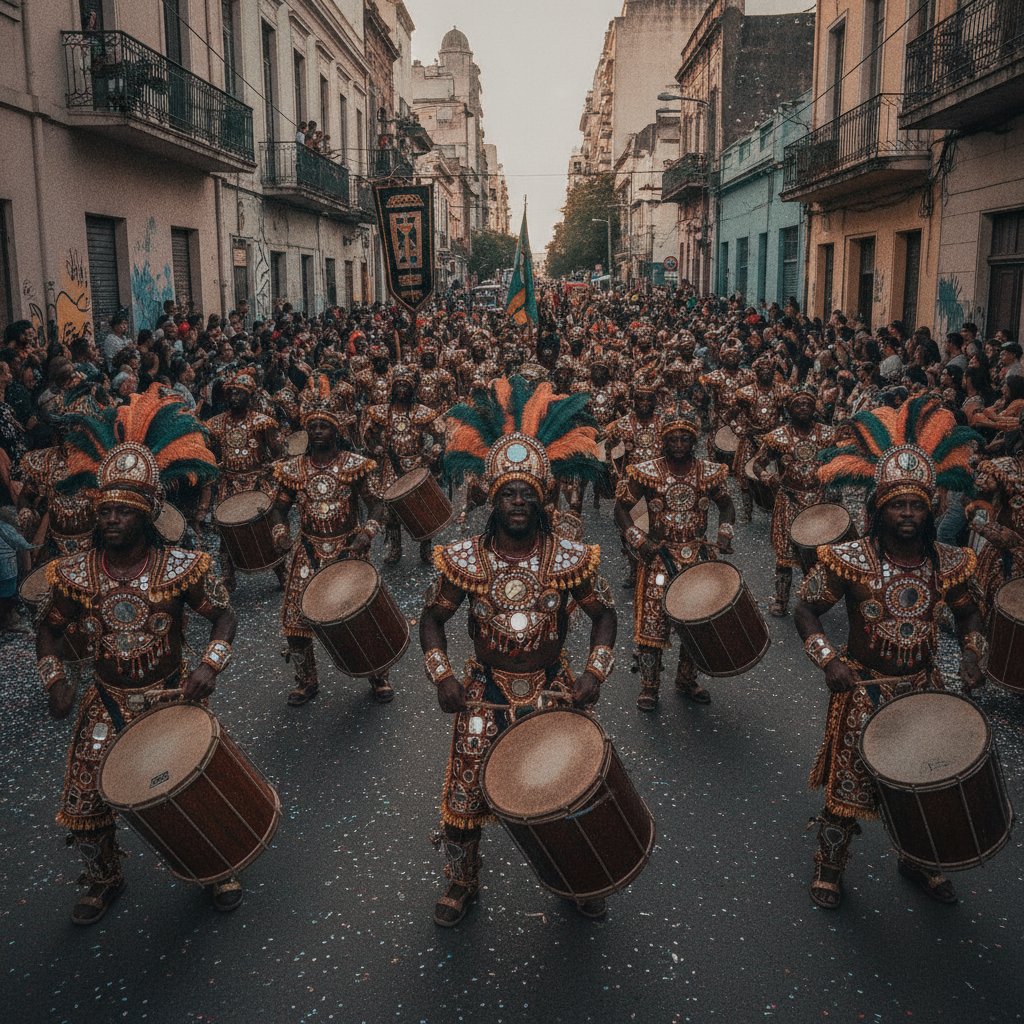
Montevideo Carnival: The Longest Carnival in the World and the Murga Tradition