Montevideo Carnival: The Longest Carnival in the World and the Murga Tradition
The Montevideo Carnival is the longest carnival in the world, running for approximately 40 days from late January to early March each year, and is organized around a set of performance genres that are unique to Uruguay and have no precise equivalent in the Brazilian or Caribbean carnivals that define the international imagination of the form. The principal Montevideo carnival genres are the murga, a theatrical-musical form combining costumed group performance, political satire, and social commentary with elaborate choral singing; the candombe drumming of the Afro-Uruguayan comparsas; the parodistas and revistas, comedy and variety show groups; and the humoristas, comedian performers. The carnival theater venues called tablados are temporary stages erected throughout the city's neighborhoods where groups perform their shows in competition for the public and judges.
- 1
Murga: Political Satire and the Voice of Uruguayan Democracy
The murga is the defining art form of the Montevideo Carnival and one of the most distinctive theatrical traditions in Latin America: a group of 14 to 17 performers in elaborate matching costumes who perform a two-hour theatrical show combining choral singing, political and social satire, comedy sketches, and instrumental performance on a small ensemble of drums, cymbals, and bass drum. The show is structured around a presentation, various musical and theatrical numbers, a retrospective review of the year's events, and a farewell, with the satire becoming increasingly sharp and specific as the show develops. The murga tradition dates to the early 20th century and reflects the Uruguayan political culture of high civic engagement, irreverence toward authority, and the expectation that art will comment on current events; during the 1973 to 1985 military dictatorship, murga groups found ways to continue performing with disguised political content that the audience could interpret correctly while maintaining plausible deniability. The most successful murga groups become nationally recognized institutions with loyal audiences that follow them from tablado to tablado throughout the carnival season. The Desfile Inaugural, the opening parade of the Carnival season on the Bulevar Artigas, brings all competing groups into the streets in a pageant that marks the official beginning of the season.
- 2
Candombe Llamadas: The Drum Processions of Barrio Sur
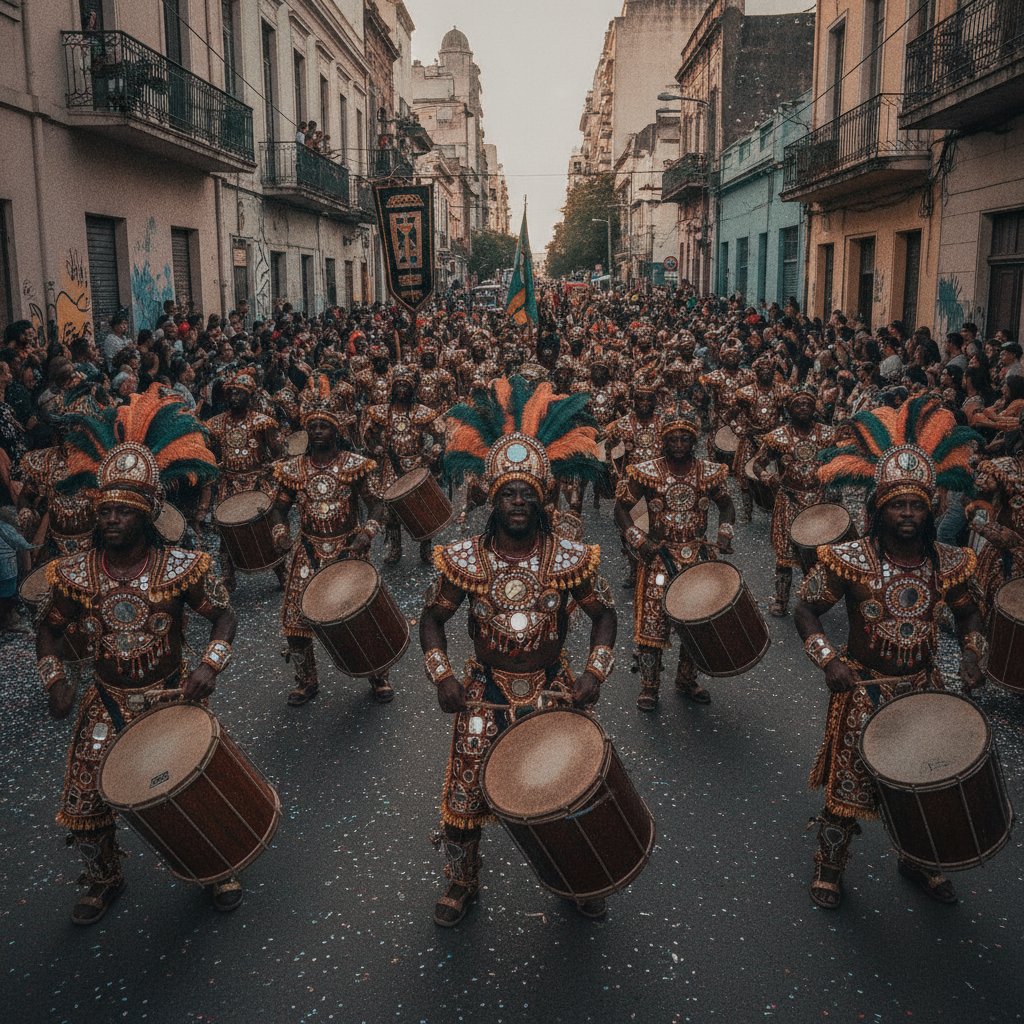
The Llamadas de Candombe, the street drumming processions that are the public climax of the Carnival season for the Afro-Uruguayan candombe tradition, take place in the Barrio Sur and Palermo neighborhoods of central Montevideo during the February Carnival period, with the principal competition Llamadas held over two evenings. Each comparsa, an organized group representing a neighborhood or community, marches through the street route playing the three-drum cuerda ensemble at maximum intensity while dancers called vedettes in elaborate costumes, mama vieja elder women figures, and gramillero medicine man characters perform in front of and alongside the drums. The competition between comparsas for the best music, best dance, and best costumes is judged by a jury, but the primary social function is the public affirmation of Afro-Uruguayan identity and cultural survival. The neighborhood streets of Barrio Sur during the Llamadas are packed with spectators on balconies and lining the route; the sound of dozens of drums in synchrony creates a physical vibration that observers describe as one of the most powerful sonic experiences in Uruguayan culture. The candombe rhythm continues beyond the formal Llamadas season: informal cuerda practice sessions called ensayos take place in the neighborhood streets throughout the year as groups prepare for the next carnival.
- 3
Tablados: The Neighborhood Carnival Stages
The tablados are temporary outdoor theater stages erected in the neighborhoods of Montevideo throughout the Carnival season, providing the performance venues where the various carnival art form groups, including murga, candombe, parodistas, revistas, and humoristas, perform their shows in competition for audiences and judges. There were traditionally hundreds of tablados operating across Montevideo during Carnival; the number has declined in recent decades as the competition from television broadcasts of the Carnival Teatro de Verano performances has reduced neighborhood audience attendance. The Teatro de Verano Ramon Collazo, a purpose-built outdoor amphitheater in the Parque Rodo area, is the prestige venue for the Carnival, hosting the major competition shows in front of large audiences. The neighborhood tablados at their best represent a genuinely democratic performance culture in which the most elaborate and expensive productions compete alongside smaller neighborhood groups, and in which the audience participates actively rather than passively watching. The tablado tradition has been declining for several decades but remains an important part of the social fabric of several Montevideo neighborhoods, particularly in the working-class areas that have maintained the most continuous Carnival participation culture.
- 4
Carnival Food and Social Culture: Chivito and the Carnival Kitchen
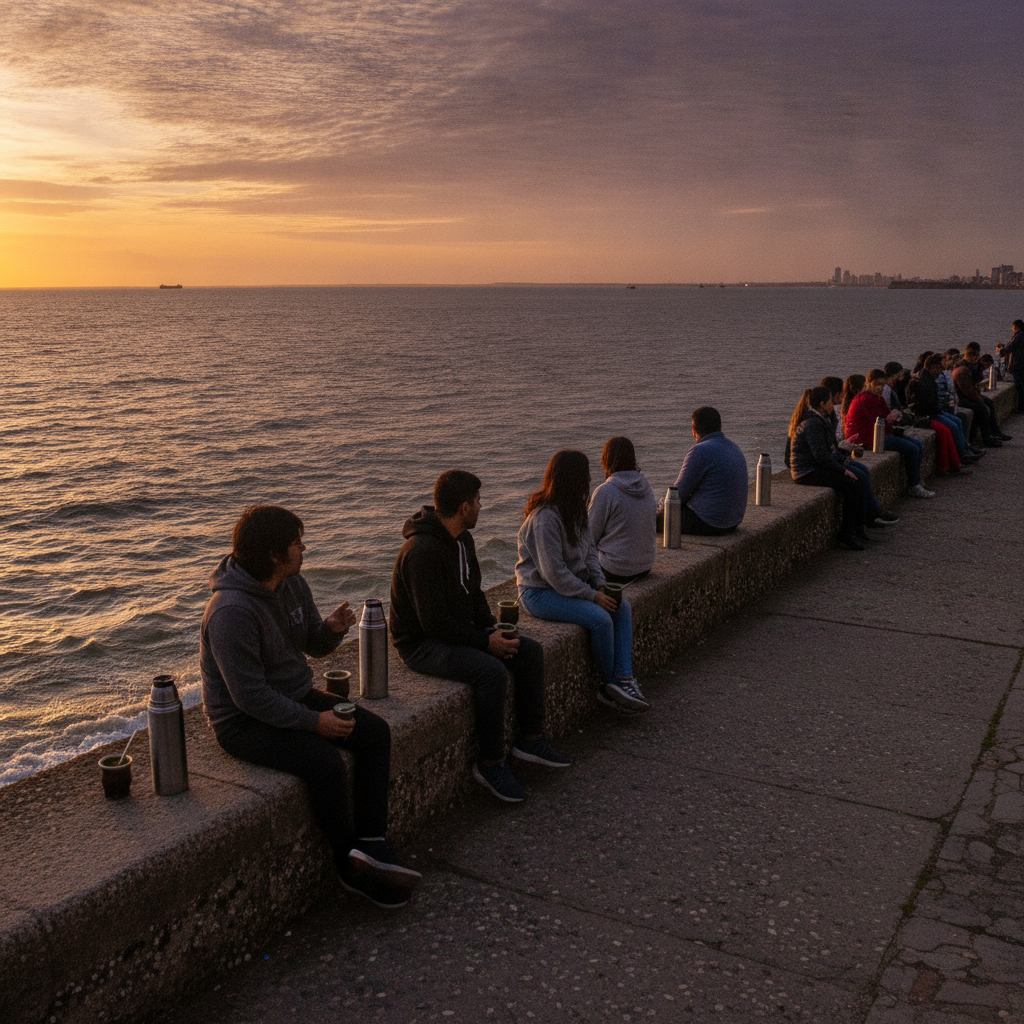
The Carnival season food culture in Montevideo involves a specific set of late-night foods associated with the evening performances and street celebrations. The chivito al pan, the Uruguayan national sandwich, is the dominant Carnival night food: thin-sliced churrasco beef on a soft pan, dressed with ham, mozzarella, lettuce, tomato, egg, and various condiments, available from stands and parilladas throughout the evening at the tablado areas. The tortas fritas, discs of fried dough dusted with powdered sugar, are the Carnival street sweet, sold by vendors throughout the season and eaten hot as a snack during performance breaks. The mate culture continues throughout Carnival: even at the tablados, groups of friends circulate the mate thermos among themselves as they watch the performances. The Carnival season corresponds with the Montevidean summer and the school holiday period, giving it a social character as a collective break in the routine; families who might not attend the theater during the year attend tablados as a seasonal tradition. The social aspects of Carnival, including the chance meetings between neighbors who do not see each other throughout the working year, are as important to the tradition as the formal artistic performances.
- 5
Parodistas and Humoristas: The Comedy Carnival Forms
The parodistas and humoristas represent the comedy dimensions of the Montevideo Carnival alongside the more theatrically complex murga. The parodistas, groups of five or more performers who parody current films, television programs, theatrical productions, or cultural events of the previous year with elaborate costuming and musical parody, have a tradition extending to the early 20th century and represent the most purely entertainment-oriented of the Carnival categories. The best parodista shows are genuinely funny for Uruguayan audiences who have followed the original productions being parodied; international visitors without that context miss the specific humor but can appreciate the production values and performance energy. The humoristas, individual or small-group comedians who perform standalone comedy shows in the tablado circuit, represent the most directly political and topical performance genre of the Carnival alongside the murga; the best-known humoristas are nationally famous figures whose Carnival shows are anticipated as the most sharp-tongued commentary on the year's events. The lubolos and negros y lubolos, groups that historically involved candombe-influenced performance with character types from the Afro-Uruguayan tradition, represent another Carnival category with complex and contested historical associations to blackface performance practices that are actively debated within contemporary Uruguayan Carnival culture.
- 6
Carnival Season Logistics: When to Visit and What to See
Planning a Montevideo visit around Carnival requires booking accommodation well in advance and understanding that the Carnival program extends over 40 days rather than concentrating in a single week. The peak period is the two weekends of the official Llamadas, typically in mid-February, when the candombe processions draw the largest crowds and the neighborhood atmosphere is most intense. The Teatro de Verano competition shows, where the major murga and carnival category groups perform for the judges, are ticketed events that sell out weeks in advance and represent the highest production values in the season. The neighborhood tablados operate from early evening to midnight or later, with multiple performance groups rotating through the same stage; arriving for the early performances before the crowds build provides the most comfortable experience. The Desfile Inaugural opening parade on Bulevar Artigas is free to watch from the street and provides an overview of all the participating groups before the season's shows begin. The full Carnival season from late January to early March corresponds with the Uruguayan school summer holiday, meaning Montevideo has a relaxed and festive atmosphere throughout this period even beyond the specific Carnival performances. Weather in Montevideo during January and February is warm and occasionally rainy; summer temperatures average 26 degrees Celsius with high humidity from the river estuary.
Walk this route with audio
Stories play automatically as you reach each stop — no tapping needed.
More in Montevideo
Montevideo Architecture and Neighborhoods: Art Deco, Pocitos, and the Coastal Suburbs
Montevideo Food: Asado, Chivito, Dulce de Leche, and the Uruguayan Table
Montevideo: The Rambla, Tango, and the Most Liveable Capital in Latin America
Montevideo Practical Guide: Getting There, Transport, Buenos Aires Ferry, and Uruguay Circuit