Montevideo Architecture and Neighborhoods: Art Deco, Pocitos, and the Coastal Suburbs
Montevideo developed its distinctive architectural character primarily in the late 19th and early 20th centuries, when waves of European immigration brought builders and architects who applied Italianate, French Beaux-Arts, and subsequently Art Deco styles to a compact coastal city with the resources to build grandly. The result is a city with an unusually rich stock of early 20th century architecture, particularly Art Deco, that has been preserved by the economic stagnation that prevented demolition and replacement in the late 20th century. The neighborhoods from the historic Ciudad Vieja through Pocitos, Punta Carretas, and Carrasco to the east display successive layers of urban development from colonial to modernist, with the Rambla coastal promenade providing the connective thread.
- 1
Art Deco Montevideo: The Palacio Salvo and Its Era
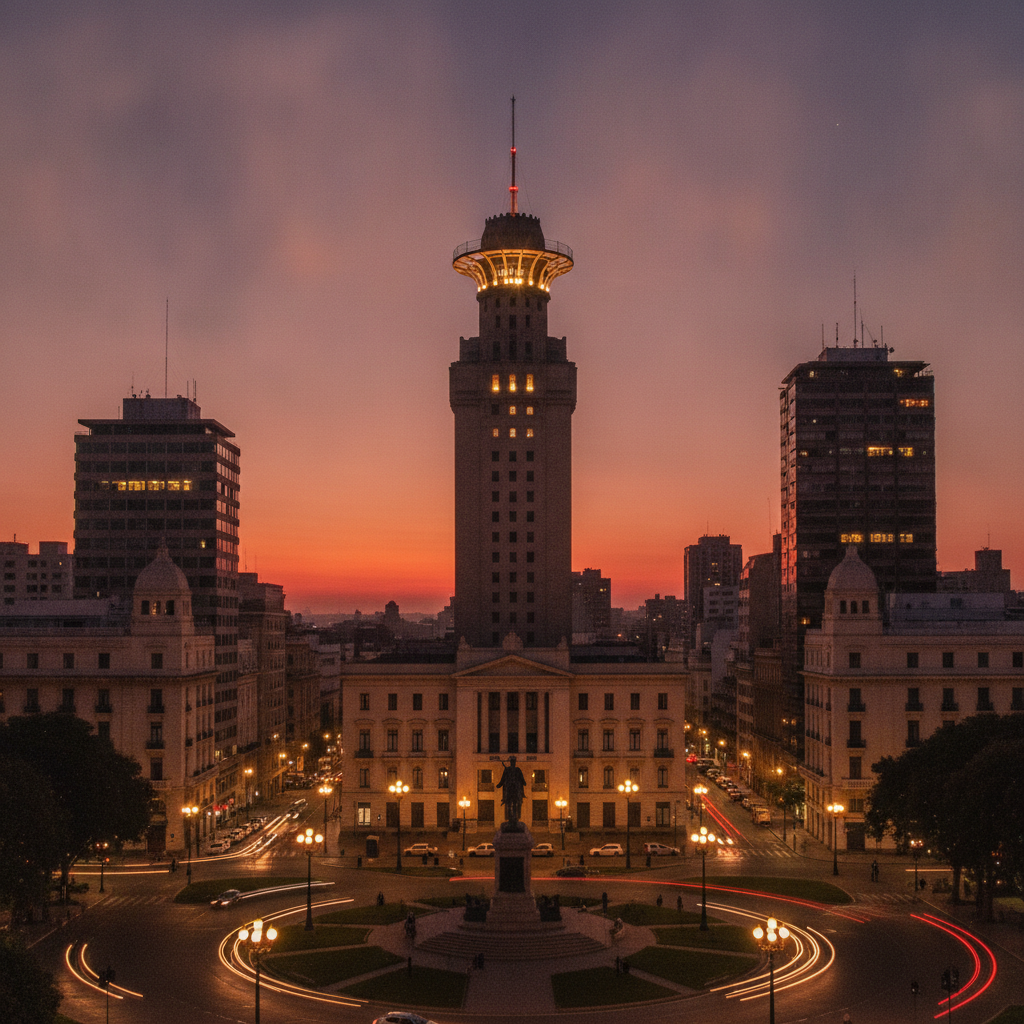
The Palacio Salvo, completed in 1928 on the Plaza Independencia at the boundary between the Ciudad Vieja and the Avenida 18 de Julio commercial district, was at its completion the tallest building in South America and remains the most recognizable building in Uruguay: a 26-story tower with a distinctive lighthouse-like upper section in an eclectic style combining Art Deco and neoclassical elements that was designed by the Italian architect Mario Palanti for the Salvo family. The building contains residential apartments, commercial spaces, and a famous rooftop viewpoint that offers the most comprehensive panorama of the city and the Rio de la Plata. The Plaza Independencia that the building overlooks is the ceremonial center of Montevideo, containing the equestrian statue of Artigas above his mausoleum. The Art Deco tradition in Montevideo extends well beyond the Palacio Salvo to include numerous apartment buildings, office towers, cinemas, and civic buildings from the 1920s through the 1940s that give the city center its architectural character. The deterioration and gradual recovery of this stock of buildings is a major thread in the urban history of Montevideo from the economic difficulties of the late 20th century to the present renovation efforts.
- 2
Ciudad Vieja: Colonial Heritage and Contemporary Regeneration
The Ciudad Vieja, the colonial peninsula that was the original walled settlement and is now the historic core of Montevideo, has experienced a complex cycle of decay and regeneration over the past half century. The neighborhood declined through the mid-20th century as wealthier residents and businesses moved east to Pocitos and Punta Carretas, leaving behind aging building stock occupied by lower-income residents and informal economic activities. From the 2000s onward, a combination of heritage investment, arts institution relocation, boutique hotel development, and the organic arrival of creative businesses has produced a partial regeneration that has increased property values and cultural vitality while also raising concerns about displacement of longtime residents. The Museo Torres Garcia, dedicated to the Uruguayan constructivist artist Joaquin Torres Garcia who founded the Taller Torres Garcia workshop in Montevideo in 1943, is one of the most significant art museums in the city and anchors the cultural identity of the Ciudad Vieja. The street art tradition in the Ciudad Vieja, concentrated on the walls of vacant buildings and spaces between historic facades, is among the most developed in Uruguay and adds a contemporary layer to the historic architectural fabric.
- 3
Pocitos and the High-Rise Coast: Mid-Century Modern Montevideo
Pocitos, the upscale residential neighborhood on the Rio de la Plata shore approximately four kilometers east of the Ciudad Vieja, developed primarily from the 1920s through the 1960s as Montevideo's most desirable residential area, building a dense concentration of high-rise apartment buildings along the Rambla and on the streets inland that now constitutes the most urban and vertically developed section of the city. The Playa Pocitos beach adjacent to the neighborhood is the most popular urban beach in Montevideo, accessible by bus and on foot from the Pocitos apartment towers; the beach is swimmable from November to March and used as a social promenade year-round. The architecture of Pocitos spans the full range of 20th century residential styles from the Beaux-Arts apartment buildings of the 1920s through the rationalist modernism of the 1950s to the less distinguished tower blocks of the 1960s and 1970s. The neighborhood has a concentration of independent restaurants, wine bars, and coffee shops that serve the affluent resident population and visiting Argentines who know Pocitos as a shorthand for Montevideo's good life. The Sunday flea market on the Tristan Narvaja street in the adjacent Cordón neighborhood is the largest and most atmospheric market in Montevideo, operating every Sunday morning with antique dealers, book vendors, food stalls, and general second-hand goods sellers covering several blocks.
- 4
Punta Carretas and Tres Cruces: The Shopping Mall Irony
Punta Carretas, the neighborhood in the southern section of Montevideo between Pocitos and the Rambla, contains one of the most architecturally ironic shopping centers in the world: the Punta Carretas Shopping, built inside the walls of the former Punta Carretas Prison, a penitentiary that was in operation from 1915 to 1986 and was famous as the site of the 1971 mass escape of 111 Tupamaro guerrillas who tunneled out through the adjacent houses. The prison structure has been preserved as the shell of the mall, with the cell blocks converted into shop units and the exercise yard into an atrium; the result is a functioning middle-class shopping center in a historic prison that held the political prisoners of the military dictatorship, producing a kind of unresolved historical tension that Uruguayans discuss with varying degrees of discomfort. The Tres Cruces bus terminal, the main long-distance bus station of Montevideo, serves as the hub for buses to Punta del Este, Colonia, and the Argentine border crossings; the adjacent commercial area has developed as a secondary retail zone. The neighborhood of Parque Rodo, named for the Uruguayan writer Jose Enrique Rodo and containing a large urban park with the Carneval Teatro de Verano amphitheater, is the primary green space between the Ciudad Vieja and Pocitos.
- 5
Carrasco: The Garden Suburb and Its Art Nouveau Villas
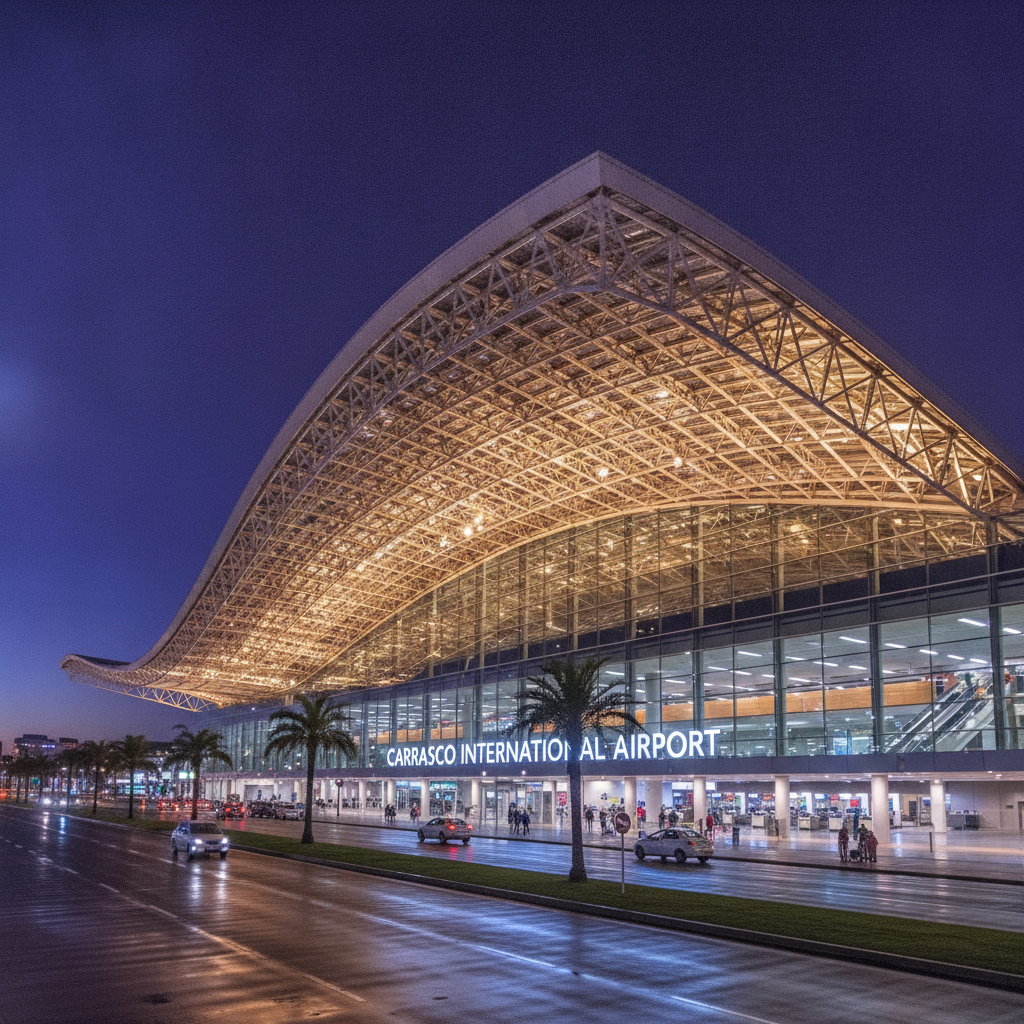
The Carrasco neighborhood at the eastern end of the Rambla, approximately 12 kilometers from the Ciudad Vieja, developed from the 1910s onward as an upscale garden suburb with large lots, tree-lined streets, and the Art Nouveau and eclectic villas that remain its primary architectural attraction. The neighborhood was designed on garden suburb principles of low density, curvilinear streets, and generous green space that contrasts entirely with the vertical density of Pocitos. The Hotel Casino Carrasco, a grand Beaux-Arts building completed in 1921 and restored to its original magnificence in 2013 after decades of neglect, is the most impressive individual building in the neighborhood and functions simultaneously as a luxury hotel, casino, and architectural landmark. The Playa Carrasco beach at the eastern end of the Rambla provides the most sheltered and family-oriented beach in the Montevideo area. The Carrasco International Airport, serving both Montevideo and the eastern resort area of Punta del Este, is located in Carrasco and designed by architect Rafael Vinoly in a striking terminal building of curved glass and steel completed in 2009 that has been recognized as one of the best contemporary airport designs in Latin America.
- 6
Teatro Solis and Montevideo Cultural Institutions
The Teatro Solis, the main opera house and performing arts theater of Uruguay, opened in 1856 in the Ciudad Vieja and is the oldest active theater in Uruguay and one of the oldest in South America. The building, designed in an Italianate neoclassical style, was extensively restored between 1997 and 2004 and has been operating continuously since its reopening with a program of opera, ballet, symphony concerts, and theatrical productions. The Montevideo Philharmonic Orchestra performs its season at the Teatro Solis alongside visiting international companies and performers. The Museo Nacional de Artes Visuales in the Parque Rodo area is the primary fine arts museum of Uruguay, with a collection including major works of Uruguayan art from the 19th century to the present and international works. The Museo Historico Nacional is distributed across several historic houses in the Ciudad Vieja and documents Uruguayan history from the colonial period through the independence era. The Torre de las Telecomunicaciones, the telecommunications tower on the Avenida 18 de Julio designed by the Uruguayan architect Carlos Ott and completed in 2002, is a distinctive contemporary landmark that provides a counterpoint to the Palacio Salvo as a vertical reference in the Montevideo skyline. Ott also designed the Opera Bastille in Paris, making him the most internationally recognized Uruguayan architect.
Walk this route with audio
Stories play automatically as you reach each stop — no tapping needed.
More in Montevideo
Montevideo Food: Asado, Chivito, Dulce de Leche, and the Uruguayan Table
Montevideo: The Rambla, Tango, and the Most Liveable Capital in Latin America
Montevideo Practical Guide: Getting There, Transport, Buenos Aires Ferry, and Uruguay Circuit
Montevideo Carnival: The Longest Carnival in the World and the Murga Tradition