Minneapolis R2: Nicollet Mall and downtown architecture (IDS Center Philip Johnson 1972, Foshay Tower 1929 W Hotel, Mary Tyler Moore statue, Hennepin Ave theater district), University of Minnesota (51,000 students, 29 Nobel laureates, Norman Borlaug Green Revolution 1 billion deaths prevented, Bob Dylan Dinkytown 1959-1960), Boundary Waters Canoe Area (1.1M acres, 1,175 lakes, most visited US wilderness, Twin Metals mining controversy), Saint Paul (Minnesota State Capitol Cass Gilbert, Summit Avenue F. Scott Fitzgerald, Cathedral of Saint Paul), Minnesota Scandinavian heritage (1.5M Norwegian descent, Minnehaha Falls Longfellow, lutefisk Lutheran church suppers, Lake Wobegon Garrison Keillor), Day trips (Duluth Lake Superior Aerial Lift Bridge, Mayo Clinic Rochester, Stillwater Victorian birthplace of Minnesota)
Minneapolis extended: Nicollet Mall (Mary Tyler Moore statue, IDS Center Philip Johnson Crystal Court, Foshay Tower Washington Monument replica, Hennepin Ave theater district Orpheum State Pantages), University of Minnesota (29 Nobel laureates, Norman Borlaug Nobel Peace 1970 Green Revolution, Bob Dylan Dinkytown first performances 1959-1960), Boundary Waters (1.1M acres 1,175 lakes most visited US wilderness, Twin Metals copper mining controversy), Saint Paul (Cass Gilbert Capitol largest dome world 1905, Summit Avenue F. Scott Fitzgerald This Side of Paradise, Cathedral of Saint Paul French Renaissance 1915), Scandinavian heritage (1.5M Norwegian 900,000 Swedish, Minnehaha Falls Longfellow Song of Hiawatha, lutefisk lefse church suppers, Lake Wobegon Prairie Home Companion Fitzgerald Theater), Day trips (Duluth Aerial Lift Bridge Lake Superior 10% worlds freshwater, Mayo Clinic Rochester USD 17B 70,000 employees, Stillwater birthplace of Minnesota 1848).
- 1
Nicollet Mall and Downtown Minneapolis Architecture
Nicollet Mall (the pedestrian-priority shopping street running through the heart of downtown Minneapolis for approximately 1.6 km from Washington Avenue to Grant Street): the commercial spine of downtown Minneapolis, lined with major retailers, hotels, restaurants, and cultural institutions. Mary Tyler Moore statue (at 7th Street and Nicollet Mall): the bronze statue of Mary Tyler Moore tossing her hat in the air (recreating the opening sequence of The Mary Tyler Moore Show, which was set in Minneapolis and filmed in the city from 1970-1977), one of the most photographed public art pieces in Minneapolis. The Minneapolis skyline and architecture: the IDS Center (at 80 South 8th Street, designed by Philip Johnson and John Burgee, completed 1972): the tallest building in Minneapolis (241m), notable for the Crystal Court atrium (the indoor public plaza connecting the building to the Skyway System) and for being the subject of the Mary Tyler Moore Show opening sequence (she worked at a fictional TV station in the tower). The Foshay Tower (at 821 Marquette Avenue, designed by Magney and Tusler, completed 1929): the first skyscraper in Minneapolis, modeled on the Washington Monument and built by Wilbur Foshay (who went bankrupt shortly after construction, in the 1929 market crash), now the W Minneapolis hotel with an observation deck. Hennepin Avenue entertainment district: the theater district of Minneapolis, with the Orpheum Theatre (1921 Beaux-Arts), the State Theatre (1921), and the Pantages Theatre (1916, now the Hennepin Theatre Trust venues presenting Broadway touring productions).
- 2
University of Minnesota and Southeast Minneapolis
University of Minnesota Twin Cities (at 100 Church Street SE, Minneapolis and Saint Paul): the flagship campus of the University of Minnesota system, one of the largest universities in the United States by enrollment (approximately 51,000 students), with 19 colleges and schools and a research budget of approximately USD 1 billion per year. University of Minnesota history and legacy: founded 1851 (before Minnesota became a state in 1858), the university has produced 29 Nobel laureates among faculty and alumni — one of the highest concentrations of Nobel Prize connections of any American public university. Nobel laureates with University of Minnesota connections: Norman Borlaug (Nobel Peace Prize 1970, father of the Green Revolution that prevented an estimated 1 billion deaths from famine — he developed high-yield wheat varieties that transformed agricultural production in India, Pakistan, and Mexico in the 1960s); Walter Heller (economics, adviser to Presidents Kennedy and Johnson, architect of the 1964 tax cut that fueled the 1960s economic expansion). The Dinkytown neighborhood (adjacent to the University of Minnesota East Bank campus): the historic bohemian neighborhood of Minneapolis, the location where Bob Dylan (Robert Allen Zimmerman, born Duluth 1941) lived as a student at the University of Minnesota in 1959-1960, playing his first professional performances at the 10 O'Clock Scholar coffeehouse on 4th Street SE — the formative experience that launched his career. The Maroon and Gold: the University of Minnesota Golden Gophers — Big Ten athletic powerhouse, the home of the 1972 and 1987 Women's gymnastics national champions, and the most storied hockey program in the Midwest.
- 3
Boundary Waters and the Minnesota Outdoors
Boundary Waters Canoe Area Wilderness (BWCAW, in northeastern Minnesota, approximately 400 km north of Minneapolis): the largest wilderness area east of the Rocky Mountains, with 1.1 million acres of boreal forest, 1,175 lakes, and 1,500 km of canoe routes within the Superior National Forest, designated as a wilderness area in 1964 under the Wilderness Act. The BWCAW experience: the area is accessible only by canoe (no motorized boats in most of the wilderness), with 1,200 designated campsites on lake shores, daily entry permit limits (2,000 permits per day across all entry points, with reservations often required months in advance for popular summer dates). The Boundary Waters is the most visited wilderness area in the United States, with approximately 250,000 visitors per year. The BWCAW copper-nickel mining controversy: the proposed Twin Metals copper-nickel-cobalt sulfide mine (in the Duluth Complex mineral deposit, upstream from BWCAW): the most contentious environmental and mining policy dispute in Minnesota history, with environmentalists arguing that the mine would permanently damage the wilderness water quality through acid mine drainage, and mining proponents arguing it would produce critical minerals for electric vehicle batteries and renewable energy. Voyageurs National Park (at International Falls, 400 km north of Minneapolis): the only national park in the United States designated primarily for water-based recreation, with 340 km of interconnected lakes (Rainy Lake, Kabetogama Lake, Namakan Lake) that form the US-Canada border. The name commemorates the French-Canadian fur trade voyageurs who paddled canoes laden with beaver pelts from the Great Lakes to Montreal from the 1600s to the early 1800s.
- 4
Saint Paul - The Other Twin City
Saint Paul (the capital of Minnesota, Ramsey County seat, population approximately 310,000): the older, quieter, more architecturally European of the Twin Cities, with a character significantly different from Minneapolis despite being directly adjacent (separated only by the Mississippi River gorge). Saint Paul history: Saint Paul grew as a river port and railroad hub at the head of navigation on the upper Mississippi River; the city retains a much larger Catholic and Irish and Italian and Hmong immigrant heritage than Minneapolis, which was more heavily Scandinavian and German. The Minnesota State Capitol (at 75 Rev Dr Martin Luther King Jr. Blvd, Saint Paul): the 1905 building designed by Cass Gilbert (who also designed the US Supreme Court building in Washington DC and the Woolworth Building in New York City), with the largest unsupported self-sustaining dome in the world at the time of construction, gilded with 23-karat gold leaf in the most recent restoration (completed 2017). Summit Avenue (the most intact Victorian residential street in the United States, running 7.5 km from the Cathedral of Saint Paul to the Mississippi River bluffs): the street where F. Scott Fitzgerald was born (at 481 Laurel Avenue, 1896), lived as a young man (at 599 Summit Avenue, where he finished his debut novel This Side of Paradise in 1919), and is memorialized with a plaque at 599 Summit. The Cathedral of Saint Paul (at 239 Selby Avenue, Saint Paul): the largest Catholic cathedral in the upper Midwest, designed by Emmanuel Masqueray in French Renaissance style, consecrated 1915, with the 58m diameter dome visible from much of the metropolitan area.
- 5
Minnesota Scandinavian Heritage and the Viking Legacy
Minnesota Scandinavian heritage: Minnesota has the largest percentage of residents of Scandinavian descent of any state in the continental United States, with approximately 1.5 million Minnesotans of Norwegian descent (10% of the 4.9 million total population) and 900,000 of Swedish descent — a legacy of the mass emigration from Scandinavia to the upper Midwest between 1850 and 1920. Reasons for Scandinavian settlement in Minnesota: the climate (similar to Scandinavia, with cold winters, abundant lakes, and forests), the availability of homestead land (the 1862 Homestead Act offered 65 hectares of land for free to settlers willing to farm it for 5 years), and chain migration (early settlers writing home encouraged family and community members to follow). The Sons of Norway and Norwegian-American culture: Minnehaha Falls and Minnehaha Park (the waterfall and park on Minnehaha Creek in south Minneapolis, immortalized in Henry Wadsworth Longfellow's 1855 poem The Song of Hiawatha): the most visited natural attraction within the Minneapolis city limits, with the 15m waterfall that flows into the Mississippi River. Lefse, lutefisk, and Minnesota food culture: lutefisk (dried whitefish cured in lye, then reconstituted: the most controversial traditional Scandinavian food, served at Lutheran church suppers throughout Minnesota in November and December), lefse (the potato flatbread, served with butter and sugar at holiday gatherings), and the Lutheran church potluck (the cultural institution of the upper Midwest, serving as the social glue of rural and small-town Minnesota). Lake Wobegon (the fictional Minnesota town created by Garrison Keillor for A Prairie Home Companion, the public radio program broadcast from the Fitzgerald Theater in Saint Paul from 1974 to 2016): the cultural artifact that has defined the image of rural Minnesota for millions of Americans.
- 6
Minneapolis-Saint Paul Day Trips and Regional Context
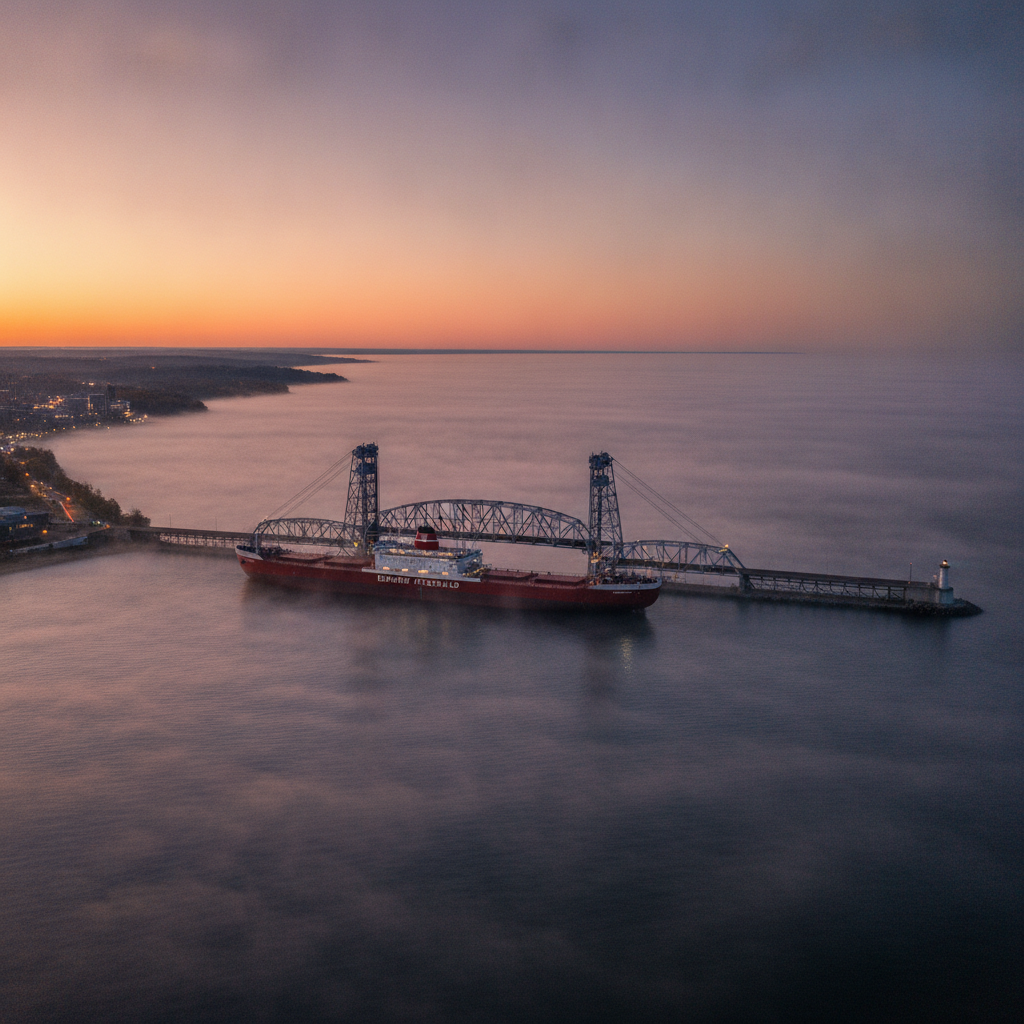
Minneapolis day trips and regional exploration: Duluth (the port city at the western tip of Lake Superior, 240 km north of Minneapolis on I-35): the freshwater port that handles more tonnage than any other US freshwater port, built on the stunning topography of the Lake Superior Hillside with dramatic views of the harbor, the Aerial Lift Bridge (the most photographed structure in Minnesota, connecting the downtown Duluth harbor to Minnesota Point), and the DECC (the convention and event center on the waterfront). Lake Superior (the worlds largest freshwater lake by surface area: 82,100 square kilometers, larger than the state of South Carolina, holding 10% of the worlds surface fresh water): the lake that defines the character of northeastern Minnesota and Upper Michigan. The Boundary Waters and the Superior Hiking Trail (the 310-km trail along the North Shore of Lake Superior from Duluth to the Canadian border): the most popular long-distance hiking trail in the upper Midwest. Rochester (110 km southeast of Minneapolis, population approximately 125,000): the home of the Mayo Clinic (the most-cited clinical research institution in the world, with a USD 17 billion annual operating budget, 70,000 employees, and patients coming from 150 countries: the institution that invented the concept of a multispecialty group medical practice in the 1880s). Stillwater (35 km east of Saint Paul on the Saint Croix River): the most charming Victorian small town in Minnesota, sometimes called the birthplace of Minnesota (the site of the 1848 constitutional convention that led to Minnesota statehood in 1858), with a historic downtown of red brick commercial buildings from the 1870s-1890s and a thriving independent bookstore and antique scene.
Walk this route with audio
Stories play automatically as you reach each stop — no tapping needed.
More in minneapolis
Minneapolis: Cuba-Touring Orchestra, Indigenous James Beard Winner and 150 Miles of Lake Superior Cliffs
Minneapolis: Mississippi River national park and 22 city lakes (best urban park system US, Grand Rounds 87km loop, Bde Maka Ska), Prince and Paisley Park (Purple Rain 1984, First Avenue nightclub, 100M records, Paisley Park museum), Mall of America (largest US mall, 40M visitors, Nickelodeon Universe, Walker Art Center Spoonbridge and Cherry, Guthrie Theater Jean Nouvel), Twin Cities food and diversity (Somali diaspora largest US 70,000-100,000, Hmong Village Saint Paul, Juicy Lucy invention, Minnesota State Fair 2M visitors), George Floyd Square (May 25 2020, Darnella Frazier, largest US protest movement 15-26M people, Chauvin convicted 2021), Practical (skyway system 13km longest world, Vikings 4 Super Bowls 0 wins, MSP airport Delta hub, Metro Blue Line airport rail)
Minneapolis: F. Scott Fitzgerald Summit Avenue, Guthrie Theater Over the River and 9 Miles of Indoor Skyways
Minneapolis: Bob Dylan Dinkytown Coffeehouses, East African Little Mogadishu and Gehry Campus
Minneapolis: Prince Paisley Park, Spoonbridge Cherry and the Busiest Wilderness in America